Easy
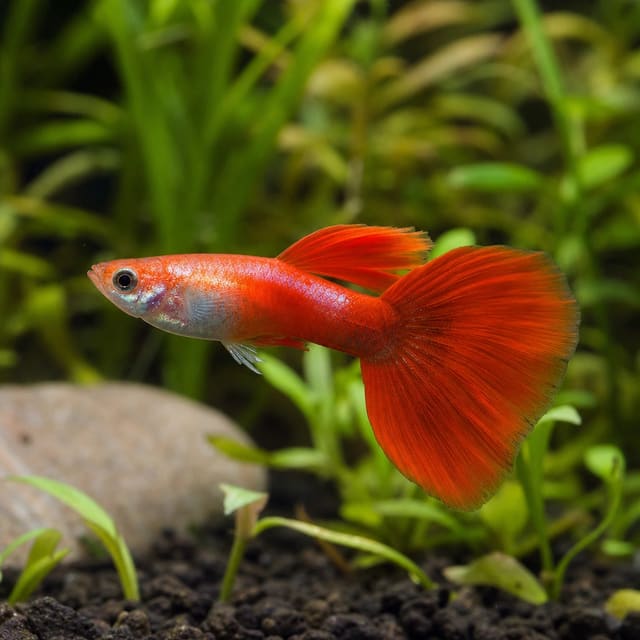
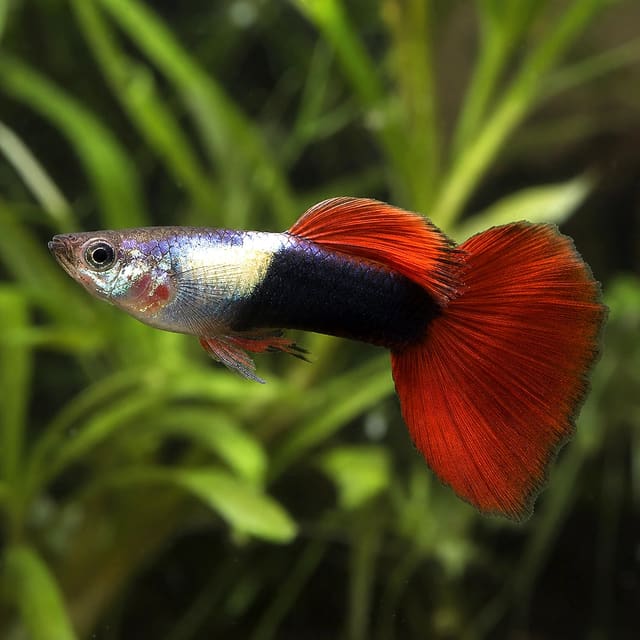
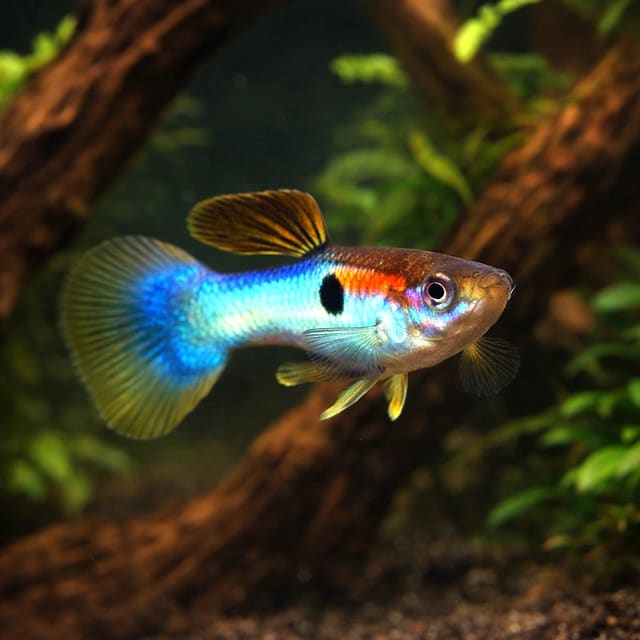
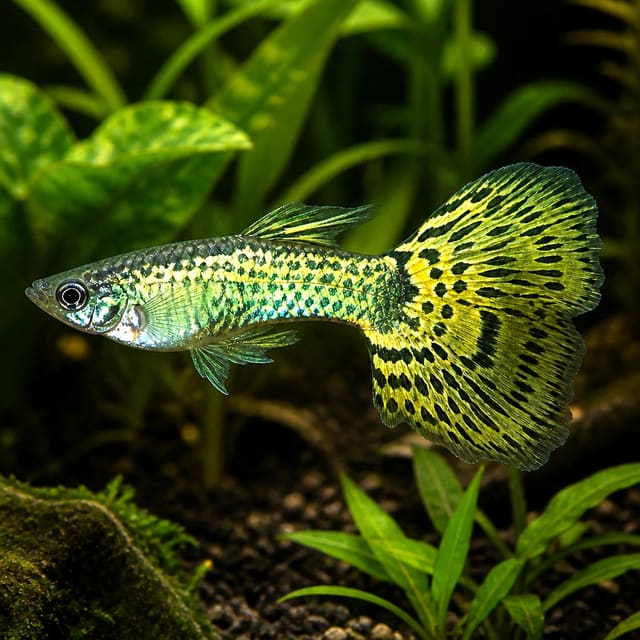
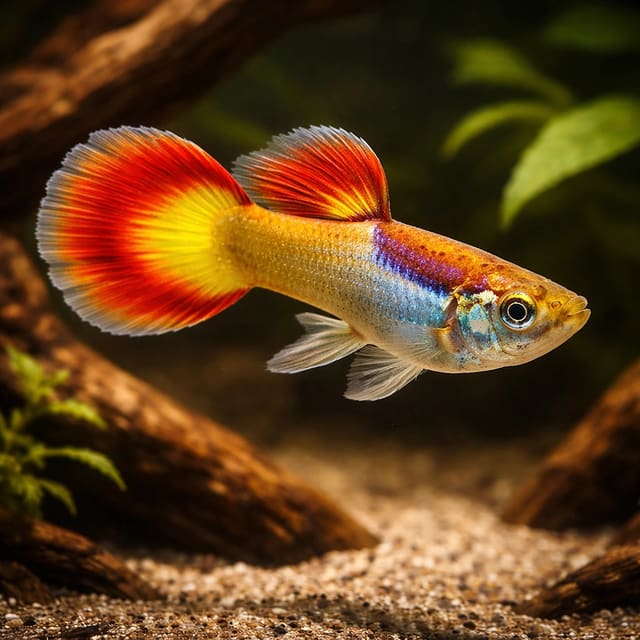
Yellow Mix Male Guppy (Poecilia reticulata)
22–28°C · pH 7–8 · 41L
£4.99
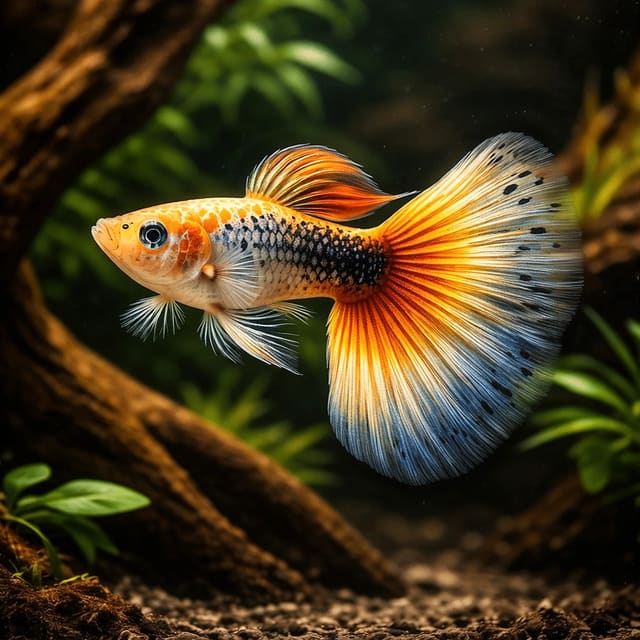
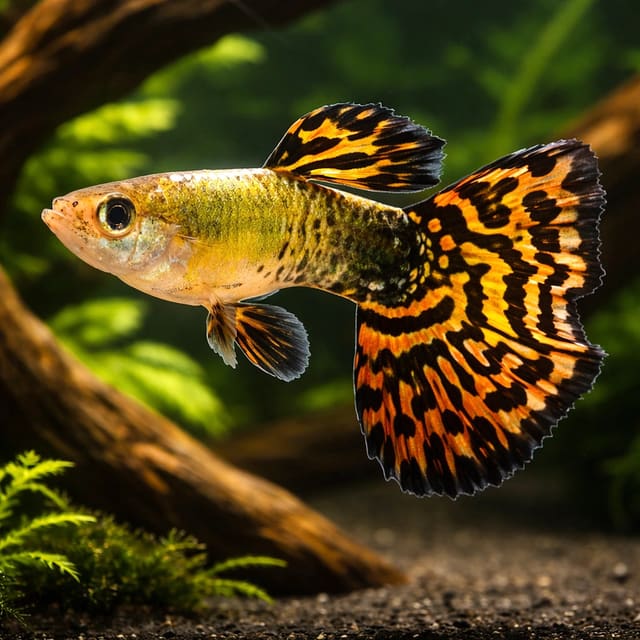
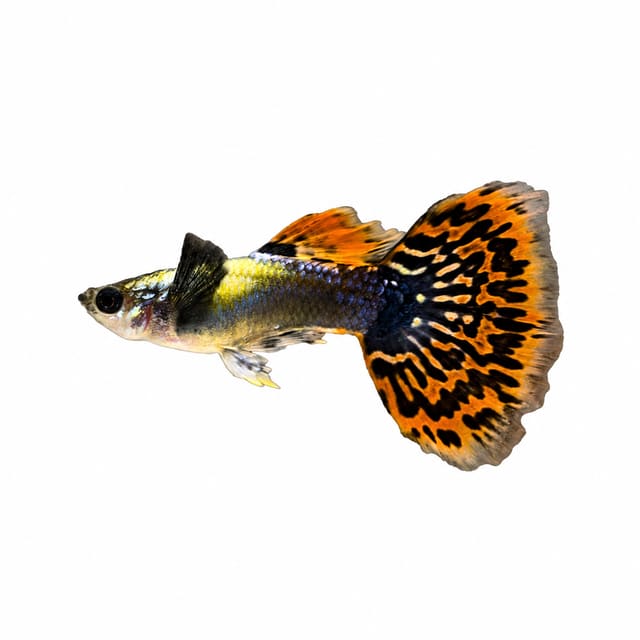
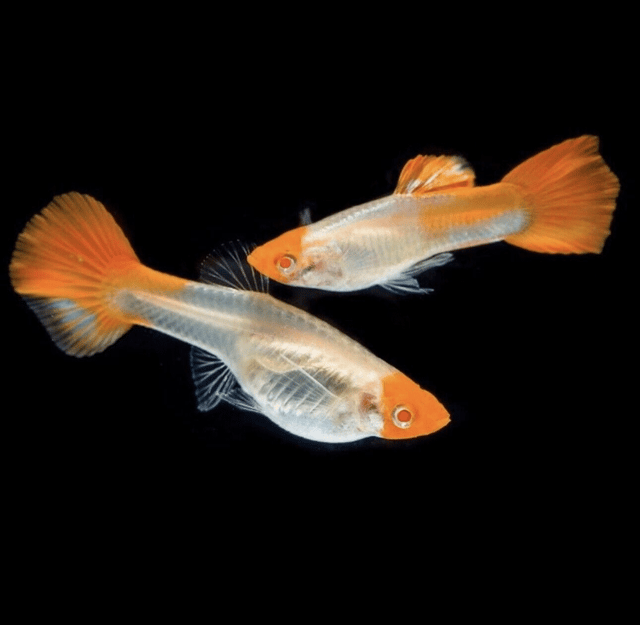
Sunset Blonde Male Guppy (Poecilia reticulata) is sold as one male fish in a 3–4 cm grade. Keep guppies in a planned group in a mature, filtered aquarium with stable mineral-bearing water and peaceful companions.
Poecilia reticulata
Shoaling fish: kept in a group they feel safer, stay calmer and show their best colour.
Minimum of 2 per order.
Sunset Blonde Male Guppy (Poecilia reticulata) is sold as one male fish in a 3–4 cm grade. Keep guppies in a planned group in a mature, filtered aquarium with stable mineral-bearing water and peaceful companions.

Guppies are social livebearers suited to a prepared beginner, not a fish-per-litre formula. Use a mature filtered aquarium, tested neutral-to-alkaline mineral-bearing water, deliberate sex and population planning, open swimming room, cover and a separation option.
Maintain these water conditions for optimal health and vibrant colors
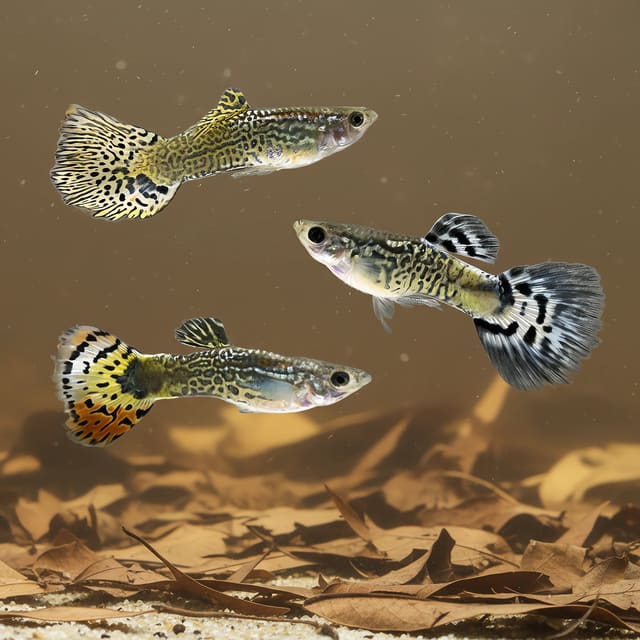
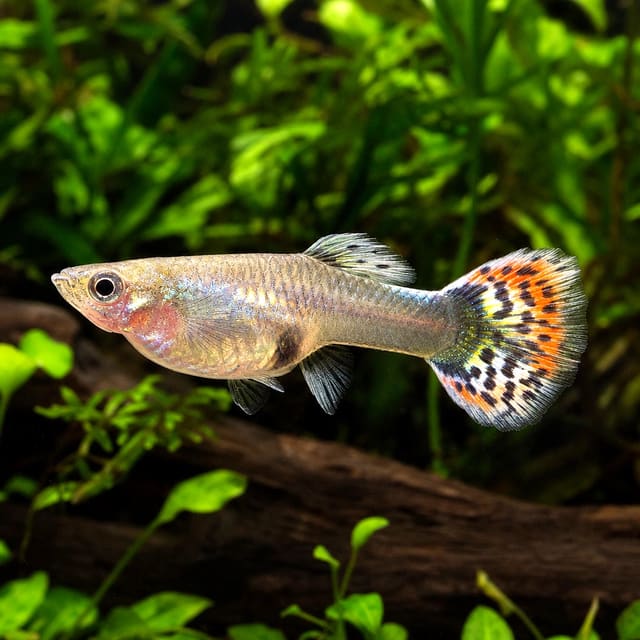
Sunset Blonde Male Guppy (Poecilia reticulata) is a peaceful livebearing fish offered as a male. One purchase supplies one live male guppy, normally in the supplier's 3–4 cm dispatch grade. The Sunset Blonde wording describes the selected colour form, not a separate species or a documented pedigree. Individual colour and fin pattern can vary. If you want a lively upper-water display, prepare a mature aquarium with open swimming room, planted cover and stable mineral-bearing water before the fish arrives.
Sex is guaranteed only when the exact product or selected option explicitly states male or female. This Poecilia reticulata male sunset blonde listing is sold as male. A single purchase is still one fish, not a ready-made social group. Guppies are social; Tropical Fish Co's guppy care guide recommends planning for five or more in a filtered aquarium at least 60 cm long, adjusting numbers for sex mix, other livestock, filtration and test results. The goal is a group that can use the whole tank without crowding the surface or allowing food and waste to overwhelm the filter. A male-only plan avoids deliberate mixed-sex breeding, but observe how the individuals interact and provide visual breaks. If females are included, plan for reproduction and for persistent male attention rather than assuming a balanced group appears automatically.
Guppies are often called beginner fish because they readily take suitable prepared food and can live in a calm community. The easy-care label works only when the aquarium is already established and the keeper tests water, maintains the filter and chooses compatible companions. New tanks with unstable ammonia or nitrite are unsuitable even for a hardy-looking livebearer. A beautiful strain does not remove the need for careful acclimation, a sensible group and a fallback if another fish damages its fins.
Use the colour to choose the fish you enjoy, then judge the setup by the needs of Poecilia reticulata. The exact fin shape and colour intensity may change as a male settles and matures. Treat the 3–4 cm grade as the size supplied, not a final adult measurement. FishBase records 5 cm standard length for male or unsexed guppies, while Seriously Fish gives 6 cm standard length in its species overview. Standard length excludes the tail, whose shape and length vary in domestic guppies. Leave generous swimming space for a growing male rather than sizing an aquarium around one tail-inclusive number.
A successful display lets the fish swim freely, retreat into plants, take food without competition and keep its fins intact. If those conditions fit your aquarium, the Sunset Blonde male can add movement and colour without needing special “strain water”. For a deeper species overview, see our guppy care guide.
| Species | Poecilia reticulata, family Poeciliidae |
|---|---|
| Offer | One Sunset Blonde male per purchase; 3–4 cm dispatch grade |
| Temperament | Peaceful; protect long fins from nippers |
| Social plan | Tropical Fish Co recommends five or more guppies in a suitable group |
| Aquarium | Store planning minimum: mature filtered tank at least 60 cm long; adjust to stocking |
| Routine display water | Store guidance: 22–28°C; OATA guppy/molly group guide: pH 7.0–8.0 and 8–18°dH |
| Food | Appropriately sized complete flake or granule staple, with suitable variety |
| Adult length | FishBase 5 cm SL male/unsexed; Seriously Fish 6 cm SL species overview; tails vary |
These figures come from different kinds of guidance. The store's 60 cm and five-fish recommendations are conservative planning policy, while the pH and hardness range comes from OATA's combined guppy and molly care sheet. FishBase environmental records describe wild conditions and are not a target for a domestic colour variety. Keep each number in its proper context.
Start with the group and the aquarium footprint, not an isolated “one fish per litre” calculation. FishBase's aquarium note gives a 60 cm minimum length and a group of five or more guppies. OATA recommends at least 45 litres for a small group of smaller livebearers. Tropical Fish Co uses the more conservative 60 cm length and five-plus group policy, then adjusts for tank mates, sex mix, filtration and actual water tests. A long, open tank can offer more usable swimming room than a tall vessel with the same volume. It also gives fish more routes past one another.
A mature biological filter is essential. The RSPCA explains that fish release toxic ammonia, which beneficial filter bacteria convert first to toxic nitrite and then to less toxic nitrate. Clear water does not prove this process is established. Test ammonia and nitrite before introducing guppies; both must be zero. Add fish gradually so the filter can adjust to the new waste load. If a reading rises after an addition, deal with the water problem before adding more. Our first aquarium guide walks through the preparation and testing sequence.
Leave an open swimming route through the middle and upper levels. Plant groups, floating vegetation or other smooth cover give fish somewhere to pause without filling every inch of the tank. Seriously Fish notes that guppies appreciate planted cover and that strong current should be avoided. Aim for circulation and oxygenation without forcing long-finned males to fight a constant jet. Inspect decorations for rough edges that could tear fins, and keep a secure lid and safe equipment access.
Plan maintenance access while arranging cover. You should be able to siphon waste, inspect the fish and reach the filter without pulling apart the entire display. A spare mature tank or suitable divider can help if a new arrival needs observation or if a tank mate turns out to be a fin nipper. No aquascape can guarantee compatibility, but good cover and room to move make ordinary interactions easier to assess.
When choosing a tank, check the footprint against the number of adult fish you expect to keep. A bare minimum volume does not reveal how much room remains after plants, equipment and companions are added. Give males enough unobstructed space to pass one another. If the filter output pushes food and fish into a single corner, redirect the flow while retaining surface movement and biological capacity. Watch the group at several times of day: a calm feeding period can conceal a fish that is chased away from its preferred resting area later. Set the layout so every individual can reach food and cover without crossing a dominant neighbour's path.
Tropical Fish Co's routine guppy display range is 22–28°C. OATA's broad guppy-and-molly care sheet gives pH 7.0–8.0 and medium-hard water at 8–18°dH. Seriously Fish describes guppies as hard-water fish for long-term maintenance, even though they may manage in softer or more acidic conditions for a period. These are compatible pieces of advice: choose a stable neutral-to-alkaline, mineral-bearing aquarium rather than pushing a fish to a wild or laboratory extreme. The store temperature range is a display recommendation, not a claim that every guppy strain has a different optimum.
Measure the water you actually have. Use a reliable thermometer and tests for pH, general hardness, ammonia, nitrite and nitrate. Carbonate hardness can help reveal whether the water is buffered against pH swings. OATA also gives a broad carbonate hardness guide of 5–15°dKH for guppies and mollies. Do not chase one number with repeated chemical additions while the fish is present. A predictable source and careful replacement routine make conditions easier to maintain than dramatic correction after every test.
Ammonia and nitrite must be zero. OATA recommends nitrate no more than 20 mg per litre above the normal tap-water level for its guppy/molly group. Test the tap water occasionally so you know the comparison point. Change water regularly with conditioned replacement water close to the aquarium's temperature and mineral content. If local tap water changes noticeably, adjust the replacement preparation gradually. Our water chemistry guide explains the readings, and the water matcher can help compare your measured values with the scoped guidance.
FishBase records a wider environmental temperature span for the species in nature. That is a description of occurrence, not a reason to run a Sunset Blonde display at a cold or hot edge. Observe the fish as well as the tests: steady swimming, normal breathing, intact fins and prompt feeding matter. When behaviour changes, test the aquarium first and investigate stocking or equipment before treating a number in isolation.
Guppies benefit from company, but buying one male does not automatically produce a suitable social group. FishBase's aquarium note calls for five or more; the store adopts a five-plus policy in a 60 cm aquarium where the full stocking plan allows it. OATA's broader guppy/molly sheet suggests at least three, commonly with two females per male when sexes are mixed to reduce pressure on females. The store's higher group target is a conservative house recommendation. Count the fish already present, not only the number you intend to add.
For an all-male display, choose enough room, plant breaks and feeding access for each fish. Males may display to one another, and individuals can differ in confidence. Check whether any fish is repeatedly excluded from food or trapped against the glass. Do not assume a male-only group is trouble-free simply because it cannot produce fry. If you prefer a mixed group, expect courtship and live young. Plan where fry will go before adding females, and avoid making the females carry all the attention from too many males.
Guppies are livebearers. Seriously Fish describes their prolific breeding and the way females can store viable sperm. A female acquired separately may produce young even if she has not recently shared an aquarium with a male. This male offer does not imply that a pair, trio or breeding project is supplied. If preserving a documented strain matters, keep records and separate guppies from Endler's livebearers or other lines that could cross; colour names alone do not certify ancestry.
Introduce additions in stages and keep water tests close after each change. If a fish hides, loses condition or shows damaged fins, review social pressure and tank mates alongside water quality. More fish can sometimes spread attention, but it also raises the waste load; use the aquarium's footprint, filtration and behaviour to decide, not a fixed count alone. A quiet, active group with access to food is the aim.
Domestic guppies accept a wide range of appropriately sized aquarium foods. Use a complete flake or small granule as the staple, with suitable variety rather than relying on one treat. OATA describes guppies and mollies as omnivorous and suggests a quality prepared food with plant material, plus small live or frozen items where appropriate. Seriously Fish notes that tank-bred guppies differ from wild insect-feeding ancestors. An occasional food is not a balanced daily diet on its own.
Give modest portions that the group can eat within a few minutes. OATA's group care sheet recommends once-daily feeding and warns that excess food breaks down into harmful waste. A small male guppy can miss a meal if faster or larger fish monopolise the surface; watch each fish rather than assuming an empty surface means every animal ate. Distribute food where all fish can reach it without a strong current carrying it into the filter.
Vary size and texture carefully. Fine flake, suitable micro-granules and small safe frozen foods can offer interest, but food must suit the fish's mouth and the rest of the aquarium. Avoid leaving large fragments on the substrate. If an unfamiliar food is ignored, remove it and try a smaller amount later. More food is not a remedy for a fish that is being bullied, breathing abnormally or living in poor water.
Notice changes in appetite. A new arrival may need a little time to begin feeding, but continuing refusal alongside clamped fins, unusual breathing or isolation is a reason to test water and examine the fish closely. Keep the feeding routine simple enough to see a change. Consistent portion size also makes nitrate trends easier to interpret. If you increase the group, expect the biological filter to need time to adjust to the added waste.
Test water at least weekly in an established aquarium, and more often during cycling, after additions or when behaviour changes. OATA recommends a weekly partial change of about 25% for guppies and mollies, adjusted to actual test results and stocking. Treat replacement tap water to remove chlorine or chloramine and bring it close to the tank's temperature. Keep a note of ammonia, nitrite, nitrate, pH and hardness so a rising trend is visible before a fish is distressed.
Check filter flow and intake for blockages. If media needs cleaning, rinse it gently only in water removed from the aquarium; never wash it under tap water. OATA warns that chlorine or chloramine can kill the useful bacteria in the filter. Avoid replacing all filter media or deep-cleaning the whole aquarium at once. Siphon uneaten food and waste from accessible areas, then leave enough planted cover for the group to use. A regular modest routine is easier on fish than infrequent drastic cleaning.
Learn the normal movement and feeding of your group. RSPCA welfare guidance flags changes in breathing, swimming, condition and appetite as reasons to check health and water. Watch for frayed fins, rubbing, persistent isolation, white spots, swelling or a fish staying at the surface in distress. A long fin can be injured by rough décor or a nipping tank mate as well as illness. Test water and inspect interactions before choosing any treatment.
Do not guess at a medicine or dose from appearance alone. Isolate new or concerning fish where a suitable separate system is available, and obtain qualified advice for persistent or severe signs. Our guppy care guide links to fish health guidance and a UK fish-vet directory. Quarantine protects the established group, but it still needs stable, filtered water and observation. Record what changed and when; those details help distinguish an equipment problem from a social or health problem.
Have the aquarium ready before ordering: a mature filter, zero ammonia and nitrite, steady temperature, suitable mineral content and cover. Plan to be at the delivery address. Tropical Fish Co's delivery and arrival policy explains protective packing, the licensed live-animal courier and the steps to take when the parcel arrives. Check the policy before arrival for packing, acclimation and reporting details.
Open and inspect the parcel promptly. The policy advises slow acclimation, describes floating the bag for 20–30 minutes and says not to pour transport water into the aquarium. Use the policy's current acclimation steps and do not leave a live animal unattended in its bag. Prepare a way to release the fish into the aquarium without transferring bag water. Keep the first introduction calm and watch whether the guppy can swim normally and reach cover.
If there is a problem on arrival, follow the policy's same-day contact and evidence instructions. A Live Arrival Guarantee claim requires a continuous unboxing video showing the sealed parcel, its opening and the fish still in the bag. This reporting evidence is separate from ongoing husbandry. Once the fish is in the aquarium, observe breathing, posture, fins and movement; check water if anything looks wrong.
Consider an appropriate observation or quarantine setup when introducing new livestock to an established group. The store care guide explains the value of isolation for disease control and cites professional veterinary guidance. A separate system must itself be ready and maintained; a bare unfiltered container is not a safe shortcut. Give the fish time to settle without repeatedly netting or chasing it.
Sunset Blonde males are peaceful, and some domestic guppies have vulnerable elongated fins. Seriously Fish recommends avoiding fin-nipping species such as tiger barbs and serpae tetras. OATA gives the same broad warning about barbs that nip guppy fins. Do not rely on a species name alone; watch the individual aquarium. A tank mate that repeatedly follows, pecks or blocks a guppy from food is a poor match even if it is commonly sold as a community fish.
Seriously Fish lists quiet communities with other livebearers, rasboras, corydoras, small loricariids and tetras as possibilities. Treat those as kinds to assess, not guaranteed companions. The chosen animals must share a stable long-term water range and fit the aquarium's size, feeding pattern and available cover. Some fish within a broad group need different softness, temperature or social numbers. Check the particular species before combining them with mineral-bearing guppy water.
Keep adult size and mouth size in view. A large or predatory fish can make a small male guppy a target. Fast competitors can cause underfeeding without overt attack. Give the guppies open space and refuge, then observe at feeding time and during ordinary swimming. If fins deteriorate or a fish spends its day hiding, investigate the neighbour and décor as well as water tests. Removing an incompatible fish is more reliable than expecting the guppy to adapt to continual nipping.
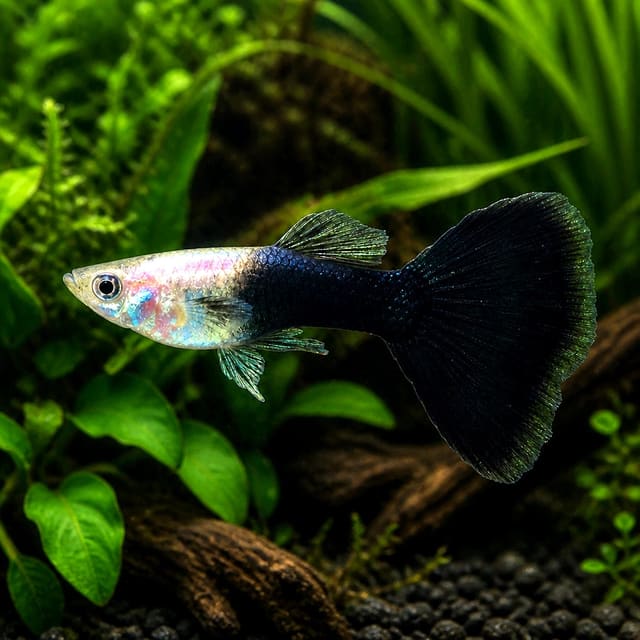
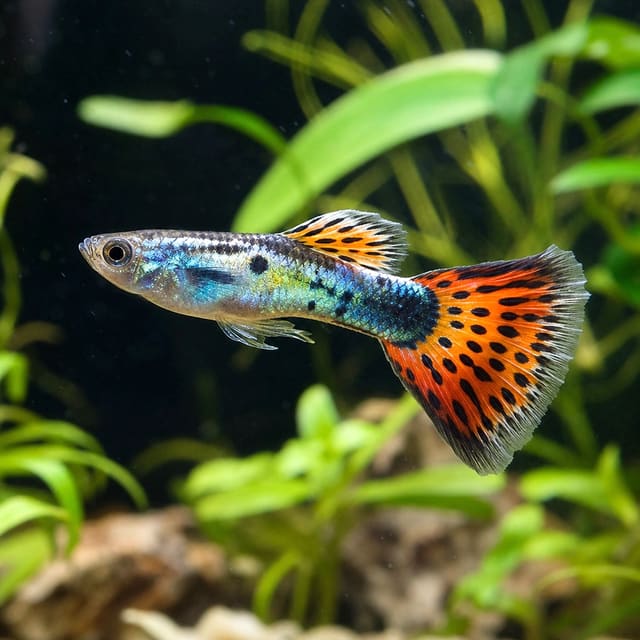
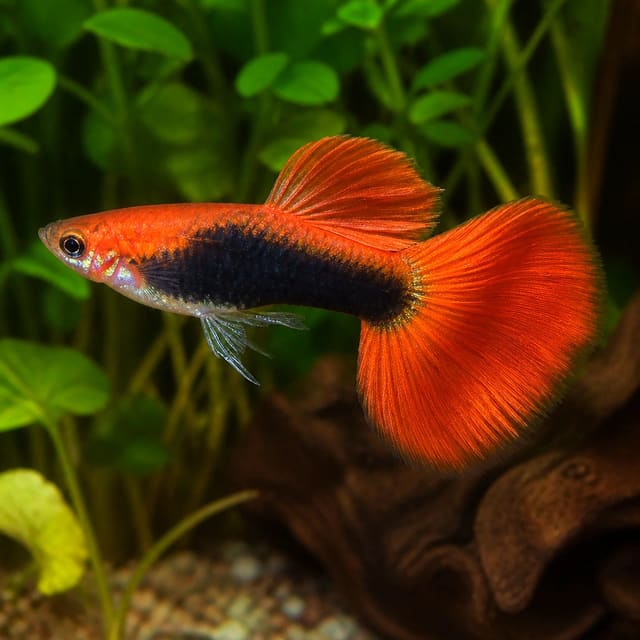
Guppy variety pages are useful buying comparisons, not compatibility guarantees. The guppy collection can help compare colour forms; count all guppies together when assessing group size and tank capacity. Do not assume another colour form changes basic Poecilia reticulata care. If a documented breeding line matters, house lines separately and keep clear records rather than treating a colour label as proof of ancestry.
Additions affect the biological filter as well as social balance. Test water after a change and avoid adding several groups at once. If a new fish is quiet for a brief period, observe; if it cannot feed, is repeatedly pursued or shows damaged fins, intervene. The aim is a calm community, not simply a list of names that can tolerate the same thermostat setting.
Guppies have been introduced outside their native range, and FishBase notes ecological risks associated with introductions. Never release unwanted adults or fry into ponds, streams or drains. Plan responsible rehoming before a mixed-sex group breeds. Avoid disposing of aquarium plants or water in a way that can carry live organisms to natural waterways.
FishBase records 5 cm standard length for male or unsexed guppies, while Seriously Fish gives 6 cm standard length in its species overview. Standard length excludes the tail, which varies in domestic males. Plan swimming space without treating either figure as an exact maximum for every individual.
Tropical Fish Co recommends a mature, filtered aquarium at least 60 cm long for a small guppy group, then adjusts for tank mates, sex mix and water tests. OATA gives 45 litres for a small group of smaller livebearers; length and usable space matter alongside volume.
Guppies are social. The store's conservative group policy is five or more in a suitable aquarium, while OATA's broader guppy/molly sheet suggests at least three. Count all guppies already present and watch how males share food and swimming space.
Yes for a prepared beginner with a mature, tested aquarium, stable mineral-bearing water, a suitable group and calm tank mates. It is not suitable for an uncycled tank with ammonia or nitrite.
Use appropriately sized complete flake or granule as the staple and offer safe variety in small amounts. Guppies are omnivorous; remove leftovers and check that every fish reaches food.
Tropical Fish Co's routine guppy display range is 22–28°C. OATA's broad guppy/molly care sheet gives pH 7.0–8.0 and 8–18°dH. Keep readings stable, with ammonia and nitrite at zero.
Guppies are generally peaceful. The concern is often the reverse: long-finned males can be nipped by unsuitable companions. Watch for repeated chasing, damaged fins and missed meals.
Seriously Fish describes quiet communities with suitable livebearers, rasboras, corydoras, small loricariids and tetras. Check each exact species for shared water, size and social needs; avoid fin nippers such as tiger barbs and serpae tetras.
Tropical Fish Co's delivery policy describes oxygen-bag packing, insulation and a licensed live-animal courier. Be present, inspect the parcel promptly and follow the current acclimation and same-day reporting instructions.
FishBase: Poecilia reticulata supports the accepted identity, wild biology and its 5 cm SL male/unsexed record. Seriously Fish gives aquarium guidance, a 6 cm SL species overview and conditional community examples. The OATA guppy and molly care sheet supplies broad group water, feeding and maintenance advice. Tropical Fish Co's guppy care guide states the store's 60 cm, five-plus group and routine display policies. The RSPCA aquarium environment guidance explains why mature filtration matters.
Use the current store delivery policy for the actual order's packing, acclimation and reporting steps. These sources describe the species and care context; they do not certify the exact colour, tail form or pedigree of an individual Sunset Blonde male.
No reviews for this item yet. Bought one? Honest reviews only, good or bad.
What customers say about ordering from us
Easy website plenty of info on fish your buying great to pick a time slot
TRACEY DURRANT · 7 Oct 2026
Got some lovely fish thank you
Kevin Mackie · 7 Oct 2026
Reviews of our shop, collected by Judge.me, an independent third-party review collector. Newest first.