Easy
Rainbow Platy (Xiphophorus variatus)
£4.59
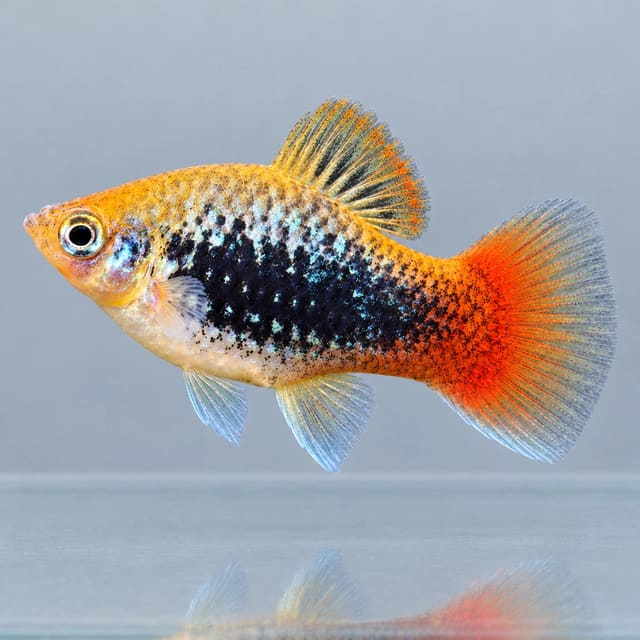
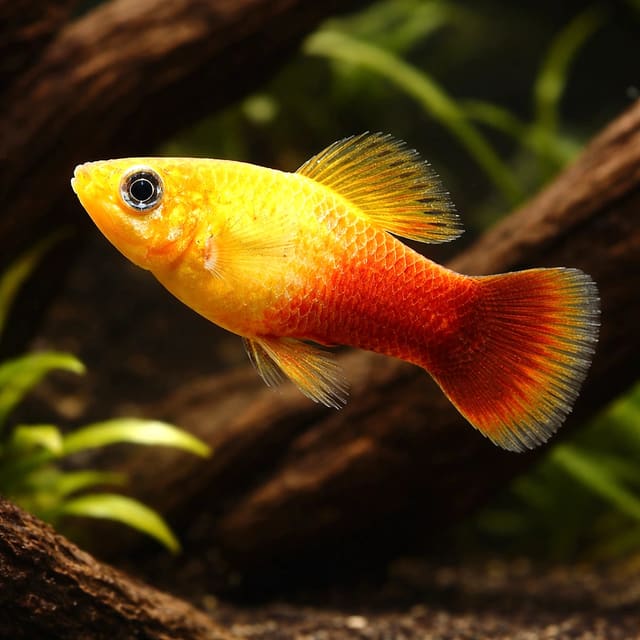
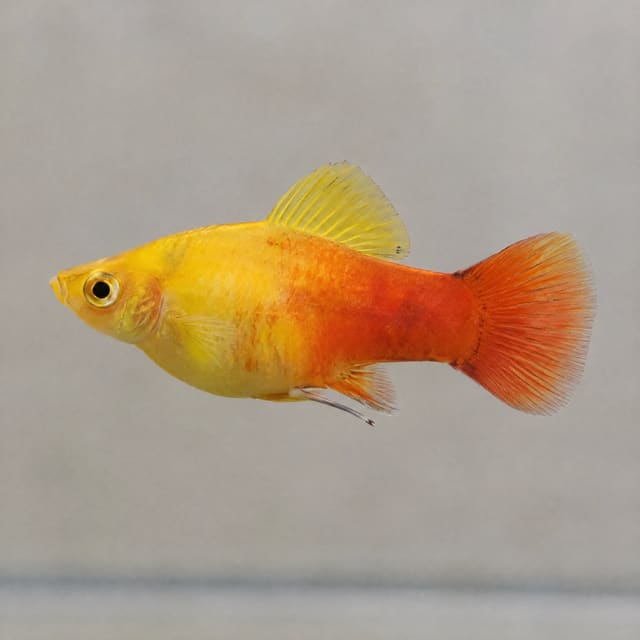
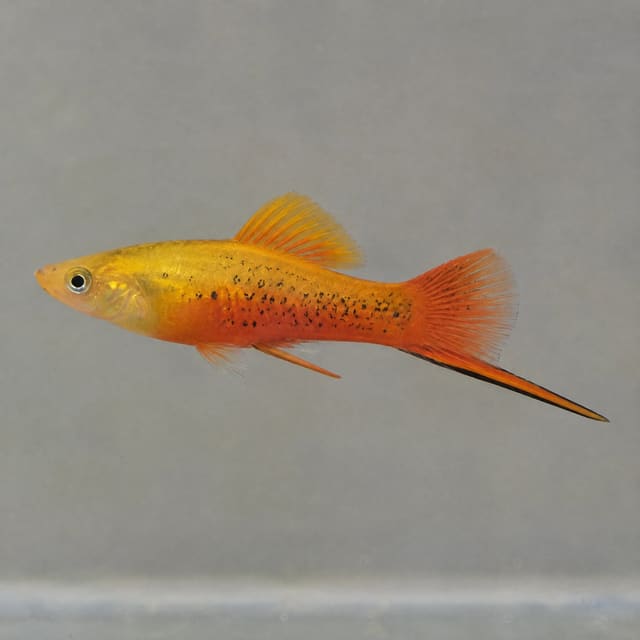
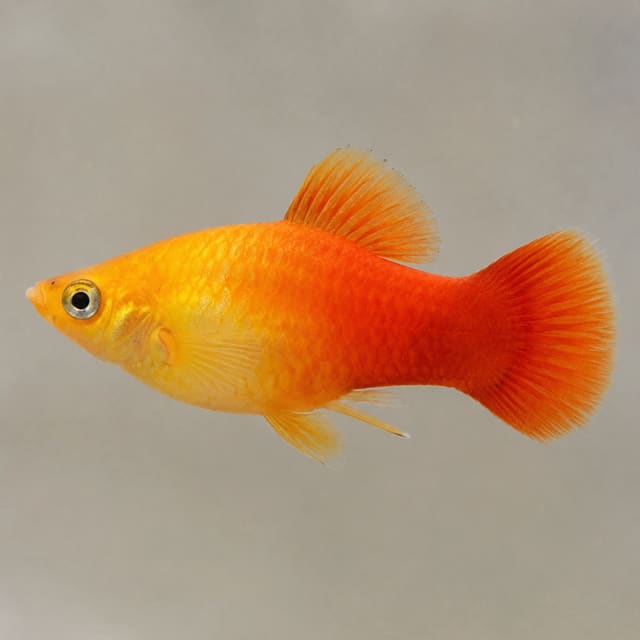
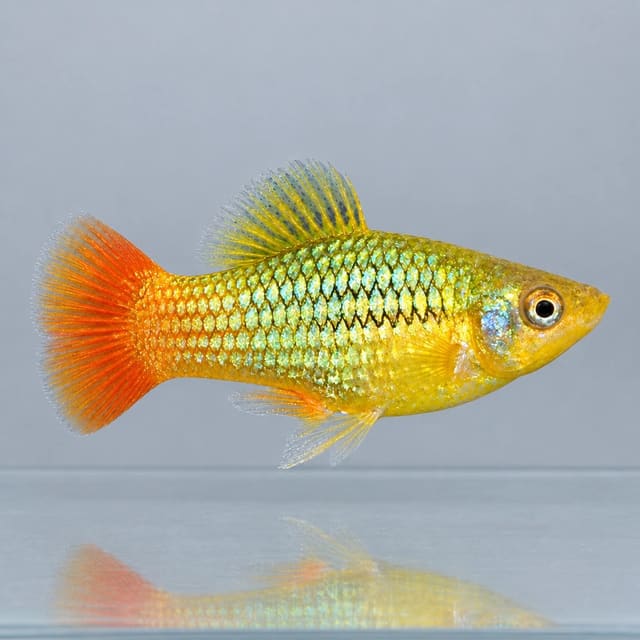
The Neon Sunset Platy is an aquarium-bred sunset form of the variatus platy, Xiphophorus variatus: golden yellow at the front shading to orange-red at the tail, with an iridescent sheen and blue-tinted fins. It is a peaceful, hardy livebearer for a hard-water community aquarium of 45–54 litres or more, and it copes with cooler indoor water than most tropical fish. Sold individually as one live fish.
Adult size is the maximum length this species reaches at full maturity (scientific sources). The livestock you receive will be younger and smaller. Product-photo provenance and any image-specific limitations are stated on the listing.
Xiphophorus variatus
Quantity discounts are pricing offers, not a group-size recommendation. Check the full care guidance and your existing animals before choosing a quantity.
The Neon Sunset Platy is an aquarium-bred sunset form of the variatus platy, Xiphophorus variatus: golden yellow at the front shading to orange-red at the tail, with an iridescent sheen and blue-tinted fins. It is a peaceful, hardy livebearer for a hard-water community aquarium of 45–54 litres or more, and it copes with cooler indoor water than most tropical fish. Sold individually as one live fish.
Adult size is the maximum length this species reaches at full maturity (scientific sources). The livestock you receive will be younger and smaller. Product-photo provenance and any image-specific limitations are stated on the listing.
Platy is a trade name used for Xiphophorus maculatus, X. variatus and domestic forms. Start with at least three in a mature aquarium of at least 45 litres, verify the exact fish and measured water, and plan extra capacity before mixing sexes.
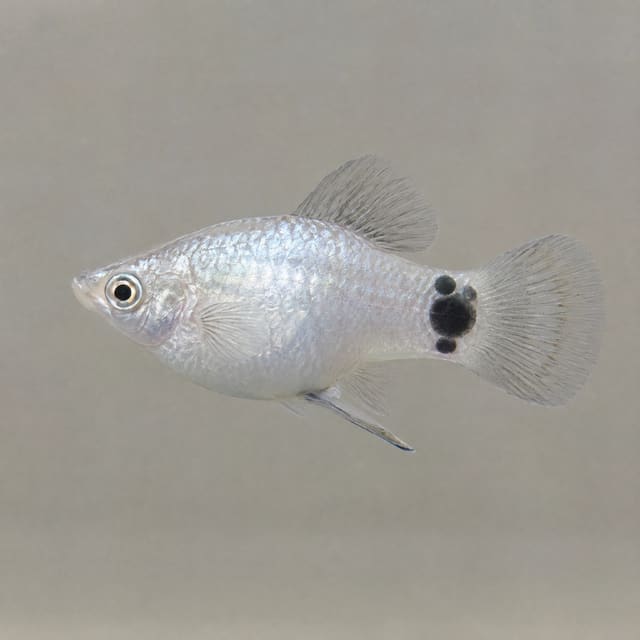
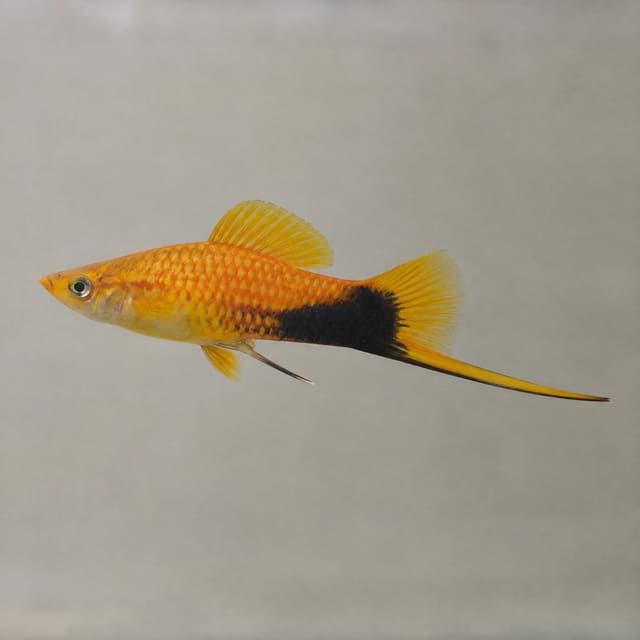
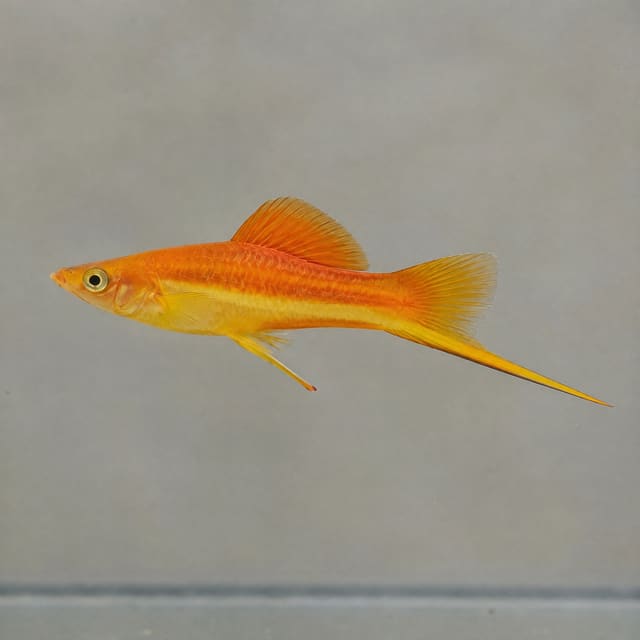
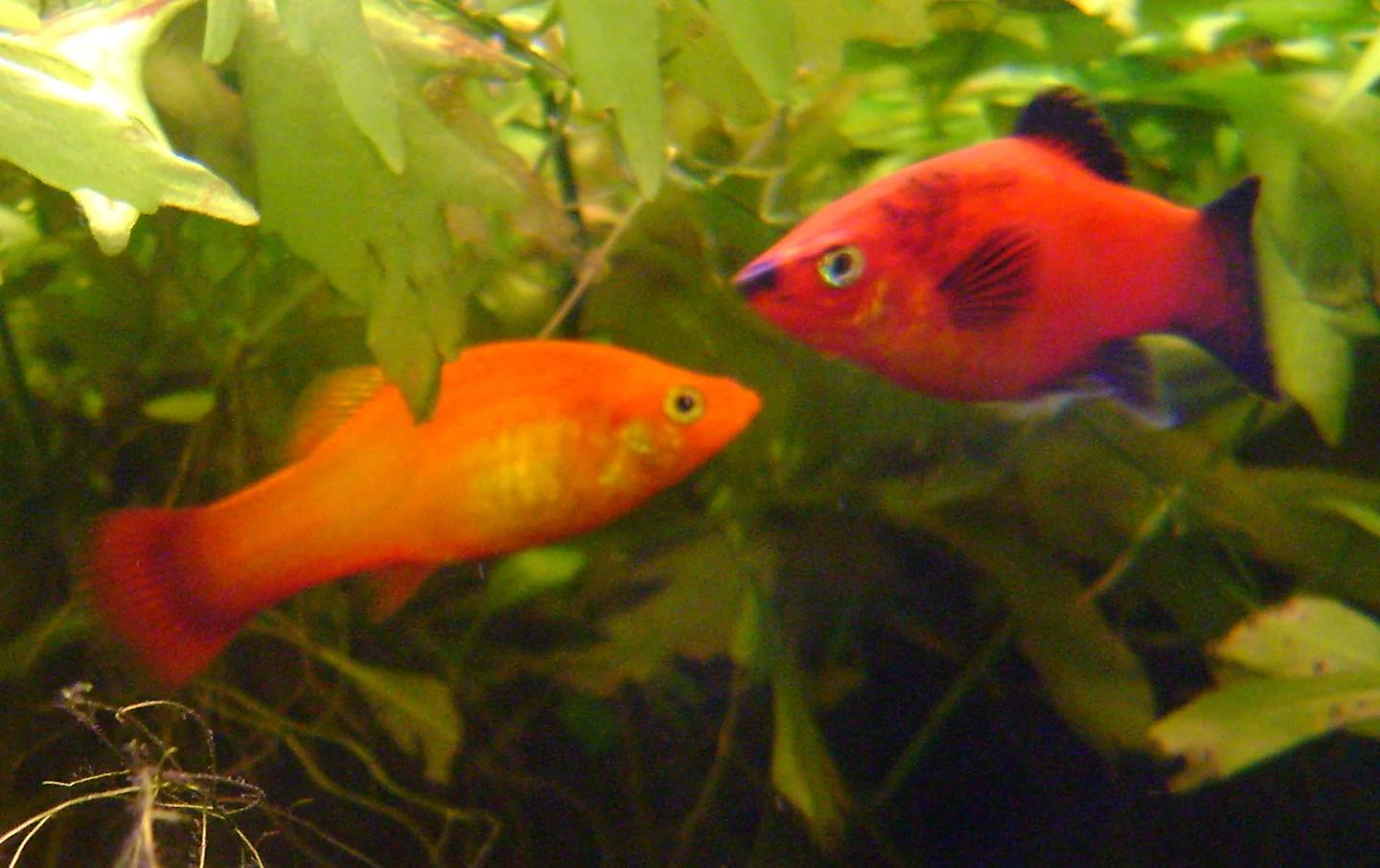
The Neon Sunset Platy is an aquarium-bred colour form of the variatus platy, Xiphophorus variatus, a small, peaceful livebearer from Mexico. Our photographs show the sunset pattern that gives it its name: a golden yellow head and front body that warms to deep orange and then orange-red towards the tail. Over that colour the scales carry a pale, iridescent sheen, which is what the trade means by "neon", and the fins are clear with a blue tint and fine yellow rays. A small red patch marks the gill cover.
The variatus platy is a good choice for a UK fishkeeper. It is hardy, easy to feed and happy in the moderately hard to hard tap water found in many areas, and it tolerates cooler indoor water than most tropical community fish. OATA even lists it among the fish suitable for an unheated indoor aquarium.
| Name | What it means |
|---|---|
| Neon Sunset Platy | The shop name for this iridescent sunset colour form |
| Xiphophorus variatus | The scientific name; Seriously Fish traces it to the Latin varius, variegated |
| Variatus platy, variable platy | Everyday names for the species, used to tell it apart from the common platy |
| Platy, platyfish | General names that also cover the common platy, X. maculatus |
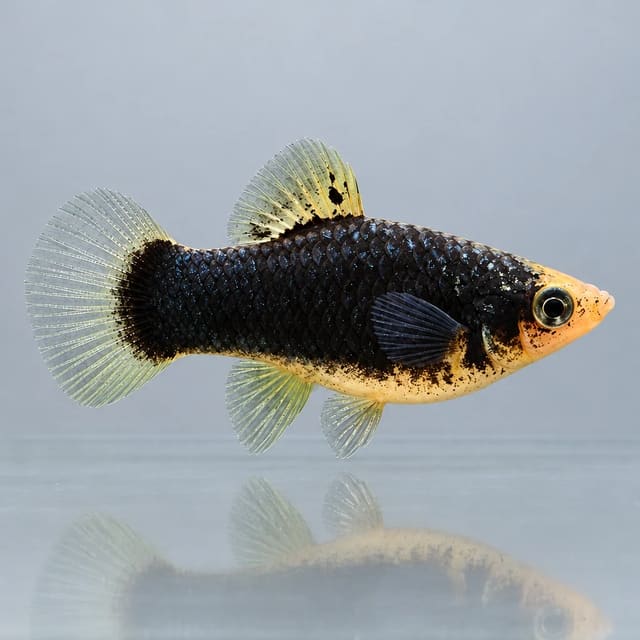
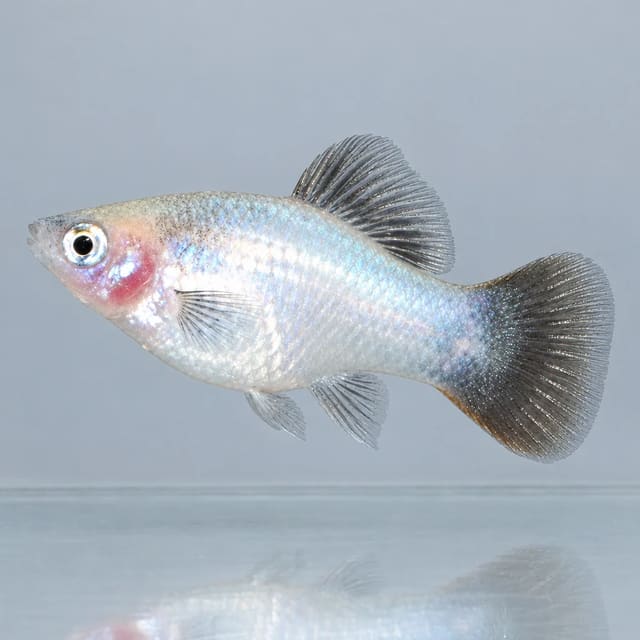
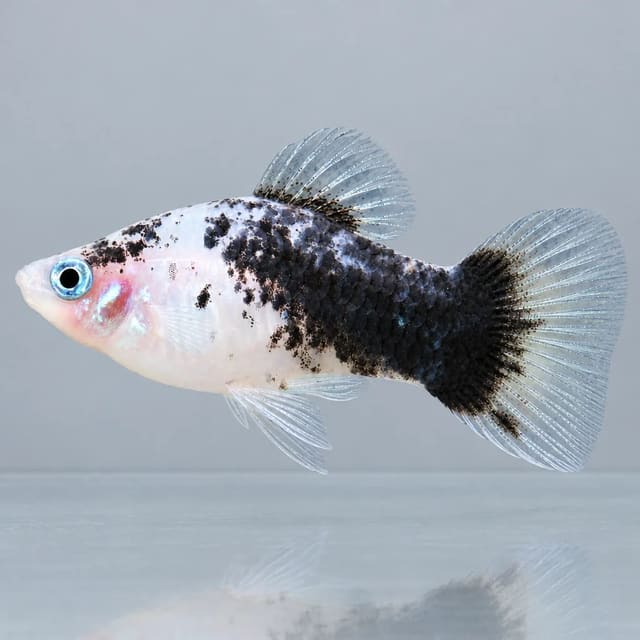
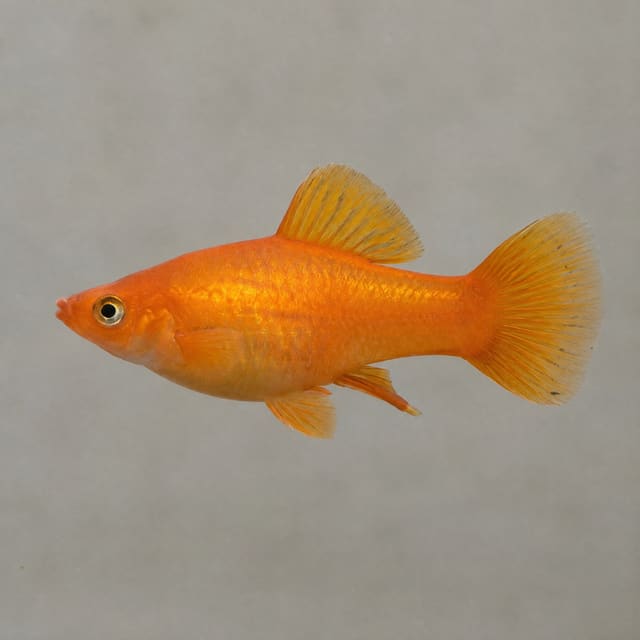
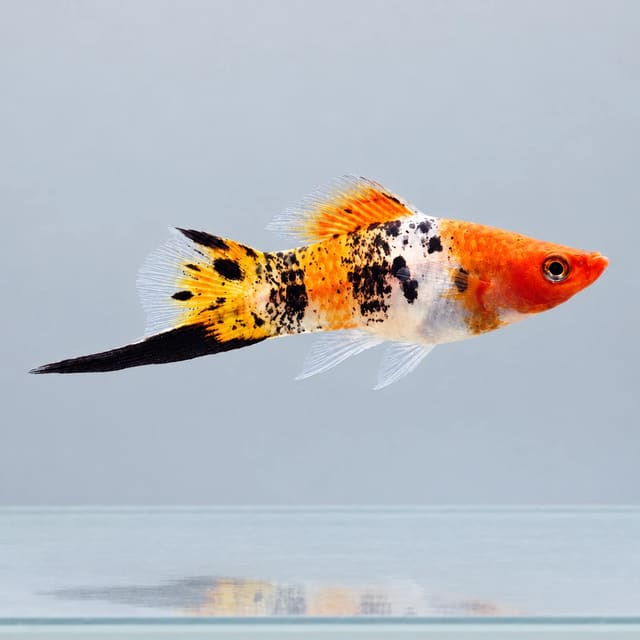
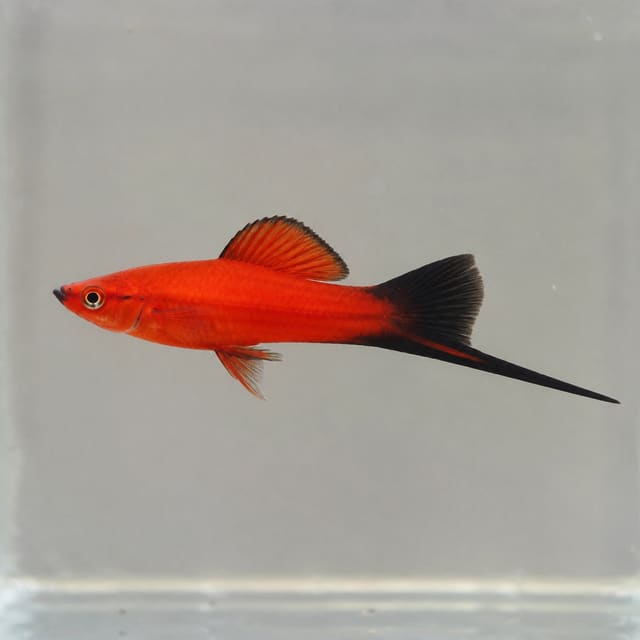
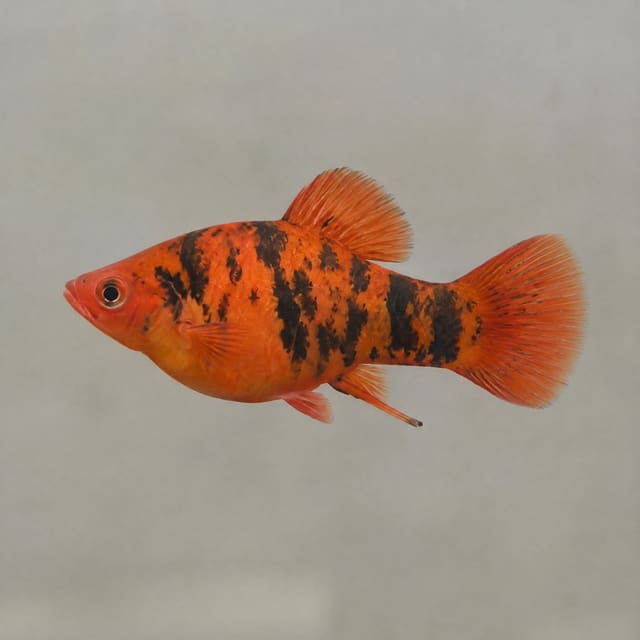
Seriously Fish notes that wild variatus platies are slimmer than the common platy, with a slightly longer dorsal fin, and that some commercial varieties were produced by crossing with swordtails or common platies. Our Sunset Variatus Platy shows the same yellow-to-red sunset body, but with yellow and orange-red fins; the Neon Sunset has the stronger sheen and blue-tinted fins. For a different look, compare the tall-finned Sunset Simpson Variatus Platy, the Orange Gold Variatus Platy and the multicoloured Hawaii Variatus Platy. All share the same care and will interbreed.
One purchase supplies one live Neon Sunset Platy of medium size, a young fish that has not finished growing. Sex is not chosen or guaranteed. Males are smaller and have a pointed, rod-like anal fin called the gonopodium; females are larger and rounder with a fan-shaped anal fin. Colour and sheen differ slightly from fish to fish and are often paler for a few days after the journey.
Read our delivery and Live Arrival Guarantee information before you order and have the aquarium filtered and matured before the fish arrive.
OATA gives adult platies as 6–8 cm, and its unheated-aquarium guidance gives the same 6–8 cm for the variatus platy. Seriously Fish gives a maximum of 50 mm standard length, which is measured without the tail, and FishBase records 7.0 cm total length. Males stay smaller than females.
OATA asks for at least 45 litres for a small group of platies. Seriously Fish recommends a base of 60 × 30 cm, about 54 litres, and FishBase also gives a minimum aquarium length of 60 cm. Larger tanks give more stable temperature and water quality, as OATA points out, and they cope better with the fry that a mixed group will produce.
Seriously Fish describes the natural habitat as shallow, heavily vegetated streams, ponds, swamps, canals and ditches, often where algae and phytoplankton are abundant. FishBase adds warm springs, weedy canals and ditches. Plenty of plants therefore suit this fish well, and the algae that grow on them become part of its grazing.
| Area | Purpose |
|---|---|
| Dense planting at the back and sides | Shelter for females and hiding places for fry |
| Open water at the front | Swimming space and a clear view of the colour |
| Floating plants | Soft light and cover for newborn fry near the surface |
| Fine gravel or sand | Easy cleaning around roots |
Leave a little algae on rocks and the back glass. Platies pick at it all day, and it is a natural supplement to the food you give.
The variatus platy needs alkaline, mineral-rich water, and it copes with a wider temperature range than many tropical fish. The sources agree on pH but differ on temperature and hardness, so here they are side by side.
| Value | OATA | FishBase | Seriously Fish | Our recommendation |
|---|---|---|---|---|
| Temperature | 17–27°C | 15–25°C | 20–26°C | 20–25°C, where all three overlap |
| pH | 7.0–8.0 | 7.0–8.0 | 7.0–8.2 | 7.0–8.0 |
| General hardness | 4–12°dH (platies) | 9–19 dH | 14–30 dGH | moderately hard to hard; 14–19 fits both species sources |
| Ammonia / nitrite | 0 mg/l | — | — | 0 mg/l |
| Nitrate | no more than 20 mg/l above tap water | — | — | as OATA |
OATA's unheated-aquarium guidance says fish like this must only be kept in indoor aquaria. In a room that stays warm, the fish may manage without a heater; in a cold room or a house that cools sharply at night, a heater set at about 22°C keeps the water inside every source's range. Test your tap water first, compare it in our water matcher and read our water chemistry guide. Soft, acidic water does not suit this species.
Seriously Fish suggests a filter turning the water over four to five times an hour, about 215–270 litres per hour for a 54-litre tank, and a heater of roughly 50 W for a room near 20°C. Platies are small, but a breeding group grows fast, and the filter has to keep pace.
Seriously Fish describes the variatus platy as omnivorous, eating small bottom-living animals and detritus in the wild, and FishBase lists worms, crustaceans, insects and plant matter. In the aquarium it accepts frozen, live and dried foods. OATA recommends a quality flake or granule with a high algae content, fed once a day in an amount eaten within a few minutes, with occasional live or frozen foods.
Check before arrival that the filter is mature, ammonia and nitrite are zero and the water is at pH 7.0–8.0 and a steady temperature. Use OATA's floating-bag method: float the sealed bag for 10 minutes, add small amounts of tank water over up to 20 minutes, and release the fish without adding the bag water to your aquarium. Our guide on how to acclimatise new fish shows each stage.
| Checkpoint | What to do |
|---|---|
| Arrival day | Lights off for a few hours, no food |
| Day 2 | Offer a small meal and check every fish feeds |
| Days 3–7 | Watch for clamped fins, shimmying or a male chasing one female constantly |
| End of week | Test the water and make the first 25% change |
Seriously Fish describes the variatus platy as peaceful and hardy and a good community fish, but warns that males can be relentless in their attention to females. OATA recommends at least three fish, with two females to each male. More females spread the attention, and plants give a female somewhere to rest.
| Suits | Avoid |
|---|---|
| Other platies and variatus forms | Soft, acidic-water specialists |
| Swordtails such as the Green Swordtail in a larger tank | Large predatory fish that can eat platies or their fry |
| A hardy bottom-dweller such as the Bristlenose Pleco | Fast, boisterous fish that take all the food first |
| Peaceful hard-water community fish of similar size | A group with more males than females |
Check any mix with our tank mates tool. Browse all platy fish and livebearers, the platy category and our Xiphophorus variatus platies. Our variatus platy guide and platy care guide cover the group in more depth.
Platies give birth to live young after internal fertilisation. Seriously Fish gives a gestation of around 4–7 weeks and says broods of over 100 fry are not uncommon; FishBase gives 24 days and up to 100 young, and OATA gives 24–30 days and 20–80 fry for platies and swordtails. The sources differ, but all agree that a healthy female can produce a large brood regularly.
If you want to keep a line looking the same, breed only within one colour form. Seriously Fish also asks keepers not to cross wild-type variatus with domestic forms.
OATA's warning signs for platies are clamped fins, flicking against objects, shimmying, hanging at the surface or sitting on the bottom, colour change, white spots or fluffy growths, lost fins or scales, a changed breathing rate and reduced appetite.
| If you see | Do this |
|---|---|
| Shimmying or clamped fins | Test pH and hardness first; soft or unstable water is a common cause in livebearers |
| A female hiding and chased | Add females or plants, or move a male |
| Fish sluggish in a cold room | Check the temperature; add a heater set at about 22°C |
| White spots or fluffy growths | Test the water and get fish-health advice before treating |
| Gasping at the surface | Test ammonia and nitrite at once and increase aeration |
FishBase lists the variatus platy as a potential pest where it has been introduced, and Seriously Fish records feral populations in several countries. Unwanted fish should go back to a shop or another keeper, never into a pond or river.
It is an aquarium-bred colour form of the variatus platy, Xiphophorus variatus, a small livebearer from the Atlantic slope of Mexico. Our photographs show the sunset pattern, golden yellow at the front shading to orange-red towards the tail, with an iridescent sheen on the scales and clear, blue-tinted fins with yellow rays. "Neon" is a trade name for that shine.
Both are sunset forms of the same species with the same care. On our photographs the Neon Sunset has a stronger iridescent sheen and blue-tinted fins, while our Sunset Variatus Platy has yellow and orange-red fins. If you want the two to look alike in one group, keep one form.
OATA gives variatus platies 6–8 cm. Seriously Fish gives a maximum of 50 mm standard length, measured without the tail, and FishBase records 7.0 cm total length. Males stay smaller than females.
It is one of the few tropical community fish that tolerates cooler indoor water. OATA lists the variatus platy among fish for unheated indoor aquariums and gives 17–27°C, and FishBase gives 15–25°C. It must stay indoors, and a heater set at about 22°C keeps conditions steady in a cold room.
OATA asks for at least 45 litres for a small group of platies. Seriously Fish recommends a base of 60 × 30 cm, about 54 litres, and FishBase gives a minimum aquarium length of 60 cm.
Hard, alkaline water. Keep it at pH 7.0–8.0, where all three sources agree, and in moderately hard to hard water: Seriously Fish gives 14–30 dGH, FishBase 9–19 and OATA a softer 4–12°dH for platies in general. Zero ammonia and nitrite, and nitrate no more than 20 mg/l above tap water.
At least three, with two females to every male, as OATA advises. Seriously Fish warns that males can be relentless in their attention, so more females spreads the pressure.
Almost certainly, if both sexes are present. Seriously Fish gives a gestation of around 4–7 weeks and says broods of over 100 fry are not uncommon; dense plants help some fry survive.
One live fish of medium size. Sex is not chosen or guaranteed, and colour varies a little from fish to fish.
No reviews for this item yet. Bought one? Honest reviews only, good or bad.
What customers say about ordering from us
Easy website plenty of info on fish your buying great to pick a time slot
TRACEY DURRANT · 7 Oct 2026
Got some lovely fish thank you
Kevin Mackie · 7 Oct 2026
Reviews of our shop, collected by Judge.me, an independent third-party review collector. Newest first.
Moved by UK carriers licensed to handle live animals
Hand-packed with oxygen bags, poly box, heat pack
Email photos the same day; an optional unboxing video helps us review problems faster — claim terms apply
Klarna & PayPal Pay in 3 at checkout