Easy
Platy Red (Xiphophorus maculatus red)
20–25°C · pH 7–8 · 54L
£4.99
The Apple Platy (Xiphophorus maculatus) is a peaceful freshwater livebearer from Veracruz in Mexico to northern Belize that reaches 4 cm. It suits beginners who can keep at least three platies; the FishBase, Seriously Fish and OATA overlap is 20–25°C, pH 7.0–8.0 and 10–12 dGH. Sold individually at a 3–4 cm dispatch size.
Adult size is the maximum length this species reaches at full maturity (scientific sources). The livestock you receive will be younger and smaller. Product-photo provenance and any image-specific limitations are stated on the listing.
Xiphophorus maculatus
Shoaling fish: kept in a group they feel safer, stay calmer and show their best colour.
Minimum of 2 per order.
The Apple Platy (Xiphophorus maculatus) is a peaceful freshwater livebearer from Veracruz in Mexico to northern Belize that reaches 4 cm. It suits beginners who can keep at least three platies; the FishBase, Seriously Fish and OATA overlap is 20–25°C, pH 7.0–8.0 and 10–12 dGH. Sold individually at a 3–4 cm dispatch size.
Adult size is the maximum length this species reaches at full maturity (scientific sources). The livestock you receive will be younger and smaller. Product-photo provenance and any image-specific limitations are stated on the listing.
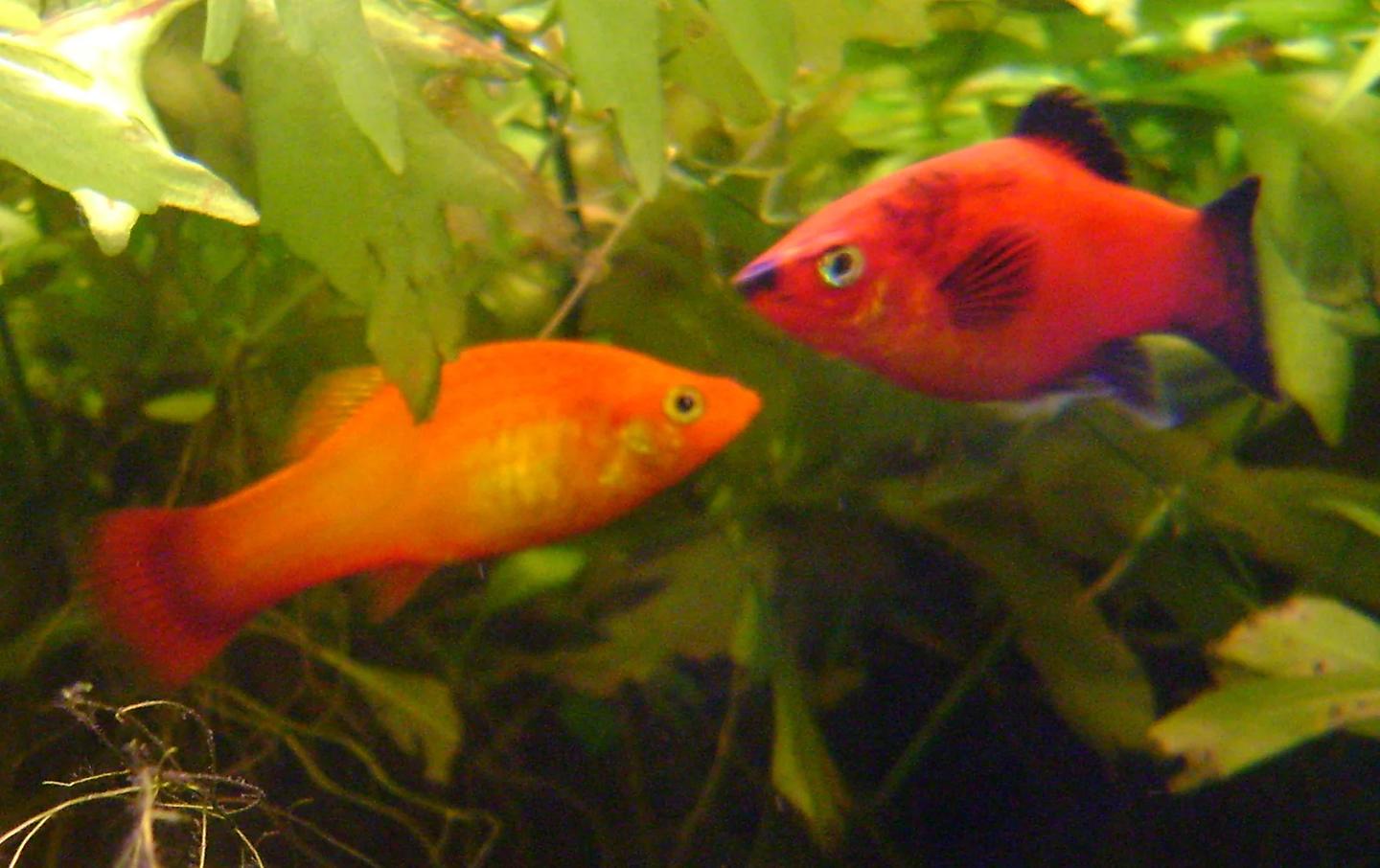
Platy is a trade name used for Xiphophorus maculatus, X. variatus and domestic forms. Start with at least three in a mature aquarium of at least 45 litres, verify the exact fish and measured water, and plan extra capacity before mixing sexes.
Maintain these water conditions for optimal health and vibrant colors
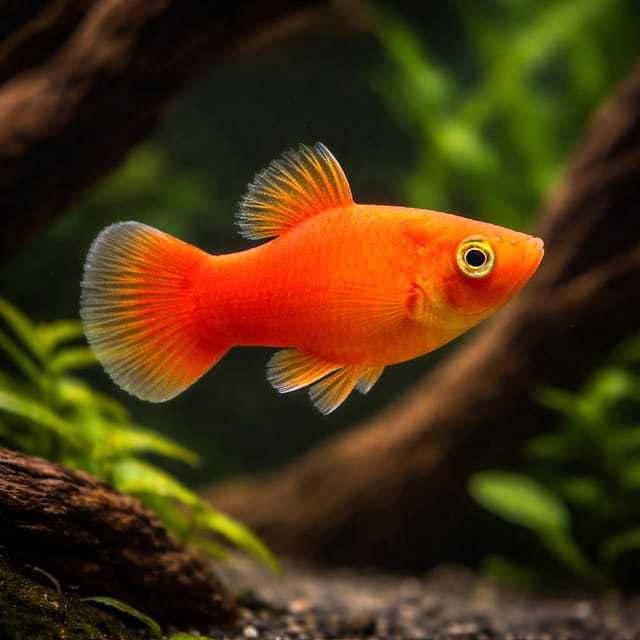
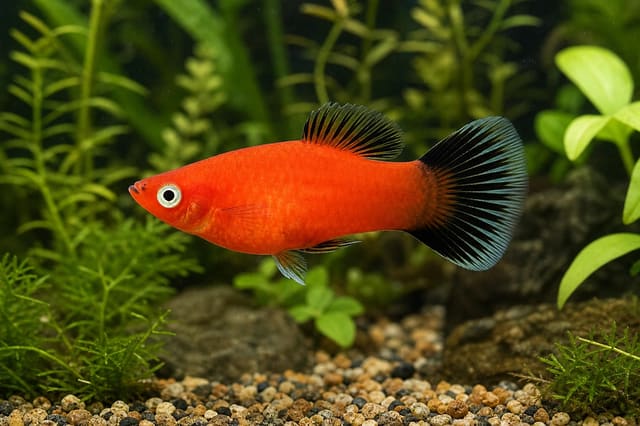
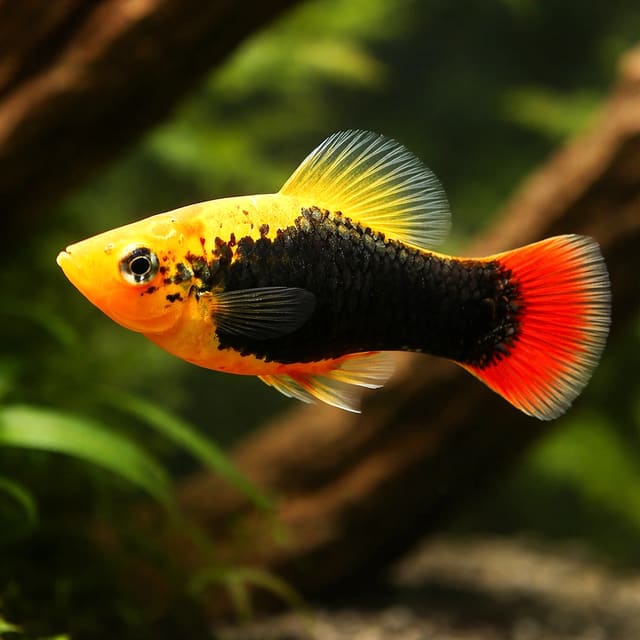
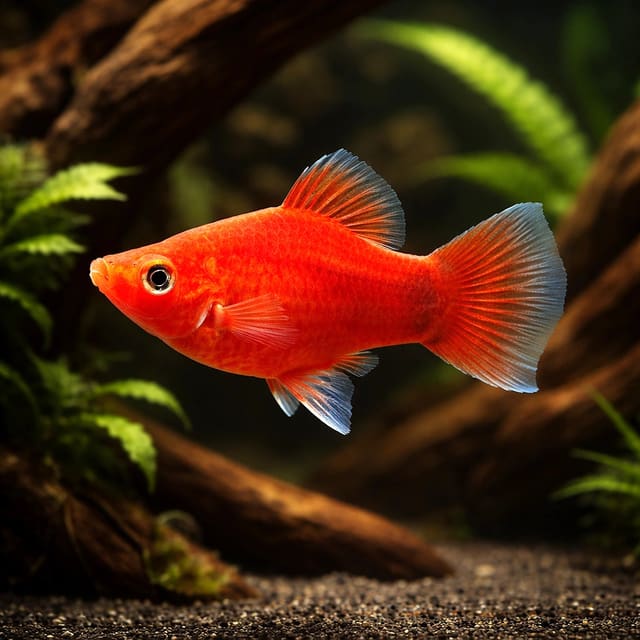
The Apple Platy is an aquarium colour form offered under Xiphophorus maculatus, a freshwater livebearer in the family Poeciliidae from Veracruz in Mexico to northern Belize that reaches 4 cm. Its compact body, warm red-orange colouring and broad fan-shaped tail make it easy to recognise among platy varieties. The Apple name describes the trade colour form; the scientific identity remains Xiphophorus maculatus.
This is a practical choice for a beginner who can provide moderately hard, neutral-to-alkaline water, a mature biological filter and room for a small platy group. We rate its care level as easy because it accepts several established aquarium food types, has peaceful behaviour and does not demand an elaborate layout. Easy does not mean maintenance-free: stable chemistry, measured feeding and weekly care remain essential.
FishBase describes Xiphophorus maculatus as a freshwater poeciliid from North and Central America, with the natural range extending from Veracruz in Mexico to northern Belize. That describes the species in nature rather than the origin of an individual aquarium fish. Wild adults occur in warm springs, canals, ditches, creeks and swamps, including slow-moving places with silt and weedy banks.
The natural diet includes worms, crustaceans, insects and plant matter. This mixed feeding biology supports an aquarium routine based on a quality food with algae content, supplemented with suitably small live or frozen items. Feeding quantity and frequency are covered separately so that variety is not confused with portion size.
| Suits | Not suited to |
|---|---|
| A mature freshwater aquarium with a working biological filter | A new aquarium whose filter has not matured |
| Moderately hard, neutral-to-alkaline water | A soft, acidic setup |
| A peaceful community planned around a small platy group | A community whose water or temperament does not match |
One purchase supplies one Apple Platy. The dispatch grade is 3–4 cm, which describes the size prepared for dispatch rather than a promised adult measurement. Do not use the dispatch grade to decide the aquarium’s long-term capacity.
Sex is guaranteed only when the selected option explicitly states male or female. This Apple Platy listing has no sex-guaranteed option.
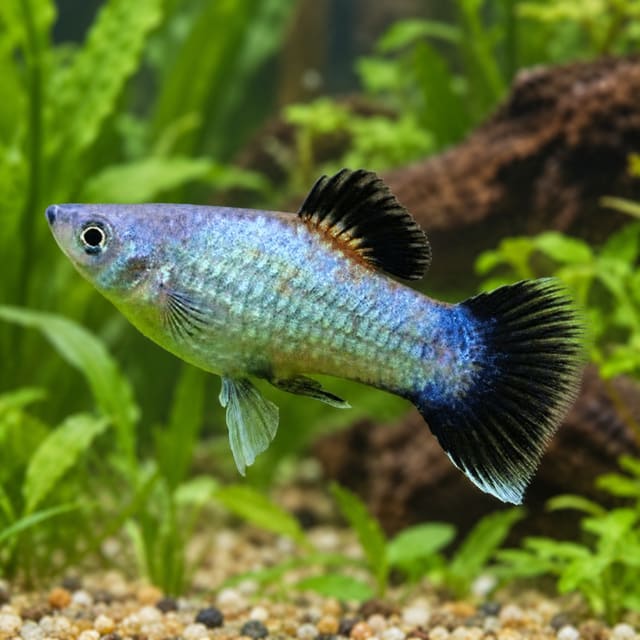
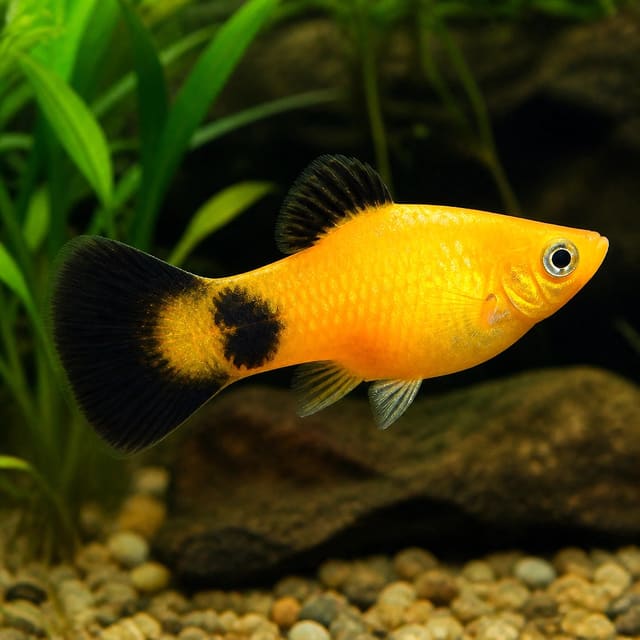
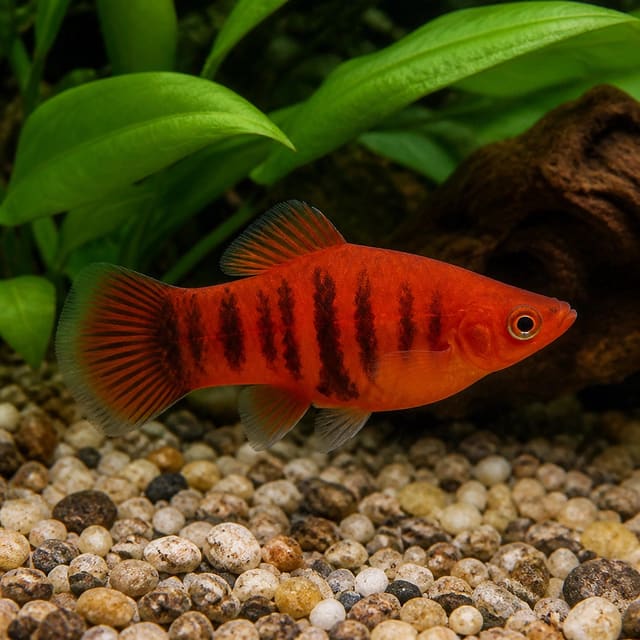
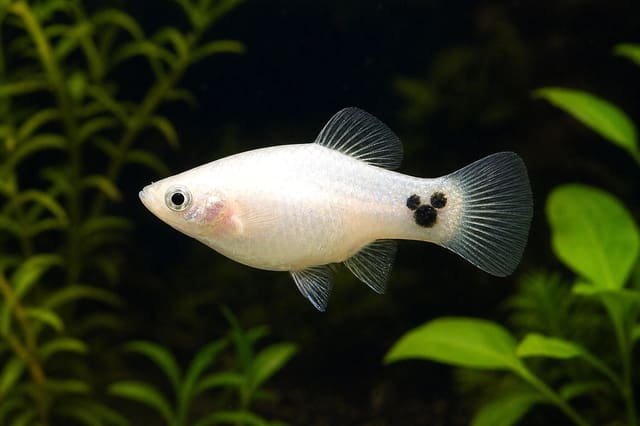
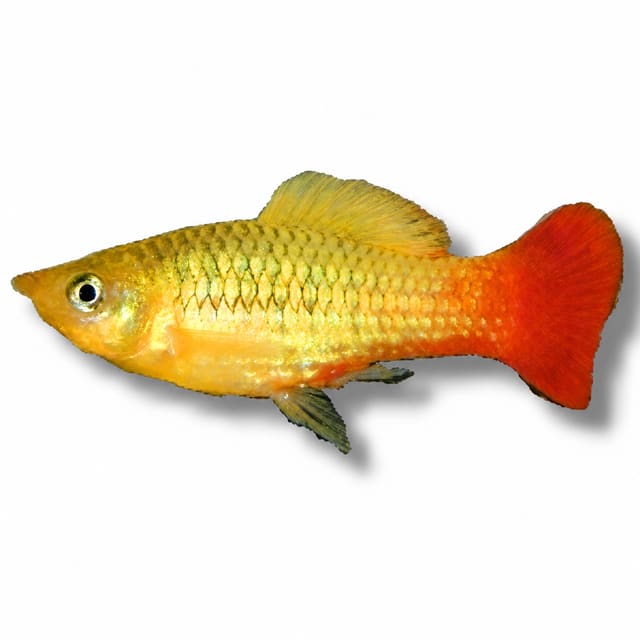
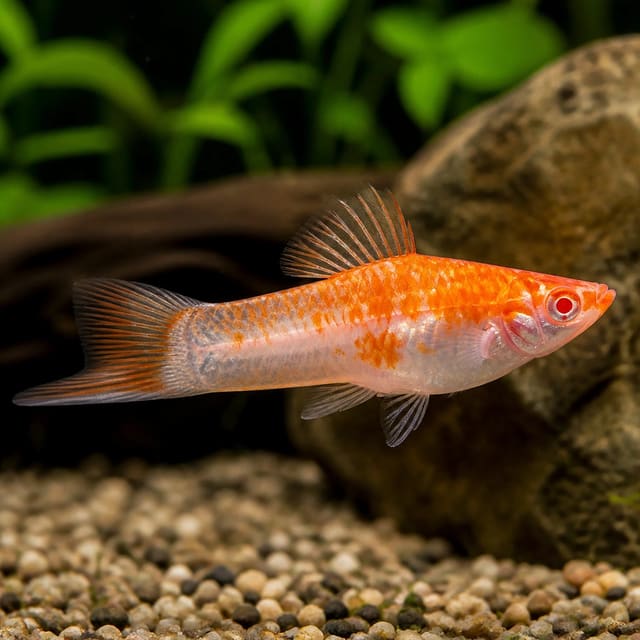
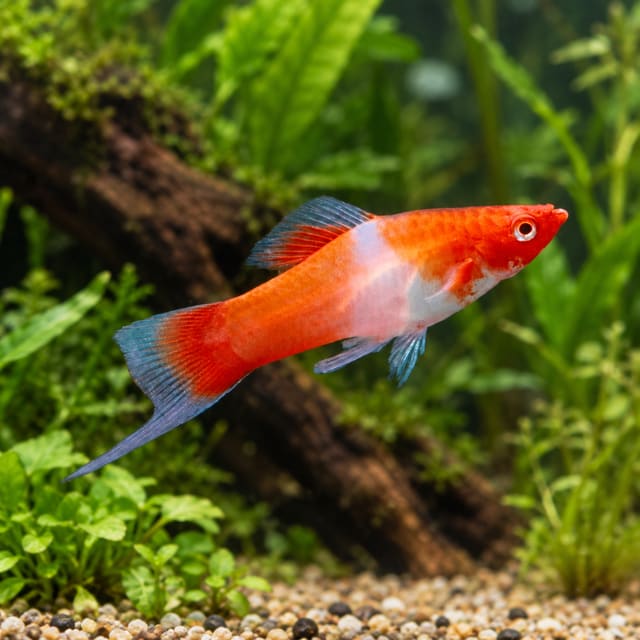
The gallery images are representative of this type of animal rather than photographs of the exact animal supplied, so colours can look slightly different from the live animal.
FishBase records a maximum of 4.0 cm total length for male or unsexed fish. Seriously Fish records 5.0 cm standard length. Plan the aquarium around the recorded 4.0 cm adult size and the species-level aquarium footprint rather than expecting every fish to finish at one exact measurement.
| Decision | Working figure |
|---|---|
| Dispatch grade | 3–4 cm |
| Recorded adult size | 4.0 cm |
| Aquarium base | At least 60 × 30 cm |
| Approximate volume | About 54 litres |
| Routine temperature | 20–25°C |
| Routine pH | 7.0–8.0 |
| Routine hardness | 10–12 dGH |
| Social plan | At least three platies |
The aquarium recommendation of a 60 × 30 cm base and about 54 litres comes from species-level husbandry. OATA’s platy and swordtail guidance recommends at least three platies and gives the group’s sex-ratio planning rule. Its water figures are combined with the species aquarium requirements below rather than used to extend them.
Plan the full community within that footprint, not merely the platies. Plants, ornaments, substrate and filter equipment occupy physical space, while every additional fish adds waste. A larger aquarium gives more room for shelter and open swimming and generally changes more slowly when temperature or water chemistry begins to drift.
If you are comparing colour forms before choosing, browse the current platy fish collection. Treat colour as the visual choice; use adult measurements, water overlap and group requirements for the practical decision.
Start with an aquarium whose base measures at least 60 × 30 cm and whose working volume is about 54 litres. Check the base measurement as well as the advertised volume: a tall aquarium may hold a similar amount of water while giving less horizontal room for a group to move between planted cover and open water.
Use live plants where practical because this species appreciates a planted setup. Arrange them so that cover does not fill the whole footprint. A simple layout places denser planting and suitable ornaments towards the back and sides, while leaving a clear route across the front or centre.
| Zone | Purpose |
|---|---|
| Planted or sheltered area | Gives fish a place to move out of direct attention and reduces an exposed feel. |
| Open swimming area | Lets the group move freely and allows every fish to reach food without crowding. |
| Accessible substrate | Makes weekly removal of settled waste practical. |
| Clear filter flow path | Moves water through the aquarium without obstructed areas behind dense décor. |
Aquarium gravel or sand is suitable. If live plants are not part of the plan, use aquarium-safe artificial plants and ornaments to provide shelter. Keep every decoration stable and retain enough access to siphon waste from the substrate during maintenance.
For a tank of about 54 litres, the husbandry calculation uses turnover of four to five times the aquarium volume each hour. That gives a filter rating of roughly 215–270 litres per hour. The rating is a starting point: position the outlet so water circulates through the aquarium without pinning fish in one place or leaving obvious stagnant areas behind dense décor.
A heater of roughly 50 W is the planning example for this volume when the room is around 20°C. Measure the aquarium itself with a thermometer rather than assuming the heater setting equals the water temperature. Room temperature, cover, placement and equipment can all affect the result.
Prepare and mature the system before livestock arrives. Our first tropical aquarium guide explains the setup sequence. Finish the layout early enough to test access to the filter, heater, substrate and planting before fish make later rearrangement more disruptive.
Use 20–25°C, pH 7.0–8.0 and 10–12 dGH as the routine working range. This is the overlap of the FishBase environmental range, the Seriously Fish aquarium range and OATA’s platy-group guidance. Stability inside the range matters more than repeatedly adjusting water to chase one exact reading.
Seriously Fish recommends 20–26°C, pH 7.0–8.2 and 10–30 dGH for aquarium care. FishBase records the wild environment at 18–25°C, pH 7.0–8.0 and 9–19 dH. OATA’s group guidance gives platies 17–27°C, pH 7.0–8.0 and 4–12 dGH. Their overlap is 20–25°C, pH 7.0–8.0 and 10–12 dGH.
| Test | Action |
|---|---|
| Temperature | Keep at 20–25°C and investigate an unexplained rise or fall. |
| pH | Keep at 7.0–8.0; do not place the fish in acidic water. |
| General hardness | Keep at 10–12 dGH so the water remains moderately hard. |
| Ammonia | Maintain at 0 mg/l. |
| Nitrite | Maintain at 0 mg/l. |
| Nitrate | Keep no more than 20 mg/l above the normal tap-water level. |
Test the source water before choosing livestock. If your tap water is already soft and acidic, repeatedly adding short-lived corrections can create swings. Make a sustainable plan for every inhabitant instead of changing chemistry around one fish while compromising another.
Use our aquarium water chemistry guide to understand what each test measures, then enter measured values in the water matcher. Record results in the same units each time so trends are easy to recognise.
A filter is essential, but water movement alone does not make an aquarium ready. A working biological filter houses beneficial bacteria that process toxic ammonia into nitrite and then into safer nitrate. The RSPCA explains this biological filtration process as the basis of aquarium waste control.
Before adding fish, test for ammonia and nitrite and require both to read 0 mg/l. Also confirm that temperature, pH and hardness have settled within the intended working range. A clear appearance is not a substitute for testing because dissolved waste can be present without making the water visibly dirty.
Add livestock gradually. Each increase in fish numbers and feeding creates more waste, and the bacterial population must expand to process it. Adding too much too quickly can lead to new tank syndrome, with ammonia or nitrite rising faster than the filter can manage.
Do not run biological filter media under the tap. Chlorine or chloramine may kill the beneficial bacterial population established in the media. When cleaning is needed, lightly rinse the media in tank water removed during a partial water change. Check the filter for blockages and restore normal flow without replacing all mature media as a routine action.
If flow falls, inspect the intake and accessible mechanical areas before disturbing biological media. A blocked intake can reduce circulation even while the motor is running. After any necessary filter work, confirm normal flow and test ammonia and nitrite so a loss of biological performance is caught early.
Use the same measured approach when increasing a platy group. Space in the aquarium is only one limit; the filter must also process the resulting waste. A slow stocking sequence gives you time to compare behaviour, appetite and water tests after each change rather than discovering several causes at once.
Feed once a day and offer only what the fish can eat within a few minutes. This time-based limit is more useful than a fixed pinch because food size, fish numbers and appetite vary. Watch the whole group during the meal and stop adding food when interest falls or pieces begin settling out of reach.
Use a good-quality flake or granule with a high algae content as the routine food. Small live or frozen items such as daphnia, small bloodworm or tubifex can add variety. Seriously Fish also describes the species as accepting dried, frozen and live foods, so the practical choice is to rotate suitable small items without turning every meal into a mixture.
| Food decision | How to use it |
|---|---|
| Flake or granule with algae content | Use as the dependable daily base. |
| Small live or frozen food | Use for variety in a portion the group finishes promptly. |
| Large or tough pieces | Choose a smaller form that the fish can take cleanly. |
| Food left after a few minutes | Reduce the next portion and remove accessible remains. |
The species’ wild diet includes worms, crustaceans, insects and plant matter. That natural breadth explains why both animal-derived items and algae-rich prepared food have a place. It does not mean that large amounts of every food should be offered at once.
Spread the portion so more than one fish can feed at the same time. If one individual repeatedly controls the food, distribute the next meal across a wider area while keeping the total amount within the few-minute limit. This changes access without increasing waste.
Overfeeding leaves organic matter to break down and release waste into the water. When uneaten food appears, first reduce the portion; do not rely on the filter to compensate for excess. Check ammonia and nitrite if feeding has increased, food has accumulated or appetite changes across the group.
A single fish refusing one moment of a meal is a prompt to observe, while reduced intake across repeated feeds or across several fish calls for water testing and closer health checks. Keep the feeding schedule consistent enough that a genuine change in appetite is easy to notice.
Carry out a 25% partial water change at least once each week. Treat the replacement water with an aquarium tap-water conditioner before it enters the tank so harmful chlorine or chloramine is removed. Match the replacement water closely enough that the change does not drive an abrupt temperature or chemistry swing.
Testing before the water change shows what developed during the week. Testing after an unusual result or a significant maintenance problem confirms whether further action is needed. Keep results with the date, water-change amount and any change in feeding or stocking; the pattern is often more informative than one isolated number.
| If you notice | Do this |
|---|---|
| Reduced filter flow | Check for blockages and restore circulation without stripping mature media. |
| Waste collecting in one area | Siphon it and review the layout or flow path. |
| Repeated leftover food | Reduce portions rather than increasing maintenance to compensate. |
| Detectable ammonia or nitrite | Pause further stocking, test again and review filter function and recent feeding. |
| Hardness or pH drifting | Compare tank and conditioned replacement water before changing the routine. |
Do not combine a large filter clean, major décor rearrangement and substantial stocking change on the same day unless an immediate welfare need demands it. Separating routine tasks preserves more stability and makes the cause of any later change easier to identify.
Once a month, review the dated results rather than merely completing another water change. A slow trend in nitrate, pH or hardness may show that stocking, feeding or replacement-water chemistry has moved away from the plan even though each individual week looked acceptable.
Prepare the aquarium before the parcel arrives. Confirm that the filter and heater are operating, the temperature is within 20–25°C, and ammonia and nitrite are both 0 mg/l.
These steps come from our delivery and Live Arrival Guarantee policy. Keep the continuous unboxing video and order number. Use them if you need to make a Live Arrival Guarantee claim, and inspect the parcel on the day it arrives.
Floating addresses the initial temperature transition. It does not repair an unsuitable aquarium, so complete the water and filter checks in advance. Never use the arrival of the fish as the point at which a new tank is first tested.
Observe what happens after release rather than reacting to one brief movement. Note whether the fish maintains balance, moves its gill covers, responds to the surroundings and begins using both sheltered and open areas. Record any concern with the time so you can tell whether it is improving or continuing.
| Checkpoint | Decision |
|---|---|
| Before release | Temperature is in range and ammonia and nitrite are zero. |
| Immediately after release | Watch balance, breathing and controlled swimming. |
| Later the same day | Check whether the fish changes position and responds to its surroundings. |
| Following days | Compare appetite, colour and behaviour with the developing normal pattern. |
Do not add several unrelated changes immediately after introduction. Stable equipment, measured feeding and normal maintenance give the fish a consistent environment and make a genuine problem easier to recognise.
Learn the normal pattern for each fish by watching it at the same points in the daily routine. Individual platies can differ slightly, so a change from that individual’s usual swimming, colour, breathing, condition or appetite is more useful than expecting every member of the group to behave identically.
| Change | First action |
|---|---|
| Hanging at the surface | Test temperature, ammonia and nitrite and check filter flow. |
| Sitting on the bottom | Observe balance and breathing, then test the water. |
| Erratic swimming | Check water readings and whether flow or interactions have changed. |
| Darker or paler colour | Compare with the normal pattern and review recent environmental changes. |
| Faster or slower gill movement | Test water quality promptly and inspect filtration. |
| White spots or fluffy growths | Record the appearance and obtain health guidance before choosing a treatment. |
| Fin or scale loss | Check interactions, décor and water quality. |
| Reduced appetite | Check whether the portion or food changed, then test the water. |
Start with water testing because poor water quality can affect several fish and can intensify other problems. Ammonia or nitrite above zero requires immediate attention to the aquarium environment. Also check temperature, recent maintenance, filter flow, feeding and additions to the tank.
Do not choose medication from appearance alone. Different problems can produce similar signs, while unnecessary treatment can distract from a water-quality cause. If a concerning change continues after the immediate environmental checks, contact us for health guidance and provide the water results, timeline and observed signs.
OATA recommends keeping at least three platies together. Its group-planning ratio is two females to each male, intended to reduce persistent male attention towards females and stress on other occupants. Seriously Fish likewise recommends more females than males when both sexes share the aquarium.
Apply that ratio only when the sexes are known. The offer disclosure in the overview governs what is supplied, and colour or dispatch size must not be used as a sex guarantee. If you are planning around known sexes from several fish, calculate the ratio across the complete group rather than one purchase at a time.
| Known-sex plan | How to assess it |
|---|---|
| One male and two females | Meets the suggested minimum group and 2:1 female-to-male ratio. |
| Two males and four females | Keeps the same ratio, but requires more aquarium capacity and filtration. |
| Two males and one female | Does not meet the suggested ratio because attention may concentrate on one female. |
| Sexes not guaranteed | Do not assume a ratio from colour, body size or the gallery. |
More fish are not automatically better. Every addition must fit the 60 × 30 cm base, the usable swimming area, the shelter layout and the biological capacity of the filter. Increase numbers slowly and confirm that ammonia and nitrite remain at zero after feeding and stocking rise.
Use planting and shelter while retaining open swimming space. A fish receiving attention should be able to move into cover. Spread food across more than one point so the whole group can feed during the same short daily meal.
Platies are livebearers, and mixed-sex groups may produce repeated batches of fry. Include that population possibility in space and stocking decisions before combining known males and females. Do not solve rising numbers by letting water quality or crowding deteriorate; the adult group and any young still add to the aquarium’s biological load.
Watch the group after each addition. Persistent pursuit, exclusion from food, hiding or changed breathing calls for a review of the sex ratio, layout, stocking density and water quality rather than simply adding more fish.
Xiphophorus maculatus is described as very peaceful and suitable for many community settings. That does not make every community pairing suitable. Screen each proposed companion for overlapping water conditions, peaceful behaviour, adult space needs and the ability of every fish to feed without sustained disturbance.
| Check | Pass condition |
|---|---|
| Temperature | The companion can live routinely at 20–25°C. |
| pH and hardness | The companion can share pH 7.0–8.0 and 10–12 dGH. |
| Temperament | Its normal behaviour fits a peaceful platy community. |
| Space and feeding | The mature community fits the aquarium and all occupants can reach suitable food. |
Water overlap is decisive. Apple Platies must be maintained in moderately hard or harder water and will not thrive in soft, acidic conditions. A candidate that requires soft, acidic water fails the screen even if its temperament sounds peaceful.
Temperament descriptions are a starting point rather than a guarantee of every interaction. Watch new combinations closely during the first week, especially at feeding time and around the most sheltered areas. Repeated pursuit, persistent hiding or one fish being excluded from food means the combination or layout needs reassessment.
A suitable community is conditional: each species must pass the same water and temperament checks, and the combined stocking level must remain within the filter’s capacity.
For a stocking and compatibility assessment, ask us with the aquarium dimensions, measured temperature, pH and hardness, present inhabitants and intended group size. Those details allow the whole community to be assessed instead of judging one species name in isolation.
The Apple Platy reaches a recorded maximum of 4.0 cm total length; plan its aquarium around that adult size rather than its 3–4 cm dispatch size.
Seriously Fish recommends a base of at least 60 × 30 cm and about 54 litres for Xiphophorus maculatus, with planted cover and open swimming space.
OATA recommends keeping at least three Apple Platies together. For known mixed sexes, use two females to each male and increase aquarium capacity for a larger group.
Yes. Seriously Fish describes this species as one of the best choices for a beginner when pH remains above neutral, while stable water, filtration and weekly maintenance are still essential.
Feed good-quality flake or granules with a high algae content once daily, offering only what it can eat within a few minutes; use small daphnia, bloodworm or tubifex for variety.
The FishBase, Seriously Fish and OATA overlap is 20–25°C, pH 7.0–8.0 and 10–12 dGH; keep ammonia and nitrite at 0 mg/l.
Seriously Fish describes it as very peaceful and says even males tolerate one another. Monitor pursuit, hiding and feeding access whenever the group or community changes.
Keep it with peaceful community fish that share 20–25°C, pH 7.0–8.0 and 10–12 dGH, fit the mature aquarium and allow every occupant to feed without sustained disturbance.
Start filming before opening the sealed parcel, then record one continuous take showing it being opened and the fish still in the sealed bag. Someone must be present to receive it; float the bag for 20–30 minutes and never pour the bag water into the aquarium.
No reviews for this item yet. Bought one? Honest reviews only, good or bad.
What customers say about ordering from us
Easy website plenty of info on fish your buying great to pick a time slot
TRACEY DURRANT · 7 Oct 2026
Got some lovely fish thank you
Kevin Mackie · 7 Oct 2026
Reviews of our shop, collected by Judge.me, an independent third-party review collector. Newest first.