Easy
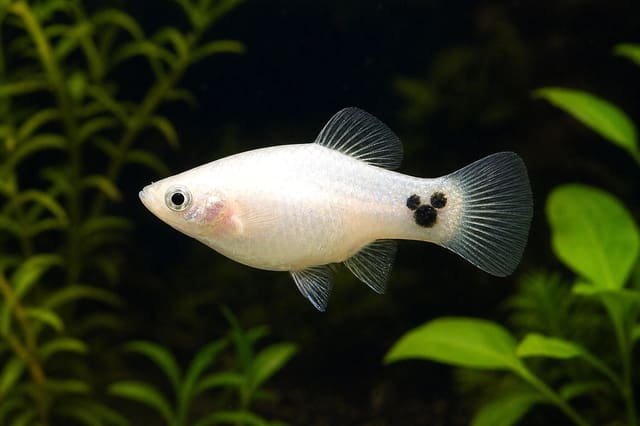
Golden Mickey Mouse Platy (Xiphophorus maculatus)
20–26°C · pH 7–8.2 · 54L
£4.99
The Platy Red (Xiphophorus maculatus red) is a freshwater livebearer from Veracruz, Mexico to northern Belize that reaches 5 cm standard length. It suits keepers who can keep at least three under OATA's group guidance and maintain the FishBase and Seriously Fish overlap of 20–25°C, pH 7.0–8.0 and 10–19 dGH. Sold individually in 3-4 cm and XL dispatch sizes.
Adult size is the maximum length this species reaches at full maturity (scientific sources). The livestock you receive will be younger and smaller — pick a size above for the actual shipping size. Product-photo provenance and any image-specific limitations are stated on the listing.
Xiphophorus maculatus
Shoaling fish: kept in a group they feel safer, stay calmer and show their best colour.
Minimum of 2 per order.
The Platy Red (Xiphophorus maculatus red) is a freshwater livebearer from Veracruz, Mexico to northern Belize that reaches 5 cm standard length. It suits keepers who can keep at least three under OATA's group guidance and maintain the FishBase and Seriously Fish overlap of 20–25°C, pH 7.0–8.0 and 10–19 dGH. Sold individually in 3-4 cm and XL dispatch sizes.
Adult size is the maximum length this species reaches at full maturity (scientific sources). The livestock you receive will be younger and smaller — pick a size above for the actual shipping size. Product-photo provenance and any image-specific limitations are stated on the listing.
Platy is a trade name used for Xiphophorus maculatus, X. variatus and domestic forms. Start with at least three in a mature aquarium of at least 45 litres, verify the exact fish and measured water, and plan extra capacity before mixing sexes.
Maintain these water conditions for optimal health and vibrant colors
Platy Red is a red aquarium variety of Xiphophorus maculatus, a small freshwater livebearer in the family Poeciliidae. It comes from freshwater habitats between Veracruz in Mexico and northern Belize and reaches a recorded maximum of 4 cm total length. It suits a keeper prepared to maintain hard, alkaline water, a mature biological filter, a social group and a planted aquarium with open swimming room.
Keep the aquarium at 20–25°C, pH 7.0–8.0 and 10–19 dGH. These routine values are the overlap of FishBase's recorded environment and the Seriously Fish aquarium profile. OATA's group guidance recommends keeping at least three platies because they require companionship.
| Suits | Not suited to |
|---|---|
| A planted, filtered aquarium with open swimming room | An aquarium without an established biological filter |
| Hard, alkaline water within the stated range | Soft, acidic water |
| A social plan for at least three platies | A plan to keep one platy without companions |
| A peaceful community screened for shared needs | Tank mates that prevent reliable access to food |
FishBase records Xiphophorus maculatus from warm springs, canals, ditches, creeks and swamps, often around slow-moving water, silt and weedy margins. Wild fish eat worms, crustaceans, insects and plant matter. Those details explain why aquarium care should combine plant cover, room to swim and an omnivorous diet rather than relying on one food alone.
FishBase records a maximum of 4.0 cm total length for male or unsexed fish. The Seriously Fish species profile gives 5.0 cm standard length, while OATA's broader platy guidance describes platies as generally reaching 6–8 cm. Use the 4 cm FishBase maximum consistently for this listing, while planning the aquarium around the stated footprint and the needs of the whole group.
This platy suits a keeper prepared to test water, maintain a biological filter and keep the aquarium moderately hard or harder. It is peaceful enough for many community arrangements, but every companion must share its water range and allow it reliable access to food.
One purchase quantity supplies one animal of the selected option. Use the live size selector to choose between the labels 3-4 cm and XL. The live selector shows the size choices for this product.
The size you select is the size supplied, not the adult size. The 3-4 cm label is a bounded dispatch measurement, while XL is a non-numeric dispatch grade. XL should not be read as a promised adult length. Whichever label you choose, plan the aquarium around the adult measurement, social group and 60 × 30 cm footprint described here.
Sex is guaranteed only when the selected option explicitly states male or female. This Platy Red listing has no sex-guaranteed option. Build a flexible social plan so that you can observe the group and adjust its composition if persistent attention develops as the fish settle and mature.
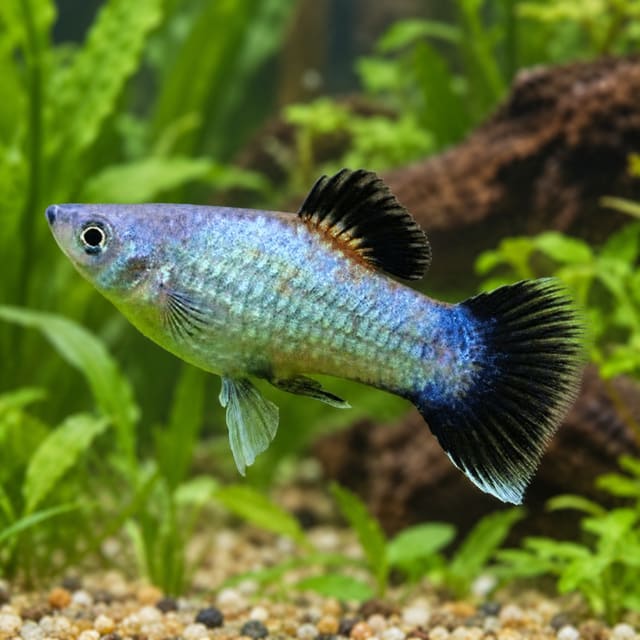
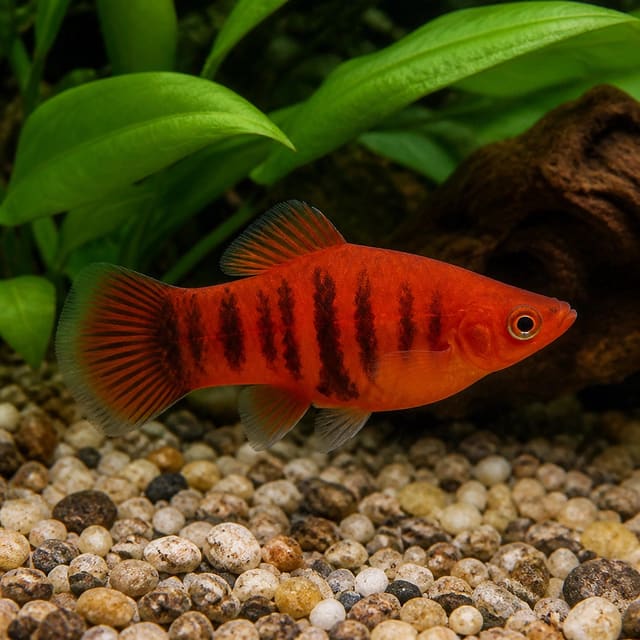
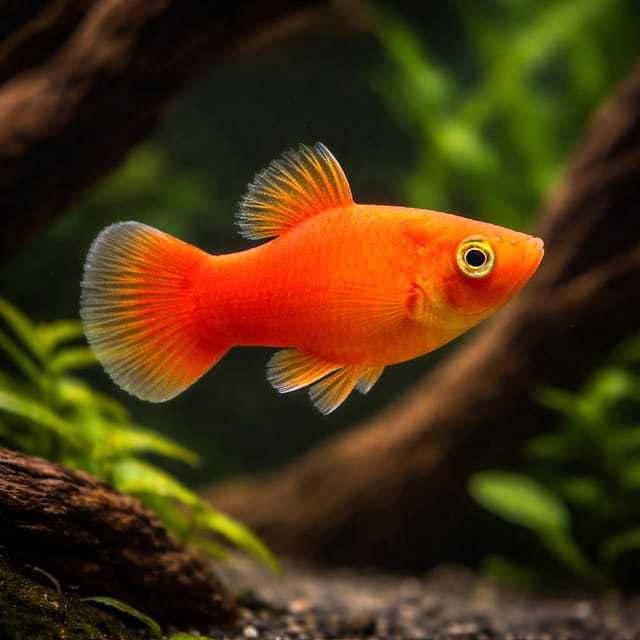
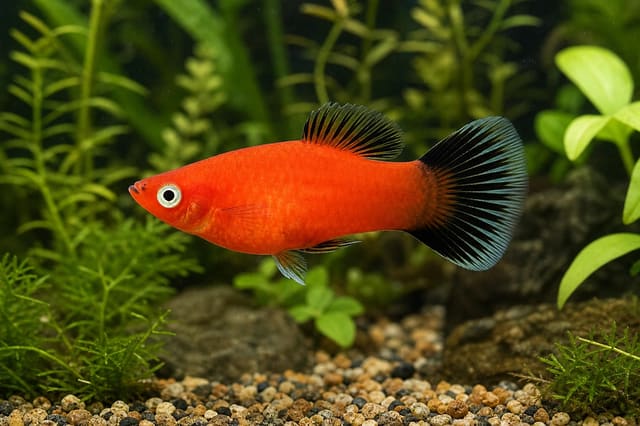
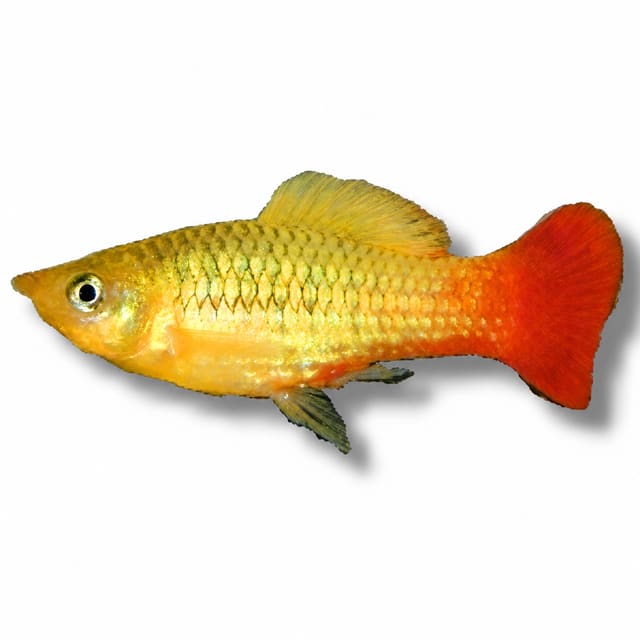
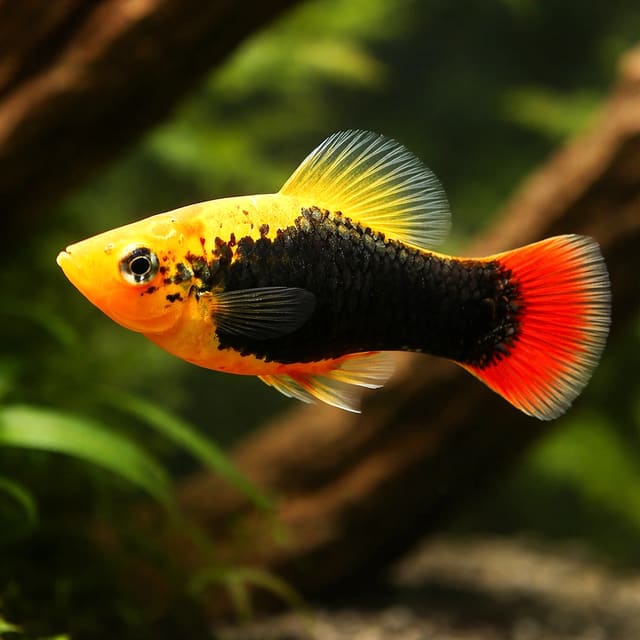
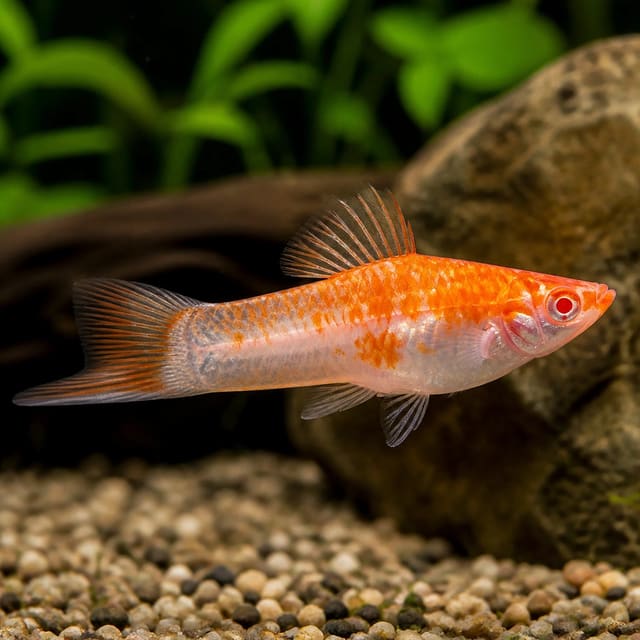
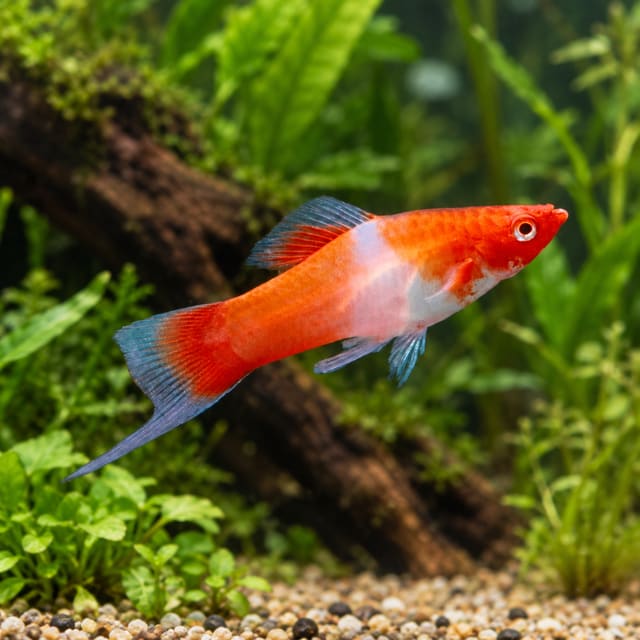
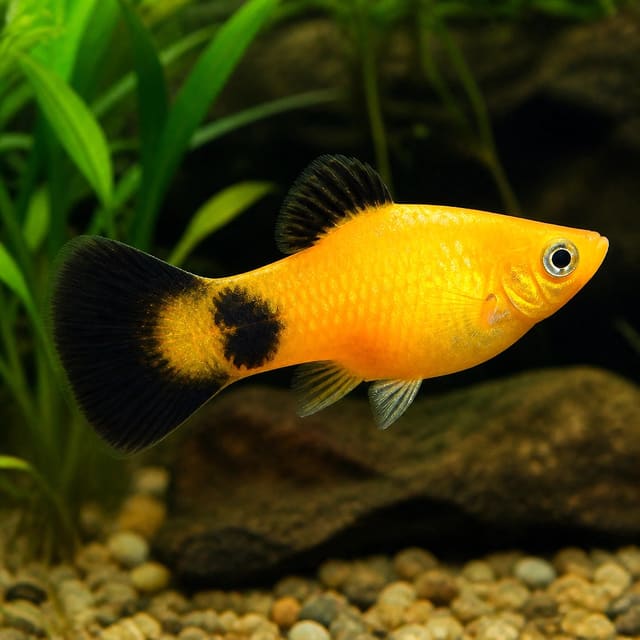
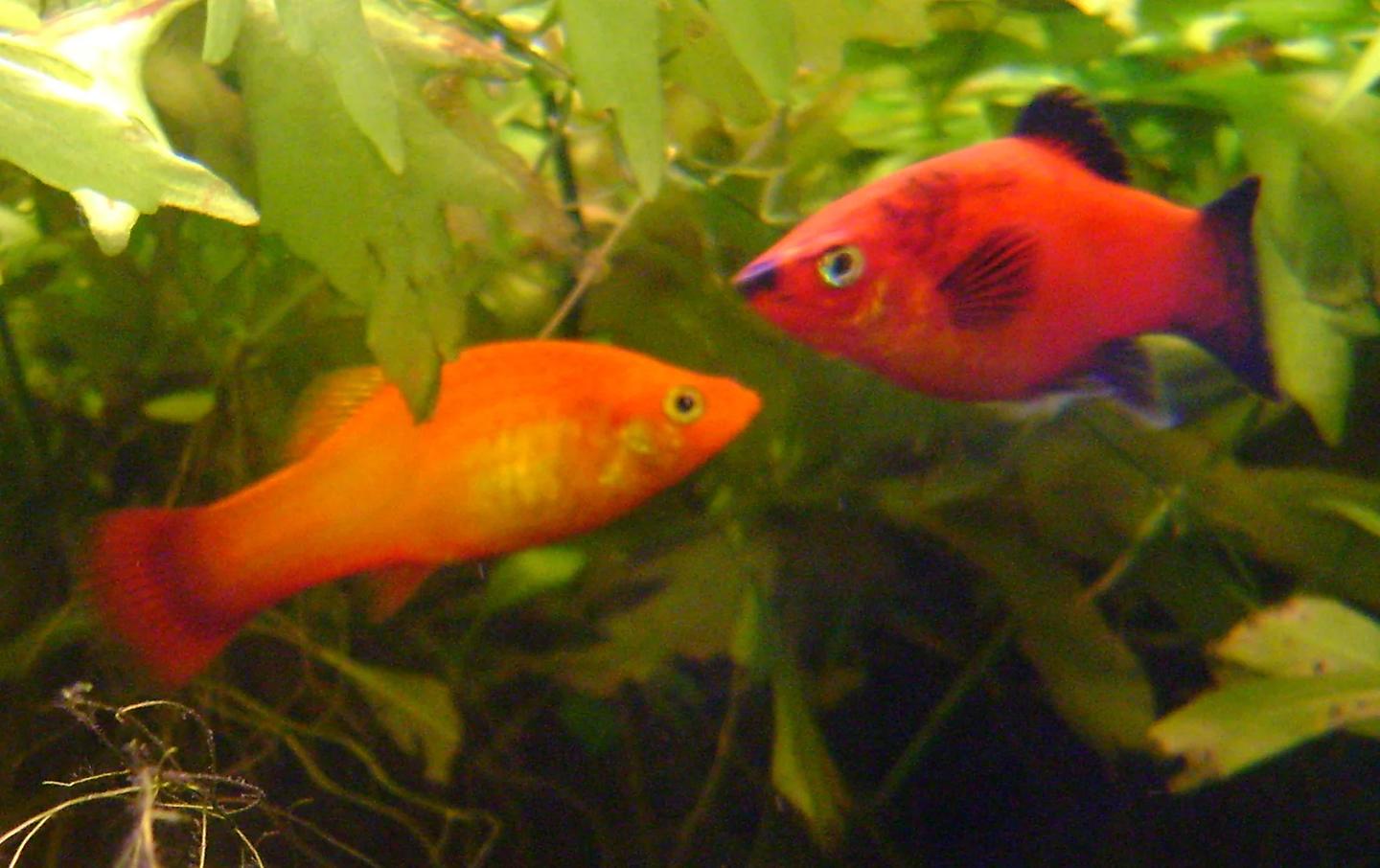
Some gallery images have been digitally enhanced to improve image quality. They show the listed type of animal rather than guaranteeing the exact markings of the individual supplied, so natural colour and pattern can vary. They show representative red platies and aquarium scenes rather than the exact individual supplied; the image showing two fish describes the scene, not the purchase quantity.
Browse the wider platy fish collection when comparing colour varieties. For dispatch days, claim steps and the terms that apply to livestock orders, read our delivery and Live Arrival Guarantee policy before ordering.
Use a base measuring at least 60 × 30 cm for this species. The Seriously Fish profile pairs that footprint with a 30 cm height and an approximate volume of 54 litres. Footprint matters because a platy group needs both planted refuge and unobstructed swimming room; choosing volume without checking length and width can leave the fish with a tall but cramped layout.
OATA's platy and swordtail guidance recommends at least 45 litres for a small platy group. The 60 × 30 cm species-profile footprint is the more useful starting point here because it accounts for horizontal room as well as nominal volume. Increase the aquarium beyond that starting point as the total fish population grows. A larger body of water also changes temperature and water chemistry more slowly, giving the keeper more time to notice and correct a developing problem.
| Zone | Purpose |
|---|---|
| Planted cover | Gives fish refuge and breaks continuous lines of sight. |
| Open water | Allows the group to swim and feed without crowding. |
| Substrate | Use aquarium gravel or sand that can be cleaned with a siphon. |
| Filter area | Keep the intake and outlet clear of plants and ornaments. |
| Observation area | Leave a clear view for checking fins, scales, breathing and body condition. |
Live plants are a strong fit for this species. Seriously Fish notes that platies appreciate a planted aquarium, while OATA recommends plants and shelter for the group. If live planting is unsuitable, use aquarium-safe artificial plants and ornaments to create cover without filling every swimming route.
Arrange decorations securely and leave enough access to siphon debris from the substrate. Dense cover should not prevent routine inspection of the fish or create inaccessible pockets of uneaten food. Before livestock arrives, prepare and mature the complete system rather than treating water-filled glassware as ready; our first tropical aquarium guide sets out that preparation sequence.
When assessing an existing aquarium, count every resident at its adult planning size. The approximately 54-litre example describes one suitable starting footprint, not permission to keep adding fish until all visible space is occupied.
Maintain 20–25°C, pH 7.0–8.0 and 10–19 dGH. These figures are the overlap of FishBase's recorded environment and the Seriously Fish aquarium profile. Seriously Fish also warns that Xiphophorus maculatus will not thrive in soft, acidic water. Test the aquarium you actually intend to use rather than assuming that local tap water falls inside the range.
Use the water chemistry guide to distinguish pH, hardness and nitrogen-waste readings. They are not interchangeable: a suitable pH does not cancel out measurable ammonia, while zero ammonia does not make soft, acidic water suitable for a platy.
For a worked nitrate example, suppose conditioned tap water measures 10 mg per litre nitrate. OATA's threshold places the aquarium ceiling at 30 mg per litre in that case: the 10 mg per litre baseline plus no more than 20 mg per litre. If the tap-water baseline changes, recalculate rather than reusing the old ceiling.
Compare measured results with the care range using our water matcher. A pass should cover the complete set of relevant values, not only temperature. Record test results each week so that gradual movement can be seen before it becomes a sharp change.
Stability matters within the range. Repeatedly moving from one end of the temperature, pH or hardness range to the other creates a different challenge from holding a consistent middle value. Make corrections carefully, using conditioned replacement water that fits the aquarium's established parameters.
A working biological filter is essential. The RSPCA's aquarium welfare guidance explains that fish release toxic ammonia, filter bacteria convert it to nitrite, and further bacteria convert nitrite to the safer nitrate. Water movement alone is not the same as biological filtration; the filter media must support an established bacterial population.
For the approximately 54-litre example aquarium, Seriously Fish suggests turnover of four to five times the tank volume each hour. That gives a filter rating of roughly 215–270 litres per hour. Treat the rating as a starting point: plant growth, debris and blocked media can reduce practical flow, so inspect the outlet and intake rather than relying solely on the number printed on the filter.
OATA warns that stocking too quickly can cause new tank syndrome because the nitrifying bacteria cannot process the sudden increase in waste. A clear aquarium can still have dangerous ammonia or nitrite, so visual clarity never replaces testing.
Seriously Fish estimates that an approximately 54-litre aquarium in a room around 20°C may need roughly a 50 W heater to hold its stated 20–26°C profile range. This is a planning example, not a universal heater choice. The aquarium's actual volume, room temperature and equipment design determine the appropriate unit. Use a separate thermometer to check the result rather than assuming the heater setting equals the water temperature.
Do not run established biological media under the tap. During a partial water change, lightly rinse media in removed aquarium water when cleaning is needed. Preserve the biological colony while clearing enough debris to restore flow.
If flow falls, inspect for blockages before replacing or aggressively cleaning all media. Changing every component at once can remove too much biological capacity just when waste is continuing to enter the system.
OATA's guidance for platies and swordtails recommends keeping at least three because these fish require companionship. Use that as the minimum social plan, then check whether the aquarium can support the full group alongside every other resident. A larger group needs more water volume and filtration capacity rather than simply more fish in the same footprint.
Where known males and females are mixed, OATA advises two females for each male. Seriously Fish gives the same practical reason: male attention can be relentless, and a greater number of females spreads that attention. A three-fish example would therefore be one male with two females. A six-fish example would be two males with four females, provided the larger aquarium and filter can carry the resulting population.
| What you observe | What to do |
|---|---|
| Fish share open water calmly | Continue the routine while checking feeding access and water quality. |
| One fish pursues another repeatedly | Add visual cover, reassess group composition and check available space. |
| A fish hides much more than usual | Test water and inspect interactions at feeding time. |
| One fish misses food consistently | Change food placement and reassess competition. |
| The population increases | Recalculate space, filtration and maintenance needs before retaining more fish. |
Platies are livebearers and give birth to live young. Mixed-sex groups may therefore increase the aquarium population. Do not base a stocking plan only on the number of adults present today; allow for the possibility of fry and decide how additional biological load would be managed.
Planting helps by breaking sight lines and giving fish places to move out of direct attention, but planting does not compensate for a poor sex ratio, insufficient footprint or overloaded filter. Keep open swimming space as well as refuge.
Observe the group as individuals. A peaceful species description does not mean every interaction will be identical, especially after changes to stocking, layout or feeding. Persistent chasing, hiding, damaged fins or reduced feeding calls for a practical adjustment rather than waiting for the fish to adapt to continuing stress.
Feed a good-quality flake or granule with a high algae content as the regular aquarium food. OATA also recommends small live or frozen items such as daphnia, small bloodworm or tubifex. This combination matches the platy's omnivorous biology: wild Xiphophorus maculatus take animal prey as well as plant matter.
Offer only what the fish can eat within a few minutes, once a day. The time limit is part of the portion rule. If food is still falling into plants or lying on the substrate after the fish have stopped feeding, the portion was too large even if it looked small when added.
| Food role | How to use it |
|---|---|
| Regular dried food | Use quality flake or granule with a high algae content. |
| Live or frozen variety | Offer suitably small daphnia, bloodworm or tubifex within the normal portion. |
| Portion check | Stop when the group has consumed what it can eat within a few minutes. |
| Water-quality check | Remove accessible leftovers and reduce the next portion. |
Variety means rotating suitable foods, not serving a full portion of each at the same meal. For example, if the usual daily amount is consumed within a few minutes, replace part of that amount with a small frozen item on a varied-food day. Do not add the frozen food on top of an already complete portion.
Watch how food is distributed through the group. A fish that repeatedly hangs back may need food released in more than one part of the aquarium. This reduces local competition without increasing the overall ration. Check that every fish feeds, then use body condition and weekly water tests to judge whether the routine remains appropriate.
Overfeeding creates two connected problems: the fish receive more food than they need, and uneaten material breaks down into waste. When ammonia, nitrite or nitrate rises, reducing excess input is part of the response, but it does not replace testing, filtration and water changes.
Reduced interest in food is also a health signal. Check water quality first, then look for changes in breathing, swimming, colour, fins, scales and interactions rather than trying to tempt the fish with successively larger portions.
Complete the aquarium checks before the fish is introduced. The filter should be mature and running continuously, temperature should sit within 20–25°C, pH within 7.0–8.0, hardness within 10–19 dGH, and ammonia and nitrite should both read 0 mg per litre. Correct the aquarium first rather than expecting a new fish to tolerate unfinished preparation.
OATA explains that every increase in fish numbers and feeding requires the filter's beneficial bacteria to process more waste. Gradual stocking gives that population time to respond. After introduction, continue testing because a reading of 0 mg per litre ammonia and nitrite before the fish arrives does not remove the need to check how the system handles the new load.
During the first week, make short observations at consistent times. Check whether the new platy swims normally, joins feeding, breathes at its usual rate and uses both cover and open space. Compare behaviour before, during and after feeding because competition can be easier to see when food enters the aquarium.
| First-week sign | Immediate check |
|---|---|
| Hanging at the surface | Test water and inspect breathing and filter flow. |
| Sitting on the bottom | Test water and check for chasing or physical damage. |
| Erratic swimming | Compare temperature and water-test results with the target range. |
| Refusing food | Check water quality, breathing, body condition and competition. |
| Persistent hiding | Review tank-mate behaviour, cover and open routes. |
Keep notes of test results and visible changes. A dated record separates a stable individual habit from a developing pattern and helps show whether a response followed a water change, stocking change or alteration to the aquarium layout.
At least once every week, carry out a partial water change of 25%, following OATA's maintenance guidance. Use a siphon to remove solid waste from accessible substrate and treat replacement tap water with conditioner before it enters the aquarium. Chlorine and chloramine can harm fish and the bacteria living in filter media.
For an approximately 54-litre aquarium, 25% is about 13.5 litres. Calculate the change from the actual operating volume where practical, because substrate, ornaments and the waterline affect how much water the aquarium contains. The worked figure is a planning aid, not a reason to ignore test results or visible waste.
| Task | Reason |
|---|---|
| Test ammonia and nitrite | Both should remain at 0 mg per litre. |
| Compare nitrate with tap water | Keep it within 20 mg per litre above the baseline. |
| Change 25% at least once a week | Removes dissolved waste and creates an opportunity to siphon debris. |
| Check filter flow | Plants, debris or blocked media may reduce turnover. |
| Inspect every fish | Behavioural and physical changes are easier to address early. |
If filter media needs cleaning, rinse it lightly in aquarium water removed during the change. Do not clean every part to a sterile appearance. The aim is to clear obstructing debris while retaining enough beneficial bacteria to continue processing ammonia and nitrite.
Healthy-condition checks should cover clear, bright eyes; intact scales; undamaged fins; normal swimming; steady breathing; expected colour; stable body condition; and interest in food. Warning changes include hanging at the surface, sitting on the bottom, erratic swimming, unusual hiding, faster or slower gill movement, white spots, fluffy growths, ulcers, bumps, missing scales, fin loss or a marked change in weight.
If you see a change, test the water immediately and compare the result with the normal record for the aquarium. Correct measurable husbandry problems carefully and seek qualified aquatic veterinary guidance when abnormal behaviour or appearance continues. Do not begin a treatment solely from a colour change or one missed meal; use the complete pattern of water results, breathing, swimming, feeding and physical condition.
Recheck after maintenance rather than assuming the job is complete. Confirm the filter restarted, the heater remains submerged and operating as designed, the temperature is stable, and no plant or ornament shifted into the intake or blocked a swimming route.
Seriously Fish describes Xiphophorus maculatus as very peaceful and suitable with most community species. That is a starting point, not a universal tank-mate list. Approve a proposed companion only after checking water, adult size, temperament and feeding behaviour together.
| Screen | Passing question |
|---|---|
| Water | Can both fish remain healthy at 20–25°C, pH 7.0–8.0 and 10–19 dGH? |
| Adult size | Will every resident have enough space when fully grown? |
| Temperament | Can the peaceful platy feed and swim without persistent pursuit? |
| Feeding | Can every species receive an appropriate portion without one taking everything? |
Avoid communities requiring soft, acidic water. Splitting the difference between incompatible ranges does not create suitable water for either animal. Choose a community built around one compatible chemistry rather than repeatedly adjusting the aquarium between competing targets.
For adult size, assess the full stocking plan against the 60 × 30 cm starting footprint and increase space when the combined population requires it. A small dispatch fish may still belong to a species with much greater adult needs, so compare mature planning dimensions rather than the measurements on two delivery labels.
Temperament must be judged through behaviour as well as a broad species description. Persistent pursuit, blocked access to food, fin damage or continual hiding means the arrangement needs attention even when both names appear in community-fish categories. More cover may help break sight lines, but it cannot repair incompatible water or chronic crowding.
Feeding compatibility matters because platies take a varied omnivorous diet and should finish their daily portion within a few minutes. Watch at an actual meal before deciding that every resident has equal access. Distribute food across more than one point when one peaceful fish is being excluded, while keeping the total ration controlled.
For a stocking and compatibility assessment, contact us with the aquarium dimensions, measured water values, filter, existing residents and proposed additions. Those details allow a specific decision instead of relying on a generic name list.
Compatibility is an ongoing result, not a one-time label. Adding fish changes waste production, feeding competition and social interactions, while growing fish change the amount of usable space. Repeat the same four-part screen whenever the population, layout or equipment changes.
During the first week after a community change, observe where each fish swims, whether it joins feeding and whether one resident repeatedly controls an area. A platy that stays hidden only while another fish is nearby presents a different clue from one that withdraws while ammonia or nitrite is measurable. Check behaviour and water together.
Use the planted layout actively. Cover can create refuge and interrupt pursuit, while open areas let peaceful fish move and feed without squeezing through decorations. If adding cover removes most swimming room, the aquarium needs a revised layout or greater footprint rather than more objects.
Do not let a successful first day end the assessment. Social pressure may become clearer around repeated meals, and nitrogen-waste readings can change as feeding and waste increase. Keep the weekly testing schedule and compare the fish's breathing, body condition, fins, scales and appetite with its normal pattern.
A community remains suitable when all residents share the established water, have enough adult space, feed reliably and show ordinary behaviour without persistent pursuit or damage. If one of those conditions changes, revise the stocking plan before adding further animals.
FishBase records a maximum of 4 cm total length for male or unsexed Xiphophorus maculatus; plan its space around the full social group rather than the dispatch size.
Plan a planted, filtered aquarium with a base of at least 60 × 30 cm; the Seriously Fish profile pairs that footprint with an approximate volume of 54 litres.
OATA's group guidance recommends at least three platies; when known males and females are mixed, use two females for each male and increase aquarium capacity for a larger group.
It suits beginners who can maintain a mature filter, hard alkaline water and weekly care; OATA describes platies as generally undemanding, while Seriously Fish requires moderately hard or harder water.
Feed quality flake or granule with a high algae content, varied with small live or frozen foods such as daphnia, small bloodworm or tubifex; give only what is eaten within a few minutes once daily.
Maintain the FishBase and Seriously Fish overlap of 20–25°C, pH 7.0–8.0 and 10–19 dGH, with ammonia and nitrite at 0 mg per litre.
Seriously Fish describes it as very peaceful and says even males tolerate one another, but persistent pursuit, blocked feeding, hiding or fin damage means the social plan needs attention.
It can live with peaceful community fish that share 20–25°C, pH 7.0–8.0 and 10–19 dGH, fit the aquarium at adult size and allow reliable access to food; avoid communities requiring soft, acidic water.
Start filming the sealed parcel before it is opened and keep one continuous take as it is opened, with the fish still inside the sealed bag. Someone must be present to receive it; inspect it that day, float the bag for 20–30 minutes, never pour the bag water into the aquarium, and contact us the same day with the order number and video if there is a problem.
No reviews for this item yet. Bought one? Honest reviews only, good or bad.
What customers say about ordering from us
Easy website plenty of info on fish your buying great to pick a time slot
TRACEY DURRANT · 7 Oct 2026
Got some lovely fish thank you
Kevin Mackie · 7 Oct 2026
Reviews of our shop, collected by Judge.me, an independent third-party review collector. Newest first.