Easy
Apple Platy (Xiphophorus maculatus)
20–25°C · pH 7–8 · 54L
£4.99
Photo coming soon
The size, price and care details on this page are for this listing.
A Neon Tuxedo Platy is a peaceful Xiphophorus maculatus livebearer for a mature, planted aquarium with moderately hard water. Each cart unit is one fish; the order minimum is two fish. Sex is not guaranteed.
Adult size is the maximum length this species reaches at full maturity (scientific sources). The livestock you receive will be younger and smaller. Product-photo provenance and any image-specific limitations are stated on the listing.
Xiphophorus maculatus
Shoaling fish: kept in a group they feel safer, stay calmer and show their best colour.
Minimum of 2 per order.
A Neon Tuxedo Platy is a peaceful Xiphophorus maculatus livebearer for a mature, planted aquarium with moderately hard water. Each cart unit is one fish; the order minimum is two fish. Sex is not guaranteed.
Adult size is the maximum length this species reaches at full maturity (scientific sources). The livestock you receive will be younger and smaller. Product-photo provenance and any image-specific limitations are stated on the listing.
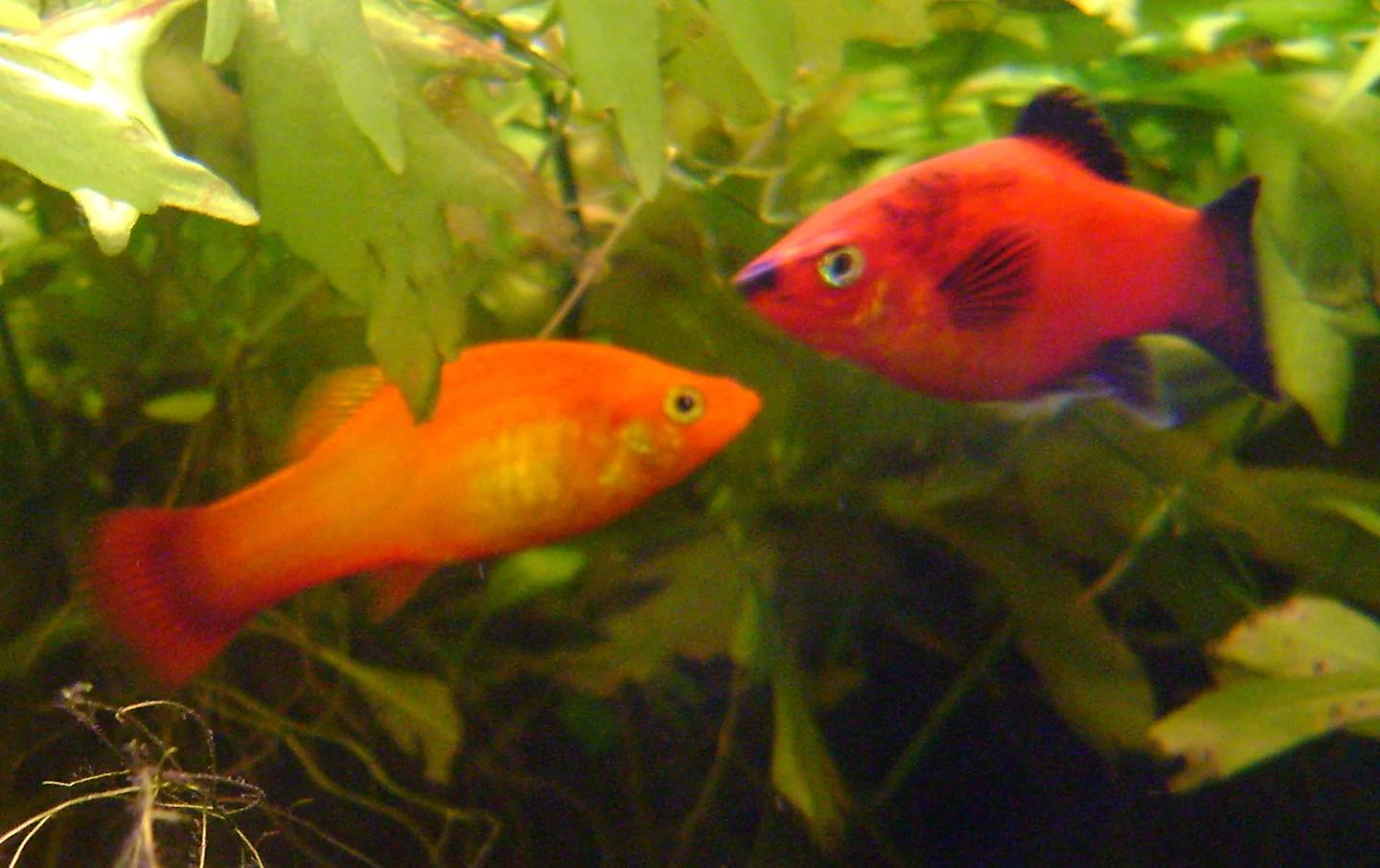
Platy is a trade name used for Xiphophorus maculatus, X. variatus and domestic forms. Start with at least three in a mature aquarium of at least 45 litres, verify the exact fish and measured water, and plan extra capacity before mixing sexes.
Maintain these water conditions for optimal health and vibrant colors
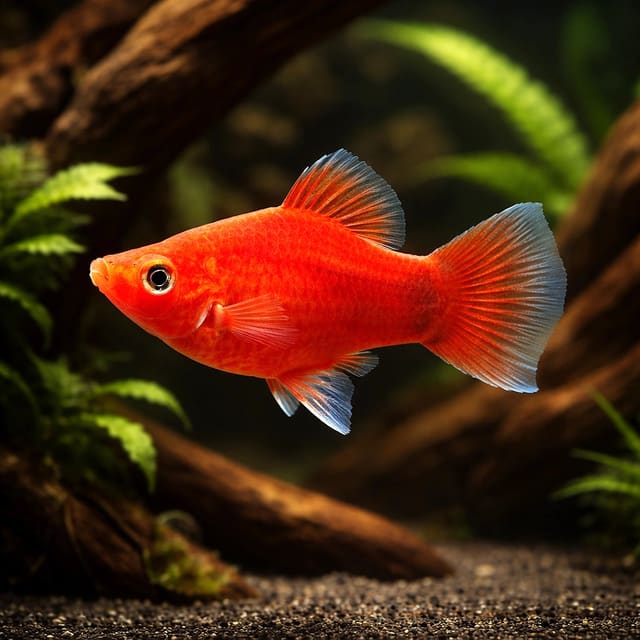
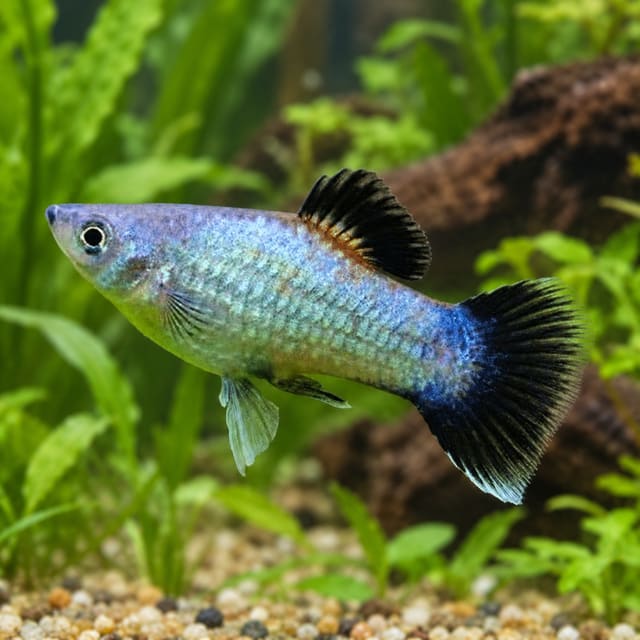
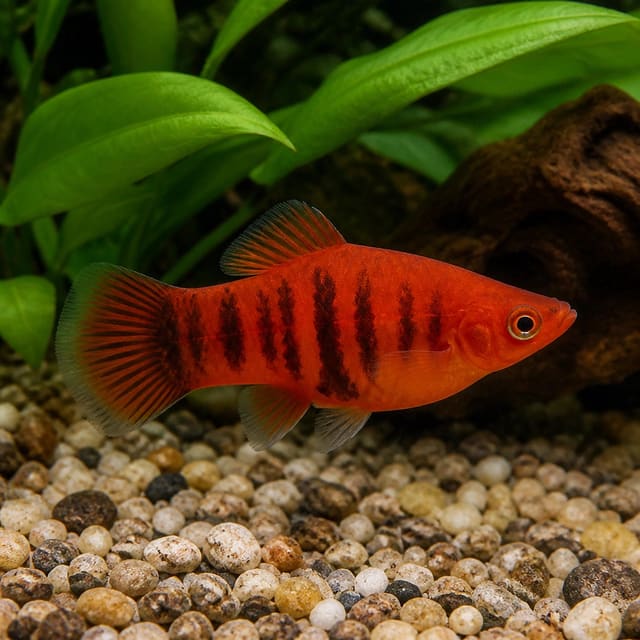
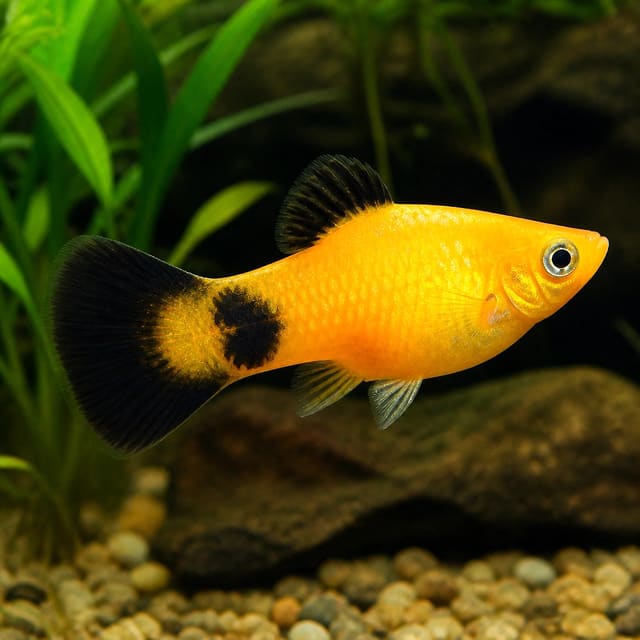
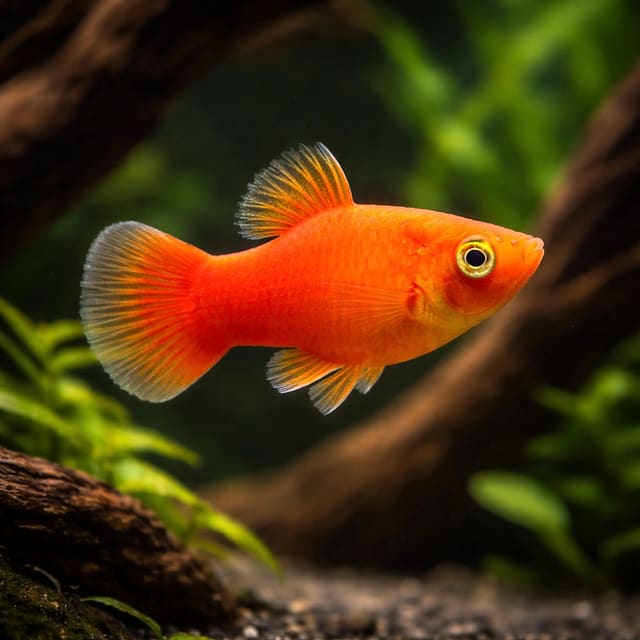
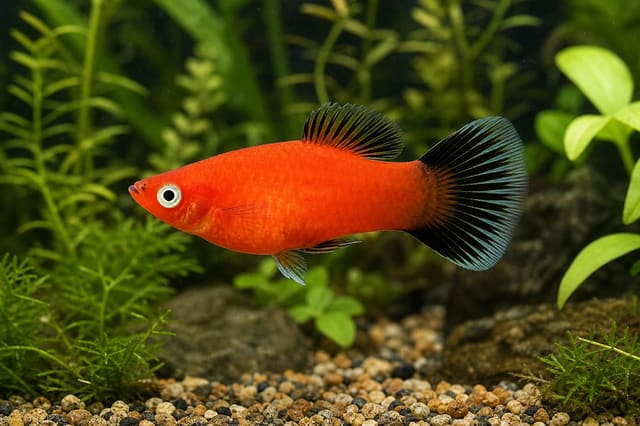
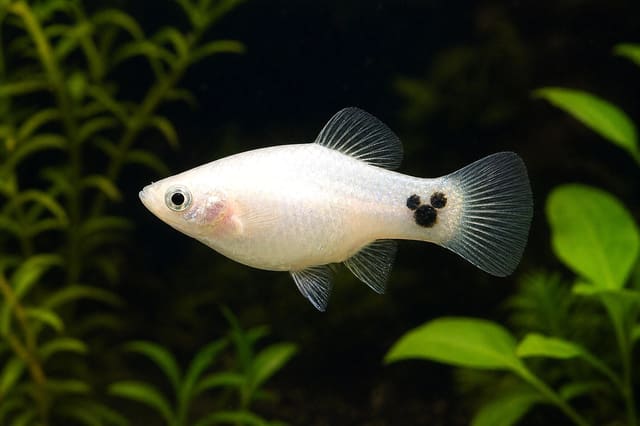
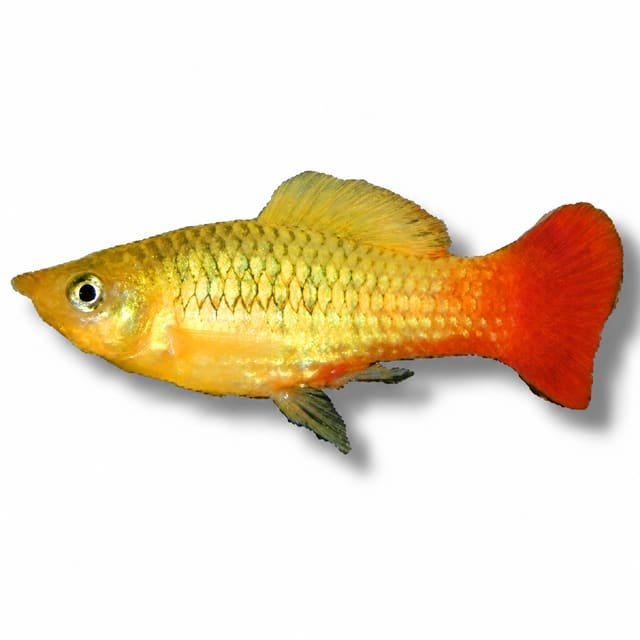
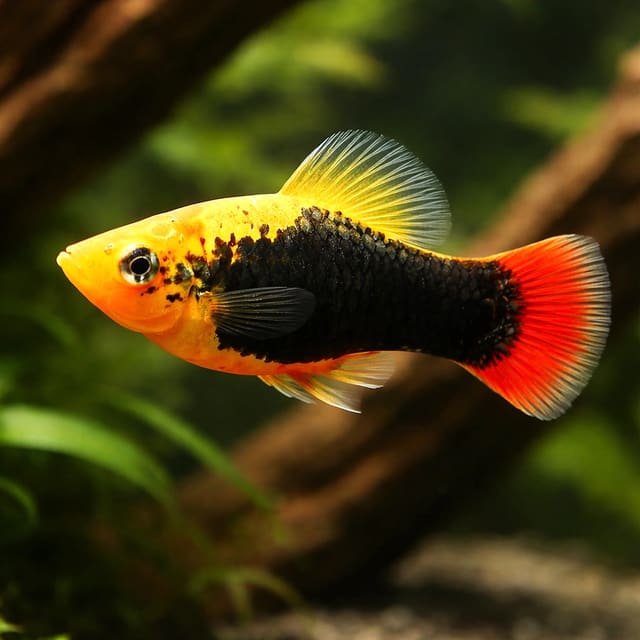
The Neon Tuxedo Platy is a colour form of Xiphophorus maculatus, a freshwater livebearer in the Poeciliidae family. Its appeal is the contrast suggested by the neon tuxedo trade name, alongside the easy-to-watch movement typical of a small platy group. The trade name describes this listing's form; it does not mean that every fish will have an identical pattern or brightness. Live fish vary naturally, and their appearance can change with maturity, surroundings and lighting. Choose this platy because its water and social needs fit your aquarium first, then enjoy the variation between individuals.
This listing sells one live fish for each cart unit. The buy box requires a minimum order of two fish, so entering two buys two individual fish; it is not a fixed pack of two. You can select a larger quantity if your aquarium has room and filtration for the group you are building. Sex is guaranteed only when the selected option explicitly states male or female. This Neon Tuxedo Platy listing has no sex-guaranteed option. Do not plan a particular sex ratio from the order alone. If a specific composition matters to an established group, ask the shop what can be confirmed before buying. An order minimum is a purchasing rule, while the recommended social group is a separate care question.
The practical match is a mature freshwater aquarium with plants or other cover, usable open swimming space and water that is moderately hard or harder rather than soft and acidic. A platy can look small beside an aquarium's empty space, but the relevant limits are stable water quality, footprint, the fish already present and the room a group will use as it settles. Serious hobby care guidance gives a 60 × 30 cm base for X. maculatus. A broad UK platy care sheet discusses 45 litres for a small group, but a volume alone cannot tell you whether an aquarium has enough length, cover or spare capacity.
Before adding a Neon Tuxedo Platy, check your normal temperature, pH and hardness, and confirm that the biological filter is established. A temperature around 20–26 °C, pH 7.0–8.2 and hardness around 10–30 dGH come from a species care profile. These are planning guidance, not an instruction to chase a number suddenly on arrival day. In particular, the profile warns that X. maculatus does not thrive in soft, acidic water. If your aquarium sits outside that general setting, resolve the mismatch before you order rather than expecting a newly delivered fish to adapt to abrupt correction.
FishBase places the species' native range from the Veracruz area of Mexico to northern Belize and describes adults using slow water, silt bottoms and weedy banks as well as creeks and swamps. Those observations help explain why a planted aquarium with quieter areas suits a platy. They do not prescribe a muddy substrate, a wild temperature cycle or a reproduction of a single collection site. Aquarium keeping calls for clean, oxygenated, filtered water and a layout that permits both movement and retreat. The neon tuxedo trade form does not change the underlying species care.
Size deserves a little more care than one number on a label. FishBase records a maximum of 4 cm total length for male or unsexed X. maculatus, while a specialist aquarium profile gives 5 cm standard length, a different measurement that excludes the tail. Neither is a promise that every purchased fish will arrive or finish at that length. Ask the shop for a current size if it affects your plan. Space, filtration and companions should be chosen for mature fish, not a guessed arrival measurement.
| Good fit | Check before ordering |
|---|---|
| A mature planted aquarium with moderately hard water and room for a group | Your measured pH, hardness, filter maturity and the needs of existing fish |
A Neon Tuxedo Platy is most straightforward to settle when the aquarium is already running steadily. The filter needs an established population of beneficial bacteria that process fish waste; a clean-looking new tank is not the same as a biologically mature one. Test for ammonia and nitrite before livestock is added, and keep testing after any increase in stocking. UK trade-body guidance for platies calls for both to be zero. If either is measurable, work out why and restore safe water before adding more fish. The RSPCA explains why a functioning biological filter is central to freshwater fish welfare.
A 60 × 30 cm base is a useful species-level starting point from Seriously Fish. The OATA group sheet mentions at least 45 litres for a small platy group, but a short, tall aquarium of that volume is not interchangeable with a longer one. Look at the base length, the swimming route and the space left after plants and decor. More fish, other species or a heavily decorated footprint all increase the need for room. Choose the final aquarium for the entire community and its adult needs; the minimum example is not a promise that every combination will work in that space.
Use plants, suitable artificial plants or ornaments to break up sight lines and give fish places to withdraw. Leave a clear route for swimming rather than filling every corner with hardscape. FishBase's weedy-bank habitat description and the species profile's preference for planted maintenance both support cover, but neither means a platy should be confined in dense vegetation with no open water. Place decor securely, avoid sharp edges that might damage fins, and leave access for cleaning. A mixed group benefits from visual breaks when one fish persistently follows another.
Choose a filter that keeps the water moving and supports biological filtration without forcing the fish to fight a strong current across the whole tank. The specialist profile discusses turnover for one example aquarium, but that figure is not a universal shopping prescription: actual flow depends on tank shape, filter design, planting and the fish present. Watch where the fish choose to swim. A quiet zone and a moving surface can coexist. If every fish huddles in the only calm corner, consider changing the flow pattern while preserving effective filtration and oxygenation.
A secure top is sensible during handling and routine maintenance because any small, active fish can be startled. Keep access for gas exchange and equipment, and check that gaps around filter pipes are suitable for the livestock you keep. The substrate can be aquarium gravel or sand, as the UK group sheet suggests; cleanliness and a layout that gives cover matter more here than claiming a special neon tuxedo substrate. Where real plants are used, choose ones that fit your water and light. Where they are not, provide other safe cover so the aquarium is not a bare display.
The most useful water question is whether your existing tank fits the fish over time. Seriously Fish gives X. maculatus a 20–26 °C aquarium range, pH 7.0–8.2 and hardness 10–30 dGH, and explicitly says the species does not thrive in soft, acidic conditions. Those are species husbandry figures. FishBase separately lists 18–25 °C, pH 7.0–8.0 and 9–19 dGH as environmental data. A wild or compiled environment range is not a reason to run a home aquarium at an extreme or to shift its water abruptly.
The OATA sheet covers platies and swordtails together and offers broader group ranges, including 17–27 °C for platies and softer general-hardness guidance. That breadth does not override the more specific warning about X. maculatus in soft acidic water. If two sources seem to give different boundaries, do not split the difference mechanically. For this page, the species profile is the practical aquarium starting point; the group sheet supplies general care routines and a reminder that husbandry cannot be reduced to a single fixed number.
Test pH and general hardness in your aquarium and compare the results with the guidance before moving fish. General hardness, usually abbreviated GH, describes dissolved calcium and magnesium; pH describes acidity or alkalinity. The two readings answer different questions and should both be recorded. Our water chemistry guide explains the terms if you are new to them. An isolated reading is less useful than knowing whether the tank stays reasonably steady through a normal week of feeding and maintenance.
If your home water is very soft or acidic, choose livestock suited to it or plan a stable adjustment well before purchase. Sudden pH or hardness changes can create another problem while trying to solve the first. Measure the water you actually use for changes, including any conditioned tap water or prepared mix, so each change does not swing the tank. If you use the water matcher, enter measured values rather than guesses; it helps compare conditions but does not replace testing, observation or consideration of the whole community.
Temperature should also be steady within the chosen aquarium range. A heater may be needed in a cool room, but its wattage depends on room temperature, tank size and equipment rather than the colour form's name. A separate thermometer lets you see what the tank does in practice, including overnight. Avoid placing a fish directly into water with a marked temperature difference. Equally, do not move the aquarium to a hotter setting simply because a source lists a higher tolerated point. Stability at a suitable value is the useful goal.
Filtration, testing and regular maintenance protect the water that the platy actually experiences. OATA recommends weekly partial changes and regular ammonia and nitrite checks for its platy and swordtail group, with replacement tap water conditioned before use. Treat its 25% weekly change as a practical starting routine, then monitor nitrate, stocking and the tank's response. Remove trapped waste where it gathers. If filter media needs a light rinse, use removed aquarium water rather than chlorinated tap water so the beneficial bacteria are not needlessly damaged.
Do not take a healthy-looking fish as proof that water readings are safe. Fish can temporarily continue feeding while ammonia or nitrite rises, especially after extra livestock is added faster than the filter can adjust. Conversely, a new fish hiding briefly after arrival is not by itself a diagnosis. Check the measurements, temperature and flow, then watch the group over time. Fast breathing, persistent surface crowding, unusual swimming, damaged fins or refusal of food deserve prompt attention. The UK group sheet advises testing water and seeking retailer guidance if you are concerned.
A first aquarium has enough tasks without rushing its first livestock purchase. Finish the filter cycle, learn your normal water values, decide where cover and open swimming space will sit, and plan how you will introduce a group gradually. Our first tropical tank guide is a useful starting point. Keep room for the fish already present and for the adult size and possible fry of livebearers. A stable, lightly stocked tank is more forgiving than one that only just meets a minimum on paper.
FishBase describes wild X. maculatus taking worms, crustaceans, insects and plant matter. That mix fits the aquarium picture of an omnivorous platy, but a wild menu does not mean you need to collect wild food. Seriously Fish says the species accepts dried, live and frozen foods. The OATA group sheet suggests a good quality flake or granule with algae content, plus small live or frozen foods such as daphnia or small bloodworm. Use a suitable staple first and offer variety in sensible portions.
Watch how a group feeds rather than measuring meals by the appetite of the boldest fish. Spread food so quieter fish have a chance, and offer only what is eaten promptly. OATA's general advice is a daily small feed that is consumed within a few minutes, because uneaten food breaks down into waste. A heavily fed tank can look lively at feeding time while its filter struggles later. Remove leftovers where practical and use water tests to check that feeding remains compatible with the aquarium's capacity.
After delivery, appetite can be a useful observation but should be interpreted in context. Let the fish settle into suitable water and shelter before offering a modest first feed. If one fish refuses food while others feed, watch its swimming, breathing and position; check the water before assuming it needs a different treat. If all fish are subdued, start with tank conditions rather than repeatedly offering richer foods. No particular neon tuxedo colour pattern requires a special diet, and excess food does not produce better colour safely.
Foods for other fish in the community may not reach the platies equally. Bottom feeders, for instance, can need their own suitable ration, while small platies may eat food before it sinks. That is a stocking and feeding issue to plan for, not a reason to describe every bottom feeder as a compatible tank mate. Assess the needs of each actual species. Frozen and live treats should be appropriately sized and handled hygienically; the staple and the tank's water quality still do most of the everyday work.
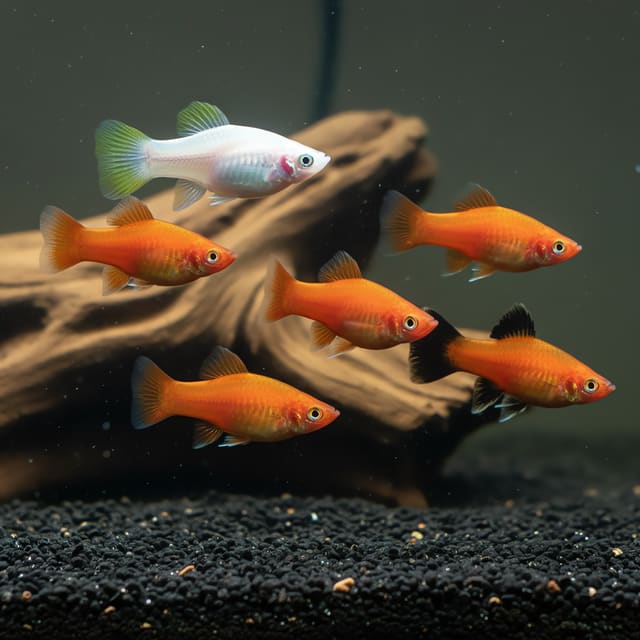
Platies are social fish. OATA suggests at least three platies or swordtails together as broad group guidance, while the exact species profile describes peaceful behaviour and a stronger need for female space when males and females share a tank. The two-fish minimum order is not a claim that two fish make an ideal lifelong group. If you already keep compatible platies, two more may fit that group; if you are starting from none, plan the eventual social group and aquarium capacity rather than treating the checkout minimum as the care target.
This listing does not promise males or females, and a young fish's appearance is not a reliable shopping guarantee. Therefore an order cannot be used to ensure the female-to-male balance discussed in care guides. If the mix of sexes is important to your existing fish, ask before ordering or choose a genuinely sexed offer if one exists. In a mixed group, provide plant cover and watch for persistent following or harassment. More females can spread attention when the sexes are known, but it is not useful to promise that a particular order will create that ratio.
Xiphophorus maculatus is a livebearer, and both the scientific summary and species care profile note easy reproduction in aquaria. Plan for the possibility of fry if males and females are present, including fish that may have been previously kept with the opposite sex. There is no breeding service or sex guarantee attached to this neon tuxedo purchase. You do not need an elaborate breeding programme to keep platies well; you do need to avoid assuming that a small starting population can never grow. Extra fish add to filtration and space demands.
Not all chasing is the same. Brief movement around food, plants and open water can be normal, while one fish repeatedly driving another into a corner deserves a closer look. Observe the full group at several times of day, including feeding and quiet periods. Check for enough cover and whether the tank is crowded. Water quality can also affect behaviour, so test rather than treating every change as a personality trait. If persistent pursuit remains, seek informed advice based on the actual sex mix and aquarium layout.
Some keepers want a calm display and are surprised by the movement and potential reproduction of livebearers. This species can be a good match if you enjoy watching a group and can maintain its water, but it is not a passive ornament. The neon tuxedo label tells you which colour form is being sold; it does not guarantee identical adult pattern, a fixed sex or a particular relationship between fish. Treat each animal as livestock with room to swim and retreat, and build the community deliberately.
Have the tank ready before the parcel arrives: stable temperature, tested water, a working filter and a place to shelter. The shop's current delivery and Live Arrival Guarantee policy explains its live-fish service and what to do if something is wrong on arrival. Arrange to be present for the delivery and inspect the parcel promptly. If a claim may be needed, follow the policy's continuous unboxing-video requirement while the parcel is still sealed, then opened, with the fish still inside the bag. That record is for resolving a delivery issue, not a care treatment.
For normal introduction, the policy advises floating the closed bag for about 20–30 minutes to bring temperatures closer before release. Do not pour transport water into the aquarium; transfer the fish as the shop's guidance shows. If you have a quarantine routine, prepare that tank to the same relevant water standards before arrival. A new fish should not be moved from a travel bag into a tank whose ammonia, nitrite, hardness or temperature you have never checked.
After release, give the fish cover and quiet observation. Some initial hiding or a subdued first hour can occur after travel, but watch for continued distress, fast breathing, loss of balance or bullying. Test the water if behaviour looks wrong. Feed lightly at first, and avoid adding other new livestock at the same time unless the tank's plan calls for it. This makes it easier to judge how the filtration and existing residents respond. Continue the ordinary maintenance routine rather than making large reactive changes without a measurement.
Neon Tuxedo Platies are generally peaceful community fish according to the specialist species profile and the OATA platy group sheet. That is a starting point, not a universal guarantee of compatibility with every fish labelled peaceful. First compare temperature, pH and hardness needs; a species that requires soft acidic water is a poor match for a platy plan built around moderately hard water even if neither species is aggressive. Then compare adult size, feeding style, swimming space and whether one animal might prey on or repeatedly chase another.
Platy group dynamics matter inside a community. Allow room for several platies, sight breaks and a calm feeding opportunity for every fish. A bold community neighbour may take most of the food without actually attacking the platies. A larger or territorial fish can make a small platy stay hidden, while a particularly timid neighbour may be unsettled by constant livebearer activity. Watch the real aquarium, not only a compatibility list. If a fish is persistently excluded from food or shelter, revisit stocking and layout.
Seriously Fish describes X. maculatus as very peaceful and suitable with many community species. It also points out that males can tolerate one another, while attention to females in a mixed group can be relentless. That contrast is more useful than a simple yes/no aggression label. Platies are not described as routine fin nippers in these sources, but individual behaviour and crowding still matter. Monitor fins and posture when fish are introduced. If you see damage, investigate causes rather than assuming the colour form explains it.
The UK group sheet says platies and swordtails are generally compatible with other species, but it warns that large swordtails can be boisterous and chase timid companions. This is a reminder to judge the actual sizes and temperaments in your tank. It is not an invitation to add a swordtail automatically. Likewise, a visually similar platy form is an alternative shopping choice, not proof that buying every form together is right for your aquarium. The shared species care can be similar, while stocking capacity remains finite.
If your tank is already set up for soft-water species, avoid trying to make a compromise by pushing every animal to the edge of its preferred conditions. Select fish with overlapping routine needs or keep separate appropriate aquaria. For an established mixed tank, measure the water as it actually runs, consider the weakest or most demanding resident and plan the new group accordingly. The best sign of a good match is sustained normal feeding, swimming and resting, supported by stable tests, rather than a brief peaceful introduction.
FishBase records 4 cm total length for male or unsexed Xiphophorus maculatus; another aquarium profile gives 5 cm standard length, a different measure. Plan space for mature platies rather than an assumed arrival size.
Seriously Fish gives a 60 × 30 cm tank base for Xiphophorus maculatus. A UK group care sheet discusses at least 45 litres for a small platy group. Check footprint, filtration and the full community as well as litres.
Platies benefit from company; OATA suggests at least three as broad group guidance. The store's two-fish order minimum is a purchase rule, not the final social-group target.
It can suit a keeper with a mature, filtered aquarium, stable moderately hard water and room for a group. It is not a fish for an uncycled tank or soft acidic water.
Xiphophorus maculatus is an omnivore. Offer a good quality flake or granule with plant content as a staple, with appropriately sized live or frozen foods for variety, and avoid overfeeding.
A species care profile gives 20–26 °C and pH 7.0–8.2, with hardness 10–30 dGH. Keep conditions stable and avoid soft acidic water.
The species is generally peaceful and is not described as a routine fin nipper in the cited care sources. Observe actual fish, especially if a mixed-sex group has persistent chasing.
Choose peaceful community fish whose normal temperature and moderately hard-water needs overlap, and check adult size, food access and available space. No tank mate is suitable merely because it is labelled a community fish.
Tropical Fish Co's delivery policy describes hand packing and a licensed live-animal courier. Be present to receive the parcel, inspect it on arrival and follow the policy's continuous unboxing-video instructions if something is wrong.
The species identity, native range and recorded total-length figure come from FishBase's Xiphophorus maculatus summary. The practical aquarium base, water guidance, diet and social behaviour are supported by the Seriously Fish species profile. For broader UK group care, maintenance and introductions, see OATA's platy and swordtail care sheet. The RSPCA aquarium environment guidance explains the role of a mature biological filter.
These sources describe a species or a broad platy group; an individual fish's colour, exact arrival size and sex are not fixed by them. Use the current buy box for the retail quantity and read the shop's delivery policy for arrival terms. If a point is especially important for your existing aquarium, measure its water and ask the shop about the actual fish before ordering.
No reviews for this item yet. Bought one? Honest reviews only, good or bad.
What customers say about ordering from us
Easy website plenty of info on fish your buying great to pick a time slot
TRACEY DURRANT · 7 Oct 2026
Got some lovely fish thank you
Kevin Mackie · 7 Oct 2026
Reviews of our shop, collected by Judge.me, an independent third-party review collector. Newest first.