Easy
Platy Red (Xiphophorus maculatus red)
20–25°C · pH 7–8 · 54L
£4.99
Photo coming soon
The size, price and care details on this page are for this listing.
Apple Tricolour Platy (Xiphophorus maculatus), sold as one live fish with 2.5–3 cm and XL size choices. A peaceful livebearer for a mature planted aquarium with moderately hard or harder water.
Xiphophorus maculatus
Shoaling fish: kept in a group they feel safer, stay calmer and show their best colour.
Minimum of 2 per order.
Apple Tricolour Platy (Xiphophorus maculatus), sold as one live fish with 2.5–3 cm and XL size choices. A peaceful livebearer for a mature planted aquarium with moderately hard or harder water.
Platy is a trade name used for Xiphophorus maculatus, X. variatus and domestic forms. Start with at least three in a mature aquarium of at least 45 litres, verify the exact fish and measured water, and plan extra capacity before mixing sexes.
Maintain these water conditions for optimal health and vibrant colors
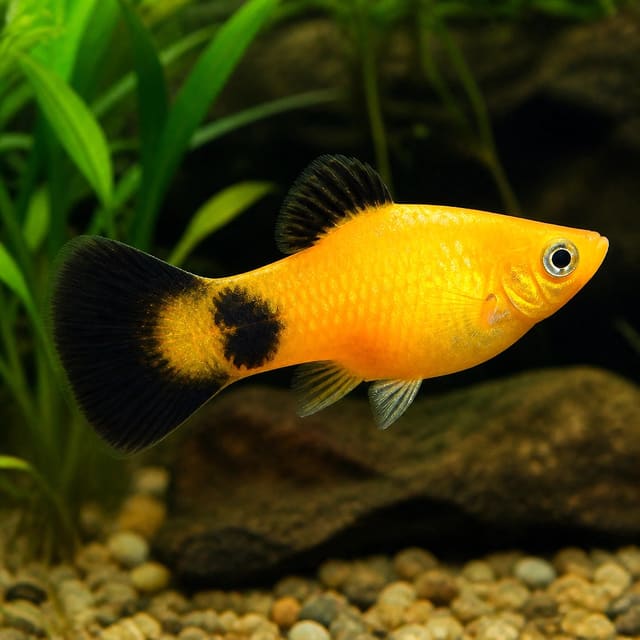
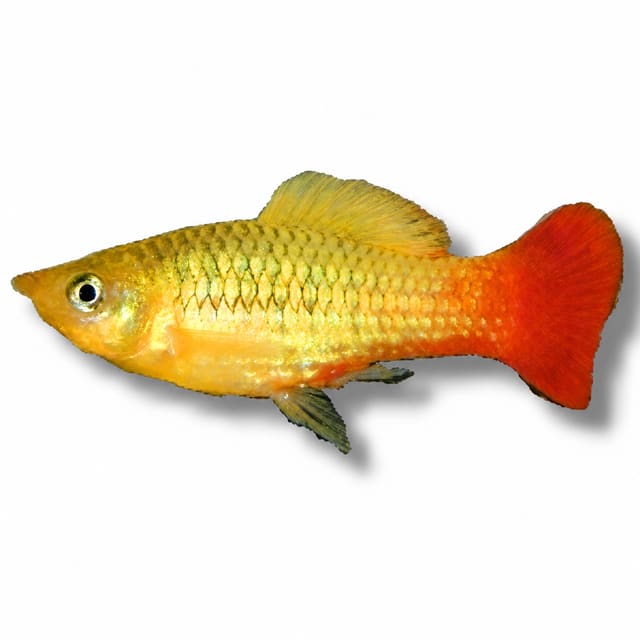
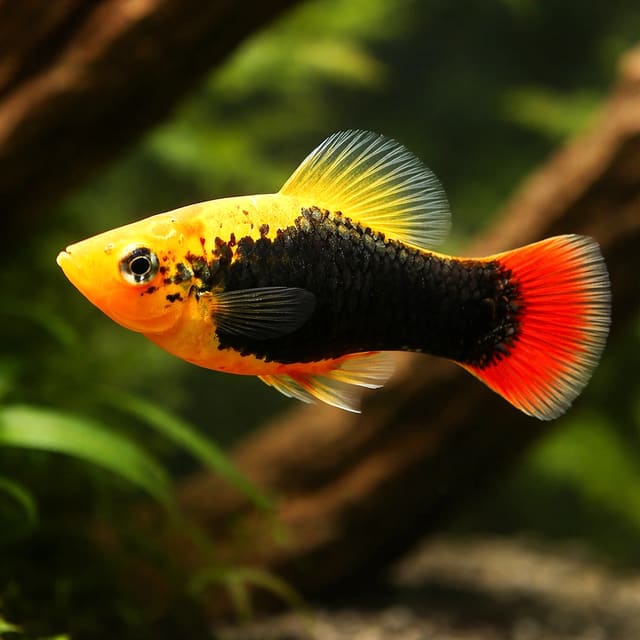
The Apple Tricolour Platy is a colour form of Xiphophorus maculatus, a small freshwater livebearer for a well-planned planted aquarium. Its appeal is easy to see: warm yellow-orange colouring, dark fin markings and a compact shape that looks at home among greenery. The more important reason to choose it is a match with your water. This species needs moderately hard or harder water and is a sensible candidate when your aquarium is naturally neutral to alkaline.
Apple Tricolour is the trade form name, while Xiphophorus maculatus is the scientific name. A colour form needs the same attention to water quality, space, feeding and social behaviour as the species itself. Choosing livestock around the aquarium you can maintain reliably makes everyday care simpler and gives the fish a better start than trying to solve a mismatch after delivery.
One purchase supplies one live fish. The size choices are 2.5–3 cm and XL. XL is a grade name without a stated numerical length. The size you select is the size supplied, not the adult size. Think about the existing group and the aquarium's longer-term capacity when deciding how many fish to order. Sex is guaranteed only when the selected option explicitly states male or female. This Platy apple tricolour listing has no sex-guaranteed option.
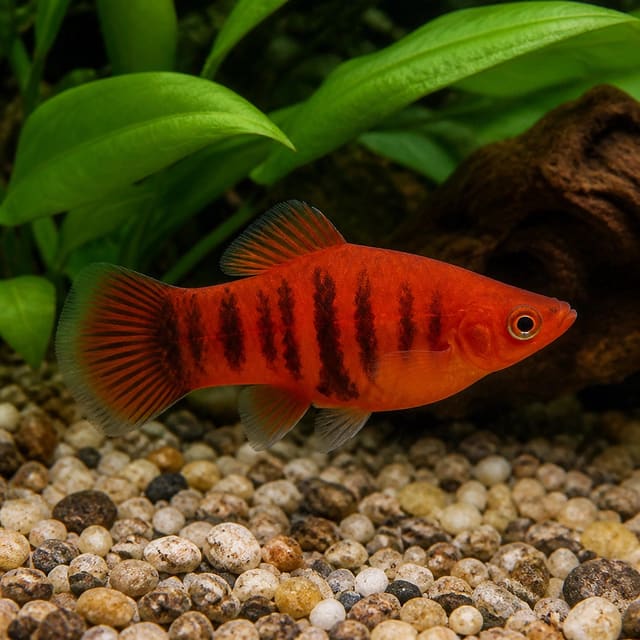
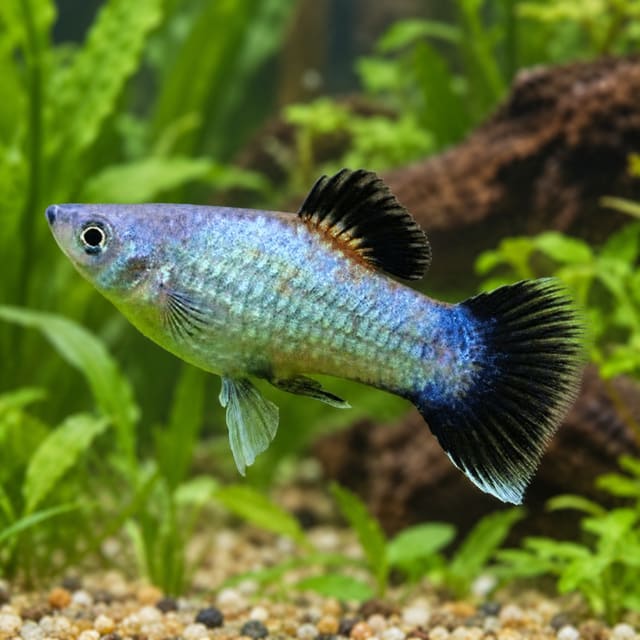
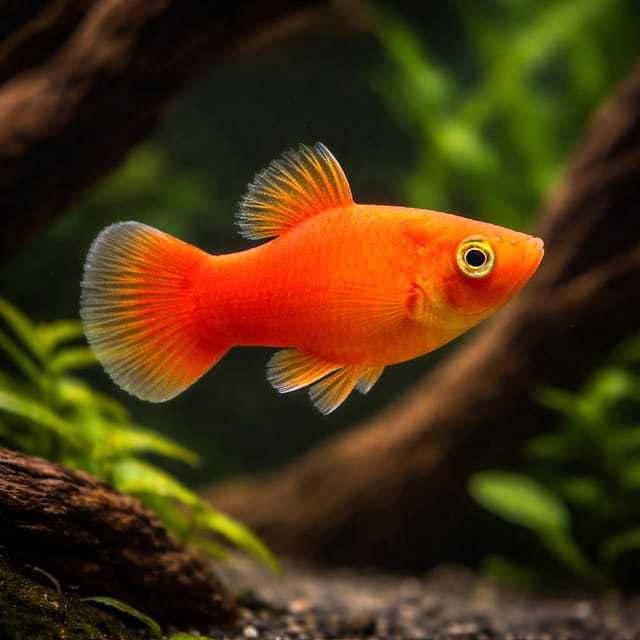
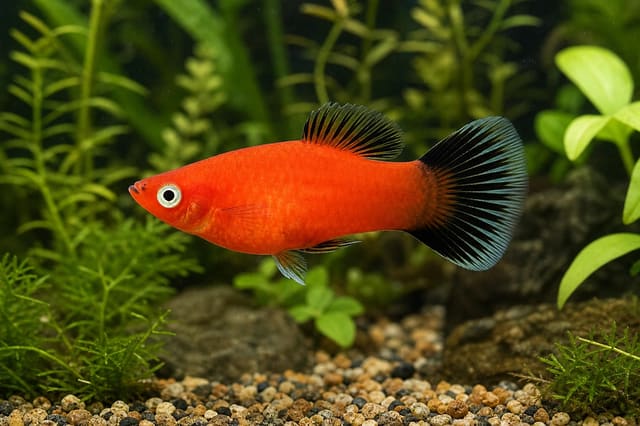
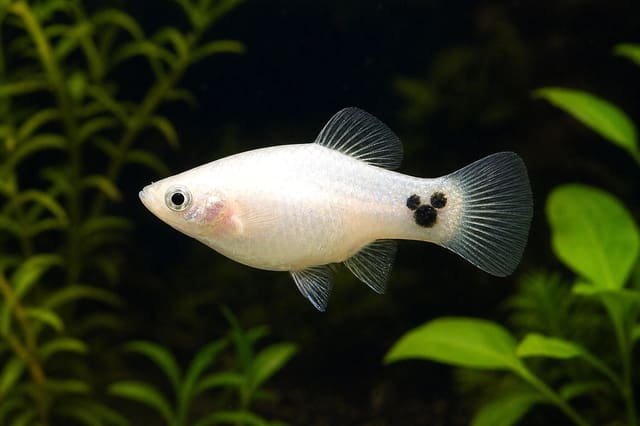
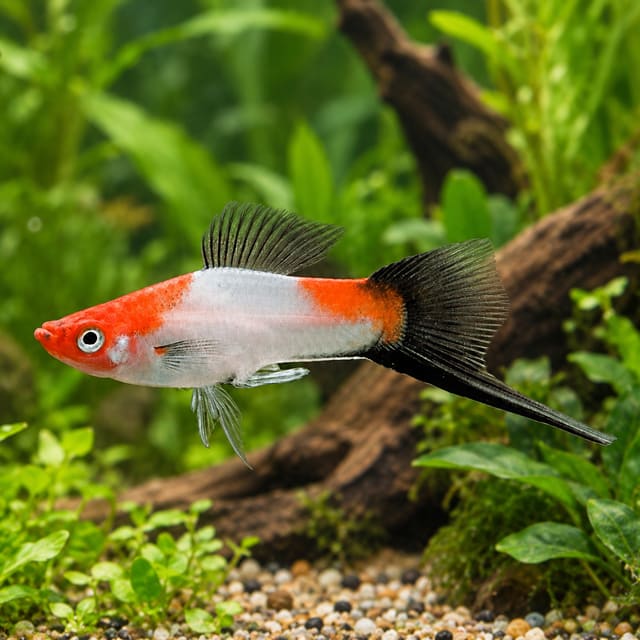
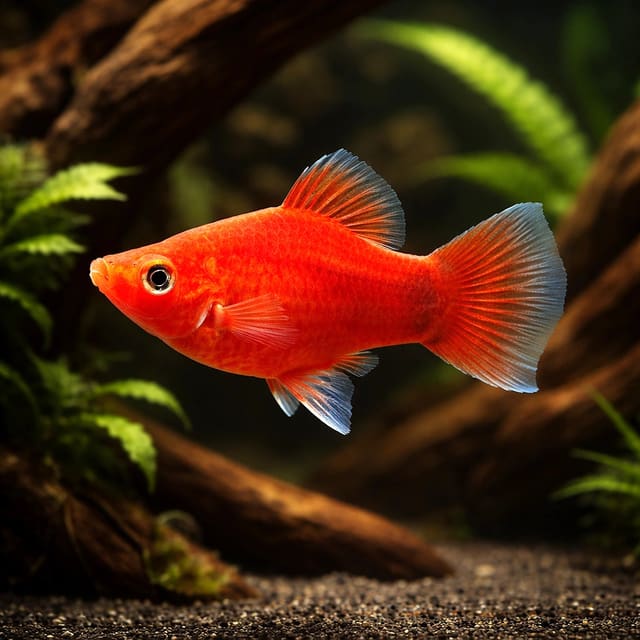
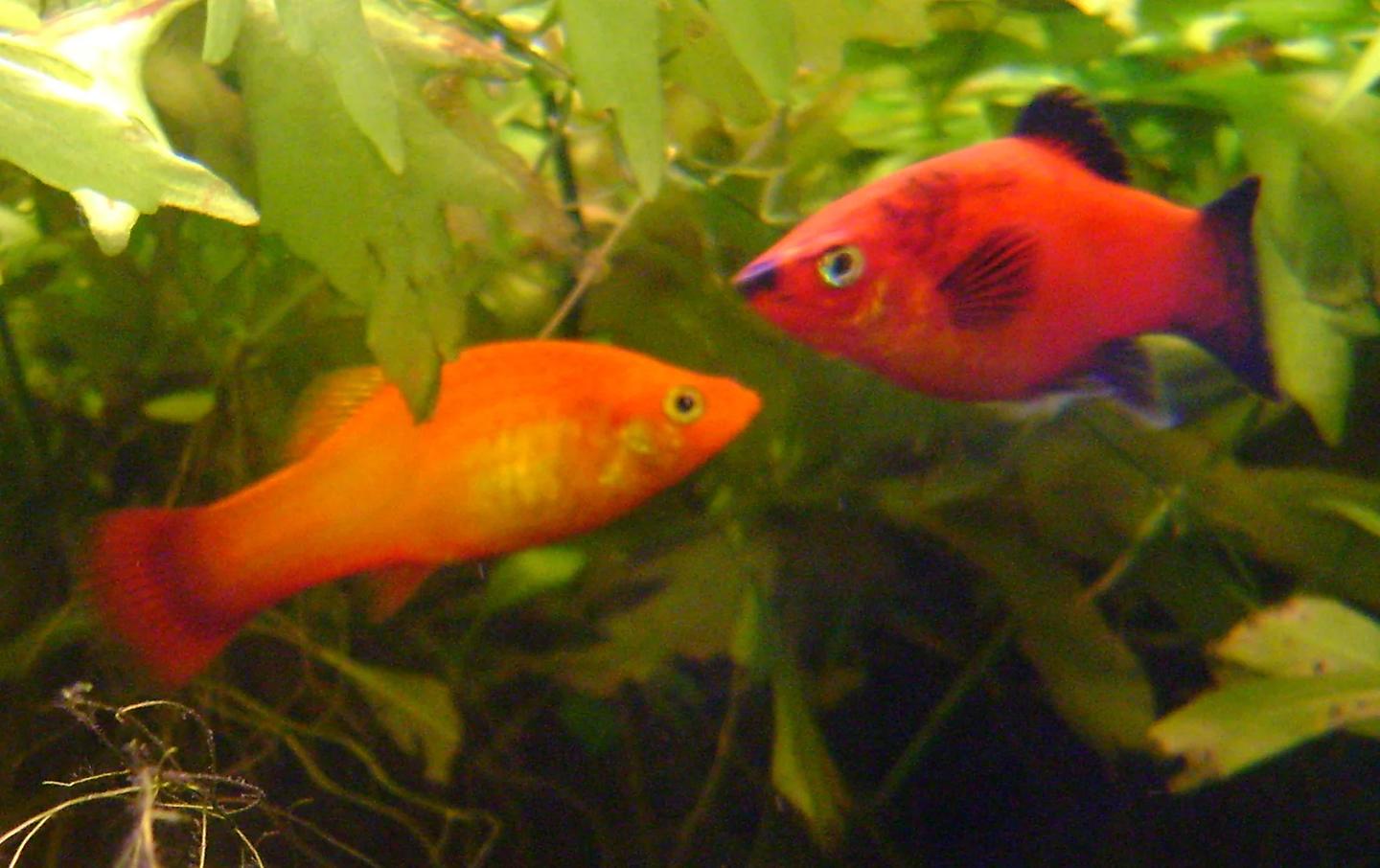
The gallery images are representative of this type of animal rather than photographs of the exact animal supplied, so colours can look slightly different from the live animal. The photograph containing two fish shows a planted scene; the purchase quantity determines the number ordered. The different views are useful for appreciating the form's appearance, without turning a pictured group into a pack offer.
The Seriously Fish species profile gives aquarium guidance of 20–26°C, pH 7.0–8.2 and 10–30 dGH. It recommends a base measuring at least 60 × 30 cm, with an example aquarium of approximately 54 litres. A planted layout with open swimming room suits the species. A mature filter and a practical water-testing routine are essential before fish arrive.
Platies are peaceful, but mixed-sex groups bring a separate responsibility. Males can give females persistent attention, and young can appear repeatedly. Plant cover, enough space and an appropriate balance of sexes help make that manageable. Think about what would happen if the population grew: the aquarium must accommodate the fish as adults, and extra young will also add to feeding and maintenance.
A varied diet is straightforward to provide. Suitable dried food with an algae or vegetable component forms a useful base, with small live or frozen foods adding variety. Watch the actual fish eating rather than judging the meal by how much food entered the tank. A quieter individual can be missed in the bustle around a feeding spot, even when the group appears keen.
If you are still deciding on the appearance of your group, compare this listing with the Coral Red Platy. That is a useful comparison between colour forms for the same general kind of aquarium. It is not a suggestion to add more fish to an already full tank. The wider platy collection can help you plan the look of the finished group before choosing individual fish.
This is a rewarding fish to observe in a prepared aquarium: feeding, exploring cover and interacting with other platies all give you useful clues about how the setup is working. Daily care need not be complicated, but it should be consistent. The care sections below explain the size measurements, water requirements and routines that make those decisions easier.
For these platies, check temperature, pH and general hardness before deciding the aquarium is suitable. Seriously Fish gives 20–26°C, pH 7.0–8.2 and 10–30 dGH as species-level aquarium guidance. Its important practical warning is that Xiphophorus maculatus does not thrive in soft, acidic water. A familiar aquarium temperature alone is not enough to establish a good match.
General hardness measures dissolved minerals and is different from pH. Water can have a pH reading that looks acceptable while containing too little mineral content for a hard-water fish. Recording both measurements helps avoid that mistake. Test the aquarium and the water used for changes, because replacement water shapes the conditions you can maintain over time.
The water chemistry guide explains the tests and terms. The water matcher can help compare your results with care guidance. Enter measured values rather than assuming all tap water in a region is identical. If you have a soft-water aquarium already, discuss an appropriate separate setup or choose animals better matched to the existing conditions.
FishBase reports environmental values of 18–25°C, pH 7.0–8.0 and 9–19 dH for the species. These are separately scoped environmental records, not a reason to chase a new target in a stable aquarium. Use a coherent aquarium-care range when planning the community, and check that every species can share it. Combining the lowest and highest figures from different references can create a misleadingly broad range that no source actually recommends.
OATA's platy and swordtail sheet gives broader group advice. Its testing and maintenance guidance is helpful, but its shared hardness values should not displace the more specific warning about soft water for this species. The goal is a predictable environment that you can reproduce during water changes, not constant adjustment in response to every small variation on a test.
Seriously Fish recommends an aquarium base of at least 60 × 30 cm. Its 60 × 30 × 30 cm example is approximately 54 litres before equipment, substrate and decoration take up space. Check dimensions as well as the advertised capacity. Extra height does not provide the same horizontal swimming room as a longer or wider base.
For context, OATA's broad guidance recommends at least 45 litres for a small group of platies. The larger species-profile footprint is the starting point used here. Neither figure is a stocking allowance for every community. More fish, additional species and growing young increase the demand on space, filtration and maintenance. Discuss the whole proposed population rather than considering each purchase in isolation.
Plan access as well as appearance. You should be able to reach the filter, observe the fish and siphon accessible areas without dismantling the aquarium. A manageable layout helps you maintain the aquarium consistently and notice changes before they become larger problems.
The species appreciates a planted aquarium. Planting around parts of the back and sides can provide shelter while leaving open water for swimming and feeding. Separate patches of cover give individuals routes through the tank and places to move out of view. This is useful when a female needs a break from a male's attention.
Look at the tank from more than one angle. A plant that appears substantial from the front may not interrupt a fish following another along the whole aquarium. Several areas of cover can be more useful than a single feature in an otherwise bare space. At the same time, avoid filling every opening with decoration: the fish still need somewhere to move and you need to see how they behave.
If live plants are not part of your setup, OATA also describes artificial plants and suitable aquarium ornaments as ways to provide shelter. Choose materials intended for aquariums and keep cleaning access around them. Each feature should have a purpose for the fish or the maintenance routine, rather than simply occupying the remaining volume.
A working biological filter is essential. Fish release ammonia, and leftover food contributes to waste as it breaks down. Beneficial bacteria process ammonia into nitrite and then nitrate. Both ammonia and nitrite are harmful. The RSPCA's aquarium guidance explains why a well-established and maintained filter is central to keeping fish safely.
Mature the aquarium before the fish arrive. Running new equipment for a short time demonstrates that it switches on; it does not show that its bacterial population can process fish waste. Water tests are needed to judge progress. The first tropical tank guide is useful if you are putting your first system together and want to understand how the stages fit.
Introduce livestock gradually. Every addition increases waste production, and the biological system must respond. Adding a complete community in one go makes it harder to identify why a problem has started and may overwhelm the filter. Allow time to see how the existing group and water quality respond before making another addition.
Check that the intake and outlet remain unobstructed during ordinary tank observation. A reduced flow can indicate maintenance is needed. Keep essential equipment visible enough to notice changes, even in a heavily planted aquarium. If young fish appear, review the safety of intakes and the suitability of the equipment for smaller animals.
When filter media needs cleaning, OATA advises lightly rinsing it in water removed during a partial water change. Washing it under the tap can expose useful bacteria to chlorine or chloramine. Follow the equipment manufacturer's instructions for other parts, and avoid treating a filter clean as an occasion to remove all biological material from the system.
The aim of maintenance is to restore useful flow and remove obstructions while preserving the processes the aquarium relies on. Record an unusual clean or equipment change, because it may explain later test results. This small habit helps you assess the system without having to remember every adjustment.
Seriously Fish gives a standard length of 50 mm, equivalent to 5 cm, for Xiphophorus maculatus. Standard length excludes the tail. FishBase lists 4 cm total length for a male/unsexed record; total length includes the tail. These are different measurements with different scope. The smaller record should not be used as a whole-species adult maximum, especially as females are the larger sex in the species profile.
Plan for grown fish rather than the small size supplied. A fish does not have to be large to need meaningful swimming space. Look at the aquarium when the whole group is spread out: can every fish get to food, move through cover and use the open water? That is a more useful check than simply comparing body length with glass dimensions.
OATA's general platy guidance suggests at least three, with two females to each male. Seriously Fish also advises more females than males, describing several females per male when discussing mixed-sex keeping. The reason is to spread male attention and reduce persistent pressure on individual females. These are husbandry principles, not a promise that an unsexed purchase will create the intended ratio.
Ask for help identifying the fish already in your aquarium if the group composition is uncertain. Observe the result of any change. A fish that repeatedly retreats, misses food or stays in one corner may be having difficulty even if the intended ratio looks sensible on paper. Additional cover can help, while persistent harassment may require a different grouping or an appropriate separate aquarium.
Mixed-sex platies can produce young repeatedly. Decide in advance how you would accommodate them and whether suitable future homes are available. Young may be unobtrusive among plants at first, but as they grow they add to the adult population and to the aquarium's waste load. Count the fish during maintenance and review the plan when that number changes.
You can enjoy a display aquarium without deliberately breeding fish, but possible reproduction still belongs in the care plan. Do not rely on crowding or poor conditions to limit numbers. If the population becomes difficult to manage, seek advice early while there are still practical options for the whole group.
Platies accept dried, frozen and live foods. OATA's platy and swordtail guidance recommends a good-quality flake or granule with a high algae content, with small live or frozen items for variety. Daphnia and small bloodworm are among the foods it names. Choose suitable pieces for the fish's mouth rather than assuming any food sold for tropical fish is equally convenient.
Watch fish swallowing food, not just chasing it. A piece repeatedly picked up and dropped may be too difficult to eat. When several fish rush to one feeding point, take a little longer to check quieter members of the group. Offering a small portion where each fish can reach it is more useful than adding extra food without observing what happens.
Browsing on aquarium surfaces is interesting behaviour, but it is not a complete feeding plan. Keep providing an appropriate diet and assess body condition. Activity by itself is not proof of adequate nutrition, and algae growth is not a reason to stop ordinary feeding or to ignore the rest of the tank's care.
OATA's broad platy advice is to feed only what is consumed within a few minutes once a day. Treat that as a starting routine, and seek advice for young fish or unusual circumstances. A whole frozen portion or a container lidful is not automatically the right amount for your aquarium. The useful measure is what the actual fish consume.
If food settles uneaten, remove it and adjust the next portion. Leftovers break down and increase the waste the filter must process. More feeding is not a reliable solution for fish that are slow to settle; check whether they can reach food, whether water conditions are suitable and whether another animal is interfering.
Follow food-storage instructions and keep dried food dry. A consistent feeding method makes changes easier to recognise. If the fish normally respond readily but begin ignoring the same food, you have a clear observation to investigate rather than an uncertain comparison between different meals.
During feeding, look at fins, breathing, swimming, skin and body condition. OATA lists changes in these areas, as well as reduced appetite and unusual hiding, as warning signs. One fish repeatedly missing a meal deserves attention even if the rest of the aquarium looks normal. Check both the water and the social situation.
White spots, damaged fins, abnormal growths, surface hanging or a marked change in body condition warrant prompt assessment. Test the water and contact a knowledgeable fish retailer with the results, what you have observed and how long it has been happening. A clear account of changes is more useful than trying an unspecified treatment on the basis of colour alone.
OATA recommends a partial water change of 25% at least weekly for platies and swordtails, with water testing at least once a week. This is broad group guidance and a starting routine. The aquarium's actual stocking, feeding and test results still matter. Ammonia and nitrite should remain at zero; OATA's nitrate guidance is no more than 20 mg per litre above the normal tap-water level.
Prepare replacement water with a suitable conditioner to remove harmful chlorine or chloramine, and check its temperature before adding it. Make ordinary cleaning predictable. Sudden changes in replacement-water conditions can complicate an otherwise simple maintenance routine, particularly when several species share the tank.
Use a siphon to remove settled waste, including around feeding areas and accessible ornament bases. Keep shelter in place while cleaning methodically around it. You do not need to dismantle the whole layout simply to remove material that has accumulated in a few areas.
Keep a short record of water tests, changes and livestock additions. If young appear and nitrate starts rising faster, the aquarium's demand has changed. If a problem follows a filter clean, knowing what was cleaned and how can help you investigate. A few notes often reveal patterns that are easy to miss when relying on memory.
After introducing new fish, watch more closely and check water quality more frequently. Delay further additions if the system is unstable or the group has not settled. Addressing a problem while the population is manageable is much easier than carrying on with a stocking plan regardless of the fish's response.
Be present to receive the parcel and have the mature aquarium ready. Tropical Fish Co's delivery and Live Arrival Guarantee policy describes oxygenated bags, insulated boxes and heat packs when conditions require them. Your confirmed Thursday or Friday delivery date is sent by email; follow the confirmation for your order and read the current policy in advance.
Inspect the parcel on the day it arrives. For a Live Arrival Guarantee claim, record a continuous unboxing video showing the sealed parcel, its opening and the fish still in the sealed bag, then contact the store that day with the order number. The video records arrival condition for the claim. For the fish themselves, follow the store's acclimatisation guidance, including floating the bag for 20–30 minutes and acclimatising slowly. Do not pour transport water into the aquarium.
Seriously Fish describes this species as very peaceful and suitable for many community aquariums. Start each proposed pairing by comparing adult temperature, pH, hardness, space and feeding needs. A fish requiring soft, acidic water is a poor choice for an aquarium planned around these platies, regardless of how the colours look together.
Avoid aggressive fish and persistent fin-nippers. Be cautious with boisterous companions that repeatedly displace platies from food or shelter. OATA specifically notes that large swordtails can chase more timid tankmates, so a shared livebearer label does not settle compatibility. Assess the actual fish and available space rather than relying on a category name.
A useful community allows every fish to feed, rest and move without constant interruption. Look for individuals confined to a corner, fins becoming damaged or fish emerging only when the others move away. Several calm minutes at the front of the tank do not tell you everything about how the group functions during the day.
Cover can make a layout more useful, but it cannot add water volume or reconcile different environmental needs. Have an appropriate alternative arrangement in mind before adding companions, and seek advice if a combination produces persistent stress. Do not wait for visible injury to decide that repeated harassment needs attention.
Other platy colour forms can be considered when planning the group's appearance. Count them as extra animals with the same requirements for space and maintenance. Related listings are alternatives to compare, and the final choice should reflect the total adult population and the care routine you can sustain.
Seriously Fish gives 5 cm standard length for the species, excluding the tail. FishBase lists 4 cm total length for a male/unsexed record; this is not an overall maximum for females. Plan for grown fish and the larger female body size rather than using the dispatch grade as an adult limit.
Use the species-profile starting footprint of at least 60 × 30 cm. A 60 × 30 × 30 cm aquarium is approximately 54 litres before decoration. More space is needed as the planned community or number of young increases. Check the horizontal swimming room as well as the advertised capacity.
For platies generally, OATA suggests at least three with two females to each male. The species profile also advises more females than males to spread male attention. Plan the group around known sexes and available space, then observe whether each fish can feed and move freely.
It can suit a prepared beginner with a mature aquarium and moderately hard or harder, neutral to alkaline water. Testing the water, maintaining the filter and planning for repeated young in mixed-sex groups are more important than relying on an easy-care label.
Use a good-quality flake or suitable granule with an algae component and add small live or frozen foods for variety. OATA's general platy guidance is only what is eaten within a few minutes once daily; observe the group and remove leftovers. Make sure quieter fish receive food too.
Seriously Fish gives aquarium guidance of 20–26°C, pH 7.0–8.2 and hardness of 10–30 dGH. The species needs moderately hard or harder water and does not thrive in soft, acidic conditions. Test general hardness separately from pH when assessing your aquarium.
The species is described as very peaceful. In mixed-sex groups, males can still give females persistent attention, so provide cover and an appropriate balance of sexes. Persistent chasing or missed feeding needs attention even in a generally peaceful group.
Choose peaceful fish whose adult space, water and feeding requirements match the aquarium. Avoid aggressive fish and fin-nippers, and be cautious with boisterous companions; OATA notes that large swordtails may chase more timid tankmates. Watch whether every fish can use the tank comfortably.
Tropical Fish Co hand-packs fish in oxygenated bags and insulated boxes, using heat packs when conditions require them, for a licensed live-animal courier. Your confirmed Thursday or Friday delivery date is sent by email. Be present, inspect the parcel that day and follow the current delivery policy and its claim requirements.
The Seriously Fish species profile supplies aquarium dimensions, water conditions, standard length, diet and social guidance. FishBase provides identity, native range and separately labelled environmental and male/unsexed length records. The species is native from Veracruz in Mexico to northern Belize; that is its natural range, not a statement about the origin of this individual stock.
OATA's platy and swordtail care sheet provides broader companionship, feeding, testing and maintenance advice. The RSPCA aquarium environment guidance explains filtration and general welfare. Read species guidance alongside those general principles when planning the aquarium.
No reviews for this item yet. Bought one? Honest reviews only, good or bad.
What customers say about ordering from us
Easy website plenty of info on fish your buying great to pick a time slot
TRACEY DURRANT · 7 Oct 2026
Got some lovely fish thank you
Kevin Mackie · 7 Oct 2026
Reviews of our shop, collected by Judge.me, an independent third-party review collector. Newest first.