Easy
Apple Platy (Xiphophorus maculatus)
20–25°C · pH 7–8 · 54L
£4.99
Photo coming soon
The size, price and care details on this page are for this listing.
The Platy Berlin (Xiphophorus maculatus) is a peaceful poeciliid livebearer from Mexico to northern Belize that reaches 4 cm. It suits beginners who can keep it at 20–25°C, pH 7.0–8.0 and 10–12 dGH, the overlap of FishBase, Seriously Fish and OATA guidance, in a group of at least three platies as OATA suggests. Sold individually at a 3 cm dispatch size.
Adult size is the maximum length this species reaches at full maturity (scientific sources). The livestock you receive will be younger and smaller — pick a size above for the actual shipping size. Product-photo provenance and any image-specific limitations are stated on the listing.
Xiphophorus maculatus
Shoaling fish: kept in a group they feel safer, stay calmer and show their best colour.
Minimum of 2 per order.
The Platy Berlin (Xiphophorus maculatus) is a peaceful poeciliid livebearer from Mexico to northern Belize that reaches 4 cm. It suits beginners who can keep it at 20–25°C, pH 7.0–8.0 and 10–12 dGH, the overlap of FishBase, Seriously Fish and OATA guidance, in a group of at least three platies as OATA suggests. Sold individually at a 3 cm dispatch size.
Adult size is the maximum length this species reaches at full maturity (scientific sources). The livestock you receive will be younger and smaller — pick a size above for the actual shipping size. Product-photo provenance and any image-specific limitations are stated on the listing.
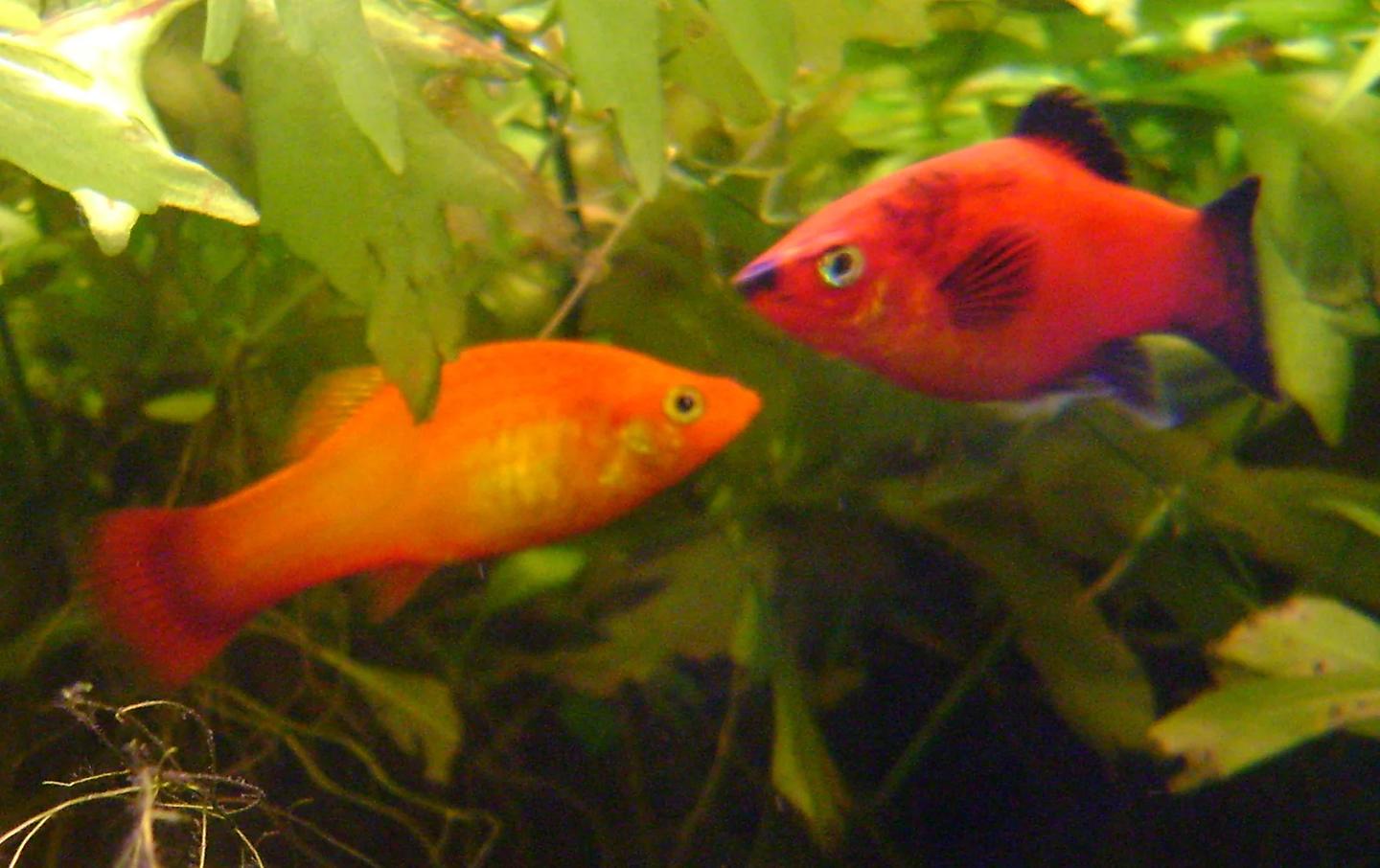
Platy is a trade name used for Xiphophorus maculatus, X. variatus and domestic forms. Start with at least three in a mature aquarium of at least 45 litres, verify the exact fish and measured water, and plan extra capacity before mixing sexes.
Maintain these water conditions for optimal health and vibrant colors
The Platy Berlin (Xiphophorus maculatus) is a freshwater poeciliid livebearer from the species’ native range between Ciudad Veracruz in Mexico and northern Belize. FishBase records a maximum length of 4 cm total length for male or unsexed fish. Its peaceful behaviour, compact size and straightforward feeding make it suitable for beginners who can provide neutral-to-alkaline, moderately hard water.
Keep this platy at 20–25°C, pH 7.0–8.0 and 10–12 dGH. These routine aquarium values are the overlap of FishBase’s recorded environment, the Seriously Fish species profile and OATA’s platy guidance. OATA’s figures are group guidance rather than a species-specific optimum. The narrow hardness overlap matters: Seriously Fish warns that X. maculatus will not thrive in soft, acidic water.
A planted, filtered aquarium with open swimming room suits its natural pattern of using slow-moving, weedy water. FishBase records wild adults in warm springs, canals, ditches, creeks and swamps, often around silt and weedy banks. Recreate the useful features rather than the silt: plants and shelter give cover, while clean open areas leave room to swim and feed.
Each purchase supplies one live Platy Berlin. Use the live size selector to choose the 3 cm dispatch grade. The size you select is the size supplied, not the adult size. Plan the permanent aquarium around the recorded 4 cm adult maximum and the full social group rather than around the fish’s length on arrival.
Sex is guaranteed only when the selected option explicitly states male or female. This Platy Berlin listing has no sex-guaranteed option. Do not base a mixed-sex ratio on assumed sex; assess the group’s composition before adding further fish. OATA’s suggested ratio is two females to each male, while Seriously Fish also advises keeping more females than males because male attention can be relentless.
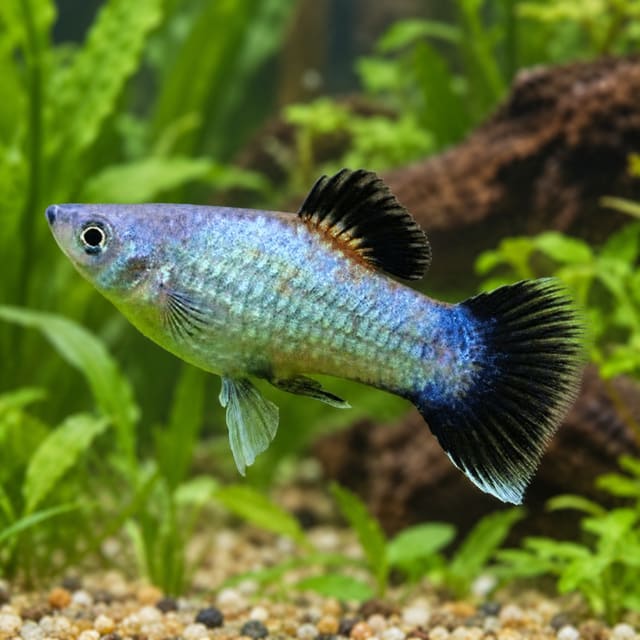
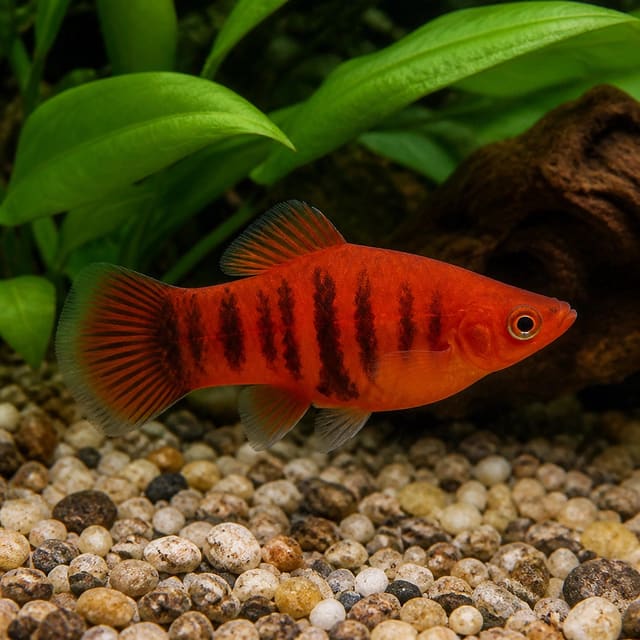
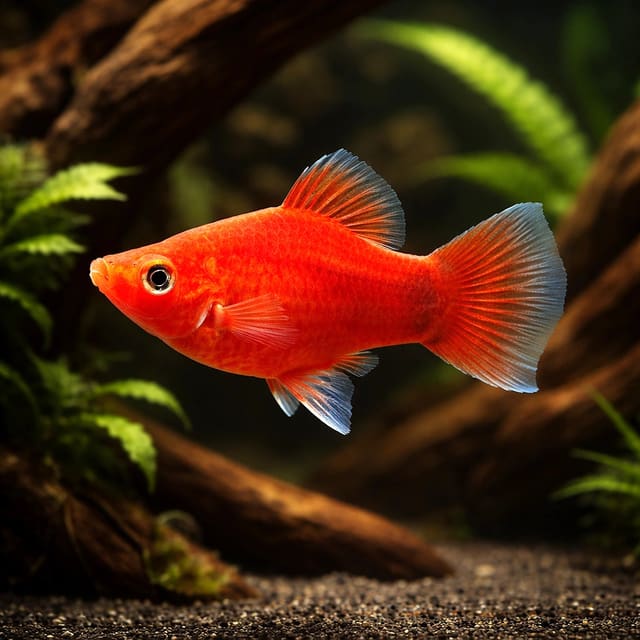
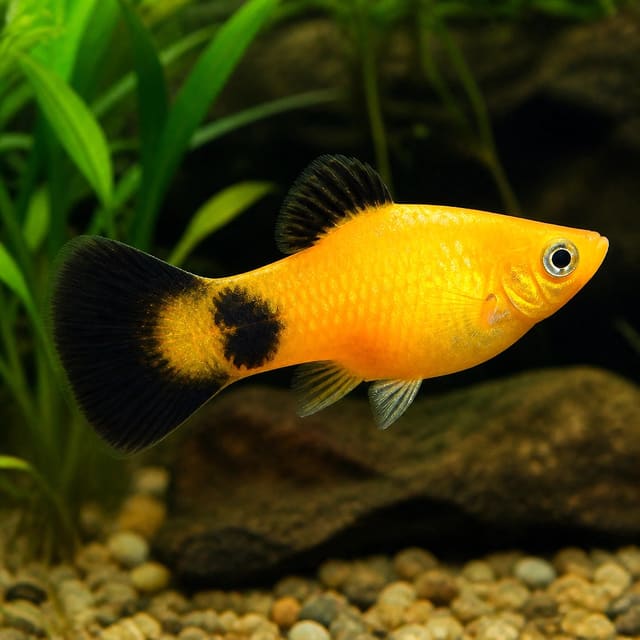
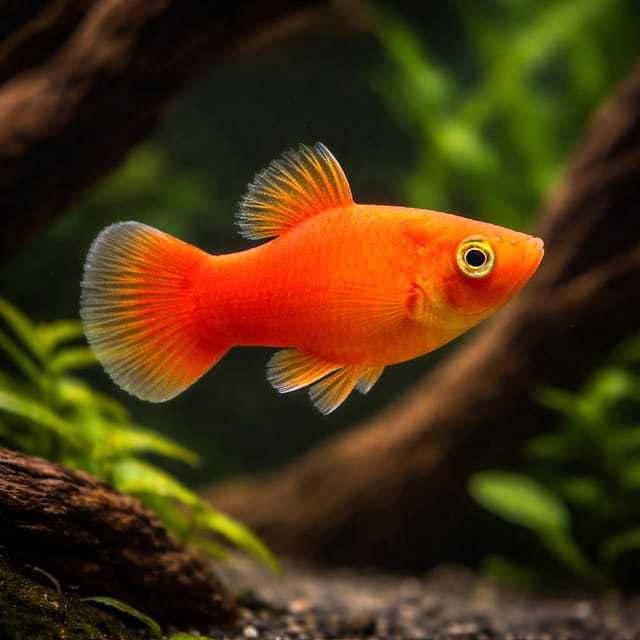
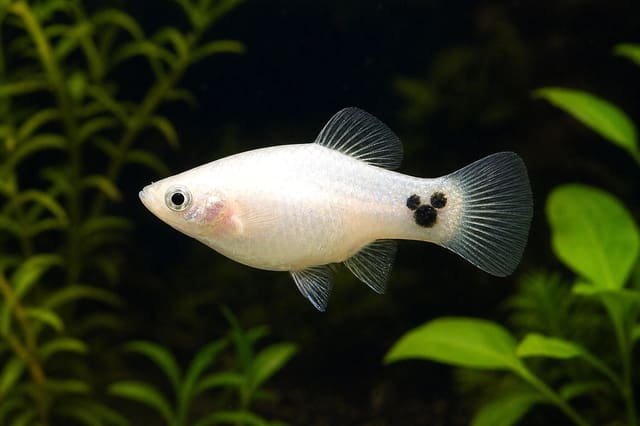
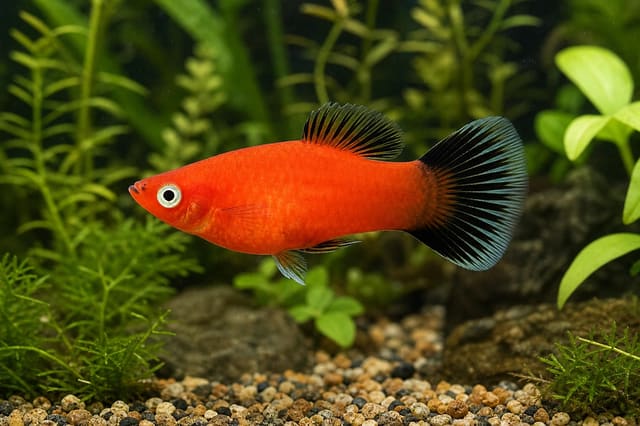
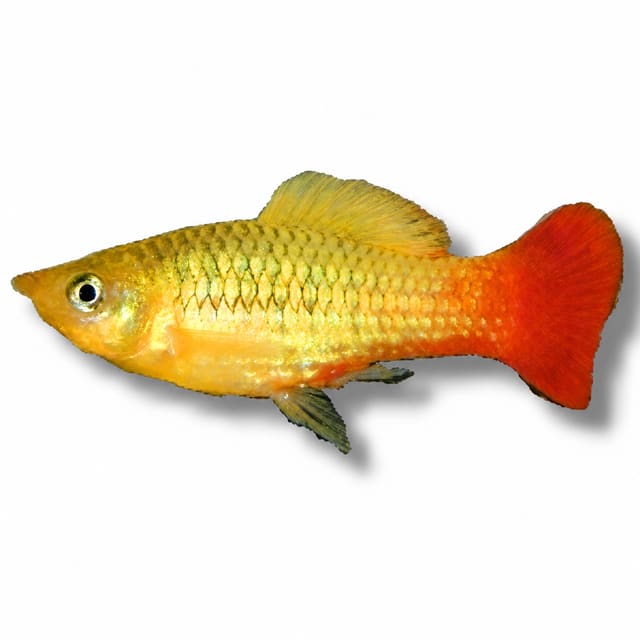
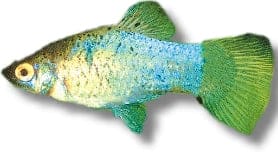
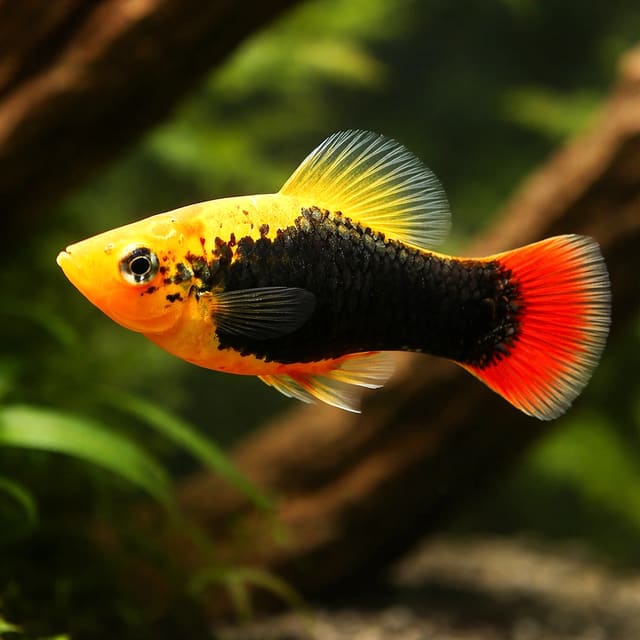
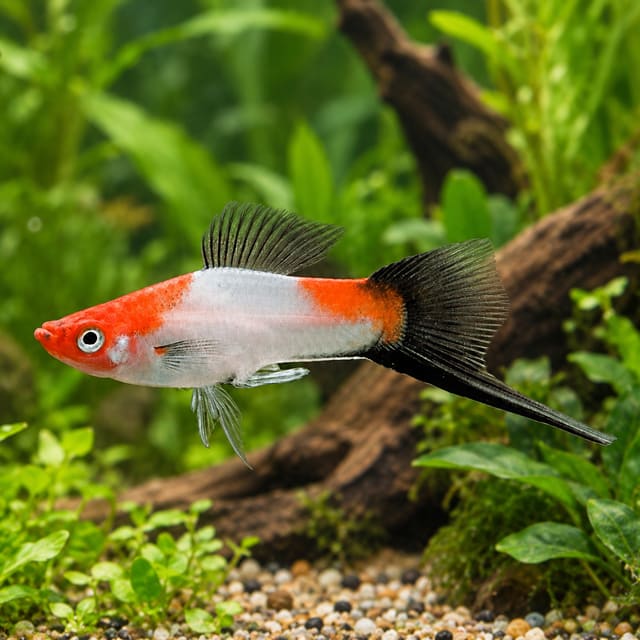
The Berlin name identifies the aquarium colour form within Xiphophorus maculatus. Expect individual fish to vary in the exact pattern and intensity of their colouring. The gallery images are representative, based on reference photographs of this species, so colours can look slightly different from the live animal.
If you are comparing colours within the same group, browse the current platy fish collection. Treat colour as the final choice after water chemistry, aquarium footprint and group composition have been settled.
This is a strong beginner choice when the aquarium is filtered, mature and kept above neutral pH. Seriously Fish calls Xiphophorus maculatus one of the best beginner species as long as pH remains above neutral, while OATA describes platies as generally peaceful and easy to keep. Ease of feeding does not remove the need to test hardness: soft, acidic water is a poor match even when the temperature looks suitable.
| Suits | Not suited to |
|---|---|
| A mature aquarium with a base of at least 60 × 30 cm | A smaller permanent aquarium planned around the 3 cm dispatch size |
| Water at 20–25°C, pH 7.0–8.0 and 10–12 dGH | Soft, acidic water in which the species will not thrive |
| A planned group of at least three platies | A platy kept without the companionship platies require |
| Most peaceful community species after water and space screening | Companions whose water needs or activity cannot share the same aquarium |
| Planted layouts with shelter and open swimming room | An unfiltered aquarium or one with no established biological filtration |
Pass: the aquarium has the required footprint, the filter is mature, tests show zero ammonia and zero nitrite, and the routine water values can remain within the stated range. There is enough capacity for the complete group as well as every existing fish.
Pause: the tap water is soft or acidic, the aquarium is still cycling, the planned group would crowd the footprint, or the existing fish need different water. Correct the setup before adding livestock rather than relying on gradual adjustment after introduction.
A larger aquarium gives more room for a group and generally holds temperature and water quality more steadily. Volume alone is not the whole decision, however: retain the 60 × 30 cm minimum base so the fish have practical swimming and feeding space.
Use 4 cm as the adult planning size for this offer. FishBase records that maximum for male or unsexed Xiphophorus maculatus. Seriously Fish lists 5 cm standard length, so allow spare capacity rather than treating the smaller figure as a reason to crowd the aquarium. Females grow larger than males, so retain spare capacity while planning around the 4 cm adult figure.
Provide an aquarium base of at least 60 × 30 cm. Seriously Fish illustrates that footprint with a 60 × 30 × 30 cm aquarium of approximately 54 litres. Both dimensions matter: a tall aquarium with less base area is not an equivalent substitute because it does not provide the same horizontal room.
The aquarium should combine cover with unobstructed swimming room. Live plants are especially useful because Seriously Fish says the species appreciates a planted aquarium. OATA recommends aquarium gravel or sand, plants or suitable ornaments for shelter, and open space for swimming. Place dense planting around the back or sides and leave accessible open areas where the group can move and take food without crowding.
Never treat the 3 cm dispatch grade as a temporary aquarium standard. The biological load increases with feeding and growth, and a social group adds waste from the beginning. Set up the adult aquarium first so filtration, water chemistry and group capacity are already settled when the fish arrives.
Keep the aquarium at 20–25°C, pH 7.0–8.0 and 10–12 dGH. This is the shared overlap of FishBase, Seriously Fish and OATA guidance, so it remains inside every named range. Aim for steady readings within that overlap rather than moving between its extremes.
Test the source water as well as the aquarium. A tank reading makes more sense when you know whether the tap water begins inside the target range and how it changes after treatment. Our water chemistry guide explains what the main tests measure, while the water matcher lets you compare measured values with the care range.
If the source water is soft or below pH 7.0, pause the purchase plan. This species needs moderately hard or harder water and is not a good choice for a naturally soft, acidic setup. Choose livestock that matches the water you can maintain consistently rather than forcing repeated large adjustments.
Test at least weekly and whenever behaviour, breathing, colour or appetite changes. Record the results so a rising nitrate level or movement in pH can be recognised before it becomes a persistent problem. Treat replacement tap water with a conditioner that removes chlorine or chloramine before adding it to the aquarium.
Run a well-established biological filter before adding the Platy Berlin. The RSPCA explains that fish release toxic ammonia, which filter bacteria convert first to toxic nitrite and then to safer nitrate. A filter therefore needs time to develop its bacterial population before it receives the waste from a social group.
If this is your first setup, follow the steps in our first tropical aquarium guide and confirm zero ammonia and zero nitrite before introducing fish. OATA warns that adding livestock too quickly can overwhelm the bacteria, producing new tank syndrome and unhealthy ammonia or nitrite levels.
Place the filter outlet so water circulates through the aquarium without turning the whole footprint into a forceful current. FishBase associates wild adults with typically slow-moving habitats, while the aquarium still needs enough circulation to carry waste to the filter and prevent stagnant areas.
Check that decorations are stable and that the group can move between cover and open water. A planted edge with a clear centre is one workable arrangement, but the decisive outcome is usable shelter plus unobstructed room. Inspect the filter regularly for reduced flow or blockage because the rated turnover only helps while water can pass through the media.
Feed a good-quality flake or granule with a high algae content as the routine dried food, then add small live or frozen foods such as daphnia, small bloodworm or tubifex for variety. FishBase records that wild Xiphophorus maculatus eat worms, crustaceans, insects and plant matter, so the aquarium diet should include both animal and plant-based components.
OATA advises offering platies only what they can finish within a few minutes, once a day. Seriously Fish also describes the species as unfussy and accepting most live, frozen and dried foods, but an easy appetite is not a reason to increase the portion.
Alternate suitable foods across the routine rather than mixing a large quantity into every meal. A dried staple supplies consistency, while small live or frozen items reflect the invertebrate component of the recorded diet. Use foods small enough for the platy to take cleanly.
Overfeeding turns uneaten food into waste, which adds pressure to the biological filter and can raise ammonia, nitrite or nitrate. Feeding and filtration are therefore one care decision: the correct portion is the amount the group consumes promptly while maintaining stable body condition and clean water.
Carry out a 25% partial water change at least once every week. Use a siphon to remove solid waste from the substrate where needed.
Treat replacement water with a tap-water conditioner before it enters the aquarium. Match it carefully enough to avoid an abrupt temperature change, then refill without disturbing the fish or substrate more than necessary. Test ammonia and nitrite at least weekly and keep both at zero.
Observe the group while feeding and during ordinary swimming. Healthy fish should have clear, bright eyes, intact scales and undamaged fins. Watch for hanging at the surface, sitting on the bottom, erratic swimming, darker or paler colour, increased hiding, altered aggression, faster or slower gill movement, white spots, fluffy growths, damaged fins or scales, changing body condition, or reduced interest in food.
If something changes, test temperature, pH, hardness, ammonia, nitrite and nitrate before making several adjustments at once. Correct a measurable water-quality problem promptly and observe whether normal behaviour returns. Separate a fish if continued chasing or injury creates an immediate welfare problem. If you remain concerned about the fish’s health after checking the water, seek advice from your aquarium retailer.
Keep a simple weekly record of test results, water changes, feeding response and visible condition. A record turns an isolated observation into a useful trend and helps distinguish a one-off disturbance from a developing aquarium problem.
Be ready to receive the parcel in person. Live fish cannot be left unattended, and the Live Arrival Guarantee requires someone to receive the parcel and to open and inspect it on the day it arrives. Our delivery and Live Arrival Guarantee policy explains the current claim requirements and arrival procedure.
Film every delivery from the sealed parcel onward. A short continuous unboxing video and the order number are needed for a Live Arrival Guarantee claim, so report any problem on the day the fish arrives. Keep the fish in the sealed bag while its condition is shown.
The fish is hand-packed in an oxygenated bag inside an insulated box, with a heat pack when the weather calls for it. A licensed live-animal courier carries the parcel, and tracking information is sent by email so someone can be present to receive it.
OATA advises checking that ammonia and nitrite are zero before any fish is introduced. Confirm the aquarium is within 20–25°C, pH 7.0–8.0 and 10–12 dGH before delivery day, rather than trying to correct unsuitable water while the fish waits in its bag.
Add fish gradually because the filter’s bacterial population must adjust as livestock and feeding increase. During the first week, check feeding response, swimming, breathing, colour and interaction with the group while continuing the normal testing routine.
Keep companionship at the centre of the stocking plan. OATA suggests at least three platies and recommends two females to each male to reduce stress on females and other inhabitants. More can be kept when the same ratio and the aquarium’s capacity are maintained.
| Group plan | Decision |
|---|---|
| Three mixed-sex platies | Plan for two females and one male. |
| Six mixed-sex platies | Maintain the same ratio with four females and two males. |
| A larger group | Increase aquarium volume as the group grows and retain more females than males. |
| Composition uncertain | Assess the group before adding further fish rather than assuming a ratio. |
Seriously Fish describes males as tolerant of one another, but it also warns that male attention towards females can be relentless. More females spread that attention. Dense planting creates visual cover, although plants do not replace the need for an appropriate ratio and sufficient space.
Mixed-sex groups will produce continual batches of fry, because this livebearer breeds readily in the community aquarium. Include those fry in the capacity decision before combining males and females.
Check ammonia and nitrite after an increase in stocking or feeding. OATA explains that the beneficial bacteria must increase as more fish and more food add waste. Additions made too quickly can produce new tank syndrome even when the aquarium was stable with its previous population.
The social recommendation does not turn every platy into an interchangeable purchase. Group composition, total capacity and water chemistry must all work together. If one of those conditions fails, pause further additions until the aquarium can support the intended group.
Seriously Fish describes Xiphophorus maculatus as very peaceful and suitable with most community species. Treat “most community species” as a screening rule, not a universal tank-mate list: every companion must share the aquarium’s water, space and behavioural conditions.
| Suitable approach | Use caution or avoid |
|---|---|
| Other platies within a planned social group | Avoid mixed-sex groups without more females than males |
| Most peaceful community species after all four checks | Large swordtails, which OATA says may be boisterous and may chase timid tankmates |
| Gradual additions to a mature biological filter | Avoid adding several fish before the filter adapts to the increased waste |
Compatibility beyond the description “most community species” remains a case-by-case decision. Do not assume that a familiar community label settles hardness, footprint or group capacity. Compare the requirements of each intended fish and use the narrower shared range.
Observe a new combination particularly closely during feeding and in the first week. Separate affected fish if chasing is persistent, a fish cannot reach food, fins become damaged or hiding replaces normal swimming. Test water at the same time because poor water quality can accompany behavioural changes and needs its own correction.
Platy Berlin reaches a recorded maximum of 4 cm total length for male or unsexed fish, according to FishBase. Plan its permanent aquarium and group around that adult figure, not the 3 cm dispatch size.
Provide a base of at least 60 × 30 cm. Seriously Fish illustrates this as a 60 × 30 × 30 cm aquarium of approximately 54 litres; increase the space when the total group or community requires it.
OATA suggests at least three platies. For a mixed-sex group, use two females to each male and maintain that ratio if the group becomes larger.
Yes. Seriously Fish describes the species as one of the best beginner fish when pH remains above neutral; keep it in mature, filtered water at pH 7.0–8.0 and 10–12 dGH.
Feed a quality flake or granule with a high algae content, plus small live or frozen foods such as daphnia, small bloodworm or tubifex. Offer only what it eats within a few minutes, once a day.
Keep it at 20–25°C, pH 7.0–8.0 and 10–12 dGH. These values are the overlap of FishBase, Seriously Fish and OATA guidance.
Seriously Fish describes it as very peaceful and says even males tolerate one another. Watch every new combination and separate affected fish if persistent chasing or fin damage occurs.
It can live with other platies in a planned group and with most peaceful community species whose water and space needs match. Use caution with large swordtails because OATA says they may chase timid tankmates.
Start filming while the parcel is still sealed, before opening it or floating the bag. The fish is packed in an oxygenated bag inside an insulated box and carried by a licensed live-animal courier; receive it in person, show it in the sealed bag, then float the bag for 20–30 minutes before release.
No reviews for this item yet. Bought one? Honest reviews only, good or bad.
What customers say about ordering from us
Easy website plenty of info on fish your buying great to pick a time slot
TRACEY DURRANT · 7 Oct 2026
Got some lovely fish thank you
Kevin Mackie · 7 Oct 2026
Reviews of our shop, collected by Judge.me, an independent third-party review collector. Newest first.