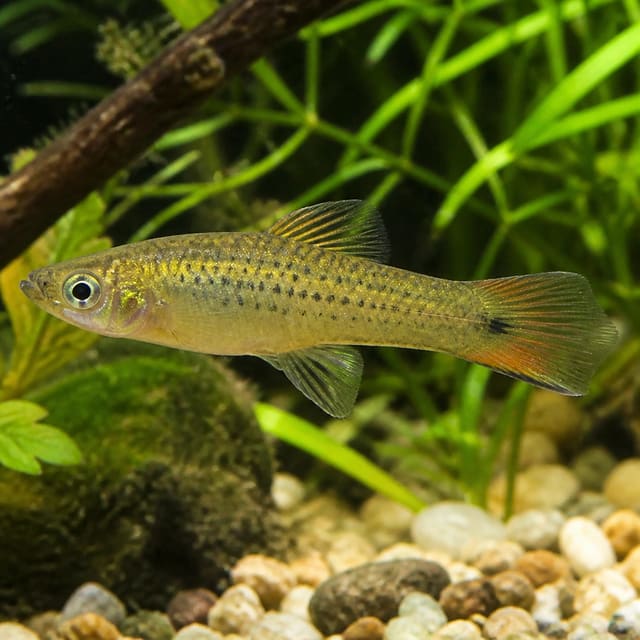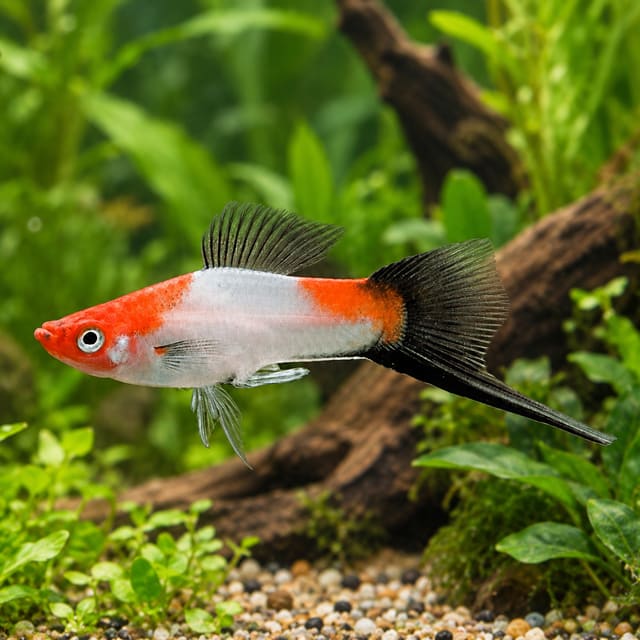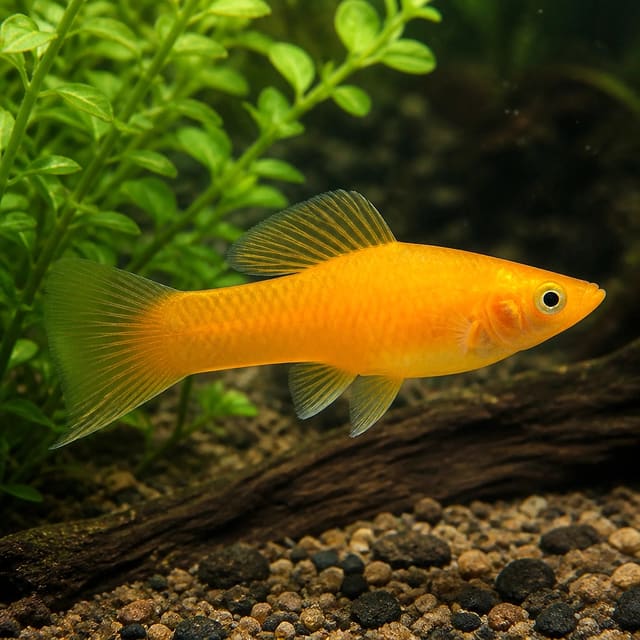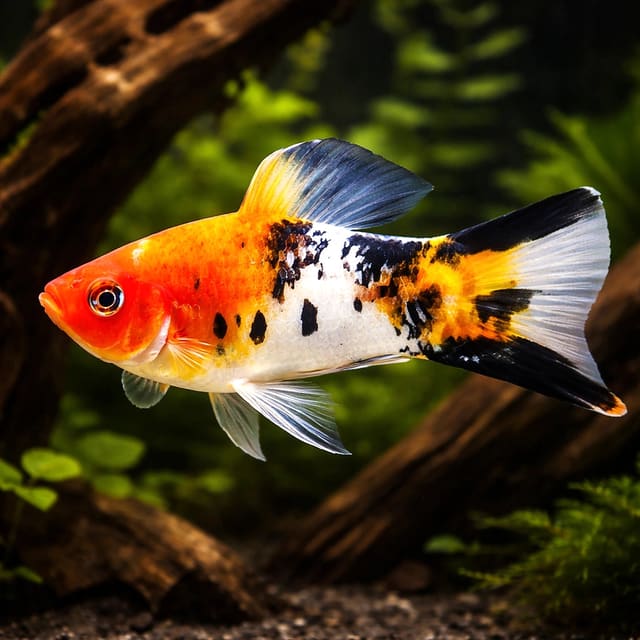
Easy
Assorted Platy (Xiphophorus maculatus) – 1–6cm & XL Size Grades
20–25°C · pH 7–8 · 54L
£2.99

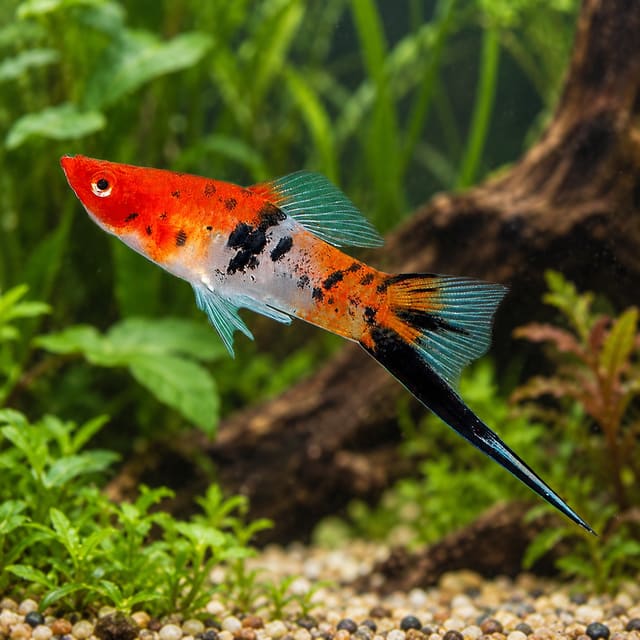
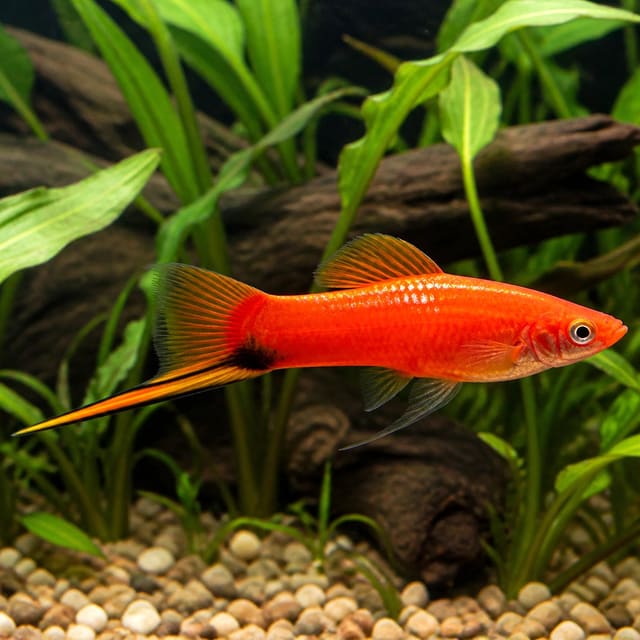
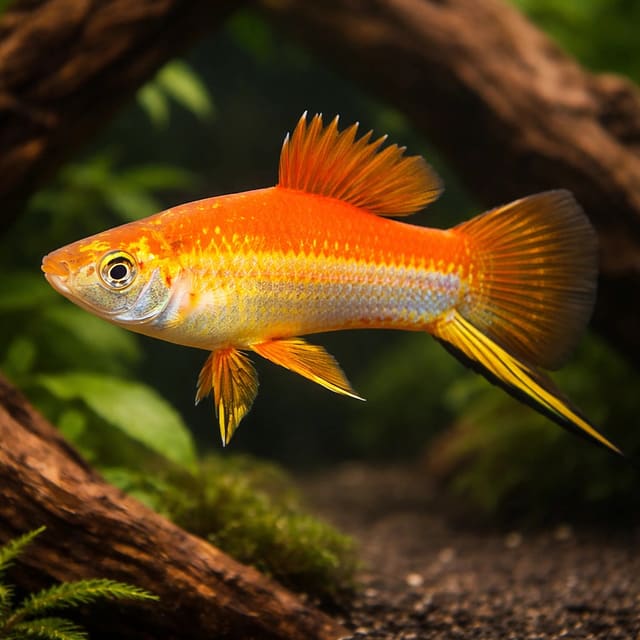
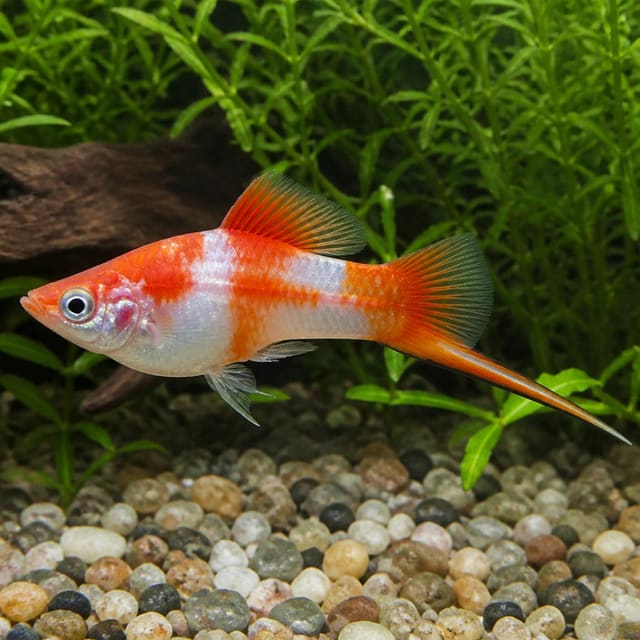
Five young assorted platies (Xiphophorus maculatus) sent as one group, about 2–2.5 cm each, with colours and sexes left to chance. A peaceful livebearer for a planted community aquarium that shares their liking for hard, alkaline water.
Adult size is the maximum length this species reaches at full maturity (scientific sources). The livestock you receive will be younger and smaller. Product-photo provenance and any image-specific limitations are stated on the listing.
Xiphophorus maculatus
Five young assorted platies (Xiphophorus maculatus) sent as one group, about 2–2.5 cm each, with colours and sexes left to chance. A peaceful livebearer for a planted community aquarium that shares their liking for hard, alkaline water.
Adult size is the maximum length this species reaches at full maturity (scientific sources). The livestock you receive will be younger and smaller. Product-photo provenance and any image-specific limitations are stated on the listing.
Platy is a trade name used for Xiphophorus maculatus, X. variatus and domestic forms. Start with at least three in a mature aquarium of at least 45 litres, verify the exact fish and measured water, and plan extra capacity before mixing sexes.
Maintain these water conditions for optimal health and vibrant colors
One order on this page brings you five young platies, Xiphophorus maculatus, packed and sent together. They're netted from the same assorted tank that supplies our single Assorted Platy listing, so the fish are no different. What you're buying here is a ready-made group, sized for keepers who want platies as one part of a community aquarium.
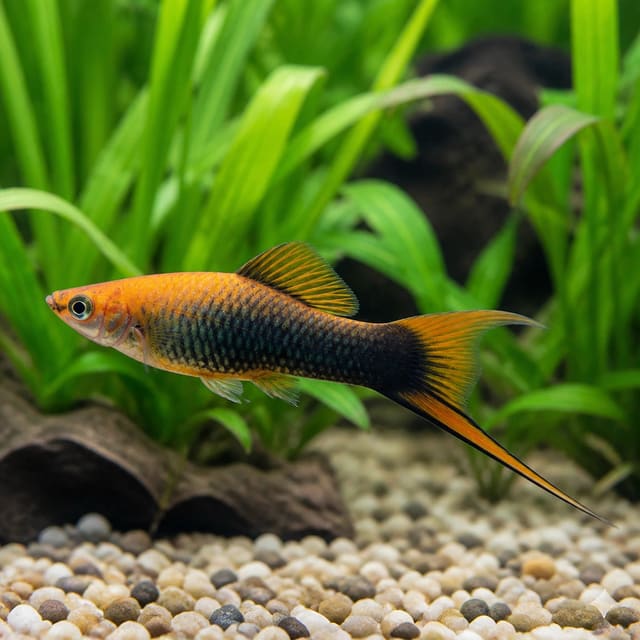
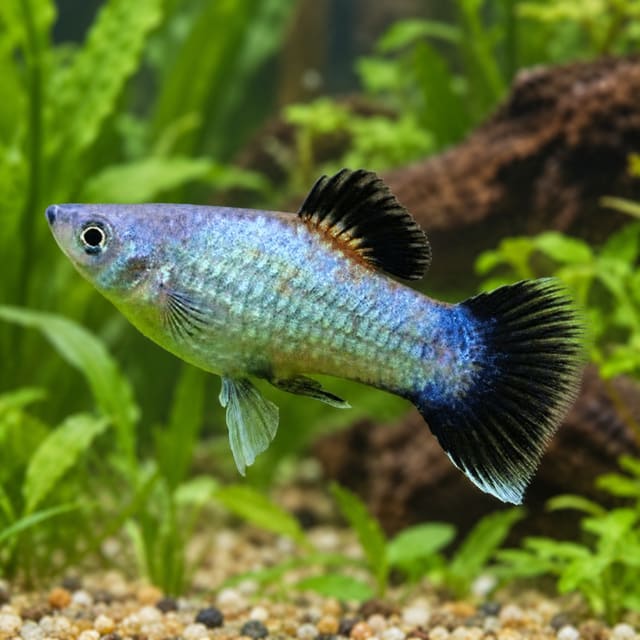
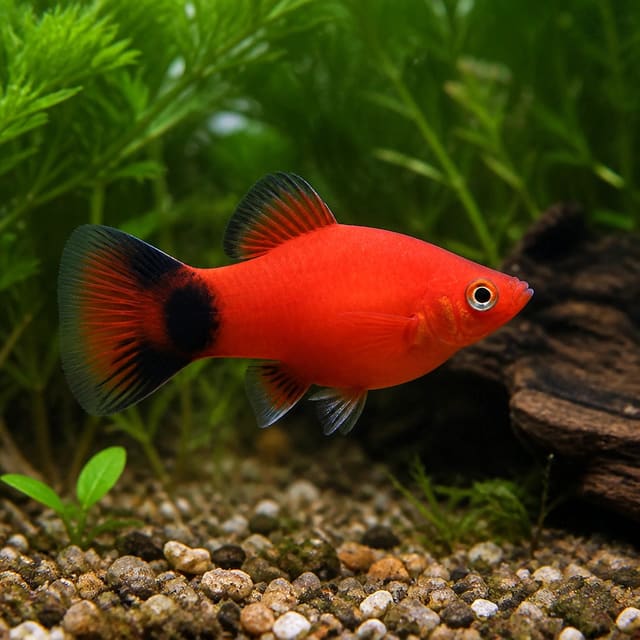
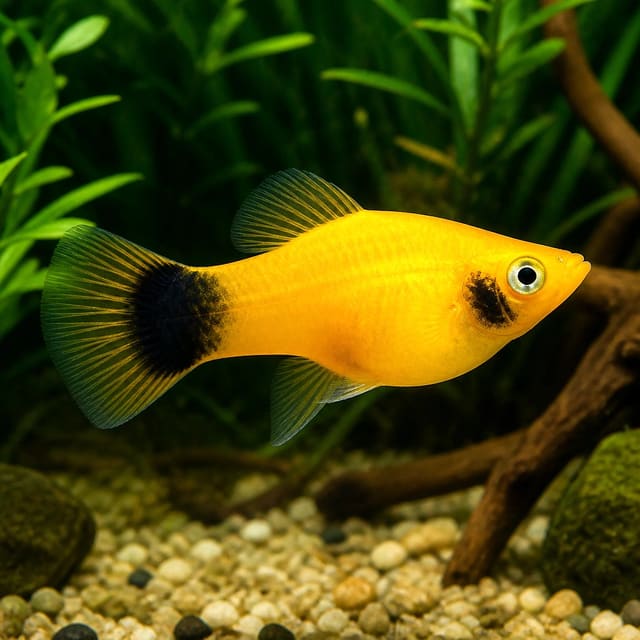
Be clear on what "assorted" means before you order. Neither colour nor sex is chosen. Five fish netted from a mixed tank can come out as a spread of colour forms or as several fish of much the same shade, and the split between males and females is whatever it happens to be, anywhere from all one sex to an even-ish mix. We can't pick to order on this listing. If one colour form is what you're after, look at the named forms instead, such as the Sunset Platy.
| Quick facts | Detail |
|---|---|
| Species | Xiphophorus maculatus (Günther, 1866), the southern platyfish |
| Family | Poeciliidae, the livebearers |
| What you receive | Five platies per order; colours and sexes not chosen |
| Size when sent | About 2–2.5 cm (our stock records) |
| Maximum size | 4.0 cm TL males, 6.0 cm TL females (FishBase) |
| Smallest tank for platies alone | 60 × 30 cm footprint, about 54 litres (Seriously Fish) |
| Temperature | 20–26 °C (Seriously Fish); 18–25 °C (FishBase) |
| pH | 7.0–8.2 (Seriously Fish); 7.0–8.0 (FishBase) |
| Hardness | 10–30 dGH (Seriously Fish); 9–19 dH (FishBase) |
| Diet | Omnivore: worms, crustaceans, insects and plant matter in the wild |
| Temperament | Very peaceful (Seriously Fish) |
| Breeding | Livebearer; 20–80 young after 24–30 days (FishBase) |
Every fact about the fish in that table comes from FishBase, Seriously Fish or Wikipedia, and the full references are at the foot of the page. Where two sources give different numbers, both are shown, and the sections that follow explain which figure to work to and why.
We offer platies in several group sizes, and five sits in a useful middle spot. It's aimed at the keeper who already runs, or is planning, a community tank somewhat bigger than the bare minimum, and who wants platies to be one strand of the stocking rather than the whole of it.
The strongest argument for five is about the sexes. Seriously Fish advises keeping more females than males whenever both share a tank, because a male platy's interest in females can be relentless. Since this group is netted without regard to sex, you are relying on chance, and chance is kinder to bigger numbers. The more fish you start with, the less a single unlucky pick decides how the group behaves, and if a male-heavy split does turn up, his attention still has more than one target. Five fish guarantee nothing, but they give you a better spread of possibilities than two or three would.
In a community aquarium with plants, wood and several other species, two or three small fish can vanish into the background. Five platies moving about the tank look like a planned part of the display. A group of this size is also easy to spot and easy to count at feeding time, which matters more than people think when you're checking that everyone is eating.
Five fish of 2–2.5 cm are a modest addition to an established, well-filtered community tank, which means you can usually introduce them together rather than in batches. Test the water a few days afterwards all the same; any addition puts some extra demand on the filter.
If your tank is large and you want platies to be a main feature rather than a supporting one, a bigger group spreads male attention more thinly still and fills more of the space. The trade-off is that a bigger mixed-sex group also produces more fry, so the larger you go, the more firmly you need a plan for surplus young. For most community set-ups, five strikes a fair balance between presence and manageability.
If your aquarium is right at the 60 cm minimum and platies will be its only residents, five plus the fry a mixed-sex group produces will fill it quickly. In that case, a smaller group or a bigger tank is the better plan. Likewise, if you want to be certain of avoiding fry, an assorted group can't promise that, because you won't know the sexes until the fish are home and growing.
FishBase lists the accepted name as Xiphophorus maculatus (Günther, 1866) and gives southern platyfish as the English common name. Wikipedia adds "common platy" and "moonfish". In shops it is simply "the platy", a name Wikipedia traces back to Platypoecilus, the species' original genus name.
The species belongs to the livebearer family Poeciliidae and to the genus Xiphophorus, which, per Wikipedia citing FishBase, holds 28 recognised species, swordtails included. Adult males make the difference obvious: a swordtail male carries a long sword-shaped extension on the tail fin, while a platy male's tail has no such extension.
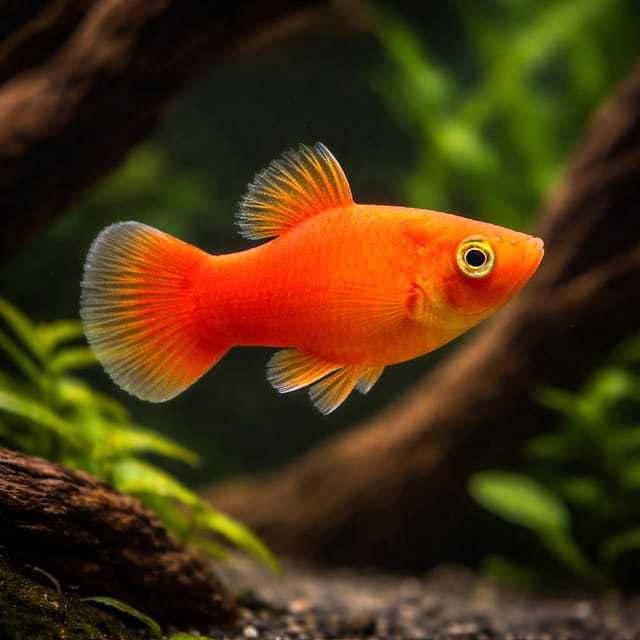
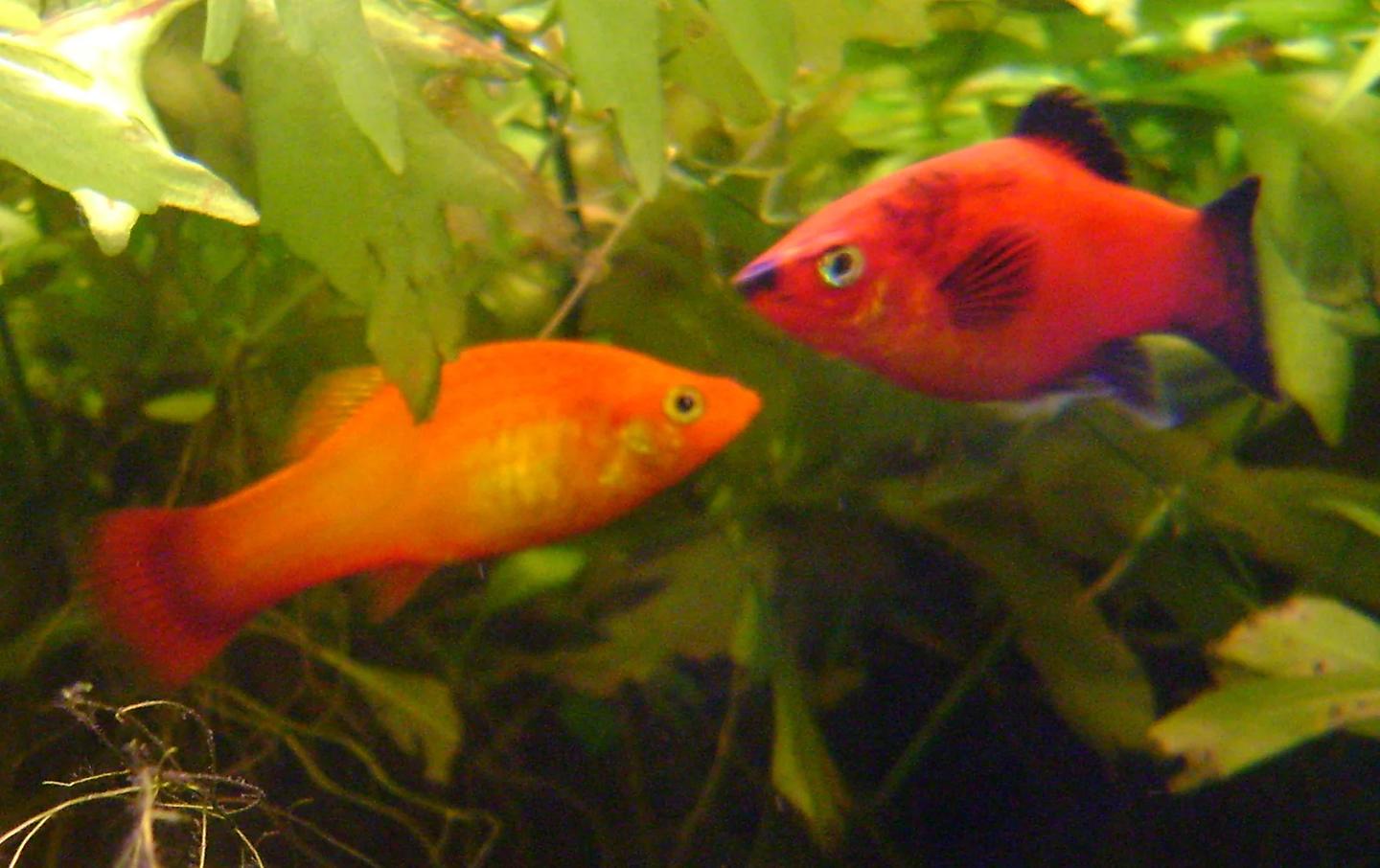
The wild fish is far from the colourful animal in the shop. Wikipedia describes wild southern platyfish as drab, without the dark line along the flank that many relatives show. The colours you'll see in an assorted group are the work of breeders. Wikipedia mentions orange, red, yellow, red/black and black/white varieties, and names rainbow wagtail, twin bar or comet, sunset and hi-fin wagtail among the strains. Seriously Fish lists mickey mouse, wagtail, tuxedo, moon, blue, red, comet and hi-fin among the dozens of selectively bred forms. Our Mickey Mouse Platy is one example sold as a single named form.
Domestic platies aren't always pure X. maculatus. Seriously Fish says some strains were produced by crossing with swordtails (X. helleri) or with X. variatus, and Wikipedia states that the fish commonly sold in pet shops is a hybrid of X. hellerii and X. maculatus rather than a pure strain. Seriously Fish also warns that many commercially bred platies are not very hardy, because of inbreeding and over-production, and that they can be prone to disease and premature death. That isn't a reason to avoid them; it is a reason to give them clean, stable, suitable water from day one.
Away from the hobby, the genus has a long research history. Wikipedia notes that Xiphophorus hybrids have been studied since the 1920s, especially in melanoma research, and that the X. maculatus genome was sequenced in 2013. It's a nice piece of trivia for a fish better known as an easy community fish.
According to FishBase, the species is native to North and Central America, from Ciudad Veracruz in Mexico to northern Belize, and Wikipedia gives the same span. Seriously Fish draws the range more widely, along the Atlantic coastal plain of Mexico, Guatemala, Belize and Nicaragua. The southern limit is where they differ; the core of the range, on the Atlantic side of Mexico down to Belize, is common to all three.
FishBase describes the habitat as warm springs, canals and ditches, typically with slow-moving water, silt bottoms and weedy banks, and Seriously Fish adds streams and rivers. Wikipedia sums it up as slow-moving water in canals, ditches and warm springs. FishBase also records the species as benthopelagic, so expect platies to spend time low down near the substrate as well as up in the water column.
A slow, weedy ditch translates into a few practical choices. Give the platies areas of calmer water rather than a current running the full length of the tank. Plant the margins thickly. Use a soft, fine substrate rather than sharp gravel, since these are fish of silty bottoms. And choose companions that also appreciate warm, hard, gently moving water, because Seriously Fish is clear that platies won't thrive in soft, acidic water, whatever the other residents prefer.
FishBase gives the IUCN status as Data Deficient, from an assessment dated April 2018, while Wikipedia records a NatureServe rating of Secure. The species has also become established outside its range. Wikipedia lists introduced populations in a number of US states and Puerto Rico, and says introduced platies and other livebearers have been implicated in the decline of native damselflies on Oahu, Hawaii. FishBase notes that at least one country reports adverse ecological effects. A breeding group in a community tank will produce more fish than you can keep, so decide early where they'll go. Never let any of them, fry included, go into a pond or open water.
Seriously Fish puts the minimum for this species at a 60 × 30 cm footprint, about 54 litres, and FishBase also gives a 60 cm minimum aquarium. Read those as the floor for platies kept on their own. A community tank holding five platies plus other species needs more room than that, and we'd suggest a tank comfortably longer than the 60 cm minimum for any genuine mix of fish. A larger volume also dilutes waste better and swings less in temperature and chemistry.
Seriously Fish says platies appreciate a planted aquarium and look their best in one. In a community set-up it helps to think in zones:
With several species sharing the water, filtration is the piece of kit to be generous with. Choose a filter rated for at least the tank's volume, and if the flow is strong, spread it with a spray bar or baffle. Use a heater with a thermostat and a thermometer you can read without moving anything. A cover glass keeps warmth in and reduces evaporation, which would otherwise slowly concentrate minerals between top-ups.
If the aquarium is already established, check that ammonia and nitrite read zero and nitrate is under control before you order. If it's a new tank, let the filter mature first and keep the first stocking light; five small platies are a reasonable first group. Either way, our arrival policy asks for the filter to be running, the water tested and the temperature matched before the fish arrive.
Seriously Fish leaves no doubt about the chemistry: this species must be kept in moderately hard or harder water and won't thrive in soft, acidic conditions. In a community tank, that one fact shapes every other choice, because whatever you set the water to has to suit every species in it.
The sources overlap rather than agree exactly, so the useful question is where they agree. Working inside the overlap keeps platies safe by every measure:
| Parameter | FishBase | Seriously Fish | Where both agree |
|---|---|---|---|
| Temperature | 18–25 °C | 20–26 °C | 20–25 °C |
| pH | 7.0–8.0 | 7.0–8.2 | 7.0–8.0 |
| Hardness | 9–19 dH | 10–30 dGH | 10–19 dGH |
Wikipedia repeats the FishBase figures. For a mixed tank, the overlap column is a good working target. If you want a companion that needs warmer water than 25 °C or softer water than 10 dGH, that species is pulling against the platies and it's worth choosing another.
Water supplies differ widely across the country, and the numbers coming out of your tap decide which fish are easy to keep. Measure pH and general hardness with a liquid kit, or look up your water company's published hardness figure, before building a community around platies. Hard, alkaline tap water makes platies straightforward. Soft, acidic water means a long-term commitment to adjusting it at every water change, and in that situation it's worth talking to us before ordering.
Water lost to evaporation leaves its minerals behind, so topping up with conditioned tap water keeps hardness roughly where it was. Be careful if you keep other tanks on softened water. Reverse-osmosis water, rainwater and water from a domestic softener all lack the hardness platies need, and using them for top-ups or changes will pull the tank away from the range above. If another species in the tank really needs that kind of water, it's a sign the two don't belong together.
A community tank with more fish produces more waste, so nitrate climbs faster than in a lightly stocked tank. Regular partial water changes with conditioned water at roughly the same temperature keep it in check, and smaller, more frequent changes avoid jolting the chemistry. Test ammonia, nitrite and nitrate regularly while the tank settles after new arrivals, and check pH and hardness every few weeks so slow drift doesn't creep up on you.
FishBase lists the wild diet as worms, crustaceans, insects and plant matter, and Wikipedia calls the species omnivorous. Seriously Fish describes platies in the aquarium as unfussy, accepting frozen, live and dried foods, and suggests a quality dried product as the backbone of the diet. Feeding them isn't difficult. Feeding them well in a tank full of other hungry mouths takes a bit more care.
In a mixed tank, faster or bolder species can clear the surface before five young platies have had much. A few habits help:
A good flake or small granule makes a sound everyday food for fish of this size. Add a plant-rich food, such as a spirulina-based flake, to reflect the plant matter in the wild diet. Frozen or live daphnia, brine shrimp and bloodworm a few times a week cover the crustaceans, insect larvae and worms that wild platies eat.
Feed what the whole community clears in a couple of minutes, once or twice a day. More fish doesn't mean you can be careless with portions: leftover food sinks into planting and decays, and the extra waste of a busier tank leaves less room for error. While your platies are still growing from 2–2.5 cm, small meals more often suit them, an idea Seriously Fish supports when it says fry grow very quickly with two or three feeds a day.
Seriously Fish says newborn platies are big enough to eat brine shrimp nauplii or powdered flake straight away. If you decide to raise a brood, that is all they need at the start, offered little and often.
Seriously Fish describes platies as very peaceful and suitable for most community species. The limits come from the water platies need and from the size of the fish around them, not from the platies picking fights.
| Category | Examples and reasoning |
|---|---|
| Good fits | Other X. maculatus colour forms, which are the same species; small, peaceful fish that also prefer warm, hard, alkaline water and stay a similar size |
| Think first | Swordtails and variatus platies, because they can interbreed with platies; larger peaceful fish, but only if they can't fit a platy in their mouth |
| Leave out | Predatory fish that could swallow a 2–6 cm platy; persistent fin-nippers; species that need soft, acidic water |
Wikipedia states that the southern platyfish can interbreed with the green swordtail, and Seriously Fish notes that some platy strains came from crosses with swordtails and with X. variatus. In a community tank where both sexes are present, platies kept with swordtails, such as our Swordtail Lyra Assorted Colours, or with variatus platies may well produce mixed young. Some keepers don't mind. If you would like each type to breed true, keep them in separate tanks.
If five leaves you wanting more, extra X. maculatus of any colour form will mix in without trouble, since they are the same species. Remember that they'll interbreed with your five too, and that more females than males is still the ratio to aim for.
Before ordering, list the fish already in the tank alongside their preferred temperature, pH and hardness, then compare that list with the overlap figures in the water section. If every resident sits comfortably in hard, alkaline water at 20–25 °C and none is big enough to eat a young platy, five platies should fit in well. If one resident needs very different conditions, the platies aren't the problem to solve.
Sexing platies comes down to one fin. Look underneath, behind the belly. Females carry an ordinary fan-shaped anal fin. In males that fin is modified into the gonopodium, a narrow, stick-like organ used to mate, as Wikipedia describes. Seriously Fish adds that males are the smaller sex, and Wikipedia notes a slightly more pointed tail fin in males, though that is the subtler clue. Your fish arrive young, at around 2–2.5 cm, so some may not be easy to sex straight away; check again as they grow.
Seriously Fish's guidance is simple: when both sexes share a tank, keep more females than males, because the males' attention can be relentless. With five unsexed fish, here's how to think about whatever you end up with.
Since the assorted listings aren't sexed, ordering more won't let you pick females. Rebalancing a male-heavy group means adding more fish and letting the numbers even out, or passing surplus males on to another keeper, a club or a shop.
Courtship in platies mostly looks like a male staying close to a female and following her around the tank, and in a balanced group that's normal and harmless. It becomes a problem when one female gets no peace. Watch for a female who spends most of the day tucked into plants or pressed into a top corner, who stops coming up to feed, or whose fins stay folded. If you see that, thicken the planting first, then rebalance the group as described above. A temporary divider or a spare tank can give her a break while you sort out a longer-term answer.
Platies give birth to live young. FishBase puts gestation at 24–30 days with 20 to 80 young, while Seriously Fish gives around four to six weeks and says broods of up to 80 are not uncommon. Wikipedia cites about 20–40 young at a time in captivity. Both FishBase and Wikipedia put sexual maturity at three to four months. Seriously Fish calls breeding very easy in a community tank and mentions that fry appear in a continuous succession once both sexes are present.
If you want to raise a brood, the surest route is to move it, or the pregnant female, to a separate tank where the young can be fed often and grown on, since Seriously Fish notes fry grow very quickly when fed two or three times a day. If you'd rather not raise fry deliberately, dense planting will give some young cover, but the population still needs a plan. A community tank can't absorb a new brood every few weeks for long. Arrange outlets early with a local club, another keeper or a shop, and never release unwanted fish into the wild.
Please read our delivery and live-arrival information before ordering. The aquarium needs to be ready before the parcel arrives, with the filter running, the water tested and the temperature matched, and someone needs to be at the delivery address to take in live animals. You'll receive an email with the confirmed delivery date and tracking.
The five platies travel in an oxygen-filled bag within insulated packaging, with heat packs added when the conditions call for them, via a tracked courier licensed to carry live animals.
Begin a continuous video while the parcel is still sealed and keep it running as you open it, showing the fish inside the still-sealed bag in the same take. If any fish is dead, dying or clearly compromised on arrival, send that video with your order number to hello@tropicalfishco.co.uk on the day of delivery. Photographs on their own don't meet the policy. Under the guarantee terms, the resolution is either a replacement for the affected fish with your next order or a refund for them.
Adding five newcomers to a stocked tank is easier on everyone if the lights stay low for the rest of the day. Some keepers feed the existing fish lightly at the moment of introduction so the residents are distracted. Over the next week, watch three things in the new arrivals: how they breathe, whether they feed, and how they behave. Fins spread, steady breathing and fish turning up at mealtimes are the signs you want. Rapid breathing at the surface, clamped fins, white spots, a fish that won't eat for more than a day or two, or one that keeps to a corner are all signs to test the water and look more closely.
Even a modest addition changes the load on a filter that was balanced for the old stocking, so test ammonia and nitrite a couple of times a week for the first fortnight and act on any reading above zero with a partial water change. Hold off adding any further fish for at least a couple of weeks after the platies arrive, so you can see how the tank copes. Keep an eye on how existing residents treat the newcomers; a resident that persistently chases the platies is telling you something about the mix. As the platies grow, note which are males and which are females, since that decides whether you need to plan for fry and whether the group needs rebalancing.
Keep in mind Seriously Fish's warning that many commercially bred platies are not very hardy because of inbreeding. When you're adding to an established community, the careful approach is to hold the newcomers in a separate quarantine tank for a couple of weeks first, so that any illness shows itself before it reaches your other fish.
We wrote this guide from the following sources. All are free to read and go into more depth than a product page can.
No reviews for this item yet. Bought one? Honest reviews only, good or bad.
What customers say about ordering from us
I have a small group of long finned mountain minnows. So was delighted to be able to order ten of this variety to increase the genetics in my tank . The ones I recieved are healthy but it’s to early to give a verdict on wether they are of a long finned type since they are small currently.
Gordon Walker · 23 Sept 2026
100% success travel and "installation". Pleased with quality of purchase. The Siamese fighter a bit "shy" so have not yet seen him at his best yet but looking good. Happy customer. GG
George E Garratt · 21 Sept 2026
Reviews of our shop, collected by Judge.me, an independent third-party review collector. Newest first.