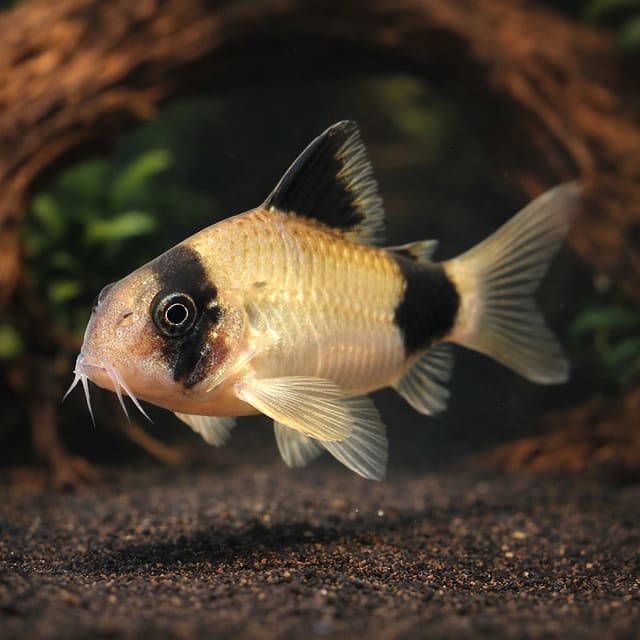
Panda Cory Catfish (Corydoras panda)
22–25°C · pH 6–7.4
£7.29
The L236 RB Line Hypancistrus Pleco (Hypancistrus sp. L236 RB line) is a warm-water L-number loricariid pleco. It suits keepers who can provide at least 120 litres, caves and oxygen-rich filtered water at 26–30°C and pH 6.0–7.5. Sold individually at a dispatch grade of 3–3.5 cm.
Hypancistrus sp. L236 RB line
The L236 RB Line Hypancistrus Pleco (Hypancistrus sp. L236 RB line) is a warm-water L-number loricariid pleco. It suits keepers who can provide at least 120 litres, caves and oxygen-rich filtered water at 26–30°C and pH 6.0–7.5. Sold individually at a dispatch grade of 3–3.5 cm.
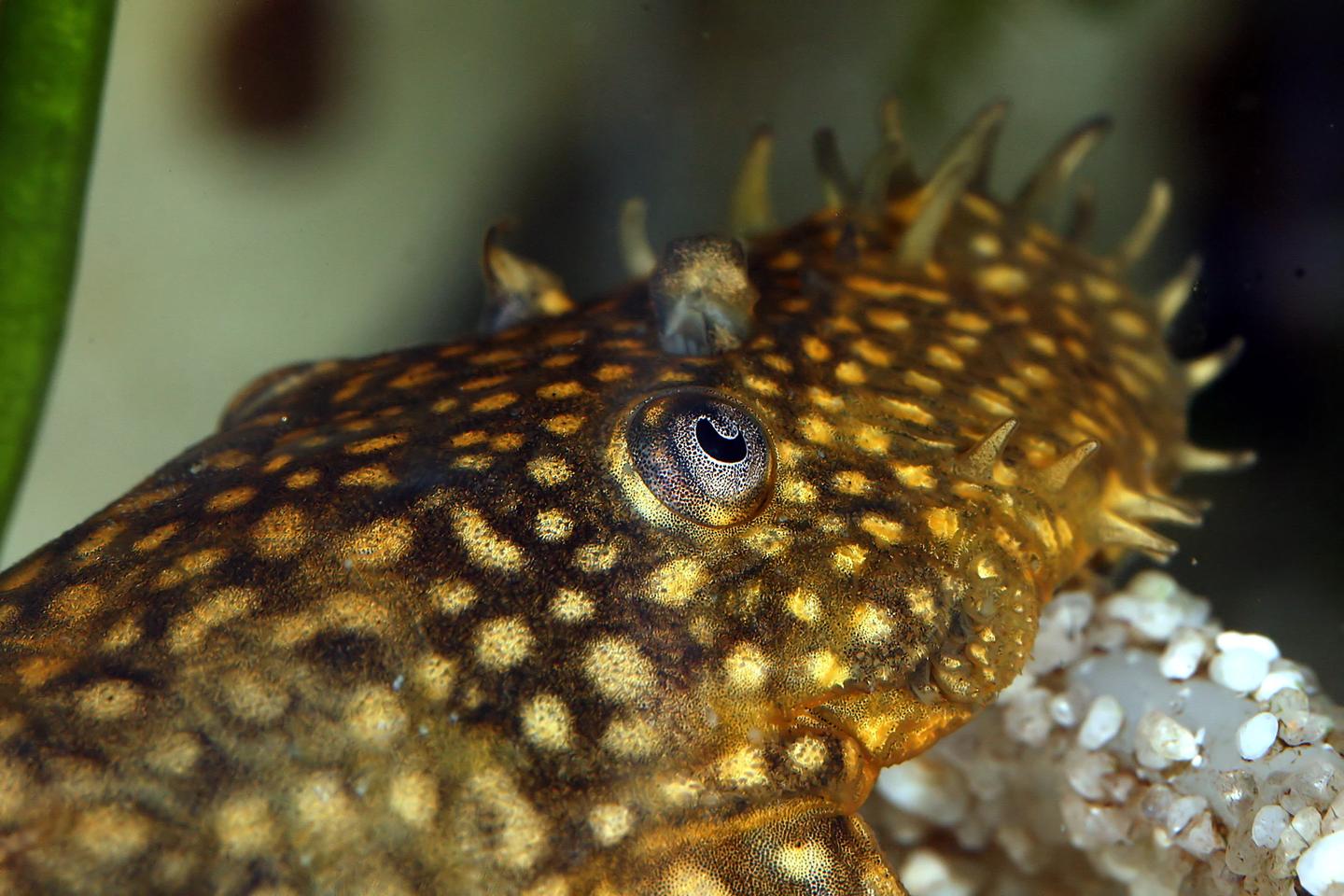
For one typical common bristlenose, start with a mature, filtered aquarium of at least 90 litres, useful floor area, wood and cover. OATA reports about 15 cm adult length, 22-27°C, pH 6-8 and 4-12 dGH. Confirm the exact trade identity before applying species-level claims.
Maintain these water conditions for optimal health and vibrant colors
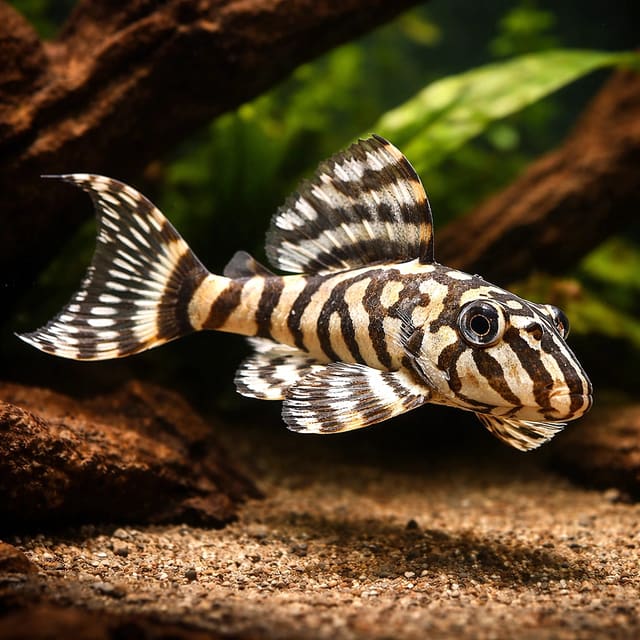
The L236 RB Line Hypancistrus Pleco (Hypancistrus sp. L236 RB line) is a freshwater L-number loricariid pleco. The RB wording identifies a selected trade line associated with L236 rather than adding a formal species name. It suits a keeper prepared to provide warm, highly oxygenated water, reliable biological filtration, several caves and close control of food waste.
Use an aquarium of at least 120 litres and organise it around secure shelter at bottom level. Keep the water at 26–30°C and pH 6.0–7.5, using stable readings within each range rather than repeatedly moving between its limits. OATA’s tropical algae-eater guidance supports regular testing, filtration, prepared feeding and sheltered aquarium layouts for the group.
This fish needs a warm, mature, well-filtered aquarium prepared before arrival. The decisive work happens before introduction: confirm that the filter is established, measure the actual water values, create more than one shelter and check that other bottom-dwelling fish will not crowd the same caves. A decorative cave is useful only when the fish can enter it freely and reach food without being persistently displaced.
| Suits | Not suited to |
|---|---|
| Filtered aquariums of at least 120 litres | Unfiltered or newly assembled aquariums |
| Keepers who test water every week | Set-ups where waste is allowed to build up |
| Layouts with several caves and bottom cover | Cramped layouts with intense cave competition |
| Warm, oxygen-rich water within the stated range | Animals requiring incompatible water conditions |
| Measured portions of sinking food | Reliance on incidental algae as the whole diet |
Make the decision from a normal maintenance week, not from the aquarium immediately after cleaning. Check whether you can reach trapped food around the caves, inspect the filter without destabilising the shelters and record the water tests consistently. A suitable layout remains manageable when plants grow, equipment needs attention and every animal is using its preferred part of the aquarium.
If this care style fits your aquarium, you can also browse the wider catfish and pleco collection. Compare the needs of each fish rather than treating all plecos as interchangeable algae cleaners.
Each purchase supplies one L236 RB Line Hypancistrus Pleco. The dispatch grade is 3–3.5 cm. That measurement describes the fish at dispatch, not a fixed adult length, so prepare the full aquarium before the fish arrives rather than using its arrival size to justify temporary housing.
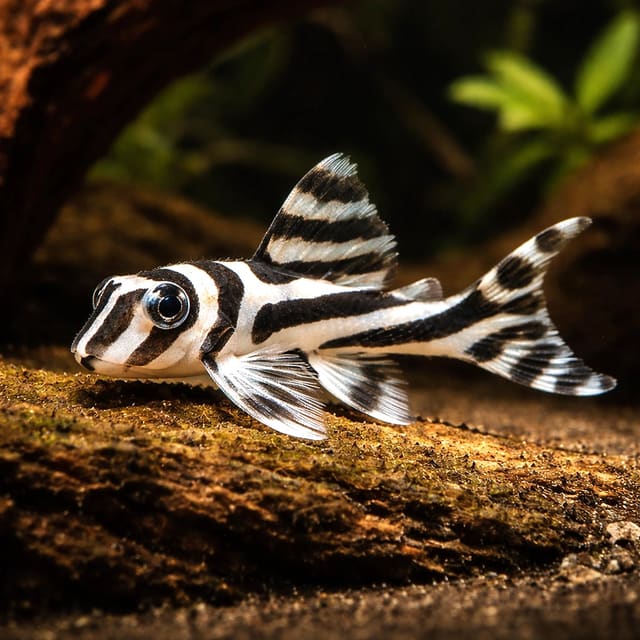
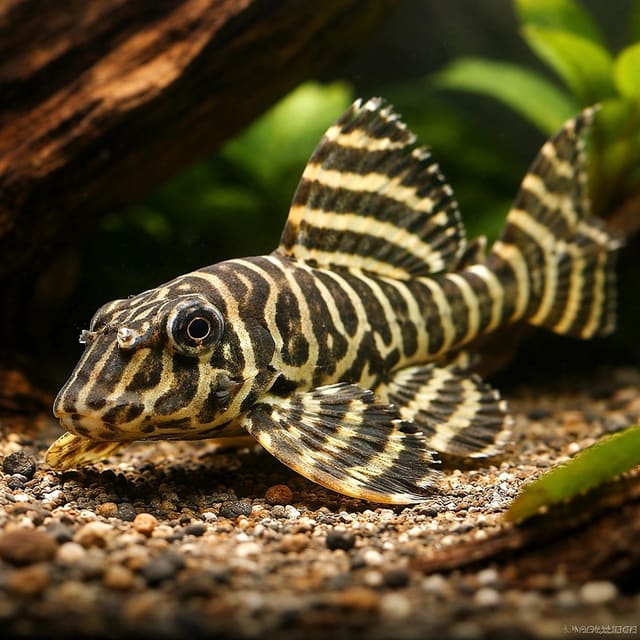
“Cracked Zebra Pleco” is also used as a trade name for this line. The scientific name is Hypancistrus sp. L236 RB line. Keep that full wording in your own livestock notes so later decisions about water, food and compatibility remain tied to the same L-number fish.
Sex is guaranteed only when the selected option explicitly states male or female. This L236 RB Line Hypancistrus Pleco listing has no sex-guaranteed option.
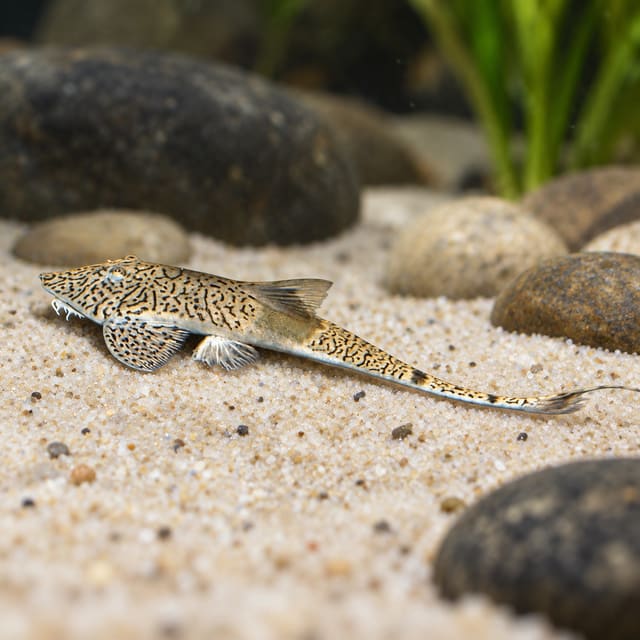
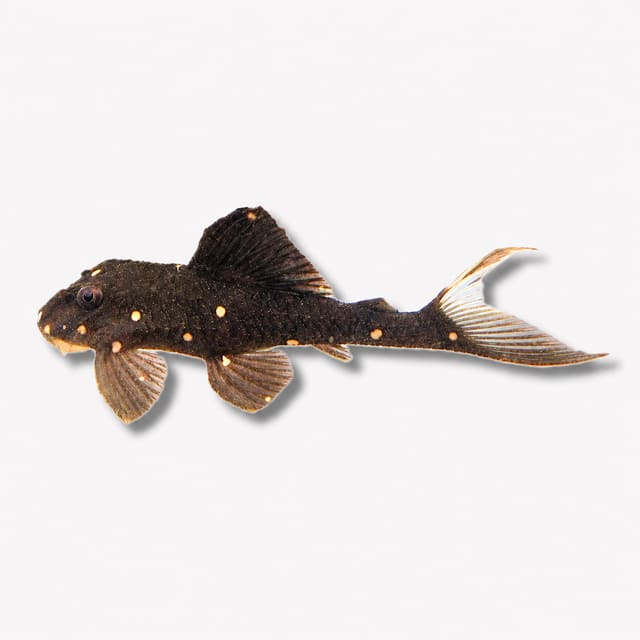
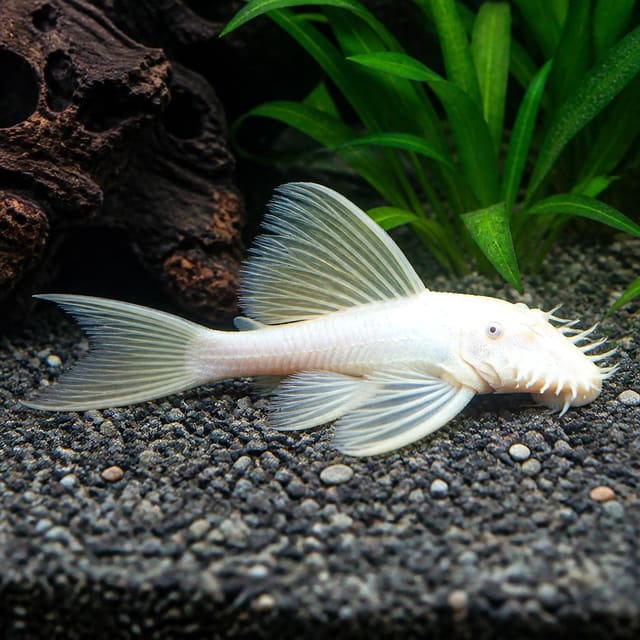
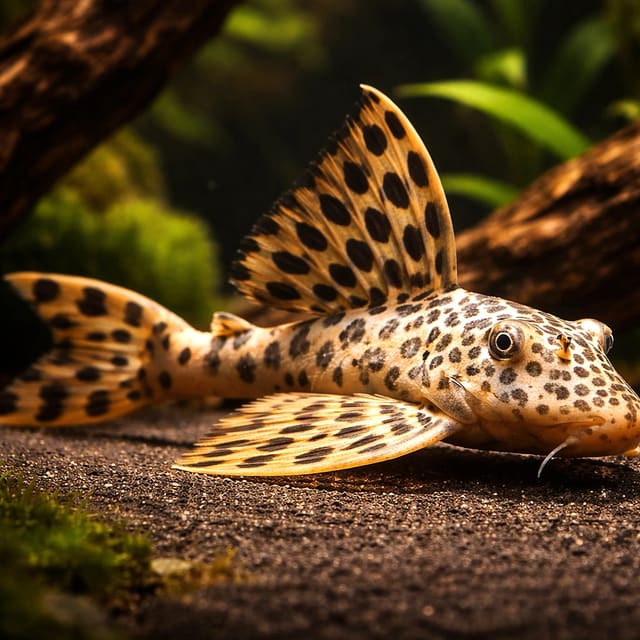
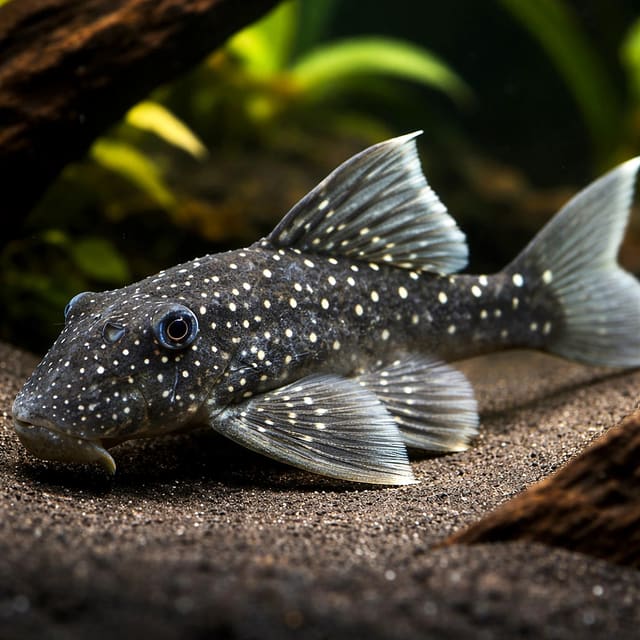
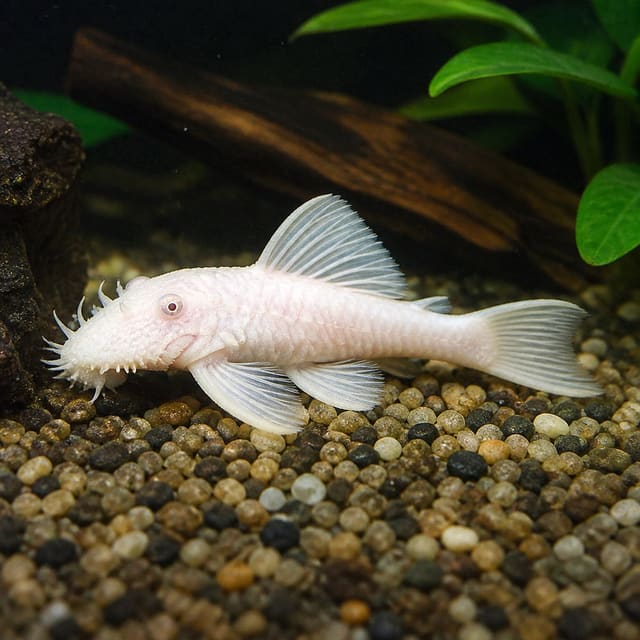
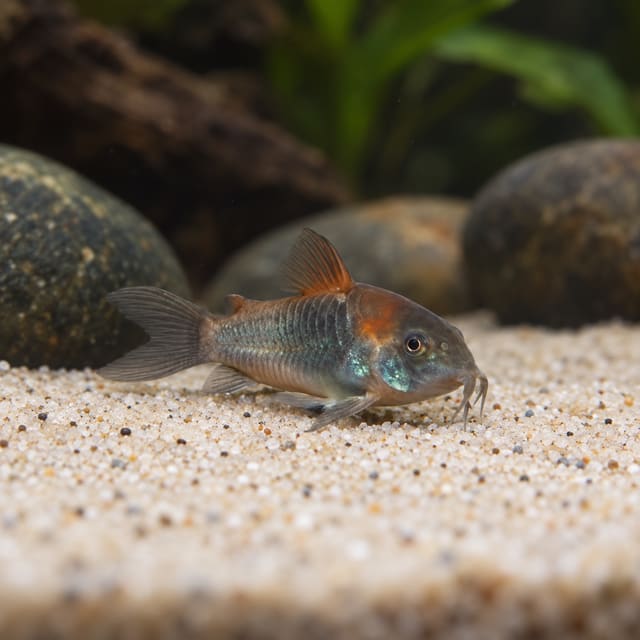
The gallery images are representative of this type of animal rather than photographs of the exact animal supplied, so colours can look slightly different from the live animal.
Check these requirements against the aquarium as it will be used. Subtract the space occupied by substrate, caves, wood and equipment when judging the useful bottom area, and include every existing animal when assessing filtration and feeding competition. The sold fish may be small at dispatch, but all essential systems should be operating at their long-term standard before introduction.
Do not treat its striking trade-line pattern as a care shortcut. The practical decision is whether you can maintain warm, clean, oxygen-rich water while keeping the bottom of the aquarium sheltered and free from persistent leftovers.
Use at least 120 litres and have the aquarium running as a complete, filtered system before introduction. A larger aquarium is helpful when it gives you more stable water conditions and enough usable bottom area for caves, feeding access and separation from other bottom-dwelling fish. Extra volume does not compensate for a poorly maintained filter or a layout in which every animal competes for the same refuge.
Plan the aquarium from the fish’s long-term needs rather than the 3–3.5 cm dispatch grade. The exact footprint is a separate decision from volume: inspect where caves, wood, plants and filter outlets will sit, then make sure the fish can move between shelter and a feeding place without crossing a permanently congested area.
Our first tropical aquarium guide helps organise the preparation and maturation work before livestock arrives. Use it to sequence the equipment and testing tasks, while keeping the L236 RB line’s caves, warm water and oxygen requirement central to the final layout.
Before introduction, trace the maintenance route with the aquarium fully decorated. Make sure you can reach the filter intake, remove debris beside the caves and place sinking food near shelter without moving heavy structures. Check that a power cable, plant or ornament cannot block the planned circulation path. This rehearsal exposes practical problems while they can still be corrected without disturbing fish.
A last-minute container, unfiltered holding tank or newly filled display is not a suitable substitute. Prepare the full set-up first, because the filter, shelter and measured water conditions must work together from the day of introduction.
Keep the aquarium at 26–30°C and pH 6.0–7.5. These are the working values for this fish. Choose stable values within each range and match replacement water carefully enough to avoid abrupt changes.
Measure both values. Temperature shows whether heating is controlled, while pH shows the water’s acid-to-alkaline position. One acceptable reading does not make the other optional. Record them together so a gradual trend is visible before it becomes a sudden husbandry problem.
| Reading | Action |
|---|---|
| 26–30°C | Hold a stable temperature within this interval. |
| pH 6.0–7.5 | Keep replacement water close to the aquarium’s measured value. |
| Ammonia or nitrite detected | Treat the reading as a filtration or waste warning and investigate immediately. |
| Nitrate rising | Review feeding, stocking and routine maintenance before the trend continues. |
Use the water chemistry guide to understand what each test measures, then enter measured values into the water matcher when comparing the aquarium with this range. Test results are more useful than labels such as “tropical” because they show the conditions the fish will actually experience.
Suppose temperature remains steady but pH shifts across consecutive tests. Check source water, replacement water and recent maintenance before changing the aquarium. If pH stays stable while nitrate rises, inspect food portions, hidden debris and total stocking instead. Looking at the pattern directs attention to the likely part of the routine and avoids changing several variables at the same time.
If a reading is outside the range, correct the cause through controlled aquarium management rather than making a rapid, unmeasured adjustment. Check the source water, heater, accumulated waste and recent maintenance. Stability inside the range is the goal; repeatedly pushing the aquarium from one limit to the other is not.
Run a well-established biological filter continuously and maintain strong oxygen availability throughout the aquarium. This pleco’s care depends on warm, clean, oxygen-rich water, so filtration and circulation must work at bottom level as well as near the surface.
The RSPCA’s aquarium welfare guidance explains why filtration is essential: fish release toxic ammonia, biological filter bacteria convert it to nitrite, and further bacterial activity converts nitrite to the safer nitrate. A filter therefore handles living waste through an active biological process; it is not simply a device for making the water look clear.
Visual clarity can hide a chemical problem. Test the water every week and whenever feeding, stocking or filter performance changes. If the fish spends less time using its normal shelters, loses access to food or shows an unexplained behavioural change, check temperature and water chemistry first, then inspect circulation and equipment.
Adding livestock, changing the feeding amount or moving caves alters how waste reaches the filter. Test after these changes and inspect whether debris now settles in a new place. A filter that coped with the former layout still needs assessment against the changed stocking and circulation pattern. Use the result to adjust maintenance before waste becomes a repeated problem.
A power interruption, blocked intake or sharply reduced outlet flow changes the system immediately. Restore safe operation, test the water and watch the fish closely. Contact us if a health change continues after the aquarium conditions and equipment have been checked.
Provide several caves and distribute them across the bottom rather than concentrating every refuge in one crowded corner. The fish needs shelter, while multiple cave-owning animals need enough separation to prevent one entrance from controlling the whole secure area.
OATA advises aquarium gravel or sand and cover from live plants, artificial plants or suitable ornaments such as model caves. Apply that advice by making every structure stable. A cave should not rock, collapse into loose substrate or trap waste where it cannot be reached during maintenance.
| Feature | Decision |
|---|---|
| Entrance | Keep it clear and accessible from the bottom. |
| Position | Spread caves apart to reduce cramped competition. |
| Stability | Set heavy structures securely before the fish uses them. |
| Water movement | Avoid creating a stagnant pocket full of uneaten food. |
| Feeding access | Place food where the fish can reach it without leaving all cover. |
Plants and wood add cover, but they do not replace a secure cave. Equally, a large number of ornaments is not automatically better. Leave open routes for water movement, observation and cleaning so shelter does not turn into an inaccessible waste trap.
Check every cave after cleaning or moving equipment. Confirm that entrances remain open, heavy items are stable and the filter outlet still moves water around the structures. Replace each item deliberately instead of assuming the earlier arrangement has been restored. A small shift can change feeding access, create a debris pocket or turn one route into a congested passage.
Review the layout after introduction. If one fish blocks the only useful entrance, another animal cannot reach food, or debris repeatedly collects behind a structure, change the arrangement carefully. The aim is a sheltered bottom zone with distinct choices, not a decorative maze that prevents maintenance.
Feed protein-rich sinking foods as the main diet, with quality wafers and suitable frozen foods used for variety. Make sure the food reaches the bottom and remains accessible near cover; a cave-dwelling fish should not have to compete in open water for every meal.
Offer a measured portion and watch whether the intended fish eats it. Use that observation to control the amount rather than leaving a large quantity in the aquarium. Sinking food that disappears behind wood or into a cave can still decompose even when it is no longer visible.
Incidental algae is not a complete feeding plan. OATA warns that algae-eating fish do not replace regular maintenance and still need prepared food. Persistent algae may also indicate a water-chemistry or maintenance issue, so adding a pleco should never be used to avoid investigating the cause.
If food disappears but the pleco’s access is unclear, observe the feeding point directly before changing the amount. Another animal may be taking the portion, or the food may be moving behind décor. Reposition a measured portion near shelter and watch who reaches it. Increase aquarium-wide feeding only when observation and water tests support that decision.
Watch body condition, feeding access and waste together. A fish that fails to reach food needs a change in placement or competition management, not an automatically larger aquarium-wide portion. If leftovers rise after adding a new food, return to a smaller amount and reassess acceptance before offering it again.
Keep the routine consistent enough to recognise change. An unexplained refusal to feed is a reason to test the water, inspect the filter and observe interactions around the caves before adding richer or larger portions.
Test the aquarium at least once a week and use the results to decide what maintenance is needed. Record temperature, pH, ammonia, nitrite and nitrate together. A written sequence makes gradual change easier to spot than isolated readings remembered from week to week.
Keep nitrate low by controlling food waste, maintaining the filter and carrying out appropriate partial water changes. Match replacement water closely enough to preserve the aquarium’s temperature and chemistry. Do not let the desire for a very low reading lead to a sudden shift in pH or temperature.
Compare the weekly results as a trend. If nitrate is rising, look at portion size, hidden leftovers, total stocking and maintenance frequency. If flow has fallen, inspect the filter and circulation path. If pH is drifting, compare the aquarium with its source and replacement water before making adjustments.
Use the same test method and record readings in the same order each week. Note any maintenance, feeding change, added livestock or equipment interruption beside the numbers. This creates a useful timeline: a later shift can be compared with a specific event instead of being treated as an isolated reading without context.
Clean viewing panels and accessible substrate without dismantling every shelter at the same time. Inspect behind caves and wood for trapped food, then preserve enough familiar cover for the fish to remain secure. Maintenance should restore water quality without repeatedly turning the whole bottom layout into unfamiliar territory.
Algae remains a maintenance signal, not a substitute food supply. Continue measured feeding and regular cleaning.
Arrange for someone to receive the sealed parcel because live fish cannot be left unattended. Read the current delivery and Live Arrival Guarantee policy before the delivery date, then have the prepared aquarium and a way to record a continuous unboxing video ready.
The fish is packed in pure oxygen inside an insulated box, with a heat pack when the weather calls for it, and carried by a licensed live-animal courier. Those measures protect the journey, while the aquarium preparation remains your responsibility: the filter must already be working, the water must match the stated range and the caves must be ready before the parcel is opened.
Before the parcel reaches you, confirm that the heater and filter are operating, the measured water remains within range and the caves are stable. Keep the route to the aquarium clear so the recorded opening, floating and release steps can be followed in order. Do not leave essential equipment checks until the fish is already waiting in its bag.
After release, observe access to shelter and the operation of the aquarium equipment. Do not respond to normal hiding by dismantling every cave. If there is a health concern, first measure the water and check the filter, heater and circulation so any report includes concrete aquarium conditions.
Consider peaceful warm-water fish only after matching water chemistry, available space and behaviour. A shared temperature label is not enough: every animal must also fit 26–30°C and pH 6.0–7.5, while the aquarium must retain enough bottom shelter and feeding access for this pleco.
Avoid rough tank mates and cramped cave competition. The L236 RB line is territorial over caves, so the most important compatibility assessment happens at bottom level. Count the useful shelters, inspect their entrances and decide whether another cave-owning fish could reach its own refuge without repeatedly passing through the same contested point.
Do not assume a larger stated volume solves every conflict. A spacious aquarium can still have one desirable cave, one narrow feeding lane or a dead area where waste collects. Conversely, adding more décor without preserving circulation and observation can make care harder.
For another bottom-dwelling fish, mark where each animal could shelter and feed before combining them. Check whether both routes depend on the same cave entrance or feeding point. Then include the extra waste in the filtration assessment. If shelter, food or filtration fails this exercise, change the plan before adding the animal rather than waiting for repeated exclusion.
Ask us for a stocking and compatibility assessment with the aquarium volume, measured water values, existing livestock and a description of the cave layout.
Watch what happens around caves and sinking food during the first days after introduction. Brief movement past another fish is different from repeated exclusion. Act when one animal persistently blocks a refuge, prevents another from feeding or drives it into an exposed part of the aquarium.
| What you see | What to do |
|---|---|
| One cave is continually guarded | Add or reposition distinct shelters and change the contested route. |
| The pleco never reaches food | Change food placement and reduce competition at the feeding point. |
| Waste gathers behind caves | Improve access for cleaning and restore circulation around the structures. |
| A fish is repeatedly chased from cover | Separate the animals if layout changes do not stop the exclusion. |
| Behaviour changes throughout the aquarium | Test water and inspect equipment before assuming the cause is social. |
When adding another bottom-dwelling fish, reassess the aquarium as a changed system. The extra animal adds waste, uses floor space and may prefer the same shelter. Check filter capacity, weekly test trends and access to sinking food instead of considering only whether the nominal aquarium volume is unchanged.
After repositioning a cave or feeding point, watch the next several feeding and shelter-use periods. A change succeeds only when both animals can reach food and secure cover without repeated displacement. If the same conflict moves to a different cave, the layout has not solved the underlying shortage of usable space.
Base the decision on observed access to caves, food and open routes. If a combination works, continue watching it during feeding and maintenance because rearranged décor or a blocked cave can change how the same animals use the space.
The approximate dispatch size is 3–3.5 cm. This is the size supplied, not an adult size.
Use an aquarium of at least 120 litres, with an established filter, oxygen-rich water, several caves and enough usable bottom area to prevent cramped shelter competition.
Plan around cave access rather than a preset group: provide several caves, avoid cramped cave competition and assess the space, filtration and feeding access before adding another pleco.
It suits a keeper who can maintain stable warm water, test it every week, run established biological filtration, manage a sinking-food diet and recognise cave or feeding conflict.
Feed it protein-rich sinking foods as the main diet, with quality wafers and suitable frozen foods for variety; measure each portion and remove persistent leftovers.
Keep it at 26–30°C and pH 6.0–7.5, holding the chosen readings steady and matching replacement water carefully.
Its main aggression concern is cave territory. Provide several shelters, avoid rough tank mates and act if chasing repeatedly blocks another animal from cover or food.
Peaceful warm-water fish are candidates when they fit the aquarium and share 26–30°C and pH 6.0–7.5. Screen every combination for floor space, cave competition and feeding access.
Tropical Fish Co packs the fish in pure oxygen inside an insulated box, adds a heat pack when the weather calls for it and uses a licensed live-animal courier; someone must receive the sealed parcel in person.
No reviews for this item yet. Bought one? Honest reviews only, good or bad.
What customers say about ordering from us
Easy website plenty of info on fish your buying great to pick a time slot
TRACEY DURRANT · 7 Oct 2026
Got some lovely fish thank you
Kevin Mackie · 7 Oct 2026
Reviews of our shop, collected by Judge.me, an independent third-party review collector. Newest first.