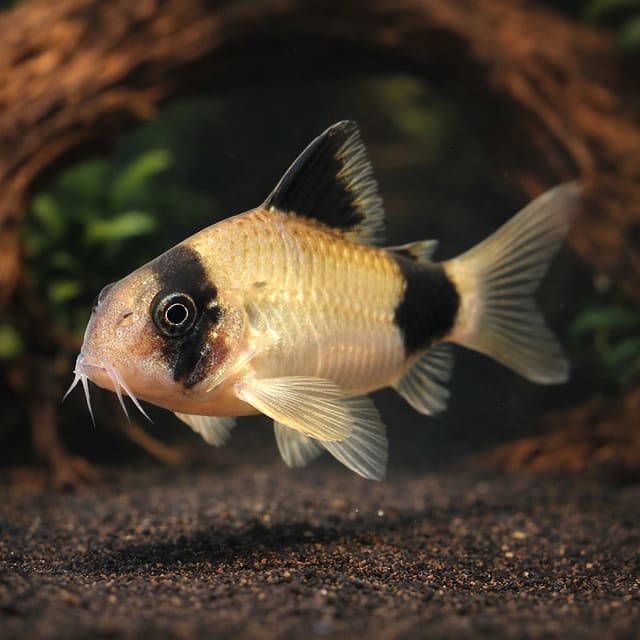
Panda Cory Catfish (Corydoras panda)
22–25°C · pH 6–7.4
£7.29
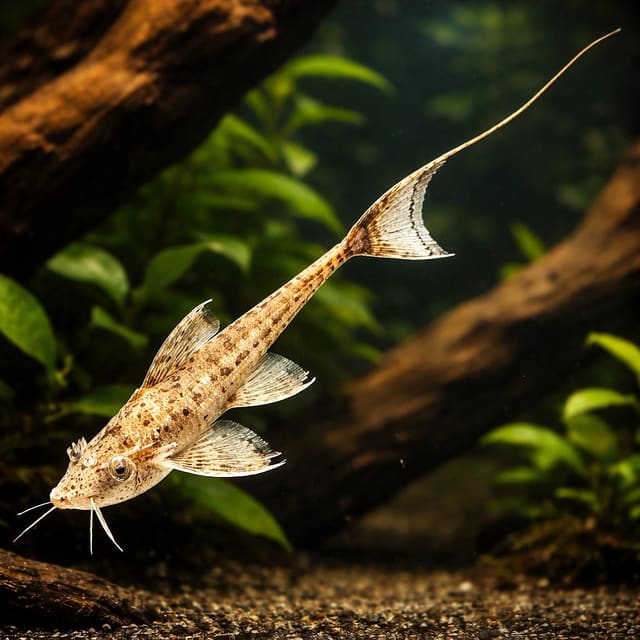
The Chameleon Whiptail Catfish (Pseudohemiodon apithanos) is a freshwater loricariid from the upper Amazon basin of Peru and Ecuador that grows up to 14.5 cm standard length. It suits a mature, filtered aquarium kept at 22–27°C and pH 6.0–8.0 under OATA's freshwater-catfish guidance, with every community mix assessed individually. Sold individually in sizes from 7 cm to 15–20 cm.
Adult size is the maximum length this species reaches at full maturity (scientific sources). The livestock you receive will be younger and smaller — pick a size above for the actual shipping size. Product-photo provenance and any image-specific limitations are stated on the listing.
Pseudohemiodon apithanos
The Chameleon Whiptail Catfish (Pseudohemiodon apithanos) is a freshwater loricariid from the upper Amazon basin of Peru and Ecuador that grows up to 14.5 cm standard length. It suits a mature, filtered aquarium kept at 22–27°C and pH 6.0–8.0 under OATA's freshwater-catfish guidance, with every community mix assessed individually. Sold individually in sizes from 7 cm to 15–20 cm.
Adult size is the maximum length this species reaches at full maturity (scientific sources). The livestock you receive will be younger and smaller — pick a size above for the actual shipping size. Product-photo provenance and any image-specific limitations are stated on the listing.
Maintain these water conditions for optimal health and vibrant colors
The Chameleon Whiptail Catfish (Pseudohemiodon apithanos) is a freshwater, bottom-living member of Loricariidae, the armoured catfish family. It comes from the upper Amazon basin of Peru and Ecuador and grows up to 14.5 cm standard length. This is a fish for a keeper prepared to plan around its adult dimensions, maintain a mature biological filter and assess any community arrangement individually.
FishBase records the species from the San Miguel River basin in the western Amazon drainage and gives 14.5 cm standard length as its maximum recorded size. Wikipedia's species summary adds records from several Peruvian rivers and Ecuador's Napo-Pastaza drainage. Standard length is measured without the tail, and the 15–20 cm option is already larger than that figure, so plan room for at least the size you select.
| Suits | Not suited to |
|---|---|
| A mature, filtered freshwater aquarium | An aquarium without an established biological filter |
| A keeper who tests water every week | A plan based only on the fish's dispatch size |
| Care planned around a 14.5 cm standard-length adult | A community assembled without assessing each catfish |
| Measured water within the stated catfish guidance | Rapid stocking that outpaces the filter bacteria |
Browse our catfish and plecos collection when comparing body size, aquarium requirements and different forms of catfish care. Treat each species as a separate decision: OATA notes that catfish range from small, peaceful animals to large predators, so a familiar family name is not enough to predict husbandry or compatibility.
Plan for a fish that grows up to 14.5 cm standard length. Use that FishBase figure as the adult size when planning. Measure the usable aquarium footprint, account for décor and choose a filter capable of maintaining zero ammonia and zero nitrite rather than judging space from the fish's size on dispatch day.
Choose the largest aquarium you reasonably can. OATA's freshwater-catfish sheet sets at least 80 litres for the smaller pleco species, says much larger aquariums are needed for bigger species, and explains that larger aquariums keep temperature and water quality more stable. This is broad group guidance, so treat 80 litres as OATA's floor for smaller plecos rather than the size for a fish supplied at up to 20 cm.
Keep the aquarium at 22–27°C, pH 6.0–8.0 and general hardness of 4–18°dGH. OATA also gives carbonate hardness of 3–15°dKH, ammonia at zero, nitrite at zero and nitrate no more than 20 mg per litre above the normal tap-water level. Test the actual aquarium rather than relying on a tap-water description or an earlier reading.
One purchase supplies one fish in the selected size. Use the live size selector to compare the labels 7 cm, 12–15 cm and 15–20 cm. The size you select is the size supplied, not the adult size. These labels describe the dispatch grade, while the adult planning figure remains the FishBase maximum of 14.5 cm standard length.
Before choosing, compare the labelled dispatch size with the aquarium's footprint, existing occupants and established filtration. A larger dispatch grade does not remove the need to introduce livestock slowly, and a smaller grade is not a reason to postpone planning for the adult dimensions. Base the aquarium decision on the mature fish and use the selector only to choose the size supplied.
Sex is guaranteed only when the selected option explicitly states male or female. This Pseudohemiodon apithanos listing has no sex-guaranteed option.
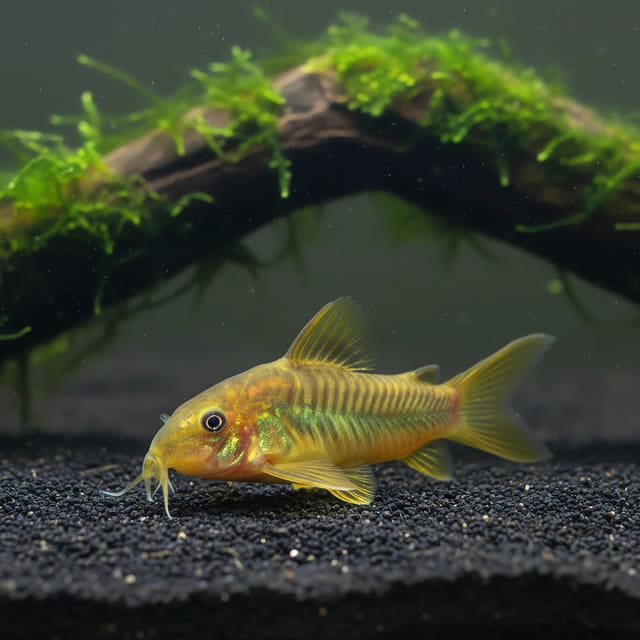
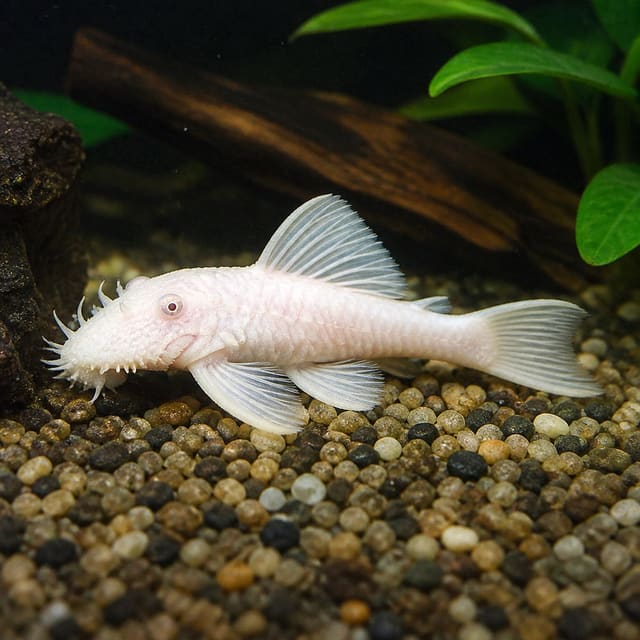
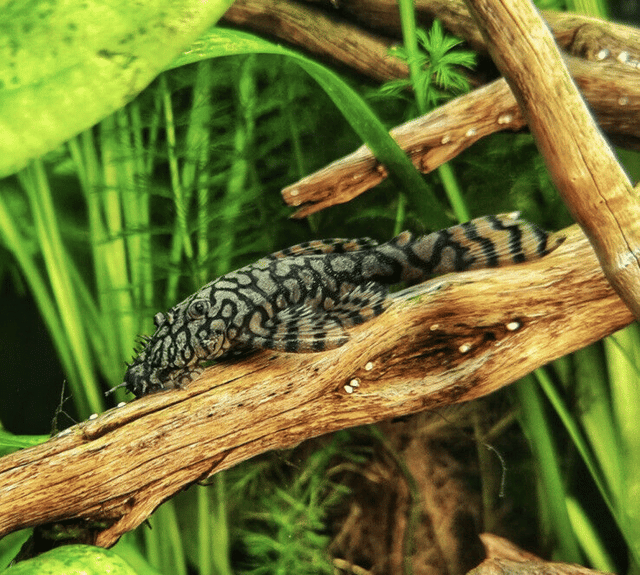
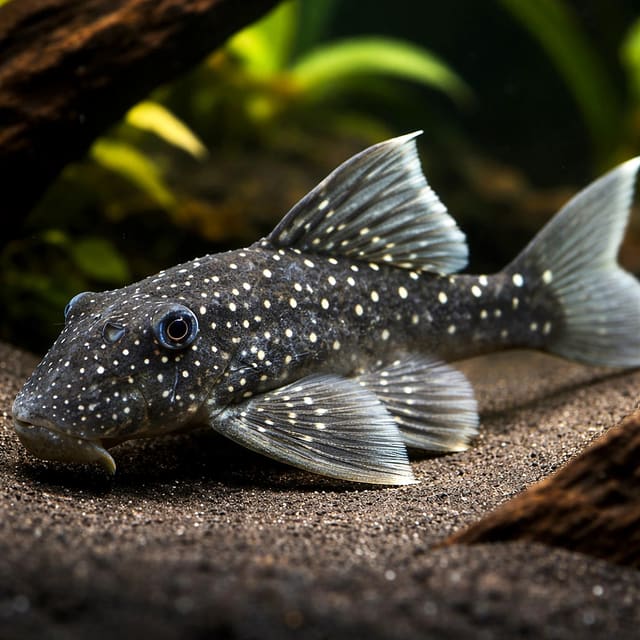
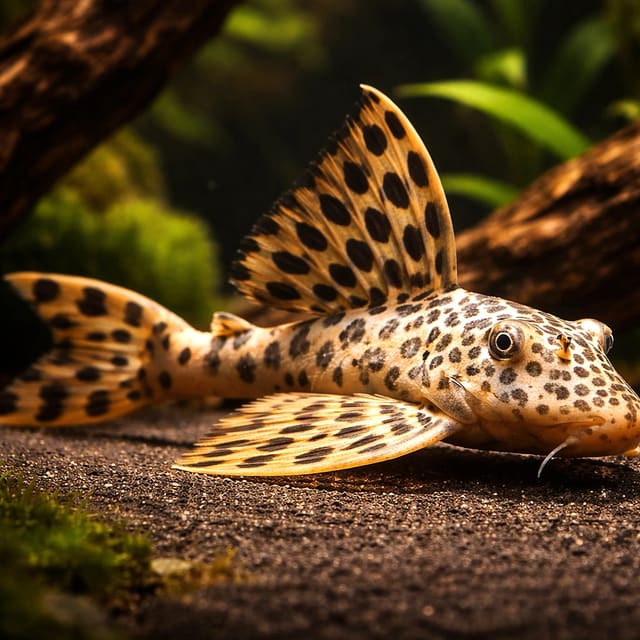
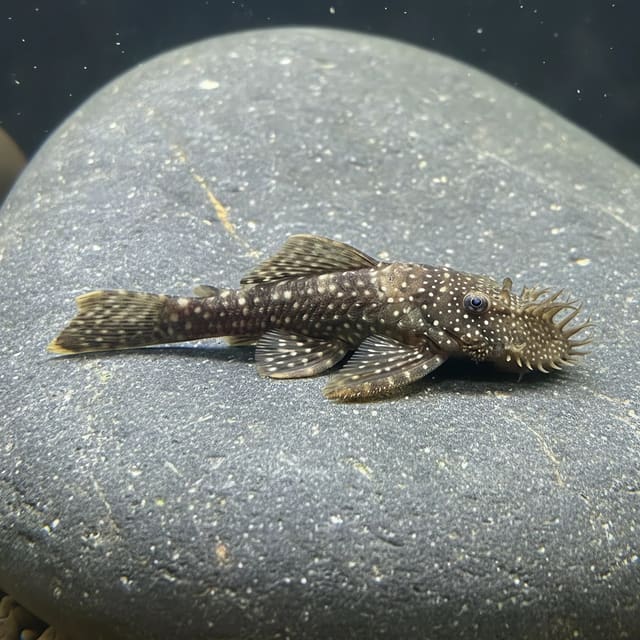
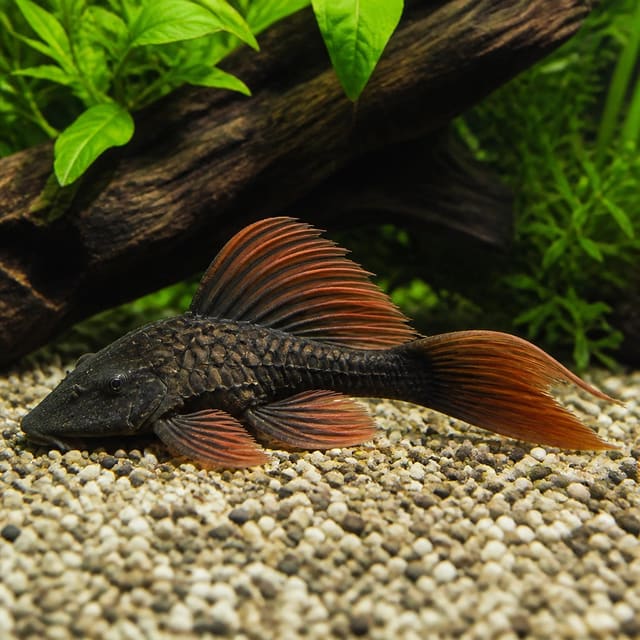
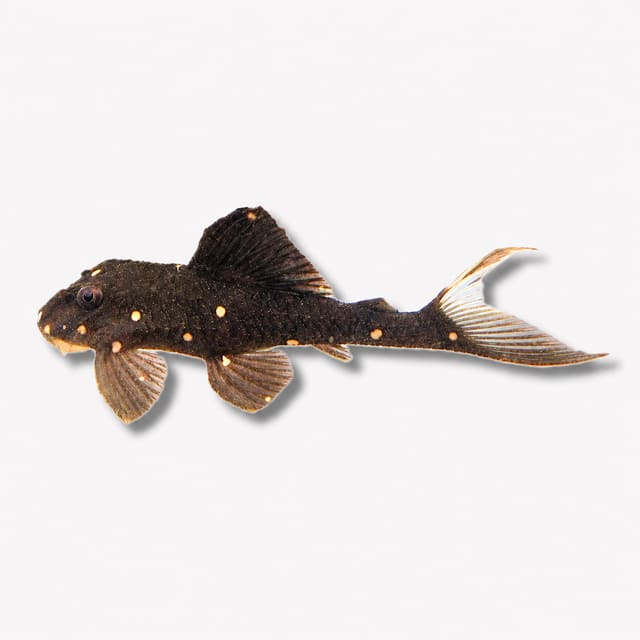
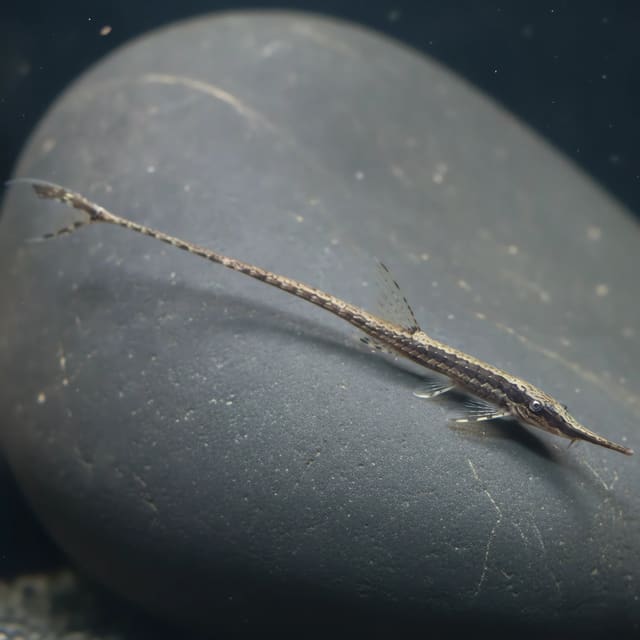
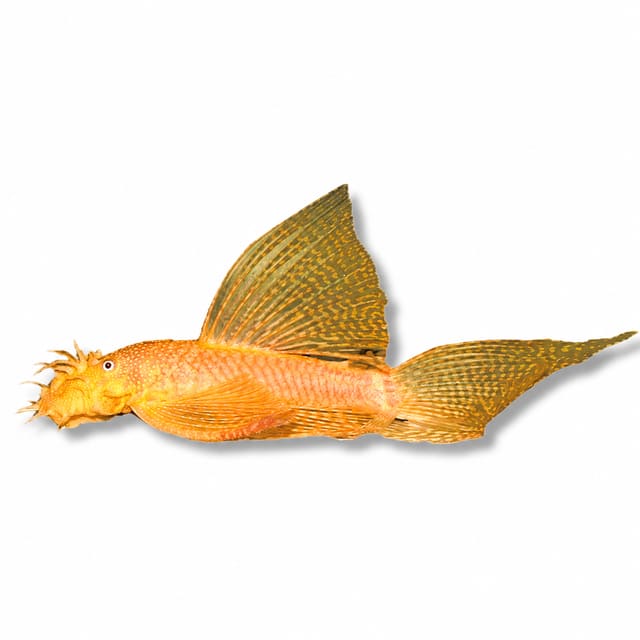
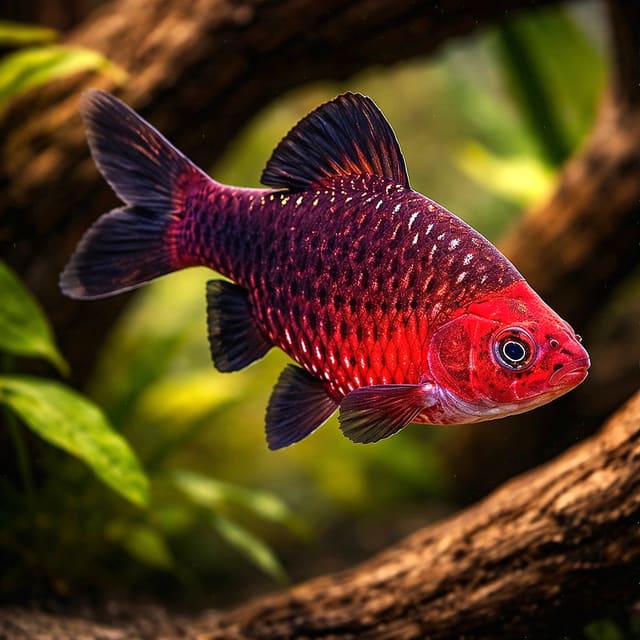
The gallery images are representative of this type of animal rather than photographs of the exact animal supplied, so colours can look slightly different from the live animal.
Do not use the gallery to infer the sex, age, origin or exact markings of the fish supplied. Use the written offer for the sold unit and dispatch grade, then use the care figures to decide whether the aquarium is ready.
Use a mature freshwater aquarium with a working biological filter. The RSPCA explains that aquarium filters remove waste and support beneficial bacteria that convert toxic ammonia into nitrite and then into safer nitrate. The RSPCA says no fish should be kept without a well set up and maintained filter.
Choose the largest aquarium you reasonably can: OATA gives at least 80 litres for the smaller pleco species and says bigger species need much larger aquariums. More water makes temperature and water quality more stable. Evaluate the usable space after filters, plants, wood, pots or caves are in place rather than treating the manufacturer's headline volume as the only planning measure.
OATA recommends live plants as cover for smaller or shy catfish, while noting that some species may eat or dig up plants. Plastic plants and suitable ornaments are alternatives where live plants are unsuitable. Many catfish also appreciate wood, pots or caves, so these can be considered as cover while retaining access for inspection and cleaning.
| Decision | Action |
|---|---|
| Filter | Run a biological filter before the fish is introduced |
| Space | Judge usable volume and footprint after décor is fitted |
| Cover | Use plants, wood, pots or caves where they suit the aquarium |
| Access | Keep areas reachable for siphoning and visual checks |
Do not choose décor on the assumption that every catfish has identical habits. Build a stable, cleanable aquarium first, provide sensible cover and watch how the fish uses the layout. If cover prevents routine inspection or traps uneaten food, rearrange it so maintenance remains practical.
Keep the temperature at 22–27°C, pH at 6.0–8.0 and general hardness at 4–18°dGH. Keep carbonate hardness at 3–15°dKH, ammonia at zero, nitrite at zero and nitrate no more than 20 mg per litre above the normal tap-water level. These figures come from OATA's freshwater-catfish guidance.
Measure each value rather than describing the aquarium as simply soft, hard, acidic or neutral. Our water chemistry guide explains what the main readings mean, while the water matcher helps compare measured aquarium values with the stated ranges. Record the results with the date so a changing trend is visible before it becomes a larger problem.
For example, 25°C and pH 7.0 sit within the temperature and pH guidance, but that does not complete the check: ammonia, nitrite, nitrate and hardness still need their own readings. Likewise, zero ammonia does not compensate for a temperature outside 22–27°C. Treat the set as one water-quality decision.
If ammonia or nitrite appears, review recent stocking, feeding and filter performance. OATA warns that adding livestock too quickly can leave the established bacteria unable to process the increased waste. Pause further additions while the aquarium is assessed and continue testing so the result is based on measurements rather than appearance.
Establish the biological filter before adding this fish and confirm that ammonia and nitrite both test at zero. A mature filter contains bacteria that process fish waste; it is not simply a filter that has been switched on or an aquarium containing clear water. Prepare the aquarium early enough to test its function before livestock is introduced.
Our first tropical aquarium guide can help organise the preparation and maturation steps. Once the aquarium is ready, increase its population slowly. OATA explains that beneficial bacteria must increase as fish numbers and feeding increase, and that stocking too quickly can cause new tank syndrome through rising ammonia and nitrite.
Filter capacity and aquarium volume work together. A larger aquarium helps with stability, but volume alone cannot process waste. Equally, a powerful filter does not create more physical room. Check both the biological capacity and the usable aquarium space whenever another animal is being considered.
Feeding also changes the filter's workload. Give only the portion consumed within the appropriate time and watch for food remaining around décor. Preventing excess food from breaking down reduces avoidable waste, but it does not replace water testing, weekly maintenance or a properly established filter.
Feed an appropriate sinking catfish food once a day, giving only what the fish can eat within a few minutes. OATA uses this portion and schedule for freshwater catfish while emphasising that different catfish have different dietary requirements. Choose a sinking food formulated for the intended catfish diet and make the portion small enough to monitor.
Place the food where its consumption can be observed. Do not assume a bottom-living fish will live on scraps left by other aquarium occupants: OATA specifically warns that the catfish reputation for scavenging does not remove the need for deliberate feeding. A community feeding routine must allow the sinking portion to reach the catfish while still limiting excess food.
Uneaten food breaks down and adds waste to the water. That can increase the burden on the biological filter and work against the zero-ammonia and zero-nitrite targets. Portion control therefore protects both nutrition and water quality.
Use changes in appetite as a health observation. Reduced intake or a lack of interest in food appears on OATA's warning list, so compare the response with the fish's normal pattern and test the water when a change occurs. Do not respond by repeatedly adding larger portions, because excess food can worsen water quality.
At least once every week, complete a 25% partial water change. OATA strongly recommends this schedule for freshwater catfish and suggests using a siphon to remove solid waste from the gravel.
Treat replacement tap water with a suitable conditioner before adding it to the aquarium so chlorine or chloramine is removed. Keep the aquarium within 22–27°C, pH 6.0–8.0 and the stated hardness ranges.
Check the filter for blockages during maintenance. If cleaning is needed, rinse the filter media lightly in aquarium water removed during the partial water change. Do not rinse it under the tap: any chlorine or chloramine present may kill the beneficial bacterial population established in the media.
| Weekly task | Required result |
|---|---|
| Water tests | Ammonia zero and nitrite zero |
| Nitrate comparison | No more than 20 mg/l above the tap-water level |
| Partial water change | 25%, at least once during the week |
| Replacement water | Conditioned before it enters the aquarium |
| Filter inspection | No blockage restricting normal operation |
| Media cleaning | Light rinse in removed aquarium water when needed |
Use maintenance to inspect areas around plants, wood, pots and caves where waste or food may collect. The aim is not to strip the aquarium down each week, but to remove solid waste, renew part of the water and preserve the bacteria that process dissolved waste.
Write down test results before or during the change. A weekly record makes it easier to connect a change in ammonia, nitrite or nitrate with heavier feeding, a blocked filter or recent stocking. Continue the routine even when the water looks clear, because appearance alone does not measure dissolved waste.
Learn the fish's normal swimming, colour, breathing, temperament, body condition and feeding response. OATA advises watching for changes because they can reveal a developing welfare problem before it becomes more serious. Observe during routine feeding and maintenance rather than relying on a single glance.
Begin with water tests for temperature, pH, ammonia, nitrite and nitrate. Check the filter for blockage and review whether feeding or stocking has recently increased. A visible symptom and a poor water result may occur together, so deal with the measurable aquarium condition instead of judging the fish in isolation.
If you are concerned about a health change, test the water and contact us for guidance. Keep the latest readings, the maintenance date and a concise description of what changed. Those details distinguish a one-off observation from an ongoing pattern and help focus the next welfare decision.
Do not use increased feeding as the automatic response to reduced body condition or appetite. Offer the normal measured portion, observe whether it is eaten and protect water quality from accumulating food. Continue the established maintenance routine while the cause is assessed.
The Tropical Fish Co policy describes fish packed in pure oxygen inside an insulated box, with a heat pack when the weather calls for it, and carried by a licensed live-animal courier. Someone must be at the delivery address to receive the parcel because live fish cannot be left unattended.
For a Live Arrival Guarantee claim, contact us on the same day with the order number and the continuous unboxing video. The policy requires the parcel to be opened and inspected on the day it arrives, with the video showing the sealed parcel, the opening and the fish still in its sealed bag.
Read the current delivery and Live Arrival Guarantee policy before the delivery day. It explains the packing, receipt and claim requirements in one place. Keep the arrival sequence separate from routine aquarium checks: before introduction, ammonia and nitrite must already be zero and the aquarium must already be within the stated temperature and pH guidance.
Once released, avoid adding other livestock rapidly. OATA advises increasing fish numbers slowly because the biological filter bacteria must respond to each increase in animals and feeding. Continue the normal observation, feeding and testing routines rather than making several stocking changes together.
Treat every community combination as a separate assessment. OATA says catfish vary in compatibility: Corydoras, Otocinclus and smaller plecos make excellent additions to community aquariums, while other species can be extremely predatory and should be mixed with caution. Those group examples are screening leads, not automatic companions for Pseudohemiodon apithanos.
Ask us to assess the proposed stocking before adding this fish to a community aquarium. Include the aquarium volume, dimensions, current animals, measured temperature and pH, filter maturity and the sizes of the occupants. Compatibility cannot be reduced to a shared label such as catfish or bottom-dweller.
| Screening point | Decision |
|---|---|
| Catfish type | Check whether any proposed animal is described as predatory |
| Adult space | Plan for the larger of the size you select and the 14.5 cm standard-length adult figure, which leaves out the tail |
| Water | Keep the aquarium within 22–27°C and pH 6.0–8.0 |
| Filter load | Add livestock slowly so bacteria can respond to increased waste |
| Feeding | Ensure the measured sinking portion can be observed and eaten |
There is no universal suitable-with list for catfish. Use Corydoras, Otocinclus and smaller plecos only as examples of the kinds OATA identifies as community additions, then assess the actual species and aquarium. Apply extra caution where another catfish is predatory or where the proposed stocking would outpace the aquarium's available space and filtration.
Compatibility remains an ongoing care decision after introduction. Watch swimming, feeding, hiding, temperament and body condition. A new change in aggression, hiding or food intake is a reason to review the mix and test the water rather than assuming that the initial plan will always remain workable.
Plan the number of Pseudohemiodon apithanos only after an individual stocking assessment. OATA explains that social requirements differ across catfish: shoaling species such as Corydoras should be kept in groups of at least five, while other species need considerable space and prefer to live alone. Do not transfer either pattern to this fish merely because it belongs to the same broad group.
The offer unit is one fish per purchase, but the retail unit is not a social prescription. Decide whether the aquarium can support another animal by reviewing adult space, biological filtration and the existing community. If several fish are being considered, account for the combined waste and increase livestock slowly rather than treating each addition as an isolated load.
During the first feeding opportunities, check that the sinking portion reaches this fish and is eaten within a few minutes. Continue watching the normal health indicators: swimming, colour, breathing, hiding, temperament, body condition and appetite. A measurable change gives a practical reason to reassess stocking, filtration or feeding.
Do not use the Corydoras group-of-five instruction as a shortcut, and do not assume solitary keeping from the behaviour of a different catfish. The correct decision is the one reached for this fish, the measured aquarium and its actual occupants.
It grows up to 14.5 cm standard length, measured without the tail, the maximum recorded by FishBase; the 15–20 cm option is already larger than that figure, so plan the aquarium for whichever is larger.
Choose the largest aquarium you reasonably can for a fish supplied at up to 20 cm that grows to 14.5 cm standard length; OATA's freshwater-catfish sheet sets at least 80 litres for the smaller pleco species and says much larger aquariums are needed for bigger species.
Plan the number only after a stocking assessment. OATA says some catfish, such as Corydoras, should be kept in groups of at least five, while other species need lots of space and prefer to live alone; do not transfer either rule automatically to this fish.
It needs a keeper who can prepare a mature, filtered aquarium, keep ammonia and nitrite at zero, test the water at least once a week and complete a 25% partial water change at least once every week.
Feed an appropriate sinking catfish food once daily, giving only what it can eat within a few minutes; OATA says some grazing species take longer, so allow 30 minutes if required.
OATA's freshwater-catfish guidance gives 22–27°C, pH 6.0–8.0 and 4–18°dGH, with ammonia and nitrite at zero.
Treat its temperament as a compatibility question to assess for the intended aquarium. OATA says catfish range from small and peaceful to extremely predatory, so watch behaviour and screen every community mix individually.
OATA identifies Corydoras, Otocinclus and smaller plecos as community-aquarium catfish, but use those names only as screening candidates and assess the actual species, space, filtration and behaviour before mixing them with this fish.
Tropical Fish Co's policy describes packing in pure oxygen inside an insulated box, with a heat pack when required, followed by a licensed live-animal courier; receive the parcel in person, film continuously from the sealed parcel, show the fish in its sealed bag and float the bag for 20–30 minutes before release.
No reviews for this item yet. Bought one? Honest reviews only, good or bad.
What customers say about ordering from us
Easy website plenty of info on fish your buying great to pick a time slot
TRACEY DURRANT · 7 Oct 2026
Got some lovely fish thank you
Kevin Mackie · 7 Oct 2026
Reviews of our shop, collected by Judge.me, an independent third-party review collector. Newest first.