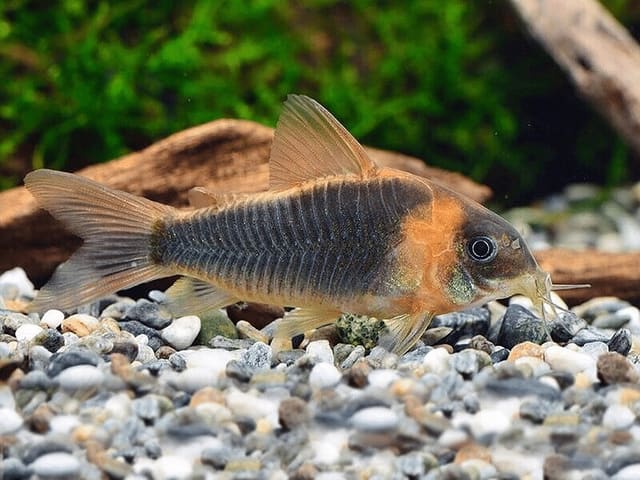
Horseman Cory (Corydoras eques)
24–26°C · pH 6–8 · 81L
£6.99

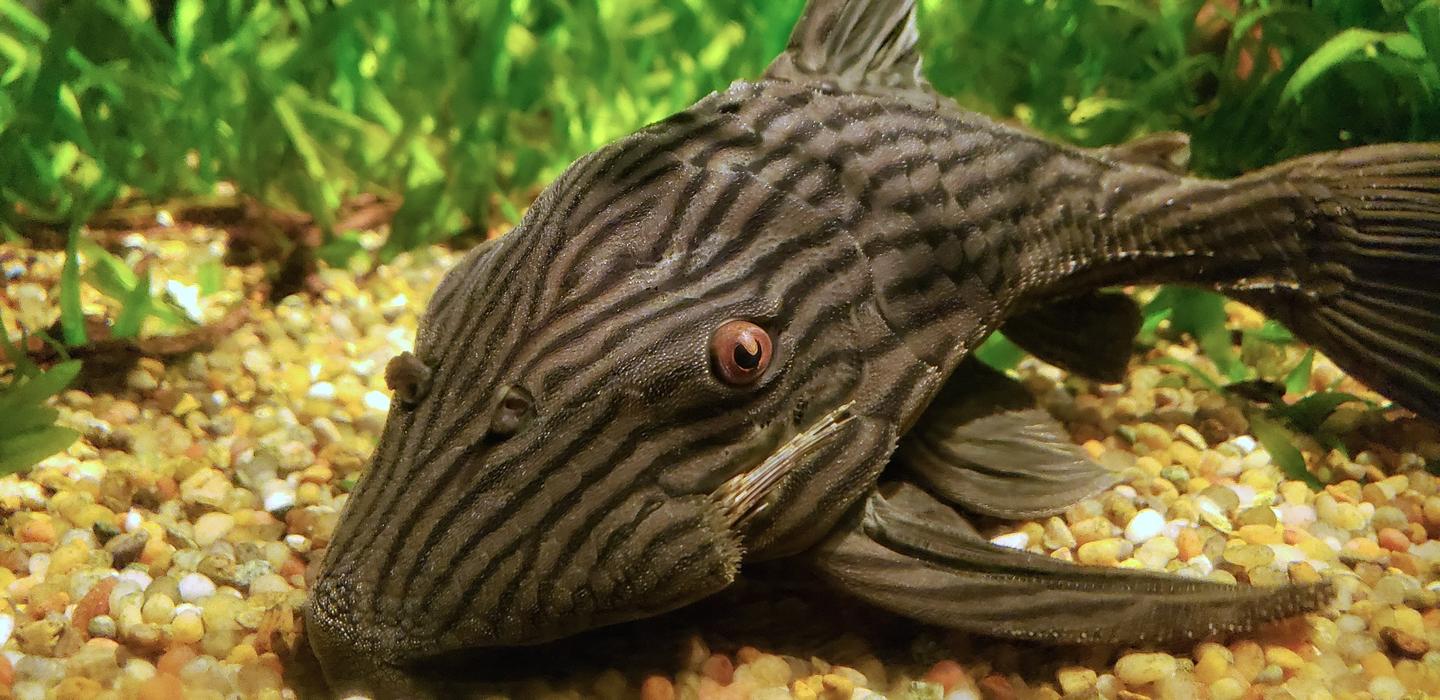
L128 Blue Phantom Pleco (Hemiancistrus sp.) is a South American loricariid trade form for established tropical aquariums, supplied as one unsexed fish in the size chosen; plan generous bottom space, dependable filtration, cover and direct feeding.
Hemiancistrus sp.
L128 Blue Phantom Pleco (Hemiancistrus sp.) is a South American loricariid trade form for established tropical aquariums, supplied as one unsexed fish in the size chosen; plan generous bottom space, dependable filtration, cover and direct feeding.
‘Pleco’ is a loose aquarium-trade label, not one species or one care sheet. Before buying, confirm the scientific name or defensible L-number, adult size and measurement method, required footprint, temperature and water, diet, social plan and source. No universal pleco tank size, menu or algae result is honest.
Maintain these water conditions for optimal health and vibrant colors
L128 Blue Phantom Pleco is the established trade identity used for this South American suckermouth catfish listing. The supported scientific parenthetical is Hemiancistrus sp. The accepted taxonomic record confirms Hemiancistrus as a genus in Loricariidae, while the genus natural-history summary describes South American freshwater members and notes that classification within the genus is complex.
One purchase supplies one live fish in the chosen dispatch grade. The listing covers 3–4 cm, 5–7 cm and 7–10 cm grades. The size you select is the size supplied, not the adult size. A dispatch measurement helps you plan introduction and feeding, but it cannot answer the mature-space question.
The exact species has not been identified, so the care advice here follows the genus Hemiancistrus and its care group. This is why the page gives an honest tropical algae-eater framework and practical welfare steps without assigning a fixed adult size, minimum litres, lifespan or breeding routine to an undescribed trade form.
| Suits | Keepers with an established filtered aquarium, generous bottom space and time to observe feeding and shelter access. |
|---|---|
| Not suited to | An uncycled tank, a cramped bottom layout, or a purchase intended to replace algae management and maintenance. |
| Sold unit | One unsexed live fish per purchase, in the chosen dispatch grade. |
| Scientific scope | Hemiancistrus sp. at genus level; L128 Blue Phantom Pleco retained as the trade identity. |
Browse the catfish and pleco collection when comparing offers, but make the final choice on care fit. Look at the aquarium's usable footprint, maturity, water stability and ability to deliver food to the bottom, not simply the animal's colour or the grade arriving from the shop.
A ready aquarium is already running predictably. The biological filter processes waste, temperature remains stable, and recent tests give you a baseline for ammonia, nitrite and nitrate. The RSPCA's aquarium-welfare material explains that ammonia and nitrite are toxic and that beneficial bacteria in a working filter convert waste through the nitrogen cycle.
Now look at the bottom as living space rather than spare decoration. The fish needs a secure place to settle, a route from that shelter to food and enough open area for maintenance. A nominally large aquarium can still be poor habitat when wood and ornaments leave one narrow feeding strip or allow debris to collect out of reach.
Choose the arrival grade for the aquarium you have now without confusing smaller with easier. A smaller fish still requires stable water and a dependable feeding route; a larger one may need more immediate floor space. In both cases, decide where the fish will shelter, how you will see food reach it and what you will do if another resident takes over that area.
Sex is guaranteed only when the selected option explicitly states male or female. This Blue Phantom Pleco L128 listing has no sex-guaranteed option.
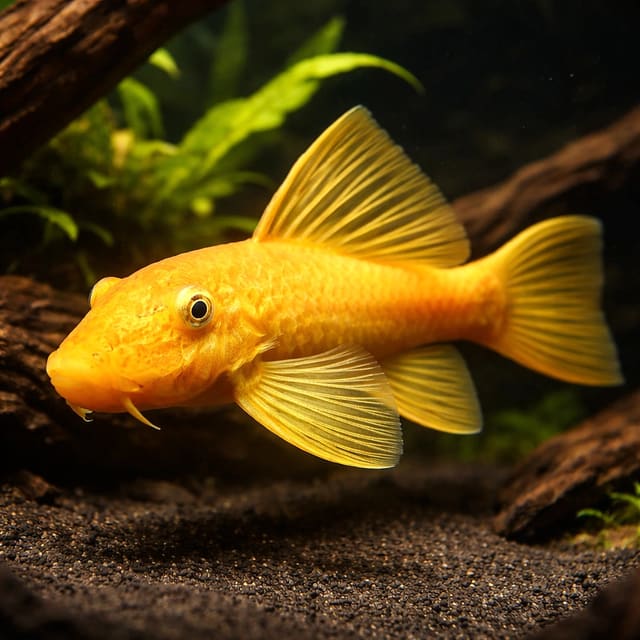
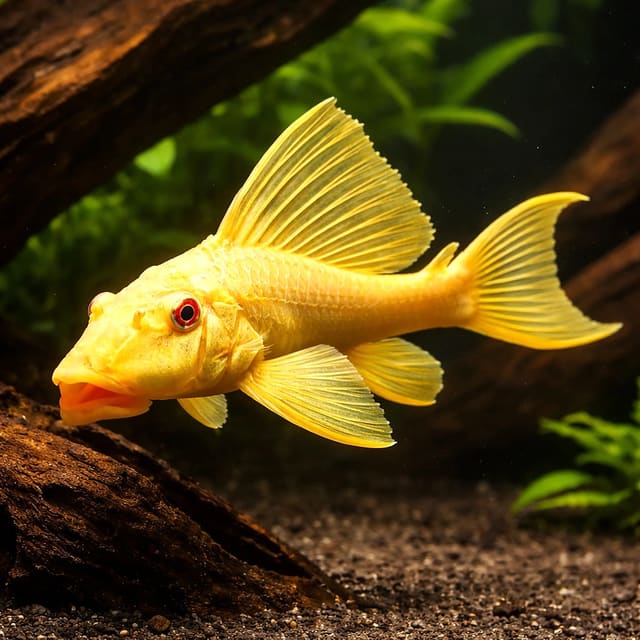
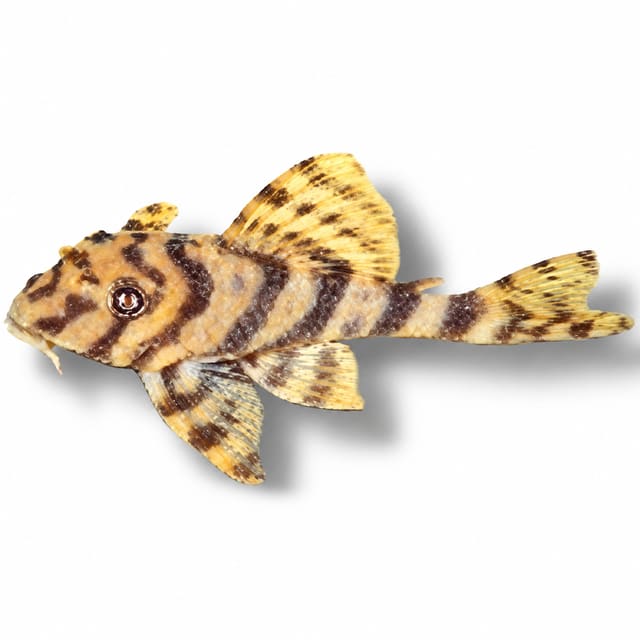
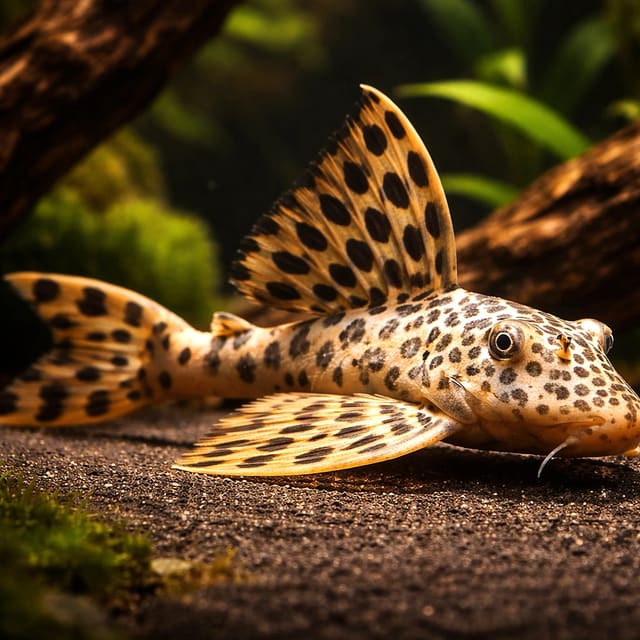
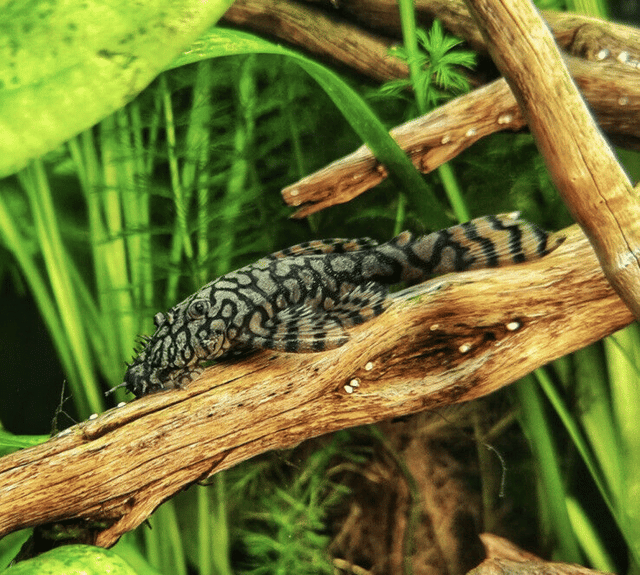
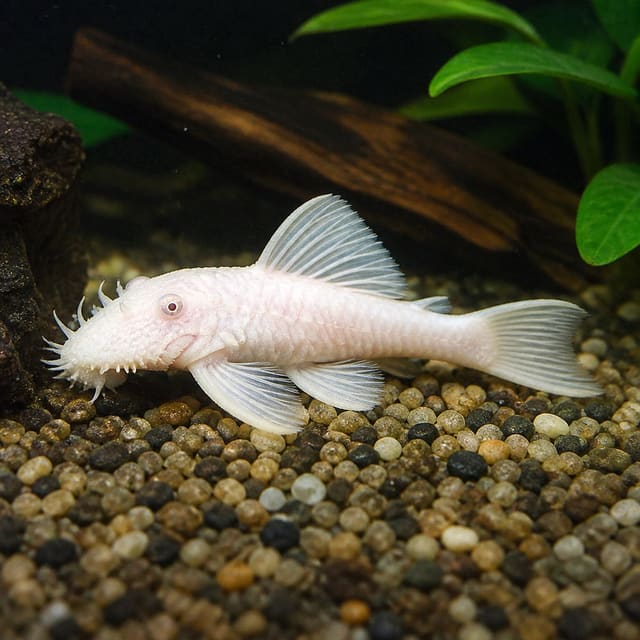
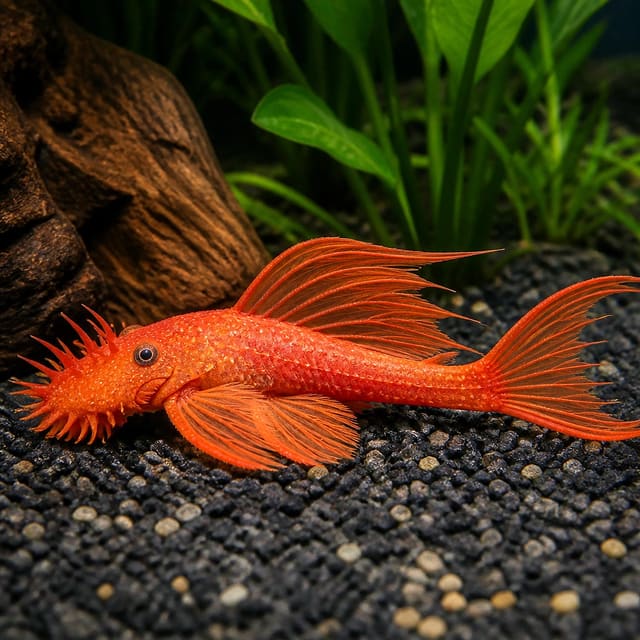
Variation is normal in living animals and in how a trade form develops. Gallery images have been digitally enhanced to improve image quality. Natural colour, pattern, size and maturity can vary between live animals.
No defensible species-level adult maximum is attached to this genus-level listing, so a precise minimum-litre box would give false confidence. Use a conservative physical plan instead: generous bottom length and width, secure structure, unobstructed feeding space and room to revise the layout as the fish grows. The dispatch grade describes arrival, not the end of the space calculation.
OATA's broad aquarium guidance recommends substrate and shelter through plants or suitable ornaments. Arrange those elements so they remain stable and cleanable. Rest rocks and wood securely, avoid sharp contact points, and leave access for a siphon around the places where sinking food lands. A refuge is useful only when the fish can enter it and when waste can be managed around it.
| Refuge | A shaded, stable shelter with an unobstructed entrance. |
|---|---|
| Feeding area | An open patch where sinking food can be seen, counted and removed if uneaten. |
| Movement route | Clear bottom space between shelter and food rather than a maze of unstable ornament. |
| Maintenance access | Room to inspect and clean without repeatedly dismantling the fish's retreat. |
Choose the footprint with the whole community in mind. Other bottom residents multiply the demand for usable space even when the aquarium's headline volume remains unchanged. If the only clear refuge or feeding site is already occupied, adding another cave-dwelling fish creates a predictable management problem.
Use the lack of a fixed figure as a reason to plan generously, not as permission to keep the fish in a small aquarium. A larger body of water is generally more stable, and extra footprint gives you more options for separated feeding and shelter. Reassess the plan as the animal matures rather than assuming that the original arrangement will remain sufficient.
The OATA tropical algae-eater sheet provides a broad starting framework through its named freshwater examples: 22–27°C, pH 6.0–8.0 and soft-to-medium water around 4–12 dGH. Those figures are not a researched L128 optimum. Use a stable overlap that suits every resident and avoid treating a boundary as the preferred target.
| Temperature framework | 22–27°C from broad tropical algae-eater guidance. |
|---|---|
| pH framework | 6.0–8.0, held stable and checked against the other animals in the aquarium. |
| Hardness framework | Approximately 4–12 dGH in named comparator examples, retained as group context. |
| Nitrogen waste | Ammonia and nitrite at zero, with nitrate controlled through appropriate stocking, feeding and maintenance. |
RSPCA filtration guidance explains the biological process behind those waste targets. A filter does more than move water: its beneficial bacteria convert ammonia to nitrite and then to less harmful nitrate. Protect that function, verify it with tests and investigate a change in readings before adding livestock.
Use the water-chemistry guide to understand the readings, then compare measured values with the stated framework using the water matcher. The useful question is not whether a single test lands inside a wide interval; it is whether the aquarium stays predictably within a shared, suitable band.
Water movement should support gas exchange and carry waste towards filtration without making the refuge unusable. Check flow at the lower aquarium after hardscape is installed, because a strong surface return can coexist with stagnant pockets beneath wood. Keep the heater guarded or positioned so a resting fish cannot remain pressed against it.
OATA warns that algae-eating fish are not replacements for aquarium maintenance and still require supplementary food. Use an appropriate prepared algae-based wafer or flake and well-washed fresh vegetables as a broad starting framework. This is care-group advice, so observe the individual fish and avoid turning the category into a precise species diet.
The practical challenge is delivery. A wafer that disappears behind wood has not necessarily been eaten by the intended fish, and a vegetable left for too long becomes a source of waste. Place food in a reachable area, watch which resident takes it and inspect later. Remove deteriorating leftovers before they compromise the lower aquarium.
| Prepared food | A suitable algae-based or vegetable-led sinking product intended for tropical aquarium fish. |
|---|---|
| Fresh supplement | Thoroughly washed suitable vegetables; OATA advises organic produce or careful washing because residues may be harmful. |
| Observation | Confirm that the food reaches this fish rather than being taken entirely by faster residents. |
| Water protection | Offer manageable portions and remove uneaten fresh food before it breaks down. |
Keep the feeding place predictable while a new fish settles. Repeatedly moving food around the aquarium makes it harder to judge whether the fish is finding it. If another bottom resident guards the site, create a second separated feeding place rather than compensating with a large surplus.
Visible algae can be part of the aquarium, but it is not a feeding guarantee. Persistent algae also points to maintenance, lighting, nutrient and stocking questions that should be addressed directly. Buy this animal for the animal itself, not as equipment for correcting an aquarium-management problem.
Before arrival, write down a short baseline: temperature, ammonia, nitrite, nitrate, filter flow and the normal feeding behaviour of current residents. That record makes it easier to recognise a real change after the new fish is introduced. Clear water alone cannot show whether the biological filter is processing waste successfully.
Observe without constantly disturbing the refuge. A newly introduced bottom fish may remain under cover, so focus on whether food reaches the entrance, whether another resident blocks it and whether breathing and posture remain consistent. Lifting the shelter repeatedly can make the environment less secure and still fail to answer whether the fish is feeding.
Maintenance should solve a measured problem without creating a second sudden change. Prepare replacement water for the aquarium, keep equipment functioning and preserve the biological filter. When readings move, look at recent stocking, feeding, filter work and decomposing food rather than chasing one number in isolation.
If this will be the first animal added to a new system, follow the first tropical tank guide before the delivery date. A heater, filter and test kit purchased on arrival day do not make a mature aquarium; preparation must already be complete.
Capacity means more than empty litres. The biological filter must handle the community's waste, the heater must hold a steady tropical temperature, and the layout must leave enough accessible floor area for this fish to shelter and feed. Before adding livestock, confirm that normal maintenance can be completed without dismantling every refuge or allowing waste to remain trapped.
Check equipment where it matters. Look for normal filter output, dependable surface movement and consistent temperature at different times of day. Make sure an intake cannot trap the fish and that a heater is positioned safely. If the aquarium depends on one crowded extension lead or equipment that frequently stops, address that weakness before introducing another animal.
A contingency plan should be simple and proportionate. It is not a treatment recipe. Its purpose is to prevent delay when a heater fails, the filter flow drops or incompatibility requires separation. Knowing where suitable temporary equipment is kept is more useful than trying to improvise while the fish is already stressed.
Recalculate capacity after community changes. A new bottom-feeder adds food and waste near the substrate, where leftovers can disappear behind hardscape. Observe the aquarium during feeding and maintenance for several weeks, then decide whether the filter, layout and routine still provide the margin you intended.
The first successful week is not the end of aquarium planning. Dispatch size changes, other residents grow and plants or hardscape alter the available bottom area. Schedule a periodic review of the refuge entrance, feeding route, filter flow and places where waste settles. A setup that remains easy to inspect is easier to keep stable.
Use body development and feeding response as prompts to review the environment, without assigning a lifespan or adult maximum that the genus-level identity cannot support. If the fish increasingly struggles to turn within a refuge, if the feeding site becomes crowded or if maintenance access is lost, change the layout or aquarium plan before the constraint becomes severe.
Watch the community at more than one time of day. Competition can be missed when every fish is observed only during bright daytime activity. Check whether suitable sinking food remains available after other residents feed, and whether the Blue Phantom can move between shelter and food without persistent displacement.
| Monthly review | Water-test pattern, filter flow, heater stability, bottom cleanliness and access to shelter. |
|---|---|
| After growth | Refuge fit, turning space, feeding position and remaining capacity in the footprint. |
| After adding fish | Food distribution, shelter occupation, chasing and the combined effect on waste. |
| After rearranging | Hardscape stability, maintenance access and flow through the lower aquarium. |
When a concern persists despite stable basic readings, gather useful observations before seeking professional aquatic advice: recent water results, changes to equipment or stocking, what food was offered and a clear description of the behaviour. Good context helps distinguish an environmental issue from one that needs a different response, without encouraging guesswork or casual treatment.
Read the current delivery and Live Arrival Guarantee policy before the parcel is due. Arrange for someone to be present, prepare the aquarium and position a phone so one continuous video can begin with the sealed parcel. The policy requires the fish to be shown inside its sealed bag before anything is disturbed.
Once released, let the fish find shelter. Avoid immediate layout changes, repeated netting or crowding around the glass. Check that the filter and heater remain normal, then place suitable sinking food where it can be reached after the aquarium is calm.
Keep the unboxing recording until you are satisfied that no arrival claim is required. The video does not replace aquarium care, and good aquarium preparation does not replace the store's evidence steps. Both parts matter: the habitat protects the fish after release, while the recording and same-day contact preserve a fair route to resolution if the parcel arrives with a problem.
No exact companion list can be justified from the genus record and broad care sheet alone. A safer method checks four things for every proposed resident: water overlap, adult-space demand, use of the bottom and access to food. Passing only one of those checks is not enough.
Peaceful mid-water fish may leave more bottom room, but the label “peaceful” still does not establish a complete match. Check the actual species' needs, including whether it is boisterous at feeding or requires different water. Similarly, another catfish may look compatible while competing directly for the same cave and food.
| Potentially suitable | Peaceful tropical residents with overlapping water needs that leave bottom shelter and food accessible. |
|---|---|
| Use caution | Additional cave users, large grazers and fast feeders that may dominate sinking food. |
| Avoid as a setup | Immature filtration, unstable water, overcrowding or an arrangement where repeated exclusion cannot be corrected. |
Monitor the result after introduction. Persistent chasing, one fish being confined to a poor refuge, repeated loss of food or damage calls for a practical change. Separate feeding sites, add genuinely usable shelter or separate residents; do not rely on an initial label once the aquarium shows a different outcome.
Count resources from the fish's point of view. Two ornaments do not make two refuges if one has no usable entrance or both sit in the same easily guarded corner. Spread shelters across the footprint and provide more than one route to food. Check the arrangement after plants grow or hardscape shifts.
Distribute appropriate sinking food between separated places and watch who eats it. Adding a large excess to overcome competition burdens the biological filter and hides the real issue. If one resident controls every suitable site, adjust the stocking or layout rather than relying on more food.
This listing carries no sex guarantee, and the gallery does not justify sexing. Build the aquarium for individual behaviour rather than an assumed male/female combination. The same caution applies to social need: the sold unit of one fish is a retail fact, not proof that the trade form is biologically solitary.
Revisit compatibility as the fish grows. A small arrival may use a refuge that later becomes tight, while a neighbour that once ignored it may begin to compete for the same area. Keeping spare capacity in the footprint allows a new refuge or feeding route to be added without destabilising the whole aquarium.
Good compatibility is therefore an ongoing condition, not a one-time purchase decision. Shared water, usable space, shelter and feeding access all need to remain true after growth and community changes. A keeper who can observe and adjust those resources is better prepared than one relying on a static list of names.
The 3–10 cm figures on this listing are dispatch grades, not a verified adult range. The scientific identity remains at genus level, so plan generous long-term bottom space and keep the aquarium flexible rather than building around an assumed maximum.
Use a mature, well-filtered aquarium with a generous footprint, a secure refuge, open feeding space and capacity for growth. A fixed litre figure would imply adult-size precision that the genus-level identity cannot supply.
Treat every additional bottom fish as a separate demand for shelter, floor area and food. Add another only when the aquarium can provide separated refuges and feeding places and you can intervene if one fish is repeatedly excluded.
This listing uses an intermediate store-care label. It suits a keeper who can maintain a mature biological filter, test water consistently, deliver food to a shy bottom fish and respond to competition around shelter.
Use broad OATA tropical algae-eater guidance as a starting framework: provide an appropriate prepared algae-based food and well-washed fresh vegetables, check that food reaches the fish, and remove leftovers before they affect water quality.
Broad OATA tropical algae-eater guidance uses 22–27°C, pH 6.0–8.0 and soft-to-medium water around 4–12 dGH. These are group planning values rather than an L128 species-specific optimum; choose stable measured water within a compatible overlap.
Plan cautiously instead of assuming a universal temperament. Give the fish its own refuge and feeding access, then watch for repeated chasing, cave occupation or food exclusion and separate residents when those problems persist.
Consider peaceful tropical fish only after confirming that their temperature and water needs overlap and that they will not monopolise bottom food or shelter. Check each proposed species individually because a community label does not settle space or behaviour.
Tropical Fish Co hand-packs live fish in an insulated box and uses a licensed live-animal courier. Be present and record one continuous unboxing video from the sealed parcel through to the fish still in its sealed bag; inspect it on arrival and contact the team the same day if a Live Arrival Guarantee claim is needed.
This listing supplies one L128 Blue Phantom Pleco per purchase, with no sex guarantee. The 3–4 cm, 5–7 cm and 7–10 cm selector values describe dispatch grades rather than adult size.
The accepted taxonomic record places Hemiancistrus at genus level in Loricariidae, and the genus natural-history summary supports South American freshwater context. At genus level, the safest approach is to plan conservatively for growth while keeping the aquarium spacious, stable and adaptable.
OATA supplies broad aquarium and tropical algae-eater guidance: filtration, shelter, deliberate supplementary feeding, washed vegetables, regular testing and water examples for named care-group members. RSPCA material supports the biological-filter explanation. Tropical Fish Co's current delivery page governs packing, licensed courier wording, the continuous unboxing video, temperature floating and same-day claim contact.
Plan generous bottom space, mature filtration, secure shelter and direct feeding access, then keep the layout flexible as the fish grows. Do not build the aquarium around an assumed adult maximum, a fixed litre prescription or universal companion list.
No reviews for this item yet. Bought one? Honest reviews only, good or bad.
What customers say about ordering from us
I have a small group of long finned mountain minnows. So was delighted to be able to order ten of this variety to increase the genetics in my tank . The ones I recieved are healthy but it’s to early to give a verdict on wether they are of a long finned type since they are small currently.
Gordon Walker · 23 Sept 2026
100% success travel and "installation". Pleased with quality of purchase. The Siamese fighter a bit "shy" so have not yet seen him at his best yet but looking good. Happy customer. GG
George E Garratt · 21 Sept 2026
Reviews of our shop, collected by Judge.me, an independent third-party review collector. Newest first.