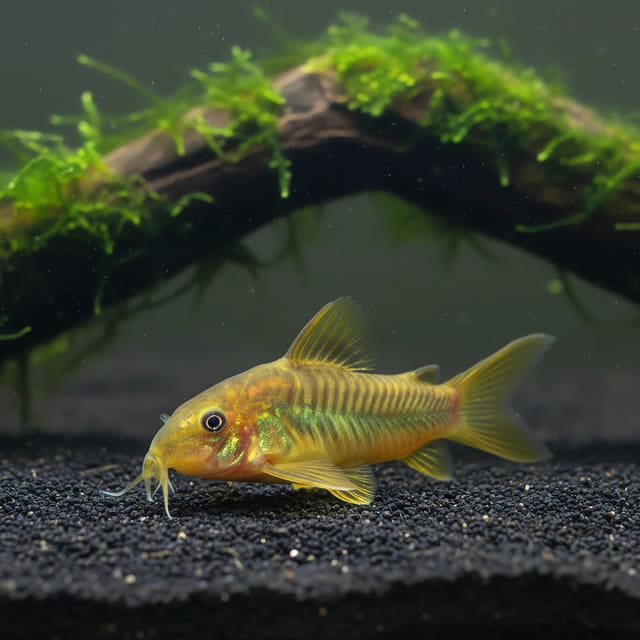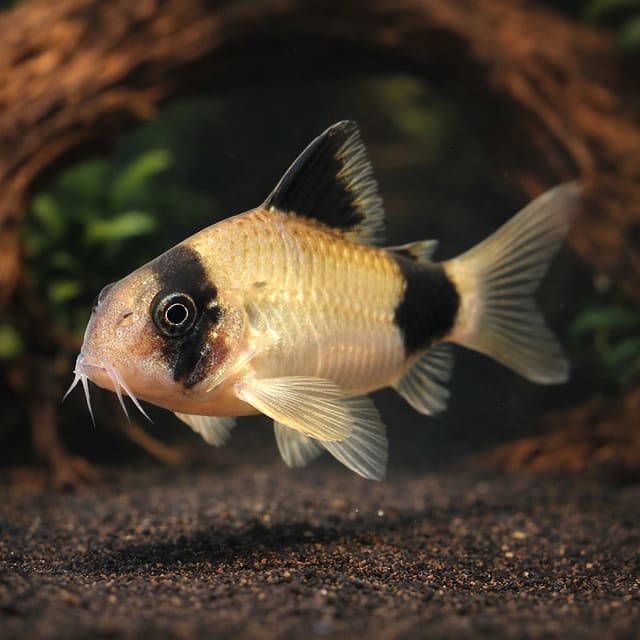
Panda Cory Catfish (Corydoras panda)
22–25°C · pH 6–7.4
£7.29

The L236 Pleco (Hypancistrus seideli) is a tropical freshwater, demersal loricariid from Brazil with a recorded maximum of 11.7 cm standard length. It suits a prepared keeper with a large filtered aquarium and cover; OATA’s broad tropical algae-eater guidance gives 22–27°C, pH 6.0–8.0 and 4–12°dH from its nearest listed pleco example. Sold individually in 3.5 cm and 4–5 cm dispatch sizes.
Adult size is the maximum length this species reaches at full maturity (scientific sources). The livestock you receive will be younger and smaller — pick a size above for the actual shipping size. Product-photo provenance and any image-specific limitations are stated on the listing.
Hypancistrus seideli
The L236 Pleco (Hypancistrus seideli) is a tropical freshwater, demersal loricariid from Brazil with a recorded maximum of 11.7 cm standard length. It suits a prepared keeper with a large filtered aquarium and cover; OATA’s broad tropical algae-eater guidance gives 22–27°C, pH 6.0–8.0 and 4–12°dH from its nearest listed pleco example. Sold individually in 3.5 cm and 4–5 cm dispatch sizes.
Adult size is the maximum length this species reaches at full maturity (scientific sources). The livestock you receive will be younger and smaller — pick a size above for the actual shipping size. Product-photo provenance and any image-specific limitations are stated on the listing.
‘Pleco’ is a loose aquarium-trade label, not one species or one care sheet. Before buying, confirm the scientific name or defensible L-number, adult size and measurement method, required footprint, temperature and water, diet, social plan and source. No universal pleco tank size, menu or algae result is honest.
Maintain these water conditions for optimal health and vibrant colors
The L236 Pleco (Hypancistrus seideli) is a tropical freshwater, demersal loricariid from Brazil. FishBase records a maximum of 11.7 cm standard length. It suits a prepared keeper who can provide a large filtered aquarium, useful lower-level space, cover and a consistent water-testing routine.
Plan around the adult fish rather than the smaller animal supplied. A tall aquarium cannot compensate for a cramped base merely because its total capacity looks generous. Substrate, plants, ornaments and filtration all reduce the usable space, so assess the completed lower-level layout before adding livestock.
| Suits | Not suited to |
|---|---|
| A large aquarium planned around an adult reaching up to 11.7 cm standard length | An aquarium planned only around the dispatch size |
| A maintained biological filter and weekly water testing | An unfiltered or newly filled aquarium |
| Gravel or sand with plants or suitable ornaments for cover | A bare plan without suitable cover |
| A keeper prepared to supplement grazing with measured food | Using another fish as a substitute for maintenance and suitable stocking |
One purchase supplies one L236 Pleco in the size selected through the live size selector. The size choices are 3.5 cm and 4–5 cm. A quantity of two supplies two animals rather than a pair or pack, and basic grade remains part of the offer’s trade identity.
The size you select is the size supplied, not the adult size. Use the selected size to plan introduction and feeding access, then use the maximum recorded length for the long-term aquarium. Do not infer sex, life stage, eventual pattern or origin from a size label.
Sex is guaranteed only when the selected option explicitly states male or female. This L236 Pleco listing has no sex-guaranteed option.
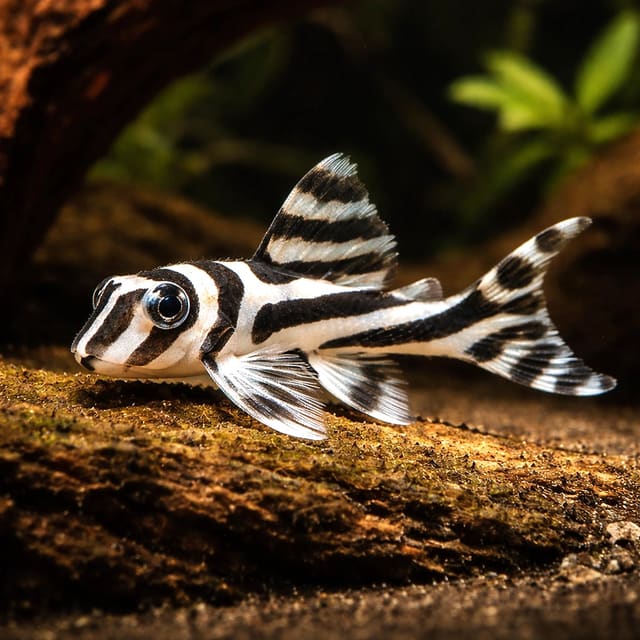
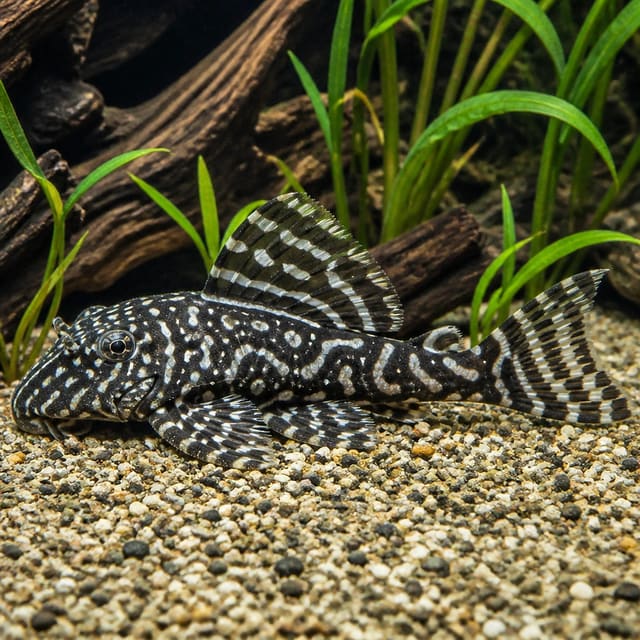
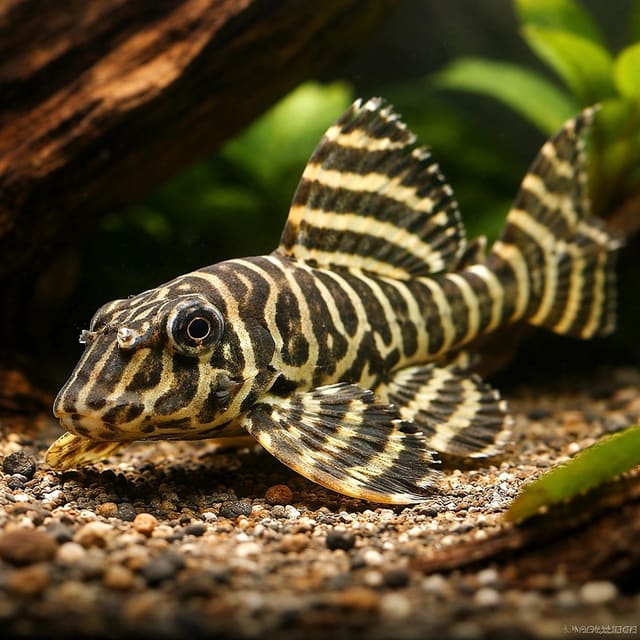
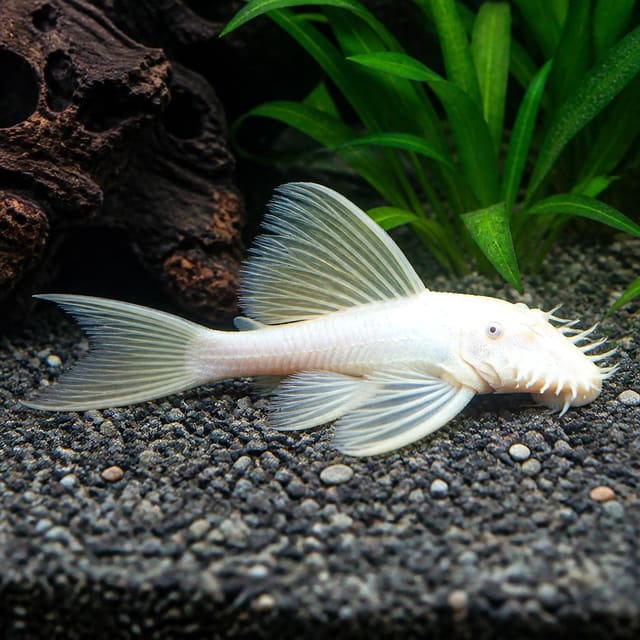
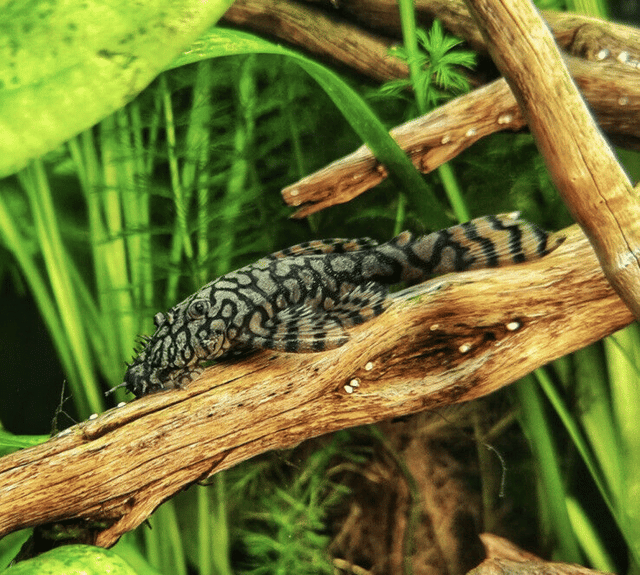
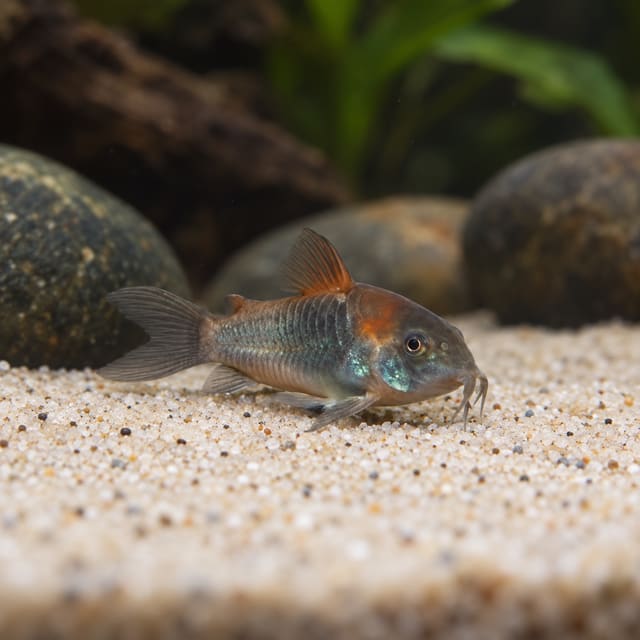
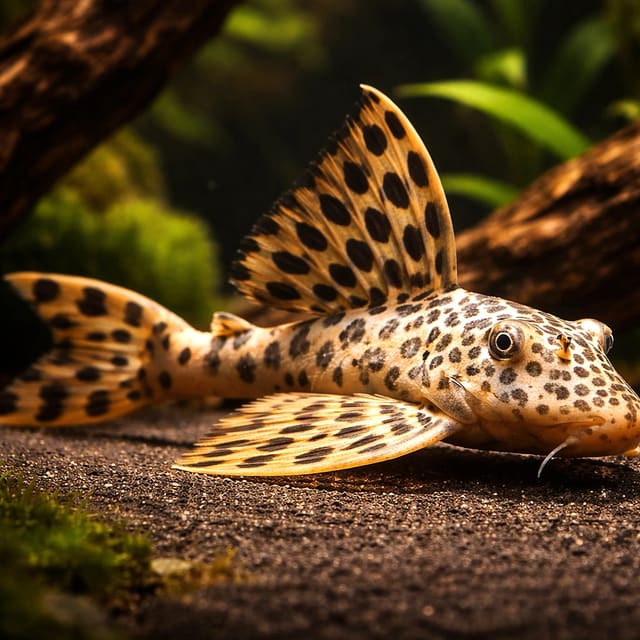
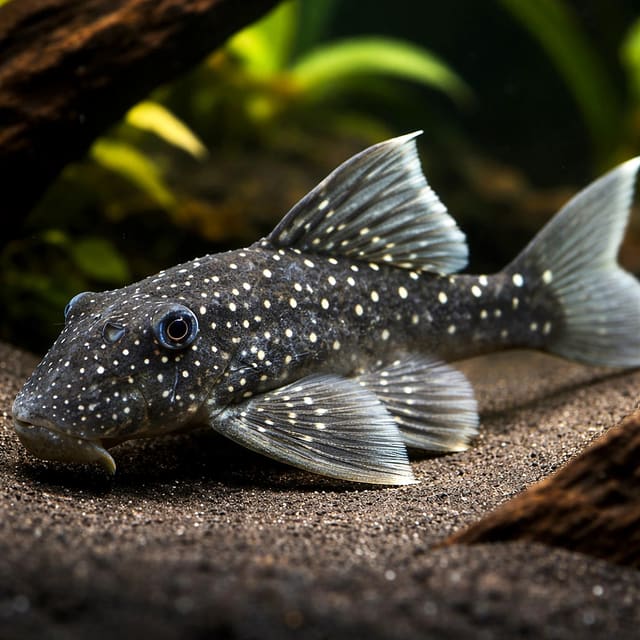
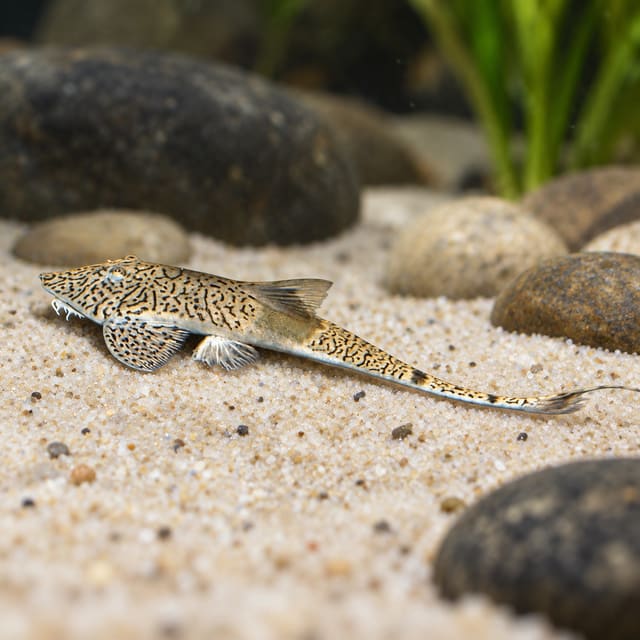
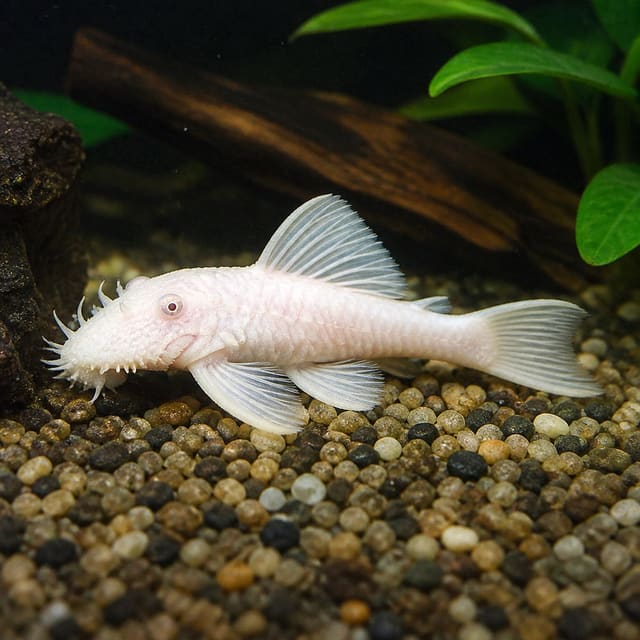
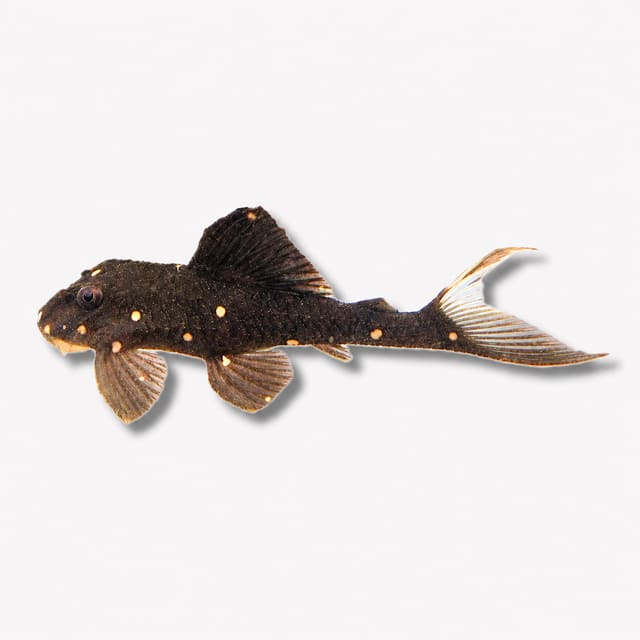
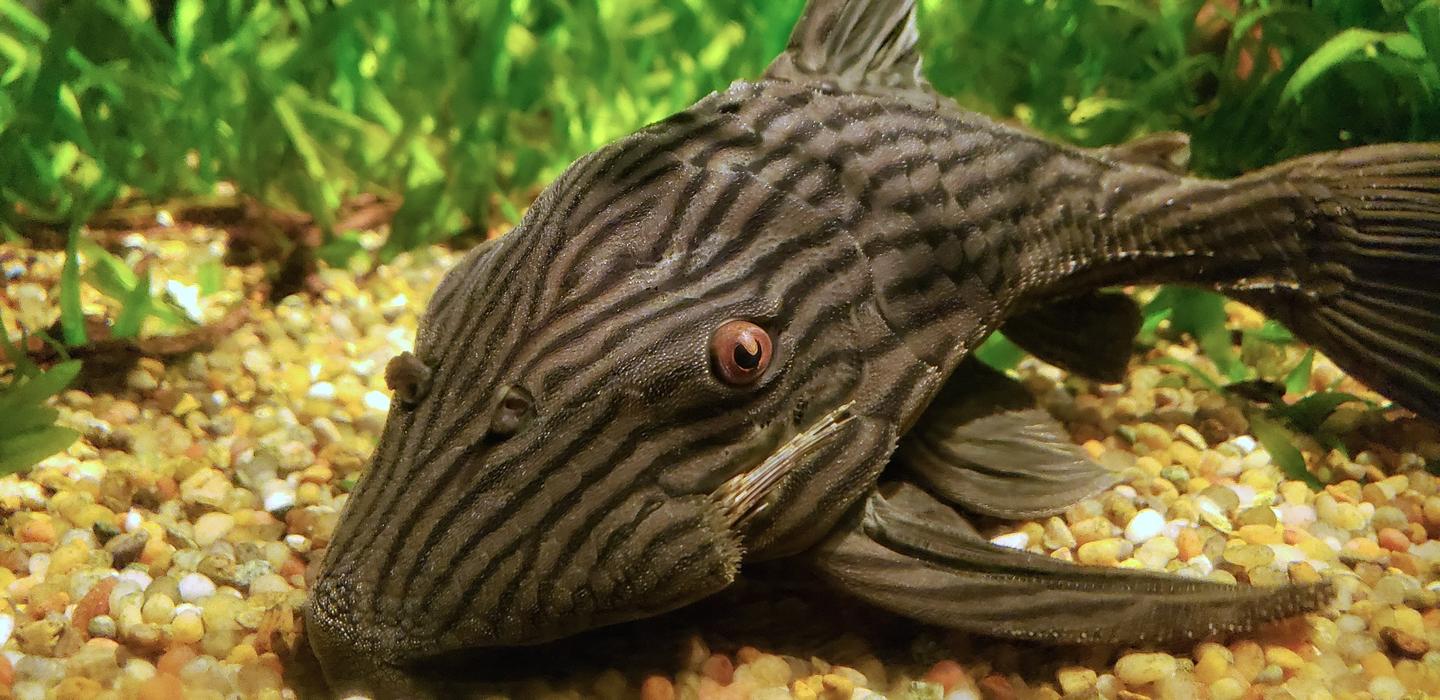
The gallery images are representative, based on reference photographs of this species, so colours can look slightly different from the live animal.
L236 Pleco is the trade identity used for Hypancistrus seideli. FishBase lists Hypancistrus seideli as the King tiger pleco in Loricariidae, the armoured catfish family. It classifies the fish as tropical, freshwater and demersal, so aquarium planning should include usable lower-level space rather than judging capacity from water volume alone.
Wikipedia describes Hypancistrus seideli as a freshwater ray-finned fish in the suckermouth armoured catfish family and as endemic to Brazil. FishBase likewise gives its South American distribution as Brazil and records a wild depth range of 0–40 metres. That depth figure describes where fish have been recorded in nature; it is not an aquarium-depth recommendation.
| Name | How to use it |
|---|---|
| L236 Pleco | Use for the established aquarium-trade identity. |
| Hypancistrus seideli | Use for scientific records, care notes and future identification. |
| Basic grade | Keep with the offer name without treating it as part of the scientific binomial. |
This identity suits a keeper prepared to plan around adult size, maintain biological filtration, test water every week and provide structured cover. The unusual trade code should never replace those practical decisions.
FishBase records a maximum of 11.7 cm standard length for male or unsexed Hypancistrus seideli. Treat 11.7 cm as a decisive long-term planning reference rather than a promise that every fish reaches exactly that measurement.
Choose an aquarium as large as reasonably possible, with enough usable lower-level area for an adult-sized demersal fish to move between food and cover. A tall aquarium cannot compensate for a cramped base merely because its total capacity looks generous. Include the substrate, plants, ornaments and filter in the layout before judging the remaining space.
OATA’s tropical algae-eater sheet gives 22–27°C and pH 6.0–8.0 for its listed pleco examples; its clown pleco guidance gives 4–12°dH. Use these as broad group planning values rather than a species-specific optimum. The same sheet calls for zero ammonia, zero nitrite and nitrate not exceeding 20 mg per litre in its listed pleco examples.
| Decision | Planning value |
|---|---|
| Maximum recorded length | Up to 11.7 cm standard length |
| Temperature | 22–27°C |
| pH | 6.0–8.0 |
| General hardness | 4–12°dH from the nearest listed pleco example |
| Ammonia and nitrite | Zero mg per litre |
| Nitrate | Not to exceed 20 mg per litre |
Assess adult length, usable base area, filter capacity, cover and total stocking together. Build the long-term aquarium around those combined needs before choosing the dispatch size.
Start with a well-set-up aquarium and a maintained filter. If this is your first livestock system, follow our guide to preparing and maturing a first tropical aquarium before arranging the animal’s introduction. A new container filled on the day is not a substitute for an established biological filter.
OATA recommends choosing an aquarium as large as reasonably possible because larger systems tend to provide more stable temperature and water quality. For this demersal catfish, examine the usable base as well as the headline volume. Substrate, ornaments, plants and equipment all occupy room, and the adult plan must still accommodate a fish recorded at up to 11.7 cm standard length.
View the completed layout at the fish’s level. A decorative upper half does little for a bottom-oriented animal if the lower area is crowded with equipment or inaccessible ornaments. Spread cover through the usable space instead of placing every refuge in one corner.
Walk through the routine before the fish depends on it. Confirm that you can reach the filter, take a water sample, place food near the lower level and inspect the areas behind ornaments without dismantling the aquarium. If a shelter blocks maintenance or leaves food permanently hidden, reposition it while the layout is still easy to change.
Use a seven-day practice period to establish the weekly rhythm. Record temperature, pH, hardness, ammonia, nitrite and nitrate on the same day, then check that the filter continues to operate and that the layout remains accessible. The purpose is not to force every reading to change; it is to show that you can measure the aquarium consistently and recognise movement from its baseline.
Finish the setup before introduction so the filter, temperature and test results can be assessed without an animal already depending on them. The aquarium should support the adult plan rather than only the smaller dispatch size.
Use OATA’s broad tropical algae-eater guidance of 22–27°C, pH 6.0–8.0 and 4–12°dH, and check the aquarium against measured values rather than relying on how clear the water looks. Clear water can still contain dissolved waste, while a test result gives you a specific decision to make.
Use our water chemistry guide to understand temperature, pH, hardness and nitrogen readings. Enter the measured aquarium values in the water matcher before selecting livestock. Record the figures so the next weekly test can be compared with a real baseline.
| Result | Decision |
|---|---|
| 22–27°C | Keep monitoring the established temperature as part of the weekly routine. |
| Outside 22–27°C | Bring the aquarium into the working range before introduction. |
| pH 6.0–8.0 | Record the result and compare it at the next test. |
| 4–12°dH | Use the measured hardness when assessing the aquarium and potential companions. |
| Ammonia above zero | Treat it as an immediate water-quality problem and restore zero before adding livestock. |
| Nitrite above zero | Treat it as an immediate water-quality problem and check biological filtration. |
| Nitrate above 20 mg/l | Review maintenance, feeding and stocking before proceeding. |
Suppose the first weekly test reads 24°C, pH 7.2, 8°dH, zero ammonia, zero nitrite and 10 mg per litre nitrate. Record that as the working baseline. If the next test keeps ammonia and nitrite at zero but nitrate rises towards 20 mg per litre, review feeding, maintenance and stocking before the ceiling is crossed. If ammonia or nitrite appears, treat the filter and water condition as the immediate priority.
Use the same test method and units each week so comparisons remain meaningful. A notebook entry should include the date, each reading and any change made to feeding, maintenance or stocking. That short record helps distinguish a one-off testing mistake from a continuing movement that requires action.
Test at least once a week. Use the same units each time, write the result down and investigate movement away from the working values. The purpose of testing is not to collect numbers; it is to catch a failing filter, excessive feeding or an unsuitable water match before the fish bears the cost.
RSPCA aquarium welfare guidance explains why every fish aquarium needs a well-set-up and maintained filter. Fish release toxic ammonia. Beneficial bacteria in a working biological filter convert ammonia to nitrite, which is also toxic, and then to the safer nitrate.
This process makes filter condition a welfare decision rather than a cosmetic preference. An aquarium may look tidy while ammonia or nitrite is rising, which is why the filter and weekly tests must be considered together. Zero ammonia and zero nitrite are the working targets.
Do not add an algae-grazing fish as a substitute for regular maintenance or suitable stocking. OATA notes that persistent algae can indicate an underlying water-chemistry or maintenance problem. Adding another animal also adds to the aquarium’s stocking level, so it cannot repair the underlying cause merely by grazing visible growth.
A useful worked check is to read the tests in order. If ammonia and nitrite are zero but nitrate is climbing, review the routine that allows waste to accumulate. If ammonia or nitrite is present, focus first on biological filtration and safe water conditions rather than adding livestock or extra food. Keep the response measured, test again and use the figures to decide when the aquarium is ready.
Use OATA’s tropical algae-eater group guidance as the feeding starting point: offer prepared algae-based wafers or flakes and supplement them with fresh vegetables such as cucumber. Algae-growing surfaces alone are not a complete feeding plan, and an algae-eating fish does not replace aquarium maintenance.
Place prepared food where the pleco can reach it, watch whether the fish gains access and remove uneaten food before it decays. The decisive result is food reaching the demersal fish without a build-up of leftovers.
| Step | Action |
|---|---|
| Choose the food | Use a prepared algae-based wafer or flake, with suitable fresh vegetable supplementation. |
| Set the portion | Begin with a measured amount and observe whether the fish reaches it without excess remaining. |
| Check access | Confirm that the demersal fish can reach its portion rather than judging the meal only by activity higher in the aquarium. |
| Remove excess | Do not leave an accumulating quantity of uneaten food to break down. |
| Review the next feed | Reduce the next portion if food remains; reassess placement if the fish could not reach it. |
Wash vegetables thoroughly before use because pesticide residues may harm fish or invertebrates. Organic vegetables are another option, but they should still be prepared cleanly. Cucumber is the specific fresh vegetable named in OATA’s guidance.
If the prepared portion is eaten and the pleco is seen reaching it, keep the next serving measured in the same way. If food remains and begins collecting around cover, remove the excess and reduce the next portion. If other fish take the entire serving before it reaches the lower level, change where the food is placed before increasing the total amount.
Keep a short feeding note for the first week: record the food used, whether the pleco reached it and whether anything remained. This creates a practical starting point for portion control without turning feeding into guesswork. Continue to judge the routine alongside ammonia, nitrite and nitrate because uneaten food affects the same filtered system.
Overfeeding creates two linked problems: uneaten food breaks down into toxic waste, and the filter has more waste to process. Keep each feeding decision tied to observation and weekly tests. If a community aquarium consumes every prepared food before the pleco reaches it, change the placement and reassess the companion mix rather than repeatedly increasing the total portion.
Use aquarium gravel or sand and provide sheltered areas throughout the usable lower level. OATA recommends live plants where practical. When live plants are not used, plastic plants and suitable ornaments such as plant pots or model caves can supply cover.
Arrange those features so they create shelter without blocking every view of the substrate, food or filter. The fish is demersal, so lower-level cover carries more practical value than decorations placed only near the surface. Leave enough open access to see uneaten food and to carry out the weekly checks.
Keep visual assessment factual. Dispatch size, sex and exact appearance should come from the offer terms rather than assumptions based on a gallery scene. Use the fish’s measured dispatch size for introduction planning and its 11.7 cm maximum standard length for the adult layout.
When food is offered, check whether it is reached and whether uneaten material remains. During the weekly routine, record temperature, pH, hardness, ammonia, nitrite and nitrate. If feeding, behaviour, breathing or appearance changes, test the water promptly and contact us for the appropriate next step; diagnosis and treatment should be handled through qualified aquatic-veterinary advice.
Prepare the filtered aquarium before arranging receipt. Using OATA’s broad tropical algae-eater guidance, confirm that temperature is within 22–27°C, pH is within 6.0–8.0, ammonia and nitrite are zero, nitrate does not exceed 20 mg per litre and suitable cover is already in place.
Read the current delivery and Live Arrival Guarantee policy when planning receipt.
Observe food access whenever food is offered. Do not interpret activity elsewhere in the aquarium as proof that the bottom-dwelling fish has eaten. Check for remaining food and keep the filter operating. Complete the weekly water test even when the water looks clear.
Use the first seven days to separate routine observations from decisions that need action. If food is reached and no excess remains, keep the portion and placement consistent. If food remains, remove it and reduce the next serving. If the pleco cannot reach its portion because another fish takes it first, change the placement and reconsider the companion arrangement.
Compare each weekly result with the initial baseline. Ammonia and nitrite should remain at zero, while nitrate should remain no higher than 20 mg per litre. Review feeding, maintenance and stocking if those figures move in the wrong direction. Confirm that the adult layout still has usable lower-level space rather than allowing temporary dispatch size to dictate permanent capacity.
A simple month record can contain four dated lines, one for each weekly test. Write down the temperature, pH, hardness and nitrogen readings, then note any change to feeding or maintenance. If the values remain steady, continue the established routine. If a reading moves, respond to that measured change and record the result at the next test.
The first month is successful when the routine is repeatable: measured feeding with uneaten food removed, weekly water testing, maintained filtration and accessible cover. Keep that routine stable before considering any further livestock.
Compatibility is an aquarium-by-aquarium decision. A familiar common name or a general community label cannot guarantee a safe match. OATA advises obtaining an assessment before adding an algae-grazing species, and the assessment should use the adult animal, the measured aquarium and the total stocking plan.
| Check | Question to answer |
|---|---|
| Adult size | Can the aquarium accommodate the L236 Pleco at up to 11.7 cm standard length as well as every companion at its own adult size? |
| Water | Can every animal share OATA’s broad 22–27°C and pH 6.0–8.0 guidance and the measured hardness without choosing one fish’s needs over another? |
| Stocking | Can the maintained biological filter keep ammonia and nitrite at zero and nitrate no higher than 20 mg per litre after the addition? |
| Cover | Will suitable plants or ornaments remain accessible after all animals and equipment are considered? |
| Food access | Can the pleco reach its prepared food without excess food being added to compensate for competition? |
Use those checks for every proposed companion rather than relying on a universal tank-mate list. The most useful description for an assessment includes the aquarium dimensions, filter, current animals with their adult sizes, measured temperature, pH, hardness, ammonia, nitrite and nitrate.
Start with the proposed companion’s adult requirements rather than its shop size. Write down its adult size and water range beside the L236 figures, then compare both with the measured aquarium. Next, consider the combined stocking effect, the amount of usable cover and whether both animals can reach food without encouraging overfeeding.
A candidate that matches temperature but fails the adult-space check is not ready for that aquarium. A candidate that fits the physical space but requires different water also fails the screen. When all five checks align, continue to monitor the actual aquarium after introduction because compatibility depends on the whole stocking plan rather than one name.
For a stocking and compatibility assessment, contact us with those details before choosing another animal. You can also compare the current catfish and pleco collection, but each animal’s adult requirements must be assessed separately.
Do not add this fish simply to solve algae. Persistent algae may point to water chemistry, maintenance or stocking issues, while another fish increases the biological load. Resolve the aquarium problem first, then decide whether the animal itself fits the long-term plan.
Each selected quantity represents one animal. Use that retail rule when calculating stocking: quantity one means one fish, quantity two means two fish and quantity three means three fish. A higher quantity does not create a biologically defined pair or group.
For a single-animal plan, reserve the complete adult capacity, cover, filter support and feeding access for that fish alongside any existing livestock. Before selecting more than one, repeat the same assessment for every additional animal instead of dividing one fish’s space between several smaller dispatch sizes.
| Plan | What must be reassessed |
|---|---|
| One L236 Pleco | Adult space for up to 11.7 cm standard length, filtration, cover, water and food access. |
| One plus existing fish | All of the above, plus shared water values, total stocking and whether the pleco reaches food. |
| More than one L236 Pleco | Adult capacity for every animal, additional cover, total waste processing and individual feeding access. |
| Any later addition | Fresh test results and the aquarium’s performance after the previous stocking change. |
Treat group size as an individual stocking decision rather than choosing a fixed number from the trade code. More animals increase the adult biomass that the filter must support and the number of fish that must reach the food provided. The weekly tests must remain within the working values after each addition.
Do not use the smaller dispatch size to justify crowding. The selected size determines what arrives; FishBase’s maximum standard length determines the long-term scale of the plan. If the adult assessment does not work for every selected animal, reduce the quantity or prepare a larger aquarium before proceeding.
FishBase records a maximum of 11.7 cm standard length for Hypancistrus seideli. Use that figure when planning the adult aquarium rather than treating the 3.5 cm or 4–5 cm dispatch size as its eventual length.
Choose an aquarium as large as reasonably possible, with a maintained filter and enough usable lower-level area, gravel or sand and cover for a fish reaching up to 11.7 cm standard length. Assess the base area, total stocking and space occupied by equipment and ornaments together.
Plan one animal at a time because a fixed group number is not part of the care guidance. Reassess adult space, filtration, cover and food access for every additional fish, and do not treat a higher purchase quantity as a pair or pack.
We rate it as intermediate because the keeper must plan around its adult size, maintain biological filtration, test water weekly, provide lower-level cover and confirm that the fish reaches its prepared food.
OATA’s tropical algae-eater group guidance recommends prepared algae-based wafers or flakes with fresh vegetables such as cucumber. Place a measured portion where the pleco can reach it, remove excess before it decays and use weekly water tests to check that feeding is not degrading water quality.
OATA’s broad tropical algae-eater guidance gives 22–27°C and pH 6.0–8.0, with 4–12°dH from its nearest listed pleco example. Keep ammonia and nitrite at zero and nitrate no higher than 20 mg per litre.
Treat aggression and fin-nipping compatibility as uncertain and assess the whole aquarium. Check every proposed companion’s adult size, water requirements, stocking effect, access to cover and ability to feed without preventing the pleco from reaching its food.
Use only companions that pass an aquarium-specific assessment for adult size, OATA’s broad 22–27°C and pH 6.0–8.0 guidance, measured hardness, total stocking, cover and food access. No named animal is an automatic match.
Have someone present to receive it and film every delivery continuously from the sealed parcel as it is opened, showing the fish still inside the sealed bag. Float the bag for 20–30 minutes before releasing the fish, and never pour the bag water into the aquarium.
No reviews for this item yet. Bought one? Honest reviews only, good or bad.
What customers say about ordering from us
I have a small group of long finned mountain minnows. So was delighted to be able to order ten of this variety to increase the genetics in my tank . The ones I recieved are healthy but it’s to early to give a verdict on wether they are of a long finned type since they are small currently.
Gordon Walker · 23 Sept 2026
100% success travel and "installation". Pleased with quality of purchase. The Siamese fighter a bit "shy" so have not yet seen him at his best yet but looking good. Happy customer. GG
George E Garratt · 21 Sept 2026
Reviews of our shop, collected by Judge.me, an independent third-party review collector. Newest first.