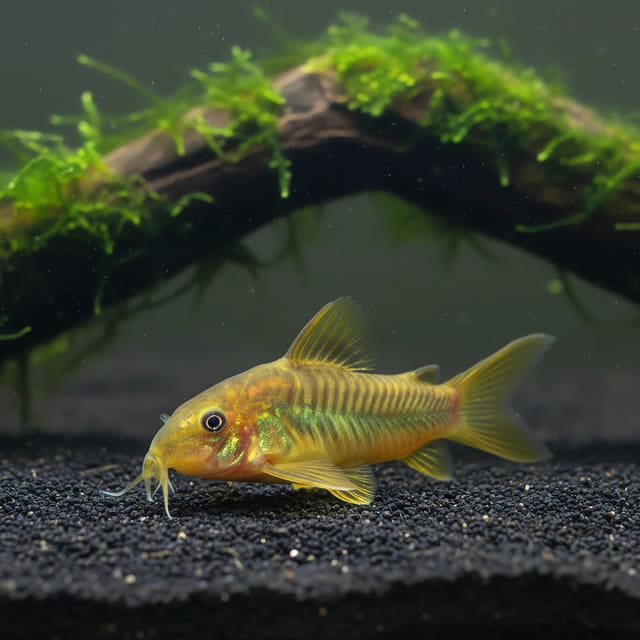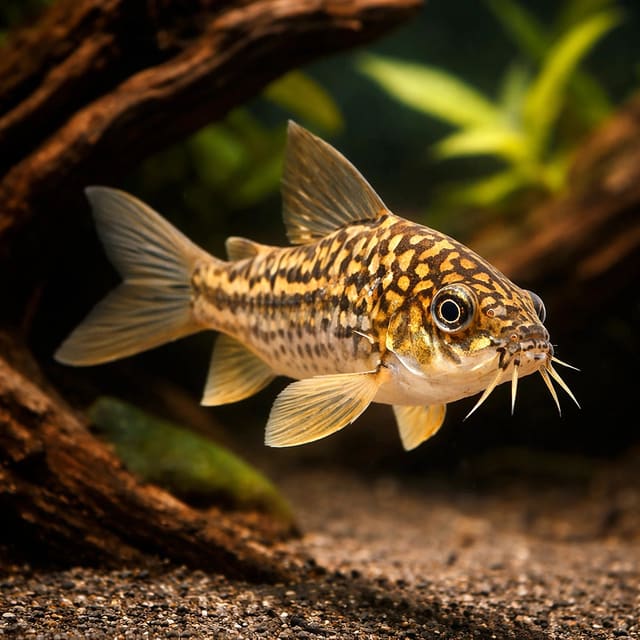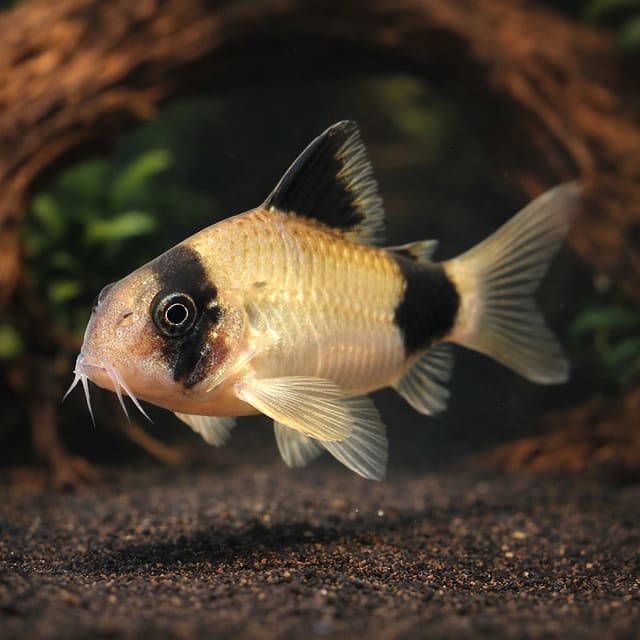
Panda Cory Catfish (Corydoras panda)
22–25°C · pH 6–7.4
£7.29

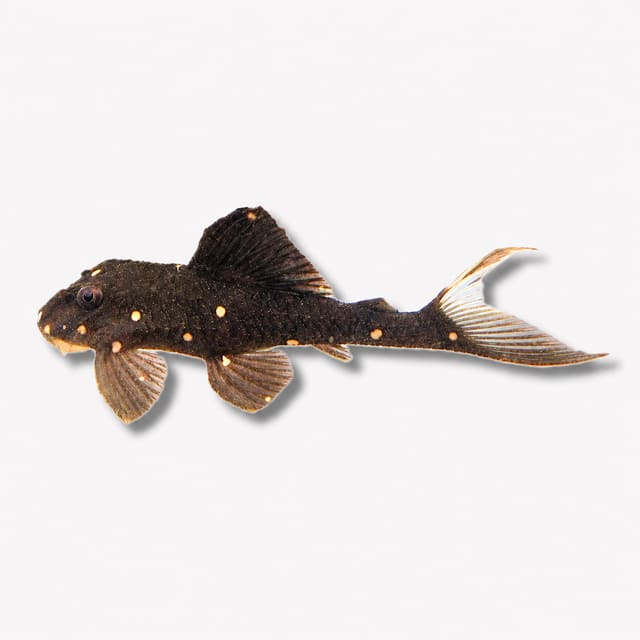
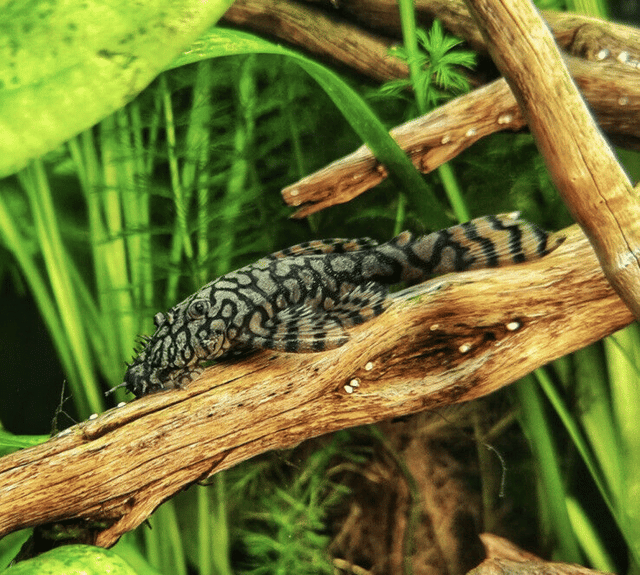
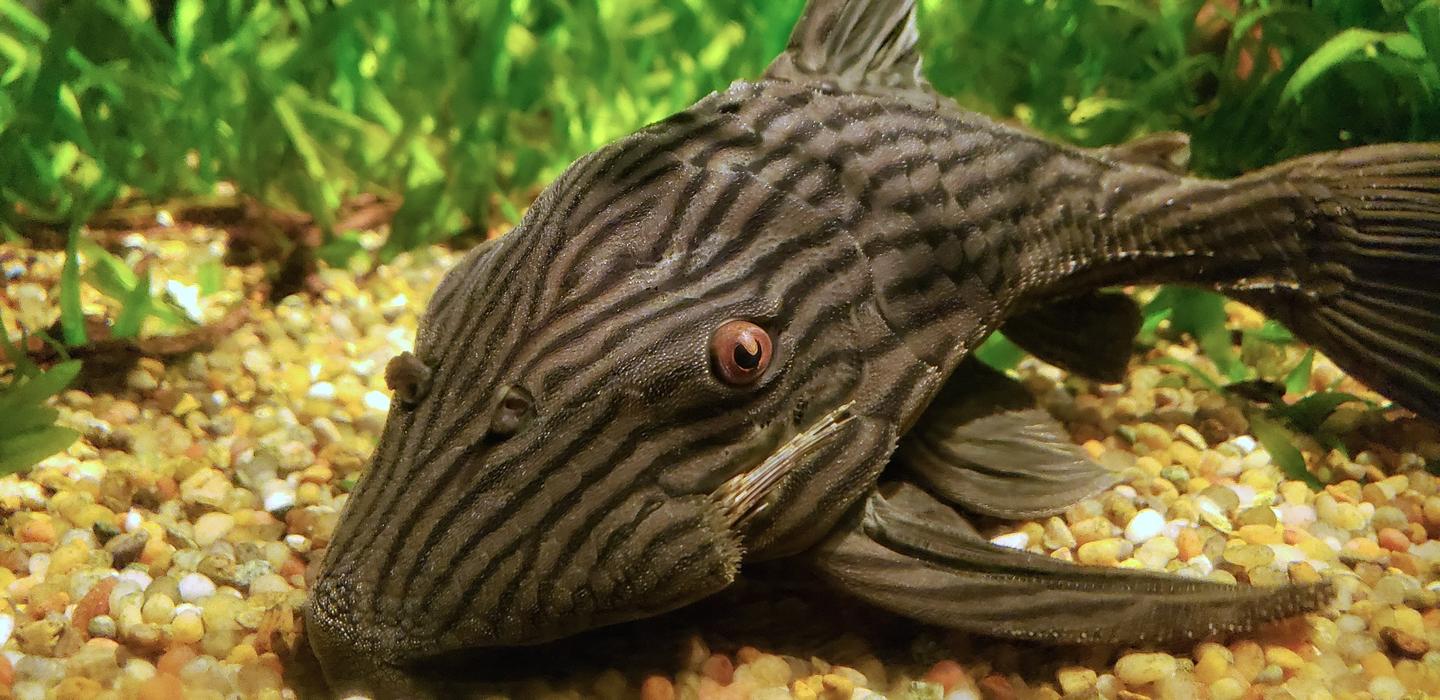
The L226 Iquitos Tiger Pleco is Panaqolus changae, a Peruvian freshwater loricariid recorded at up to 8.5 cm standard length. One purchase supplies one animal in the selected dispatch grade; keep it in a mature filtered aquarium with cover and a supplemented prepared diet.
Adult size is the maximum length this species reaches at full maturity (scientific sources). The livestock you receive will be younger and smaller — pick a size above for the actual shipping size. Product-photo provenance and any image-specific limitations are stated on the listing.
Panaqolus changae
The L226 Iquitos Tiger Pleco is Panaqolus changae, a Peruvian freshwater loricariid recorded at up to 8.5 cm standard length. One purchase supplies one animal in the selected dispatch grade; keep it in a mature filtered aquarium with cover and a supplemented prepared diet.
Adult size is the maximum length this species reaches at full maturity (scientific sources). The livestock you receive will be younger and smaller — pick a size above for the actual shipping size. Product-photo provenance and any image-specific limitations are stated on the listing.
‘Pleco’ is a loose aquarium-trade label, not one species or one care sheet. Before buying, confirm the scientific name or defensible L-number, adult size and measurement method, required footprint, temperature and water, diet, social plan and source. No universal pleco tank size, menu or algae result is honest.
Maintain these water conditions for optimal health and vibrant colors
The L226 Iquitos Tiger Pleco is Panaqolus changae, a tropical freshwater member of Loricariidae, the armoured catfish family. FishBase records a maximum of 8.5 cm standard length and describes the fish as benthopelagic, placing its activity close to the lower part of the water column. Use that 8.5 cm SL figure as the adult-size planning reference rather than treating a dispatch grade as a prediction of future growth.
In its natural-history account, Wikipedia describes Panaqolus changae as a Peruvian freshwater ray-finned fish in the suckermouth armoured catfish family. It also explains the aquarium-trade names Iquitos Tiger Pleco and L-226. These names refer to the same animal in this offer; they are not separate varieties or sex forms.
OATA’s tropical algae-eater guidance gives 22–27°C, pH 6.0–8.0, general hardness of 4–12°dH and carbonate hardness of 3–10°dKH for listed catfish examples. Treat these as broad group guidance rather than a species-specific optimum for L226.
| Planning point | Figure or action |
|---|---|
| Adult-size reference | Up to 8.5 cm SL |
| Temperature | 22–27°C |
| pH | 6.0–8.0 |
| General hardness | 4–12°dH |
| Carbonate hardness | 3–10°dKH |
| Ammonia and nitrite | Zero mg per litre |
| Nitrate | Not more than 20 mg per litre above the normal tap-water level |
This pleco suits a keeper prepared to measure water, maintain biological filtration, provide shelter and serve a deliberate supplemented diet. Choose it as an animal with its own needs, not as a replacement for aquarium maintenance or a shortcut for persistent algae.
A practical first decision is to compare the aquarium you have with every row in the table. A temperature match alone is not enough if ammonia or nitrite is detectable, while suitable chemistry does not compensate for a lower area with no shelter or feeding access. Proceed only when the water, filtration and physical layout work together.
The live size selector is the place to check which dispatch grade can be chosen. Four available grades are available: 4–5 cm, 5–7 cm, 7–10 cm and 12–15 cm. The size you select is the size supplied, not the adult size. These measurements describe the selected dispatch grade and do not change the scientific adult-size reference of up to 8.5 cm standard length.
For example, selecting 4–5 cm means the supplied animal falls within that dispatch grade; it does not mean 5 cm is its adult limit. The same rule applies to every selector label. Where the label itself reaches beyond 8.5 cm SL, resolve the apparent difference before treating that option as the same long-term planning case.
One purchase quantity supplies one animal of the selected option. A size label does not indicate sex, life stage or origin, and it should never be used to infer any of those characteristics.
Sex is guaranteed only when the selected option explicitly states male or female. This L226 Iquitos Tiger Pleco listing has no sex-guaranteed option.
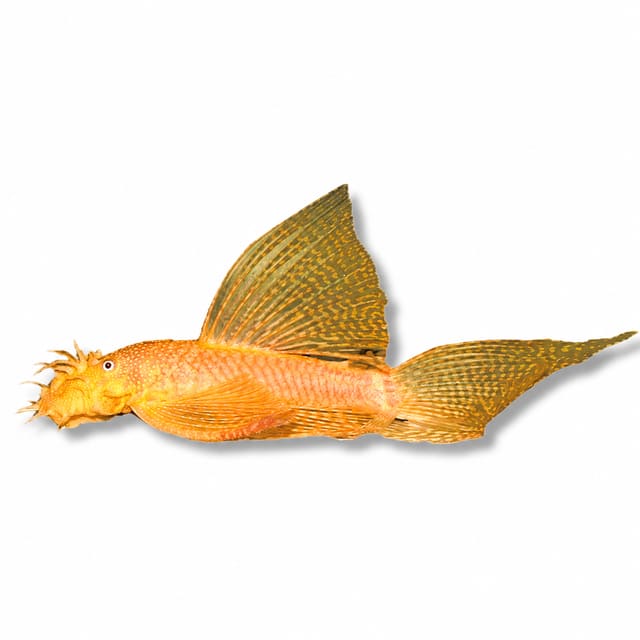
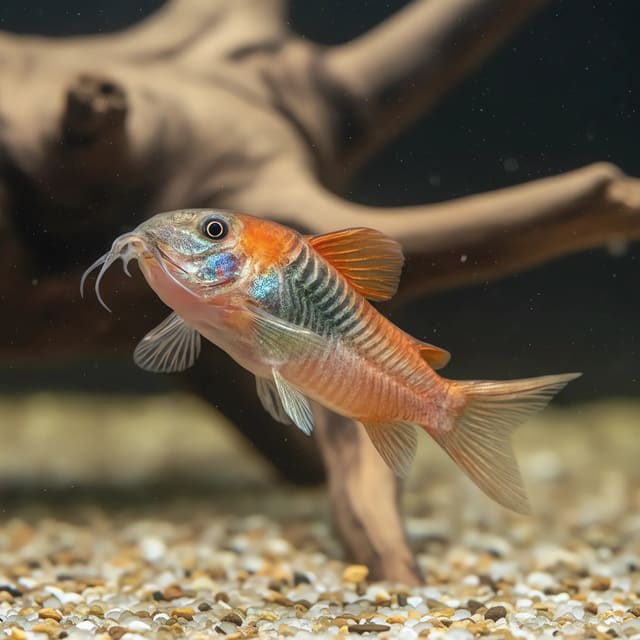
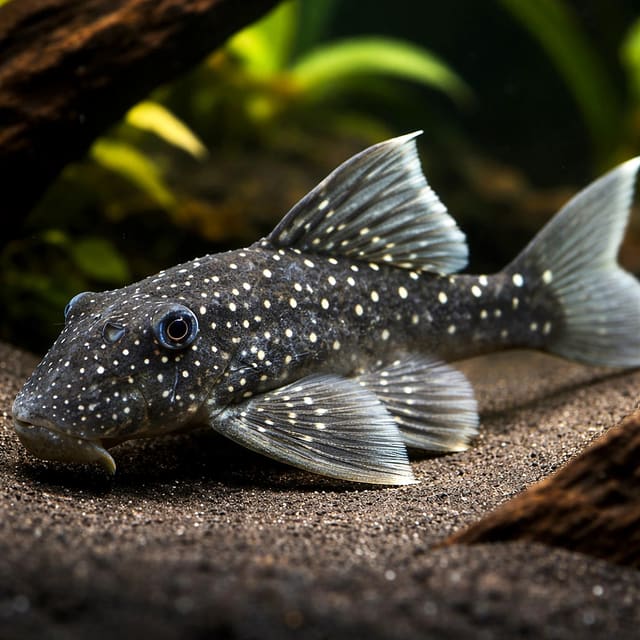
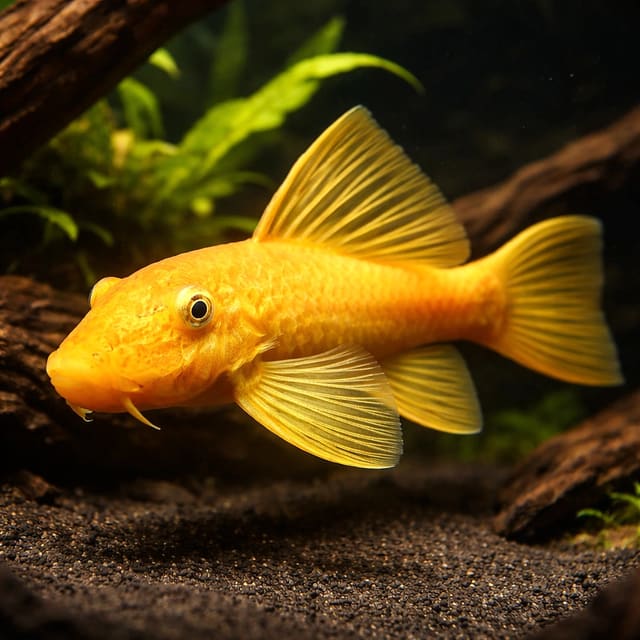
The gallery images are representative of this type of animal rather than photographs of the exact animal supplied, so colours can look slightly different from the live animal.
Prepare the aquarium and confirm that its water, space and filtration are suitable before choosing a grade. For packing, dispatch days, claims and guarantee terms, read our delivery and Live Arrival Guarantee policy directly.
Start with the adult-size reference of up to 8.5 cm standard length, then give the fish useful lower-level space rather than choosing an aquarium from litres alone. FishBase describes Panaqolus changae as benthopelagic, so the layout and accessible bottom area deserve as much attention as the headline volume.
OATA advises choosing an aquarium as large as reasonably possible because larger aquariums usually provide more stable environmental conditions. Apply that principle here: select a mature aquarium that can hold shelter, open feeding access and a well-established filter without making the lower area cramped.
| If you are deciding between | Prefer the aquarium that |
|---|---|
| Two tanks with similar volume | Provides the more useful bottom footprint and room around shelter |
| A decorative but crowded layout | Retains accessible feeding areas and clear water movement around the filter |
| A small tank and a larger stable tank | Offers greater environmental stability within your practical limits |
| One fish and several bottom users | Has enough lower-level space and filtration capacity for every animal |
Keep aquarium gravel or sand as the substrate and include cover. Live plants can provide cover; where live plants are not used, plastic plants and suitable ornaments such as model caves can create shelter. Arrange everything securely and leave routes through the lower area rather than filling every part of it with decoration.
A litre figure by itself cannot describe footprint, cover, filtration capacity or the demands of other occupants. Make the decision from the whole system: adult-size reference, usable lower space, stable water, established filtration, shelter and total stocking. If any one of those parts is weak, improve it before adding the fish.
Test the proposed layout before introduction by identifying one sheltered position, one accessible feeding position and an unobstructed route between them. Then account for the space already used by every existing bottom-dweller. If decorations or other occupants remove those practical areas, enlarge or revise the arrangement rather than relying on the aquarium’s volume label.
Use a mature aquarium with a well set up and maintained biological filter. If this is your first aquarium, follow our first tropical tank guide before livestock is introduced. Maturity belongs to the aquarium and filter: it means the biological system has been prepared to process fish waste rather than merely filled with water.
The RSPCA explains why aquarium filtration is vital. Fish release ammonia, which is toxic. Beneficial bacteria in a working biological filter convert ammonia to nitrite, which is also toxic, and then to the safer nitrate. This process is the reason a filter must be established and maintained rather than treated as optional equipment.
Do not rely on decoration to compensate for an immature filter. Shelter can help create a usable environment, but it cannot process ammonia or nitrite. In the same way, a filter does not replace the need for an appropriate layout. The fish needs both waste processing and a lower area that includes cover.
Check the completed layout from the fish’s level before introduction. Confirm that shelter remains accessible, plants and ornaments do not consume the entire bottom footprint, and food can be placed where it can be monitored. This final check turns a collection of equipment into a practical living space.
Repeat that layout check after moving ornaments or allowing plants to fill out. A shelter that becomes blocked and a feeding place hidden behind growth no longer perform their intended jobs. Keep the arrangement functional while preserving the established filter and the accessible lower area.
Use 22–27°C, pH 6.0–8.0, general hardness of 4–12°dH and carbonate hardness of 3–10°dKH as the working aquarium range. Keep ammonia at zero mg per litre and nitrite at zero mg per litre. Nitrate should not exceed 20 mg per litre above the normal level in the tap water used for the aquarium.
Test regularly once a week rather than judging water by appearance. Our water chemistry guide explains what the measured values mean, while the water matcher helps compare your aquarium readings with the stated range.
| Reading | Required response |
|---|---|
| Temperature outside 22–27°C | Bring the aquarium into range before introduction |
| pH outside 6.0–8.0 | Resolve the mismatch before choosing this fish |
| General hardness outside 4–12°dH | Choose livestock whose needs match the measured water |
| Ammonia or nitrite above zero | Stop the introduction plan and restore biological stability |
| Nitrate more than 20 mg/l above tap water | Review maintenance, feeding and stocking pressure |
The nitrate limit is relative to the normal tap-water baseline. For example, if the tap water measures 8 mg per litre nitrate, the corresponding upper comparison point is 28 mg per litre. If the tap baseline is 15 mg per litre, the comparison point is 35 mg per litre. Measure both values instead of assuming the tap water starts at zero.
Keep a simple dated record so that the weekly result has context. A value moving towards a boundary is a reason to examine the aquarium before it becomes a failed test. Larger aquariums can make environmental conditions more stable, but their water still needs measurement and appropriate maintenance.
Use the first four weekly entries as a baseline for the aquarium. Compare each new result with both the stated range and the earlier readings. A result can remain inside a boundary while moving consistently towards it, so investigate the direction of travel rather than waiting for ammonia, nitrite or another value to fail its target.
Treat visible algae as incidental grazing rather than a complete ration. OATA advises that algae-eating fish need their diet supplemented with prepared feeds, including algae-based wafers or flakes, and ideally fresh vegetables such as cucumber. Use that menu as the practical starting point for L226.
Offer a measured portion and watch whether the fish gains access to it. Judge the amount by whether uneaten material starts accumulating, then reduce the next portion when leftovers persist. The purpose is to provide deliberate supplementary food without allowing excess to break down and release toxic waste.
| Food or observation | Action |
|---|---|
| Algae-based wafer or flake | Use as a measured prepared feed, not an unlimited addition |
| Fresh cucumber | Choose organic produce or wash it thoroughly before use |
| Food reached by the fish | Keep the portion under observation at the next feed |
| Food repeatedly left behind | Reduce the portion and prevent waste from accumulating |
| Persistent aquarium algae | Review maintenance, water chemistry and stocking instead of adding food or fish as a cure |
Vegetables may carry residual pesticides that can harm fish or invertebrates. Organic produce reduces that concern, while thorough washing is the practical alternative. Prepare only what you intend to offer and keep the feeding area easy to inspect.
An algae-eating label never transfers responsibility for aquarium cleaning to the fish. Persistent algae can point to water-chemistry or maintenance issues, and inappropriate stocking can add further waste. Feed L226 as a living animal with a planned ration while managing algae through testing, maintenance and suitable stocking levels.
Keep food assessment separate from algae assessment. A cleaner-looking surface does not show that the fish has received a complete ration, while visible algae does not justify adding extra animals. Base feeding on access and leftovers, then manage the wider aquarium through measured water results.
Complete the aquarium assessment before the fish is introduced. The filter should be established and maintained, the aquarium should be mature, and the measured water should sit within the working range. Preparing these points in advance is safer than trying to solve them after an animal has entered the system.
If a checkpoint fails, wait and correct that part of the system. A live animal should not be used to test whether a filter can process waste, whether the water will settle into range or whether existing occupants leave enough space.
During the first week, use feeding observations and water readings as concrete checkpoints. Confirm that food is accessible and does not accumulate, and test immediately if the fish’s appearance or feeding changes rather than waiting for the next scheduled weekly check. This approach focuses attention on measurable conditions without assigning a cause from appearance alone.
Make the final go-or-wait decision from the weakest checkpoint. Seven passing items do not cancel one detectable ammonia reading, an unsuitable temperature or a blocked lower area. Correct the failed condition, repeat the relevant measurement or layout check, and proceed only when the entire aquarium can support the planned addition.
A repeatable routine makes changes easier to notice and keeps feeding, testing and maintenance connected. Offer measured food, inspect for uneaten material, and run the complete water test once a week. Keep the readings together so that temperature, pH, hardness and nitrogen waste are judged as one system rather than isolated figures.
| When | What to do |
|---|---|
| At a feeding observation | Offer a measured ration and check whether food remains |
| Once each week | Test temperature, pH, hardness, ammonia, nitrite and nitrate |
| After a changed result | Review feeding, maintenance, filtration and stocking pressure |
| After a change in appearance or feeding | Test the aquarium immediately and contact us for health guidance |
| When algae persists | Investigate water chemistry and maintenance rather than treating the fish as cleaning equipment |
Four weekly results across the first month create a useful starting pattern. If ammonia and nitrite remain at zero while the other values stay within range, continue the same disciplined checks. If one value moves repeatedly towards a limit, respond to the trend instead of waiting for it to cross the boundary.
Do not solve repeated waste readings by withholding all food without first considering the whole system. Overfeeding can create uneaten material, while stocking and filter performance also affect waste pressure. Adjust the part responsible and continue giving the fish a measured supplemented ration.
Keep shelter and feeding access clear as plants grow or ornaments are moved. The original layout decision remains useful only while the lower area continues to offer cover, accessible space and a place where sinking food can be observed.
At the end of four weekly checks, compare water trends with feeding observations and any layout changes. Repeated leftovers point towards a portion or access problem; rising waste readings require a wider review of feeding, maintenance, filtration and stocking. Stable readings do not remove the need for continued testing, because the routine is what reveals later change.
Start compatibility screening with measurable needs. L226 is a tropical freshwater fish, and its working aquarium range is 22–27°C, pH 6.0–8.0, general hardness of 4–12°dH and carbonate hardness of 3–10°dKH. A candidate should be assessed against the same temperature, chemistry and water-quality plan before behaviour or appearance enters the decision.
| Question | Decision |
|---|---|
| Do the temperature needs fit 22–27°C? | Continue only when one stable setting suits both animals |
| Do pH and hardness needs overlap? | Use measured aquarium water, not a guessed value |
| Can ammonia and nitrite remain at zero? | Add nothing when biological stability is already under pressure |
| Can nitrate remain within the stated comparison limit? | Include the candidate’s waste in the stocking decision |
Water overlap is necessary but is not the whole assessment. The aquarium must also have enough lower-level space, cover, feeding access and filtration capacity after the candidate is included. A match remains conditional because individual animals and aquarium layouts can differ even when their measured water needs align.
Do not use a generic community label as the final answer. Compare the exact animal under consideration, its adult-size planning figure, its aquarium region and its care requirements. If one stable aquarium cannot meet both sets of needs, select a different combination rather than forcing a compromise between them.
For example, a candidate whose temperature range overlaps at 25°C still fails the screen if its pH or hardness needs do not overlap. A fish matching every water value may also fail when it would crowd the lower area or prevent access to food. Compatibility therefore requires every relevant condition to pass, not an average of good and poor matches.
Panaqolus changae is described as benthopelagic, so compatibility planning must include the lower part of the aquarium. Another fish may share the same water range while still consuming the space, shelter or feeding access needed by L226. Count those physical demands before adding another bottom user.
Aquarium volume can hide a poor physical match. A tall aquarium may hold substantial water while offering limited usable bottom area, whereas a different shape can provide more practical room around shelter and feeding places. Use actual layout and footprint alongside the total volume.
Feeding access is part of compatibility because this pleco needs a deliberate supplemented diet. If other occupants remove every wafer before L226 can reach it, shared water parameters have not produced a workable feeding arrangement. Place and monitor food so that the intended fish can access its ration without leaving excess to decay.
Group planning should remain conservative. Begin with the animal covered by the purchase and add another only after repeating the full stocking screen. Size labels, gallery images and shared trade names do not establish a social requirement.
Map the lower area before increasing stocking. Mark where shelter sits, where food can be observed and which routes remain open around existing occupants. If two animals depend on the same single space or feeding point, the plan needs revision even when the total aquarium volume appears generous.
Bring the water, space, cover, feeding and filtration checks together before choosing a companion. A candidate that passes only one part of the screen is not ready to add. The final decision should describe how both animals will be maintained in the same aquarium every day.
If the answers are specific and measurable, monitor the aquarium through the same feeding observations and weekly testing routine used for L226. If an answer depends on hoping that one fish will take less space, produce little waste or ignore inaccessible food, revise the stocking plan first.
You can browse the catfish and plecos collection when comparing alternatives, but assess every animal independently. Placement in the same shop category does not establish shared water needs or compatibility.
For a stocking and compatibility assessment, contact us with the aquarium dimensions, measured water values, established occupants, filtration and selected L226 grade. Include an identity and measurement query if the selected grade extends beyond the 8.5 cm SL planning reference. That information supports a decision about the actual aquarium rather than a generic tank-mate list.
A useful written answer names the shared water setting, identifies where each animal will feed and shelter, and explains how waste readings will remain within target. If any answer is simply “there should be enough room”, measure the aquarium and inspect the completed layout before making the stocking decision.
It is the L226 Iquitos Tiger Pleco, a tropical freshwater loricariid from Peru. FishBase records a maximum of 8.5 cm standard length and describes it as benthopelagic.
One purchase quantity supplies one animal of the selected option. The size label describes its dispatch grade and does not guarantee sex, life stage or origin.
The selector contains 4–5 cm, 5–7 cm, 7–10 cm and 12–15 cm dispatch grades. Use the live selector and pause for an identity and measurement check where a grade extends beyond the 8.5 cm SL adult reference.
Use a mature aquarium with an established biological filter, gravel or sand, cover, shelter and useful lower-level space. Choose as large an aquarium as reasonably possible and judge the bottom footprint alongside total volume.
Plan one Panaqolus changae at a time. Treat every additional fish as a fresh stocking decision based on lower-level space, shelter, feeding access, filter capacity and measured water.
Use 22–27°C, pH 6.0–8.0, general hardness of 4–12°dH and carbonate hardness of 3–10°dKH as OATA group guidance. Keep ammonia and nitrite at zero and nitrate no more than 20 mg/l above tap water.
Offer a measured supplemented diet using prepared algae-based wafers or flakes and fresh vegetables such as cucumber. Choose organic vegetables or wash them thoroughly, make sure the fish can reach the food and prevent leftovers from accumulating.
Before introduction, confirm that the aquarium is mature and filtered, water sits within range, ammonia and nitrite are zero, nitrate meets its limit, shelter is ready and the selected grade has suitable space.
Compare the candidate’s temperature, pH, hardness, adult size, aquarium region, feeding needs and waste load. Add it only when one stable aquarium can meet both animals’ needs; compatibility remains conditional.
No reviews for this item yet. Bought one? Honest reviews only, good or bad.
What customers say about ordering from us
I have a small group of long finned mountain minnows. So was delighted to be able to order ten of this variety to increase the genetics in my tank . The ones I recieved are healthy but it’s to early to give a verdict on wether they are of a long finned type since they are small currently.
Gordon Walker · 23 Sept 2026
100% success travel and "installation". Pleased with quality of purchase. The Siamese fighter a bit "shy" so have not yet seen him at his best yet but looking good. Happy customer. GG
George E Garratt · 21 Sept 2026
Reviews of our shop, collected by Judge.me, an independent third-party review collector. Newest first.