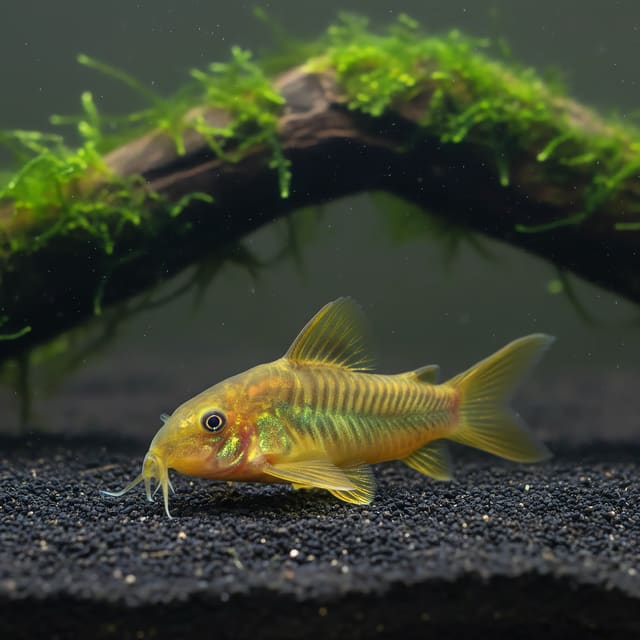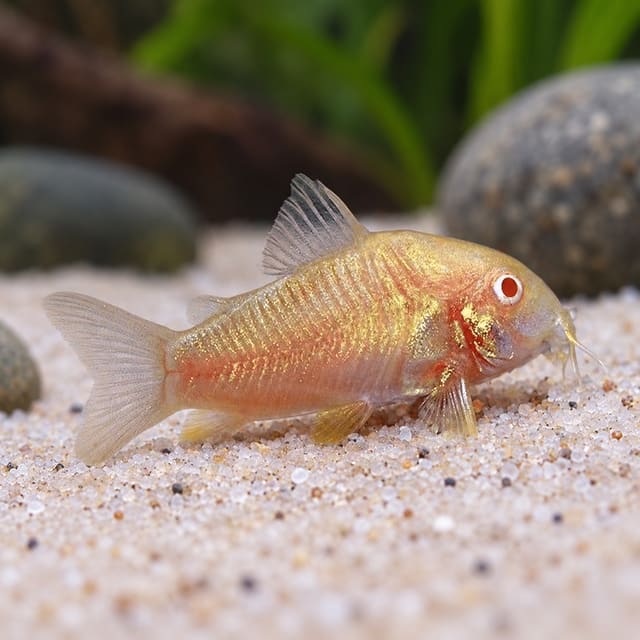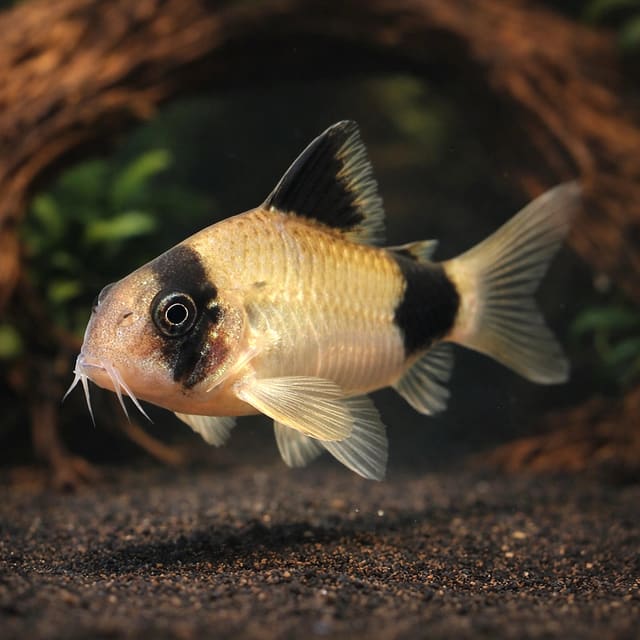
Panda Cory Catfish (Corydoras panda)
22–25°C · pH 6–7.4
£7.29
Photo coming soon
The size, price and care details on this page are for this listing.
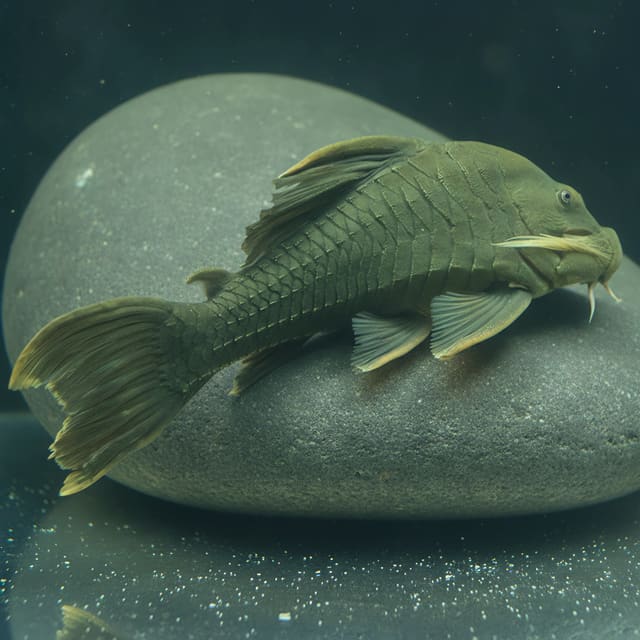
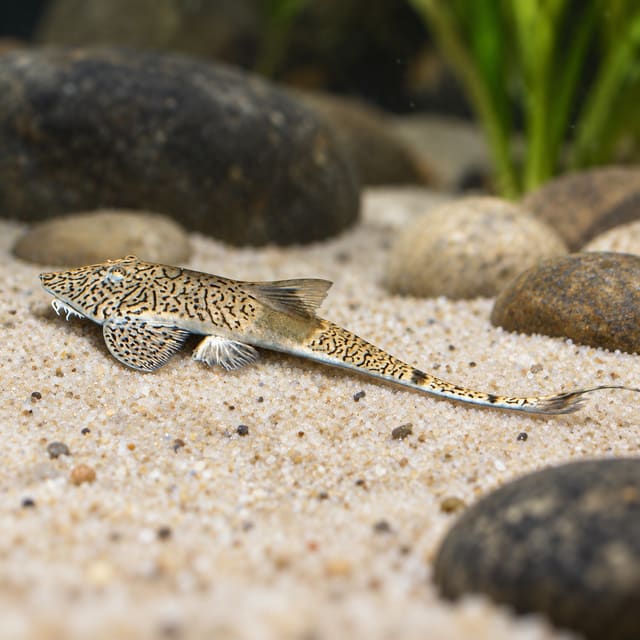
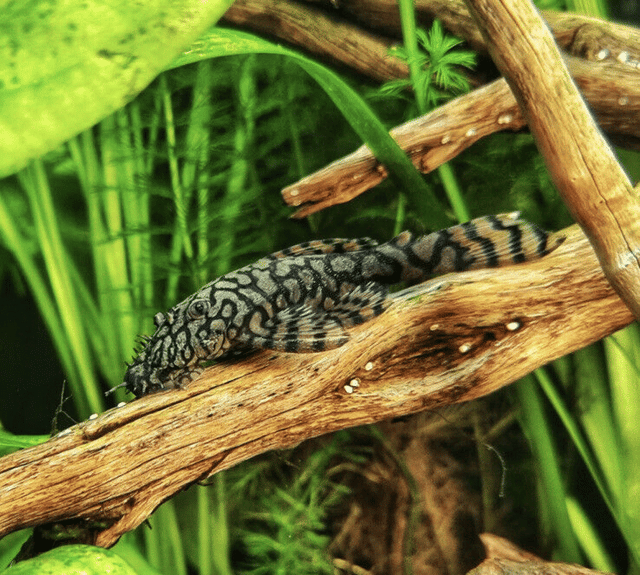
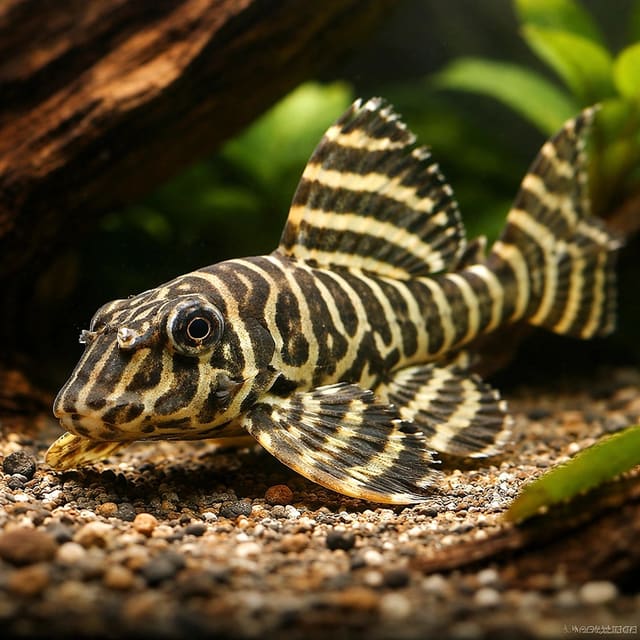
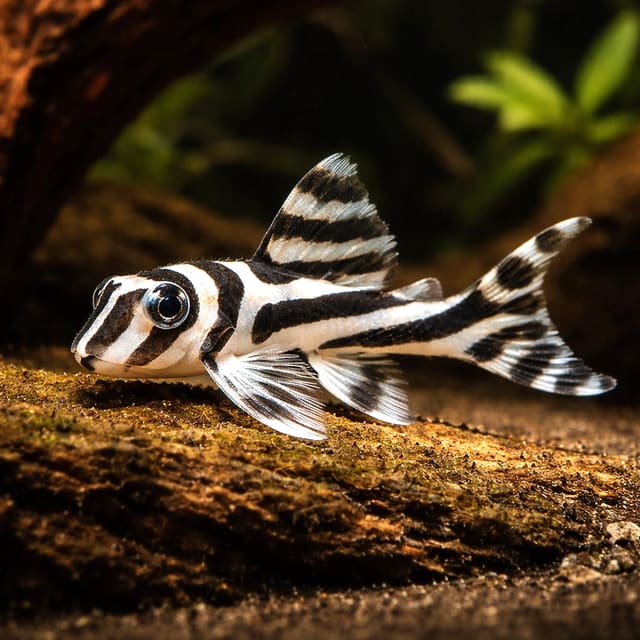
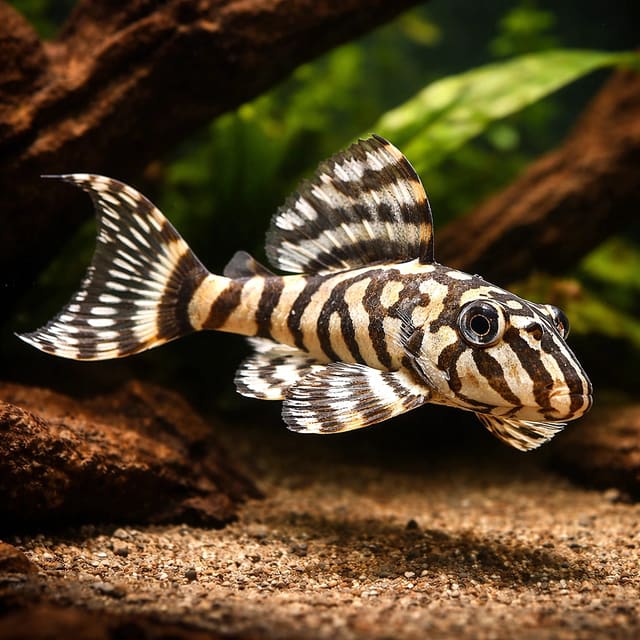
The L168 Butterfly Pleco (Zonancistrus pulcher) is a suckermouth armoured catfish from Brazil, Colombia and Venezuela that reaches 14 cm. It suits keepers who can provide a filtered, well-covered aquarium with strong current; OATA’s tropical algae-eater guidance gives 22–27°C, pH 6.0–8.0 and 4–12°dH. Sold individually as one live fish per purchase.
Adult size is the maximum length this species reaches at full maturity (scientific sources). The livestock you receive will be younger and smaller. Product-photo provenance and any image-specific limitations are stated on the listing.
Zonancistrus pulcher
The L168 Butterfly Pleco (Zonancistrus pulcher) is a suckermouth armoured catfish from Brazil, Colombia and Venezuela that reaches 14 cm. It suits keepers who can provide a filtered, well-covered aquarium with strong current; OATA’s tropical algae-eater guidance gives 22–27°C, pH 6.0–8.0 and 4–12°dH. Sold individually as one live fish per purchase.
Adult size is the maximum length this species reaches at full maturity (scientific sources). The livestock you receive will be younger and smaller. Product-photo provenance and any image-specific limitations are stated on the listing.
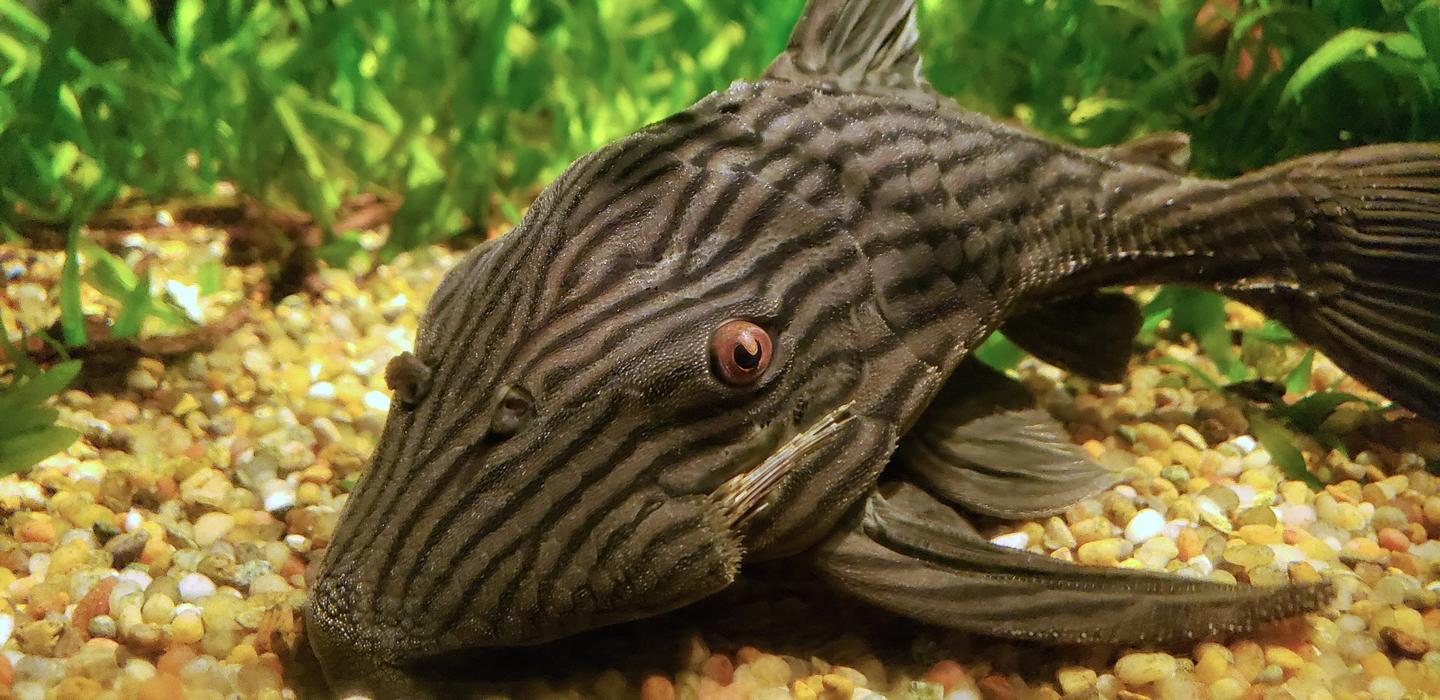
‘Pleco’ is a loose aquarium-trade label, not one species or one care sheet. Before buying, confirm the scientific name or defensible L-number, adult size and measurement method, required footprint, temperature and water, diet, social plan and source. No universal pleco tank size, menu or algae result is honest.
Maintain these water conditions for optimal health and vibrant colors
The L168 Butterfly Pleco (Zonancistrus pulcher) is a tropical freshwater, demersal suckermouth armoured catfish in the Loricariidae family. It comes from South America, with records from Brazil, Colombia and Venezuela, and reaches a recorded maximum of 14 cm total length. It suits a keeper prepared to build the aquarium around strong water movement, substantial cover, stable water quality and the fish’s adult proportions.
FishBase now lists it as Dekeyseria picta and treats Zonancistrus pulcher as a synonym. FishBase records the 14 cm maximum and a Least Concern conservation assessment. Both scientific names refer to the same L168 fish.
Wikipedia places this catfish in the Rio Negro basin in Brazil and the Orinoco basin in Colombia and Venezuela, around rocks, rapids and sunken logs. FishBase adds that it is always associated with fast-flowing water, on large bedrock in strong currents and on the large logs of floating houses where the current is swift. Those details make flow, wood, rock and secure retreat areas central planning decisions rather than decoration added at the end.
| Suits | Not suited to |
|---|---|
| A tropical freshwater aquarium planned around a 14 cm adult | A layout chosen only for the fish’s smaller dispatch length |
| Strong flow with rocks, wood and sheltered crevices | A bare arrangement without meaningful cover |
| A filtered aquarium with stable, regularly tested water | An unfiltered or newly assembled aquarium |
| A keeper who will provide a complete supplemented diet | Being treated as a replacement for aquarium maintenance |
OATA’s tropical algae-eater guidance stresses that algae-grazing fish are not substitutes for regular maintenance or appropriate stocking. Choose this pleco for the animal and its habitat needs, not as a quick solution to persistent algae.
One purchase supplies one live L168 Butterfly Pleco. The dispatch size for this offer is 3–4 cm, while the recorded adult maximum is 14 cm. Treat 3–4 cm as the size at dispatch and plan the permanent aquarium around the fish reaching 14 cm.
Sex is guaranteed only when the selected option explicitly states male or female. This L168 Butterfly Pleco listing has no sex-guaranteed option.
The L-number and common name help identify this aquarium fish, and Zonancistrus pulcher is the same animal now listed as Dekeyseria picta. Wikipedia also records the trade names Urubaxi butterfly pleco and flounder pleco, as well as the numbers L168 and L052. Use these names to recognise the same fish, then plan its care around the 14 cm adult size, water conditions and habitat needs.
If you are comparing bottom-dwelling freshwater fish before deciding, browse the catfish and pleco collection, then assess each animal against your measured water, established aquarium and existing livestock.
Use 14 cm as the adult planning figure throughout the aquarium design. FishBase records that maximum as total length for male or unsexed fish. Total length includes the tail, so plan space, stocking and growth around the full 14 cm.
OATA advises choosing an aquarium as large as reasonably possible because greater water volume makes environmental conditions such as temperature and water quality more stable. For this pleco, combine that principle with the 14 cm adult maximum, its demersal habit and its association with large logs and bedrock. The useful aquarium is one that provides both stable water volume and enough bottom-level structure for the adult fish to move among cover.
A litre figure alone cannot show whether the layout works for a demersal fish. Two aquariums with similar capacity can offer very different bottom footprints, flow paths and amounts of cover. Judge the whole arrangement against the adult body length and habitat structure, not simply the volume printed on the aquarium.
The 3–4 cm fish can grow beyond its dispatch length. Establish the adult plan first so the same aquarium can support the animal as it grows without rebuilding its flow, cover and water-quality conditions later.
Build the lower aquarium around strong water movement, substantial wood, rock and protected crevices. FishBase records this species mainly from black waters of the Rio Negro and its tributaries, always associated with fast-flowing areas. Field collections found it on the large logs used on floating houses where the current was swift and on large bedrock in strong currents.
Use those habitat elements together rather than choosing only one. Wood provides the log-like structure linked to the fish’s natural setting, while rock creates bedrock-style surfaces and changes how water travels across the aquarium. Crevices and model caves add protected spaces within the overall layout. Add aquarium gravel or sand, and provide cover with live plants or, where live plants are not used, plastic plants and suitable ornaments such as model caves, as OATA’s broader aquarium guidance advises.
FishBase recorded two dimorphic males inside crevices in floating logs while tending clutches of eggs. The males remained over the eggs, fanning them with branched pectoral-fin rays while enlarged pelvic fins covered the clutch. This behaviour reinforces the value of enclosed log-like retreats. The offer is unsexed, so plan those retreats as habitat rather than around a male-female breeding arrangement.
Arrange the current so water moves effectively through the rock-and-log layout while the aquarium remains filtered, stable and maintainable. Check both exposed surfaces and sheltered routes after the hardscape is complete.
Keep the aquarium at 22–27°C, pH 6.0–8.0 and 4–12°dH. OATA’s freshwater tropical algae-eater sheet gives these figures as broad group guidance, so use them as a routine planning range while prioritising stability within the range.
Test the water before introduction and then at least once a week. The same OATA sheet gives 0 mg/l for ammonia and 0 mg/l for nitrite. These waste compounds must remain at zero because an aquarium can look clear while biological filtration or stocking pressure is failing.
| Measured result | Decision |
|---|---|
| Temperature below 22°C or above 27°C | Bring the aquarium back into the 22–27°C planning range before introduction. |
| pH below 6.0 or above 8.0 | Resolve the mismatch rather than expecting the fish to bridge it. |
| Hardness below 4°dH or above 12°dH | Bring hardness back into the 4–12°dH planning range before introduction. |
| Ammonia or nitrite above 0 mg/l | Correct the water-quality problem before adding livestock or increasing stocking. |
Use the water chemistry guide to understand what each test measures, then compare your readings with the stated range using the water matcher. Record actual results rather than describing the aquarium loosely as soft, neutral or tropical.
Stability does not mean ignoring a value outside the range. It means holding suitable temperature, pH and hardness steady while the biological filter keeps toxic waste under control. A reading of pH 8.1, for example, remains outside the 6.0–8.0 planning range even when it changes very little. Similarly, temperature movement within 22–27°C does not excuse detectable ammonia or nitrite.
Compare replacement water with the aquarium water before each water change so routine maintenance does not cause a large shift. Keep a written weekly record so gradual movement is visible early and decisions are based on measurements rather than appearance.
Use a well set up and maintained filter from the beginning. The RSPCA’s aquarium welfare guidance explains that fish release toxic ammonia, while a working biological filter supports beneficial bacteria that convert ammonia to toxic nitrite and then to safer nitrate. Clear water alone therefore cannot show that an aquarium is biologically ready.
Prepare and mature the aquarium before livestock arrives. Our first tropical aquarium guide covers the practical setup sequence. For this pleco, readiness also means that the final wood, rock, substrate and flow arrangement is already installed; adding major hardscape later can change circulation and reduce access to cover.
Stocking and feeding both affect the amount of waste the filter must process. A filter that copes with one established stocking level should not be treated as limitless. Any later addition requires a fresh check of adult space, waste capacity and measured water quality.
Keep the filter working during normal aquarium operation and maintain it without destroying its biological function. The essential outcome is continuous processing of fish waste, supported by weekly testing. If ammonia or nitrite becomes detectable, treat that reading as a water-quality failure requiring correction rather than waiting for visible symptoms in the fish.
Filtration also has to work with the habitat plan. Positioning the return so water circulates through the lower hardscape can support the species’ strong-current setting, but the rock and wood must not prevent routine filter access. Complete the arrangement and test its circulation before the fish is introduced.
Offer controlled portions of prepared food and vegetables, and allow extra time for the fish to graze on algal foods. OATA’s tropical algae-eater guidance says these fish need prepared foods such as algae-based wafers or flakes and, ideally, fresh vegetables such as cucumber.
Do not judge the feeding plan by the amount of visible algae in the aquarium. OATA warns that algae-eating fish are not substitutes for maintenance, while a persistent algae problem can point to water-chemistry or maintenance issues. The animal’s ration and the aquarium’s algae management are separate decisions.
Start with one controlled portion rather than adding several foods together. Check whether the presentation gives the fish access around its lower rock-and-wood habitat. If food remains, reduce the next portion and remove the leftovers before they break down.
Variety does not mean unlimited quantity. Prepared food and vegetables still contribute organic waste, so adjust portions according to consumption and remove excess food. Weekly water tests provide an independent check on whether feeding, stocking and biological filtration remain in balance.
Keep wood as habitat structure and continue offering the supplemented diet. Natural grazing surfaces and wood do not replace prepared food and suitable vegetable variety.
Test the aquarium at least once a week and keep ammonia and nitrite at 0 mg/l. Record temperature, pH and hardness alongside the waste readings so the full 22–27°C, pH 6.0–8.0 and 4–12°dH plan is checked rather than relying on a single measurement.
Use the results to decide what needs attention. Detectable ammonia or nitrite points to a failure in waste processing. A gradual temperature, pH or hardness shift shows that the aquarium is moving away from its planning range. Persistent algae should trigger a review of maintenance, water chemistry and stocking rather than the addition of another algae-grazing animal.
The first comparison is against the limits: 22–27°C, pH 6.0–8.0, 4–12°dH and zero ammonia and nitrite. The second comparison is against the trend. A reading can remain inside the range while moving steadily towards an edge, so a written record gives earlier notice than an isolated test.
Observation complements testing but does not replace it. Note where the fish settles, whether it reaches the offered food and whether the strong-current and sheltered areas remain accessible. If behaviour or feeding changes, check the measured water and filter function first because visual inspection cannot reveal toxic ammonia or nitrite.
Keep maintenance proportionate to the measured aquarium rather than following algae growth alone. The goal is a stable, filtered habitat in which food, waste processing, flow and stocking remain in balance around a fish that can reach 14 cm.
Prepare the established aquarium before the parcel arrives. Check that temperature is 22–27°C, pH is 6.0–8.0, hardness is 4–12°dH, and ammonia and nitrite are 0 mg/l.
Our delivery and Live Arrival Guarantee policy explains the packing, receipt and claim procedure. The fish is hand-bagged in pure oxygen and packed in an insulated poly box, with a heat pack added when the weather calls for it. A licensed live-animal courier carries the parcel.
Film every delivery from the sealed parcel onwards. The continuous sequence records the sealed outer parcel, the opening and the fish while it remains inside the sealed bag. Keep the order number with the recording.
If anything has gone wrong, contact us on the same day with the order number and continuous unboxing video. The Live Arrival Guarantee requires someone to receive the parcel, same-day opening and inspection, and the sealed-parcel video sequence described above.
After release, keep the established feeding, filtration and testing plan consistent. Do not compensate for uncertainty by adding excess food. Offer a controlled portion, inspect whether the fish reaches it and confirm the aquarium remains within the planned water range.
Treat every proposed pairing as conditional. The aquarium must work for the L168 Butterfly Pleco’s 14 cm adult size, tropical freshwater conditions, strong-current rock-and-log habitat, cover requirements and biological waste load as well as for the other animal.
Screen every algae-grazing addition individually before it enters a community aquarium, because a broad community label cannot show whether two animals share suitable water, use the same limited cover or create more waste than the filter can process.
| Question | Required decision |
|---|---|
| Do the water needs overlap? | The proposed arrangement must work with 22–27°C, pH 6.0–8.0 and 4–12°dH. |
| Is adult space adequate? | Include the pleco’s 14 cm maximum in the stocking plan. |
| Does the habitat still work? | Retain strong flow, wood, rock and accessible crevices after all animals are considered. |
| Can the filter process the combined waste? | Maintain 0 mg/l ammonia and 0 mg/l nitrite and continue weekly testing. |
| Can every animal reach food and cover? | Observe the finished arrangement and revise it if access is blocked. |
Do not infer safety from the fact that two animals are both freshwater, tropical or bottom-associated. Those labels do not establish a shared water range, compatible space use or adequate filtration. Likewise, do not use this pleco as a compatibility choice made solely to control algae.
Before combining multiple L168 Butterfly Plecos or adding one to an established community, run the screen above against the actual aquarium. Work from the aquarium dimensions, measured temperature, pH and hardness, current livestock, filter details and hardscape plan rather than from general labels.
Choose the number of L168 Butterfly Plecos only after assessing adult space, cover, flow, filtration and the other animals already using the aquarium. Build the calculation around 14 cm per adult fish rather than the 3–4 cm dispatch length.
Provide meaningful rock, wood and crevice structure within the strong-current lower habitat. When considering more than one fish, check that adding further structure does not remove so much open route or bottom area that the completed layout stops working for full-sized animals.
Plan the group count from adult space, cover and filtration, and do not expect two unsexed fish to form a breeding pair.
Assess the combined waste load before increasing the number. The RSPCA explains that fish produce toxic ammonia, which a working biological filter converts through nitrite towards safer nitrate. More fish and more food increase what that system must process, so maintain zero ammonia and nitrite and continue weekly testing.
Observe access to food and the principal covered areas after any stocking change. If an animal cannot feed or use the habitat effectively, the combination is not working as planned. Reconfigure the arrangement or separate the animals rather than relying on the fact that their headline water requirements appear similar.
FishBase records this fish at a maximum of 14 cm total length. Plan the aquarium, hardscape and stocking around that adult figure.
Choose as large an aquarium as practical and plan its bottom area around a 14 cm adult, strong flow, substantial wood, rock and accessible crevices. OATA notes that larger aquariums provide more stable temperature and water quality.
Set the number only after an individual stocking assessment covering each fish’s 14 cm adult size, bottom-level space, cover, strong-flow habitat and the filter’s ability to maintain 0 mg/l ammonia and nitrite.
It suits a prepared keeper who can establish biological filtration, test water weekly, maintain strong flow and cover, and hold the aquarium within OATA’s 22–27°C, pH 6.0–8.0 and 4–12°dH group range.
Offer controlled portions and remove uneaten food before it breaks down. OATA’s algae-eater guidance says these fish need their diet supplemented with prepared foods such as algae-based wafers or flakes, ideally alongside fresh vegetables such as cucumber that is organic or thoroughly washed.
Keep this fish at 22–27°C and pH 6.0–8.0, with hardness of 4–12°dH. These figures are OATA’s broad tropical algae-eater group guidance, and weekly tests should also show 0 mg/l ammonia and nitrite.
Treat aggression and fin-nipping as individual compatibility questions rather than assuming either behaviour. Screen the proposed combination for adult space, water match, cover, feeding access, flow and filtration, then observe how the arrangement works.
Screen community fish and invertebrates individually rather than using a universal tank-mate list. The combination must share suitable water and leave enough adult space, cover and filter capacity for a 14 cm demersal pleco.
Tropical Fish Co bags the fish in pure oxygen, uses an insulated poly box and adds a heat pack when the weather calls for it. Be present to receive it, film the sealed parcel continuously while opening, inspect it the same day and float the bag for 20–30 minutes before release.
No reviews for this item yet. Bought one? Honest reviews only, good or bad.
What customers say about ordering from us
Easy website plenty of info on fish your buying great to pick a time slot
TRACEY DURRANT · 7 Oct 2026
Got some lovely fish thank you
Kevin Mackie · 7 Oct 2026
Reviews of our shop, collected by Judge.me, an independent third-party review collector. Newest first.