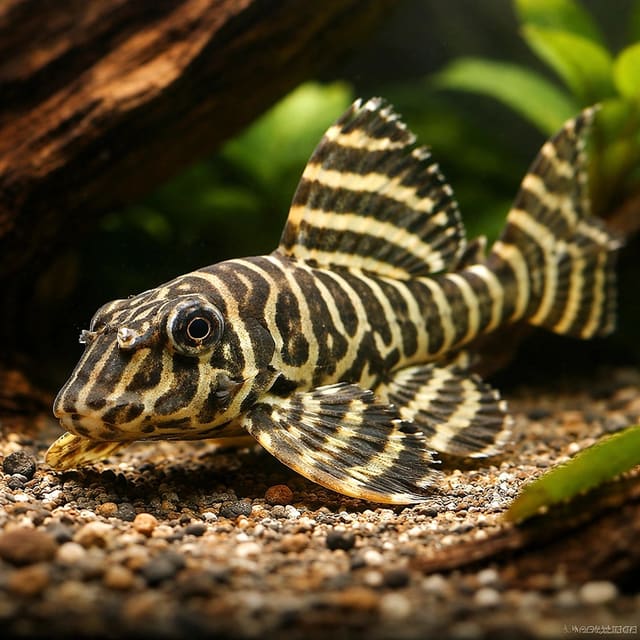
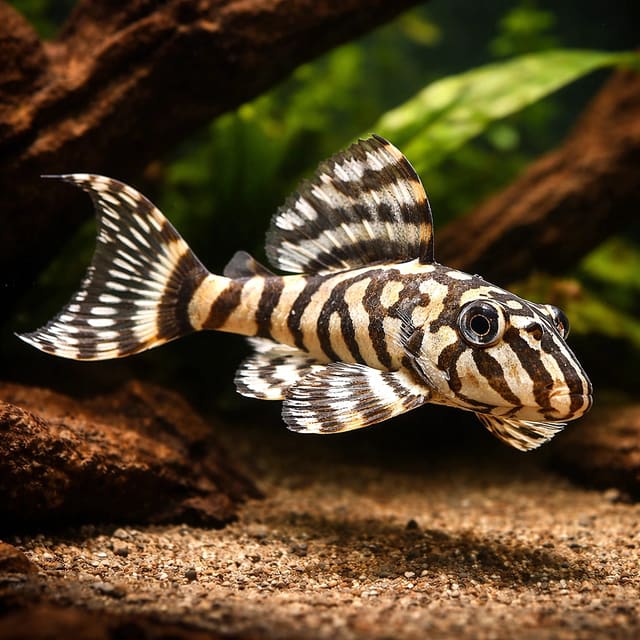
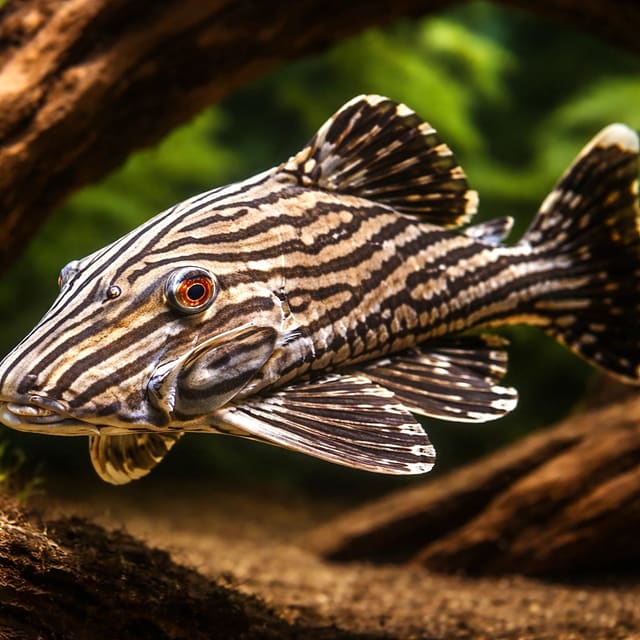
L066 King Tiger Pleco (Hypancistrus sp.)
22–27°C · pH 6–8
£84.99
Photo coming soon
The size, price and care details on this page are for this listing.
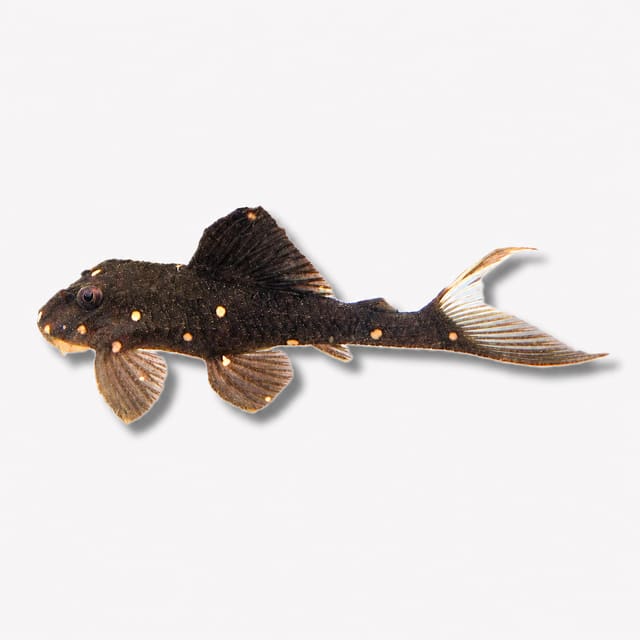
L471, the Whitespotted Ventuari Pleco, is an undescribed Hypancistrus from Venezuela's Orinoco and lower Ventuari that grows to about 6 cm. It is a peaceful, slightly shy cave-dweller that needs mostly meaty food and clean, flowing, oxygen-rich water. You receive one unsexed fish per unit ordered.
Hypancistrus sp. (L471)
L471, the Whitespotted Ventuari Pleco, is an undescribed Hypancistrus from Venezuela's Orinoco and lower Ventuari that grows to about 6 cm. It is a peaceful, slightly shy cave-dweller that needs mostly meaty food and clean, flowing, oxygen-rich water. You receive one unsexed fish per unit ordered.
Maintain these water conditions for optimal health and vibrant colors
L471 is a small suckermouth catfish from the Orinoco in southern Venezuela, one of the many Hypancistrus plecos that keepers know by number rather than by name. Planet Catfish's Cat-eLog lists it as Hypancistrus sp. (L471) and gives it the English name Whitespotted Ventuari Pleco. In Danish it is the Hvidplettet Ventuari-sugemalle, which means the same thing. Fully grown, it measures around 6 cm from snout to the base of the tail, which puts it among the smaller members of a genus better known for the zebra pleco.
We sell it as Hypancistrus sp. because that is exactly what it is: a recognised, numbered fish that no scientist has yet formally described. Your order brings you one L471 for each unit you buy. They are sold unsexed, so the sex isn't specified.
| Feature | L471 Whitespotted Ventuari Pleco |
|---|---|
| Scientific name | Hypancistrus sp. (L471), undescribed |
| Family | Loricariidae, the suckermouth armoured catfishes |
| Wild range | Río Orinoco and the lower Río Ventuari, Venezuela |
| Adult size | 60 mm (2.4 in) standard length |
| Diet | Mostly meaty foods, given little and often |
| Temperament | Peaceful, a little shy, slow to reach food |
| Breeding | Closed-cave spawner with male care; bred by hobbyists |
| Sold as | One fish per unit, sex not specified |
Planet Catfish records a useful bit of history. This fish first reached the trade under the name L280a. That was never an official number: nobody at DATZ, the German magazine that publishes L-numbers, ever issued it. It was simply a label someone made up to sell it. The fish later received its proper number, L471, and Planet Catfish cites DATZ issue 12/2013 as its reference. Its Cat-eLog entry dates from December 2013. If you come across "L280a" on an old forum thread or price list, it is very likely this fish.
The L-number system dates from 1988, when DATZ started photographing unfamiliar suckermouth catfish from imports and numbering them. Das Aquarium ran its own series with the prefix LDA. Seriously Fish notes that Loricariidae is the largest catfish family, with more than 700 described species and many more waiting for names, which is why hobbyists and scientists alike use L-numbers as a working label. The system is useful but rough. Seriously Fish and Wikipedia both point out that one number has sometimes been given to several species, and one species has sometimes collected several numbers for different populations. An L-number tells you which photographed form a fish matches. It isn't a guarantee of species, and the story of L471 and "L280a" shows how messy trade labels can get.
Wikipedia currently lists eleven described species of Hypancistrus. The most recent two, H. seideli and H. yudja, were named by Sousa and colleagues in 2025, and the oldest is the zebra pleco, H. zebra, from 1991. Four of the eleven come from the Orinoco near or in the Ventuari. L471 is not one of them, and Planet Catfish keeps it as a separate, undescribed entry. Seriously Fish puts the situation plainly: most species in this genus have not yet been described, even though many are well established in the hobby. L471 is one of those.
The genus name comes from the Greek hypo, meaning less than or beneath, joined to Ancistrus, the bristlenose genus. It refers to the reduced number of teeth these fish have, particularly in the lower jaw. Planet Catfish gives the pronunciation as "hype-an-SISS-truss".
Start with what makes a Hypancistrus a Hypancistrus. Seriously Fish gives the most practical clue for fishkeepers: the teeth in the lower jaw (the dentary) are about twice as long as those in the upper jaw (the premaxilla). In most other plecos the two sets are about the same length. Wikipedia adds that there are fewer lower-jaw teeth than upper-jaw teeth. Planet Catfish describes the result as a small, lightly toothed mouth. You won't see the teeth in a shop tank, but they matter, because they shape how this fish feeds.
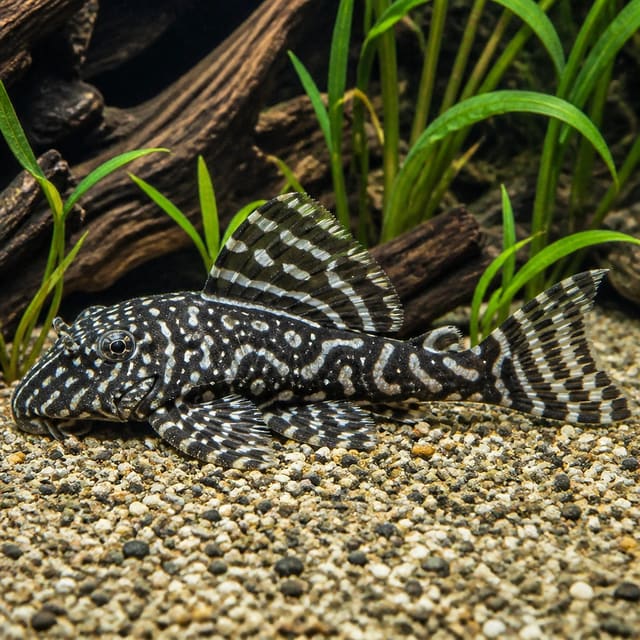
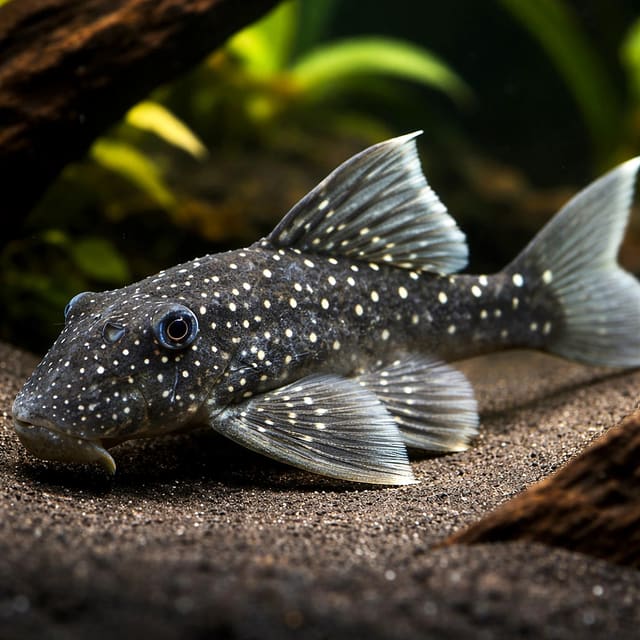
The trade name describes what L471 is known for: white spots, and a home on the Ventuari. Several other spotted Hypancistrus come from the same corner of South America. The snowball pleco, H. inspector (L102), comes from the upper Rio Negro and the Casiquiare, the channel that links the Negro to the Orinoco. Seriously Fish describes it as brown to black with large whitish to yellow spots, much like H. contradens, the Orinoco polka-dot pleco, which was described from the Ventuari itself. Both grow much larger than L471: about 12.6 cm for H. contradens and 16 cm for H. inspector. If you already keep one of these, keep it well apart from L471. The section on tank mates explains why.
No detailed description of L471's pattern has been published, and spotted plecos vary from fish to fish. Expect individual differences in spot size and spacing.
Planet Catfish describes clear differences once the fish are mature:
Look from above as well as from the side. Seriously Fish notes that in H. inspector the males are more slender and less stocky than the females, and that the difference is easiest to see when the fish are viewed from the top. These are features of mature fish, so sexing a juvenile L471 is guesswork. That is why we sell them unsexed.
Planet Catfish gives L471's distribution as the Río Orinoco and the lower Río Ventuari. In its regional index it places the species in the Orinoco, Upper Orinoco and Ventuari areas. The trade name points straight to the Ventuari.
The Ventuari rises in the Guiana Highlands of south-central Venezuela and flows south-west for about 520 km to join the Orinoco. Wikipedia describes it as the largest tributary of the Orinoco in southern Venezuela and the largest clearwater tributary of the Orinoco. It drains a basin of about 40,000 km², carries an average of about 2,000 cubic metres of water a second, and its major tributary is the Manapiare. By 2006, 470 fish species were known from the river, several of them found nowhere else, and more have been described since.
Wikipedia describes Hypancistrus as fish of slow-to-moderately flowing water, living on bedrock and in the crevices within it. Seriously Fish gives a closer picture of the Ventuari's mouth. Its profile of the green phantom pleco, a catfish known only from around the confluence of the Ventuari and the Orinoco, records that species being collected from the spaces between granite bedrock and boulders. It then lists the other loricariids living in that same stretch. Four Hypancistrus are on the list: H. contradens, H. debilittera, H. furunculus and H. lunaorum. All four were described in 2007 from Amazonas state, Venezuela, by Armbruster, Lujan and Taphorn. Planet Catfish records the type locality of H. lunaorum as the first major riffle complex on the Río Guapuchi, in the Ventuari drainage.
Planet Catfish's data sheets for the four described Orinoco species make a handy comparison, and they show where L471 fits:
| Species | Trade name | Size (SL) | Where described from | IUCN status |
|---|---|---|---|---|
| H. contradens | Orinoco polka-dot pleco | 126 mm | Río Ventuari, north-east of Macuruco | Near Threatened (assessed 2019) |
| H. debilittera | L129, Colombian zebra pleco | 70 mm | Pasaganado, Río Orinoco | Least Concern (2020) |
| H. furunculus | L199, yellowhead zebra pleco | 120 mm | Cucue, on the Río Orinoco | Least Concern (2020) |
| H. lunaorum | L339, Luna angel pleco | 120 mm | Río Guapuchi, Ventuari drainage | Not evaluated |
| Hypancistrus sp. (L471) | Whitespotted Ventuari pleco | 60 mm | Not yet described | None (undescribed) |
L471 is the smallest fish in that table. H. lunaorum is named after the Luna family, who founded the village of Macuruco on the Orinoco near the mouth of the Ventuari. That detail, recorded by Planet Catfish, is a reminder that these fish come from a lived-in landscape of river villages. Seriously Fish gives the type locality of the green phantom pleco as the Ventuari "near ornamental fish market in river", so the aquarium trade is part of life on the lower Ventuari.
So L471 shares its river with several named relatives, in a landscape of granite, riffles and clear water. That habitat gives you the brief for the aquarium: rock, crevices and caves to hide in, water that moves, and the kind of cleanliness a clearwater river provides.
At around 6 cm standard length, L471 doesn't need a huge aquarium, but it does need the right one. No minimum tank size has been published for L471 itself, so we use the profiles of its relatives. Seriously Fish recommends a base of at least 60 × 30 cm, around 54 litres, for the zebra pleco, which grows to about 8 cm. For the slightly larger L260 and L136, both about 9 cm, it recommends 90 × 30 cm. L471 is smaller than all three, so 60 × 30 cm is a fair minimum for a single fish or a small group. Go for 90 cm or more if you want to keep several or try breeding them. A breeding report on Planet Catfish for the twice-as-long H. lunaorum describes a 110-litre tank, which gives an idea of the scale people use.
For L471, Planet Catfish's furnishing advice is short: sand, mainly rocks, and driftwood if you like, with caves made from slate plates, bamboo or PVC pipe. Seriously Fish's advice for the zebra pleco is similar in spirit: a sandy bottom scattered with smooth pebbles and rocks of different sizes, a few pieces of driftwood, and a powerhead at one end to keep the water moving. Here is how we would put that together:
Wild Hypancistrus live in water that moves, from slow to moderate. Wikipedia adds that in the aquarium they should have clean, fast-moving water. A filter that turns the tank volume over several times an hour, plus a small powerhead aimed along the base of the rockwork, gives L471 a current to sit in and keeps oxygen levels up. Arrange the flow so there are also calmer pockets behind the rocks, where the fish can rest out of the current.
No temperature or pH range has been published for L471 itself. The best guide comes from the described Hypancistrus of the same Orinoco and Ventuari waters, whose ranges Planet Catfish lists:
| Relative (Orinoco basin) | Temperature | pH |
|---|---|---|
| H. contradens (Ventuari) | 25 to 29 °C | 5.0 to 7.5 |
| H. debilittera (L129) | 24 to 28 °C | 6.4 to 7.6 |
| H. furunculus (L199) | 24.5 to 28.5 °C | not given |
| H. lunaorum (L339, Ventuari drainage) | 23 to 26 °C | not given |
Taking the core of those ranges, we recommend keeping L471 at 24 to 28 °C, with a pH between 6.0 and 7.5. The middle of that range, 25 to 27 °C, is the comfortable place to aim. For hardness, Seriously Fish gives 1 to 15 dGH for H. inspector from the neighbouring Casiquiare. The Ventuari is a clearwater river, and the one breeding report for H. lunaorum on Planet Catfish describes very soft water: 27 °C, pH 6.5 and 3 dGH. Soft to moderately hard water suits L471. If your tap water is very hard, ask us before you buy.
Seriously Fish's profile of H. inspector says this kind of rapids fish does not tolerate a build-up of organic pollution. It needs spotless water, with weekly water changes of 30 to 50% of the tank volume as routine. The same profile asks for a moderate to high level of dissolved oxygen and some water movement, from power filters, powerheads or air stones as needed. The breeding report for H. lunaorum mentions heavy circulation and filtration.
OATA's care sheet for freshwater catfish sets the baseline every UK keeper should know. Ammonia and nitrite should read zero. Nitrate should be kept to no more than 20 mg per litre above your tap water. Change at least a quarter of the water every week, treat new water with a dechlorinator, and test for ammonia, nitrite, nitrate, pH and hardness once a week. When the filter needs cleaning, rinse the media in water taken from the tank, not tap water, so the helpful bacteria survive. For L471, use OATA's quarter as a minimum and lean towards Seriously Fish's larger changes.
Because L471 needs oxygen-rich water, take care on hot days, when the tank temperature can climb above 28 °C. Warmer water holds less oxygen. Extra surface movement or an air stone during a heatwave is a cheap insurance policy.
The most common mistake with Hypancistrus is buying one as an algae eater. Planet Catfish is direct about it: contrary to what people assume about plecos in general, Hypancistrus are more carnivores than algae eaters. Their small, lightly toothed mouths make them poor at scraping algae. Wikipedia describes the genus as generally omnivorous, with some species taking meatier foods. Either way, the practical answer is the same: build L471's diet around animal foods.
Planet Catfish's advice for L471 is to give small, frequent feeds of mainly meaty foods, with flake or algae tablets only now and then. It names these foods:
The profiles of its relatives add variety. For the Orinoco's H. debilittera, Planet Catfish lists bloodworm, gammarus and brine shrimp, with Spirulina tablets also eaten. Seriously Fish suggests sinking dried foods, frozen Daphnia, mosquito larvae, bloodworm and prawn or shrimp for H. inspector, plus some fresh fruit and parboiled potato. It also recommends homemade foods bound with gelatine, so that you can mix vegetables and Spirulina in with the meatier ingredients. A rotation of a good sinking carnivore pellet, two or three frozen foods and an occasional vegetable-based tablet covers everything these sources describe.
This matters more than the menu. Planet Catfish warns that Hypancistrus can be a bit shy and slow to take food, so you need to make sure they get enough. In a community tank, faster fish will clear the food before a small pleco has left its cave. Some simple habits help:
Look at your L471 at least every couple of days. If you never see it eat, test the feeding with a torch after dark before assuming all is well.
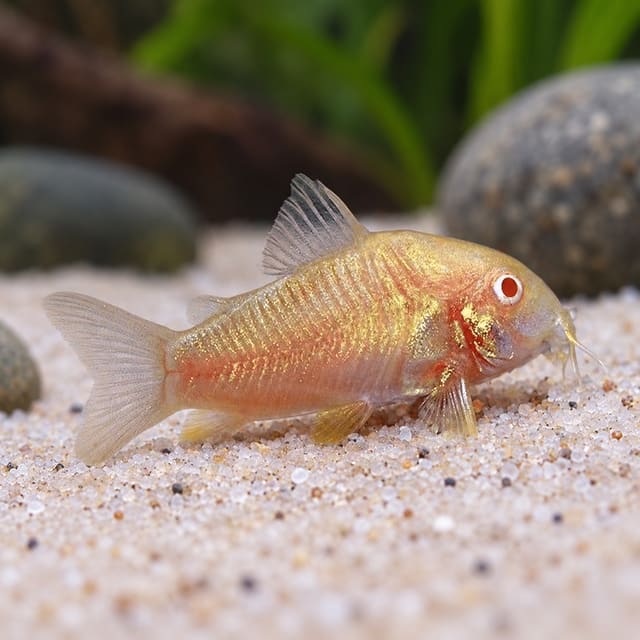
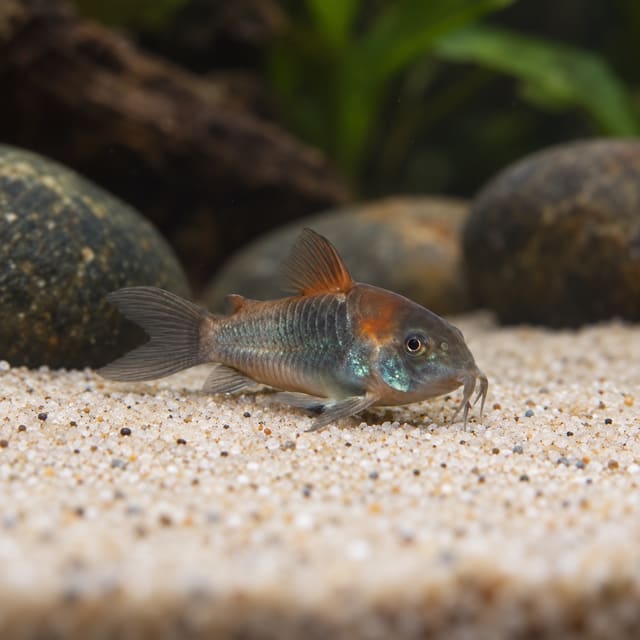
L471 is a peaceful fish. Planet Catfish says the genus is suitable with most fish, as long as they are not too large or too territorial about the bottom. For tank mates it suggests small tetras and similar small fish, and Corydoras. Fish like these are small enough not to bully a 6 cm pleco.
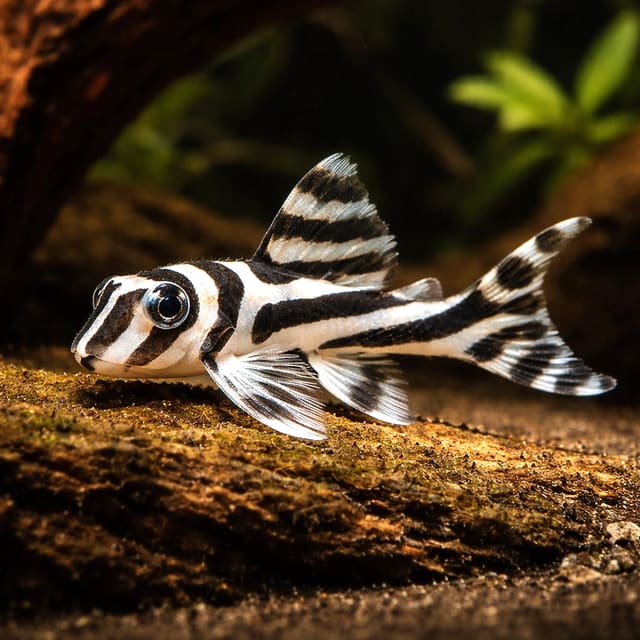
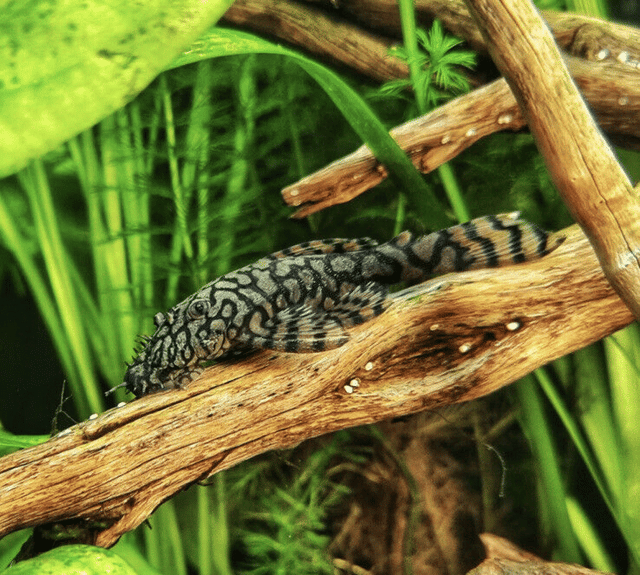
Seriously Fish advises, for both the snowball pleco and L136, that they should not be kept with other Hypancistrus, to prevent hybridisation. The same applies to L471. Different Hypancistrus can interbreed in aquariums, which is exactly what that advice is meant to prevent. With so many of these fish still undescribed, keeping each form pure matters. If you love the genus and want more than one kind, give each its own tank. That includes other Hypancistrus on our site, such as the L066 King Tiger Pleco, the L333 Maze Zebra Pleco and the L236 RB Line Hypancistrus Pleco. Each is a fine fish in its own aquarium, not as a companion for L471.
Several L471 can share a tank if the layout allows it. Planet Catfish holds five breeding reports for the species, which means keepers have kept them together long enough to spawn. Give each fish its own cave, add spare caves, and break up sightlines with rock so that a dominant male can't watch the whole floor of the tank. Because males of related species defend their space against their own kind, more caves than fish is the rule.
A small pleco that lives in caves can hide a problem for longer than a fish that swims in the open, so make looking part of your routine. OATA's catfish care sheet lists the changes worth noticing:
Water is the first thing to check. Seriously Fish stresses that this kind of rapids fish needs spotless, well-oxygenated water. If L471 is breathing hard, sitting out in the open in daylight when it normally hides, or has stopped feeding, check ammonia, nitrite, nitrate and temperature before anything else. Fix the water first. A large water change with temperature-matched, dechlorinated water is the first remedy to reach for.
OATA reminds UK fishkeepers that the Animal Welfare Act 2006 requires owners to provide a suitable environment and diet, let animals behave normally, house them with or apart from other animals as appropriate, and protect them from pain, injury and disease. It also asks that aquarium fish and plants are never released into the wild. For a small, numbered fish from a single river system, and a genus where hybrids are a real concern, add one more: keep your L471 line pure and pass on any youngsters honestly labelled.
L471 has been bred, which is not true of every L-number pleco. Planet Catfish holds five breeding reports for the species. Its photo gallery includes youngsters at one week and two weeks old, alongside a male and a female.
Planet Catfish describes the pattern for the whole genus. All Hypancistrus are closed-cave spawners. The male traps the female inside his cave, the eggs are laid and fertilised there, and the male then guards them until the fry are free-swimming. Seriously Fish describes the same cave spawning with male brood care for H. inspector.
Planet Catfish gives more detail for relatives from the same waters, and these figures are a useful guide to what to expect:
L471 is roughly half the length of H. contradens, so its clutches and caves are likely to be at the smaller end of these ranges. Nobody has published egg counts specific to L471.
You will need at least one mature male and one female, sexed using the features described earlier, in a tank with several snug caves, very clean, soft-to-moderate water and plenty of flow and oxygen. Feed generously on meaty foods to bring the female into condition. Since L471 is sold unsexed, the practical route to a pair is a small group, from which pairs can form. Keep only L471 in a breeding tank, never another Hypancistrus, so that every youngster you raise is the genuine fish.
A little planning before the fish arrives makes settling in much easier. Please read our delivery and live-arrival details before you place your order.
The aquarium should be up and running before the parcel arrives, with the filter established, the water tested and the heater holding a steady temperature. For L471 that means somewhere between 24 and 28 °C. Have the rockwork and caves already in place. A small pleco released into a tank with nowhere to hide has a much harder first night. Make sure someone will be at home to receive the parcel. Live fish need a person to take them in.
Once your delivery date is confirmed, we email it to you with the tracking details. L471 travels in an oxygen-filled bag inside an insulated box, with heat packs added when the weather is cold enough to need them. It goes by a tracked courier licensed to carry live animals.
Film the unboxing. Start recording before the box is opened, while it is still sealed, and keep going without stopping until the fish is visible in its unopened bag. If a fish has arrived dead, is dying or is clearly unwell, email hello@tropicalfishco.co.uk the same day it is delivered, with your order number and the video. Photographs on their own are not enough to make a claim. Covered cases are put right under our live-arrival guarantee terms, either by replacing the affected fish with your next order or by refunding it.
Keep the tank lights dimmed for the first day or two. Expect L471 to find a cave quickly and stay out of sight, which is exactly what a shy cave-dweller should do. From the second evening, offer a pinch of sinking meaty food near the caves after lights-out, and check the next morning whether it has gone. Through the first week, keep an eye on its breathing, its appetite and how it behaves when you do catch sight of it. If anything worries you, test the water and then get in touch.
The sources behind this guide, if you would like to learn more:
Our core species reference is the Hypancistrus sp. (L471) entry in Planet Catfish's Cat-eLog, along with its entries for H. contradens, H. debilittera, H. furunculus and H. lunaorum. Search for "L471" on planetcatfish.com to see the photographs, including the young fish.
No reviews for this item yet. Bought one? Honest reviews only, good or bad.
What customers say about ordering from us
Easy website plenty of info on fish your buying great to pick a time slot
TRACEY DURRANT · 7 Oct 2026
Got some lovely fish thank you
Kevin Mackie · 7 Oct 2026
Reviews of our shop, collected by Judge.me, an independent third-party review collector. Newest first.