Moderate
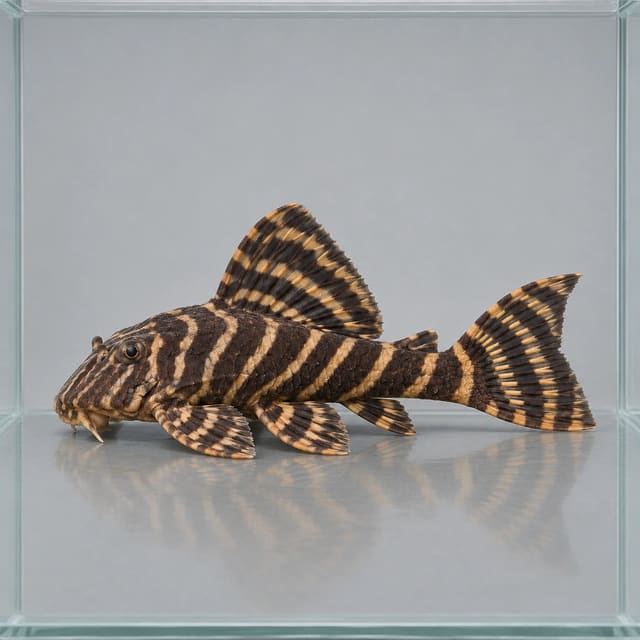
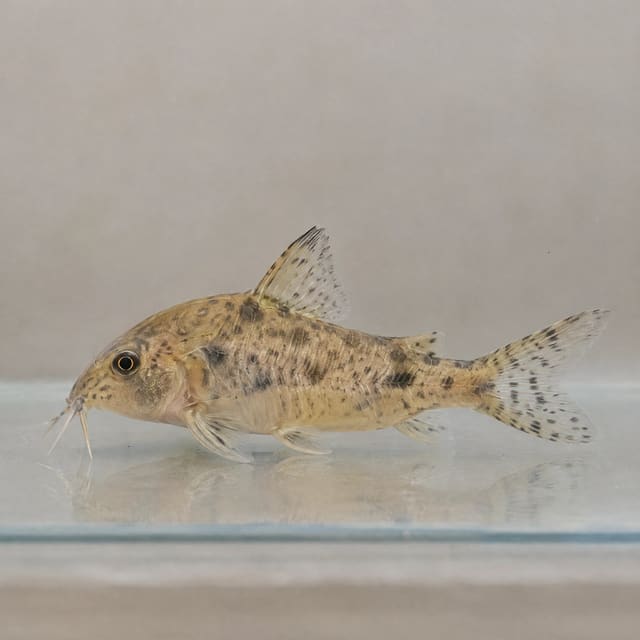
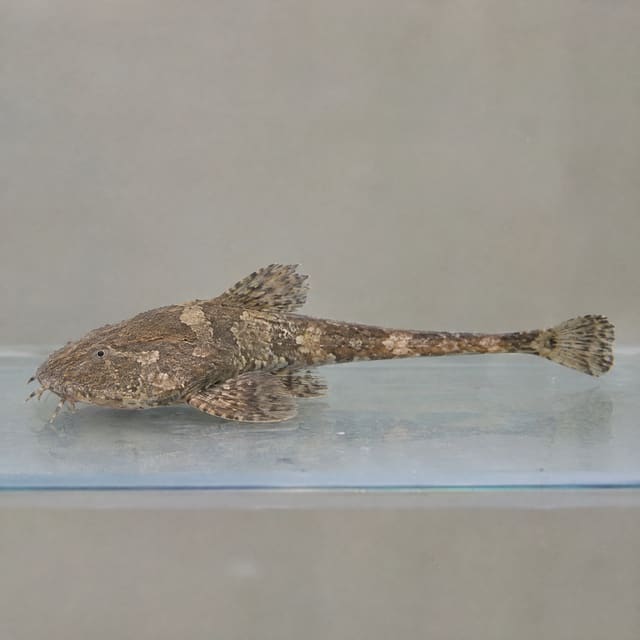
L104 Clown Pleco (Panaqolus maccus)
23–27°C · pH 6.8–7.6
£31.39
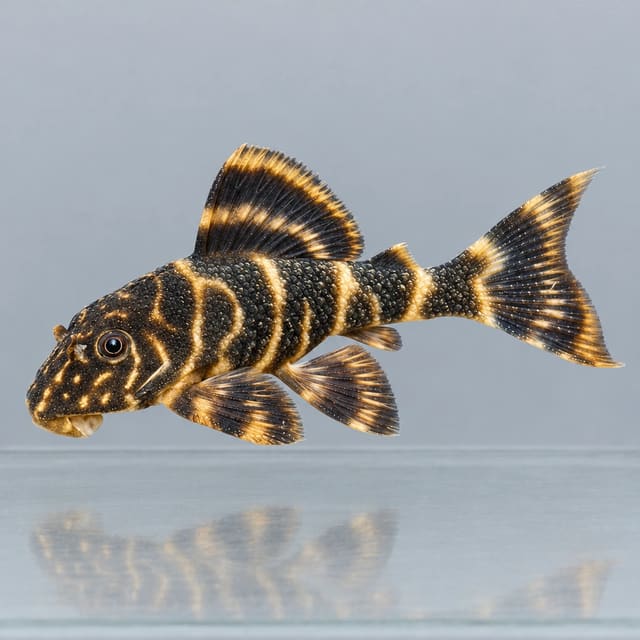
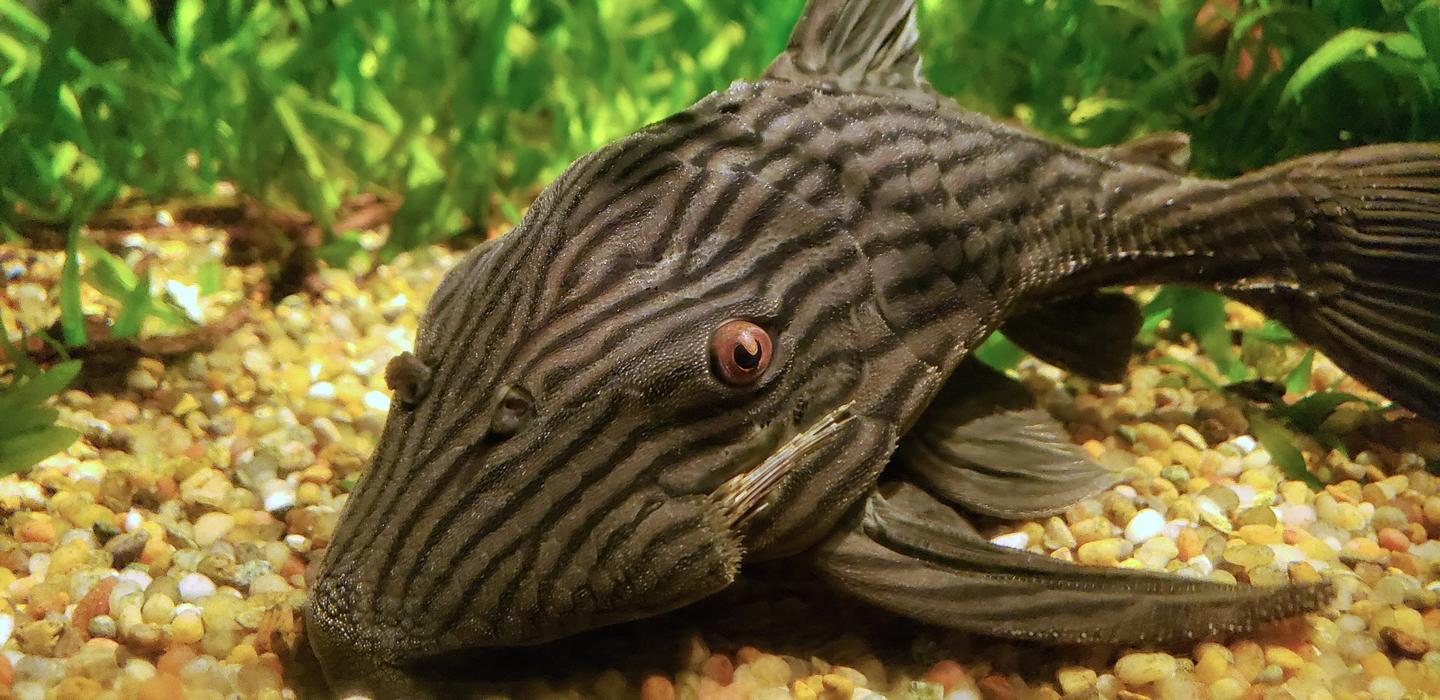
The L398 Tanke Tiger Pleco (Panaqolus tankei) is a small, banded, wood-eating suckermouth catfish from the lower Rio Xingu in Brazil. It grows to about 8–12 cm and needs a warm, well-aerated aquarium with plenty of real driftwood to rasp. Sold individually as one live fish.
Panaqolus tankei
The L398 Tanke Tiger Pleco (Panaqolus tankei) is a small, banded, wood-eating suckermouth catfish from the lower Rio Xingu in Brazil. It grows to about 8–12 cm and needs a warm, well-aerated aquarium with plenty of real driftwood to rasp. Sold individually as one live fish.
‘Pleco’ is a loose aquarium-trade label, not one species or one care sheet. Before buying, confirm the scientific name or defensible L-number, adult size and measurement method, required footprint, temperature and water, diet, social plan and source. No universal pleco tank size, menu or algae result is honest.
Read the full care guidance when planning conditions for your aquarium.
The L398 pleco, Panaqolus tankei, is a small tiger-banded suckermouth catfish from the lower Rio Xingu in Brazil. Like the rest of its genus it rasps and eats wood, so real driftwood is part of its diet, not just decoration. Planet Catfish calls it the Tanke Tiger Pleco, and it suits a warm, well-aerated community aquarium where a pleco of about 12 cm can claim a tangle of wood of its own.
It was traded as L398 for years before Cramer and Sousa described it formally in 2016, in an open-access paper in PLoS ONE. The name honours Andreas Tanke, a German aquarist who studied Panaqolus, kept and observed these fish, visited their habitats and, according to ScotCat, was probably the first to breed this species in captivity.
| Name | What it means |
|---|---|
| L398, Tanke Tiger Pleco | The L-number and the common name used by Planet Catfish |
| Panaqolus tankei Cramer & Sousa, 2016 | The scientific name since 2016 |
| Panaqolus sp. (L398) | The name used before the formal description |
| Tiger pleco | A loose name shared by several banded Panaqolus and Peckoltia; always check the L-number |
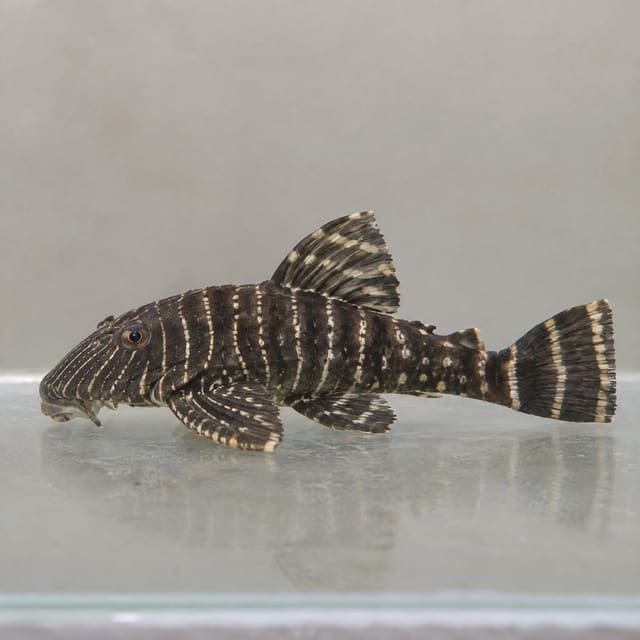
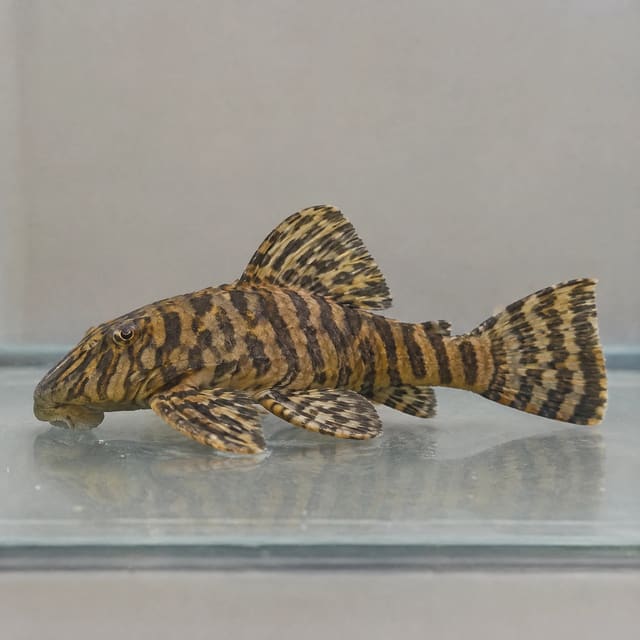
The description identifies it mainly by colour. It has five to seven dark diagonal bars on the trunk, dark and light bars of roughly equal width, two to four bands in the dorsal fin and dark lines running from the back of the head to the front of the snout. In small fish the fin bands are compact; in larger fish the first body bars may split or form a D shape.
Those details separate it from its relatives. The L226 Iquitos Tiger Pleco (P. changae) has worm-like markings on the head and six to twelve body bars; the clown pleco, P. maccus, has dark bars at least two to three times wider than the pale ones; and the L397 Tangerine Tiger Pleco is a separate orange-banded Panaqolus. Our clown pleco guide covers the best-known member of the genus, and all our Panaqolus plecos are grouped in one place.
One purchase supplies one live L398 Tanke Tiger Pleco. The size option is "Standard": the fish is sent at the size currently available, which is smaller than the adult size. Sex is not chosen or guaranteed.
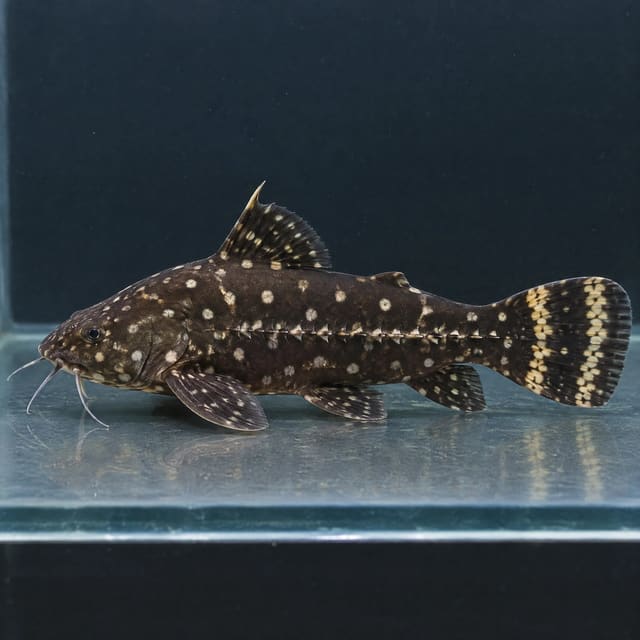
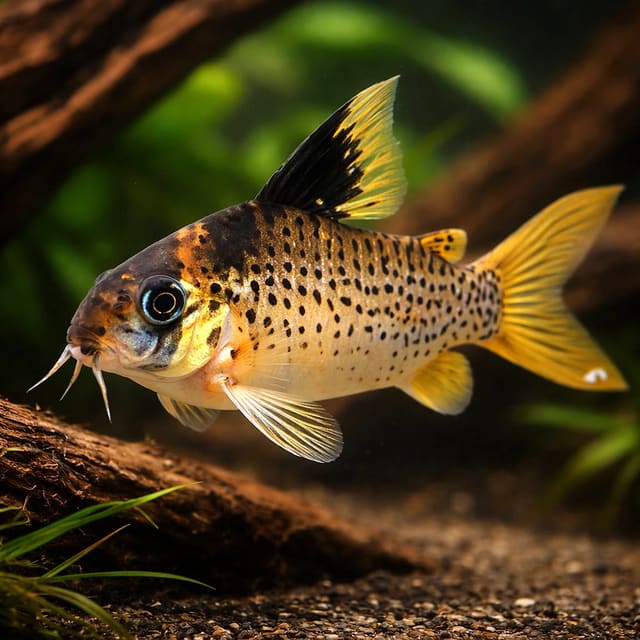
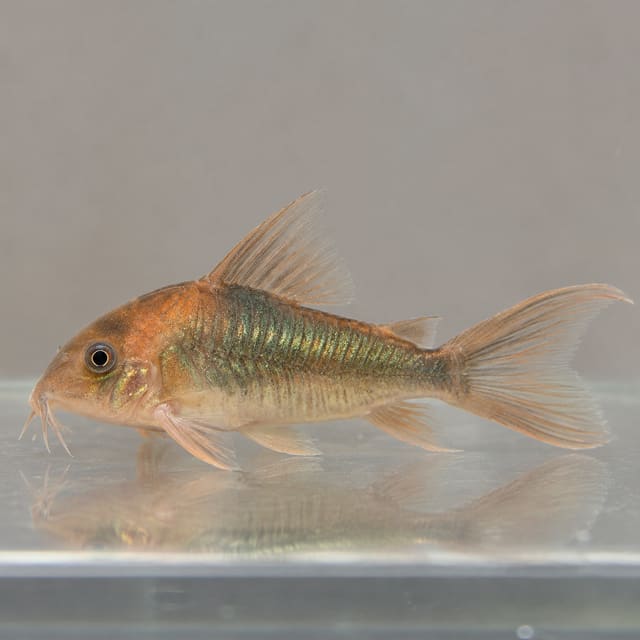
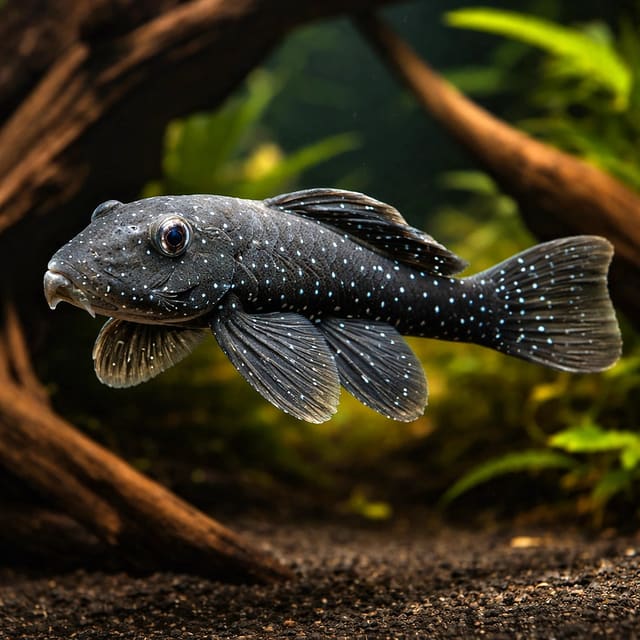
The photographs show the type of fish, not the individual you will receive. The width and shape of the bars, the tone of the pale bands and the fin pattern vary between individuals and change as the fish grows, and colours look different under different lighting.
Planet Catfish describes mature males growing elongated cheek odontodes (bristles) in the breeding season and noticeable odontodes along the back, and the original description notes elongated odontodes on the male's tail stem. Males also have small, pointed genital papillae, while mature females have large, rounded ones and, when full of eggs, a noticeably wider body between the pectoral and pelvic fins seen from above. Before you order, read our delivery and Live Arrival Guarantee information.
The size sources disagree. The original description measured specimens up to 83 mm standard length, Planet Catfish gives 120 mm and ScotCat 14 cm. Plan for about 12 cm without the tail, and accept that some fish stay smaller.
No published minimum exists for this species, and Seriously Fish has no profile for it. For Panaqolus sp. L403, a wood-eater of similar size (120 mm SL), Seriously Fish recommends a base of at least 120 × 30 cm, roughly 108 litres in a 30 cm-tall tank. We use that as the starting point for one fish, with more floor area for a group.
Keep the aquarium away from radiators, windows and draughts, as OATA's catfish care sheet advises, and fit a lid. At 26–30°C the heater works all year in a UK home, so check the thermometer every day.
In the wild, according to ScotCat and the original description, P. tankei lives on fallen trees and sunken wood along the riverbank, at depths of 1 to 10 m, in the lower Xingu below the Belo Monte waterfalls. Planet Catfish puts it plainly for the aquarium: rock piles are optional, but wood tangles are a must, and it recommends several pieces of wood, preferably of several kinds, to chew on.
| Area | Purpose |
|---|---|
| Tangle of branches and roots | Food, daytime cover and territory boundaries |
| Caves under the wood or among rocks | Retreats and spawning sites |
| Sand or small rounded gravel | A soft floor where food lands, as ScotCat recommends |
| Open front strip | Easy siphoning of wood shavings and waste |
Choose aquarium-safe hardwoods such as bogwood and mopani, and use several types so the fish always has a softer piece to work on. A busy wood-eater produces fine, brown wood waste, so plan for regular siphoning. Leave out delicate plants: ScotCat says this species eats plants and is not suitable for planted tanks, and Planet Catfish warns that plants will be nibbled or destroyed. Tough plants tied to wood have the best chance.
ScotCat gives 26–30°C and pH 6.0–7.5 and recommends strong aeration because of the higher temperatures. Planet Catfish publishes no water values for the species. For the related L403, Seriously Fish gives 24–30°C and pH 6.0–7.0, which overlaps well. A setting of about 27–28°C sits comfortably inside these figures.
| Reading | Target |
|---|---|
| Temperature | 26–30°C |
| pH | 6.0–7.5 |
| Hardness | No published figure; keep it stable |
| Ammonia | 0 mg/l |
| Nitrite | 0 mg/l |
| Nitrate | No more than 20 mg/l above your tap water |
The waste readings come from OATA's catfish guidance. Hard UK tap water can read above pH 7.5; if yours does, blend it with reverse-osmosis water rather than adding pH chemicals, and use replacement water at the same temperature so a warm-water fish is not chilled. Our water matcher compares your readings with this fish's range, and our water chemistry guide explains each reading.
Warm water holds less oxygen, and a wood-eater fills the filter with fine debris. Use a filter rated at four to five times the tank volume an hour, the turnover Seriously Fish's species profiles use, and add an air stone so the surface keeps moving, in line with ScotCat's call for strong aeration.
Stock gradually, so the filter bacteria can grow with the waste load, and keep testing even when the water looks clear.
Planet Catfish describes the genus as wood-feeders and recommends a mainly vegetarian diet alongside the wood: algae wafers, fresh vegetables such as courgette, and tubers such as potato or sweet potato. ScotCat adds cucumber and sinking tablets. For the related L403, Seriously Fish advises keeping meaty foods to a minimum, and the same principle suits L398.
Feed in the evening near the wood tangle, when the pleco is active. A rounded belly and fresh rasp marks on the wood are good signs; a hollow belly means it is not reaching the food, so change the feeding spot or time.
Add the fish only to a filtered aquarium that has run long enough to process waste, with ammonia and nitrite at zero and the temperature set. OATA recommends acclimatising with the lights off: float the sealed bag for about 10 minutes, add small amounts of aquarium water over up to 20 minutes, then release the fish with as little bag water as possible. Our guide on how to acclimatise new fish goes through each step.
| Checkpoint | What to do |
|---|---|
| Before arrival | Test the water, set the temperature and place the wood tangle and caves |
| Arrival | Acclimatise with the lights off, release, and keep the lights off for the rest of the day |
| First evening | Offer a piece of blanched courgette or a wafer near the wood |
| Days 2–7 | Look for rasp marks on the wood, a rounded belly and removed leftovers |
| End of week | Retest ammonia, nitrite and nitrate and do the usual water change |
Expect it to hide in the wood for several days. That is normal for a nocturnal pleco; rapid breathing, hanging at the surface or lying on its side are not.
Planet Catfish says the species works well with most types of peaceful community fish. Its only real friction is with its own kind and similar plecos competing for the same wood, which space and extra hiding places solve. Choose companions that enjoy the same warm water and do not mind a tank full of wood rather than plants.
| Suits | Avoid |
|---|---|
| Tetras and other peaceful midwater characins | Cool-water fish |
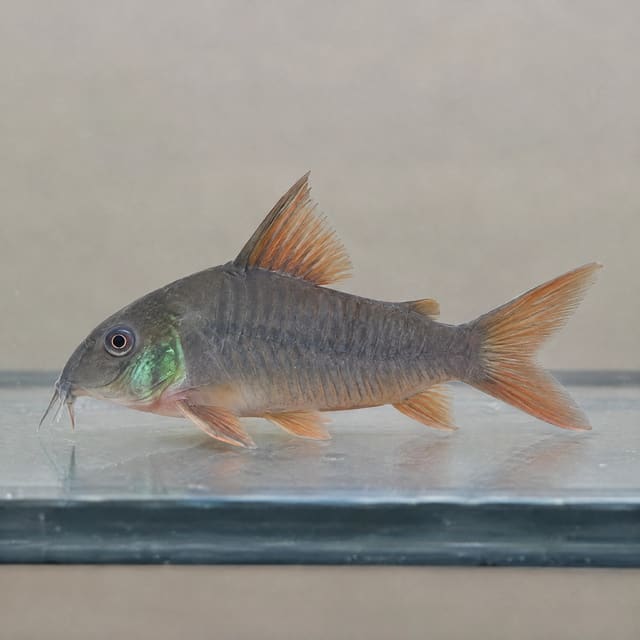
| Corydoras on the open sand | Carefully planted aquariums you want to keep intact |
| Plecos of a different shape, with spare wood and caves | Several Panaqolus crowded into too little floor |
| Fish comfortable at 26–30°C | Large, aggressive bottom dwellers |
Other wood-loving plecos include the L206 Pleco and the L204 Flash Pleco; give each its own wood. Check any mix with our tank mates tool, browse all catfish and plecos, our L-number plecos and the wider range of South American catfish, and read our pleco care guide for the basics.
OATA describes a healthy fish as having clear, bright eyes, undamaged fins and no ulcers or bumps, and lists hanging at the surface, sitting on the bottom and erratic swimming as warning signs. Learn what is normal for your pleco in the first month: where it rests, how much wood it rasps and how quickly vegetables disappear.
| If you see | Do this |
|---|---|
| A hollow belly | Offer vegetables near the wood after dark and check for competition |
| Rapid breathing or hanging near the surface | Test ammonia, nitrite and temperature at once and increase aeration |
| No rasp marks on the wood | Add a softer piece or a different type of wood |
| White spots or fluffy patches | Test the water and get fish-health advice before treating |
| Cloudy water and heavy debris | Siphon wood waste and clean the filter sponge in tank water |
| Not seen for several days | Look with a dim torch after lights-out and count your fish |
Test first, then act. Most changes in behaviour follow a water-quality or temperature problem.
Planet Catfish records that the species has been bred in aquariums and lists four breeding reports. ScotCat recommends a few caves for spawning among plenty of wood on a sand or small rounded gravel floor. The original description notes that aquarium observations suggest spawning depends on seasonal changes in water quality and temperature, so a stable aquarium may need a nudge.
Leave a cave with eggs undisturbed, and keep the young supplied with soft vegetables and wood as they grow. The breeding reports on Planet Catfish describe keepers' own conditions in detail.
It is Panaqolus tankei, a small, banded, wood-eating suckermouth catfish (family Loricariidae) from the lower Rio Xingu in Brazil. It was traded as L398 before Cramer and Sousa described it scientifically in 2016. Planet Catfish calls it the Tanke Tiger Pleco.
Sources differ. The original description measured fish up to 83 mm standard length, Planet Catfish gives 120 mm and ScotCat 14 cm. Plan for an adult of about 12 cm.
Yes. Planet Catfish and ScotCat both say Panaqolus feed on wood, and Planet Catfish recommends several pieces, preferably of several kinds. The wood is part of its diet, not just decoration.
It is not a good choice for a carefully planted tank. ScotCat says it eats plants, and Planet Catfish warns that plants will be nibbled or destroyed. Tough plants tied to wood may survive; soft stem plants usually will not.
ScotCat gives 26–30°C and pH 6.0–7.5, and recommends strong aeration because of the warm temperature. Keep ammonia and nitrite at zero.
The original description separates it from P. changae (L226) by the lack of worm-like markings on the head and by fewer body bars, and from P. maccus, the clown pleco, by dark and light bars of about equal width. The L397 Tangerine Tiger Pleco is a separate, orange-banded Panaqolus.
Yes, in a large enough aquarium with plenty of hiding places. Planet Catfish says it can be somewhat territorial towards its own kind and suggests about 30 × 30 cm of floor per fish.
Yes. Planet Catfish lists four breeding reports, and ScotCat says the aquarist it is named after, Andreas Tanke, was probably the first to breed it.
One live fish of the standard size currently available. It is not sexed.
No reviews for this item yet. Bought one? Honest reviews only, good or bad.
What customers say about ordering from us
Easy website plenty of info on fish your buying great to pick a time slot
TRACEY DURRANT · 7 Oct 2026
Got some lovely fish thank you
Kevin Mackie · 7 Oct 2026
Reviews of our shop, collected by Judge.me, an independent third-party review collector. Newest first.
Moved by UK carriers licensed to handle live animals
Hand-packed with oxygen bags, poly box, heat pack
Email photos the same day; an optional unboxing video helps us review problems faster — claim terms apply
Klarna & PayPal Pay in 3 at checkout