Moderate
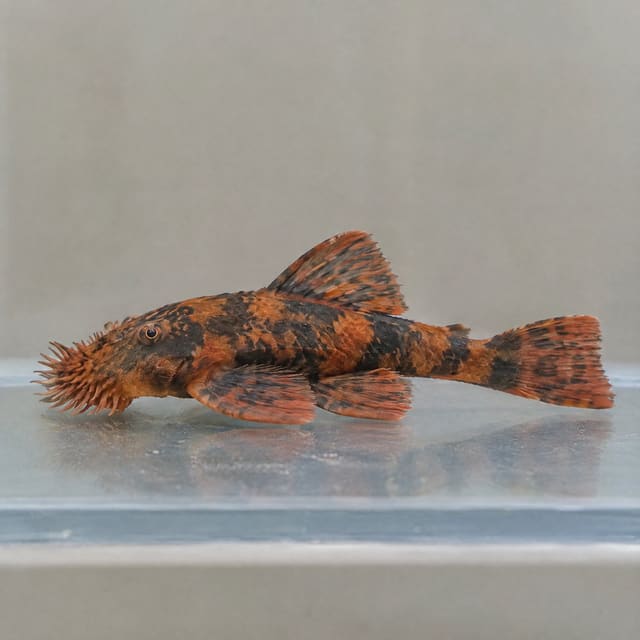
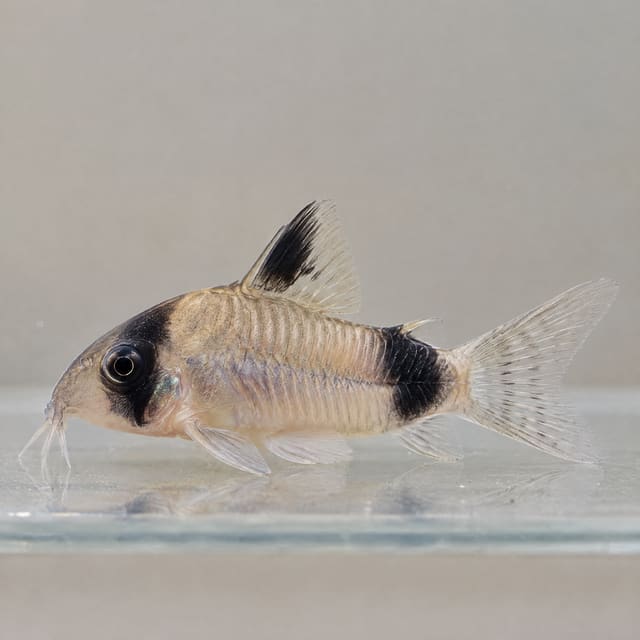
L104 Clown Pleco (Panaqolus maccus)
23–27°C · pH 6.8–7.6
£31.39
The L002 Tiger Pleco (Panaqolus sp. L002, also L074) is an undescribed, banded wood-eating pleco from the Rio Tocantins in Brazil that reaches about 12 cm. Keep it at 24–27°C and pH 6.5–7.5 in a mature aquarium of 80 litres or more with permanent bogwood, one cave per pleco and strong filtration. Sold individually as one live fish.
Adult size is the maximum length this species reaches at full maturity (scientific sources). The livestock you receive will be younger and smaller. Product-photo provenance and any image-specific limitations are stated on the listing.
Panaqolus sp. (L002)
The L002 Tiger Pleco (Panaqolus sp. L002, also L074) is an undescribed, banded wood-eating pleco from the Rio Tocantins in Brazil that reaches about 12 cm. Keep it at 24–27°C and pH 6.5–7.5 in a mature aquarium of 80 litres or more with permanent bogwood, one cave per pleco and strong filtration. Sold individually as one live fish.
Adult size is the maximum length this species reaches at full maturity (scientific sources). The livestock you receive will be younger and smaller. Product-photo provenance and any image-specific limitations are stated on the listing.
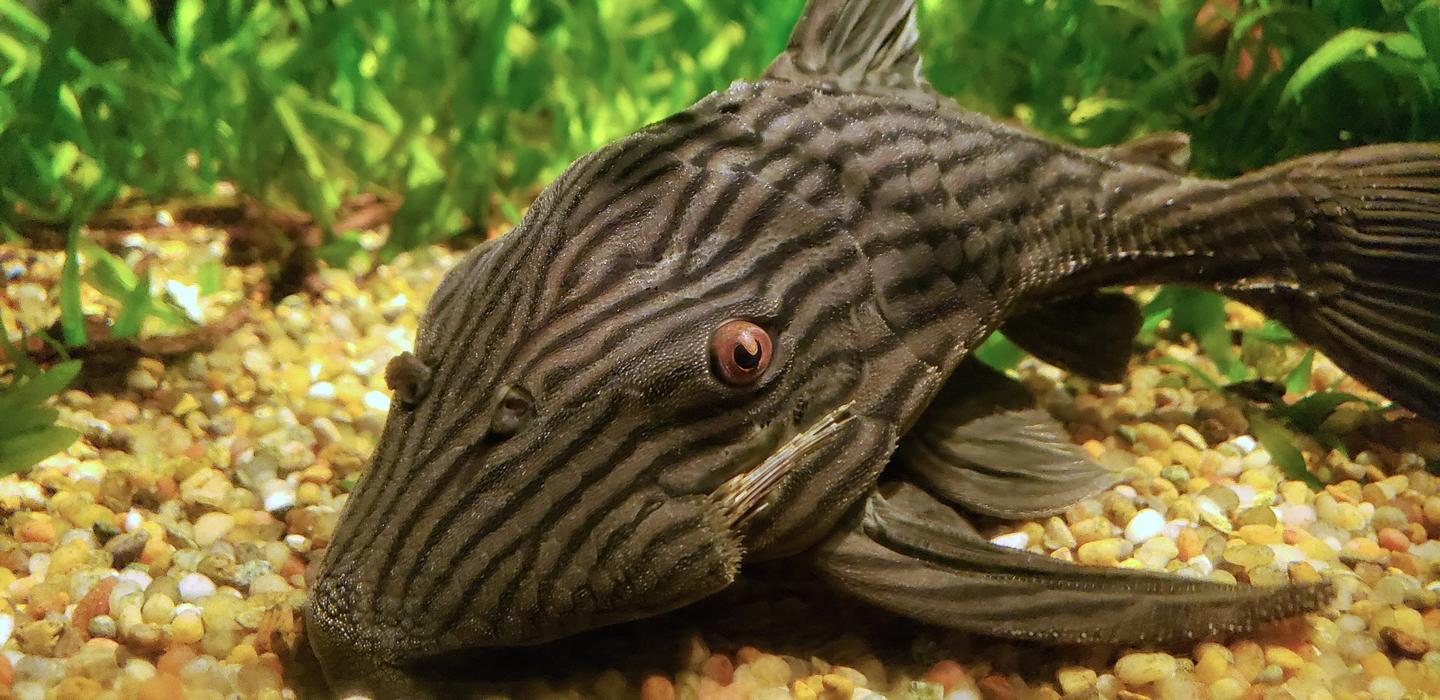
‘Pleco’ is a loose aquarium-trade label, not one species or one care sheet. Before buying, confirm the scientific name or defensible L-number, adult size and measurement method, required footprint, temperature and water, diet, social plan and source. No universal pleco tank size, menu or algae result is honest.
Read the full care guidance when planning conditions for your aquarium.
The L002 Tiger Pleco is a small suckermouth catfish of the genus Panaqolus from the Rio Tocantins around Cametá in Pará, Brazil. It has never been formally described, so the hobby still identifies it by its L-number, L002. Scotcat notes that the same fish also received the number L074 when the German magazine DATZ featured it in November 1990, and it is traded as the Tiger Pleco, Tiger Peckoltia and Tocantins Tiger.
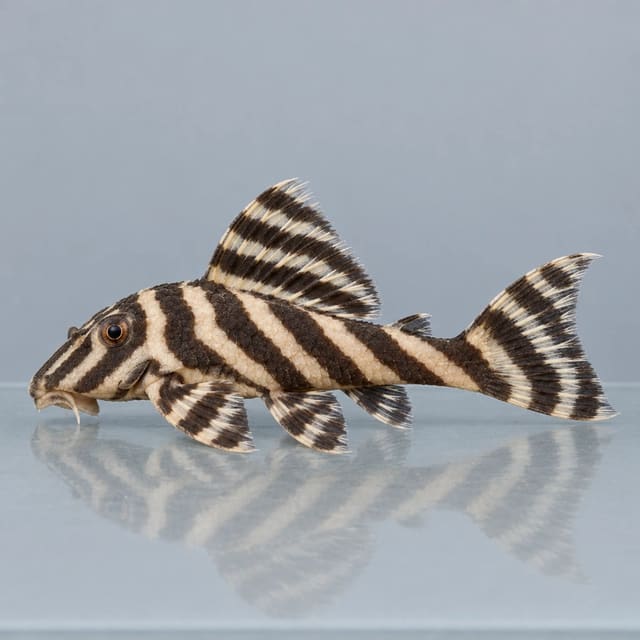
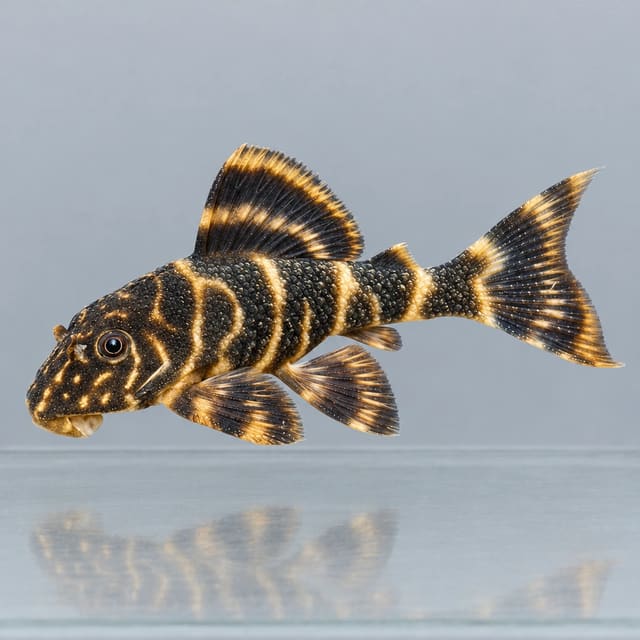
Adults reach about 12 cm. Dark brown bands alternate with cream to tan bands across the head, body and every fin, and each fish carries its own version of the pattern. Like its close relatives, the L002 rasps wood as part of its diet, so permanent bogwood is a requirement of keeping it rather than an optional decoration.
Several different plecos share the word "tiger", and the L002 has been sold under a few names that belong to other fish. Use this table when you compare offers:
| Name you may see | What it refers to |
|---|---|
| L002 or L074 | This fish: an undescribed Panaqolus from the Rio Tocantins |
| Panaqolus tankei | A different tiger pleco, described in 2016 from the Rio Xingu and also known as L398 |
| Peckoltia vermiculata or Panaqolus vermiculata | A name that, according to Aquarium Glaser, belongs to a different species |
| L226 Iquitos Tiger Pleco | Panaqolus changae, a separate species from Peru |
Because the L002 has no scientific name yet, we list it as Panaqolus sp. (L002). Aquarium Glaser records that it was first imported and presented to hobbyists in 1988 and that no scientist has yet taken a closer look at it. If you collect banded species, compare it with our other Panaqolus plecos and the wider range of L-number plecos.
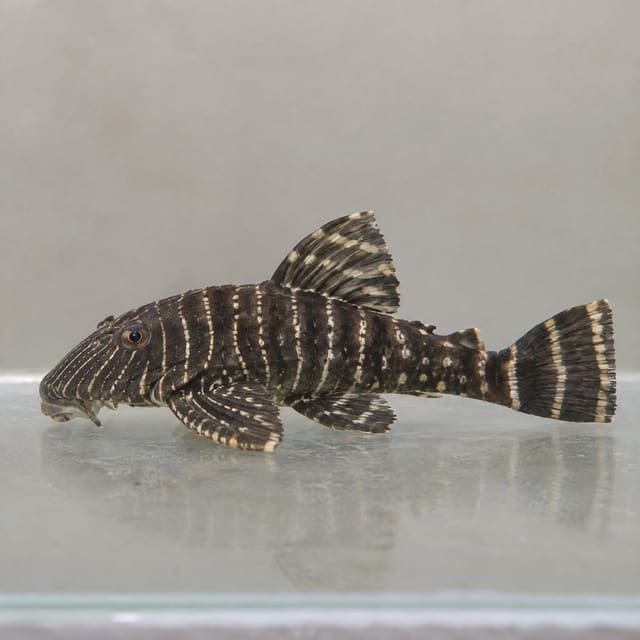
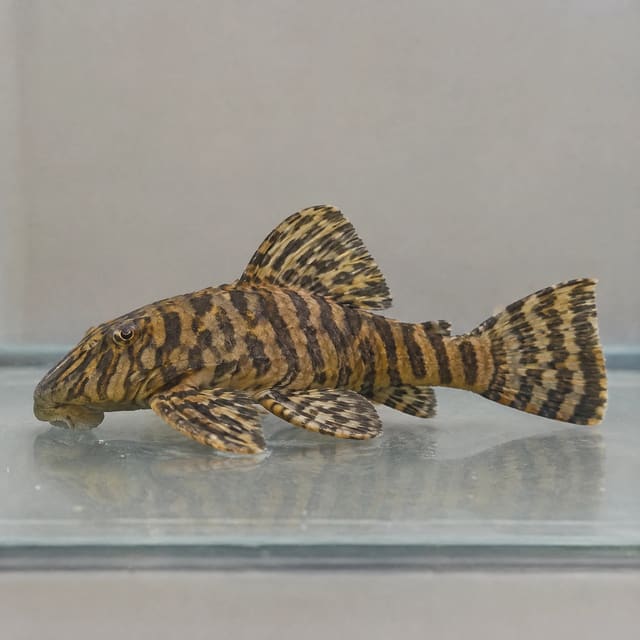
One purchase quantity supplies one live L002 Tiger Pleco. The fish is not sexed: young males and females look alike, and the differences described further down only appear as they mature. The banding varies from fish to fish, so the photographs show the species and its typical pattern, not the individual you will receive.
The size at dispatch depends on availability and is not stated in centimetres, so the listing has a single standard option. Whatever size arrives, plan the aquarium for the adult.
Prepare the aquarium before you order and read our delivery and live arrival information, so the fish goes straight into a tank that is already matured, decorated and tested.
No published tank size exists for the L002 itself, so we work from two references. OATA's catfish care sheet asks for at least 80 litres for smaller plecos. Seriously Fish suggests a base of 120 × 30 cm, about 108 litres, for L403, another undescribed Panaqolus that also reaches about 12 cm. Treat 80 litres as the floor and the 120 × 30 cm base as the better target.
The footprint matters more than the height. A pleco spends its life on the bottom and on wood, so a long, shallow aquarium gives it more usable space than a tall one of the same volume. Every other bottom-dweller in the tank needs its share of that floor area.
Set the aquarium up and mature the filter before the pleco arrives. The RSPCA explains that cycling a new filter takes at least two weeks, and fish should only go in once ammonia and nitrite have risen and fallen back to zero.
Design the tank around wood. Several pieces of aquarium-safe bogwood give the L002 something to graze on all day and broken shapes to hide behind. Add caves, clay pipes or stacked stone so each pleco can claim its own retreat, and keep the lighting moderate with some shaded areas.
| Area | Purpose |
|---|---|
| Bogwood pieces spread along the floor | Food source, grazing surface and cover |
| One cave per pleco, set apart | A daytime retreat each fish can defend without fights |
| Sand or fine gravel | A soft floor that OATA recommends for catfish |
| Open strip in front of the filter outlet | Moving, well-oxygenated water and an easy place to feed |
Leave access for a gravel cleaner around the wood, because shredded wood and droppings collect underneath it. Lift and rinse the wood occasionally in removed tank water rather than scrubbing it, so the grazed surface stays intact.
Plants are a judgement call. Scotcat describes the L002 as unsuitable for planted tanks because it eats plants, while Aquarium Glaser says that offering courgette or other green food prevents plant damage. If you want greenery, choose tough plants tied to wood or rock, feed vegetables regularly and accept that soft leaves may be grazed. OATA also suggests adding some artificial plants in tanks with plant-eating catfish.
The sources agree on warm, roughly neutral water. Scotcat gives the L002 24–28°C and pH 6.5–7.5. OATA's guidance for its closest relative on their lists, the clown pleco (also a Panaqolus), gives 22–27°C, pH 6.0–8.0 and soft to medium-hard water.
| Source | Temperature | pH | Hardness |
|---|---|---|---|
| Scotcat (L002) | 24–28°C | 6.5–7.5 | Not stated |
| OATA (clown pleco guidance) | 22–27°C | 6.0–8.0 | 4–12 dGH, 3–10 dKH |
| Seriously Fish (L403, for comparison) | 24–30°C | 6.0–7.0 | 2–10 dGH |
| Our planning range for L002 | 24–27°C | 6.5–7.5 | 4–12 dGH |
Our planning range is simply where the L002 data and OATA's guidance overlap. Stability inside it matters more than hitting one exact number, so avoid chasing pH with chemicals in a tank that is already steady.
The waste readings are separate from these habitat values. OATA sets ammonia and nitrite at zero mg/l and nitrate at no more than 20 mg/l above your normal tap-water level. Check what comes out of your tap with our water matcher, and our water chemistry guide explains what each reading means.
Aquarium Glaser notes that this pleco produces a lot of waste and needs strong filtration, and that its tank mates must be comfortable with that. Much of what it rasps from wood passes straight through, so fine debris builds up quickly around the bogwood.
Seriously Fish uses a turnover of four to five times the tank volume per hour for a Panaqolus of this size. For a 108-litre aquarium that is roughly 430–540 litres per hour (108 × 4 = 432, 108 × 5 = 540). Check the real flow once the media is in place, because a rated figure drops as sponges fill.
Our guide to keeping plecos covers filtration, wood and feeding for the whole group in more detail.
Scotcat states that wood must be included in the aquarium because this fish eats it. Aquarium Glaser calls wood an important food component. Keep at least one good piece of bogwood in the tank at all times and add another before the first is worn away.
Alongside the wood, offer vegetables and sinking foods. Scotcat lists cucumber and courgette and sinking tablets; Aquarium Glaser mentions food tablets and vegetables. OATA advises buying organic vegetables or washing them thoroughly, because residual pesticides can harm fish. Our green algae wafers are a convenient sinking staple.
| Food | How to use it |
|---|---|
| Bogwood | Always available; replace pieces as they wear down |
| Courgette or cucumber slice | Several times a week; weigh it down and remove the remains the next morning |
| Sinking vegetable wafers or tablets | On the other days, one portion it can finish overnight |
| Meaty foods | Rarely, if at all |
Keep meaty foods to a minimum. Aquarium Glaser warns that meaty food can cause fatty deposits that threaten the fish's life, and Seriously Fish advises a mainly vegetarian diet for its Panaqolus relatives.
Plecos are mainly active in the evening and at night, so feed shortly before the lights go off. OATA suggests feeding what is eaten within a few minutes once a day, but allows grazing species up to 30 minutes. One thing it will not do is clean your glass: Aquarium Glaser notes that the L002 does not eat algae, so do not buy it as an algae eater.
Have the wood, caves and filter in place and the water tested before delivery. OATA's catfish method is to switch the aquarium lights off, float the sealed bag for 10 minutes, then add tank water to the bag slowly over up to 20 minutes before releasing the fish and leaving as much bag water behind as possible. Our guide on acclimatising new fish walks through each step.
Handle it gently. OATA points out that most catfish carry spines on the pectoral fins and behind the gills, which can snag in a net, so guide the pleco into a container rather than lifting it out in mesh.
| Checkpoint | What to do |
|---|---|
| Day of arrival | Lights off, let it find a cave, no food until the next evening |
| First evening feeds | A small slice of courgette or one wafer near its cave |
| Every day | Look for fresh rasping marks on the wood and droppings as signs it is feeding |
| Day three and day seven | Test ammonia and nitrite; the extra waste can push a young filter |
It is normal for a new L002 to stay out of sight for several days. Judge it by the wood and the food disappearing rather than by how often you see it.
A settled L002 has clear eyes, intact fins, a rounded belly and sits firmly on wood or glass. OATA lists the warning signs that apply to catfish generally; pair each with a first action.
| If you see | Do this first |
|---|---|
| Hanging at the surface or fast gill movement | Test ammonia and nitrite and check the filter flow |
| Sunken belly | Check that wood and vegetables are reaching it after dark |
| Darker or paler colour than usual | Compare water readings and temperature with your normal values |
| White spots, fluffy growths or damaged fins | Test the water and seek fish-health advice before treating |
| Constant chasing from cave to cave | Add more caves or reduce the number of bottom-dwellers |
Most problems with wood-eating plecos trace back to poor water quality or a missing wood supply, so test and check the wood before reaching for a medication.
Scotcat and Aquarium Glaser both describe the L002 Tiger Pleco as peaceful, and Glaser calls it well suited to community tanks. It ignores mid-water fish, but OATA warns that two male clown plecos, its close relatives, are likely to fight, and plecos defend their shelters. Give every bottom-dweller its own cave and keep the number of plecos low.
| Suits | Avoid or take care with |
|---|---|
| Peaceful mid-water fish that share 24–27°C and neutral water | Large, boisterous fish that take all the food at night |
| Small catfish that keep to their own space | Several male plecos in a small tank |
| A tank with strong filtration and plenty of wood | Delicate fish that need very still water |
| Tough plants tied to wood, or artificial plants | Soft-leaved plants you want to keep perfect |
Our tank mates tool checks temperature and pH overlap for any pair of fish. For more banded wood-eaters, compare the L204 Flash Pleco, the L226 Iquitos Tiger Pleco, the L397 Tangerine Tiger Pleco and the L206 Pleco. Our clown pleco guide covers another small Panaqolus with the same wood-based diet.
Scotcat describes mature males as having a broader head and longer odontodes, the bristle-like bony projections, on the rear of the body, behind the gill covers and on the pectoral spines. In females these odontodes are much shorter. Seriously Fish describes the same rear-body odontodes in its Panaqolus relative L403.
Aquarium Glaser describes the L002 as a typical cave-breeder in which the male cares for the family. It is rarely bred, because wild-caught fish are usually available. If you want to try, a mature pair needs a cave of the right size, excellent water quality and patience; most keepers simply enjoy it as a single fish.
Browse all our catfish and plecos or the full South American catfish category if you are still choosing between species.
About 12 cm. Scotcat and Aquarium Glaser both give 12 cm, so plan the aquarium, filtration and shelters for a fish of that length.
Yes. It rasps wood as part of its diet, so keep bogwood in the aquarium permanently and add vegetables and sinking tablets alongside it.
No. Aquarium Glaser notes that the L002 does not eat algae. Buy it for its looks and character, not as an algae cleaner.
With care. Scotcat calls it unsuitable for planted tanks because it eats plants, while Aquarium Glaser says regular courgette or other green food prevents plant damage. Choose tough plants tied to wood and feed vegetables often.
Warm, roughly neutral water. Scotcat gives 24–28°C and pH 6.5–7.5; OATA's guidance for its relative gives 22–27°C and 4–12 dGH. We plan on 24–27°C, pH 6.5–7.5 and 4–12 dGH, with zero ammonia and nitrite.
No. Panaqolus tankei was described in 2016 from the Rio Xingu and is known as L398. The L002 from the Rio Tocantins has not been formally described.
Only with space and one cave each. Plecos defend their shelters and OATA notes that two male clown plecos, close relatives, are likely to fight, so a single L002 is the simplest choice.
At least 80 litres, following OATA's figure for smaller plecos, and ideally a 120 × 30 cm base, the footprint Seriously Fish suggests for a Panaqolus of the same size.
No reviews for this item yet. Bought one? Honest reviews only, good or bad.
What customers say about ordering from us
Easy website plenty of info on fish your buying great to pick a time slot
TRACEY DURRANT · 7 Oct 2026
Got some lovely fish thank you
Kevin Mackie · 7 Oct 2026
Reviews of our shop, collected by Judge.me, an independent third-party review collector. Newest first.
Moved by UK carriers licensed to handle live animals
Hand-packed with oxygen bags, poly box, heat pack
Email photos the same day; an optional unboxing video helps us review problems faster — claim terms apply
Klarna & PayPal Pay in 3 at checkout