−15%
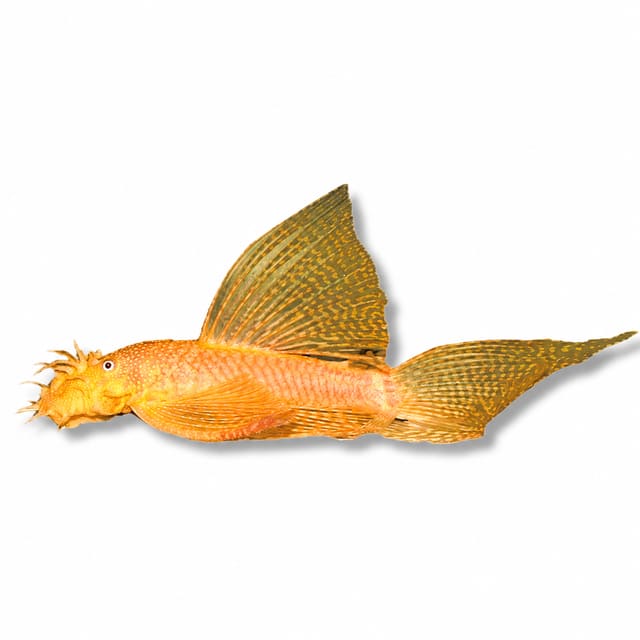
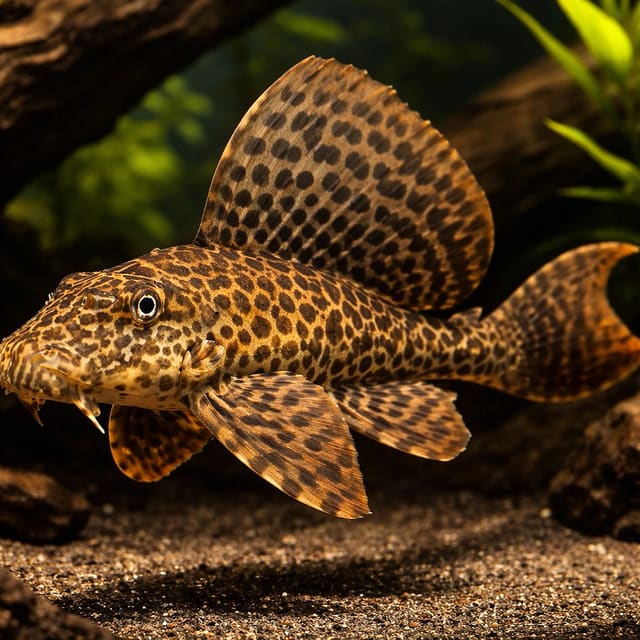
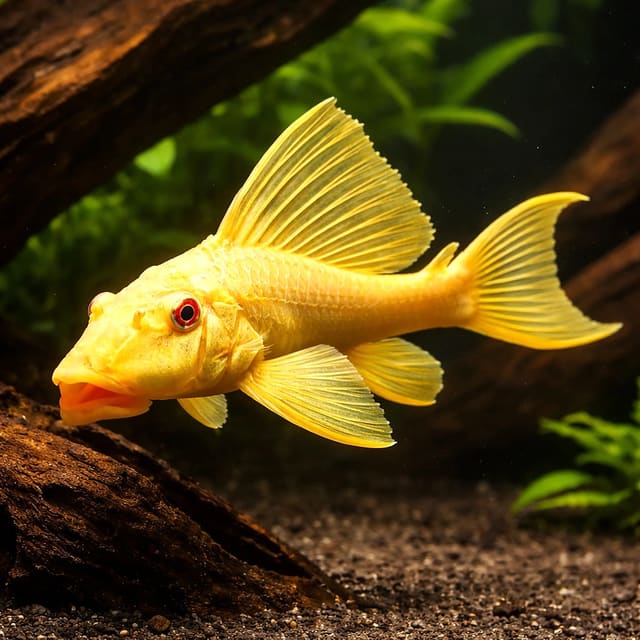
Suckermouth Catfish Gold (Hypostomus plecostomus)
22–27°C · pH 6.2–8
£8.49£9.99

Shark catfish, or Tete sea catfish, is sold under the supplier identity Arius jordani; FishBase accepts Ariopsis seemanni. This large migratory sea catfish needs expert long-term planning, a small social group, a 240 × 60 cm minimum base and roughly 864 litres, with brackish to marine conditions as it matures. Each purchase supplies one fish.
Adult size is the maximum length this species reaches at full maturity (scientific sources). The livestock you receive will be younger and smaller — pick a size above for the actual shipping size. Product-photo provenance and any image-specific limitations are stated on the listing.
Arius jordani
Shark catfish, or Tete sea catfish, is sold under the supplier identity Arius jordani; FishBase accepts Ariopsis seemanni. This large migratory sea catfish needs expert long-term planning, a small social group, a 240 × 60 cm minimum base and roughly 864 litres, with brackish to marine conditions as it matures. Each purchase supplies one fish.
Adult size is the maximum length this species reaches at full maturity (scientific sources). The livestock you receive will be younger and smaller — pick a size above for the actual shipping size. Product-photo provenance and any image-specific limitations are stated on the listing.
Maintain these water conditions for optimal health and vibrant colors
Shark catfish, also called Tete sea catfish, is a large, active member of the sea-catfish family. This offer keeps the supplier identity Arius jordani, while FishBase accepts Ariopsis seemanni and treats Arius jordani as a synonym. The bridge matters because both names appear in the aquarium trade. They refer here to the same supplier-anchored offer, not to two different fish.
One purchase supplies one live fish in the size chosen. The listed dispatch sizes are 5–8 cm and 9–10 cm, and the product page shows current availability. The size you select is the size supplied, not the adult size. These are juveniles of a fish that becomes very large. FishBase records 44.4 cm total length under a male/unsexed record; total length includes the tail. Seriously Fish gives 350 mm standard length; standard length excludes the tail. Keep both records with their own measurement conventions rather than treating 35 cm SL as a smaller alternative maximum or converting one into the other.
Sex is guaranteed only when the selected option explicitly states male or female. This Shark catfish, Tete sea catfish listing has no sex-guaranteed option. Seriously Fish says juveniles are difficult to sex and mature females are thicker-bodied than males, but that biological observation cannot guarantee the sex of a photographed or purchased juvenile.
This is not a routine freshwater community catfish. FishBase records marine, freshwater and brackish environments, says adults occur in seawater and labels the species unsuitable for a home aquarium, with a minimum aquarium length above 150 cm. Seriously Fish gives a more demanding long-term plan: a base of 240 × 60 cm and about 864 litres, described as mandatory. It also says young fish can manage in hard freshwater but require marine salt as they grow, with adults kept in brackish or full marine conditions.
Seriously Fish describes the species as peaceful with its own kind and best kept in a small group. It does not give a fixed head count, so one fish per purchase must not be mistaken for a complete social group. A prospective keeper should plan the final aquarium, salinity management, group, filtration and adult compatibility before buying juveniles. An upgrade promised for later is not the same as having the adult system ready.
| Customer name | Shark catfish / Tete sea catfish |
|---|---|
| Supplier identity | Arius jordani |
| Accepted-name bridge | FishBase accepts Ariopsis seemanni |
| Sold unit | One live fish per purchase |
| Dispatch-size choices | 5–8 cm and 9–10 cm |
| Adult-size records | 44.4 cm TL male/unsexed in FishBase; 350 mm SL in Seriously Fish |
| Species-level aquarium plan | 240 × 60 cm base and about 864 litres from Seriously Fish |
| Long-term water | Hard freshwater for young fish; marine salt required as the fish grows; adults brackish or full marine |
| Keeper fit | Advanced: very large aquarium, salinity progression, strong filtration and social planning |
| Suits | An experienced keeper who already has space for the adult aquarium; can manage brackish or marine water; can keep a small group; and can provide open swimming room, strong filtration and a safe handling routine. |
|---|---|
| Not suited to | A general freshwater community; a 500-litre adult plan; a temporary juvenile tank with no funded upgrade; a planted freshwater display intended to remain unsalted; or companions small enough to be eaten. |
Use the aquarium setup guide to understand filter maturation, but recognise that this species goes well beyond an ordinary first tropical tank. Its adult size, group needs and changing salinity make it a specialist commitment.
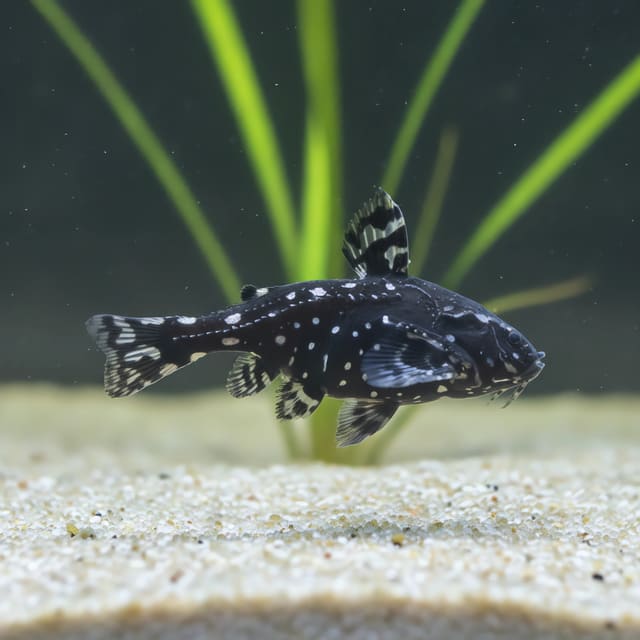
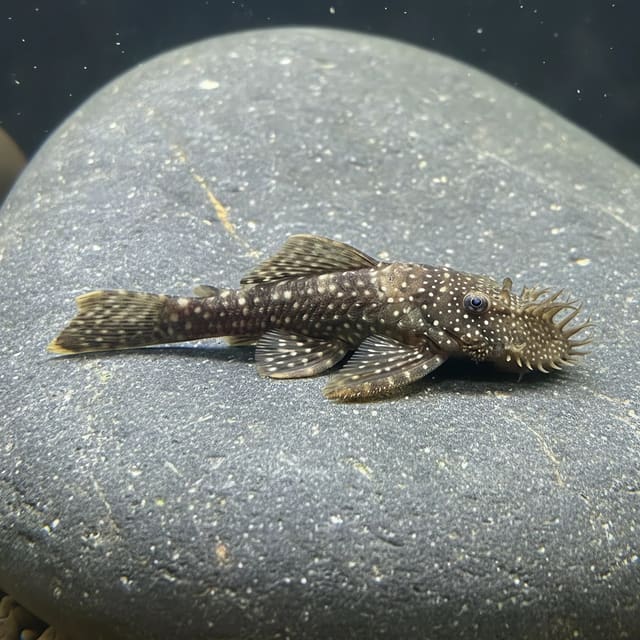
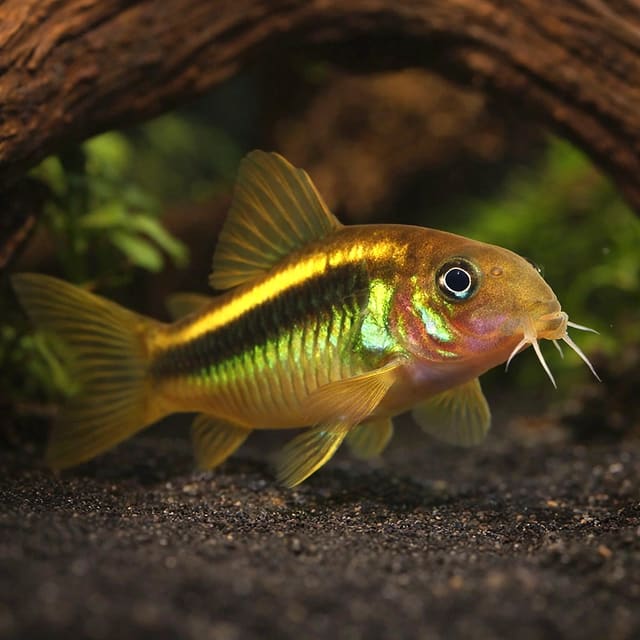
Gallery images have been digitally enhanced to improve image quality. Natural colour, pattern, size and maturity can vary between live animals.
The first care decision is whether the adult system is realistic. A juvenile may look manageable at 5–10 cm, but the size records describe a much larger fish: 44.4 cm total length in FishBase and 350 mm standard length in Seriously Fish. Those figures use different endpoints, so they belong side by side. The fish also changes habitat use across its life, moving from riverine or harder freshwater conditions towards coastal brackish and marine water as it matures.
Seriously Fish states that a 240 × 60 cm base should be considered mandatory and equates that footprint with about 864 litres. FishBase gives a shorter threshold of more than 150 cm aquarium length, but the larger specialist-care plan is the safer practical basis because it adds the width needed for a large active group. Volume alone can hide a narrow shape; a tall aquarium with little turning room is not equivalent to a 240 × 60 cm base.
Measure the actual space, including access for filters, pipes, lids and water changes. Check the floor and cabinet for the final filled load, not only the glass volume. Plan how the fish would be moved safely if the aquarium, heater or filter failed. Because Seriously Fish recommends a small group, adult capacity must cover several large fish rather than one juvenile.
Keep broad service access around the tank. A keeper needs to reach intakes and heaters without placing hands close to startled fish. Seriously Fish warns that this family has venom-producing glands at the bases of the first dorsal and pectoral spines and calls for extreme caution during maintenance or handling. The best routine is one that minimises chasing and physical contact. Keep children and pets away when lids or equipment are open.
FishBase records the species from eastern Pacific waters between El Salvador and Panama, common in coastal marine and brackish environments and also entering medium and large rivers. Seriously Fish says younger specimens can do well in hard freshwater, but marine salt is required as they grow. Adults can be maintained in brackish or full marine conditions. This is a life-stage requirement, not a decorative preference.
Seriously Fish gives a specific gravity around 1.005 as a workable brackish condition and says it may be raised as fish get older. It does not give one universal timetable tied to centimetres or months. Build the transition around the fish's development, the complete group's needs and measured water. Use marine salt intended for brackish or marine aquaria and a suitable salinity instrument; ordinary tonic or table salt is not a substitute for a balanced marine mix.
Prepare salinity changes in replacement water rather than tipping dry salt into an occupied aquarium. Match temperature, dissolve the mix fully and verify the reading before use. Raise salinity gradually while monitoring behaviour, breathing, feeding and water quality. Every companion, plant and biological filter in the system must be suitable for the intended long-term salinity, so the stocking plan should be made for the adult brackish or marine aquarium from the beginning.
Seriously Fish gives 22–26 °C, pH 6.8–8.5 and 10–30 °dGH as species-level aquarium guidance. FishBase gives an environmental pH range of 6.8–8.0, hardness of 8–30 °dH and temperature of 22–26 °C. The matching temperature strengthens the practical range, while the slightly different pH and hardness limits should remain attached to their source context. For the aquarium, 22–26 °C, pH 6.8–8.5 and 10–30 °dGH are the published specialist-care values.
Stable salinity and mineral content matter as much as the headline pH. Use the water-chemistry guide to distinguish pH, GH and KH, and use the water parameter matcher to compare actual readings with the intended plan. In a brackish system, also record specific gravity using the same calibrated instrument and at a consistent temperature.
Ammonia and nitrite should remain zero. OATA's freshwater-catfish sheet advises keeping nitrate no more than 20 mg/l above normal tap-water levels as broad group guidance. A large active carnivore group can create substantial waste, so test frequently enough to see a trend rather than waiting for visible cloudiness or distress. Salinity never replaces biological filtration or water changes.
Seriously Fish says decent oxygenation and water flow are appreciated. Its worked equipment example for roughly 864 litres uses a turnover of four to five times the aquarium volume per hour and three filters rated around 1,150–1,440 litres per hour each. Treat those numbers as an illustration tied to that system, head height and media load, not as a promise that any three filters with printed ratings will deliver the same result.
Design the system with redundancy. Several filters can preserve some circulation if one unit is stopped for maintenance, but each intake and outlet must be placed so the full aquarium receives movement. Leave broad open swimming routes and protect intakes where necessary. Surface movement supports gas exchange, while directed flow can reflect the riverine aspect of the species without forcing the fish to sprint continuously.
The RSPCA explains why a biological filter is essential: toxic ammonia from fish is processed to nitrite and then nitrate by established bacteria. Mature the complete system before adding the group, and allow for increased waste as the fish grow. Check flow, temperature and oxygenation every day. In a large heated aquarium, a power or pump failure deserves an immediate response plan.
A system of this scale should be run as a complete working aquarium before any Shark catfish arrives. Fill and heat the full volume, mature the biological filters, and test every intake, return, air supply and heater together. Confirm that water moves through the open swimming area without leaving stagnant corners or a single harsh jet. Check temperatures at more than one point and make sure lids can be opened for service without dismantling pipes. The cabinet, floor, electrical supply and nearby working space need to support the filled aquarium, stored replacement water and routine access.
Rehearse a normal water change with no livestock present. Measure how much water is removed, how long the process takes, where new water will be mixed and how accurately its temperature and specific gravity can be matched. Use dedicated containers and equipment suitable for the eventual brackish or marine mix. Mark volumes so repeat changes do not depend on guesswork. Confirm that the chosen salinity instrument gives repeatable readings and that there is enough marine salt, dechlorinator and prepared water to complete a change rather than stopping halfway.
Also rehearse a response to loss of circulation or heat. Know which filters remain active if one stops, where temporary aeration can be connected and how the aquarium will be kept safe during maintenance. Keep nets, rigid containers and protective equipment accessible without inviting casual handling. A dry run exposes awkward hose routes, inaccessible valves and undersized mixing vessels while they are easy to correct. It also turns the published aquarium dimensions and salinity progression into a practical routine the keeper can sustain as the group grows.
Seriously Fish recommends plenty of open swimming space and offers a simple layout of river sand with driftwood branches or mangrove roots. This is not a fish that benefits from a dense wall of decorations. Use smooth, stable pieces around the perimeter and keep the central route open. Make sure large fish can turn without catching barbels or fin spines.
Most commonly sold aquatic plants are described as a poor long-term choice because they do not suit the required brackish conditions. If plants are used in an early stage, select species for the intended salinity and accept that the adult layout may be simpler. Do not allow a temporary freshwater planted design to delay the adult brackish transition.
A secure lid and protected service openings are sensible for a powerful active fish, but the strongest safeguard is adequate space and a calm layout. Inspect the aquarium for gaps around pipes and cables. Position heaters where large fish cannot strike or rest against them, and use equipment designed for the final water conditions.
Seriously Fish describes Shark catfish as peaceful with its own kind and says it does best in a small group. A fixed head count would be misleading, so select the final small group with a specialist who understands the available 240 × 60 cm or larger system. Buying one fish at a time without a group plan can leave a solitary juvenile or create later size differences that complicate introduction.
Provide enough swimming room for the group to move without constantly colliding at feeding time. Watch whether every fish can feed and cruise normally. Repeated isolation, frantic dashing or a sudden change in behaviour deserves a water, salinity and social check. Seriously Fish notes periods of restlessness that may relate to migratory instincts and says salinity fluctuation may help settle the fish; any adjustment should remain measured and appropriate to all inhabitants.
Seriously Fish says young fish accept bloodworm and other small meaty foods. Larger individuals appreciate earthworms, mussel, prawn and sinking tablets. Some may initially resist dried food but can learn to accept it. Use a varied, nutritionally complete plan rather than relying on one frozen item. Choose portions that the entire group can consume and make sure shy individuals receive food.
OATA's broader catfish guidance says predatory species need appropriate sinking foods and recommends feeding only what can be eaten within a few minutes, generally once a day for the group covered by that sheet. Observe body condition and waste rather than adding food until the fish stop searching. Remove uneaten pieces promptly; high-protein leftovers can quickly burden a warm, heavily filtered aquarium.
Do not use feeder fish. They add disease and nutritional risks and are unnecessary when suitable prepared and invertebrate foods are accepted. Handle shellfish and frozen foods hygienically, thaw only the portion required and avoid allowing oily residues to collect at the surface.
At least once every week, OATA's broad catfish guidance recommends a partial water change of 25%, supported by regular ammonia and nitrite testing. The actual schedule may need to be more frequent as fish grow or nitrate rises. Prepare new water with matched temperature, mineral content and salinity. Measure after mixing, then verify the aquarium again after the change.
Siphon waste from open sand without undermining wood or pipework. Check each filter for reduced flow and clean mechanical stages as needed. OATA advises rinsing biological media gently in removed aquarium water rather than under chlorinated tap water. Stagger filter cleaning so every biological stage is not disturbed on the same day.
Record temperature, pH, hardness, specific gravity, ammonia, nitrite, nitrate, water-change volume and filter work. A written trend helps distinguish normal gradual salinity progression from an accidental concentration change caused by evaporation. Replace evaporated water according to the system's salinity plan; evaporation removes water while salts remain, so verify the reading rather than assuming it is unchanged.
Tropical Fish Co says live fish are hand-bagged in pure oxygen, placed in an insulated box and given a heat pack when weather calls for one. Be present to receive the parcel. For any Live Arrival Guarantee claim, make one continuous video beginning with the sealed parcel, then show the parcel being opened and the fish still inside the sealed bag. Contact the store the same day with the order number if there is a problem.
The current policy advises floating the sealed bag for 20–30 minutes before release and says not to pour transport water into the aquarium. Follow the instructions delivered with the order and have the receiving water prepared in advance. After release, check breathing, balance, barbels, fins and whether the fish can swim without striking décor.
OATA recommends monitoring swimming, colour, temperament, breathing, appearance, condition and appetite. If behaviour changes, first test temperature, ammonia, nitrite, nitrate, pH and salinity and check every pump. Seek experienced aquatic or veterinary advice for persistent distress or injury rather than guessing a treatment.
Seriously Fish describes Shark catfish as peaceful with conspecifics and best kept in a small group. It also says the fish will not attack an animal too large to be considered food. That makes adult size and mouth size central to compatibility. A companion that looks substantial beside a 5–8 cm juvenile may become prey as the catfish grows.
Every companion must tolerate the intended adult salinity, 22–26 °C temperature range, strong filtration and open-water activity. Select robust brackish or marine-capable fish that are too large to be swallowed and that will not crowd the same swimming route. Avoid soft-water freshwater species, small fish, shrimp and other small invertebrates.
Temperament labels alone are not enough. A peaceful fish can still become food, while a large aggressive fish can damage barbels and fins. Compare adult body depth, feeding style and swimming speed. Make sure every animal can feed without a frantic collision and that no species requires delicate planting or quiet water incompatible with the catfish setup.
Meet the Shark catfish's own social and space needs before building a mixed display. A 240 × 60 cm base and roughly 864 litres is the species-level minimum plan given by Seriously Fish; a group plus companions may require more. The filtration and water-change routine must cope with the combined adult biomass, not the dispatch sizes.
Introduce fish only when the salinity and biological filter are stable. Observe the group during feeding and normal cruising. A fish that repeatedly breaks away, dashes into glass, hides or misses food needs attention. Test water and salinity, inspect for injury, and simplify the stocking plan if the aquarium cannot provide calm movement for every inhabitant.
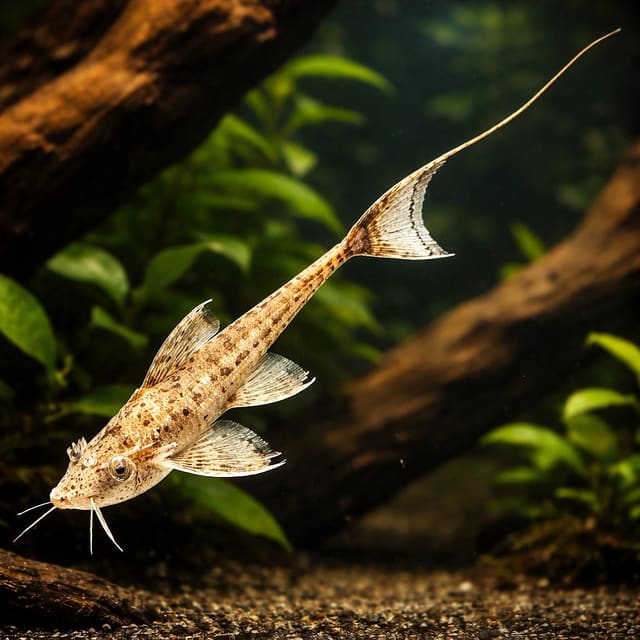
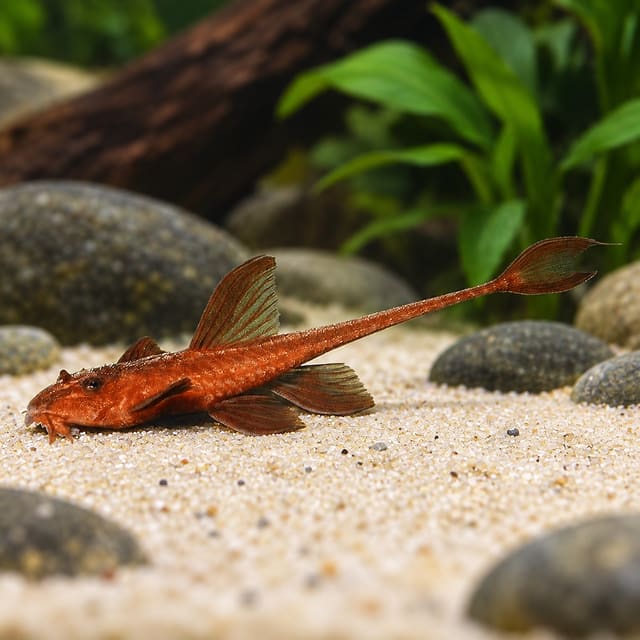
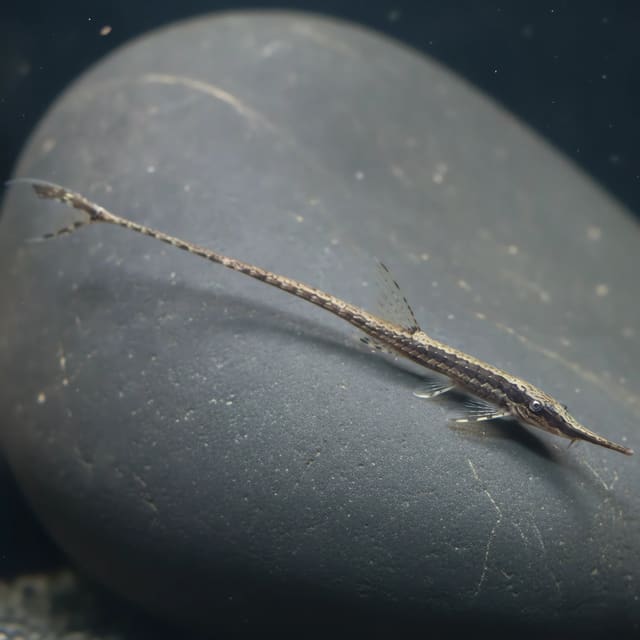
Ordinary freshwater plecos and hoplo-type catfish may appear nearby in a shop collection, but they are not direct husbandry substitutes for a large migratory sea catfish. This listing therefore does not present the supplied freshwater catfish pages as related choices. Browse the catfish and pleco collection for comparison, then assess each animal on its own adult size, salinity, social and footprint requirements.
FishBase records 44.4 cm total length under a male/unsexed record, while Seriously Fish gives 350 mm standard length. Total length includes the tail and standard length excludes it, so keep the two records separate. The listed 5–8 cm and 9–10 cm sizes are dispatch sizes.
Seriously Fish describes a 240 × 60 cm base and about 864 litres as mandatory. FishBase gives more than 150 cm aquarium length, but the larger plan better provides turning and group space. Measure the footprint and prepare the adult system before buying juveniles.
Seriously Fish says this species is peaceful with its own kind and does best in a small group. A fixed head count would be misleading, so plan the final group with a specialist around the available 240 × 60 cm or larger aquarium. One purchase supplies one fish.
No. Treat it as an advanced specialist fish because it grows large, needs a social group and requires marine salt as it matures. Adults live in brackish or full marine conditions, and Seriously Fish recommends roughly 864 litres with strong filtration and open swimming room.
Young fish take bloodworm and other small meaty foods. Larger fish appreciate earthworms, mussel, prawn and sinking tablets. Some learn to accept dried food. Use a varied complete plan, feed portions the group can finish and remove high-protein leftovers promptly.
Seriously Fish gives 22–26 °C, pH 6.8–8.5 and 10–30 °dGH. Young fish can live in hard freshwater, but marine salt is required as they grow; adults can live in brackish or full marine water. Measure specific gravity as well as freshwater parameters.
Seriously Fish describes it as peaceful with its own kind rather than a routine fin-nipper. Its main compatibility risk is predation: it may eat animals small enough to be food. Large size, fast movement and sharp venom-associated fin spines still require generous space and cautious handling.
Consider robust animals that tolerate the adult brackish or marine conditions and are too large to be swallowed. Avoid small fish, shrimp, other small invertebrates and species requiring soft acidic freshwater. Match adult size, salinity, swimming space and feeding style before combining animals.
Tropical Fish Co hand-bags live fish in pure oxygen, uses an insulated box and adds a heat pack when weather calls for one. A licensed live-animal courier carries the parcel. Be present and record one continuous video from the sealed parcel to the fish still in its bag for any Live Arrival Guarantee claim.
FishBase supports the accepted-name bridge, distribution, environmental records, adult seawater note and 44.4 cm TL record. Seriously Fish supplies the species-level aquarium footprint, 350 mm SL record, water, salinity, group, diet and behaviour guidance. OATA and the RSPCA add broad UK catfish and filtration guidance, while the store policy governs packing and claim evidence.
No reviews for this item yet. Bought one? Honest reviews only, good or bad.
What customers say about ordering from us
I have a small group of long finned mountain minnows. So was delighted to be able to order ten of this variety to increase the genetics in my tank . The ones I recieved are healthy but it’s to early to give a verdict on wether they are of a long finned type since they are small currently.
Gordon Walker · 23 Sept 2026
100% success travel and "installation". Pleased with quality of purchase. The Siamese fighter a bit "shy" so have not yet seen him at his best yet but looking good. Happy customer. GG
George E Garratt · 21 Sept 2026
Reviews of our shop, collected by Judge.me, an independent third-party review collector. Newest first.