Moderate
Whiptail Catfish (Dasyloricaria filamentosa)
23–28°C · pH 6–7.5 · 150L
£7.59

A rare blackwater whiptail catfish for mature soft-water aquariums, best kept with gentle tank mates, sand, wood and stable 24-29C conditions.
Adult size is the maximum length this species reaches at full maturity (scientific sources). The livestock you receive will be younger and smaller — pick a size above for the actual shipping size. Product-photo provenance and any image-specific limitations are stated on the listing.
Loricaria sp. Schocko / Loricaria spinulifera group
Confirm your email, then we’ll send an availability message for this exact item if it returns within 180 days.
This request is only for this product—no newsletter or other promotions. A mail-provider retry may very rarely duplicate the same availability message. Unconfirmed addresses are removed after 48 hours. See our privacy policy.
A rare blackwater whiptail catfish for mature soft-water aquariums, best kept with gentle tank mates, sand, wood and stable 24-29C conditions.
Adult size is the maximum length this species reaches at full maturity (scientific sources). The livestock you receive will be younger and smaller — pick a size above for the actual shipping size. Product-photo provenance and any image-specific limitations are stated on the listing.
Maintain these water conditions for optimal health and vibrant colors
Loricaria sp. Schocko is a rare blackwater whiptail catfish for aquarists who enjoy quiet, natural South American setups. This listing covers the 6-7 cm size, with the larger 8 cm+ option available on the same product when stock allows. It is best treated as an experienced keeper's fish: peaceful and rewarding, but sensitive to rough substrate, poor oxygenation, unstable water chemistry and rushed acclimation.
The trade name is commonly used for a slender Loricaria-type whiptail associated with the Loricaria spinulifera group. The care priorities are the important part for the aquarium: soft acidic water, clean sand, wood, leaf litter, subdued light and calm tank mates that will not outcompete it at feeding time.
| Best for | Mature soft-water or blackwater aquariums |
|---|---|
| Adult size | Usually around 6.5-14 cm depending on exact form and age |
| Temperature | 24-29C |
| pH | 5.5-7.0, stable and low in dissolved minerals |
| Tank size | 90 litres or more for a small group |
| Temperament | Peaceful, shy and mostly bottom-dwelling |
| Diet | Sinking meaty foods, small invertebrate foods, quality pellets and natural biofilm |
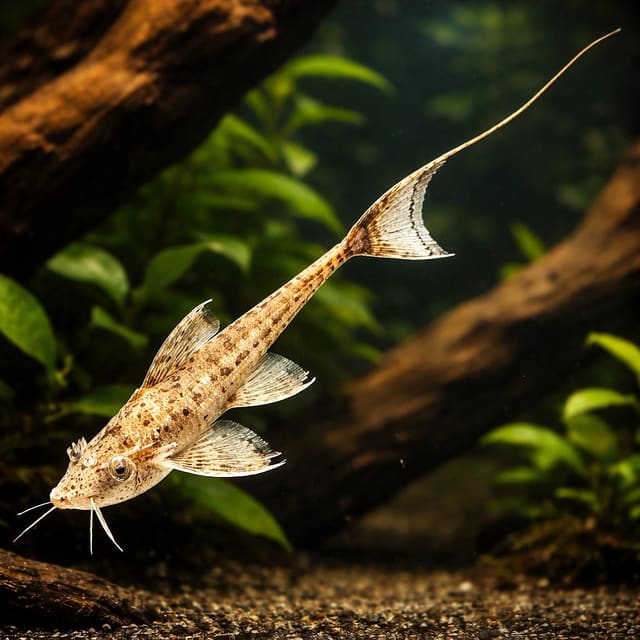
This whiptail has the long, flattened Loricaria body shape, a narrow head, sucker mouth and extended tail filament that gives the group its common name. The body is usually pale brown to cream with dark reticulation, spotting and banding across the body and fins. Under soft lighting the pattern blends beautifully with wood, sand and leaf litter rather than looking flashy. That natural camouflage is part of the appeal.
Because whiptail catfish can change how bold their markings appear depending on light, stress level and background, give this fish a quiet shaded aquarium before judging its final colour. Newly arrived specimens often look paler on the first day and settle once they have secure resting places.
Loricaria spinulifera is recorded from blackwater river systems in northern Brazil, including the Rio Negro, lower Rio Branco and lower Rio Jauaperi. These habitats are soft, acidic, tannin-stained and often dim, with sand, mud, submerged wood, roots and organic debris. In the aquarium, this points towards a mature setup rather than a bright, newly started community tank.
A good home aquarium does not need to be extreme, but it should be stable. Use clean sand, driftwood, botanicals and gentle flow with strong biological filtration. Indian almond leaves, beech leaves or alder cones can help create a natural blackwater feel, as long as pH and conductivity are monitored instead of guessed.
Use fine sand or very smooth substrate so the underside and barbels are not damaged. Add branching wood, broad leaves, caves and shaded resting places. Java fern, Anubias, Cryptocoryne and floating plants work well because they soften the light without demanding intense fertilisation. Avoid sharp gravel, harsh spotlights and very turbulent flow.
Keep oxygen high and nitrate low. This species does best in an established aquarium with a settled biofilm layer, not a sterile tank that has only just cycled. Weekly water changes, careful temperature matching and slow changes to pH or hardness are more important than chasing a perfect number.
Loricaria sp. Schocko is not a wood-eating pleco and should not be left to survive on algae alone. Offer sinking meaty foods such as bloodworm, blackworm, brine shrimp, daphnia, small insect larvae foods and quality sinking carnivore or omnivore pellets. Some individuals also take loricariid tablets, spirulina foods and soft vegetable-based foods, but the core diet should reach the bottom after lights dim.
Feed small portions in the evening so calmer fish get a fair share. If faster tetras or cichlids clear the food before it reaches the substrate, use a feeding tube or target a shaded area near the catfish's resting spot. A rounded belly and regular grazing behaviour are better signs than simply seeing food vanish.
This is a peaceful, shy catfish that spends much of its time resting on wood, sand or plant leaves. It may be more active at dusk and after lights out. Groups can work well in spacious aquariums with enough cover, although males may posture around preferred caves or tubes. Serious aggression is uncommon when space and hiding places are provided.
Choose calm South American fish that enjoy similar soft-water conditions. Good options include Cardinal Tetras, small pencilfish, peaceful dwarf cichlids, gentle Corydoras and other non-aggressive bottom dwellers that will not bully it at feeding time. It can also suit a specialist blackwater community built around quiet movement and low light.
Avoid large cichlids, fin nippers, boisterous barbs, aggressive plecos, predatory catfish and very competitive bottom feeders. Small shrimp may be safe in a dense planted tank, but tiny shrimplets can be investigated like any other small food item.
Breeding is rarely documented in home aquariums. If attempted, condition a settled group with varied frozen and live foods, very clean soft acidic water and narrow tubes or crevices. Males may show stronger odontode development on the pectoral area. Fry, if produced, would need excellent water quality and very small first foods.
Whiptail catfish do not appreciate sudden changes. Float the sealed bag to equalise temperature, then gradually mix small amounts of aquarium water over 30-45 minutes before release. Keep the lights low for the rest of the day and avoid heavy feeding for the first few hours. A mature quarantine or prepared main aquarium gives the fish the best chance to settle cleanly.
We health-check livestock before dispatch and pack fish carefully for UK courier travel in insulated packaging. Eligible livestock orders are supported by our Live Arrival Guarantee, and first-time customers can use WELCOME10 at checkout when the code is available. More importantly, this listing is written to help you decide whether the fish genuinely suits your aquarium, not just to push a sale.
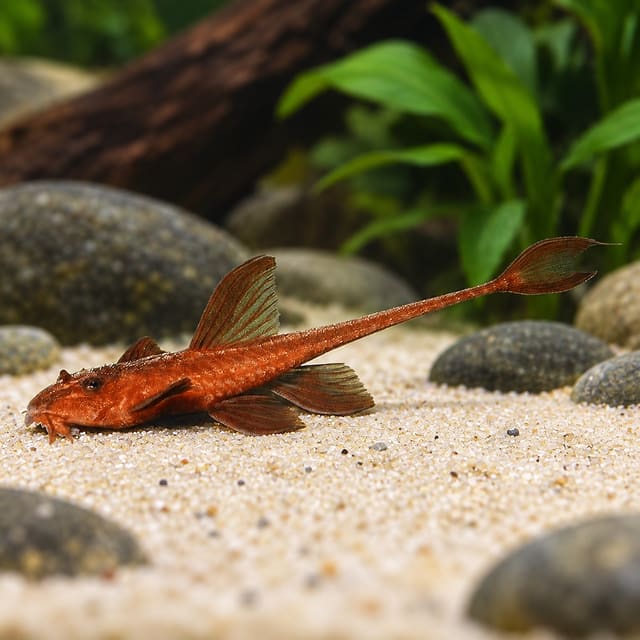
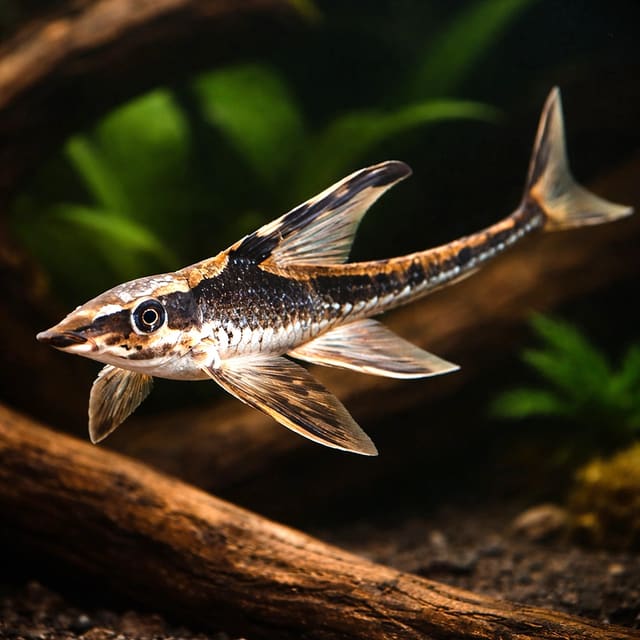
If you are building a blackwater or South American catfish setup, you may also want to compare this fish with Loricaria red spec., Royal Farlowella and other peaceful whiptail-style catfish before choosing the best fit.
No reviews for this item yet. Bought one? Honest reviews only, good or bad.
What customers say about ordering from us
I have a small group of long finned mountain minnows. So was delighted to be able to order ten of this variety to increase the genetics in my tank . The ones I recieved are healthy but it’s to early to give a verdict on wether they are of a long finned type since they are small currently.
Gordon Walker · 23 Sept 2026
100% success travel and "installation". Pleased with quality of purchase. The Siamese fighter a bit "shy" so have not yet seen him at his best yet but looking good. Happy customer. GG
George E Garratt · 21 Sept 2026
Reviews of our shop, collected by Judge.me, an independent third-party review collector. Newest first.