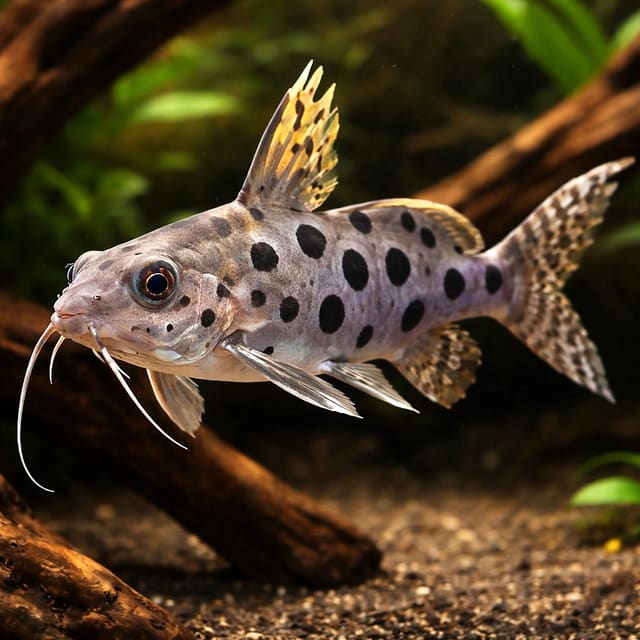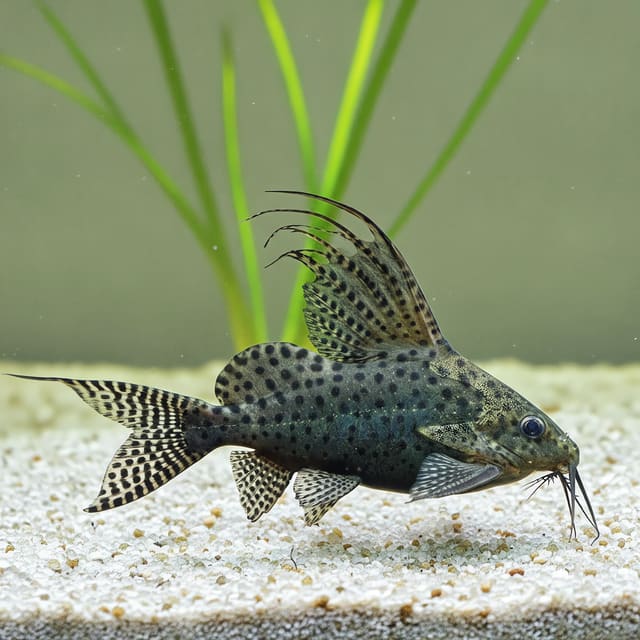
Featherfin Synodontis (Synodontis eupterus)
22–26°C · pH 6.2–7.5
£6.99
Silver form of the cuckoo-type Synodontis — a sociable Tanganyikan catfish, around 15 cm, for hard alkaline water and Rift Lake communities.
Adult size is the maximum length this species reaches at full maturity (scientific sources). The livestock you receive will be younger and smaller. Product-photo provenance and any image-specific limitations are stated on the listing.
Synodontis multipunctatus
Shoaling fish: kept in a group they feel safer, stay calmer and show their best colour.
Confirm your email, then we’ll send an availability message for this exact item if it returns within 180 days.
This request is only for this product—no newsletter or other promotions. A mail-provider retry may very rarely duplicate the same availability message. Unconfirmed addresses are removed after 48 hours. See our privacy policy.
Silver form of the cuckoo-type Synodontis — a sociable Tanganyikan catfish, around 15 cm, for hard alkaline water and Rift Lake communities.
Adult size is the maximum length this species reaches at full maturity (scientific sources). The livestock you receive will be younger and smaller. Product-photo provenance and any image-specific limitations are stated on the listing.
Maintain these water conditions for optimal health and vibrant colors
Build a Lake Tanganyika community and the catfish question answers itself. Synodontis multip. sp. silver is the pale, silver-toned form of the cuckoo-type Synodontis — a Mochokidae catfish from East Africa that evolved alongside the very Rift Lake cichlids most Tanganyika keepers already stock.
Its claim to fame is brood parasitism. During cichlid spawns this catfish sneaks its own eggs into a mouthbrooder's clutch, leaving the unwitting cichlid to raise a brood of young catfish. Beyond that extraordinary trick, you get a long-lived bottom-dweller — around 15 cm as an adult, with a lifespan that can stretch to 15 years — rated moderate in care, semi-aggressive in temperament, and far too opportunistic to trust around small fish.
Hard, alkaline water is non-negotiable: aim for 24–27 °C, pH 7.5–9.0 and 10–25 dGH in a tank of 200 litres or more. Equally important is company of its own kind, because this is a social species — plan for a group of three as the minimum. At dinner time it behaves like the easy omnivore it is, taking sinking pellets, frozen foods and live foods without fuss. Suitable companions are Tanganyikan cichlids and other Synodontis; soft-water fish have no place in this setup.
Against dark rockwork the silver colouring stands out beautifully, making this the more visible choice of the two forms we list. Keep the lifespan in mind as you stock: at up to 15 years this catfish will outlast most of the fish around it, so the trio or more you start with should be sized for the 200-litre-plus aquarium they will occupy as adults. Buy in threes or more to see natural group behaviour — and if you keep mouthbrooding cichlids, watch closely at spawning time. Dispatch is via licensed live-animal courier with a live arrival guarantee.
No reviews for this item yet. Bought one? Honest reviews only, good or bad.
What customers say about ordering from us
Easy website plenty of info on fish your buying great to pick a time slot
TRACEY DURRANT · 7 Oct 2026
Got some lovely fish thank you
Kevin Mackie · 7 Oct 2026
Reviews of our shop, collected by Judge.me, an independent third-party review collector. Newest first.