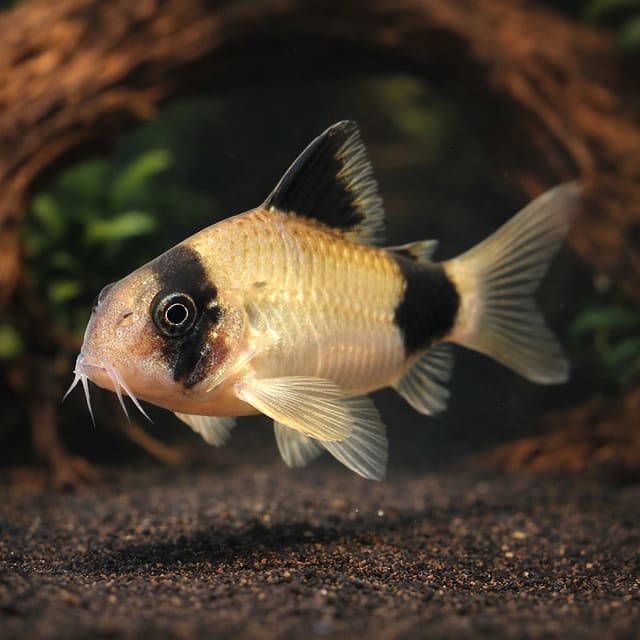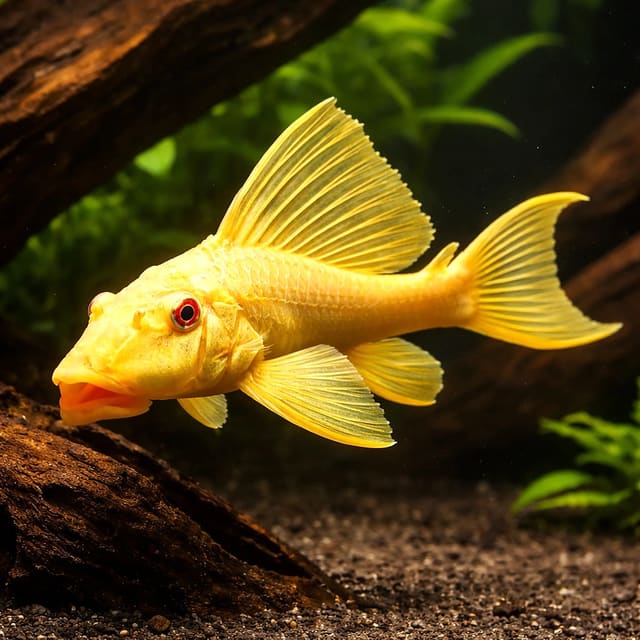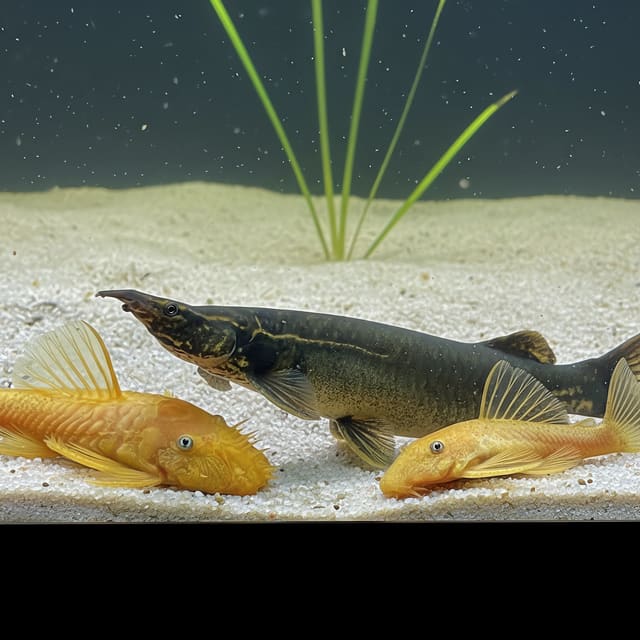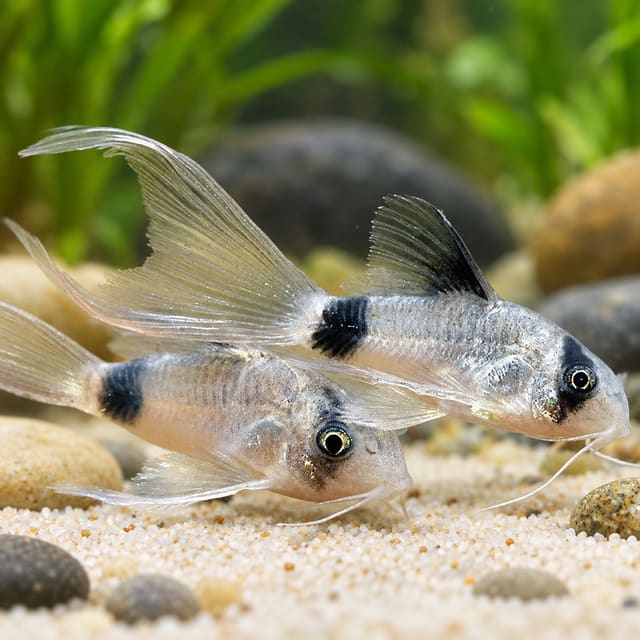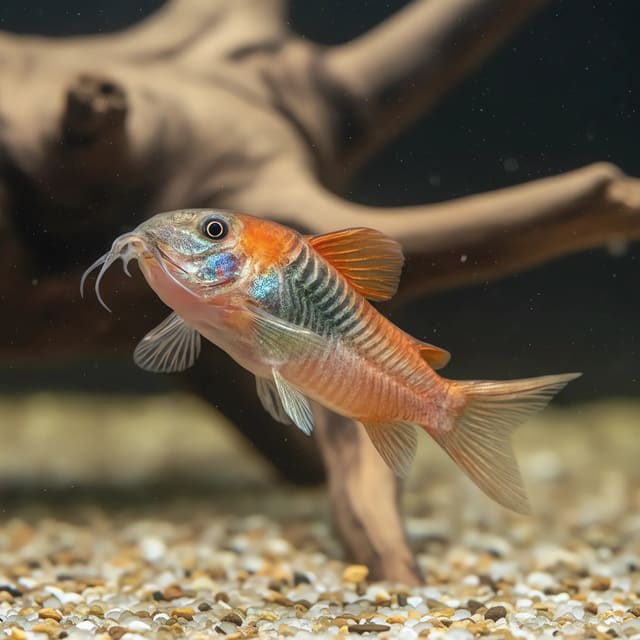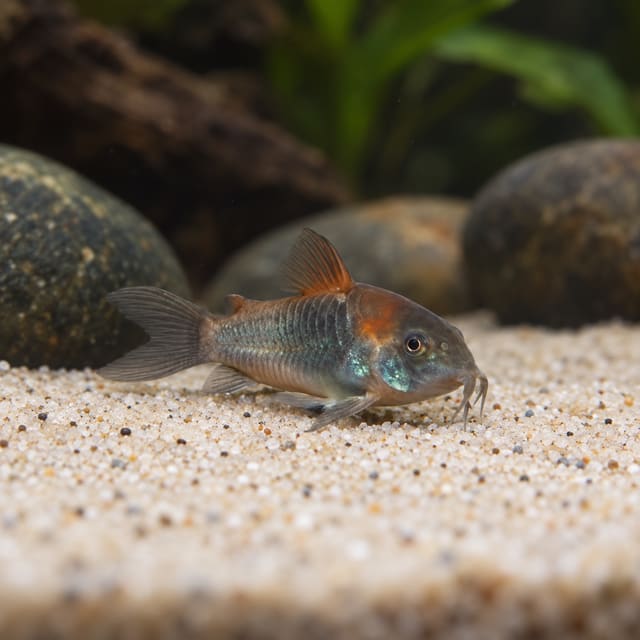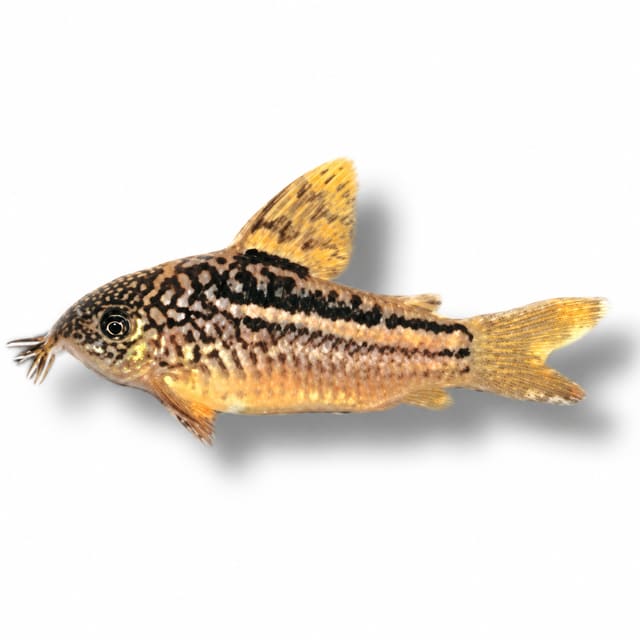
Elegant Cory (Corydoras elegans)
22–26°C · pH 6–7.5
£7.99

Spotted Raphael Talking Catfish (Agamyxis sp.) is a sheltered, mostly nocturnal South American catfish. One unsexed fish is supplied in the size selected. Plan a mature tropical aquarium with floor space, several secure hides and deliberate sinking feeds; the exact species is unresolved.
Agamyxis sp.
Spotted Raphael Talking Catfish (Agamyxis sp.) is a sheltered, mostly nocturnal South American catfish. One unsexed fish is supplied in the size selected. Plan a mature tropical aquarium with floor space, several secure hides and deliberate sinking feeds; the exact species is unresolved.
Maintain these water conditions for optimal health and vibrant colors
Spotted Raphael Talking Catfish (Agamyxis sp.) is a trade name for a spotted, armoured doradid catfish. It suits a keeper who enjoys a fish that rests under cover by day and explores when the aquarium becomes quiet. Provide a mature, heated freshwater tank with useful floor space, shaded retreats and food that actually reaches the bottom. A brightly lit bare tank or a small aquarium chosen only for the juvenile sale size is a poor start.
One purchase supplies one live fish in the size selected. The size choices are 3–3.5 cm, 3.5–4 cm, 4.5–5 cm and over 5.5 cm; check the live size selector when choosing. These are dispatch sizes. The size you select is the size supplied, not the adult size. Sex is guaranteed only when the selected option explicitly states male or female. This Spotted Raphael Talking Catfish listing has no sex-guaranteed option. Pattern and body condition vary naturally between individuals.
The exact species has not been identified, so the care advice here follows the genus Agamyxis and its care group. A commonly described Agamyxis species has a published maximum of 15 cm standard length, measured without the tail, but that is a species record rather than a verified maximum for the fish supplied here. The useful buying decision is to reserve adult floor space now and be ready to adjust the layout as the fish grows. The small size on arrival is not a reason to build a permanent nano setup.
A new Raphael may spend much of the daylight inside a cave or behind wood. Its absence from the open water is not, by itself, a sign that anything is wrong. Give it a choice of sheltered routes and a predictable evening feeding time. Observe breathing, posture and whether food disappears near its shelter after lights dim. A fish that cannot reach food because faster tank mates take it all needs a different feeding arrangement, even if those companions are otherwise peaceful.
This is a bottom forager that needs a varied sinking diet; it is not an algae-control purchase. Its armour and defensive spines make it distinctive, but also call for thoughtful handling. An aquarist who wants a continuously visible daytime shoal may prefer a different fish. For someone happy to watch at dusk, the gradual change from hidden newcomer to confident evening explorer can be especially rewarding.
Check the tank's footprint, filter maturity, temperature, water tests and available hiding places before choosing a size. A settled community may already have every cave occupied. Place several retreats across the bottom, with different entrances and visual barriers, so this catfish can rest without competing for one prized gap. Make sure you can deliver food close to a chosen hide without pushing your hand through the whole aquascape each night.
Use our first tropical tank guide if the aquarium is still being prepared. For other bottom fish to compare by behaviour and care, browse the catfish and plecos collection. A similar shop category does not mean two fish are suitable companions; make that decision using their adult size, feeding, water and shelter needs.
| Good fit | A mature, heated aquarium with useful bottom area, secure shelters and a keeper who enjoys observing at dusk. |
|---|---|
| Plan carefully | A busy community where fast feeders take every sinking pellet, or another bottom fish guards most of the caves. |
| Choose another fish if | You need an algae grazer, a cold-water fish or a catfish that is on view throughout the day. |
The right aquarium gives this fish freedom to rest unseen, emerge to feed and grow without losing access to cover. The simplest check is to picture the adult layout before choosing the small arrival size. If you cannot reserve shelter and floor space, delay the purchase until the tank can support it comfortably.
Floor space matters more to an Agamyxis catfish than extra height. It needs a route between hiding places and a feeding patch that is not permanently occupied by another bottom dweller. A specialist profile for one commonly traded Agamyxis species recommends a base of at least 120 × 30 cm, with roughly 108 litres as an example volume. Because the precise species of this offer is unresolved, use that as a planning comparison, not a guaranteed minimum for every fish sold under the name. A larger, well laid out aquarium gives more room for cover, stable water and other fish. Measure the usable footprint after adding hardscape rather than relying on the litre figure alone.
Place shelters at both ends and through the middle of the tank if its layout allows. Wood tangles, suitably sized caves and planted shade can create several options without closing every swimming route. A retreat should let the fish turn or back out without becoming wedged. Check that rocks and heavy wood are secure before the catfish begins exploring beneath them. If another fish guards an entrance, the Raphael needs a second route. A single showpiece cave in an otherwise exposed aquarium rarely solves the problem.
Use sand or smooth fine gravel where it rests and searches. This is a practical way to avoid rough edges against the underside and barbels; keep the surface free of trapped decaying food. Subdued light suits the secretive behaviour described for the better documented species. Floating cover or plant shade can soften a bright aquarium while leaving a clear place for the keeper to observe feeding. It need not be dark at every hour: the goal is a reliable choice between cover and open space.
Set up biological filtration before livestock is added. Fish waste becomes ammonia, then nitrite, through a developing filter; both ammonia and nitrite should read zero before this catfish is introduced. Test them whenever the aquarium is new, the filter has been disturbed, feeding changes or the fish behaves unusually. The RSPCA explains why a working filter and established beneficial bacteria are fundamental for aquarium welfare. A catfish that hides near the bottom still depends on the same oxygenated, clean water as visible midwater fish.
For broad freshwater catfish care, OATA gives 22–27 °C, pH 6.0–8.0 and general hardness 4–18 dGH. These are group guidance, not measured optimum values for the unidentified species offered here. A specialist profile for A. pectinifrons gives 22–26 °C, pH 5.5–7.5 and 1–20 dGH, but the precise species of this stock remains uncertain. Aim for a stable, suitable warm aquarium and check any planned extremes with an experienced retailer before purchase. Do not rapidly change pH or hardness just to reach the middle of a printed range. The current fish's condition, a mature filter and consistency matter more than chasing a neat number.
Use a reliable thermometer and test kit rather than judging warmth by touch. Compare your measured values with the broad guidance using the water matcher, then use the water chemistry guide to understand what each result means. Neither tool substitutes for checking the fish and aquarium as a whole. If ammonia or nitrite is detectable, investigate the filter and stocking before buying another animal.
Provide steady circulation and good surface movement, while allowing calmer pockets around the caves. A strong jet aimed into every retreat can leave a secretive fish nowhere comfortable to rest. At the same time, still corners where meaty food rots are not useful shelter. Adjust outlets and hardscape so the water moves and the catfish has a choice of flow. Watch the fish's breathing and where it chooses to settle after any major change.
OATA recommends regular testing and a weekly partial water change as general catfish husbandry. Its example is 25% weekly, with replacement water conditioned to remove chlorine or chloramine. Let the test results and stocking guide the exact maintenance routine. Siphon visible debris from feeding spots without repeatedly dismantling the fish's preferred shelter. Rinse a clogged filter medium lightly in removed aquarium water rather than under the tap, because chlorine or chloramine can damage the bacterial community. Keep the aquarium familiar while removing waste.
Check for food caught under wood after an evening feed. A fish may emerge later than expected, so avoid stripping its meal away immediately; equally, do not leave decomposing pieces overnight as a standing routine. Small portions near a shelter are easier to assess than a large handful scattered over the bottom. If a second fish joins the aquarium, increase feeding and biological load gradually. The filter's capacity cannot be judged solely from the tank's rated size.
A documented Agamyxis species is an omnivorous generalist. Its specialist profile recommends good quality sinking pellets or tablets with a variety of frozen or live foods such as insect larvae and worms. That gives a sensible starting pattern for this genus level offer. Choose a reputable sinking staple, vary it with appropriately sized frozen foods, and watch what your own fish takes. Do not assume algae wafers, surface flakes or crumbs missed by other fish provide a complete diet. Some plant material in a mixed food is different from relying on the fish to graze algae from the glass.
Put food near a known retreat as the lights dim. In a lively community, feed the midwater fish first, then add sinking food at more than one point. This prevents a fast fish from intercepting every piece before the Raphael starts searching. A feeding tube or careful placement can help without pulling apart a cave. Observe over several evenings and change the location if a territorial bottom fish controls it. Use enough to confirm the catfish feeds, then remove significant leftovers. OATA's general advice is to feed only what is eaten promptly rather than turn the aquarium floor into a store of decaying food.
Look at body condition over time. A consistently hollow fish may not be getting its share, even if pellets disappear. An unusually swollen body, rapid breathing, loss of balance or a sudden refusal to feed deserves closer attention to water tests, food and tank-mate pressure. A gently rounded, active night forager is a more useful sign than a single daytime glimpse. Avoid claiming a diagnosis from appearance alone. If health changes persist, contact an experienced aquatic retailer or fish veterinarian with the water results and observations.
Low daytime visibility is part of the appeal and the compromise of keeping a Raphael catfish. Offer shelter and keep the room quiet after arrival. Do not repeatedly lift wood to prove that it is still present; a hurried search can trap or frighten a fish in its favourite gap. Watch from a little distance after the main light has gone off. A discreet evening look can show whether the fish leaves cover and how the other residents react. A hiding fish that breathes normally and feeds at night is different from one that is being chased or steadily losing weight.
Predictable routines help. Try feeding in the same broad area at a similar time, while still checking that the site is safe and clean. The fish may learn to appear sooner. Resist the temptation to turn every evening into a long chase for photographs or a forced display. The aquarium should allow it to choose cover. A keeper who understands that rhythm can enjoy brief, natural appearances without compromising the animal's security.
Have the mature aquarium ready before delivery: stable heat, tested water, clear sheltered paths and an available cave. Be present to receive live fish, inspect the parcel promptly and follow the current delivery and arrival guidance. The store advises floating the sealed bag for 20–30 minutes and acclimatising slowly before release. Keep the lights low and do not pour transport bag water into the aquarium. The live arrival policy explains what evidence to record if there is a problem; recording a sealed parcel opening is claim documentation, separate from caring for a healthy fish.
Guide the fish gently into its new home. Strong pectoral spines can catch in fine net mesh, so a smooth, suitably sized container is often easier to manage than a tight soft net. Avoid pulling a snagged spine or gripping the fish by its armour. Once released, allow it to find cover and settle. A missed first meal after transport can happen; check calmly later rather than repeatedly disturbing the hide. If breathing, balance or posture looks abnormal, test the water and seek prompt advice.
During the first day, prioritise darkness, secure cover and stable water. Over the next several evenings, establish a small targeted feed and check that food reaches the catfish. After it has settled, review the whole bottom layout: Is there more than one safe retreat? Can the fish move to a feeding spot without passing a guarding neighbour? Is waste collecting under the same wood? These questions reveal problems that a simple litres-per-fish rule cannot.
Keep notes if you are unsure. Record water tests, what was offered, where it was placed and whether the fish emerged. Trends are more useful than a single fleeting observation. If it continues to hide, compare its body condition and breathing with earlier observations before assuming illness. If it begins to lose condition, change feeding access and investigate bullying or water quality. The aim is a settled catfish in a stable aquarium, not a timetable for how often it must pose in daylight.
Raphael catfish have stout defensive spines. A net can snag them, and a panicked attempt to free the fish can injure both fish and keeper. If a move is necessary, plan the route, clear loose obstacles and use a smooth container where practical. Do not chase it around the aquarium for a routine look. Check wood and caves before lifting them: a hiding catfish may be tucked further inside than you expect. Move slowly enough to see where the fish is.
Designing the aquarium for the longer term reduces the need for a difficult later catch. Leave reasonable access for siphoning and maintenance, but do not sacrifice all shelter for convenience. A good layout gives the keeper a way to clean while the fish still has places to retreat. Keep a lid or secure cover appropriate to the aquarium setup, especially when using temporary containers during maintenance; never leave a fish unattended in an open handling vessel.
Begin with a quiet observation after the aquarium lights dim. Place a modest sinking portion close to the familiar retreat, and check whether other fish reach it first. If the food vanishes immediately, try a second feeding point so the Raphael has its own route. If food remains untouched, remove it before it fouls the water and check temperature, ammonia and nitrite. A fish may be slow to accept a new food after transport, but repeated missed meals or declining body condition calls for a closer look. Try a different suitable sinking staple or a small portion of appropriate frozen food before increasing the amount.
Check that the fish has a secure cave, shaded routes and a calm patch of flow. Watch for a neighbour guarding the entrance or chasing it away after dusk. Hiding can be normal for a nocturnal catfish, especially in an unfamiliar tank, but hiding together with rapid breathing, poor balance or a visibly hollow body is a different picture. Test the water and seek experienced advice when those signs appear. Moving every shelter to find the fish may make a safe aquarium feel less safe; observe first.
Treat detectable ammonia or nitrite as a reason to investigate immediately, not as a value to average over a week. Check that the filter is running, consider whether recent cleaning or a new fish increased the biological load, and follow sound aquarium care advice for a safe partial water change. Condition replacement tap water and avoid a sudden temperature swing. Do not respond by washing all filter media under the tap. Keep a record of subsequent tests so you can see whether the filter is recovering.
Look at the aquarium after dark, when the Raphael is most likely to use the shared floor. One fish may sit across an entrance while another waits in the open; that is a practical problem even without visible damage. Spread shelters and sinking food further apart, then observe whether each fish can rest and eat. If the layout cannot give them distinct routes, reconsider the stocking rather than adding yet another cave into the same cramped corner. Space, access and consistent feeding make a more reliable community than a list of species names.
The specialist profile of Agamyxis pectinifrons describes a generally non-aggressive catfish but cautions that adults may eat very small fish. That exact species identification is unconfirmed here, so treat the warning as a practical precaution for a growing, nocturnal Agamyxis fish. Avoid a community built around fish small enough to fit into an adult catfish's mouth. Do not rely on the size at dispatch to judge a lasting match.
Peaceful midwater characins and calm cichlids are examples named in that species profile for a suitably sized South American community. Check the particular fish's adult size and temperament before mixing it with this offer. A cichlid that fiercely guards a cave or disturbs a resting catfish may be unsuitable even if it shares similar water values. A characin that remains very small may be at risk even if it swims peacefully by day. Species names alone cannot replace observation and space.
Other catfish can sometimes share a spacious aquarium, but competition for caves and sinking food is easy to miss. Divide the floor into several sheltered zones, with entrances facing different directions and visual breaks between them. Place feeds so one fish cannot monopolise every portion. Watch for a Raphael waiting outside a blocked hide, being displaced repeatedly or losing body condition. A tank can look calm from above while bottom fish have no real choice of shelter.
A single Raphael can be kept. The profile of one commonly traded species reports more natural behaviour in groups of four or more, but that statement does not establish a group requirement for the unidentified fish supplied here. If you would like a group, plan much more floor space, several retreats and individual feeding access before adding fish. Do not force multiple catfish into a small footprint just to meet a number taken from another species account.
A Raphael is an evening cave user. Corydoras are a different type of bottom fish with their own social and care needs; buying one as a substitute for this catfish would not produce the same behaviour. Plecos also vary widely in adult size, diet and territorial behaviour. If the attraction is visible daytime bottom activity or algae grazing, compare those fish on their own care pages. If the attraction is a spotted, armoured fish that emerges from shelter at dusk, plan for a Raphael's hiding and deliberate feeding instead.
Before adding any companion, compare temperature, water chemistry, adult mouth size, activity period and use of the bottom. Ask whether each fish can eat without the other stealing the meal. Make sure a newly added fish cannot close off the only retreat. Then observe after lights dim, when this catfish's actual interaction with neighbours is easier to see. A compatible community is one in which the fish can rest and feed, not merely one in which no fighting occurs in daylight.
The precise Agamyxis species remains uncertain. A published record for one commonly traded Agamyxis species is 15 cm standard length, excluding the tail, but it is not a verified maximum for this stock. Plan for a substantial adult catfish rather than the small dispatch size.
Choose a mature aquarium with generous floor space and multiple caves. A specialist profile for one Agamyxis species uses a 120 × 30 cm base and about 108 litres as a reference; the unidentified fish here may need more as it grows or if it shares the bottom.
One can be kept. A profile for a commonly traded Agamyxis species describes groups of four or more showing more natural behaviour, but that is not a proven group requirement for this exact stock. Give any group substantially more floor space, hides and feeding places.
It can suit a careful new keeper who has a mature, tested aquarium and is happy to feed a secretive catfish after lights dim. The main challenges are planning for growth, providing secure cover and confirming that sinking food reaches it.
Offer a quality sinking catfish food and vary it with suitable frozen or live insect larvae and worms. Feed where the catfish can reach the meal after lights dim. It needs deliberate feeding and should not be bought as an algae cleaner.
OATA's broad freshwater catfish guidance gives 22–27 °C and pH 6.0–8.0. These are group values rather than a verified optimum for the exact species sold. Keep a suitable mature aquarium stable and check any unusual water values before purchase.
The related species described by a specialist source is generally non-aggressive, but an adult may eat very small fish. Do not treat a peaceful label as permission to keep it with tiny companions or to overlook competition around caves and food.
Peaceful, appropriately sized characins, calm cichlids and some other catfish are possibilities in a spacious aquarium, as described for a related Agamyxis species. Check each companion's adult size, water needs and behaviour, then provide separate retreats and feeding areas.
Tropical Fish Co says live fish are hand packed in oxygenated bags and insulated boxes, with a heat pack when needed, then sent by a licensed live animal courier. Be present to receive the parcel and follow the current delivery and Live Arrival Guarantee guidance for acclimation and any arrival concern.
FishBase documents one named species and its wild biology; that record does not identify the individual fish supplied here.
Seriously Fish gives detailed aquarium guidance for that named species, useful as a qualified comparison for habitat, feeding and behaviour. OATA's freshwater catfish care sheet gives broad group guidance on water, feeding and maintenance. The RSPCA aquarium environment advice explains biological filtration and water quality. For the shop's current live fish arrival terms, read Tropical Fish Co delivery guidance.
No reviews for this item yet. Bought one? Honest reviews only, good or bad.
What customers say about ordering from us
I have a small group of long finned mountain minnows. So was delighted to be able to order ten of this variety to increase the genetics in my tank . The ones I recieved are healthy but it’s to early to give a verdict on wether they are of a long finned type since they are small currently.
Gordon Walker · 23 Sept 2026
100% success travel and "installation". Pleased with quality of purchase. The Siamese fighter a bit "shy" so have not yet seen him at his best yet but looking good. Happy customer. GG
George E Garratt · 21 Sept 2026
Reviews of our shop, collected by Judge.me, an independent third-party review collector. Newest first.