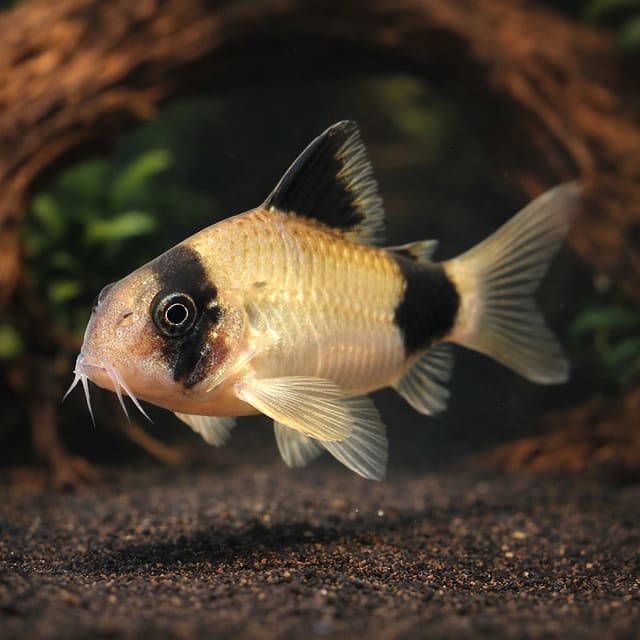
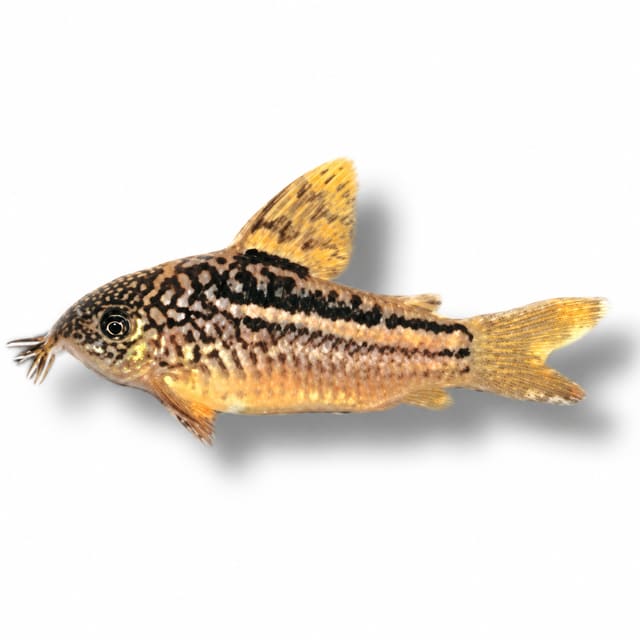
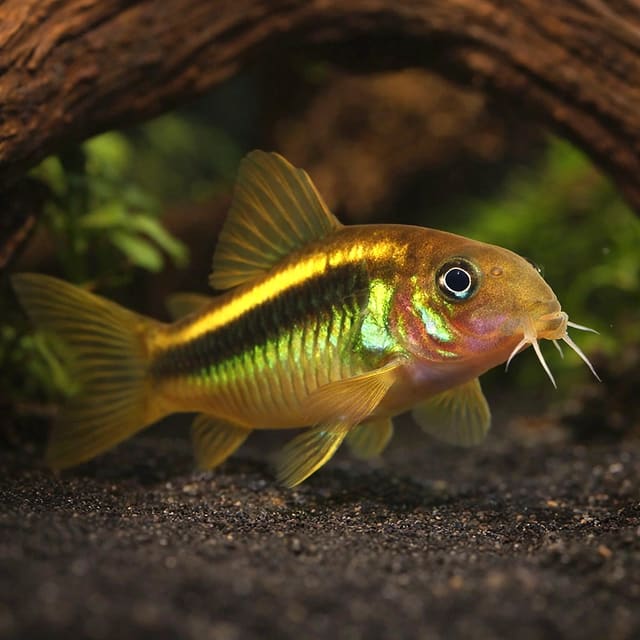
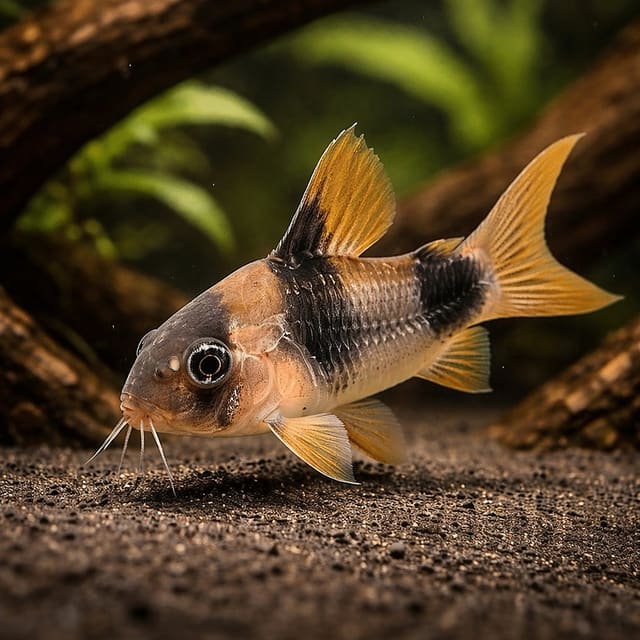
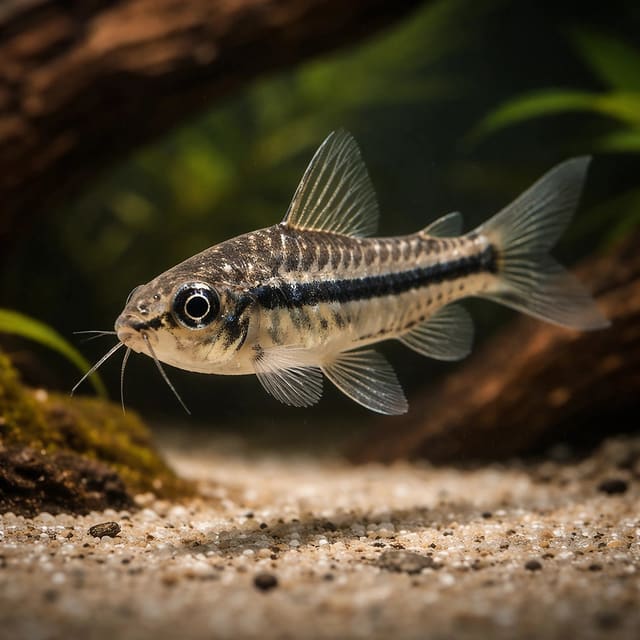
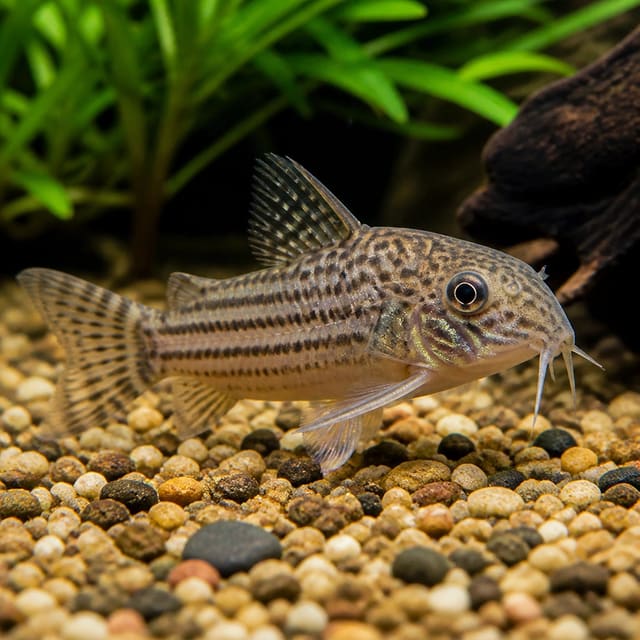
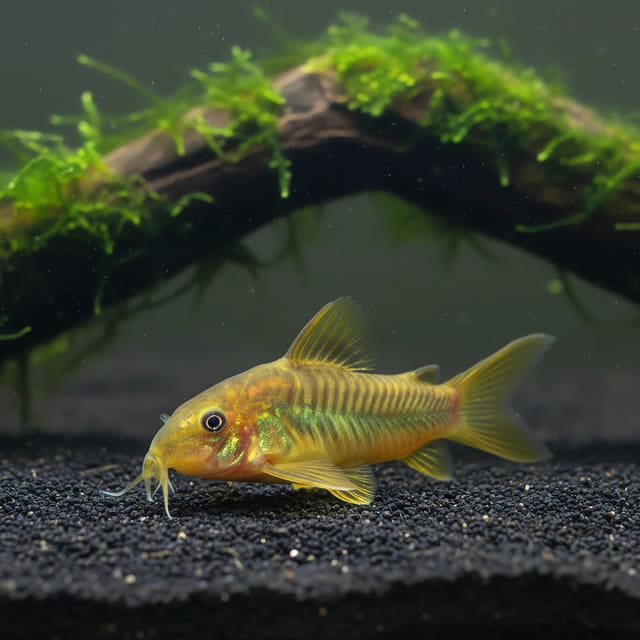
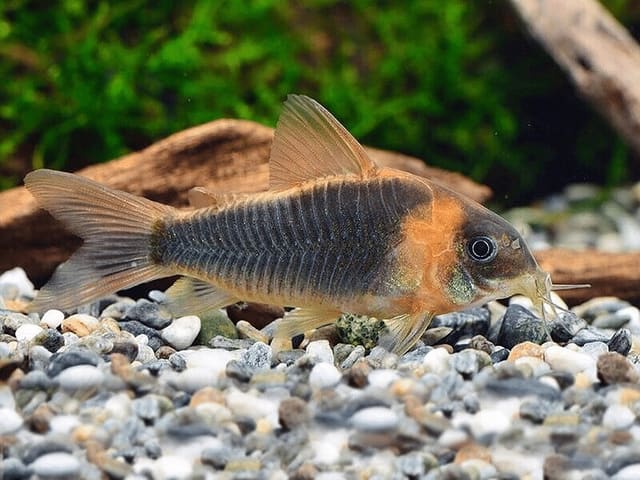
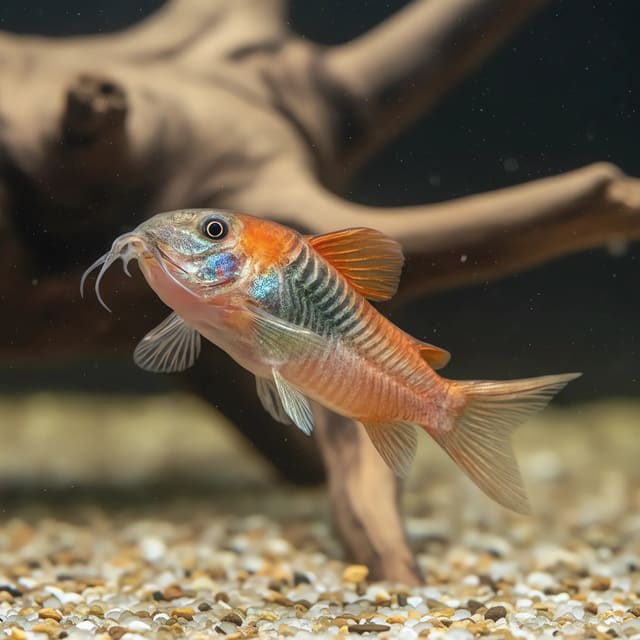
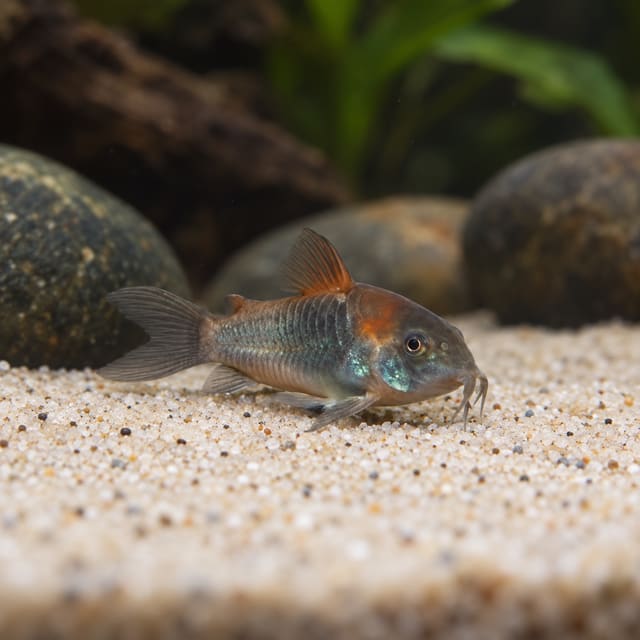
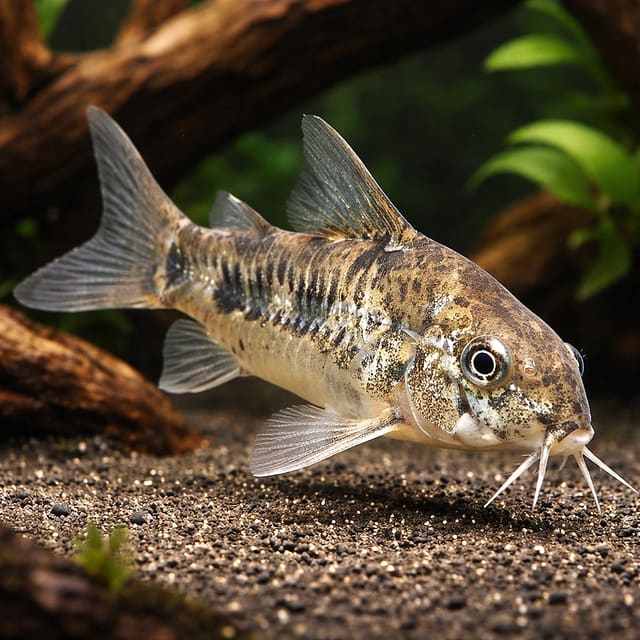
Corydoras arcuatus
22–26°C · pH 6–7.5
£22.99

Agassiz’s Cory (Corydoras agassizii) is a peaceful bottom-dwelling fish for a mature community aquarium. Keep it with a group of its own kind over clean, soft substrate.
Adult size is the maximum length this species reaches at full maturity (scientific sources). The livestock you receive will be younger and smaller — pick a size above for the actual shipping size. Product-photo provenance and any image-specific limitations are stated on the listing.
Corydoras agassizii
Shoaling fish: kept in a group they feel safer, stay calmer and show their best colour.
Agassiz’s Cory (Corydoras agassizii) is a peaceful bottom-dwelling fish for a mature community aquarium. Keep it with a group of its own kind over clean, soft substrate.
Adult size is the maximum length this species reaches at full maturity (scientific sources). The livestock you receive will be younger and smaller — pick a size above for the actual shipping size. Product-photo provenance and any image-specific limitations are stated on the listing.
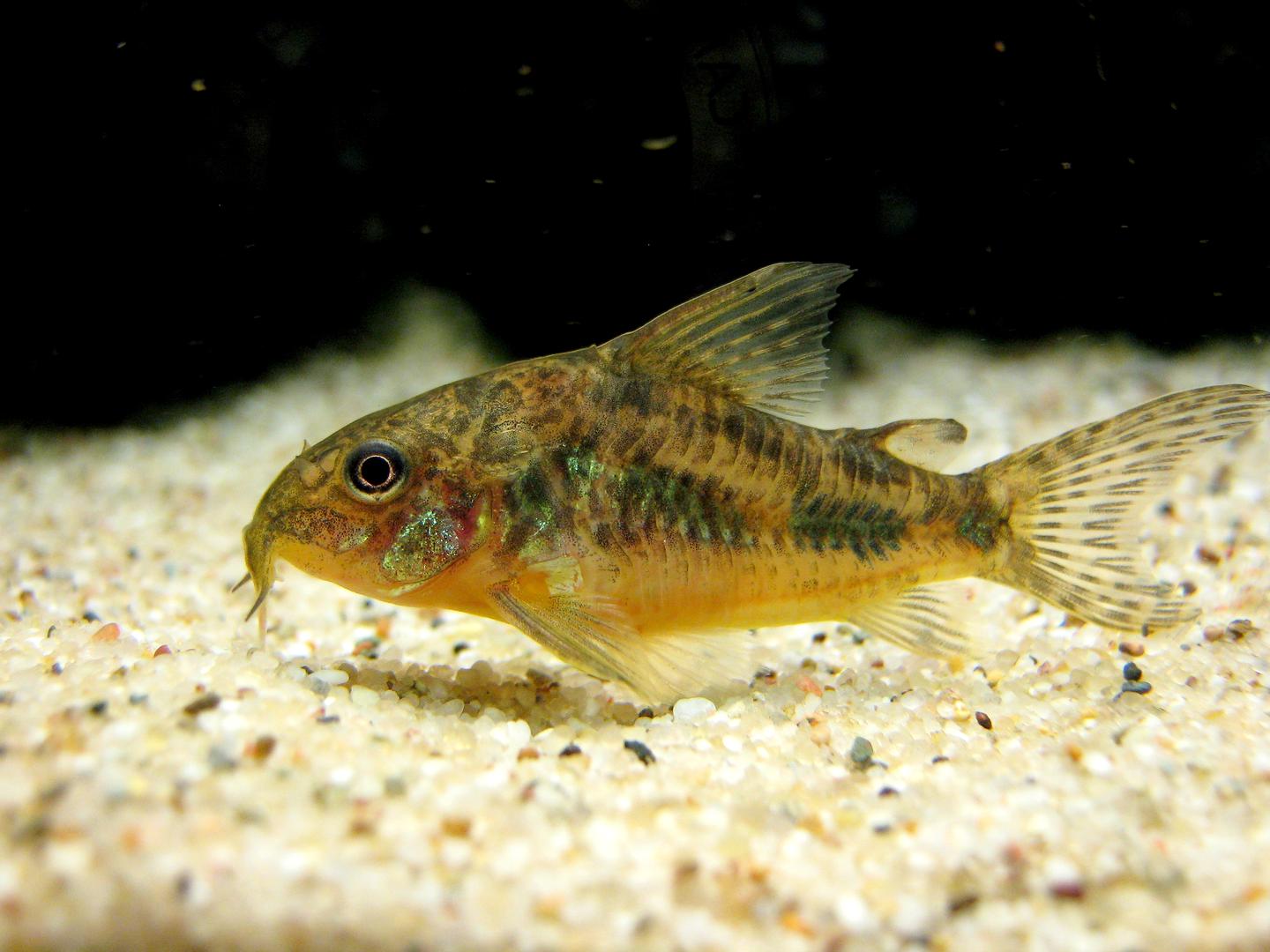
Identify the exact cory catfish before choosing care. Our starting policy for many common medium species is six compatible conspecifics, a mature 60 x 30 cm aquarium of about 60 litres, smooth fine sand and measured species-appropriate water.
Maintain these water conditions for optimal health and vibrant colors
Cory Catfish are among the most useful and enjoyable fish you can add to a peaceful tropical aquarium, and Corydoras agassizii is a standout choice for aquarists who want active bottom-dwellers with elegant spotting and classic South American charm. This species combines the traits many keepers value: a calm temperament, constant foraging behaviour, manageable adult size and a lifespan that can reach around 10 years with proper care. Native to South America, these armored catfish stay close to the substrate, sift gently through sand, and do best in groups, making them a peaceful choice for planted community tanks.
For Agassiz’s Cory, the key care needs are soft substrate, clean water, stable temperature, and a social group of at least six. Their daily needs are straightforward, but stable water and a suitable group still matter. Settled fish reward careful keepers with active foraging and social behaviour. Its spotted body and whisker-like barbels make it distinctive in a planted aquarium. They add gentle activity to the lower levels of a peaceful tank.
Corydoras agassizii belongs to the armored catfish family, a group known for bony plates, sensitive barbels, and social behaviour. In the aquarium hobby, Corydoras are some of the most widely kept bottom fish because they stay small, mix well with community species, and show more personality than many people expect. Agassizii is especially valued by keepers who enjoy natural-looking South American aquascapes and want something a little more distinctive than the most common bronze forms.
For a species profile covering natural history and husbandry, see Seriously Fish: Corydoras agassizii. This reference does not identify the fish pictured or confirm current stock.
To understand where do corydoras catfish come from, it helps to picture slow-moving and seasonally flooded waters across tropical South America. The corydoras origin of Agassizii-type fish is tied to soft-bottom creeks, tributaries, and marginal river zones where leaf litter, submerged roots, and fine sediment dominate the landscape. In the wild, where do corydoras live is usually not in fast, rocky channels but in calmer areas where they can probe the substrate for insect larvae, tiny worms, crustaceans, and organic matter.
This Agassiz’s Cory habitat is typically warm, slightly acidic to neutral, and rich in natural cover. When aquarists ask where are corydoras native to, the short answer is South America; the better answer is that many species, including Agassizii forms, come from blackwater or clearwater systems with soft sand, tannins, and dense shoreline vegetation. Looking at corydoras in the wild explains why they appreciate dimmer lighting, gentle current, and plenty of shaded resting areas in captivity.
Their corydoras natural habitat also helps answer where do corydoras like to hide. They tuck under driftwood, among plant roots, beneath broad leaves, and in quiet corners where they feel secure. In nature, where do corydoras live in the wild often changes with the seasons as rising water opens up new feeding grounds. That is one reason these fish are such active foragers in the aquarium: they are built to patrol the bottom all day.
Many keepers also ask where do corydoras lay eggs. In natural conditions and in aquariums, they often place eggs on smooth surfaces such as plant leaves, glass, filter pipes, or decor. The habitat takeaway is clear: mimic soft-bottom South American margins and you will see more natural behaviour, stronger feeding response, and better long-term health.
Mimicking the natural habitat of Corydoras with fine sand, leaf litter accents, driftwood, and shaded planting improves confidence, reduces stress, and often brings out more active daytime foraging.
Good husbandry starts with understanding real cory catfish requirements. Although these fish are easy to keep, they are not disposable “cleanup crew” fish. The best Agassiz’s Cory tank setup is a mature, fully cycled aquarium with stable water, soft substrate, and enough floor space for a proper group. If you are reviewing corydoras tank requirements, think horizontal footprint before height. These fish spend nearly all of their time on the bottom, so usable floor area matters more than a tall tank.
The recommended Agassiz’s Cory minimum tank size is 60 litres, and the practical Agassiz’s Cory tank size for a group of six is 60-90 litres depending on tank mates. A 60-litre setup works for a species group or very light community stocking, while 90 litres gives better swimming room and more stable water chemistry. Tank-size advice differs among Corydoras because species vary in adult size and activity. Agassizii is not a true dwarf species, so allow adequate floor space for this species.
Agassiz’s Cory is not a dwarf species. If planning a mixed Corydoras group, allow enough floor space for the largest species present.
The ideal Agassiz’s Cory temperature is 22-26°C, which is also the practical Agassiz’s Cory water temperature range for long-term care. If you have wondered what temperature should corydoras be kept at, this range suits most community tanks while still supporting good oxygen levels. The general corydoras ideal temperature for Agassizii is around 24°C. Check each species' needs before keeping different Corydoras together; their preferred ranges are not identical.
The preferred Agassiz’s Cory pH requirements are 6.0-7.5, with soft to moderately hard water from 2-15 dGH. Stable conditions matter more than chasing an exact number. Keep ammonia and nitrite at zero, and nitrates ideally below 20 ppm. If you are checking corydoras tank temperature daily, also make a habit of checking oxygenation and cleanliness, because Corydoras are sensitive to poor substrate hygiene.
Use a gentle but efficient filter that keeps waste under control without blasting the bottom with current. A sponge filter, spray-bar canister, or well-baffled internal filter works well. Corydoras appreciate clean water but do not enjoy being pinned to one side of the tank. Fine mechanical filtration helps because these fish stir up debris while feeding.
Sand is strongly recommended. Rounded, fine-grain sand protects the barbels and lets the fish perform natural sifting behaviour. Sharp gravel can wear down barbels over time and trap decaying food. A pale or natural-toned substrate also makes the spotted pattern stand out better in the aquarium and supports this Agassiz’s Cory for planted aquarium style setup.
Use driftwood, smooth stones, and broad-leaved plants to create cover without blocking open feeding areas. In a peaceful community, Agassizii pairs well visually with other Cory species such as the Bronze Cory Catfish Corydoras Aeneus, Albino Golden Corydora Neon Cory Catfish, and Gold Laser Cory Corydoras CW010. If you like darker fish for contrast, the Black Cory Corydoras Tropical Fish is another attractive option. Moderate lighting is ideal; very bright light should be softened with floating plants or wood cover.
Always cycle the tank for 4-6 weeks before adding Corydoras. Because they feed on the bottom, they are often the first fish to show stress when uneaten food and waste build up in an immature aquarium.
A common mistake is assuming Corydoras can live on leftover food. In reality, the Agassiz’s Cory diet is omnivorous and should be planned, not accidental. In nature they consume insect larvae, micro-crustaceans, worms, and organic material. In the aquarium, the best Agassiz’s Cory feeding guide includes a quality sinking staple plus regular frozen or live protein foods.
The daily base should be sinking catfish pellets, quality micro-pellets that reach the substrate, and soft wafers designed for bottom feeders. If you are wondering what should corydoras eat, think small, protein-rich foods that sink quickly and are easy to locate. Good staple feeding is more important than relying on algae or scraps.
Offer frozen bloodworm, daphnia, cyclops, mosquito larvae, and brine shrimp several times per week. These foods improve condition and help bring fish into spawning shape. Give the group its own sinking food; do not rely on leftovers from midwater fish.
Corydoras are sometimes mistaken for algae or snail control. The honest answer is that Corydoras are not reliable algae eaters and should not be bought as a dedicated algae solution. They may pick at biofilm and tiny soft matter on surfaces, but calling Agassiz’s Cory an algae eater is misleading if it suggests the fish replaces tank maintenance. They are not specialist snail predators either.
If you are asking when do corydoras eat or when to feed corydoras, the best routine is once or twice daily, with at least one feeding timed so food reaches the bottom before faster midwater fish consume it. Feed only what the group can finish in 2-3 minutes. In busy community tanks, use two feeding spots so shy fish are not outcompeted.
| Time | Food | Amount |
|---|---|---|
| Morning | Sinking micro-pellets or catfish pellets | Small portion, fully eaten in 2 minutes |
| Evening | Frozen bloodworm, daphnia, or brine shrimp | Light protein feed 3-4 times weekly |
Overfeeding causes ammonia spikes, dirty substrate, and bacterial issues around the barbels. Corydoras are bottom feeders, so uneaten food can rot where you do not immediately see it.
The appeal of Agassizii lies in its understated but elegant patterning. Adult Agassiz’s Cory size is usually around 5-6 cm, giving it a useful middle ground between tiny dwarf species and larger, chunkier Corydoras. The body is elongated with a gently arched back, a slightly pointed snout, and rows of protective bony plates rather than conventional scales. The base colour is usually silver-beige to light tan, overlaid with dark spotting and a broken lateral pattern that gives the fish a refined, natural look.
A pale body with darker markings can stand out over sand, wood and leaf litter tones. The natural spotted pattern appeals to keepers who prefer a subtler fish to brightly coloured varieties. It looks wild, active, and authentic in a South American aquascape.
Females are generally deeper-bodied and broader when viewed from above, especially when mature and full of eggs. Males are often slimmer and slightly more streamlined. Body shape and bulk vary among Corydoras species. Agassizii is not flashy in the same way as laser or albino forms, but it has a more natural pattern that many experienced keepers prefer.
When choosing a fish, look for intact barbels, full fins, clear eyes and an alert feeding response.
One of the biggest reasons this species is so popular is compatibility. If you are asking are cory catfish aggressive, the answer is no in normal conditions. Agassizii is a textbook peaceful Agassiz’s Cory for aquarium species and one of the best Agassiz’s Cory for community tank choices for aquarists who want activity on the bottom without territorial behaviour. They spend their time foraging, resting together, and making quick dashes to the surface for air.
These fish are highly social. If you are wondering are corydoras schooling fish or is corydoras schooling fish, the practical answer is yes: they should be kept in a proper group. Keep at least six Agassiz’s Corys together; a group of eight to ten may show bolder behaviour. That also answers how many cory catfish should be kept together. Keeping 2 corydoras is not enough for long-term confidence or natural social interaction.
Small tetras, rasboras, peaceful dwarf cichlids, pencilfish, hatchetfish, and other calm bottom fish all work well. Within the Corydoras group, aquarists often compare sterbas corydoras, corydoras panda, corydoras paleatus, bronze corydoras, and corydoras julii when deciding on a community layout. Choose other small, peaceful fish with compatible water and space needs; allow a proper group of Agassiz’s Cory first.
Mixed Corydoras groups need planning. Different Cory species may shoal loosely and rest together, especially in peaceful tanks, but they usually show the strongest natural behaviour in groups of their own kind. Mixed-species Cory communities can work, but each species should still ideally be kept in a decent number.
Avoid large, aggressive cichlids, fin-nipping barbs, and boisterous bottom competitors. Only small, peaceful cichlids are sensible companions. Goldfish are generally a poor match because their cooler, messier conditions and feeding competition can disadvantage Corydoras.
Keeping them with a Betta calls for a more cautious decision. In a suitably sized, warm, peaceful tank, many bettas ignore Corydoras completely because they occupy different levels. Still, the betta’s temperament decides the outcome, so monitor closely.
Are corydoras safe with shrimp and can corydoras live with shrimp? Usually yes with adult shrimp, especially larger Neocaridina or Amano shrimp, because Corydoras are not hunters in the way many predatory fish are. Very tiny shrimplets may occasionally be eaten if found. Snails are generally safe tank mates. Just do not expect Corydoras to solve a snail outbreak.
| Species | Compatible? | Notes |
|---|---|---|
| Bronze Cory Catfish Corydoras Aeneus | ✅ Yes | Similar temperament and care needs; best in proper groups |
| x Black Widow Tetra: A Dramatic | ⚠️ Caution | Works in larger tanks if the tetra group is calm and not overly nippy |
| Large aggressive cichlids | ❌ Avoid | Too rough, too competitive, and likely to stress bottom-dwelling Corydoras |
Always quarantine new arrivals for 2-4 weeks before adding them to a Corydoras tank. Bottom-dwellers are especially vulnerable to parasites and bacterial issues introduced by new fish.
Agassiz’s Cory breeding is best described as moderate rather than difficult. For hobbyists interested in cory catfish breeding or breeding cory catfish, Agassizii follows the classic Corydoras pattern: condition adults well, provide clean water, then trigger spawning with cooler water changes and rich feeding. Use a separate breeding setup if you want to protect eggs and fry.
Use a separate breeding tank of 40-60 litres with sponge filtration, fine sand or bare bottom, and spawning sites such as glass, plant leaves, or mops. Keep a ratio of two males per female if possible. Condition the adults on frozen foods and maintain excellent water quality. If you are asking when can corydoras breed or when do corydoras start breeding, the answer is once they are mature, well-fed, and settled, usually after several months of good care.
When do corydoras breed, when do corydoras spawn, and when do corydoras lay eggs are usually linked to environmental triggers. A large cool water change, increased oxygenation, and a period of heavy feeding often stimulate spawning. The female holds eggs between her pelvic fins while the pair performs the classic T-position. This is one of the most recognisable forms of corydoras breeding in the hobby.
Corydoras eggs are generally small, round and pale when freshly laid. Cory catfish eggs are adhesive and usually attached to glass, leaves, or decor. Remove the eggs or the adults, because eggs may be eaten. Gentle aeration and very clean water reduce fungus risk. Hatching usually occurs in 3-5 days depending on temperature.
Cory catfish fry should be fed infusoria, powdered fry foods, microworms, and newly hatched brine shrimp once the yolk sac is absorbed. The corydoras fry growth rate is steady rather than fast; regular small water changes and spotless hygiene matter more than pushing growth with heavy feeding. Many hobbyists ask about breeding corydoras in community tank. It can happen, but survival is much lower because eggs and fry are usually eaten.
Condition the group with varied frozen foods for 10-14 days, then perform a 30-40% water change using slightly cooler, soft water while increasing aeration. This often mimics rainfall conditions and can trigger spawning within 24-48 hours.
There are many cory catfish types, and comparison matters because not all Corydoras behave or grow the same way. Agassizii sits in a very useful middle ground: larger and more substantial than pygmy species, but still peaceful and manageable for a standard community aquarium. If you are comparing cory catfish price, care level, or visual style, it helps to decide whether you want a natural spotted fish, a bold metallic fish, or a smaller schooling species for nano-style tanks.
| Feature | Corydoras agassizii | Bronze Corydoras |
|---|---|---|
| Max Size | About 6 cm | About 6.5-7 cm |
| Care Level | Easy | Easy |
| Temperature | 22-26°C | 22-26°C |
| Best For | Natural South American community tanks | Hardy all-round community setups |
| Feature | Corydoras agassizii | Panda Corydoras |
|---|---|---|
| Max Size | About 6 cm | About 5 cm |
| Care Level | Easy | Easy to moderate |
| Temperature | 22-26°C | Slightly cooler tolerated by many keepers |
| Best For | Spotted, wild-look aquascapes | High-contrast black-and-white community tanks |
Choose Agassizii if you want a classic South American look, a visible yet peaceful bottom group, and a fish that suits planted aquariums without needing specialist care. If you want a more familiar beginner species, the Bronze Cory Catfish Corydoras Aeneus is a great alternative. If you prefer striking pattern contrast, a panda-type Cory may appeal more. For collectors who enjoy rarer variations, the Gold Laser Cory Corydoras CW010 or Adolfo'S Cory Corydoras Adolfoi Hardy Aquaruom offer a different visual style.
Good Agassiz’s Cory health starts with clean substrate, stable water, and proper feeding. Healthy fish are alert, social, quick to forage, and show intact barbels, smooth skin, and full fins. Because they live on the bottom, Corydoras are often the first fish to suffer if waste accumulates. That is why prevention matters more than medication.
The most common Agassiz’s Cory diseases seen in aquariums include bacterial barbel erosion, fin damage from poor substrate, stress-related fungal issues, and white spot. Yes, can corydoras get ich is a valid concern; they can, especially after transport stress or sudden temperature swings. Watch for flashing, clamped fins, white grains on the body, rapid breathing, or unusual lethargy.
Corydoras can be sensitive to some medications, especially overdosed treatments in warm, low-oxygen water. Raise aeration during treatment and always double-check dosage instructions. If shrimp are present, remember that many medications are not invert-safe. Even relatively hardy Corydoras depend on clean substrate and stable water.
Corydoras have defensive fin spines, so transfer them carefully to avoid injury to the fish and handler.
Never use harsh copper-based treatments casually in mixed tanks, especially if shrimp or snails are present. Always confirm that any medication is suitable for scaleless or sensitive bottom-dwelling fish before dosing.
Agassizii is active, social, and far more engaging than many first-time keepers expect. During the day, a settled group will patrol the substrate, pause under cover, and occasionally dash to the surface to gulp air, which is a normal behaviour in many Corydoras. This does not mean the tank is unhealthy unless it becomes frantic or constant.
The species is strongly social, which is why a proper Agassiz’s Cory group size matters. In too small a group, fish often become shy and inactive. In a larger group, they rest together, forage together, and appear much more confident. This makes them a suitable choice alongside other peaceful community fish.
Provide open sand for feeding and distinct Agassiz’s Cory hiding spots for security. In well-designed tanks, you will see the full range of natural behaviour: coordinated foraging, playful bursts of movement, and occasional spawning activity after water changes. For many aquarists, that combination of usefulness and personality is exactly why Corydoras remain one of the best community catfish groups in the hobby.
Check the selected size variant before ordering. Agassiz’s Cory is a social fish, so plan a suitable group and a mature aquarium with clean substrate.
For delivery terms and current availability, use the live product and checkout information.
Compare other peaceful Corydoras only after planning a suitable group and enough bottom space for each species.
No reviews for this item yet. Bought one? Honest reviews only, good or bad.
What customers say about ordering from us
I have a small group of long finned mountain minnows. So was delighted to be able to order ten of this variety to increase the genetics in my tank . The ones I recieved are healthy but it’s to early to give a verdict on wether they are of a long finned type since they are small currently.
Gordon Walker · 23 Sept 2026
100% success travel and "installation". Pleased with quality of purchase. The Siamese fighter a bit "shy" so have not yet seen him at his best yet but looking good. Happy customer. GG
George E Garratt · 21 Sept 2026
Reviews of our shop, collected by Judge.me, an independent third-party review collector. Newest first.