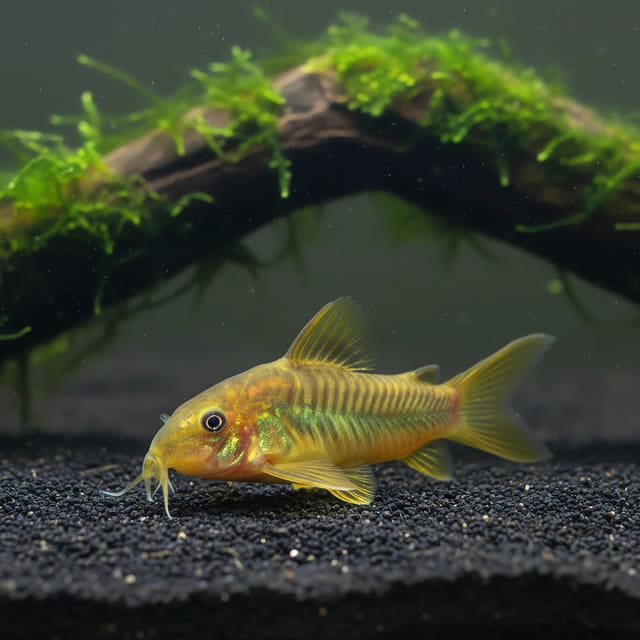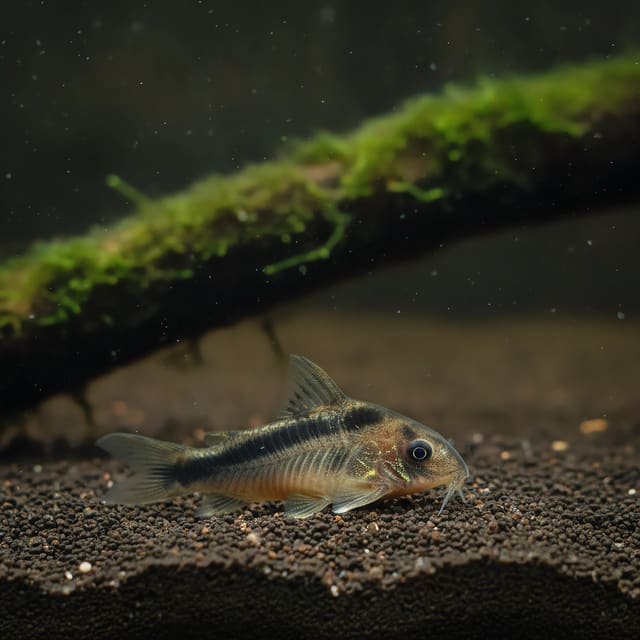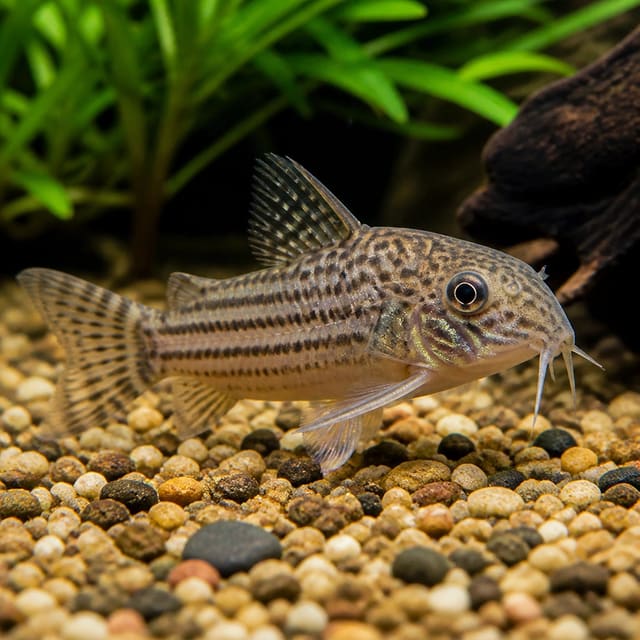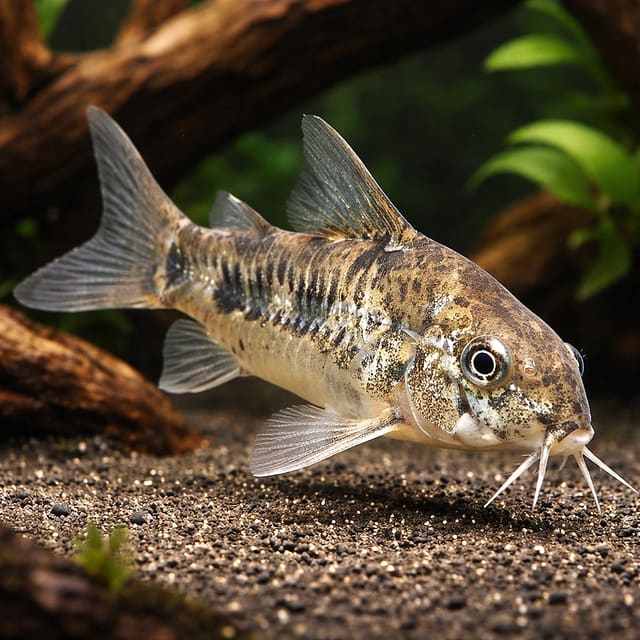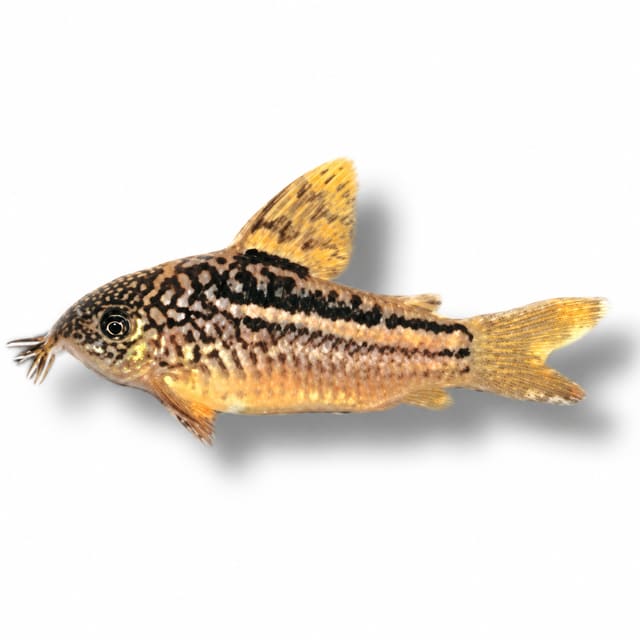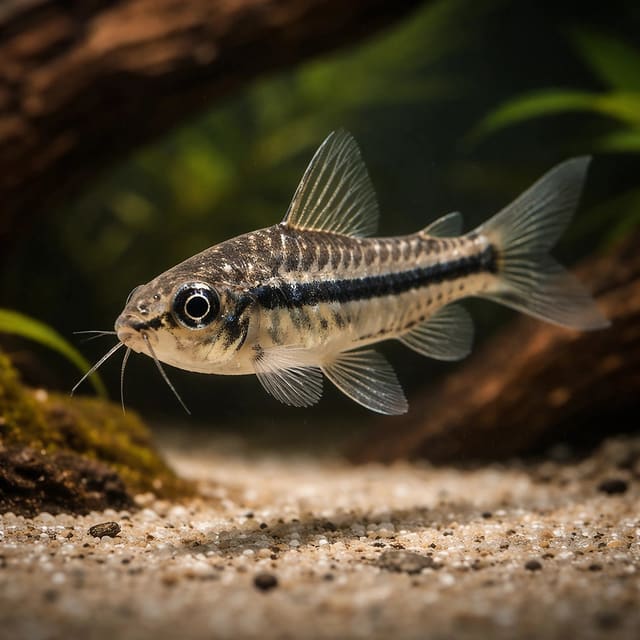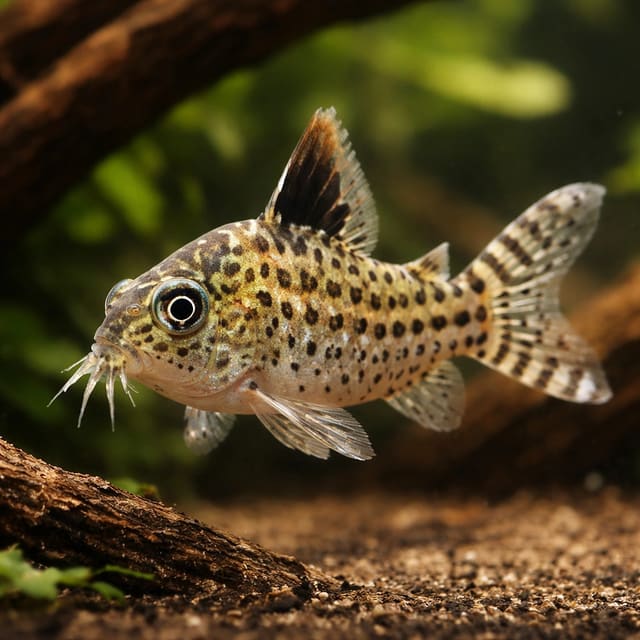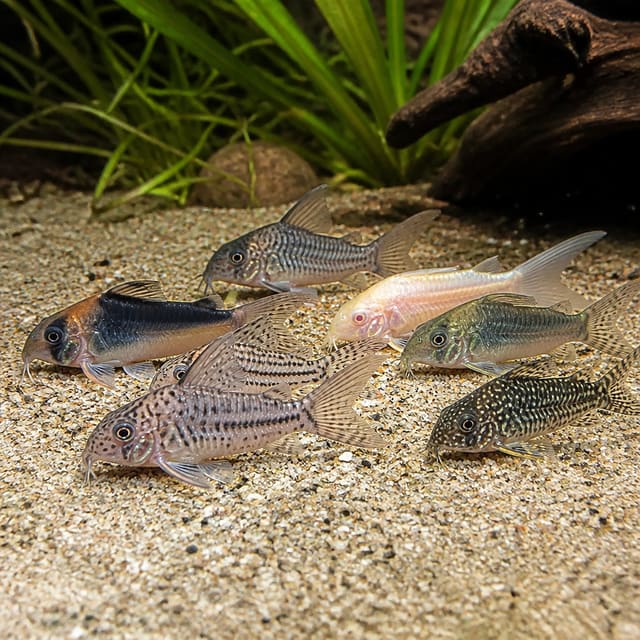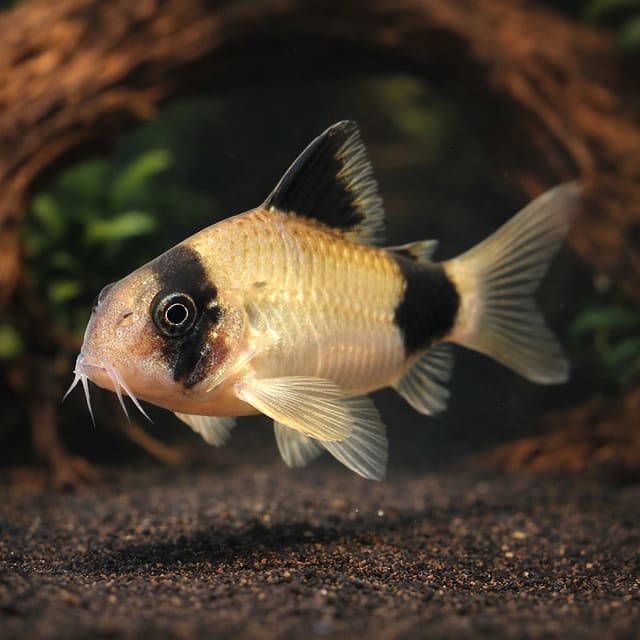
Panda Cory Catfish (Corydoras panda)
22–25°C · pH 6–7.4
From £8.69Some sizes on sale

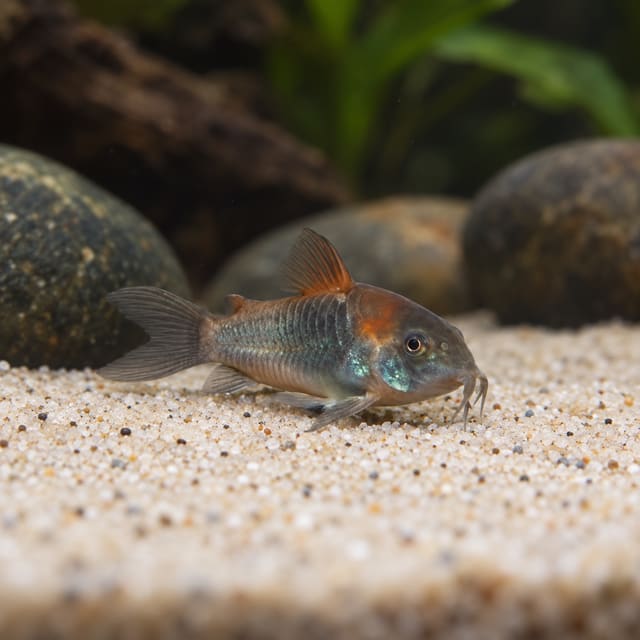
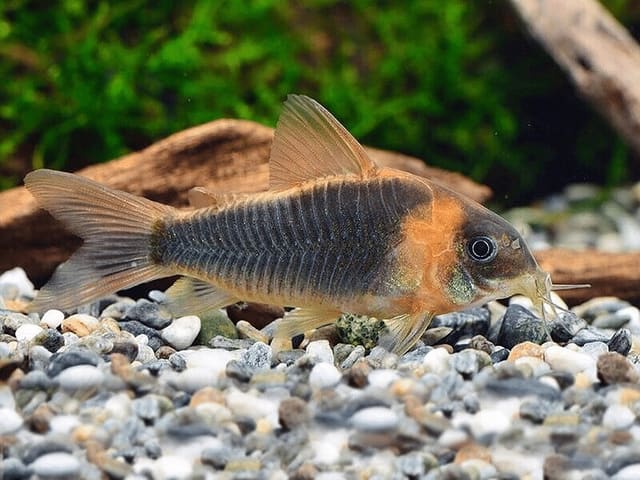
Adolfo’s Cory is a peaceful, social Rio Negro catfish with a warm orange nape, dark dorsal band and busy bottom-foraging behaviour. One purchase supplies one fish in the selected dispatch size; it should join a proper group in a mature aquarium with fine sand, cover, gentle flow and deliberately offered sinking food.
Corydoras adolfoi
Shoaling fish: kept in a group they feel safer, stay calmer and show their best colour.
Adolfo’s Cory is a peaceful, social Rio Negro catfish with a warm orange nape, dark dorsal band and busy bottom-foraging behaviour. One purchase supplies one fish in the selected dispatch size; it should join a proper group in a mature aquarium with fine sand, cover, gentle flow and deliberately offered sinking food.
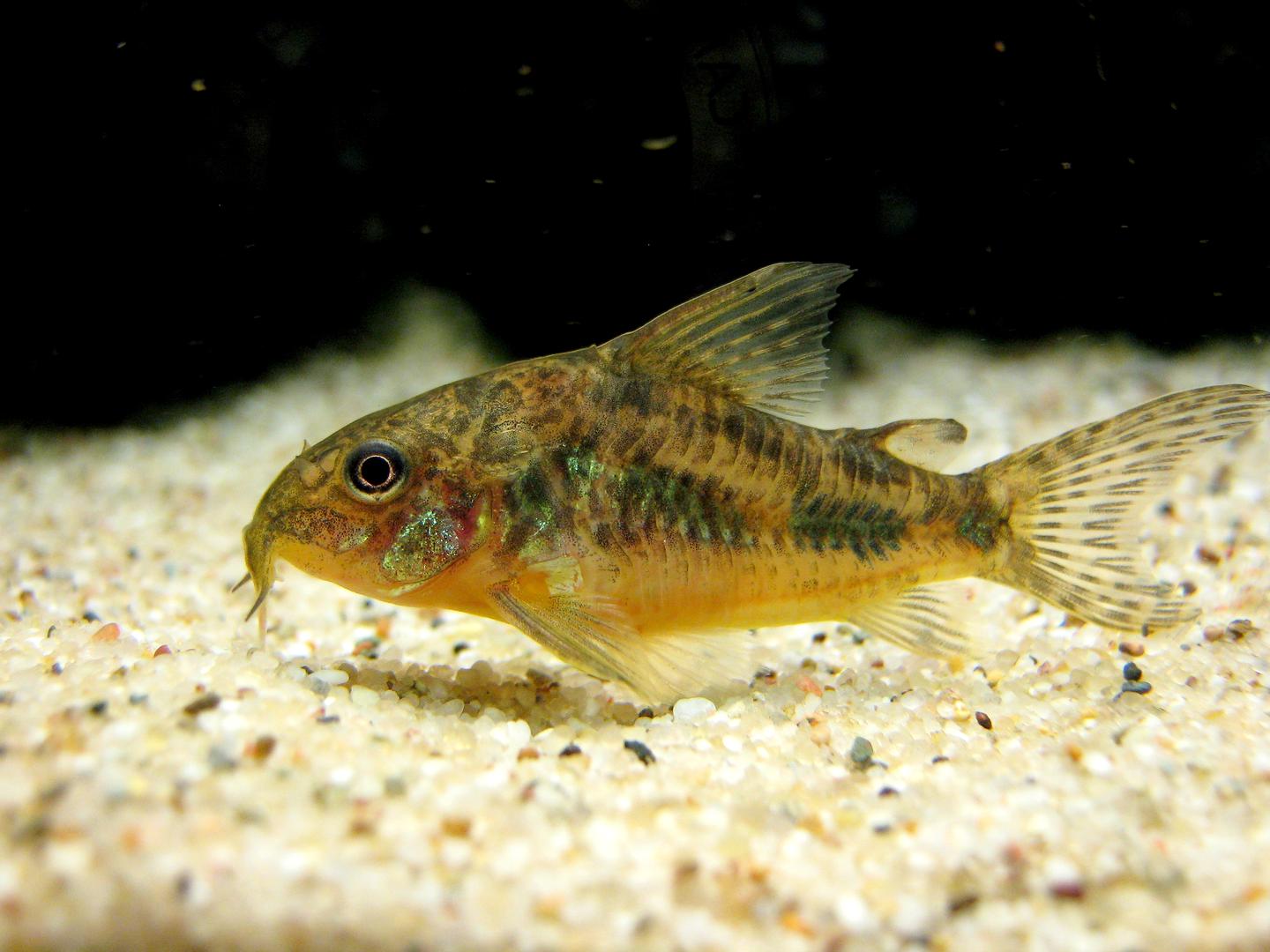
Identify the exact cory catfish before choosing care. Our starting policy for many common medium species is six compatible conspecifics, a mature 60 x 30 cm aquarium of about 60 litres, smooth fine sand and measured species-appropriate water.
Maintain these water conditions for optimal health and vibrant colors
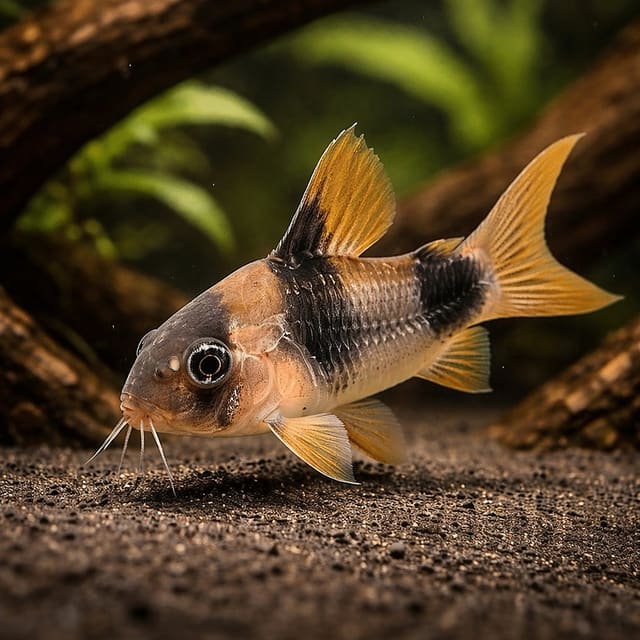
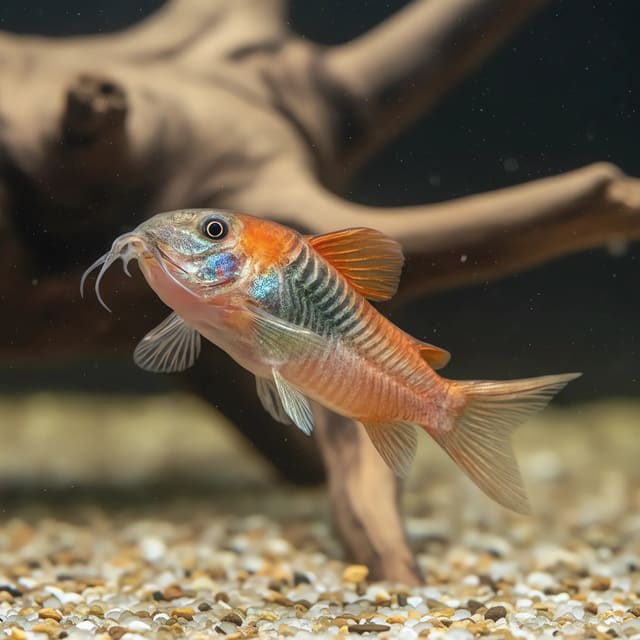
Adolfo’s Cory is a small, peaceful armoured catfish from the Rio Negro basin of Brazil. Its pale body, dark eye mask and oblique dorsal band are set off by a warm orange patch across the nape, giving it a distinctive appearance without the scale or aggression of a centrepiece fish. It spends much of its time close to the bottom, searching through the substrate and moving between open feeding ground and shaded cover. The character of this fish is social rather than solitary: a settled group will often forage together, rest beneath wood or broad leaves, and become noticeably bolder at feeding time.
The trade identity for this offer is Corydoras adolfoi, which is therefore retained in the customer title. FishBase lists the accepted name as Hoplisoma adolfoi and treats Corydoras adolfoi as a synonym. Both names refer to the same fish here; the familiar trade name is not being silently replaced. This is useful context when comparing modern references, because a care page may appear under either genus.
One purchase supplies one live fish in the size selected. The recurring dispatch grades are 1.5–2 cm, 2.5–3 cm and over 4 cm. Those are supply sizes, not adult-size claims; the live selector shows which size can be chosen for an order. The size you select is the size supplied, not the adult size. FishBase records a maximum of 5.7 cm standard length for a male or unsexed fish, while the species profile at Seriously Fish records 60 mm standard length. Standard length excludes the tail, so neither record should be compared directly with an unlabelled total-length figure.
Sex is guaranteed only when the selected option explicitly states male or female. This Adolfo’s Cory listing has no sex-guaranteed option.
Mature females may tend to become broader and larger than males, particularly when carrying eggs, but that general difference is not a reliable promise about a juvenile or an individual from this listing. Choose this fish for its species, size grade and social behaviour, not for an assumed sex or pair bond.
Adolfo’s Cory suits a keeper who can provide a mature filtered aquarium, a genuine group, soft clean substrate and regular sinking meals. Seriously Fish gives species-level aquarium guidance of 20–26°C, pH 4.0–7.0 and 1–5 dGH. FishBase separately records wild environmental values of 22–26°C, pH 6.0–8.0 and 2–25 dH; those wild records describe a different scope and are not being blended into a made-up compromise. For day-to-day aquarium planning on this page, the species husbandry range is the more directly applicable guide.
Its peaceful nature makes it a candidate for a carefully matched community, but “bottom feeder” does not mean cleaner or maintenance substitute. Adolfo’s Cory must receive enough food in its own right, and its group needs safe access to the bottom without competition from forceful tank mates. It will not solve algae, uneaten-food or waste problems. A cycled filter, testing, water changes and sensible feeding remain essential.
| Suits | Think again if |
|---|---|
| A mature, filtered aquarium with a long footprint and clean fine sand | The aquarium is newly filled, uncycled or has sharp, dirty gravel |
| A planned group of at least four to six with several feeding points | The intention is to keep one fish as a cleaner or rely on leftovers |
| Stable species-level guidance of 20–26°C, pH 4.0–7.0 and 1–5 dGH | Existing livestock requires hard alkaline water or much warmer conditions |
| Calm companions that leave small bottom fish safe access to food | Large predators, aggressive bottom dwellers or relentless feeders dominate the tank |
This is a good match for a keeper who enjoys watching subtle social behaviour and is willing to test the water rather than choosing fish by appearance alone. It is a poor shortcut for algae control. The most rewarding display is a settled group moving between shaded cover and open sand, each fish feeding confidently without being chased or crowded.
If you are comparing the different shapes and markings available, the Corydoras collection is the most useful starting point. Compare adult size, group needs, temperature and water chemistry before choosing by pattern alone.
Gallery images have been digitally enhanced to improve image quality. Natural colour, pattern, size and maturity can vary between live animals.
Seriously Fish describes this species as peaceful and gregarious and recommends a group of at least four to six individuals. In practice, planning for the upper end of that minimum gives the fish more opportunities to express normal group movement and reduces the pressure placed on a lone individual. A mixed collection of unrelated bottom fish should not be treated as an automatic substitute for a proper group of Adolfo’s Cory. Add the group only when the filter can support the additional feeding and waste load.
OATA’s broad freshwater-catfish guidance recommends at least 80 litres for a shoal of smaller Corydoras-type catfish. That is a group-level planning figure rather than a species-specific laboratory limit, so footprint, stocking and filtration still matter. A long aquarium with open bottom area is more useful than a tall narrow aquarium of the same nominal volume. Larger quarters make it easier to provide feeding space, cover and stable water while keeping a real group.
Prepare the aquarium before the fish arrives. The store’s first tropical tank guide explains maturation and safe stocking in a practical sequence. A newly filled aquarium is not mature merely because the water looks clear. Beneficial bacteria in the biological filter must be established and capable of processing the ammonia produced by fish and food.
For routine aquarium husbandry, use the species profile from Seriously Fish: 20–26°C, pH 4.0–7.0 and hardness of 1–5 dGH. Keep the aquarium inside a stable portion of that range rather than repeatedly adjusting it from one edge to the other. Sudden change is more stressful than a steady value that is appropriate for the fish. Measure the tap water and the mature aquarium before purchase so that acclimation is not being used to bridge a large long-term mismatch.
FishBase records the species in wild environments at 22–26°C, pH 6.0–8.0 and 2–25 dH. Those data help describe recorded habitat conditions; they are not the same thing as a routine aquarium optimum. The temperature overlap between the species husbandry range and the wild environmental record is genuinely 22–26°C, but the wider pH and hardness figures have different purposes and should remain labelled rather than collapsed into one apparently precise recommendation.
Use the aquarium water-parameter guide to understand ammonia, nitrite, nitrate, pH and hardness, then compare actual test results with the stated husbandry range using the water parameter matcher. Ammonia and nitrite should remain at zero. OATA’s broad guidance recommends that nitrate should not rise more than 20 mg/l above the normal level in the source tap water.
A biological filter is essential. The RSPCA explains that fish release toxic ammonia, which established filter bacteria convert first to nitrite and then to the less toxic nitrate. Choose a filter that offers reliable biological capacity without turning the entire bottom into a high-velocity channel. Seriously Fish notes that gentle filtration, including an air-powered sponge filter, can be adequate, while some water movement is acceptable. Position the outlet so there are both oxygenated areas and calmer places to rest.
Because Corydoras can take occasional gulps of atmospheric air, a quick dash to the surface is not automatically a crisis. Repeated surface visits, laboured breathing, unusual stillness or loss of appetite deserve attention, however. Test water first, check temperature and filter operation, and look for a recent change in stocking or feeding. Air-breathing ability does not make the fish immune to poor water quality or low oxygen.
OATA recommends testing at least weekly and making a weekly partial water change of about 25% as broad catfish guidance. Treat replacement tap water for chlorine or chloramine and match its temperature closely. When filter media needs attention, do not run it under the tap; rinse it lightly in removed aquarium water so the biological colony is protected. Siphon exposed waste, but do not sterilise the whole aquarium or disturb every refuge at once.
Seriously Fish recommends fine sand, with smooth rounded gravel as an alternative only when it is kept scrupulously clean. Sand allows natural sifting and reduces the risk created by sharp, dirty material around the mouth and barbels. Avoid jagged gravel and deep pockets where food can rot unseen. Leave a generous clear feeding area so every member of the group can reach sinking food.
Combine that open area with secure cover. Driftwood branches, broad-leaved plants and patches of dried leaf litter create shade and boundaries. Seriously Fish notes that decomposing leaves can support microbial colonies which are useful to fry and release tannins associated with blackwater-style conditions. Use aquarium-safe botanicals, add them gradually, and continue testing rather than assuming brown water is automatically suitable water.
Lighting can be chosen around the plants, provided the fish has shade. Floating plants, overhanging wood and broad leaves help break up harsh light. Do not crowd the whole bottom with caves and ornaments: this species needs a route through the tank and space to forage as well as places to withdraw. Make sure no decoration can trap a small catfish and that wood or stones cannot shift during maintenance.
Seriously Fish describes Corydoras as foraging omnivores which accept sinking dried foods plus small live and frozen foods such as bloodworm and Tubifex. Build a varied diet around an appropriate quality sinking pellet or granule, then rotate modest portions of suitable frozen or live food. Place food where the group can find it after upper-water fish have eaten, and watch to confirm that the smallest fish is not continually excluded.
Do not rely on leftovers. A Cory may spend much of the day searching, but searching behaviour is not proof that enough suitable food reaches it. Nor should algae wafers be assumed to make it an algae specialist. Judge portions by body condition, feeding response and what remains after the group has had time to eat. Remove persistent excess before it breaks down.
OATA’s broad catfish sheet recommends feeding only what can be consumed within a few minutes, generally once daily for this group, while the species profile stresses variety rather than a rigid schedule. Adapt the amount to the number and size of fish, the food format and competition in the aquarium. Small dispatch-grade fish need appropriately sized particles and careful observation; larger pellets that disappear into cracks are not a successful meal.
Have the group plan, water tests and quarantine arrangements ready before ordering. Read the current delivery and Live Arrival Guarantee instructions before the parcel is due. Give the fish quiet access to cover. Match the receiving aquarium to the long-term husbandry range; do not use a short acclimation period as a substitute for suitable water. Feed lightly at first and check that each animal is moving normally and can reach the bottom without harassment.
During the first days, focus on breathing, posture, intact barbels and fins, response to food and interaction with the group. Colour may change with lighting, background, maturity and stress, so colour alone is not a health diagnosis. If behaviour changes, test the aquarium and review recent additions before reaching for medication. Treatment should follow a clear problem, and any product must be checked for its suitability for the fish and every other inhabitant.
FishBase records 5.7 cm standard length for a male or unsexed fish. Seriously Fish gives 60 mm standard length. Both use standard length, which measures to the base of the tail and excludes the tail fin. They are close species-level records, but neither means that every individual will be exactly that size. The dispatch grades on this listing describe the fish when supplied; growth depends on individual development and long-term care.
Because the largest dispatch grade is written as over 4 cm, it has no fixed upper bound within the selector label. Do not interpret it as an adult-size promise or as evidence that the animal has finished growing. Choose an aquarium for the adult record and the needs of the whole group, not merely for the smallest dispatch grade.
A settled group may alternate between active foraging and quiet rests beneath leaves or wood. Individuals can make brief trips to the surface because the species is a facultative air-breather, as recorded by FishBase. That ability is part of its biology, not permission to neglect aeration or filtration. Look at the pattern of behaviour: an occasional purposeful dash followed by normal activity differs from repeated gasping, loss of balance or every fish crowding the surface.
At feeding time, count the fish and watch how food is shared. A bold individual can look healthy while a shy group member steadily loses condition. Scatter suitable sinking food across more than one open area, then observe from a distance. If one fish remains hidden, check whether a tank mate controls the route to food, whether the lights are too abrupt, and whether the cover offers an exit as well as an entrance.
Barbels should be watched closely because they help the fish search the bottom. Worn or shortened barbels are a reason to review substrate texture, trapped debris and water quality. Do not assume all bottom resting is disease, but compare any change with the fish’s established routine. OATA’s general warning signs include abnormal swimming, changed breathing, reduced feeding, fin or scale damage and an unexpected shift in colour or body condition.
The smallest grade needs the same adult-oriented plan as a larger fish, with extra attention to food particle size and filter safety. Cover strong intakes with an appropriate guard or sponge, check gaps around equipment and make sure the animal cannot become trapped behind unstable decor. Small fish can disappear visually in a heavily furnished aquarium, so complete a quiet head count during feeding rather than dismantling the layout each day.
Move fish with care. Corydoras possess fin spines, and OATA advises caution when handling catfish. Avoid chasing one around a bare container or lifting it unnecessarily. If transfer is required, use equipment suitable for the fish’s size and keep the route short. Never hold the animal to inspect or determine sex; the listing does not guarantee sex, and mature body-shape tendencies are not a safe sorting method for an individual offered here.
This rhythm is more valuable than chasing a perfect-looking aquarium with sudden large interventions. Stable care protects the filter bacteria, keeps the substrate usable and lets changes in behaviour stand out early. When a result shifts, change one factor thoughtfully and retest instead of adding multiple remedies at once.
Start with the adult group and the aquarium’s established capacity, then choose a dispatch size that makes sense for that plan. Three recurring grades define the offer, while the live selector shows what can be chosen for an order. A one-fish purchase is not a ready-made shoal. Work out how many Adolfo’s Cory the aquarium can support, how many are already present and whether the new arrival can be fed safely alongside them.
When adding to an established group, compare size and behaviour rather than assuming the same name guarantees an effortless introduction. A very small arrival may need finer food and protection from a strong intake, while a larger established fish may reach food first. Arrange several feeding points and watch the entire group. If the aquarium contains a different Corydoras species, keep the social needs of both species in mind rather than counting every catfish as interchangeable.
A separate mature observation aquarium can help protect the display and let a new fish feed without competition. It should match the required water chemistry and have a cycled filter and secure cover; a bare, unstable container is not a welfare improvement. Use dedicated equipment where practical and observe appetite, breathing, posture and waste. If treatment becomes necessary, identify the problem and check the product carefully instead of dosing the main aquarium on suspicion.
Adolfo’s Cory depends on the combination of social security, suitable chemistry, clean substrate, reliable filtration and direct feeding. Improving only one element cannot compensate indefinitely for another that is missing. Extra food will not correct bullying, a larger filter will not make sharp dirty gravel safe, and a low pH reading does not prove that the aquarium is stable or mature.
Keep a simple record of test results, water changes, additions and unusual behaviour. Trends are often more informative than a single snapshot. If nitrate rises faster than before, for example, review feeding, stocking and maintenance together. If the group becomes timid after a new tank mate arrives, investigate the interaction instead of merely adding more cover. Calm, consistent observation is one of the most useful tools in fishkeeping.
Adolfo’s Cory is peaceful, but compatibility still depends on the whole aquarium. Seriously Fish describes the species as peaceful and gregarious. Suitable companions are calm community fish that share 20–26°C, pH 4.0–7.0 and 1–5 dGH, do not treat a small catfish as prey and do not monopolise sinking food. This is a set of conditions, not a universal list of named species.
Mid-water fish can be a good behavioural match when they are similarly peaceful and comfortable in the same water. Check their adult size, activity, social number and feeding style before purchase. A fish sold as “community” may still be unsuitable if it needs much harder water, grows large enough to swallow a Cory, or becomes territorial across the bottom.
Be cautious with other bottom dwellers. Several peaceful species can still compete at the same feeding sites, and a forceful loach or territorial cichlid may leave the Cory group hiding or underfed. Provide more than one feeding area, observe after lights change, and make sure every Cory maintains good body condition. More floor space helps, but it does not cure an incompatible temperament.
A companion species does not replace the Adolfo’s Cory group. Maintain at least four to six of this species as advised by Seriously Fish, then calculate the aquarium’s capacity for any additional fish. If a mixed Corydoras display is planned, give each social species enough of its own kind rather than assembling one or two of several types for visual variety.
Do not assume that a male and female will be supplied or that two fish will form a breeding pair. No sex is guaranteed in this offer. If eggs appear in a community, other fish may eat them, and defending a breeding area can change local behaviour. Breeding is a separate project from simply keeping a healthy social group.
Shrimp and other very small invertebrates need a separate risk assessment. This is an omnivorous forager and should not be treated as guaranteed safe with tiny young. Larger invertebrates must also share the water range and be compatible with any treatments used in the aquarium.
If all five checks work together, Adolfo’s Cory can bring gentle movement to the lower level of a mature community. If any one fails, choosing a different species or a separate aquarium is kinder than hoping the fish will adapt.
FishBase records up to 5.7 cm standard length for a male or unsexed fish, while Seriously Fish records 60 mm standard length. Standard length excludes the tail fin. The size chosen here is the dispatch size, not the adult size, and individual growth can vary.
OATA’s broad freshwater-catfish guidance recommends at least 80 litres for a shoal of smaller species such as Corydoras. Treat that as a group-level planning figure, then favour a long footprint with open sand, cover and enough filtration for the whole group and any companions.
Seriously Fish recommends at least four to six because the species is peaceful and gregarious. Plan for the upper end of that minimum where possible, and do not expect unrelated bottom fish to replace a proper group of its own kind.
It can suit a prepared keeper, but this store rates the species intermediate because it needs a mature aquarium, a real group, deliberately supplied sinking food and stable soft-water husbandry. It is a poor choice for an uncycled tank or as a single “cleaner” fish.
It is a foraging omnivore. Offer a quality sinking pellet or granule and rotate small live or frozen foods such as bloodworm or Tubifex. Make sure food reaches every fish; it must not be expected to survive on leftovers or control algae.
Seriously Fish gives species-level aquarium guidance of 20–26°C, pH 4.0–7.0 and 1–5 dGH. FishBase’s separate wild environmental record is 22–26°C, pH 6.0–8.0 and 2–25 dH. Keep those scopes distinct and prioritise stable, tested aquarium conditions.
Seriously Fish describes the species as peaceful and gregarious. It is not known as a fin-nipping fish, but it can still be stressed or excluded by aggressive tank mates. Provide a group, cover and clear access to sinking food.
Choose calm community fish that share its species-level water range, are too small-mouthed to prey on it and do not dominate the bottom. Avoid large predators, aggressive bottom dwellers, persistent nippers and hard-water specialists. Check each proposed species rather than relying on a generic community label.
Tropical Fish Co hand-packs the fish with oxygen in an insulated box and uses a licensed live-animal courier, with a heat pack when weather calls for one. Be present for the confirmed delivery and inspect the parcel that day. A continuous unboxing video from the sealed parcel to the fish still in its bag is required only as evidence if you need to make a Live Arrival Guarantee claim.
Adult length, dispatch size and wild environmental values remain separately labelled so they are not mistaken for one another.
No reviews for this item yet. Bought one? Honest reviews only, good or bad.
What customers say about ordering from us
I have a small group of long finned mountain minnows. So was delighted to be able to order ten of this variety to increase the genetics in my tank . The ones I recieved are healthy but it’s to early to give a verdict on wether they are of a long finned type since they are small currently.
Gordon Walker · 23 Sept 2026
100% success travel and "installation". Pleased with quality of purchase. The Siamese fighter a bit "shy" so have not yet seen him at his best yet but looking good. Happy customer. GG
George E Garratt · 21 Sept 2026
Reviews of our shop, collected by Judge.me, an independent third-party review collector. Newest first.