3 × Peppered Corydoras (Corydoras paleatus)
22–23°C · pH 6–7 · 70L
£10.99

The 10 × Black Corydoras (Corydoras sp. Black Venezuela) pack contains freshwater armoured catfish from the South American genus Corydoras. Keep all ten together; OATA’s freshwater-catfish guidance gives 22–27°C, pH 6.0–8.0 and 4–18°dH. Sold as one pack of ten live fish.
Corydoras sp. Black Venezuela
The 10 × Black Corydoras (Corydoras sp. Black Venezuela) pack contains freshwater armoured catfish from the South American genus Corydoras. Keep all ten together; OATA’s freshwater-catfish guidance gives 22–27°C, pH 6.0–8.0 and 4–18°dH. Sold as one pack of ten live fish.
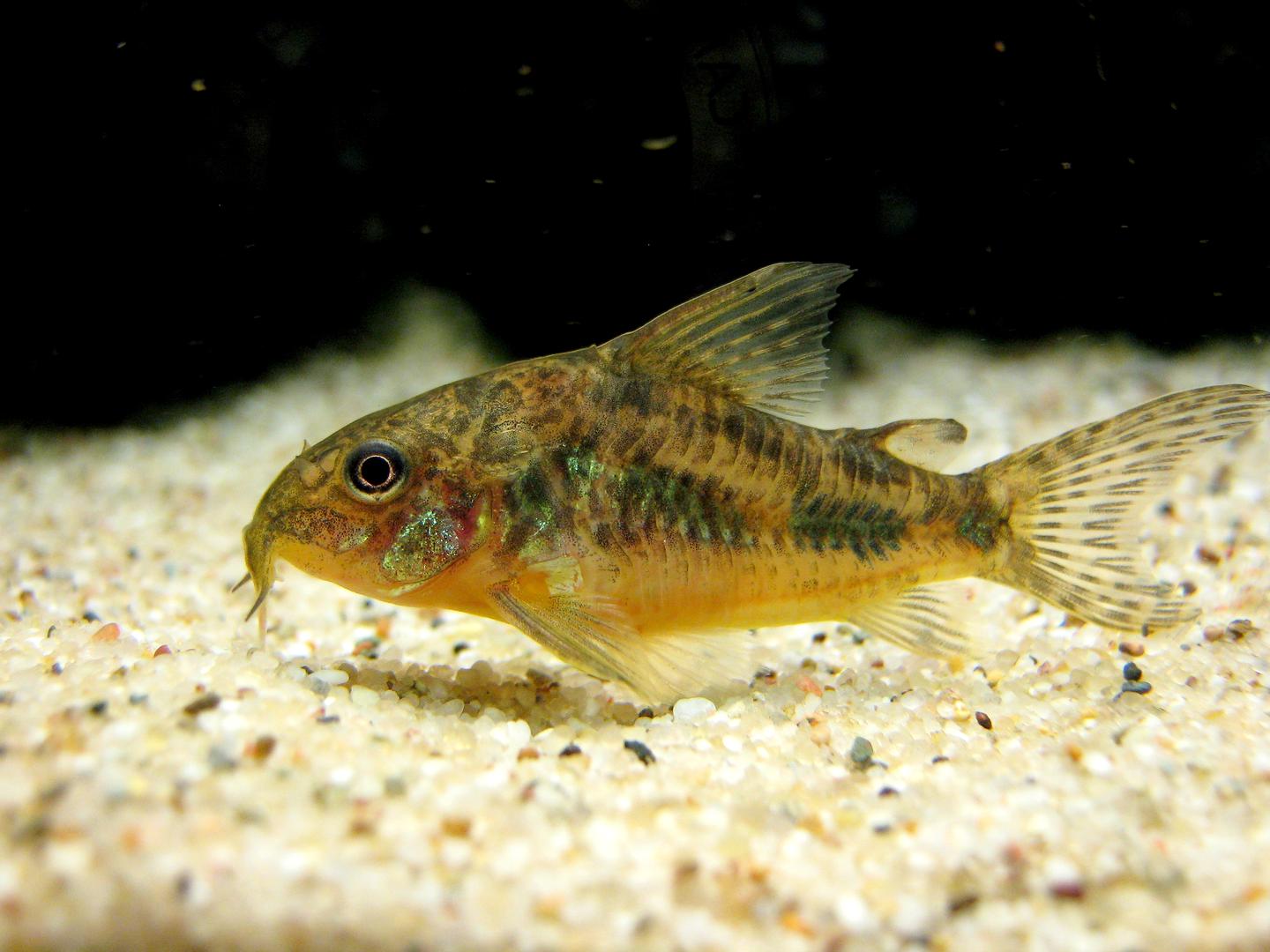
Identify the exact cory catfish before choosing care. Our starting policy for many common medium species is six compatible conspecifics, a mature 60 x 30 cm aquarium of about 60 litres, smooth fine sand and measured species-appropriate water.
Maintain these water conditions for optimal health and vibrant colors
The 10 × Black Corydoras (Corydoras sp. Black Venezuela) pack contains freshwater armoured catfish belonging to the family Callichthyidae. WoRMS places Corydoras in Callichthyidae, while the Black Venezuela wording is the aquarium trade label attached to this unidentified form. It suits a keeper prepared to maintain a mature, filtered freshwater aquarium, preserve a shoal of ten and monitor water quality every week.
The Corydoras genus occurs across much of South America, from east of the Andes towards the Atlantic coast and from Trinidad south to the Río de la Plata drainage in northern Argentina. That broad genus distribution should not be read as a precise collection locality for this aquarium form. Its identity remains at genus level, so aquarium planning should be conservative rather than based on the dimensions or habitat of one named species.
Keep the group at 22–27°C, pH 6.0–8.0 and 4–18°dH, with ammonia and nitrite at zero. OATA’s freshwater-catfish sheet sets those values as broad group guidance, not a species-specific optimum. It also recommends at least 80 litres for a shoal of smaller Corydoras and much larger aquariums for bigger catfish. Because this trade form is identified only to genus, choose an aquarium larger than 80 litres rather than treating the smaller-species benchmark as the final limit.
| Suits | Not suited to |
|---|---|
| A mature, filtered freshwater aquarium | An unfiltered or biologically immature aquarium |
| A plan that keeps all ten fish together | Solitary keeping or a group below five |
| Weekly testing and water changes | Water with detectable ammonia or nitrite |
| A community assessed as a complete stocking plan | A purchase based on an assumed species identity or fixed adult length |
One purchase supplies one pack of ten live Black Corydoras. The quantity in the title is the purchase unit, so plan filtration, aquarium capacity and the existing fish population for all ten animals before ordering. OATA advises increasing aquarium populations slowly because the beneficial bacteria in a mature filter must respond whenever fish numbers and feeding increase. Prepare the aquarium for the complete pack and avoid adding other substantial groups at the same time.
The exact species has not been identified, so the care advice here follows the genus Corydoras and its care group. The label Corydoras sp. Black Venezuela should therefore stay intact when you compare care plans; replacing “sp.” with the name of a particular species could attach the wrong adult length or environmental range to these fish. Use the water and group instructions on this page as the practical plan for this offer.
Sex is guaranteed only when the selected option explicitly states male or female. This 10 × Black Corydoras listing has no sex-guaranteed option. Do not use colour, apparent body shape or the gallery to assign sex to the fish in the pack.
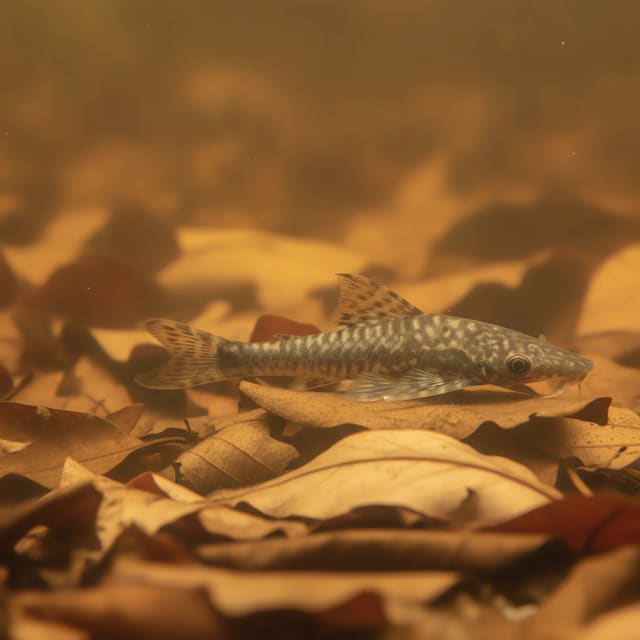
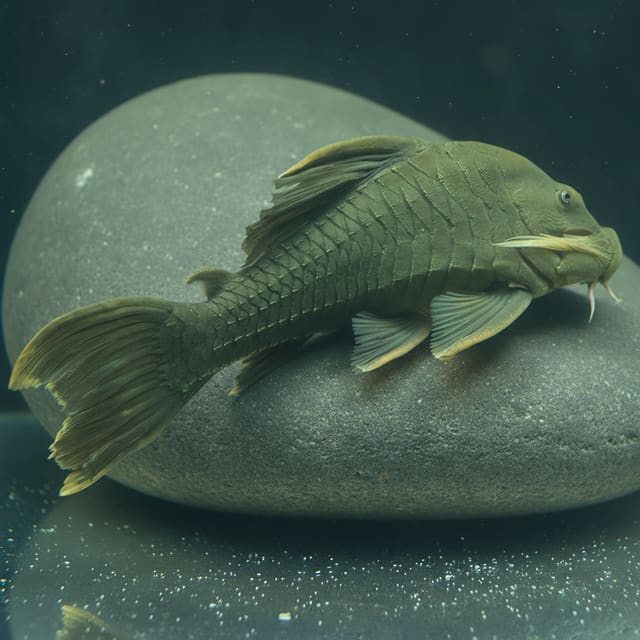
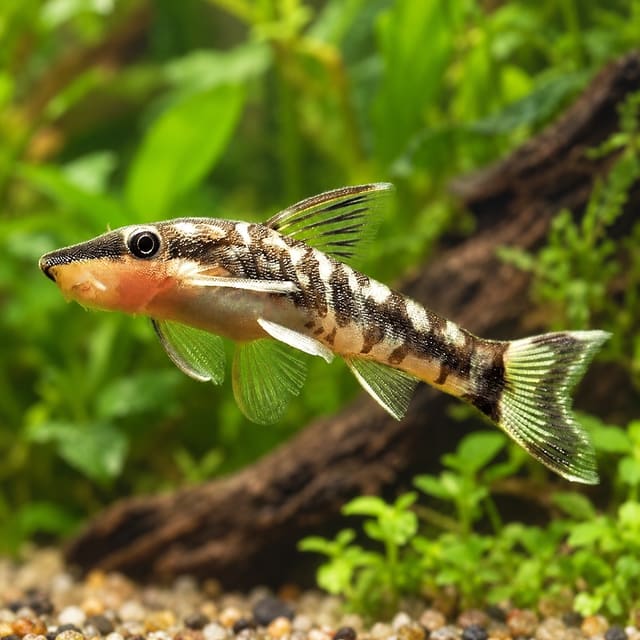
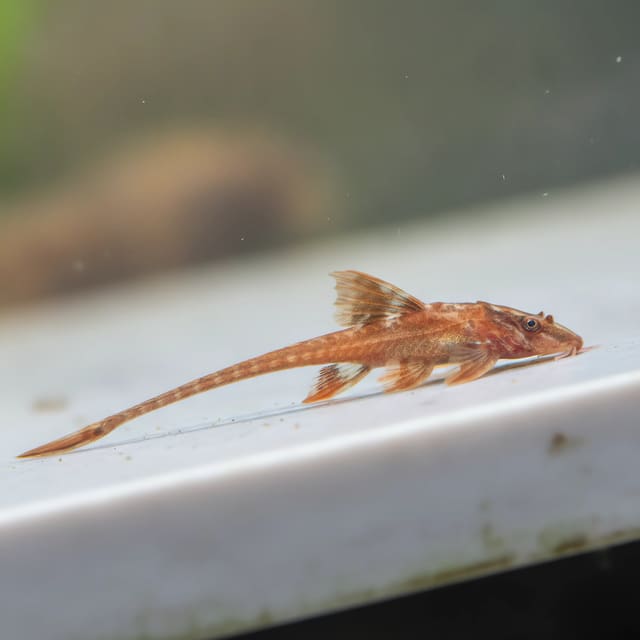
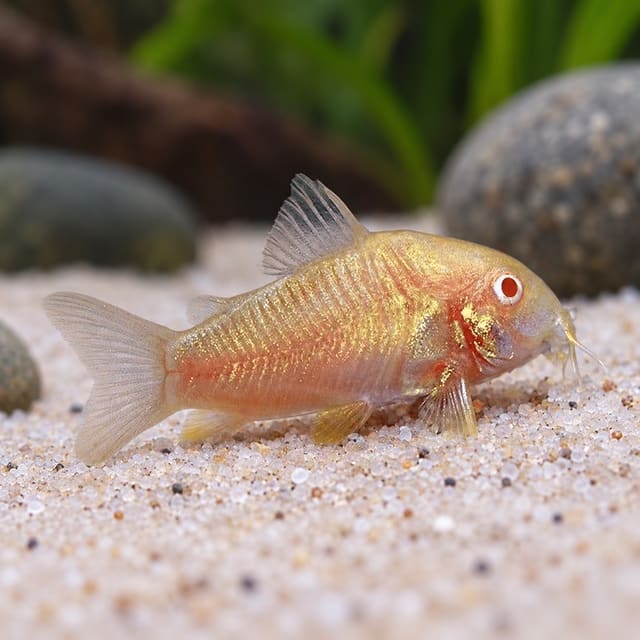
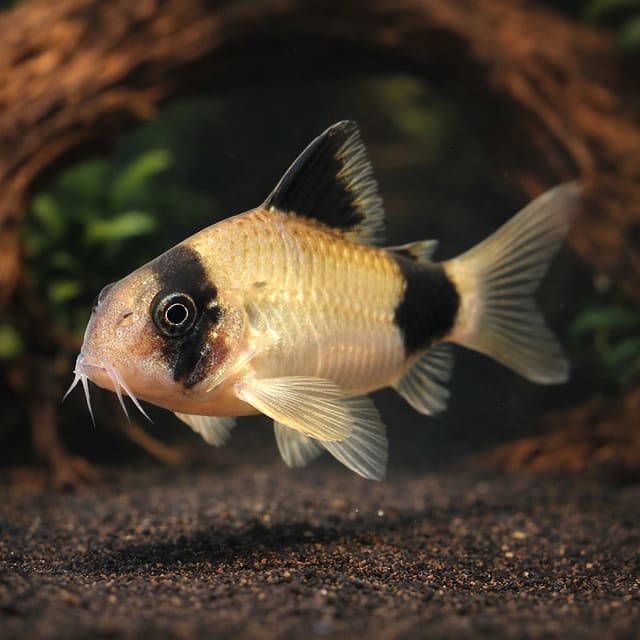
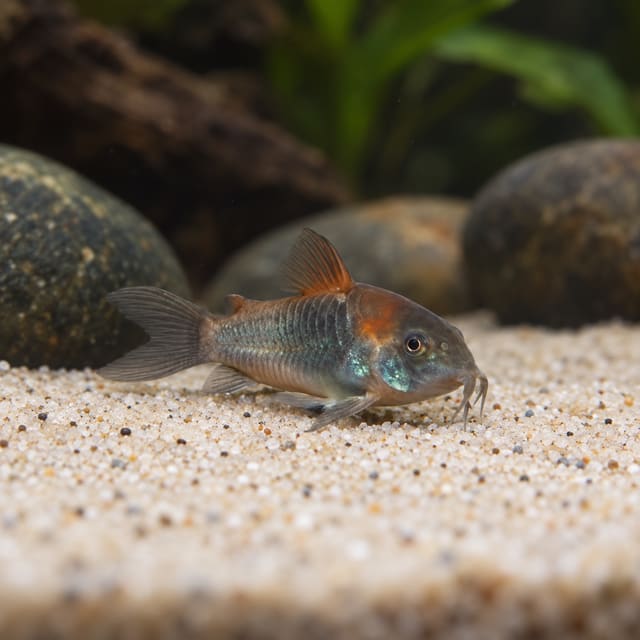
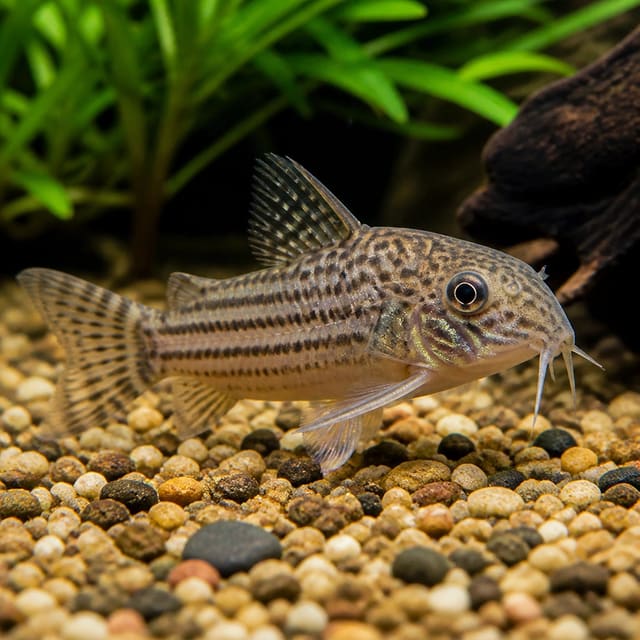
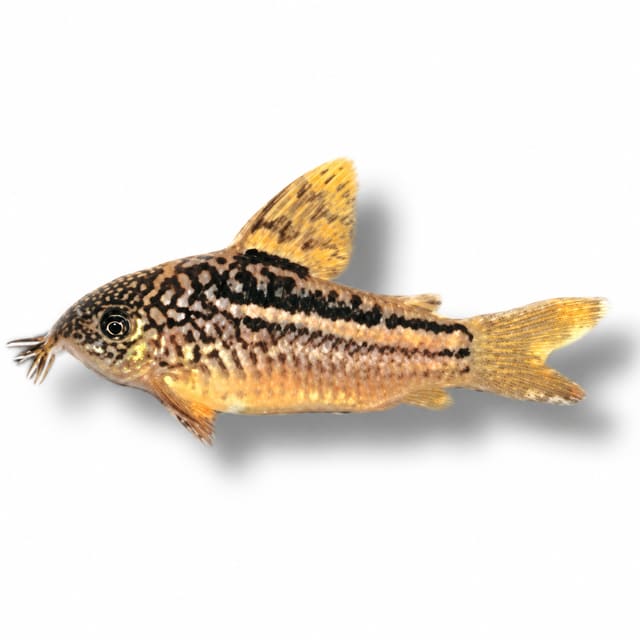
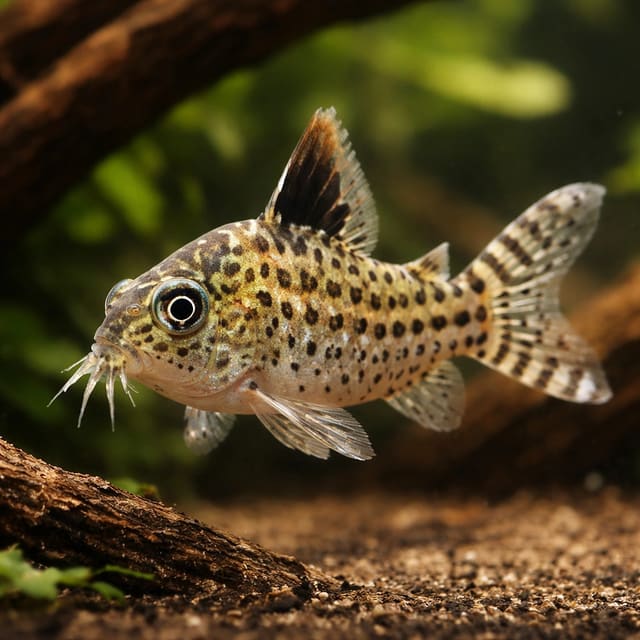
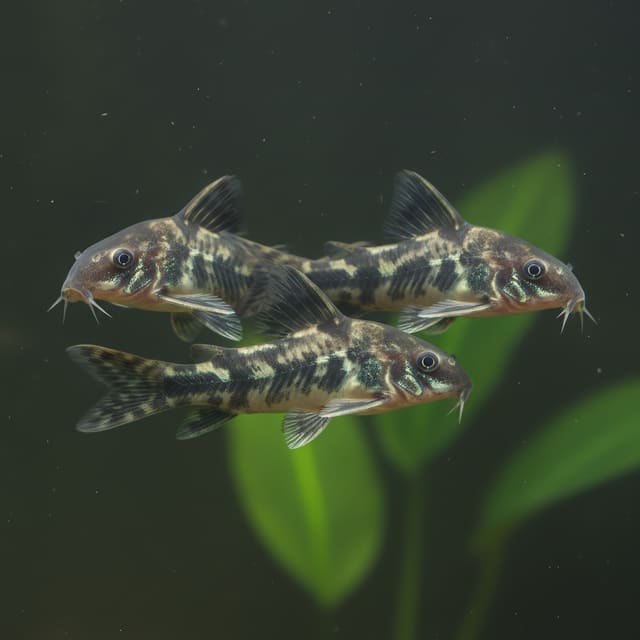
The gallery images are representative of this type of animal rather than photographs of the exact animal supplied, so colours can look slightly different from the live animal. Seven fish are visible in the gallery scene, but the purchase unit remains the ten-fish pack stated in the title. Use the written offer quantity rather than counting fish in a representative scene.
Keep temperature at 22–27°C, pH at 6.0–8.0 and general hardness at 4–18°dH. OATA also places carbonate hardness at 3–15°dKH. Choose stable targets within those ranges and avoid repeatedly moving between their extremes. A measured routine gives you a clear baseline, making later changes in water chemistry or fish condition easier to recognise.
Ammonia must be zero mg per litre and nitrite must be zero mg per litre. Both values indicate whether the biological filter is processing fish waste effectively. Test before the pack is introduced, then continue testing at least weekly. A newly increased fish population creates more waste and demands more from the filter bacteria, so do not assume that an established aquarium will remain stable without measurement.
Keep nitrate to no more than 20 mg per litre above the normal level in your tap water. This is a relative limit rather than a universal absolute number. For example, if conditioned tap water measures 10 mg per litre nitrate, the aquarium should not exceed 30 mg per litre under that guidance. If the tap baseline changes, recalculate the limit from the new reading.
Our aquarium water chemistry guide explains what the main tests measure. Once you have results, use the water matcher to compare them with the stated ranges. Make adjustments gradually and verify the result with another test instead of relying on the amount of product added.
Use an aquarium larger than 80 litres for this ten-fish pack. OATA recommends at least 80 litres for a shoal of smaller Corydoras, while larger catfish need much more space. The Black Venezuela trade form is identified only as Corydoras sp., so the safer decision is to move above the smaller-species threshold and assess the complete stocking plan rather than treating 80 litres as a universal answer.
A larger aquarium also makes temperature and water quality more stable. That matters when ten fish are introduced together because feeding and waste production rise at the same time. Aquarium volume must be considered alongside the existing population and filter capacity; an apparently spacious aquarium can still be overstocked when it already holds a substantial community.
Include live plants where practical, particularly when creating cover for smaller or shy fish. OATA also notes that many catfish appreciate shelters made from wood, pots or caves. Arrange cover securely and leave enough open water for the whole group to move between shelters. Check that decorations do not trap fish and that you can still reach the aquarium during routine cleaning.
| Planning question | Decision for this pack |
|---|---|
| Can I use the 80-litre figure? | Treat it only as the smaller-Corydoras benchmark and choose a larger aquarium. |
| Can the fish be divided? | Keep all ten together; fish kept singly or in groups that are too small will often become stressed. |
| Does empty volume settle capacity? | No. Include existing fish, filtration and the waste created by feeding. |
| Should cover be included? | Yes. Plants, wood, pots and caves can provide sheltered areas. |
Plan the aquarium before the fish arrive. If this is your first setup, follow our first tropical aquarium guide through preparation and maturation before livestock is introduced. Do not use the delivery day as the point at which filtration, heating or water chemistry is first tested.
Run a well-established biological filter continuously. The RSPCA explains that aquarium filters are vital because fish release toxic ammonia; beneficial bacteria convert it to nitrite and then to the safer nitrate. OATA likewise treats a filter as essential in every catfish aquarium. The practical test of that system is zero ammonia and zero nitrite, not simply that water is moving.
A pack of ten increases the fish population and daily feeding together. Beneficial bacterial populations need time to respond to that extra waste. Mature the aquarium before introduction, confirm zero ammonia and nitrite, and avoid adding other sizeable groups at the same time. Continue testing after introduction so a developing rise is found before it becomes a health problem.
Filter capacity and aquarium volume work together. A larger aquarium generally gives more stable environmental conditions, but it still requires a working filter. Conversely, a powerful filter does not make crowding harmless. Assess the number of existing fish, the complete ten-fish pack and the planned feeding level as one system.
Treat replacement tap water with a suitable conditioner before it enters the aquarium. The conditioner removes harmful chlorine or chloramine that could affect fish and filter bacteria. Keep the filter-maintenance method consistent so a routine clean does not create the instability the filter is meant to prevent.
Feed an appropriate sinking food made for omnivorous catfish once a day. OATA describes Corydoras as omnivorous and warns that catfish should not be expected to live as scavengers. Food must reach the fish directly and meet their nutritional needs; leftovers from other aquarium residents are not a feeding plan.
Offer only what the group can eat within a few minutes. Watch all ten fish during that period rather than judging the portion by what disappears from the surface. Sinking food should reach the part of the aquarium where the Corydoras can find it, while the amount should remain small enough to prevent a persistent accumulation of uneaten material.
If food remains after the normal feeding window, reduce the next portion. Excess food breaks down and releases waste into the water, adding pressure to the biological filter and increasing the risk of ammonia or nitrite problems. The correct amount is therefore the portion the group consumes promptly while water-test results remain stable.
| What you observe | What to do |
|---|---|
| Food is eaten within a few minutes | Keep the portion steady and continue observing the whole group. |
| Food remains after feeding | Reduce the next portion and check for waste during maintenance. |
| Some fish do not reach food | Distribute the sinking food so it is accessible to the shoal. |
| Interest in food falls | Test water quality and check for other changes in condition. |
Keep the once-daily schedule consistent enough to make changes in appetite noticeable. Reduced intake or a lack of interest in food can be an early health warning. Pair feeding observations with weekly water tests, because appetite and water quality should be assessed together rather than treating food refusal as a diagnosis.
Change 25% of the aquarium water at least once every week. OATA recommends this frequency and proportion together: the water change is 25%, and it takes place at least weekly. Use a siphon during the change to remove solid waste from the gravel, then replace the removed water with conditioned water.
A fixed sequence reduces the chance that testing, conditioner or filter checks are missed. Recording results also separates a gradual change from a one-off reading. If ammonia or nitrite appears, treat the result as a water-quality warning and review recent changes in stocking, feeding and filter operation.
Do not run filter media under the tap. Chlorine or chloramine may kill the beneficial bacterial population established in the media. Lightly rinsing the media in water removed from the aquarium reduces bacterial loss while clearing material that obstructs flow.
Maintenance should preserve stable conditions rather than making the aquarium look newly reset each week. Avoid combining unnecessary disruption with a new livestock introduction. The weekly 25% change, routine testing and careful filter check provide a repeatable foundation for the ten-fish group without stripping away the mature biological system on which it depends.
Prepare the aquarium and testing equipment before the parcel arrives. Tropical Fish Co packs live fish in pure oxygen inside an insulated box, with a heat pack when the weather calls for it. Be present to receive the parcel because live fish must not be left unattended.
Read the full delivery and Live Arrival Guarantee policy before the delivery date. The video must begin with the sealed parcel and continue through opening to the fish still inside the sealed bag; do not begin recording after the parcel has already been opened.
OATA advises confirming suitable water quality before any fish are introduced. Test ammonia and nitrite and proceed only when both are zero. Confirm that temperature, pH and hardness sit within the stated catfish ranges, and make sure the filter is operating normally. These aquarium checks should be completed before the bag is opened rather than during the acclimatisation period.
The pack adds ten fish to the biological load at the same time. Avoid adding other substantial groups alongside it, and continue testing after introduction while the filter bacteria adjust to the increased waste and feeding. A mature aquarium reduces risk, but measurements remain necessary after the fish enter the system.
Observe the group every day and learn its normal pattern before using a change as a warning sign. OATA recommends watching swimming, colour, temperament, breathing, appearance, body condition and feeding. Looking across several signs is more useful than focusing on one momentary movement.
When you see a concerning change, test ammonia and nitrite first and confirm the temperature. Review the most recent water-change result, feeding amount and filter operation. This sequence checks the immediate environmental factors covered by routine care without guessing at a disease or treatment.
Healthy fish should have clear, bright eyes, undamaged fins, intact external covering, appropriate swimming behaviour and a steady interest in food. Compare the whole shoal: a change affecting several fish at the same time makes an aquarium check especially urgent.
If abnormal behaviour or appearance continues after the water checks, contact us for further guidance. Keep the test results and a concise description of the change ready. Do not start a disease treatment solely from a general symptom, because similar outward signs can accompany different problems.
Keep the ten Black Corydoras together and assess any community as a complete stocking plan. OATA identifies Corydoras as shoaling fish that should be kept in groups of at least five; fish kept singly or in groups that are too small often become stressed. This pack already exceeds that group threshold, so preserve it as one shoal.
OATA also describes Corydoras as excellent additions to community aquariums, but catfish vary greatly in compatibility. Apply the community guidance to Corydoras rather than assuming every catfish has the same temperament. Some other catfish can be extremely predatory, and the suitability of one group says nothing about an unrelated species.
Compatibility is not settled by a shared temperature alone. Aquarium capacity, total stocking and filtration still have to support every fish. Likewise, an aquarium that is physically large enough is not ready if ammonia or nitrite is detectable.
The genus-level trade identity does not justify a universal tank-mate list. Contact us with the aquarium volume, measured water values and complete resident list for a stocking and compatibility assessment. This keeps the decision tied to the actual aquarium rather than to a generic claim about one companion.
The group requirement and the aquarium-capacity requirement solve different problems. Keeping at least five addresses the stress associated with solitary keeping or an undersized Corydoras group. Providing enough aquarium capacity addresses environmental stability, filtration and total stocking. Meeting one condition does not replace the other.
| Decision | Rule to apply |
|---|---|
| Number of Black Corydoras | Keep the complete pack of ten together. |
| Starting aquarium benchmark | Choose larger than 80 litres for this genus-level form. |
| Water compatibility | Use 22–27°C, pH 6.0–8.0 and 4–18°dH. |
| Filter readiness | Ammonia and nitrite must both be zero. |
| Community introduction | Increase the wider fish population slowly. |
If the aquarium cannot support ten additional fish, splitting them into isolated or undersized groups is not the answer. Choose an aquarium and stocking plan that can keep the whole shoal while maintaining water quality. OATA warns that Corydoras kept singly or in groups that are too small often become stressed.
Black Venezuela identifies the aquarium form, while Corydoras sp. shows that it has not been assigned a species name here. Make community decisions from the group requirement, water range, aquarium capacity and actual resident list. Do not attach a named species’ temperament, adult length or companion list to this pack.
After introduction, observe whether swimming, hiding, breathing, colour or feeding changes. If several fish change together, test the aquarium promptly. Community planning continues after release through observation and water testing; it is not finished merely because the fish shared broad water values before purchase.
The 10 × Black Corydoras trade form is identified as Corydoras sp., so do not assign it the adult length of a named species. Plan conservatively around a larger aquarium and the fish’s full growth rather than its appearance on arrival.
Use an aquarium larger than 80 litres. OATA recommends at least 80 litres for a shoal of smaller Corydoras and much larger aquariums for bigger catfish; this genus-level form should not be limited to the smaller-species benchmark.
Keep the complete 10 × Black Corydoras pack together. OATA says Corydoras should be kept in groups of at least five because solitary fish and groups that are too small often become stressed.
They suit a keeper who can prepare a mature, filtered aquarium, keep all ten together, test water weekly and maintain zero ammonia and nitrite. No simple experience label replaces those requirements.
Feed an appropriate sinking food for omnivorous catfish once a day. OATA advises offering only what they can eat within a few minutes and not relying on scraps left by other fish.
OATA’s freshwater-catfish guidance gives 22–27°C, pH 6.0–8.0 and general hardness of 4–18°dH. Keep ammonia and nitrite at zero and avoid abrupt changes between the ends of those ranges.
OATA regards Corydoras as excellent additions to community aquariums. Screen the complete community for aquarium capacity, compatible water requirements and total stocking rather than assigning a universal temperament claim to an unidentified trade form.
OATA supports Corydoras in community aquariums but does not create a universal companion list. Keep the ten together and assess every proposed community using aquarium volume, water values, filtration and the complete resident population.
Start filming the sealed parcel before opening it, continue in one take until the fish are visible inside the sealed bag, then float the bag for 20–30 minutes before release. Fish are packed in pure oxygen inside an insulated box, with a heat pack when weather calls for it.
No reviews for this item yet. Bought one? Honest reviews only, good or bad.
What customers say about ordering from us
I have a small group of long finned mountain minnows. So was delighted to be able to order ten of this variety to increase the genetics in my tank . The ones I recieved are healthy but it’s to early to give a verdict on wether they are of a long finned type since they are small currently.
Gordon Walker · 23 Sept 2026
100% success travel and "installation". Pleased with quality of purchase. The Siamese fighter a bit "shy" so have not yet seen him at his best yet but looking good. Happy customer. GG
George E Garratt · 21 Sept 2026
Reviews of our shop, collected by Judge.me, an independent third-party review collector. Newest first.