−10%
Easy
Bronze Corydoras, Bronze Cory Catfish (Corydoras aeneus)
22–26°C · pH 6–7.5 · 60L
£3.59£3.99

Smudge Spot Cory (Corydoras similis) is a peaceful, social armoured catfish for a mature aquarium with sand, stable water and a group of at least six. One purchase supplies one live fish in the selected 2.5–3 cm or 3–3.5 cm size choice; the selected size is the dispatch size, not the adult size.
Corydoras similis
Shoaling fish: kept in a group they feel safer, stay calmer and show their best colour.
Smudge Spot Cory (Corydoras similis) is a peaceful, social armoured catfish for a mature aquarium with sand, stable water and a group of at least six. One purchase supplies one live fish in the selected 2.5–3 cm or 3–3.5 cm size choice; the selected size is the dispatch size, not the adult size.
Maintain these water conditions for optimal health and vibrant colors
Smudge Spot Cory is the familiar aquarium name used here for Corydoras similis, a small South American armoured catfish from the Madeira River basin. Current FishBase taxonomy lists the accepted name as Hoplisoma simile and treats Corydoras similis as a synonym. Keeping both names together makes the identity clear for customers who know the long-used trade name and for keepers checking current scientific references.
This is a social bottom-dwelling fish rather than a solitary clean-up worker. The species profile describes it as very peaceful and recommends a group of at least six, where the fish are more confident and active. A mature aquarium should provide a sand substrate, shaded cover, stable filtration, food that reaches the bottom and calm companions that share the same water requirements.
One purchase supplies one live fish in the size choice selected. The listed choices are 2.5–3 cm and 3–3.5 cm. The size you select is the size supplied, not the adult size. Both choices describe dispatch size only; they do not imply different sex, temperament or care requirements.
The strongest aquarium-planning length in the specialist profile is 60 mm standard length, or 6 cm SL. FishBase separately records 3.8 cm SL for a male or unsexed record. SL means standard length, measured to the base of the tail rather than including the tail fin. The two records have different contexts, so the 6 cm SL figure is the safer planning size for aquarium space. It must not be converted into an unlabelled total-length maximum.
| This fish suits | Plan carefully when |
|---|---|
| A keeper ready for a group of at least six | Only one or two fish can be accommodated |
| A mature aquarium with sand and stable filtration | The tank is new or has coarse, dirty substrate |
| A calm community with small peaceful companions | Large, aggressive or highly competitive fish dominate |
| Targeted sinking food and regular observation | The fish is expected to survive on leftovers |
Sex is guaranteed only when the selected option explicitly states male or female. This Smudge Spot Cory listing has no sex-guaranteed option. The specialist profile notes that mature females are often rounder and broader when viewed from above, especially when carrying eggs, but that general dimorphism cannot determine the sex of a fish sold through an unsexed size choice.
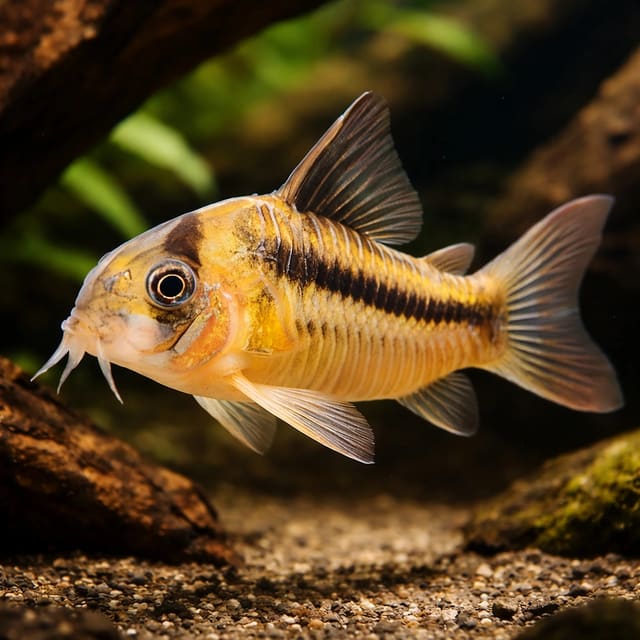
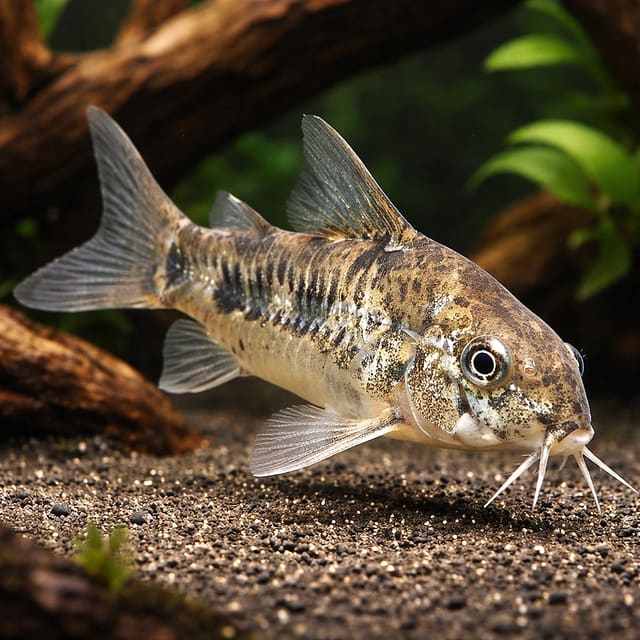
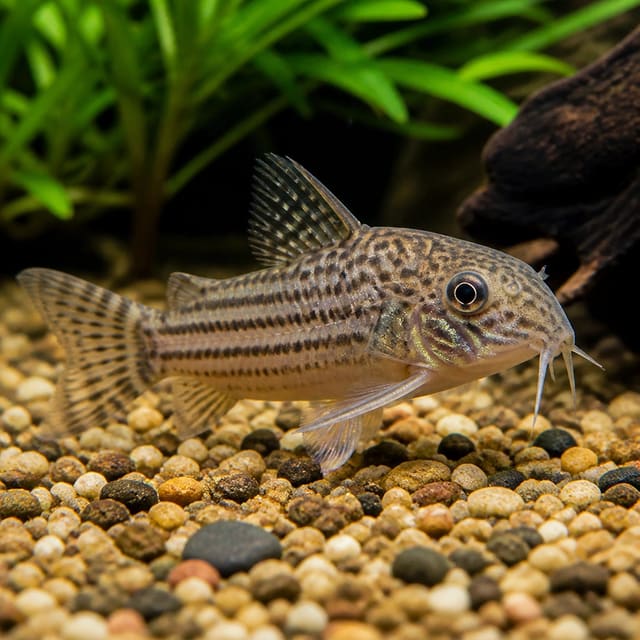
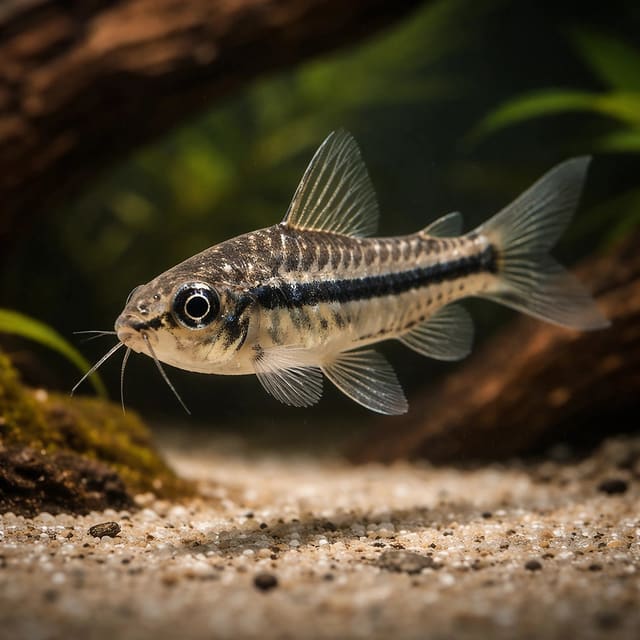
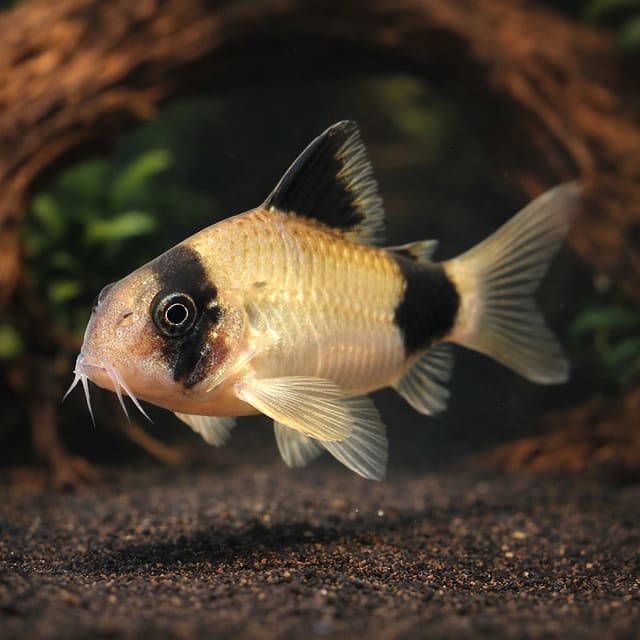
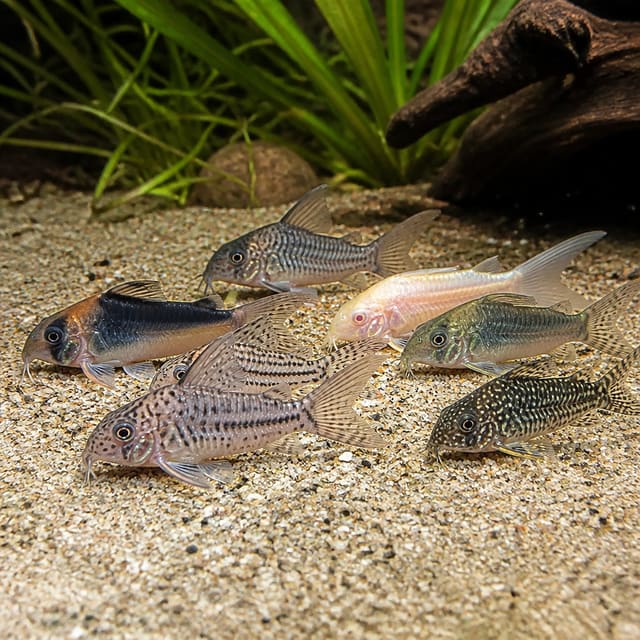
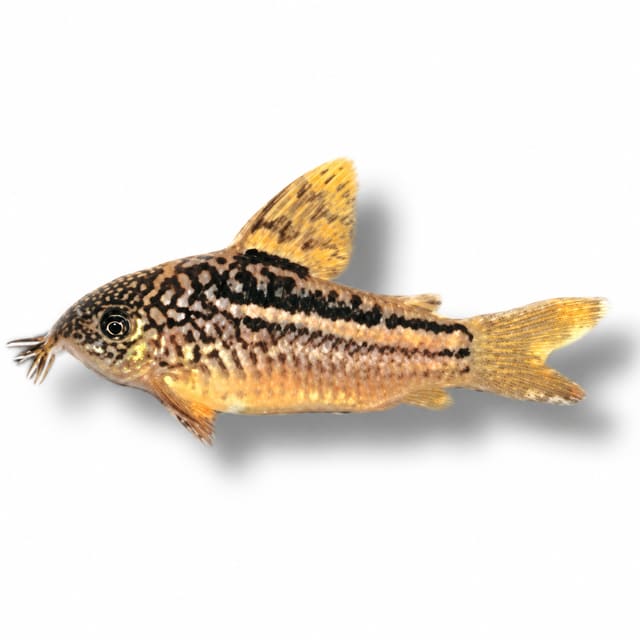
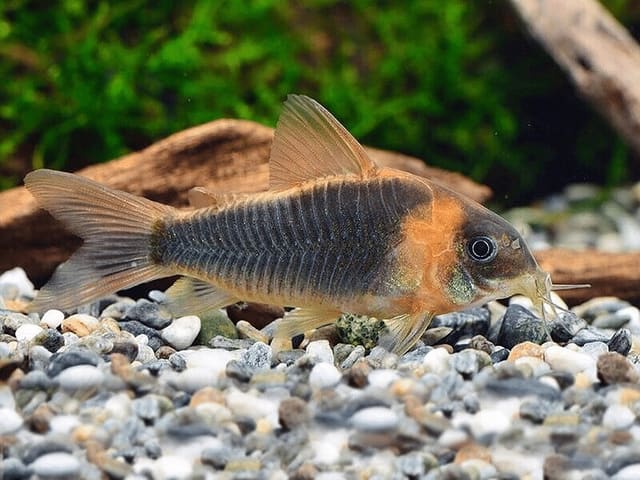
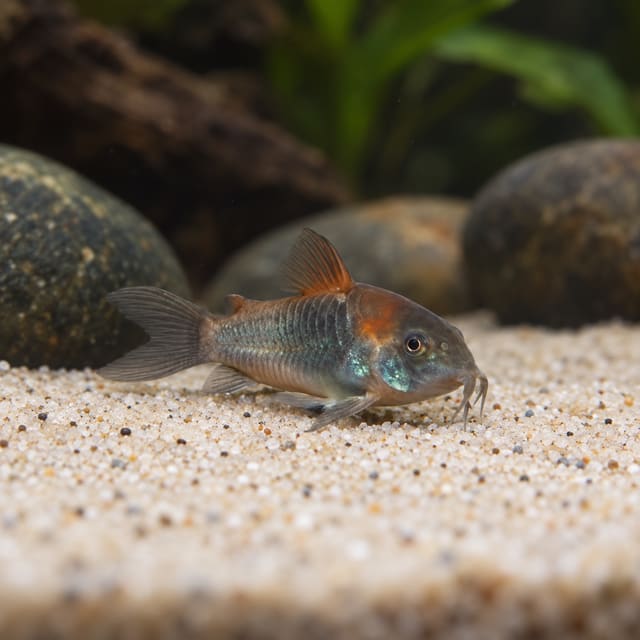
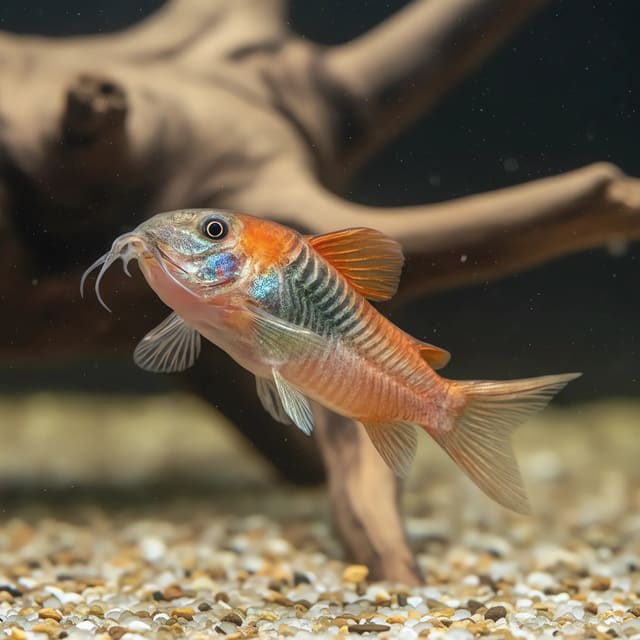
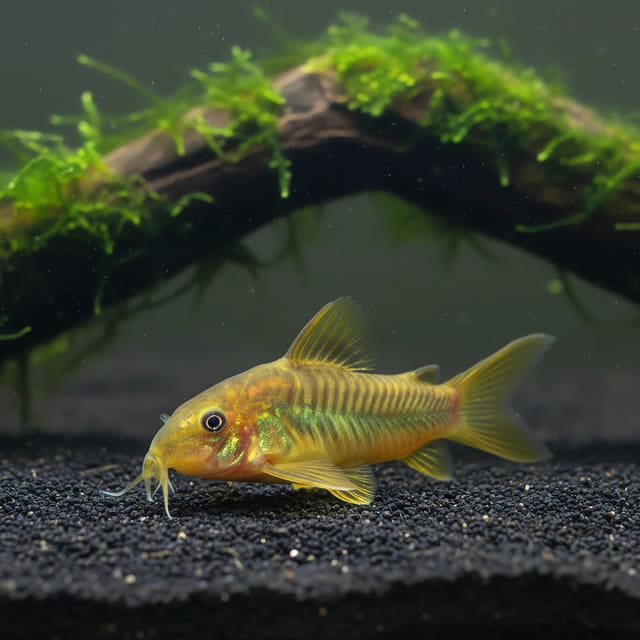
Gallery images have been digitally enhanced to improve image quality. Natural colour, pattern, size and maturity can vary between live animals. The four images show spotted-headed, dark-flanked cory forms in aquarium and plain-background views. Their provenance and exact-specimen relationship remain unknown. They are useful for showing visible shape and scene, while the product identity, selected size and unsexed offer define the purchase.
Expect a peaceful, group-oriented fish whose care depends on the whole bottom area, not just nominal litres. A 45 × 30 cm base and about 41 litres are described by the specialist species profile as enough for a small group. OATA’s broader UK catfish sheet recommends at least 80 litres for a shoal of smaller catfish such as Corydoras. The larger figure offers extra stability and community space; whichever aquarium is chosen, the footprint must accommodate the full group and accessible feeding areas.
The catfish and plecos collection lets you compare other bottom-dwelling fish, but a shared category never makes two species automatic tank mates. Compare adult size, group needs, water values, diet and temperament before combining them.
The product remains titled Smudge Spot Cory (Corydoras similis) because that is the established customer and supplier identity. FishBase now places the species under Hoplisoma simile in the family Callichthyidae. This is a taxonomy bridge, not a different animal. It lets a keeper find current reference material without silently changing the identity used for the live offer.
Length needs the same care. FishBase records a maximum of 3.8 cm SL for a male or unsexed record, while the specialist aquarium profile gives 60 mm SL. Neither number includes the tail fin. Sex, sample and measurement method affect how a record should be read. For practical aquarium planning, allow for 6 cm SL and choose the tank footprint, shelters and feeding pattern around a full group at that size.
The dispatch choices of 2.5–3 cm and 3–3.5 cm describe the fish at supply. A smaller arrival still needs the same adult plan. Avoid buying a larger number simply because juvenile fish look tiny in a spacious tank; the biological filter and bottom area must support the group as it grows. Equally, avoid confusing a larger dispatch choice with a different species, sex or guaranteed future size.
Smudge Spot Cory are facultative air breathers according to FishBase. Access to the surface should remain unobstructed, and an occasional purposeful rise can be part of their biology. Persistent rapid surfacing, altered breathing or unusual inactivity still deserves a water-quality check, because a natural ability to take air does not make poor oxygenation or toxic waste safe.
The specialist aquarium profile gives 21–27°C, pH 5.6–7.0 and 0–12°dGH for Corydoras similis. Those species-level aquarium values are the clearest routine care range in the provided material. FishBase gives a somewhat different environmental record of 22–26°C, pH 6.0–8.0 and 2–25°dH. Use the aquarium profile for the care plan while recognising that a field database and a husbandry profile answer different questions.
Aim for stability within the chosen range instead of repeatedly pushing water from one edge to another. Match the fish to water the keeper can maintain through ordinary water changes. If tap water is very different, plan a consistent method for preparing replacement water before the fish arrives. Sudden shifts in temperature, pH or dissolved minerals can be more disruptive than a steady value within an appropriate band.
Ammonia and nitrite should measure zero. OATA’s broader catfish guidance advises keeping nitrate no more than 20 mg/l above the normal tap-water level, testing at least weekly and changing about 25% of the water each week. Those maintenance figures are group guidance, but they provide a sensible routine alongside species-level temperature, pH and hardness values.
The aquarium water-parameters guide explains what the measurements mean. Use the water matcher to compare actual readings with the stated care range. Write down the result and look for trends; clear water alone cannot show whether dissolved ammonia, nitrite or nitrate is under control.
Maintain good oxygenation and uninterrupted filter flow. The fish may rise for air naturally, but that behaviour should not be used to dismiss a blocked filter, high temperature or deteriorating water quality. Check the whole pattern: frequency of surfacing, breathing rate, activity, feeding and test results.
The specialist profile describes a 45 × 30 × 30 cm aquarium, around 41 litres, as large enough for a small group. Treat the 45 × 30 cm base as important: Corydoras use the bottom, so a tall narrow aquarium with the same litres may provide less useful foraging and resting area. OATA’s broader recommendation of at least 80 litres for a shoal of smaller catfish gives more margin for a mixed community and more stable water.
Use a substrate of river sand. The species profile describes driftwood branches, twisted roots and dried leaves for an Amazon-style arrangement, with dimmer lighting and tannin-stained water, while also noting that the fish can do well in a more standard planted aquarium. Choose one coherent setup rather than combining decorative features without regard to cleaning, flow or access.
Build the bottom area around the group:
Dried leaves and wood can create a natural blackwater feel, but remove and replace old leaves before they rot and foul the water. Use only aquarium-safe materials. The specialist profile mentions fully dried, bark-free beech and oak leaves as examples; never collect from polluted, sprayed or uncertain sites.
A planted layout is also valid. Plants can provide shade and visual cover, while open sand remains available for the group. Position hardscape so each fish can move between feeding space and shelter without passing through a bottleneck controlled by a larger tank mate.
The first tropical aquarium guide covers cycling and preparation. Complete that work before the fish arrives. A filter running on a new tank is not automatically biologically mature; confirm stable zero-ammonia and zero-nitrite readings under a realistic bioload.
The specialist species profile recommends at least six Smudge Spot Cory, explaining that Corydoras are more confident and active with conspecifics. OATA’s broader catfish sheet says Corydoras should be kept in groups of at least five and that undersized groups will often become stressed. The species-level recommendation of six is the better target for this listing.
Build the group deliberately. If adding fish over more than one delivery, keep the end number and filter capacity in mind from the start. Quarantine and introduction arrangements should not leave an individual isolated for longer than necessary. At the same time, add livestock at a pace the mature filter can support and test after the bioload changes.
A group needs distributed resources. Provide more than one shaded resting area and spread sinking food across a wide enough patch for all fish to feed. Watch the smallest or least assertive individuals rather than assuming a peaceful species cannot experience competition. A fish that is repeatedly displaced may remain thin even when food is present in the aquarium.
Peaceful social behaviour is not the same as inactivity. The fish should have room to forage across the bottom, rest under cover and rise to the surface when needed. Sudden withdrawal, clamped fins, rapid breathing, repeated isolation or loss of appetite should prompt water tests and a review of group dynamics.
Sex is not guaranteed with this offer. Although mature females may appear broader from above, body condition, age and reproductive state can change shape. Do not buy a group expecting a particular sex ratio, pair bond or breeding result. Choose the fish for their social behaviour and care needs, with breeding treated as a separate advanced project.
The specialist profile describes this species as omnivorous and recommends a good-quality sinking pellet or tablet as the staple, supplemented with live or frozen foods such as Daphnia, Artemia and bloodworm. OATA likewise warns that catfish should receive appropriate sinking foods rather than being expected to survive as scavengers.
Offer food where the whole group can reach it. Split the portion across more than one point if a single tablet draws every fish into a tight contest. Watch food reach the bottom and confirm that each cory feeds. Midwater fish can intercept sinking granules, so the quantity placed in the tank is less important than the amount actually eaten by the target fish.
Use variety to complement a suitable staple, not to create a rich and erratic menu. Introduce a new frozen or live food in a sensible portion and remove leftovers. OATA’s general catfish guidance suggests feeding only what can be consumed within a few minutes, usually once a day, while noting that some grazing species may take longer. For this cory, direct observation of the group and water quality should guide the final routine.
Corydoras are not a substitute for gravel cleaning. Uneaten food, faeces and decaying material still need to be removed during maintenance. A rounded belly immediately after feeding is different from sustained healthy body condition; assess the fish over time and compare individuals within the group.
If one fish misses meals, check competition, mouth or barbel condition, breathing and water quality. Place a portion nearer its shelter while avoiding chronic overfeeding of the rest. Persistent weight loss, abnormal swelling or refusal to feed calls for informed aquatic-health advice rather than repeated treats.
The RSPCA aquarium environment guidance explains the biological filter’s job: beneficial bacteria convert toxic ammonia to nitrite and then to the safer nitrate. Run the filter continuously and keep water moving through mature media. A polished-looking aquarium can still have dangerous dissolved waste.
OATA recommends a weekly 25% partial water change for catfish as broad guidance. Treat replacement water for chlorine or chloramine, match temperature sensibly and add it without blasting the substrate or fish. Test before and after a change when diagnosing a problem, and avoid making several chemical adjustments at once.
When filter media needs attention, do not wash it under the tap. Rinse it lightly in water removed during the aquarium’s water change so chlorine or chloramine cannot damage the bacterial population. Clean only part at a time, clear blocked intakes and preserve enough mature media to keep the cycle stable.
Watch for a change from the group’s normal pattern: increased hiding, unusual restlessness, rapid or laboured breathing, colour change, damaged fins, white spots, abnormal growths, weight loss, swelling or reduced interest in food. These signs are prompts to test water and seek appropriate help, not diagnoses on their own.
Because catfish have spines, use care when handling or netting them. Avoid chasing the group around hardscape. Prepare the destination container first, move decor only when necessary and use equipment suited to an armoured catfish. Good preparation reduces both stress and the chance of a spine catching in unsuitable mesh.
Tropical Fish Co’s delivery policy says live animals are hand-packed in pure oxygen, placed in an insulated polystyrene box and supplied with a heat pack when weather calls for it. A licensed live-animal courier carries the parcel. Tracking and the confirmed Thursday or Friday delivery date are sent by email, and someone must be present to receive live fish.
Prepare the mature aquarium before the delivery day. The policy says to float the sealed bag for 20–30 minutes and acclimatise slowly before release. Follow the current arrival steps sent with the order, keep transport water out of the aquarium and allow the fish to settle before normal feeding begins.
For a Live Arrival Guarantee claim, the unboxing video is evidence for the claim rather than a care procedure. Record one continuous video beginning with the parcel still sealed and the outer box visible, then show the fish still inside the sealed bag. Contact Tropical Fish Co on the day of arrival with the order number; the policy identifies WhatsApp as the fastest route.
Read the full delivery and Live Arrival Guarantee policy before dispatch. Someone being available, opening and inspecting the parcel on arrival day and preserving the required evidence are part of the current terms.
Begin with a simple baseline: record temperature, pH, ammonia and nitrite, then note where the group rests and whether all six or more fish reach food. The aim is to learn this group’s normal pattern without repeatedly moving decor or changing the routine.
A single quiet fish may simply be resting, but repeated isolation, rapid breathing, clamped fins or missed meals deserves attention. Compare the individual with the group, test water and check whether another bottom dweller is controlling the feeding area. Correct one clear issue at a time so the effect can be observed.
Keep the routine steady through the first water change. Match replacement-water temperature, treat tap water and avoid a sudden current across the resting area. A short record of tests, food and behaviour creates a useful reference for future maintenance and makes gradual change easier to recognise.
The specialist profile describes Smudge Spot Cory as very peaceful and suitable for many community aquariums. It specifically advises against anything very large or aggressive and names small characins, cyprinids, anabantoids, dwarf cichlids and other peaceful catfish as examples of compatible kinds. These are categories to evaluate, not automatic approval for every species within them.
Compare adult size, temperature, pH, hardness, feeding speed and behaviour before adding any companion. A nominally peaceful fish can still dominate food or crowd the bottom. Active midwater fish may work well when they leave the substrate group undisturbed and food still reaches the corys.
| Usually worth considering | Avoid or use strong caution |
|---|---|
| Small peaceful characins and cyprinids with overlapping water needs | Large or aggressive fish |
| Suitable anabantoids and dwarf cichlids after species-level checks | Bottom dwellers that dominate every shelter or feeding point |
| Other peaceful catfish where footprint and food are sufficient | Fast competitors that prevent sinking food reaching the group |
| A group of at least six Smudge Spot Cory | Keeping one fish as a token bottom cleaner |
The profile notes that corys may consume bite-sized items such as eggs or fry. That is feeding opportunity rather than evidence of aggression, but it makes breeding tanks and tiny fry a poor match. Protect eggs and fry in their own planned setup.
Monitor the actual aquarium. Check that every cory can rest, forage, surface and feed without repeated displacement. When a combination fails, separate the animals rather than waiting for visible injury or chronic weight loss.
The Panda Cory Catfish (Corydoras panda) is a useful same-form comparison for a keeper deciding among social Corydoras. Compare each listing’s adult size, temperature range, group plan and aquarium footprint. The link is not a recommendation to mix species or to replace a proper single-species group with one of each.
For Smudge Spot Cory, the clearest plan is at least six of the same species, a sand-based bottom area, 21–27°C, pH 5.6–7.0, 0–12°dGH and a footprint of at least 45 × 30 cm, with a larger aquarium providing more margin in a community. Use those needs as the comparison checklist rather than choosing by markings alone.
If the aquarium can support only a few bottom fish, solve the group-size problem before buying. A mixed display of single Corydoras species may look varied to the keeper while denying each fish the social group described for it.
The specialist aquarium profile records up to 6 cm standard length (SL), while FishBase records 3.8 cm SL for a male or unsexed specimen. Use 6 cm SL for aquarium planning; SL excludes the tail fin, and the 2.5–3.5 cm choices on this listing are dispatch sizes.
The species profile gives a 45 × 30 cm base and about 41 litres for a small group. OATA’s broader UK catfish guide recommends at least 80 litres for a shoal of smaller catfish, so a larger aquarium is sensible for extra stability or a community.
Keep at least six of the same species. The specialist profile says Corydoras are more confident and active with conspecifics, and OATA warns that undersized groups will often become stressed.
It can suit an attentive keeper who can cycle the aquarium, maintain stable soft-to-moderately hard water, keep a proper group, provide sand and feed the fish directly. It is a poor choice for an uncycled tank or as a single clean-up fish.
Use a good-quality sinking pellet or tablet as the staple, supplemented with live or frozen foods such as Daphnia, Artemia and bloodworm. Make sure food reaches every fish; Corydoras should not be expected to live on leftovers.
The specialist aquarium range is 21–27°C, pH 5.6–7.0 and 0–12°dGH. Keep values stable, maintain good filtration and check that any tank mates share an overlapping range.
The species profile describes them as very peaceful. Choose calm companions, avoid very large or aggressive fish and remember that eating unattended eggs or tiny fry is possible without making the cory a fin-nipping species.
Suitable candidates include small characins, cyprinids, compatible anabantoids, dwarf cichlids and other peaceful catfish, provided their adult size, water needs and feeding behaviour fit. No category is universally compatible, so check the exact species and aquarium footprint.
Tropical Fish Co’s policy says live fish are hand-packed in oxygen, insulated and carried by a licensed live-animal courier, with a heat pack when conditions call for it. Someone must receive the parcel; for a Live Arrival Guarantee claim, contact the store on arrival day with the order number and a continuous video showing the sealed parcel being opened and the fish still in the sealed bag.
The specialist profile supplies the routine aquarium range. FishBase values remain labelled as environmental or record data, and OATA values remain labelled as broader catfish guidance.
No reviews for this item yet. Bought one? Honest reviews only, good or bad.
What customers say about ordering from us
I have a small group of long finned mountain minnows. So was delighted to be able to order ten of this variety to increase the genetics in my tank . The ones I recieved are healthy but it’s to early to give a verdict on wether they are of a long finned type since they are small currently.
Gordon Walker · 23 Sept 2026
100% success travel and "installation". Pleased with quality of purchase. The Siamese fighter a bit "shy" so have not yet seen him at his best yet but looking good. Happy customer. GG
George E Garratt · 21 Sept 2026
Reviews of our shop, collected by Judge.me, an independent third-party review collector. Newest first.