Moderate
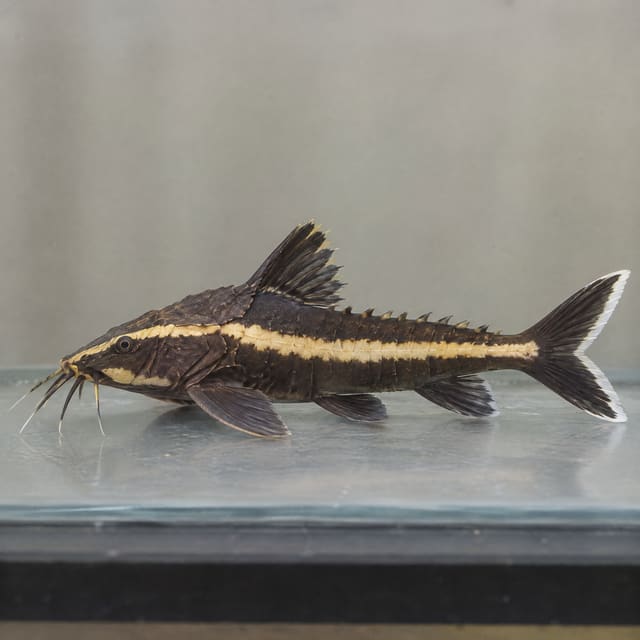
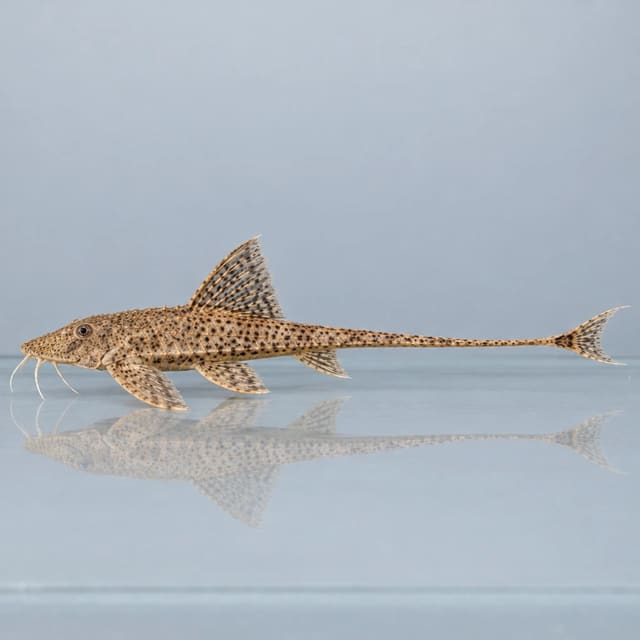
L398 Tanke Tiger Pleco (Panaqolus tankei)
26–30°C · pH 6–7.5
£37.69
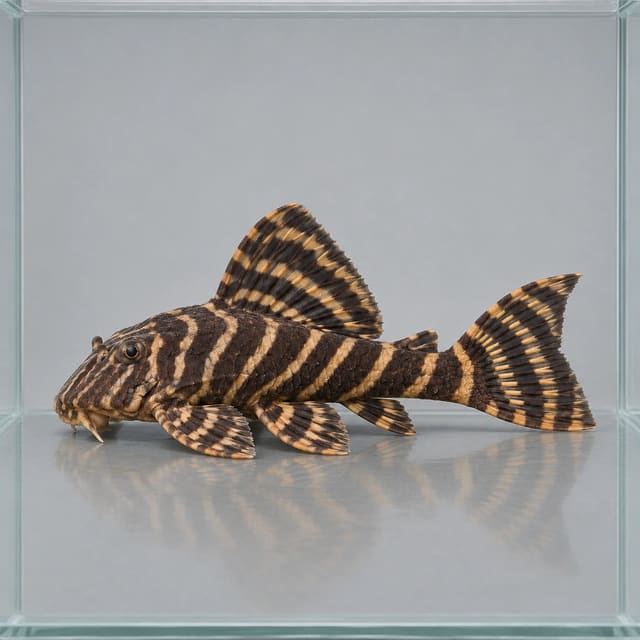
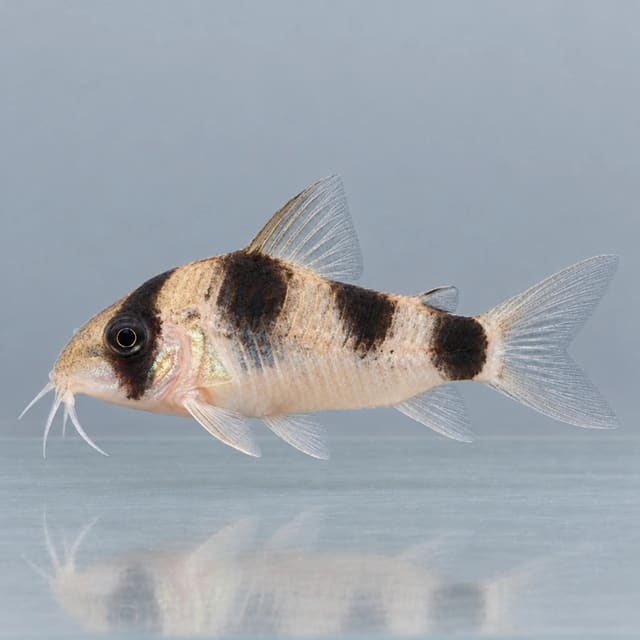
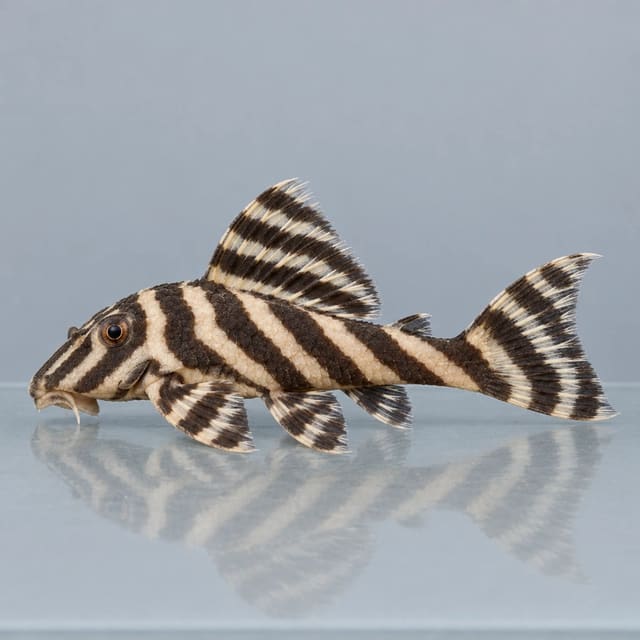
The L104 Clown Pleco (Panaqolus maccus) is a small, peaceful wood-eating catfish from the Orinoco basin of Venezuela, with cream to golden-orange bands on a dark body. It reaches 88 mm standard length and needs driftwood to rasp, vegetables, strong mechanical filtration and water at 23–27°C. Sold individually as one live fish, medium size.
Panaqolus maccus
The L104 Clown Pleco (Panaqolus maccus) is a small, peaceful wood-eating catfish from the Orinoco basin of Venezuela, with cream to golden-orange bands on a dark body. It reaches 88 mm standard length and needs driftwood to rasp, vegetables, strong mechanical filtration and water at 23–27°C. Sold individually as one live fish, medium size.
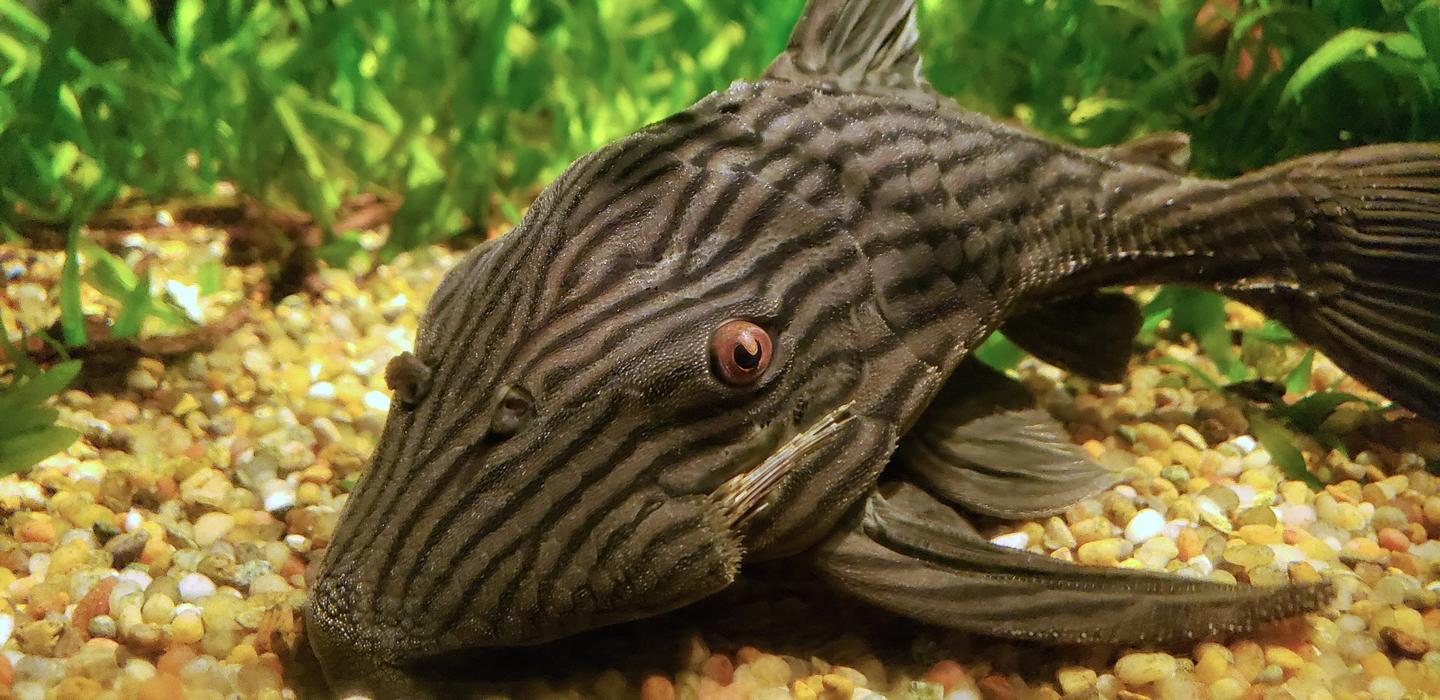
‘Pleco’ is a loose aquarium-trade label, not one species or one care sheet. Before buying, confirm the scientific name or defensible L-number, adult size and measurement method, required footprint, temperature and water, diet, social plan and source. No universal pleco tank size, menu or algae result is honest.
Read the full care guidance when planning conditions for your aquarium.
The L104 Clown Pleco, Panaqolus maccus (Schaefer and Stewart, 1993), is a small armoured suckermouth catfish with bold cream to golden-orange bands on a dark brown to black body. It comes from the Orinoco basin of Venezuela, where FishBase records it in the Apure and Caroní river systems, and it reaches only 88 mm standard length. Its species name comes from the Latin maccus, a clown or buffoon, a nod to the "clown plecostomus" name aquarists were already using.
In the trade the clown pleco carries several codes and names. Planet Catfish lists L104, L162 and LDA022, plus clown panaque and ringlet pleco, and the old scientific name Panaque maccus. Whatever the label, this is a wood-eater: the scientific paper that described it covers the "wood-eating armored catfishes" of tropical South America, and Planet Catfish recommends decorating its tank with several different types of driftwood.
| Suits | Not suited to |
|---|---|
| A mature aquarium of at least 80 litres with plenty of driftwood | A newly set-up tank, or one without wood |
| A peaceful community of small tetras, small cichlids or other loricariids | Large predators or boisterous bottom-dwellers |
| Water kept at 23–27°C and pH 6.8–7.6 | An unheated or coldwater aquarium |
| Strong mechanical filtration and regular water changes | A lightly filtered tank, because wood-eaters produce a lot of waste |
| A keeper who wants a characterful fish rather than an algae cleaner | A tank that needs an algae-control fish |
Our clown pleco buying guide compares the different Panaqolus species sold as clown plecos; this listing is Panaqolus maccus itself, the fish the name was first used for. Browse more small plecos in our catfish and plecos shop, the South American catfish category and the Panaqolus pleco range.
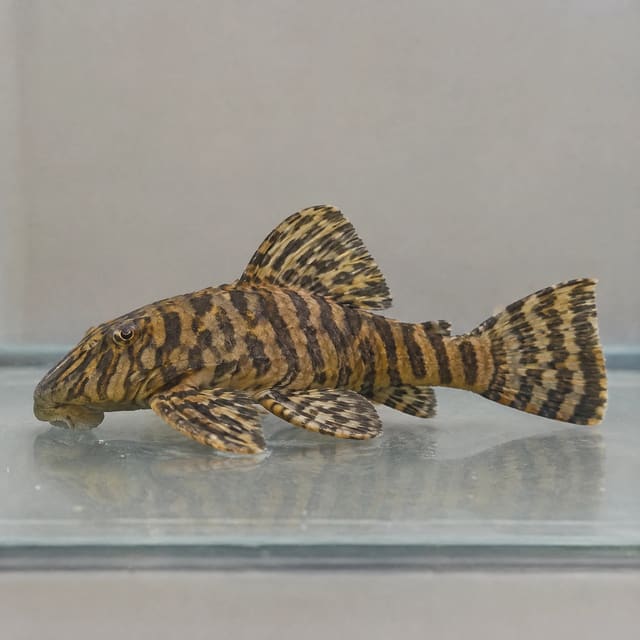
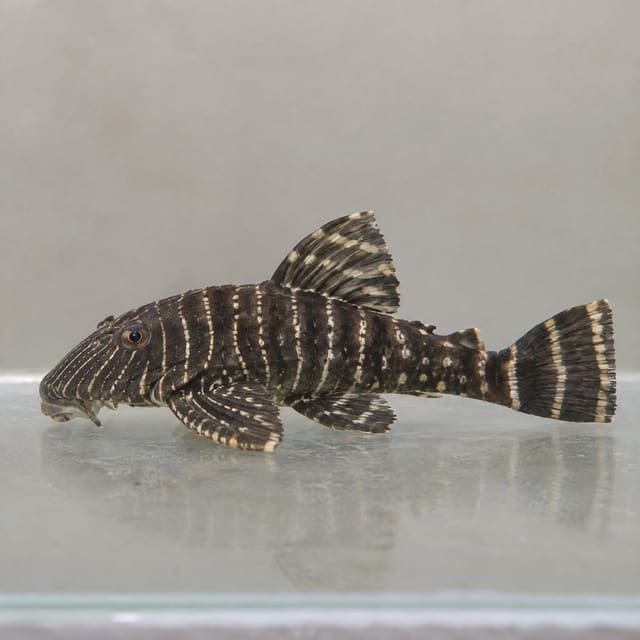
The clown pleco's pattern of cream and dark bands works as camouflage among the driftwood tangles it lives in, and adults also develop stripes and squiggles on the head. Planet Catfish warns that it is sometimes confused with L448 (LDA068), which looks very similar but grows larger. Juvenile L448 already show stripes and squiggles on the head, which appear only in mature P. maccus, and L448 can exceed 100 mm, a size not seen in P. maccus.
| Fish | Scientific name | Key point |
|---|---|---|
| L104 Clown Pleco (this fish) | Panaqolus maccus | The original clown pleco; 88 mm SL |
| L204 Flash Pleco | Panaqolus albivermis | Same genus; see its own page for size and care |
| L226 Iquitos Tiger Pleco | Panaqolus changae | Same genus; see its own page for size and care |
| L448 (not sold here) | Panaqolus sp. | Look-alike that grows beyond 100 mm (Planet Catfish) |
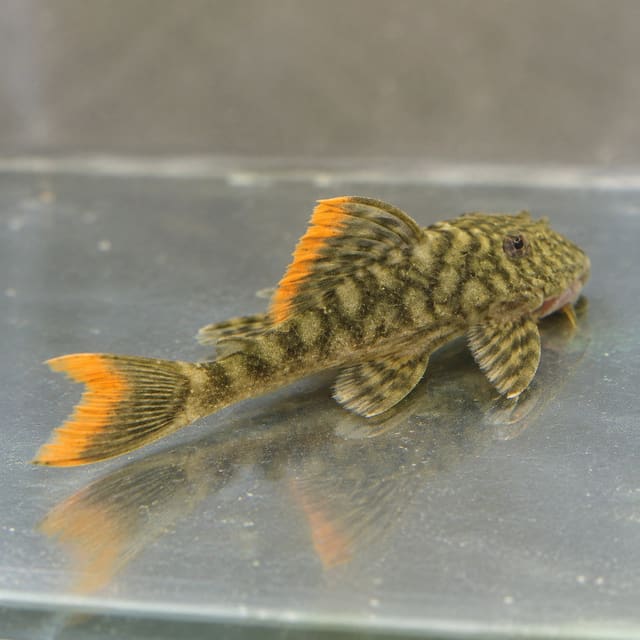
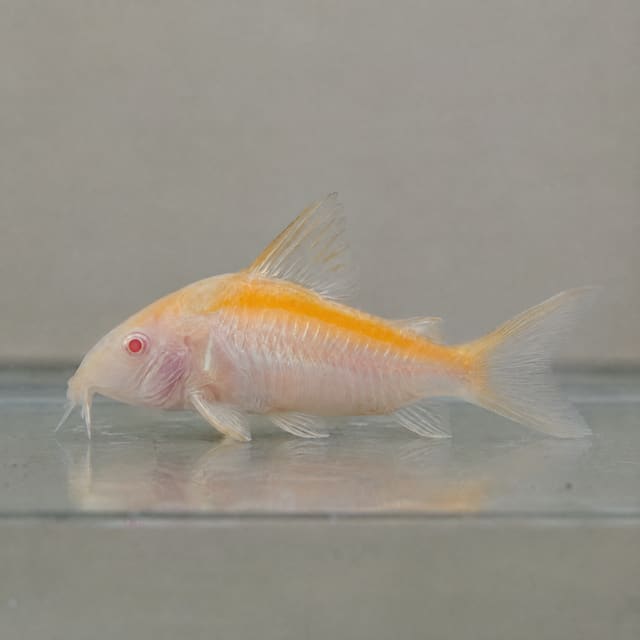
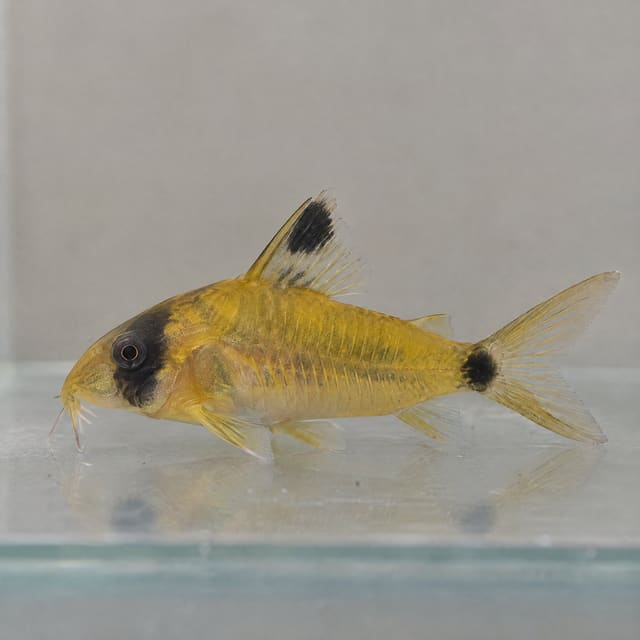
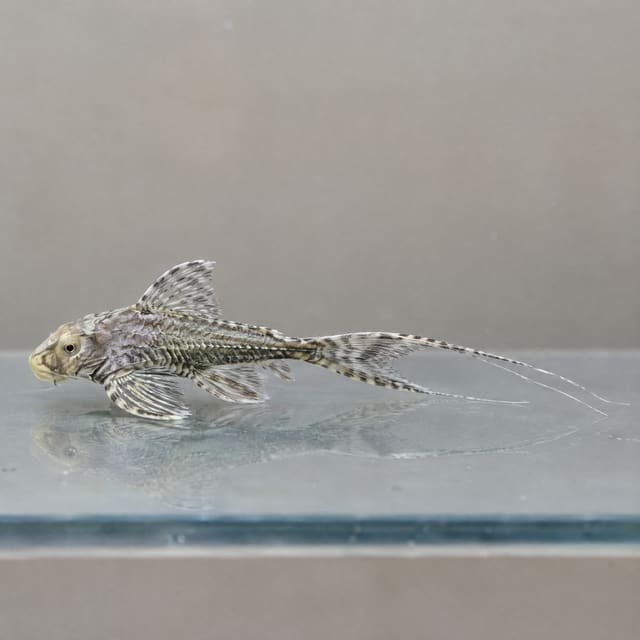
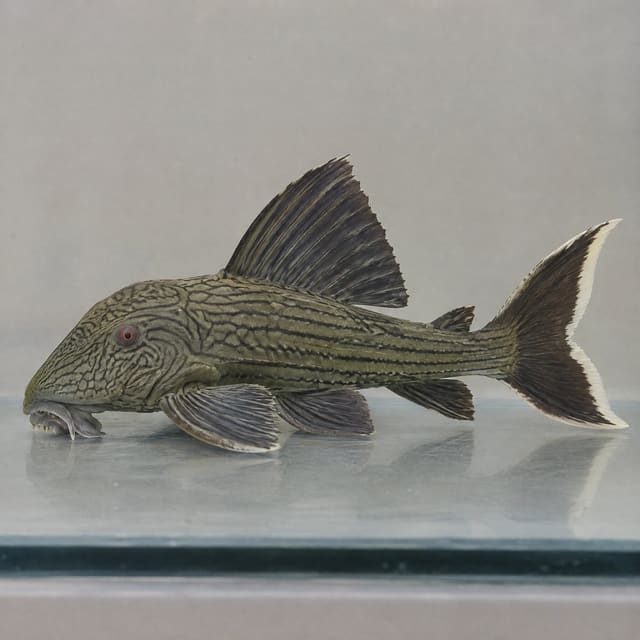
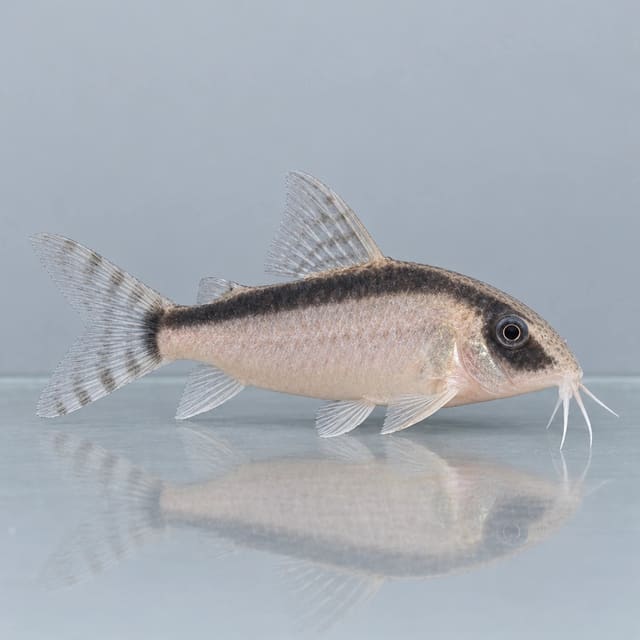
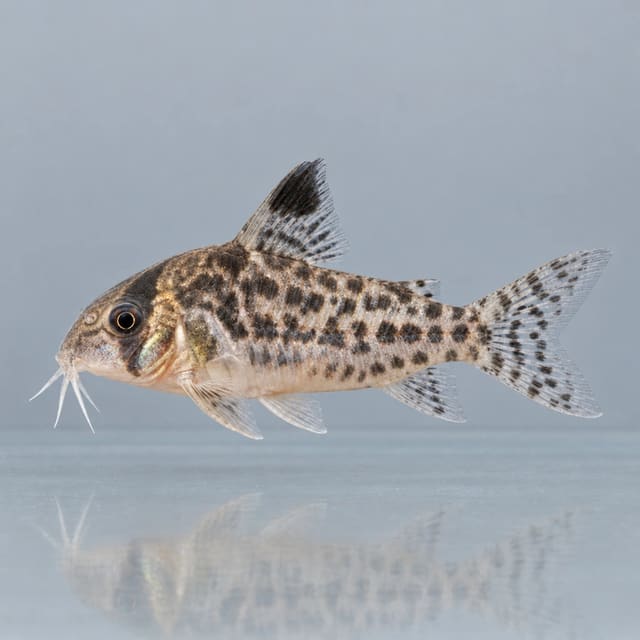
Our photographs show the species, not the individual you will receive. Banding varies from fish to fish, and the head markings become more intricate as the fish matures, so the clown pleco you receive will differ from the pictures. More L-number catfish are in our L-number plecos category.
One purchase supplies one live L104 Clown Pleco, medium size. The size you select is the size supplied, not the adult size, so plan the aquarium for a fish of up to 88 mm standard length. Sex is not specified.
Planet Catfish explains how to sex mature fish. Like all members of the genus, males grow long odontodes, bristle-like teeth on the skin, on the interopercular plates of the cheek during the breeding season, and noticeable odontodes along the back. Males have a small pointed genital papilla, while mature females have a large, rounded, swollen one, and egg-carrying females look clearly wider between the pectoral and pelvic fins when seen from above.
Before you order, check that the aquarium is mature and the wood is already in place. Dispatch days and our Live Arrival Guarantee are explained on our delivery and Live Arrival Guarantee page.
For a fish of 88 mm, the sources differ slightly on the smallest workable tank. Planet Catfish suggests that a small tank of 15 to 20 US gallons, about 57 to 76 litres, can house it alongside a school of small tetras, and that a larger tank can hold a community of wood-eating loricariids. OATA's freshwater catfish care sheet recommends at least 80 litres for smaller plecos and other small catfish. We suggest working from 80 litres, which satisfies both.
A long, low tank gives more floor and wood space than a tall one of the same volume, and the floor is where this fish lives.
In the wild, Planet Catfish says, P. maccus is found only among driftwood tangles close to the banks of the main river channels, where its striped brown and cream body is excellent camouflage. Its biotope advice is to place various types and lengths of driftwood at slanting angles from the back of the tank to the front, cover the back and sides with a dark background, use red-brown sand or fine gravel, and hide spawning caves along the back behind the wood.
| Area | Purpose |
|---|---|
| Driftwood tangle | Food to rasp, shelter and daytime resting places |
| Caves along the back | Private refuges and, later, spawning sites |
| Open sand at the front | A feeding area where you can watch it take vegetables and frozen food |
| Dark back and sides | A calmer fish that comes out more often |
| Middle and upper water | Space for a school of small tetras or hatchetfish |
Use several kinds of wood so it always has something to chew, and expect softer pieces to wear away over time. OATA recommends sand or fine gravel for catfish because coarse substrate can damage sensitive skin and barbels. Plants are optional.
Planet Catfish gives pH 6.8–7.6 and 23–28°C, and says the aquarium water should be clear with neutral values. It describes the wild habitat as Andean whitewater rivers flowing through the Llanos into the Orinoco. In the dry season, measurements in the Río Tinaco gave about 27°C (80°F), pH 7.5 and fairly hard water; in the wet season the water is cooler, softer and close to neutral. OATA's general range for freshwater catfish is 22–27°C, pH 6.0–8.0 and 4–18 dGH.
| Value | Planet Catfish | OATA (catfish in general) | Aim for |
|---|---|---|---|
| Temperature | 23–28°C | 22–27°C | 23–27°C |
| pH | 6.8–7.6 | 6.0–8.0 | 6.8–7.6 |
| Hardness | Not given; fairly hard in the dry season | 4–18 dGH | 4–18 dGH |
Temperature, pH and hardness describe the habitat; ammonia, nitrite and nitrate describe waste. OATA's targets are zero mg/l ammonia and nitrite, with nitrate no more than 20 mg/l above your tap water. UK tap water ranges from soft to hard by region, and much of it falls within the hardness range above. Treat all new water with a conditioner and use our water matcher to compare your tap water with the clown pleco's needs.
Planet Catfish stresses that the tank must have good mechanical filtration, because these fish produce a lot of waste from their steady diet of wood. Much of that waste is fine, woody material that settles on the substrate and clogs filter sponges, so plan regular siphoning as well as filtration. Its breeding method also adds a powerhead and an air stone, a reminder that this is a fish of flowing rivers that appreciates clean, well-oxygenated water.
Planet Catfish describes the clown pleco as a wood-eating fish that really likes to have something to chew on. Squash, cucumber and other vegetables should be readily available, with yams a favourite, and the diet should be supplemented two or three times a week with frozen foods. OATA's catfish care sheet confirms that plecos are herbivorous and that grazing species may need up to 30 minutes to finish a meal, compared with a few minutes for most fish.
| When | Food | Notes |
|---|---|---|
| Always | Several kinds of driftwood | The base of the diet as well as shelter |
| Most days | A slice of blanched squash, cucumber or yam, or a sinking pleco tablet | Remove leftovers once grazing is over; OATA allows grazers up to 30 minutes |
| Two or three times a week | Frozen foods | The supplement Planet Catfish recommends |
A sinking tablet made for plecos, such as Tropical Pleco's Tablets, is a convenient extra between fresh vegetables. Place food close to the wood so the clown pleco can reach it before faster tank mates.
Add the clown pleco only to an established aquarium with zero ammonia and nitrite and its wood already in place. OATA advises acclimatising fish with the floating-bag method and monitoring water quality closely during the first week, and recommends double-bagging catfish for transport so fin spines cannot pierce the bag.
| When | Check | Action |
|---|---|---|
| Arrival | Bag and tank temperature | Float, acclimatise, then release it close to the wood |
| Days 1–2 | Hiding in the wood or a cave | Normal behaviour; keep the lights low and leave it alone |
| Days 3–4 | Rasping marks on the wood and food taken | Offer vegetables or a tablet near its refuge and remove leftovers |
| Days 5–7 | Belly shape and water tests | A hollow belly means it is not finding food; feed closer to its refuge |
Planet Catfish describes the clown pleco as a peaceful fish well suited to the community tank, provided it has driftwood. Its suggested tank mates are other loricariids, small cichlids and tetras, and in a small tank of 15–20 US gallons it recommends a school of small tetras. In the Río Tinaco, hatchet tetras were common, and other loricariids collected with it included Hypostomus, Hypoptopoma and Otocinclus species.
| Suits | Avoid |
|---|---|
| Small tetras and hatchetfish in the middle and upper water | Large predatory fish that can swallow or harass it |
| Small, peaceful cichlids | Boisterous bottom-dwellers that take over its caves |
| Other wood-eating loricariids, given room and heavy filtration | Fish that need cold water or very different water values |
A school of Silver Hatchetfish keeps the surface busy while the clown pleco works the wood, and in a larger, well-filtered tank it can share the bottom with other Panaqolus such as the L204 and L226 above. Our tank mates tool checks a mix before you buy, and our pleco care guide covers the basics shared by all plecos.
A clown pleco spends much of the day in the wood, so check it at feeding time and look closely at its belly and fins.
| You notice | Likely cause | Action |
|---|---|---|
| Sunken or hollow belly | Not enough wood or vegetables reaching it | Add wood, feed near its refuge and check for competition |
| Hiding all the time after the first week | Bright light, harassment or poor water | Add shade and caves, test the water and review tank mates |
| Fine brown debris building up | Waste from its wood diet | Siphon more often and rinse prefilters |
| Torn fins or scrapes | Disputes over caves or rough décor | Add more refuges and remove sharp items |
| Faded colour | Stress or water quality | Test, change water and keep the tank calm |
Clown plecos have been bred in aquariums, and Planet Catfish holds a number of breeding reports. Its method copies the change from dry season to wet season in the fish's home rivers.
Yes. Planet Catfish lists L104, L162 and LDA022 as codes for the same species, Panaqolus maccus. L-numbers are trade codes, so one species can carry several.
Planet Catfish and FishBase give a maximum of 88 mm standard length, measured without the tail, which makes it one of the smaller plecos.
Yes. It is a wood-eating catfish, and Planet Catfish recommends several different types of driftwood. Wood is part of its diet as well as its shelter.
It is not sold as an algae cleaner. Its diet is wood, vegetables such as squash, cucumber and yam, and frozen foods two or three times a week.
Planet Catfish suggests that a small tank of 15 to 20 US gallons, about 57 to 76 litres, can house it with a school of small tetras. OATA advises at least 80 litres for smaller plecos, so 80 litres is the safer starting point.
Planet Catfish gives 23 to 28°C and pH 6.8 to 7.6, with clear water and neutral values. Keep ammonia and nitrite at zero and nitrate no more than 20 mg/l above your tap water.
Planet Catfish recommends other loricariids, small cichlids and tetras. It is peaceful, so avoid large predatory fish and boisterous bottom-dwellers that take over its wood and caves.
Mature males grow long odontodes on the cheek plates and along the back in the breeding season and have a small pointed genital papilla. Females have a larger, rounded papilla and look wider when full of eggs.
Yes, aquarium spawnings have been reported. Planet Catfish describes a dry-season period followed by cool water changes, with caves just large enough for the female to squeeze into.
No reviews for this item yet. Bought one? Honest reviews only, good or bad.
What customers say about ordering from us
Easy website plenty of info on fish your buying great to pick a time slot
TRACEY DURRANT · 7 Oct 2026
Got some lovely fish thank you
Kevin Mackie · 7 Oct 2026
Reviews of our shop, collected by Judge.me, an independent third-party review collector. Newest first.
Moved by UK carriers licensed to handle live animals
Hand-packed with oxygen bags, poly box, heat pack
Email photos the same day; an optional unboxing video helps us review problems faster — claim terms apply
Klarna & PayPal Pay in 3 at checkout