Moderate
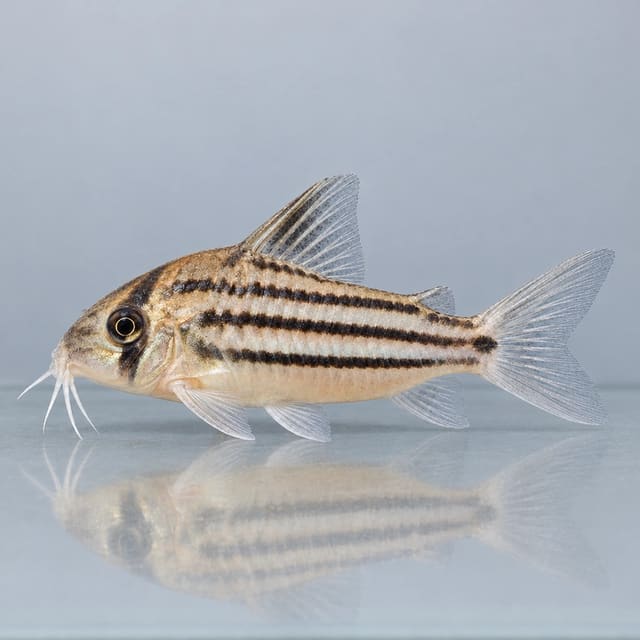
Super Parallelus Cory CW127 (Hoplisoma sp. CW127)
22–25°C · pH 6–7.2
£37.69
Corydoras CW102, the Gold Bow Cory, is a small, undescribed armoured catfish from the Rio Tapajós drainage in Brazil, now filed as Hoplisoma sp. (CW102). It grows to about 3.5–4 cm and needs a group of at least five on soft sand at 22–26°C and pH 6.0–7.2. One live fish per purchase.
Adult size is the maximum length this species reaches at full maturity (scientific sources). The livestock you receive will be younger and smaller. Product-photo provenance and any image-specific limitations are stated on the listing.
Hoplisoma sp. (CW102)
Quantity discounts are pricing offers, not a group-size recommendation. Check the full care guidance and your existing animals before choosing a quantity.
Corydoras CW102, the Gold Bow Cory, is a small, undescribed armoured catfish from the Rio Tapajós drainage in Brazil, now filed as Hoplisoma sp. (CW102). It grows to about 3.5–4 cm and needs a group of at least five on soft sand at 22–26°C and pH 6.0–7.2. One live fish per purchase.
Adult size is the maximum length this species reaches at full maturity (scientific sources). The livestock you receive will be younger and smaller. Product-photo provenance and any image-specific limitations are stated on the listing.
Identify the exact cory catfish before choosing care. Our starting policy for many common medium species is six compatible conspecifics, a mature 60 x 30 cm aquarium of about 60 litres, smooth fine sand and measured species-appropriate water.
Read the full care guidance when planning conditions for your aquarium.
Corydoras CW102 is a small armoured catfish from the Rio Tapajós drainage in Brazil that has not yet been given a scientific species name. In the hobby it is sold as the Gold Bow Cory. The code comes from Corydoras World, which numbers recognisable corys that science has not yet described, so "CW102" identifies one particular fish rather than being a formal name. Planet Catfish describes it as a peaceful, shoaling community fish, and at around 4 cm as an adult it is one of the smaller corydoras you can keep.
The label has changed in the last few years. Older books and websites list it as Corydoras sp. CW102. In 2024 Dias and colleagues published a new classification of the corydoradine catfishes, splitting the very large genus Corydoras into several genera, and both ScotCat and Planet Catfish now file this fish as Hoplisoma sp. (CW102). ScotCat places it in lineage 9, the short-snouted corys whose type species is the spotted cory, punctatus. You will still see the old name on many import lists, which is why we keep the familiar "Corydoras CW102" in the title.
| Name | Where you will meet it | What it tells you |
|---|---|---|
| Corydoras CW102 | Shop labels and import lists | The Corydoras World code for this undescribed fish |
| Gold Bow Cory | Common name on Planet Catfish | The trade name for the same fish |
| Hoplisoma sp. (CW102) | ScotCat and Planet Catfish today | The current genus after the 2024 reclassification |
| Corydoras sp. CW102 | Older books and websites | The name used before 2024 |
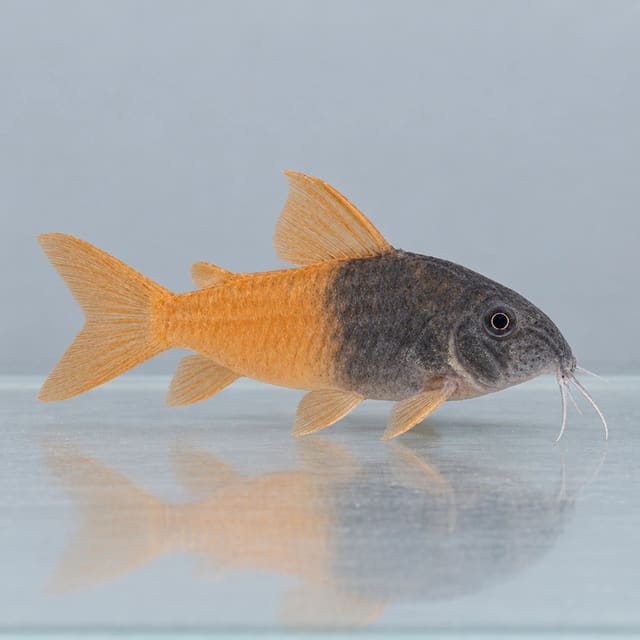
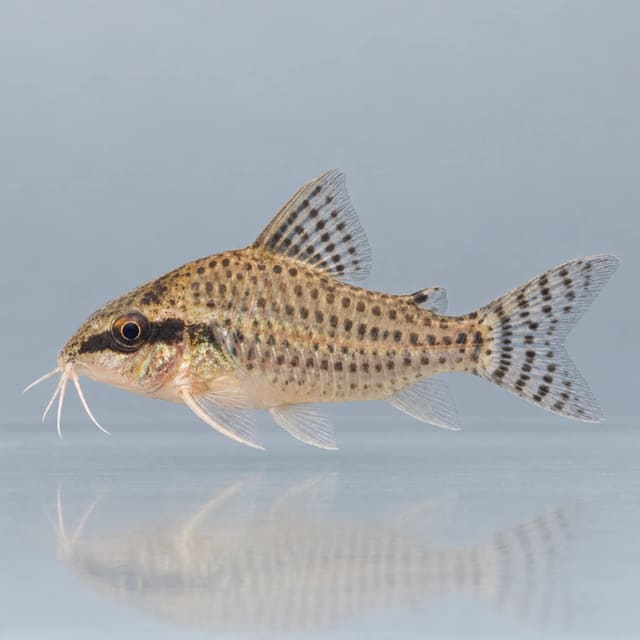
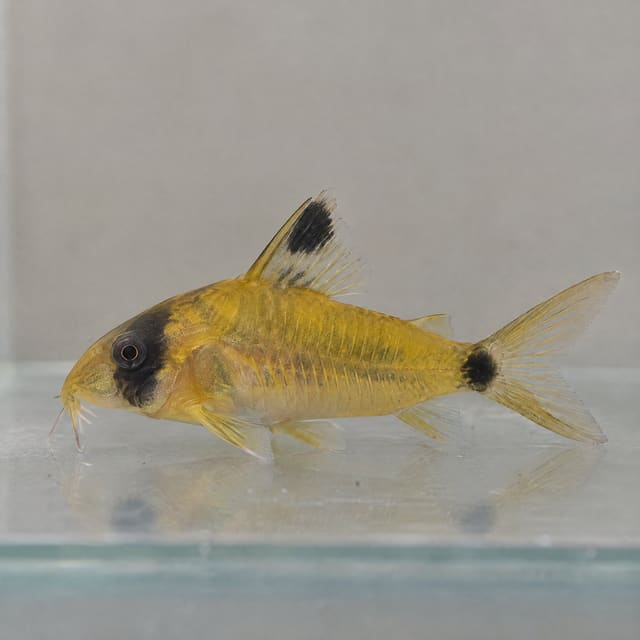
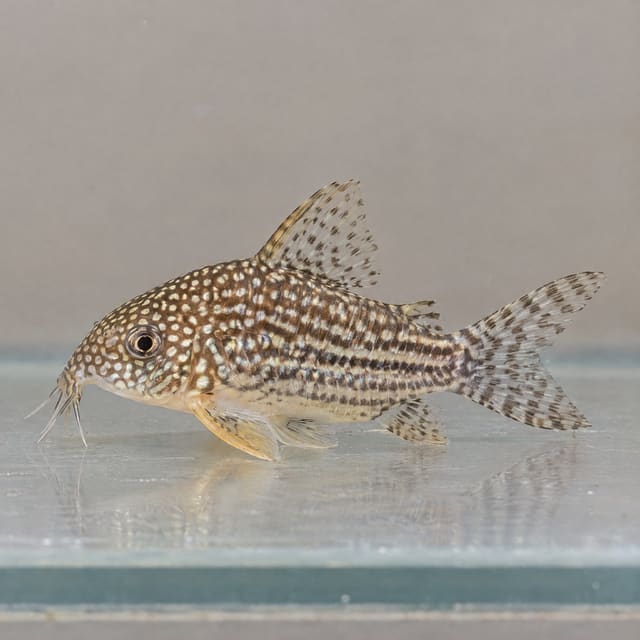
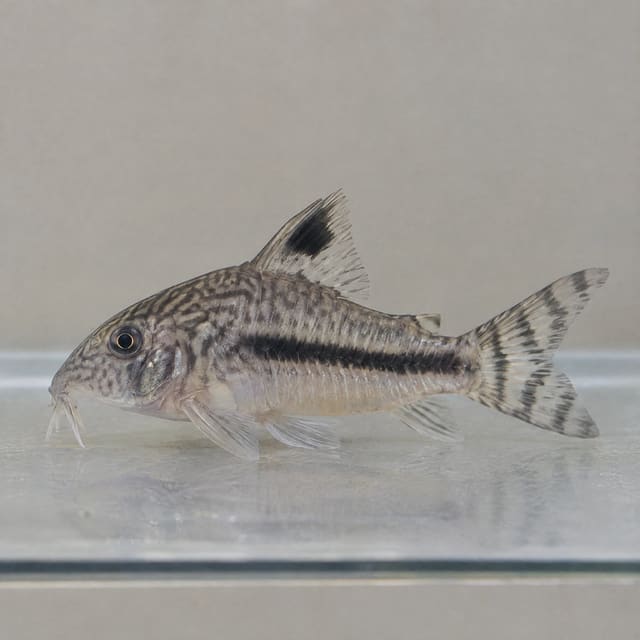
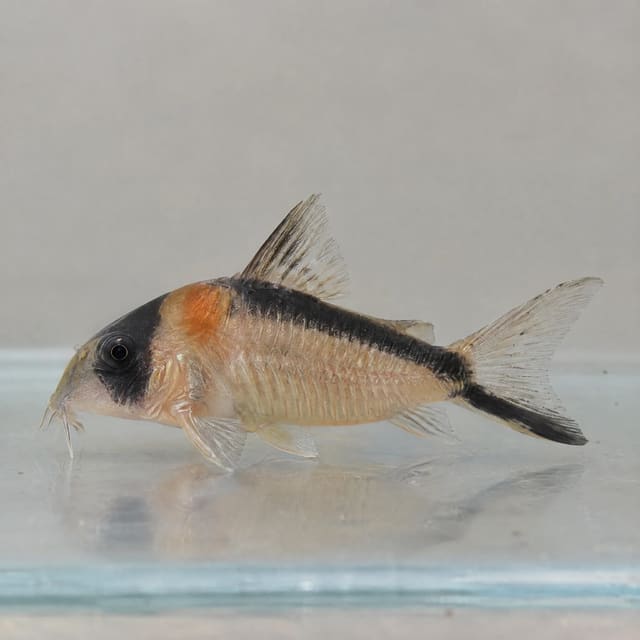
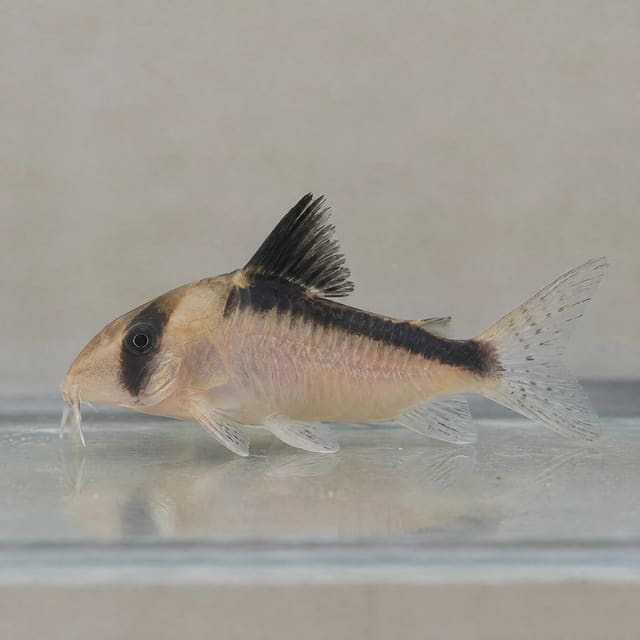
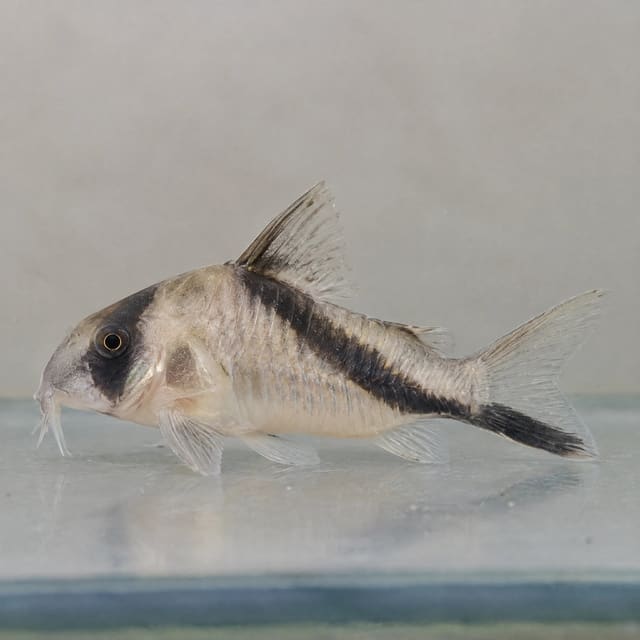
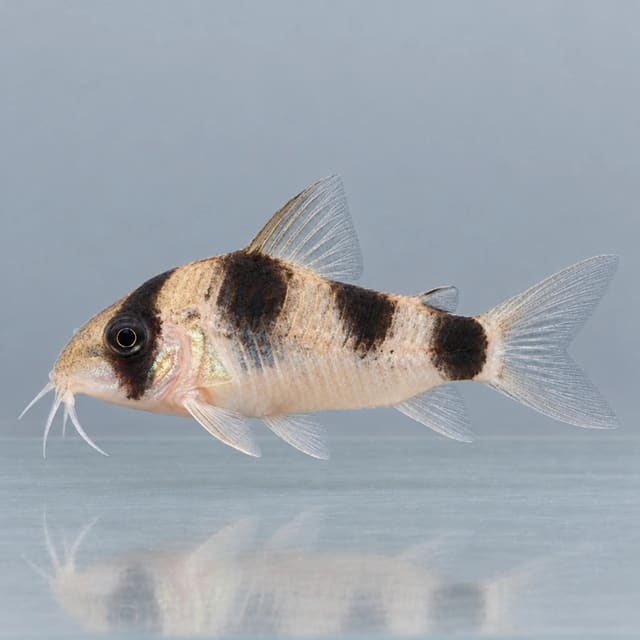
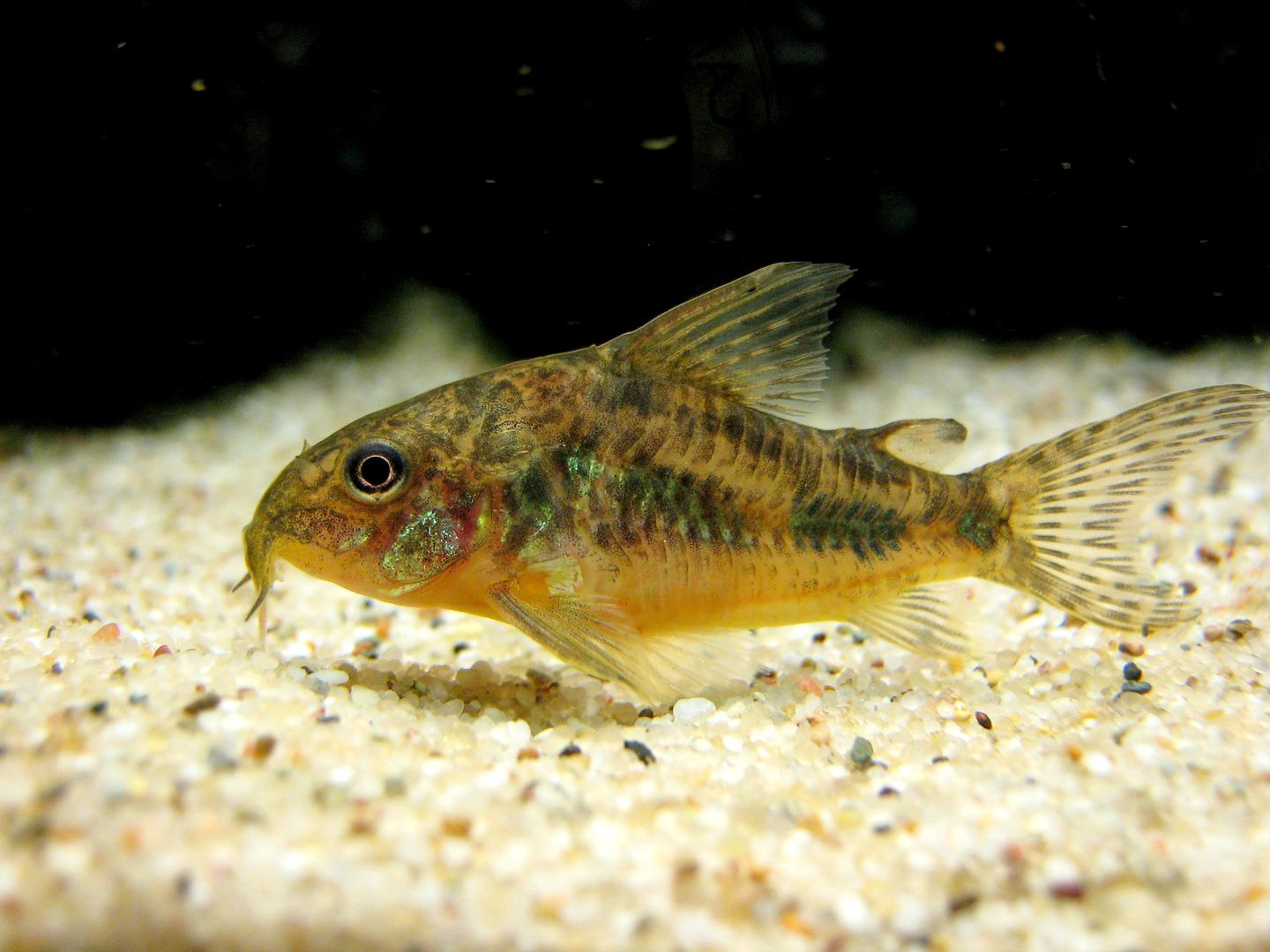
In the photographs on ScotCat's factsheet, the fish has a grey to greenish body finely peppered with small dark spots, a dark band running down through the eye, a metallic green-gold sheen on the gill cover and a warm golden-orange band that arches over the head just in front of the dorsal fin. That arched band is the "gold bow" behind the trade name. The fins are clear to lightly tinted.
A peer-reviewed study by Tencatt and colleagues, published in Neotropical Ichthyology in 2024, shows how easily these fish can be confused. In a shallow stream in the Tapajós basin they watched CW102 shoaling with two other corys that share a similar colour pattern: CW101 and the newly described Corydoras caramater. CW102 was the most abundant of the three. The authors note that look-alike corys living together in this way can still differ clearly in their anatomy; they separate CW102 from C. caramater by the direction of the tiny serrations on the pectoral-fin spine, which point mostly forwards in CW102. For a keeper, the practical point is simple: keep the CW code with your records, because similar-looking corys from the same rivers can turn out to be different species.
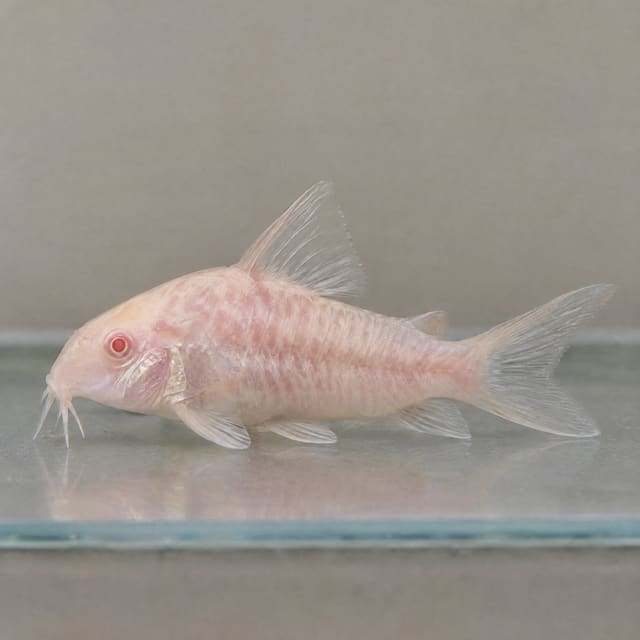
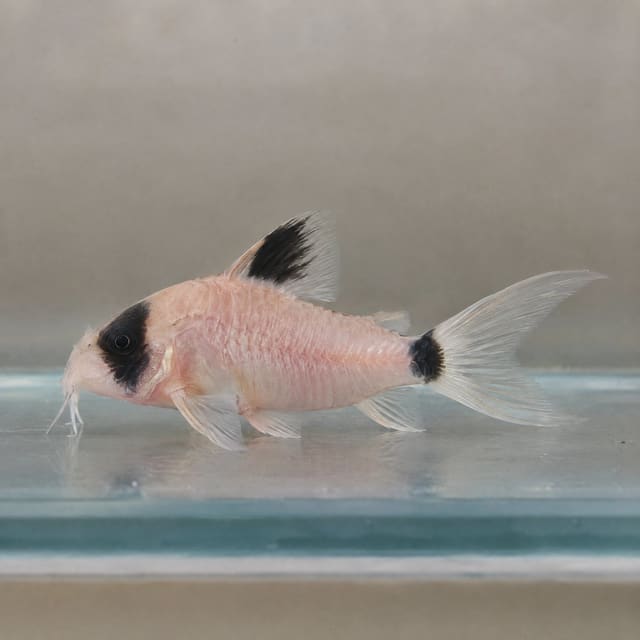
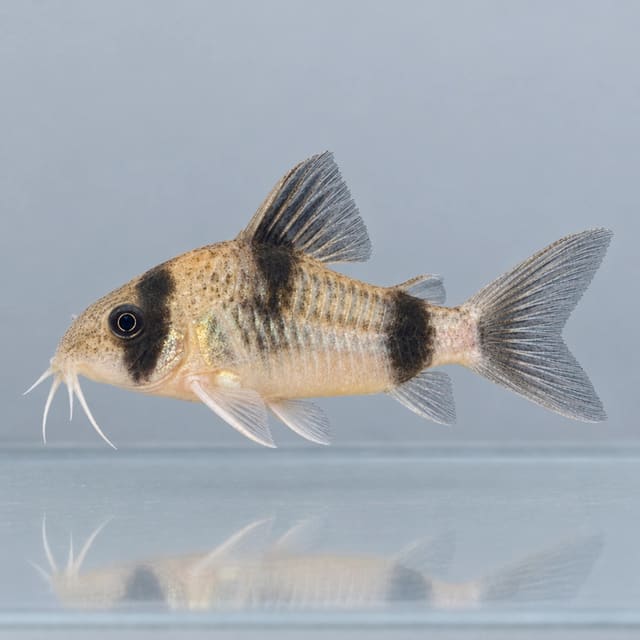
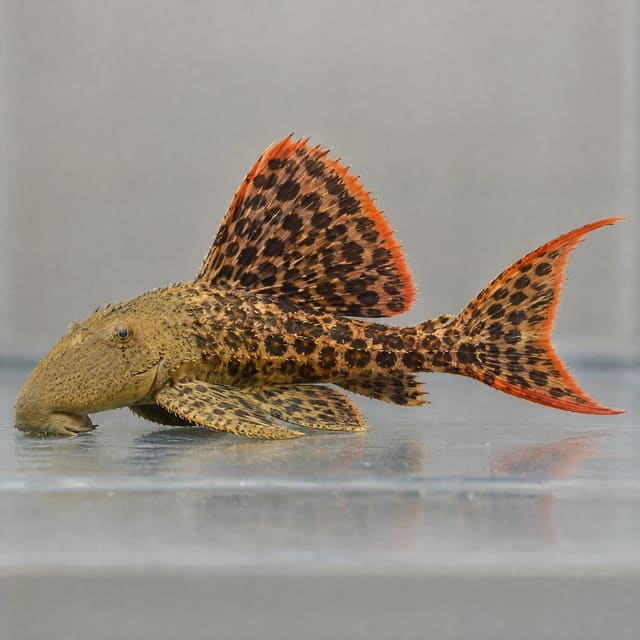
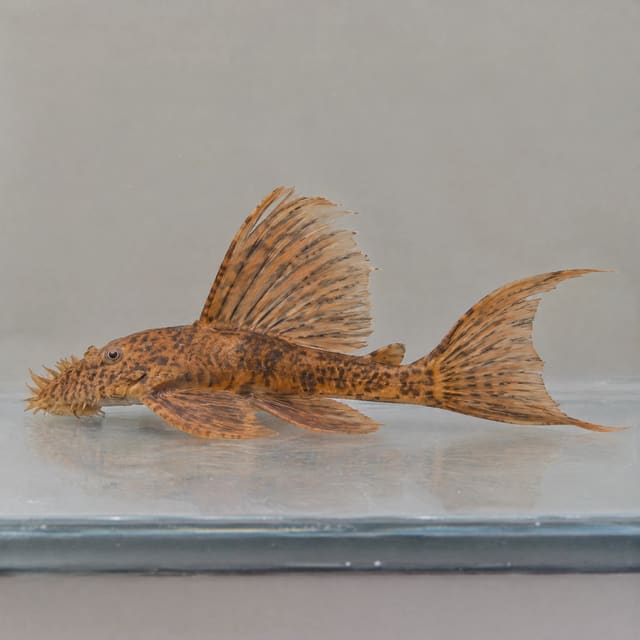
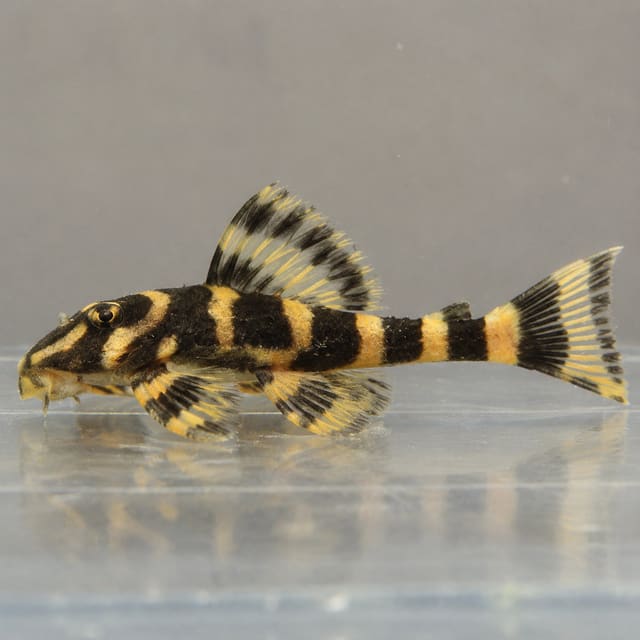
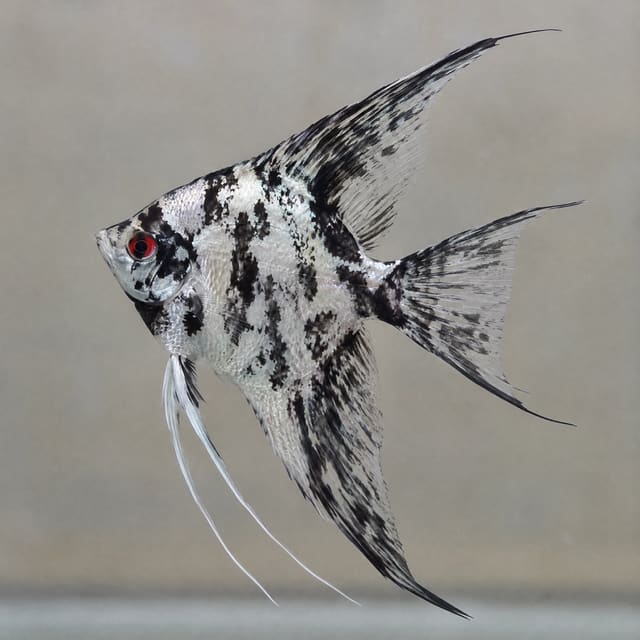
One purchase supplies one live Corydoras CW102 in the standard size we receive. Sex is not chosen. Planet Catfish notes that adult females grow larger and more full-bodied, which is easiest to see from above, while maturing males tend to have more pointed fin tips. The gallery images are representative, prepared from a reference photograph, and do not show the individual you will receive; colours and markings vary between fish and with mood and lighting.
Planet Catfish listed only a handful of registered keepers for this fish at the time of writing, which tells you it is a collector's cory rather than a shop staple. If you want a shoal, it is worth buying the whole group in one order so the fish settle in together.
| Plan | Group | Why |
|---|---|---|
| Minimum shoal | 5 fish | OATA advises keeping corydoras in groups of at least five; fewer often become stressed |
| Better shoal | A larger group if floor space allows | Planet Catfish describes it as shoaling, and the wild fish were seen in mixed shoals |
| Species tank | A group on its own | ScotCat suggests a species tank if you hope to breed it |
ScotCat gives the adult size as about 3.5 cm for males and 4.0 cm for females. That is small, but a cory shoal spends its day working across the floor together, so floor area matters far more than height. OATA recommends an aquarium of at least 80 litres for a shoal of the smaller catfish such as corydoras, and stresses that a larger tank keeps temperature and water quality more stable. Treat 80 litres as the starting point for a group, not a target to fill.
The wild habitat is a useful guide. Tencatt and colleagues describe the Tapajós stream where they found CW102 as shallow, mostly up to about 30 cm deep and one to three metres wide, with a slow to moderate current over fine sand and gravel, patches of leaf litter, submerged branches and logs, and water plants. Planet Catfish's advice for the aquarium matches this closely: sand is ideal and close to mandatory, rounded gravel is an imperfect alternative, and rough-edged or sharp substrates should be avoided because they damage the barbels when the fish dig for food. OATA gives the same reason for sand or fine gravel in any catfish tank.
Border the sand with driftwood and plants, leaving an open area in the middle where the shoal can search for food and swim. Planet Catfish notes that shade from overhanging rock work, arching bogwood, tall plants or floating plants is all a group needs to settle. A few dried leaves on the sand add cover and look natural; remove any that start to break down into sludge.
| Zone | What to use | Why it helps |
|---|---|---|
| Open foraging area | Fine, smooth sand | Lets the fish sift for food without wearing their barbels |
| Edges | Driftwood, plants and a few leaves | Gives resting places and the cover found in the wild streams |
| Overhead | Floating plants or tall stems | Softens the light so the shoal stays out in the open |
| Feeding spot | A clear patch of sand at the front | Makes it easy to see every fish eat and to siphon leftovers |
ScotCat gives 22–26°C and a pH of 6.0–7.2 for Corydoras CW102. No hardness figure is published for this undescribed fish, so the safest course is to stay inside the general range OATA gives for catfish, soft to hard at 4–18°dH, and to avoid the hard, alkaline end. OATA's general catfish temperature range is wider, at 22–27°C, but the species figure from ScotCat is the one to follow.
| Value | Target | Source |
|---|---|---|
| Temperature | 22–26°C | ScotCat (CW102) |
| pH | 6.0–7.2 | ScotCat (CW102) |
| General hardness | Not published for CW102; stay within 4–18°dH and avoid very hard water | OATA catfish guide |
| Ammonia and nitrite | Zero | OATA |
| Nitrate | No more than 20 mg per litre above your tap water | OATA |
UK tap water varies a great deal from one supply area to the next, from soft water in some regions to hard, alkaline water in others. Test your own tap water for pH and hardness before the fish arrive. If your supply sits above pH 7.2, plan how you will bring it down gently and hold it steady, for example by mixing in purified water, rather than chasing the number after the fish are in. Our water matcher compares your readings with the fish you plan to keep, and the water chemistry guide explains pH and hardness in plain terms.
Temperature, pH and hardness describe the kind of water the fish evolved in. Ammonia, nitrite and nitrate tell you whether waste is building up. The first group should be steady; the second should stay at or near zero. Check both every week, as OATA advises, and more often in the first month.
A filter is essential in every aquarium, as OATA puts it, and for corys the aim is clean, well-oxygenated water with a gentle to moderate flow across the floor, like the slow to moderate current of the home streams. Corys spend their lives with their barbels in the sand, so a dirty substrate is a direct health risk. Siphon the open sand every week and do not let uneaten food or decaying leaves collect in corners. Our aquarium filtration guide explains how to choose and run a filter of the right size.
Planet Catfish says this fish readily accepts all prepared foods that reach the bottom of the aquarium, such as tablets, granules and larger flakes, and that live or frozen bloodworm, white worm, grindal worm, Daphnia and Tubifex are also readily taken and good for conditioning a group. ScotCat recommends a good flake and tablet food for adults with occasional feeds of frozen or live food. OATA describes corydoras as omnivorous and reminds keepers that catfish should be given proper sinking foods rather than left to scavenge.
The common mistake is to assume a cory will live on what other fish drop. In a busy community the midwater fish eat almost everything before it reaches the floor. Drop sinking food at the same clear patch of sand each time, so the shoal learns where to look, and watch that every fish gets a share.
Only add fish to a tank with a fully matured filter, where ammonia and nitrite read zero. OATA warns that stocking too quickly causes "new tank syndrome", when the filter bacteria cannot keep up with the extra waste. Catfish should travel double-bagged, because their fin spines can pierce a single bag. When the box arrives, follow OATA's floating bag method: switch off the aquarium lights, float the sealed bag for about 10 minutes so the temperatures match, then add small amounts of aquarium water to the bag over up to 20 minutes, and release the fish with as little bag water as possible. Our guide to acclimatising new fish covers each step.
Take care when handling any catfish. OATA notes that most have spines on the pectoral fins, and a cory can lock these spines and tangle in a net. Guide the fish gently into a container rather than lifting it out of the water in a net.
| When | What to do |
|---|---|
| Before arrival | Test the water; confirm 22–26°C, pH 6.0–7.2, zero ammonia and nitrite |
| Day one | Keep the lights low and leave the shoal to settle; offer a very small sinking meal in the evening |
| Days two to four | Count the fish at each feed and check that all are eating |
| Mid-week | Retest ammonia and nitrite rather than waiting for the weekly test |
| End of the week | Full water test and the first 25% partial change |
A settled group of Corydoras CW102 forages together over the sand, rests in a loose cluster near cover and becomes more confident as the weeks pass. OATA's catfish care sheet lists the changes worth watching for in any catfish: unusual swimming, colour turning darker or paler, hiding more than usual, faster or slower breathing, white spots or fluffy growths, damaged fins, weight loss and loss of appetite.
| If you see | Do this |
|---|---|
| The group foraging together over open sand | Normal; keep the routine steady |
| Short, worn or reddened barbels | Siphon the sand, test for ammonia and nitrite, and check the substrate for sharp grains |
| Fish hiding all day or breathing fast | Test the water at once and check temperature and oxygen |
| A hollow belly on one fish | Feed at a fixed spot and make sure faster tank mates are not taking everything |
| White spots, fluffy growths or damaged fins | Test the water and seek fish-health advice before treating |
If a problem continues, write down your readings and contact us with them; numbers make it far easier to help.
ScotCat describes this fish as very peaceful and best housed with small to medium tank mates such as tetras, rasboras and danios, or in a species tank if you want to breed it. Choose midwater and surface fish that are happy at 22–26°C in soft to moderately hard water, and avoid anything large or boisterous that would bully a 4 cm catfish or take all the food.
| Suits | Avoid |
|---|---|
| Small, peaceful tetras | Large or boisterous fish of any kind |
| Rasboras and small danios | Fish big enough to swallow a 4 cm catfish |
| Hatchetfish and pencilfish in the upper water | Bottom-dwelling cichlids that guard the floor |
| Other small, peaceful corydoras | Fish that need cool water or hard, alkaline water |
From our range, the surface-dwelling Marbled Hatchetfish, the slender Dwarf Pencilfish and the tiny Ember Tetra leave the floor to the corys; check that their own water needs overlap. If you enjoy the genus, compare the Sterbai Cory, the Three-Stripe Cory and the Palespotted Cory, all now placed in Hoplisoma too. Browse every cory in our corydoras catfish collection, the wider South American catfish category, our bottom-dwelling fish and the rare and collector fish, and read our corydoras care guide. Before you buy, check the whole mix with our tank mates tool, and see our delivery information for dispatch days.
Planet Catfish holds no breeding report for Corydoras CW102, so anyone who spawns it will be adding to what is known. ScotCat suggests a species tank for breeding attempts, and Planet Catfish notes that live and frozen foods such as bloodworm, white worm, grindal worm, Daphnia and Tubifex are good for conditioning a group. Start with a well-fed group in which the broader, fuller females can be told apart from the slimmer males, keep the water clean and stable, and record what you try. Treat breeding as a bonus rather than a plan.
It is an undescribed armoured catfish from the Rio Tapajós drainage in Brazil, known in the hobby as the Gold Bow Cory. CW102 is its Corydoras World code. Since the 2024 reclassification it is filed as Hoplisoma sp. (CW102), and older sources call it Corydoras sp. CW102.
ScotCat gives about 3.5 cm for males and 4.0 cm for females, so it is one of the smaller corys. Females are also fuller in the body.
Keep a group. OATA advises at least five corydoras together, and Planet Catfish describes this fish as a shoaling species. A larger group gives more natural behaviour if the floor space allows.
No species minimum is published. OATA recommends at least 80 litres for a shoal of the smaller catfish such as corydoras, and floor area with open sand matters more than height.
ScotCat gives 22–26°C and pH 6.0–7.2. No hardness figure is published for this fish, so stay within the soft-to-moderately-hard part of the band OATA gives for catfish and keep conditions stable. Ammonia and nitrite must read zero.
Sinking foods: small tablets, granules and larger flakes that reach the floor, plus live or frozen bloodworm, white worm, grindal worm, Daphnia and Tubifex, which Planet Catfish lists as readily accepted.
Small, peaceful fish such as tetras, rasboras and danios, which ScotCat suggests, together with other peaceful bottom dwellers. Avoid large or boisterous fish and anything that can swallow a 4 cm catfish.
Adult females grow larger and look broader when viewed from above, and mature males tend to have more pointed fin tips. Sex is not chosen when we pick your fish.
No reviews for this item yet. Bought one? Honest reviews only, good or bad.
What customers say about ordering from us
Easy website plenty of info on fish your buying great to pick a time slot
TRACEY DURRANT · 7 Oct 2026
Got some lovely fish thank you
Kevin Mackie · 7 Oct 2026
Reviews of our shop, collected by Judge.me, an independent third-party review collector. Newest first.
Moved by UK carriers licensed to handle live animals
Hand-packed with oxygen bags, poly box, heat pack
Email photos the same day; an optional unboxing video helps us review problems faster — claim terms apply
Klarna & PayPal Pay in 3 at checkout