Moderate
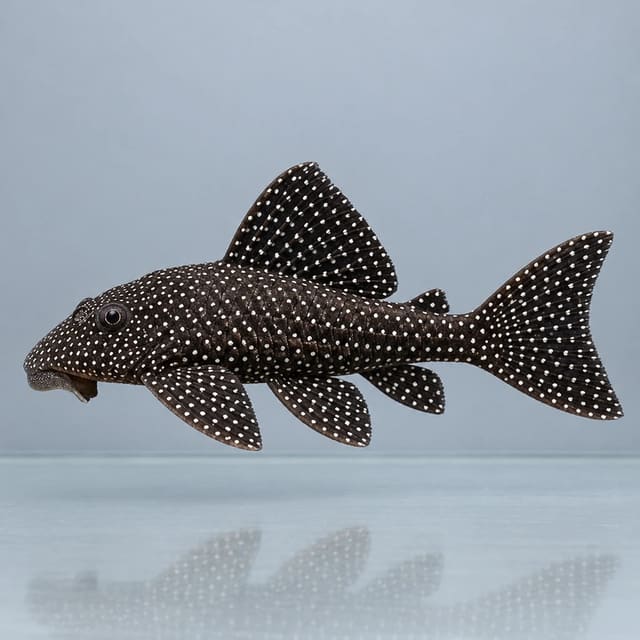
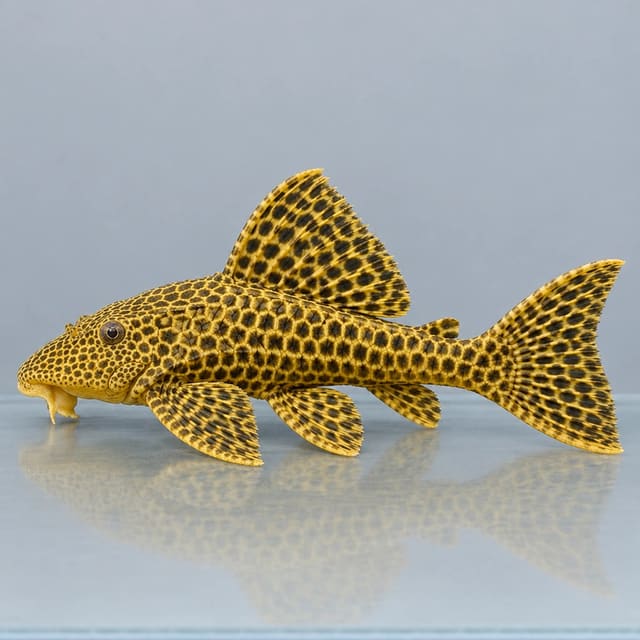
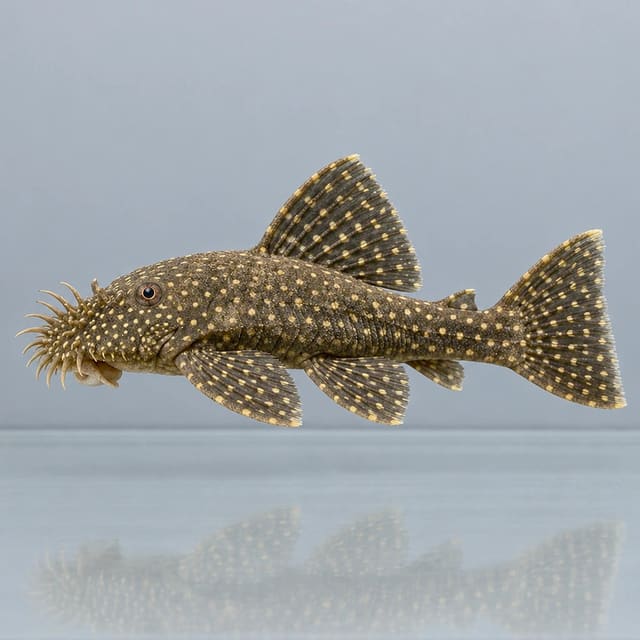
Mitu Cory CW106 (Brochis sp. CW106)
23–25°C · pH 6–7
£31.39
The Bifasciatus Cory or Two-Stripe Cory (Brochis bifasciata, formerly Corydoras bifasciatus) is a rare, peaceful armoured catfish from the Rio Cururu in the upper Tapajós system of Brazil, named for the two black stripes along its body. It grows to about 5–6 cm and needs a group of at least five on soft sand at 23–25°C. One live fish per purchase.
Adult size is the maximum length this species reaches at full maturity (scientific sources). The livestock you receive will be younger and smaller. Product-photo provenance and any image-specific limitations are stated on the listing.
Brochis bifasciata
Quantity discounts are pricing offers, not a group-size recommendation. Check the full care guidance and your existing animals before choosing a quantity.
The Bifasciatus Cory or Two-Stripe Cory (Brochis bifasciata, formerly Corydoras bifasciatus) is a rare, peaceful armoured catfish from the Rio Cururu in the upper Tapajós system of Brazil, named for the two black stripes along its body. It grows to about 5–6 cm and needs a group of at least five on soft sand at 23–25°C. One live fish per purchase.
Adult size is the maximum length this species reaches at full maturity (scientific sources). The livestock you receive will be younger and smaller. Product-photo provenance and any image-specific limitations are stated on the listing.
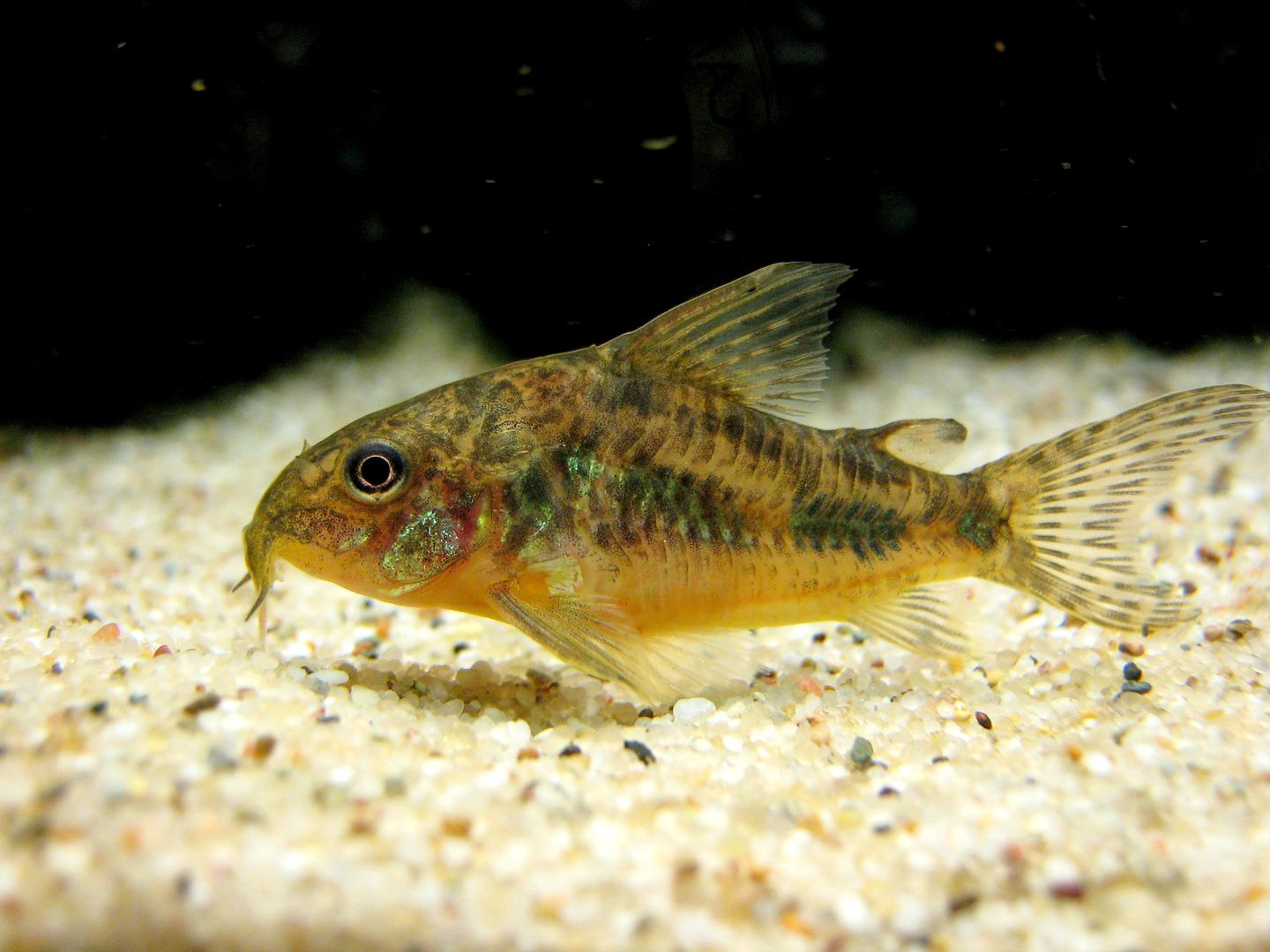
Identify the exact cory catfish before choosing care. Our starting policy for many common medium species is six compatible conspecifics, a mature 60 x 30 cm aquarium of about 60 litres, smooth fine sand and measured species-appropriate water.
Read the full care guidance when planning conditions for your aquarium.
The Bifasciatus Cory, also called the Two-Stripe Cory, is Brochis bifasciata, a small armoured catfish from the upper Rio Tapajós system in Pará State, Brazil. It was described by Nijssen in 1972 as Corydoras bifasciatus, and that is still the name most shops and import lists use. Planet Catfish gives the type locality as a creek on the left bank of the Rio Cururu, a tributary of the upper Tapajós. The name is Latin for "two stripes": bi means two and fasciatus means striped, referring to the two black lines along the body. ScotCat describes it as very rare in the hobby.
In 2024 Dias and colleagues published a new classification of the corydoradine catfishes, and this species moved with the other deep-bodied "intermediate long-snouts" of ScotCat's lineage 8 into the genus Brochis. The species name changed its ending at the same time, to agree with the new genus, so Corydoras bifasciatus became Brochis bifasciata. Both names refer to the same fish.
| Name | Where you will see it | Notes |
|---|---|---|
| Bifasciatus Cory | Shop labels | Taken from the scientific name |
| Two-Stripe Cory, Twostripe corydoras | Planet Catfish, ScotCat and FishBase | The established common name |
| Corydoras bifasciatus | Most shops, older books | The original 1972 name |
| Brochis bifasciata | FishBase, Planet Catfish, ScotCat | The current name after the 2024 reclassification |
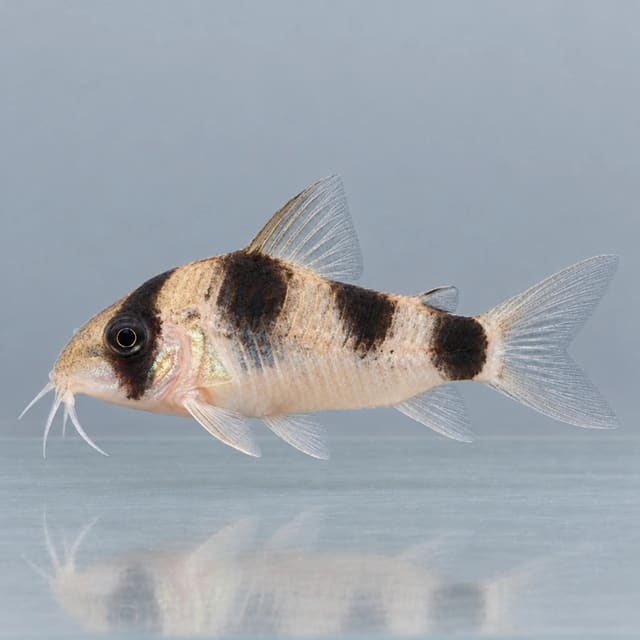
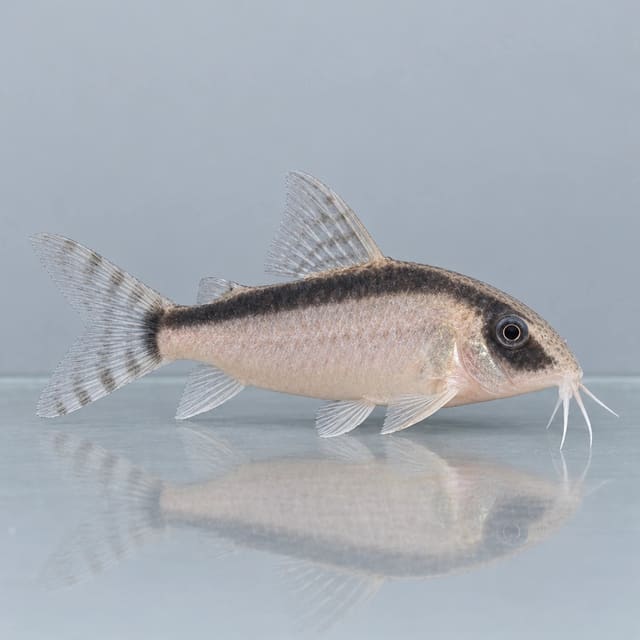
In the photographs on ScotCat's factsheet, the fish has a dark head and back, a black stripe along the upper flank and a second black stripe along the middle of the body to the base of the tail, with a pale golden-cream band between them and a pale belly. The fins are mostly clear, with a dusky dorsal fin. Those two black lines are what the name describes.
This is a fish for collectors who enjoy a little uncertainty. ScotCat, quoting the IUCN Red List assessment, notes that scientific collections hold only the original specimens from the type locality, and that the fish shown on ornamental-fish websites are most likely, but not certainly, this species. The type locality lies within the Munduruku Indigenous Territory. With no significant threats known, the species is assessed as Least Concern. A 2024 study by Tencatt and colleagues lists it among only nine described corydoras species known from the whole Tapajós basin, against 27 coded, undescribed forms such as CW101 and CW102, which shows how much remains to be learned about corys from this river.
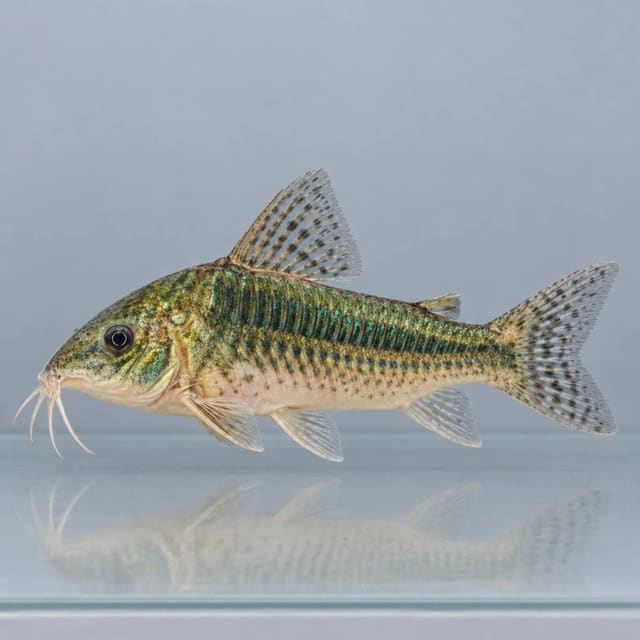
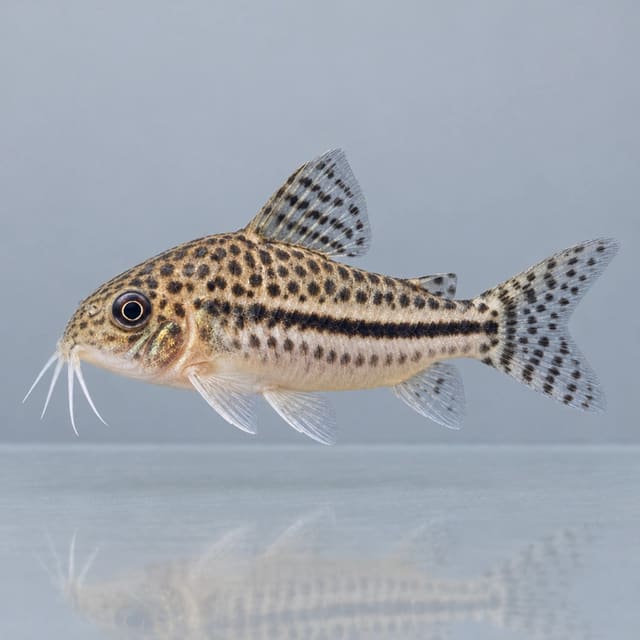
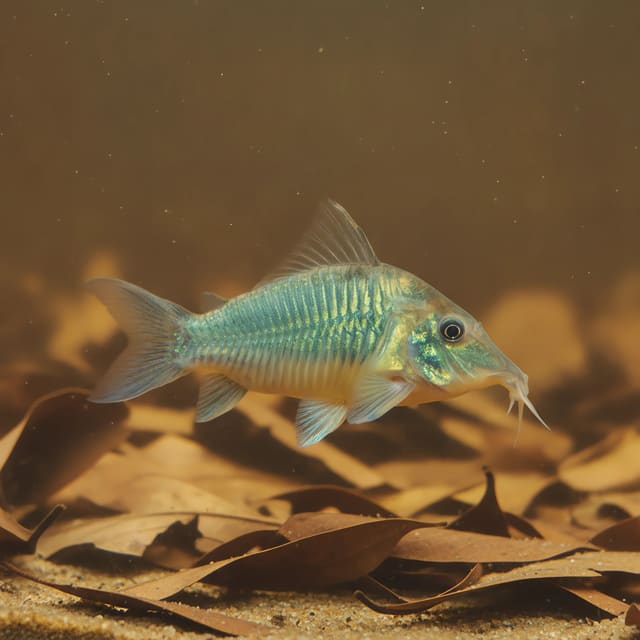
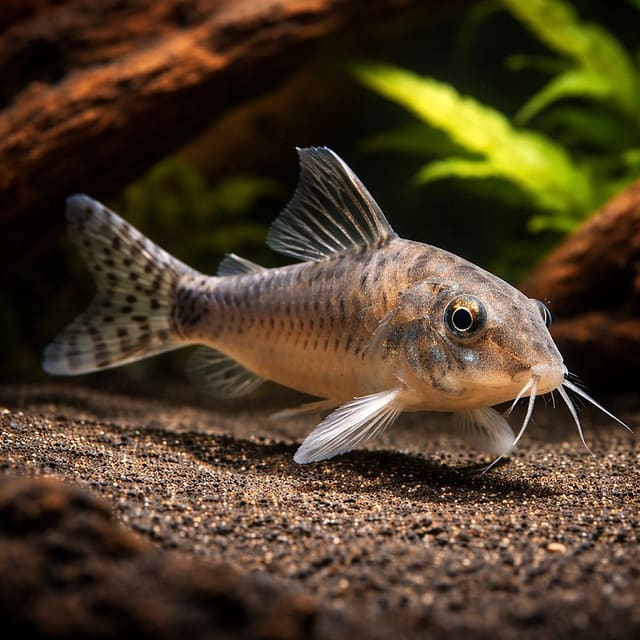
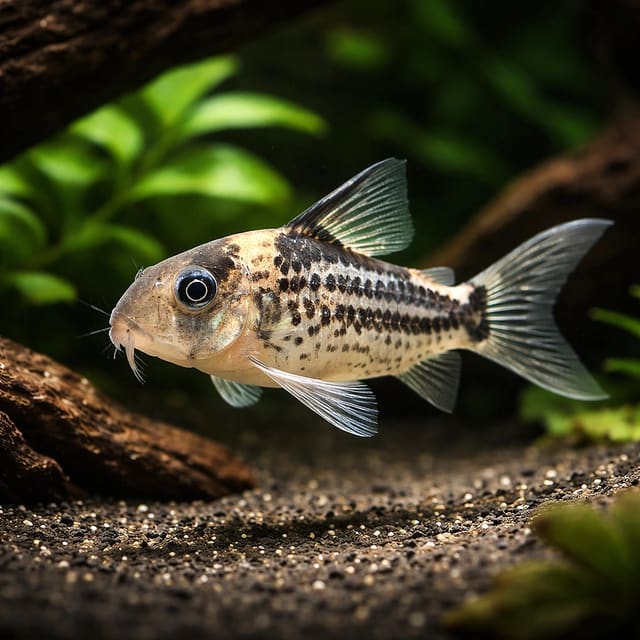
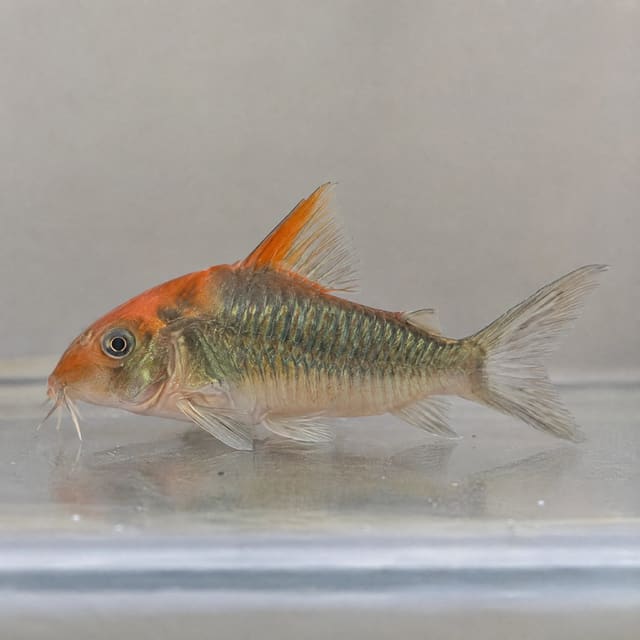
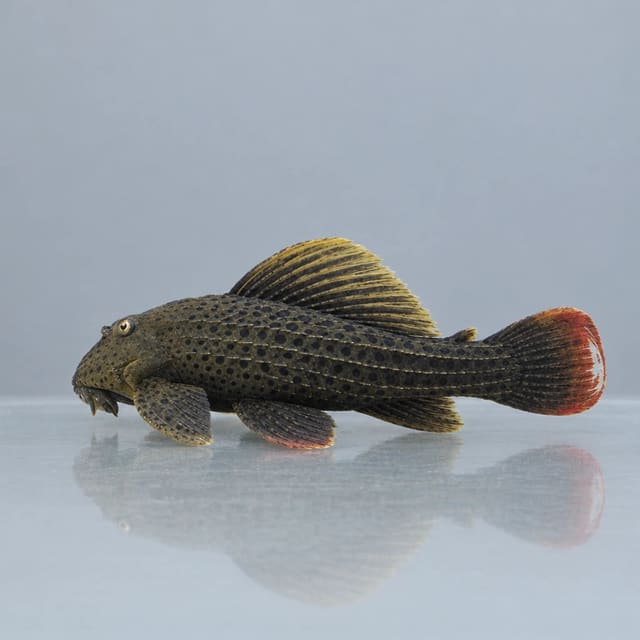
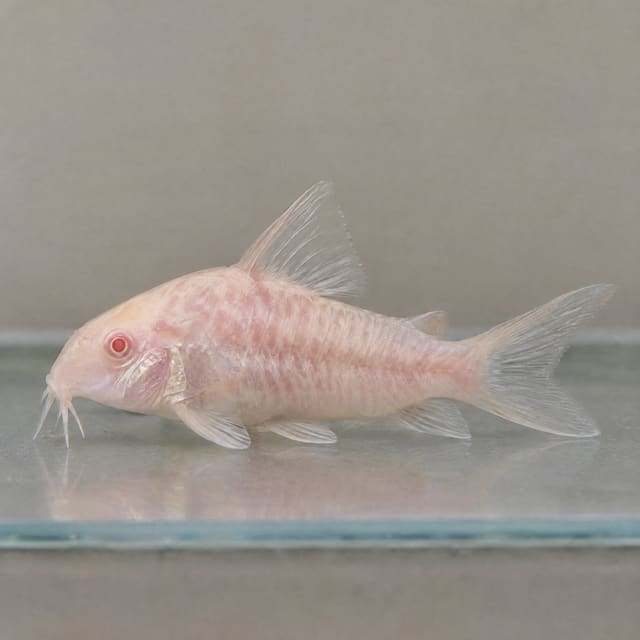
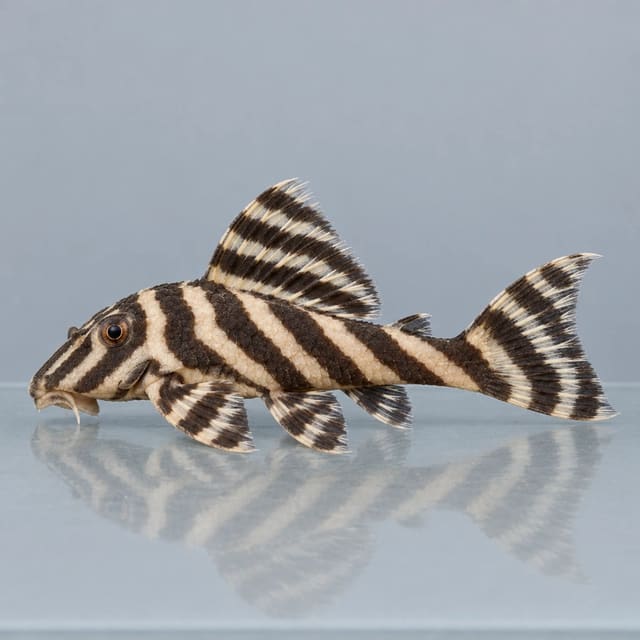
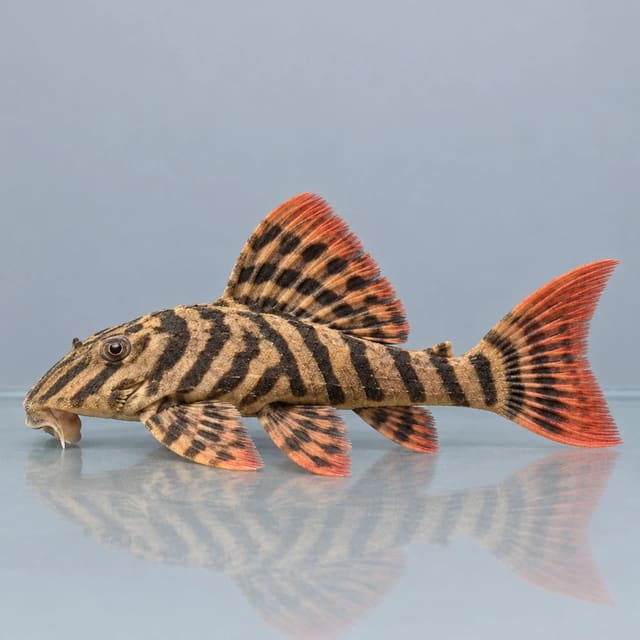
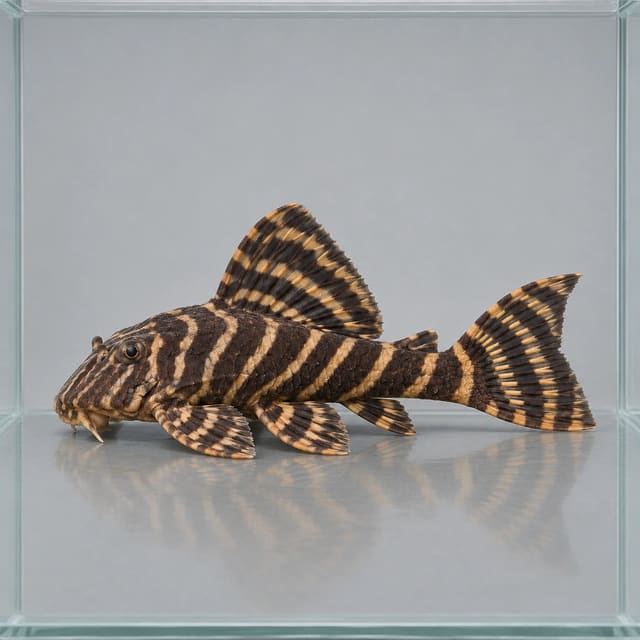
One purchase supplies one live Bifasciatus Cory in the standard size we receive, sex not chosen. Planet Catfish notes that females grow larger and more full-bodied, which is easiest to judge from above, while males develop more pointed fin tips as they mature. The gallery images are representative, prepared from a reference photograph, and do not show the individual you will receive; patterns vary between fish.
| Plan | Group | Why |
|---|---|---|
| Minimum | 5 fish | OATA's minimum for corydoras; smaller groups are often stressed |
| Preferred | A larger group where floor space allows | Planet Catfish describes it as a shoaling fish |
| Breeding attempt | A group in a species tank | ScotCat suggests a species tank for breeding |
Because it is so rarely available, buy the whole group in one order; matching fish may not be offered again for some time.
FishBase and Planet Catfish give a maximum of 5.2 cm standard length, measured from the snout to the base of the tail. ScotCat gives 5.5 cm for males and 6.0 cm for females. The difference is small, partly because standard length leaves out the tail, so plan for a fish of 5–6 cm. OATA recommends at least 80 litres for a shoal of small catfish such as corydoras, and notes that bigger tanks hold temperature and water quality more steadily. For a cory, the floor area is what counts.
Planet Catfish's advice is to use sand, with rounded gravel as an imperfect alternative, and to avoid rough or chipped gravel because it damages the barbels when the fish dig. OATA gives the same reason for sand or fine gravel in every catfish tank. Edge the sand with driftwood and plants, leaving an open area where the shoal can search for food and swim, and add shade from overhanging wood, tall plants or floating plants; Planet Catfish notes that this is all a group needs to settle.
| Zone | Use | Purpose |
|---|---|---|
| Front | Open fine sand | Foraging without barbel wear |
| Back and sides | Driftwood, plants and a few leaves | Resting cover and shade |
| Surface | Some floating plants, with gaps | Softer light and room to gulp air |
| Feeding point | A clear patch of sand | Lets you see every fish feed |
The published water values are generous. FishBase gives 22–26°C, a pH of 6.0–8.0 and a hardness of 2–25°dH; ScotCat gives a slightly narrower 23–25°C and the same pH range. Many UK tap supplies, once treated with a conditioner, fall inside these values, so for this cory the priority is usually stability rather than chemistry. Aim for the middle of the range and avoid sudden swings between water changes.
| Value | FishBase | ScotCat | Target |
|---|---|---|---|
| Temperature | 22–26°C | 23–25°C | 23–25°C |
| pH | 6.0–8.0 | 6.0–8.0 | Steady within 6.0–8.0, ideally near the middle |
| Hardness | 2–25°dH | Not given | Steady within 2–25°dH |
| Ammonia and nitrite | OATA: zero | Zero | |
| Nitrate | OATA: no more than 20 mg per litre above tap water | As low as possible | |
Test your tap water once before the fish arrive so you know your starting point, and match new water to the tank's temperature at every change. Our water matcher compares your readings with the fish you plan to keep.
Temperature, pH and hardness describe the habitat; ammonia, nitrite and nitrate measure waste. The first group should be steady, the second near zero. A mature filter is what keeps waste down, and our guide to the nitrogen cycle explains how a new tank builds one.
A filter is essential in every aquarium, as OATA says. Choose one that keeps the water clean and well oxygenated with a moderate flow across the floor, and point the outflow so waste is carried to the intake rather than settling on the sand. FishBase records this species as a facultative air-breather, so expect the odd quick dash to the surface to gulp air; that is normal, and it is a reason to leave part of the surface open.
Planet Catfish says the species readily accepts prepared foods that reach the bottom, such as tablets, granules and larger flakes, along with live or frozen bloodworm, white worm, grindal worm, Daphnia and Tubifex, which are also good for conditioning. ScotCat recommends a good flake and tablet food for adults with occasional live or frozen feeds. OATA describes corydoras as omnivorous and says catfish should be fed proper sinking foods rather than left to scavenge.
Only add fish to a mature tank in which ammonia and nitrite read zero; OATA warns that stocking too quickly leads to "new tank syndrome". Catfish should travel double-bagged because their spines can pierce bags. Acclimatise with OATA's floating bag method: lights off, float the sealed bag for about 10 minutes, add small amounts of tank water to the bag over up to 20 minutes, then release the fish with as little bag water as possible. Our page on how to acclimatise new fish walks through it. Avoid netting corys where you can, because their fin spines tangle in the mesh.
| When | Action |
|---|---|
| Before arrival | Test: 23–25°C, stable pH, zero ammonia and nitrite |
| Day one | Dim lights, no disturbance, a tiny sinking meal in the evening |
| Days two to four | Count the group and confirm each fish feeds |
| Mid-week | Retest ammonia and nitrite |
| Day seven | Full test and first 25% water change |
A settled group forages over the sand together and rests near cover. OATA's catfish care sheet lists the changes worth noticing: unusual swimming, colour turning darker or paler, hiding more than usual, breathing faster or slower, white spots or fluffy growths, fin or scale loss, and changes in body weight or appetite. Our white spot guide explains one of the commonest problems in newly moved fish.
| If you see | Do this |
|---|---|
| Short dashes to the surface | Normal air-gulping |
| Repeated gasping by the whole group | Test the water and increase aeration at once |
| Barbels wearing down | Clean the sand and check for sharp grains |
| White spots on body or fins | Test the water and read up on white spot before treating |
| One fish thin, others rounded | Target-feed at a fixed point |
ScotCat describes this cory as very peaceful and best kept with small to medium tank mates such as tetras, rasboras and danios, or in a species tank for breeding. Planet Catfish calls it a peaceful, shoaling community fish. Choose companions that live above the floor, share 23–25°C, and will not bully the corys or strip the food before it sinks.
| Suits | Avoid |
|---|---|
| Small and medium peaceful tetras | Large or aggressive fish |
| Rasboras and danios | Territorial bottom-dwelling cichlids |
| Pencilfish | Fast, greedy bottom feeders |
| Other peaceful corys | Fish needing very warm water above 25°C |
From our range, the Penguin Tetra, Diamond Tetra and Beckfordi Pencilfish keep to the water above the sand; check that their own needs overlap. For other Brochis, see the Delphax Cory, the Reticulated Cory and the Emerald Catfish, or browse all our Brochis catfish, the wider South American catfish, every cory catfish we stock and our rare and collector fish. The corydoras care guide covers the group as a whole, the tank mates tool checks a mix before you buy, and our delivery information explains dispatch days.
Planet Catfish lists breeding as unreported in the aquarium, so there is no proven method for this species yet. ScotCat suggests a species tank for breeding attempts, and Planet Catfish recommends live and frozen foods such as bloodworm, white worm, grindal worm, Daphnia and Tubifex for conditioning a group. If you try, start with a healthy, well-fed group in which the broader females can be told from the slimmer males, keep the water clean and steady, and keep notes; a first breeding record for a rare cory like this is a genuine contribution.
It is Brochis bifasciata, described by Nijssen in 1972 as Corydoras bifasciatus and also called the Two-stripe Cory. It comes from the Rio Cururu, part of the upper Rio Tapajós system in Pará State, Brazil. ScotCat describes it as very rare in the hobby.
In the 2024 reclassification by Dias and colleagues it moved from Corydoras to Brochis. Because the genus name changed, the species name changed its ending to match, so Corydoras bifasciatus became Brochis bifasciata.
FishBase and Planet Catfish give 5.2 cm standard length, measured without the tail. ScotCat gives 5.5 cm for males and 6.0 cm for females. Plan for an adult of about 5–6 cm.
At least five, as OATA advises for corydoras, and more if your floor space allows. Planet Catfish describes it as a peaceful, shoaling community fish.
Aim for 23–25°C, where the FishBase (22–26°C) and ScotCat (23–25°C) figures overlap. Both give a wide pH range of 6.0–8.0, and FishBase gives 2–25°dH, so many UK tap supplies treated with a conditioner are within range; test yours first. Stability matters more than an exact figure.
Sinking tablets, granules and larger flakes, plus live or frozen bloodworm, white worm, grindal worm, Daphnia and Tubifex, all of which Planet Catfish lists as readily accepted.
Small to medium peaceful fish such as tetras, rasboras and danios, as ScotCat suggests, and other calm bottom dwellers. Avoid large, aggressive or territorial fish.
Planet Catfish lists breeding as unreported in the aquarium. Any successful spawning would be new information worth recording.
No reviews for this item yet. Bought one? Honest reviews only, good or bad.
What customers say about ordering from us
Easy website plenty of info on fish your buying great to pick a time slot
TRACEY DURRANT · 7 Oct 2026
Got some lovely fish thank you
Kevin Mackie · 7 Oct 2026
Reviews of our shop, collected by Judge.me, an independent third-party review collector. Newest first.
Moved by UK carriers licensed to handle live animals
Hand-packed with oxygen bags, poly box, heat pack
Email photos the same day; an optional unboxing video helps us review problems faster — claim terms apply
Klarna & PayPal Pay in 3 at checkout