Advanced
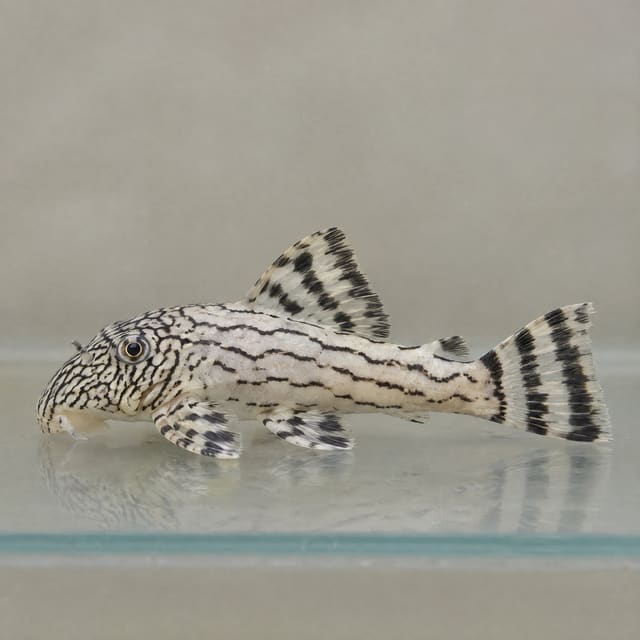
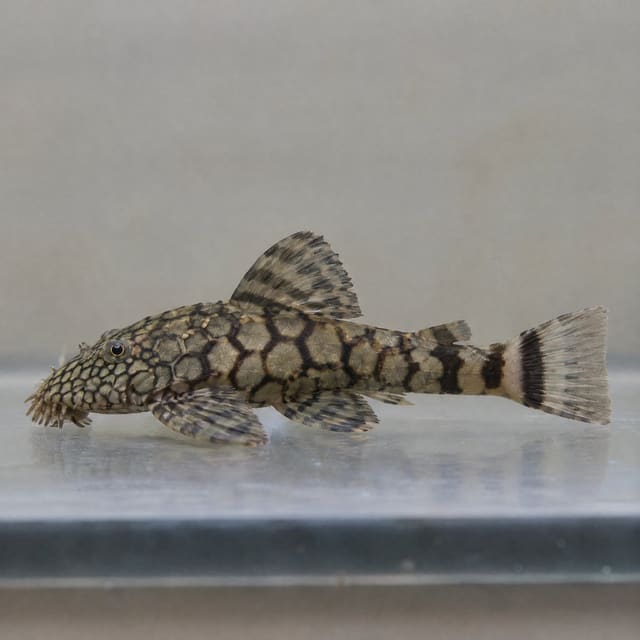
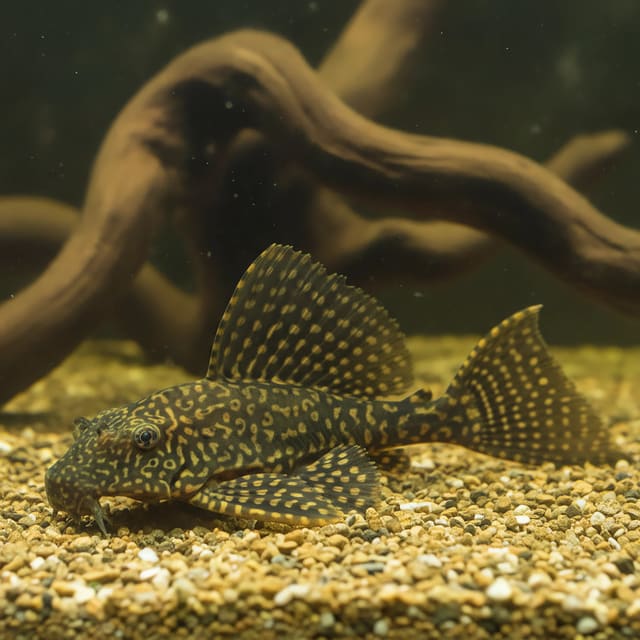
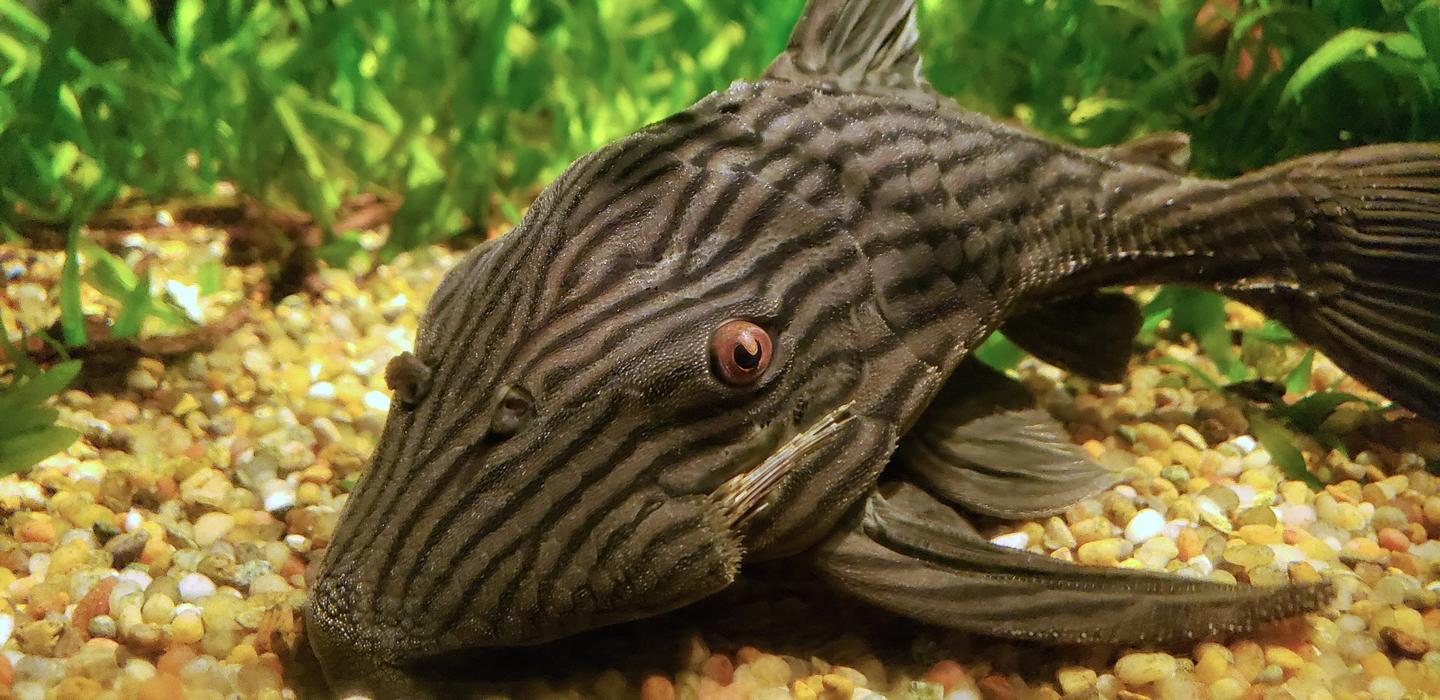
L024 Redfin Cactus Pleco (Pseudacanthicus pitanga)
25–27°C · pH 6–7.5
£101.79
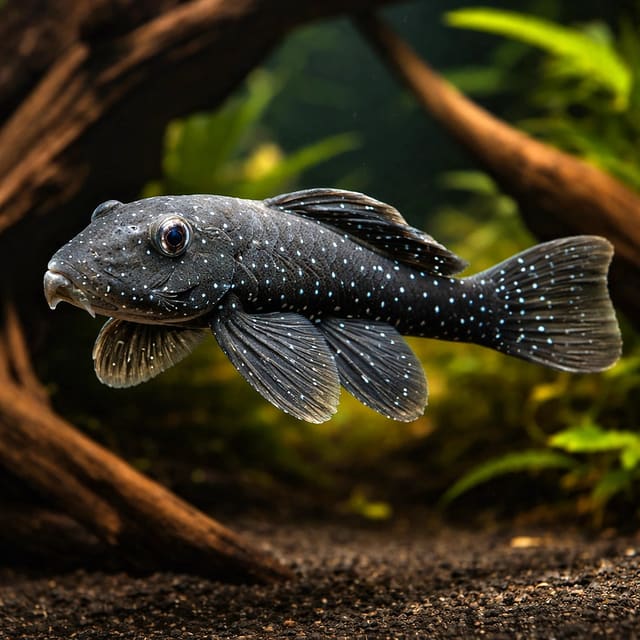
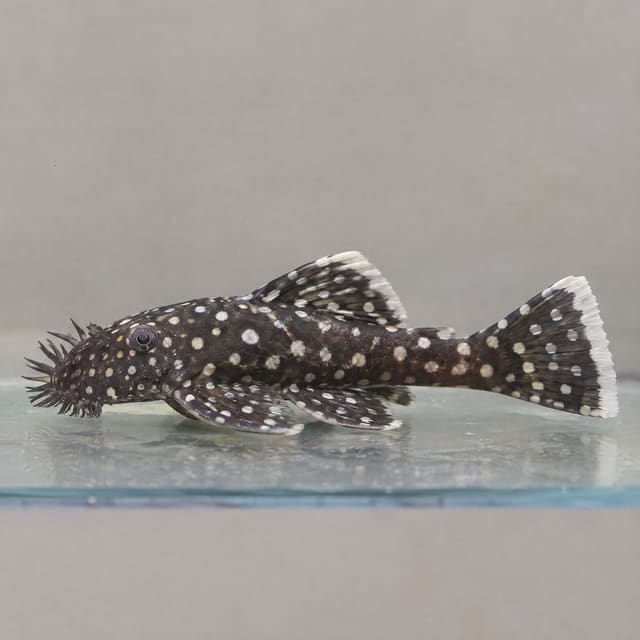
The L020 Polkadot Pleco is a white-spotted Spectracanthicus from the Rio Xingu in Brazil, listed by Planet Catfish and Scotcat as Spectracanthicus zuanoni. It is a different fish from the L030 Peppermint Pleco. A night-grazing omnivore of about 13 cm, it needs warm, flowing, oxygen-rich water and a rock cave. One live fish per purchase.
Spectracanthicus zuanoni
The L020 Polkadot Pleco is a white-spotted Spectracanthicus from the Rio Xingu in Brazil, listed by Planet Catfish and Scotcat as Spectracanthicus zuanoni. It is a different fish from the L030 Peppermint Pleco. A night-grazing omnivore of about 13 cm, it needs warm, flowing, oxygen-rich water and a rock cave. One live fish per purchase.
‘Pleco’ is a loose aquarium-trade label, not one species or one care sheet. Before buying, confirm the scientific name or defensible L-number, adult size and measurement method, required footprint, temperature and water, diet, social plan and source. No universal pleco tank size, menu or algae result is honest.
Read the full care guidance when planning conditions for your aquarium.
The L020 Polkadot Pleco is a white-spotted Spectracanthicus from the Rio Xingu at Altamira, in the Brazilian state of Pará. Planet Catfish and Scotcat both list L020 as Spectracanthicus zuanoni, a species described in 2014 by Carine Chamon and Lúcia Rapp Py-Daniel and named after the ichthyologist Jansen Zuanon, who first collected it and recognised it as new. Scotcat also gives the names L354 and grey-spotted sail-fin pleco, and Planet Catfish records the Brazilian name acari bola branca, the "white-ball pleco".
The L-number has a tangled history. Planet Catfish explains that the original magazine photograph of L020 showed only a colour pattern shared by two different plecos living in the same place in the Xingu: a Baryancistrus and a Spectracanthicus. To settle it, L019 now refers to the Baryancistrus and L020 to the Spectracanthicus. You will still see L020 sold under the name Spectracanthicus punctatissimus, which belongs to its close relative, our L030 Peppermint Pleco.
| Feature | L020, S. zuanoni | L030, S. punctatissimus |
|---|---|---|
| Other L-numbers | L354 | L016 and L315 |
| Spots | Large white spots | Small yellowish to white or light-blue dots |
| Fin tips | No yellow bars recorded | Yellowish bars on the tips of the dorsal and tail fins |
| Eyes | Larger: up to 29.2% of head length | Smaller |
| Size | 129 mm standard length (Planet Catfish) | 106 mm standard length (Planet Catfish) |
| Range | Lower Rio Xingu at Altamira | Xingu basin upstream of Belo Monte |
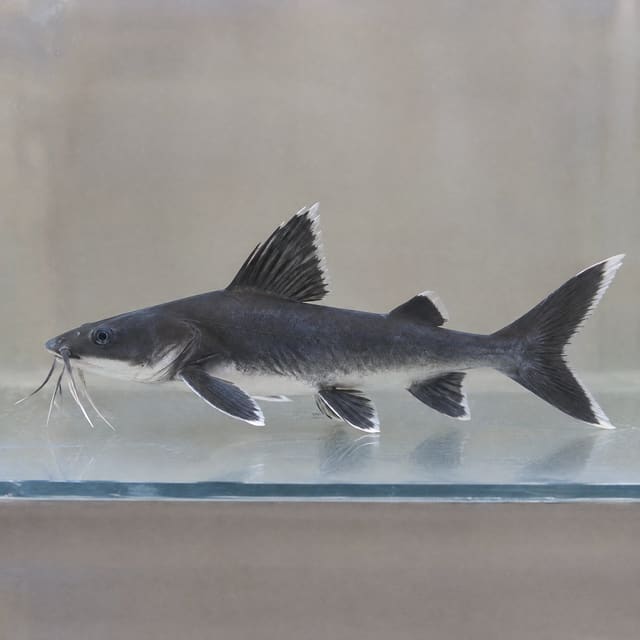
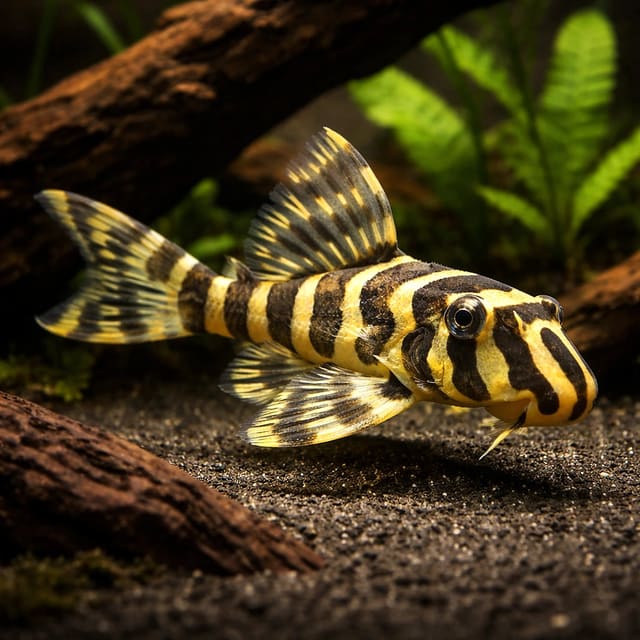
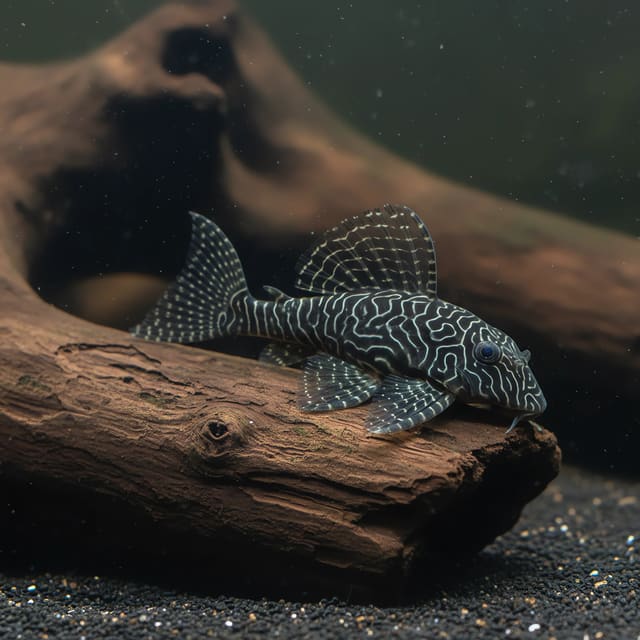
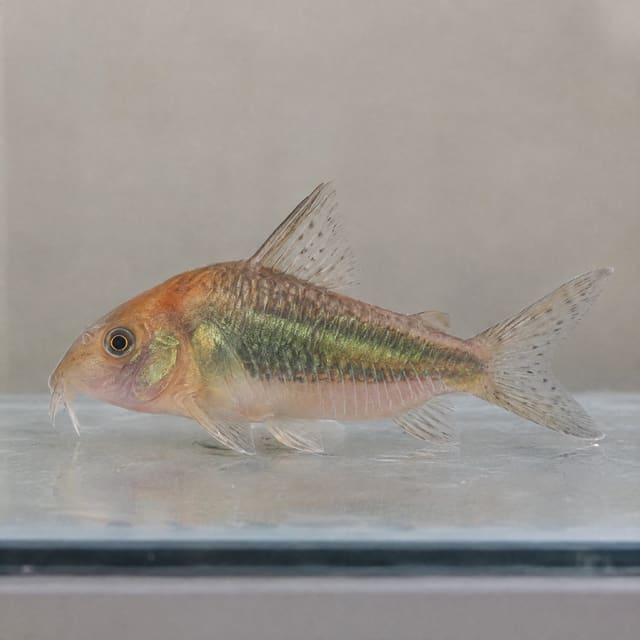
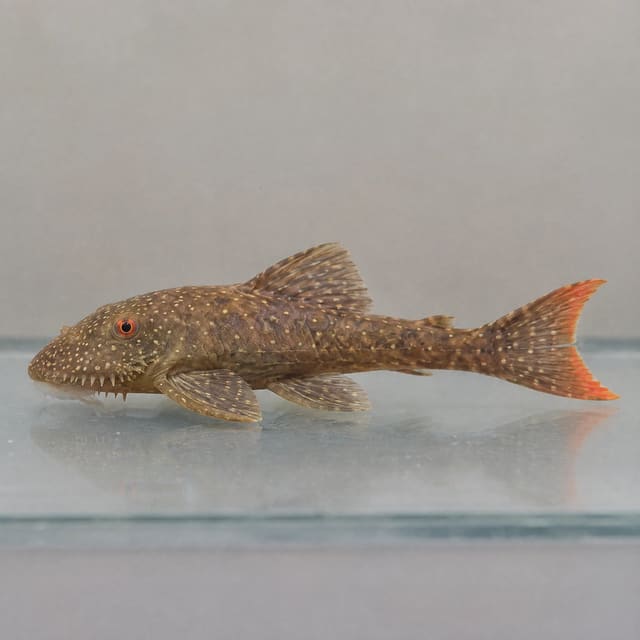
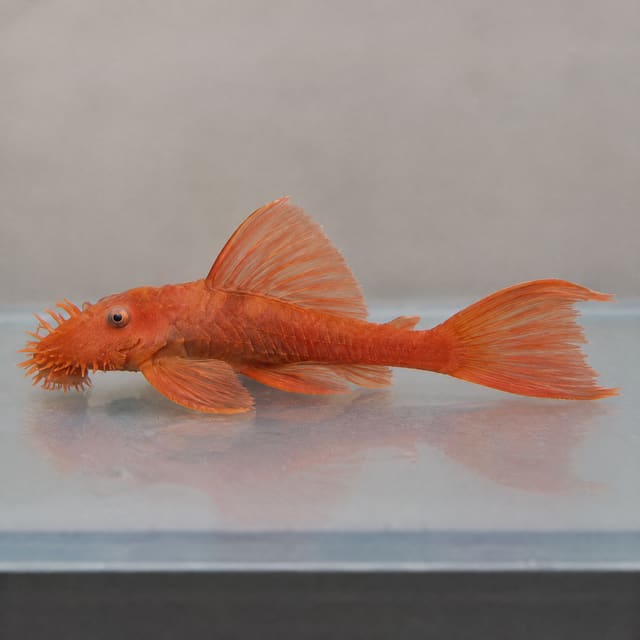
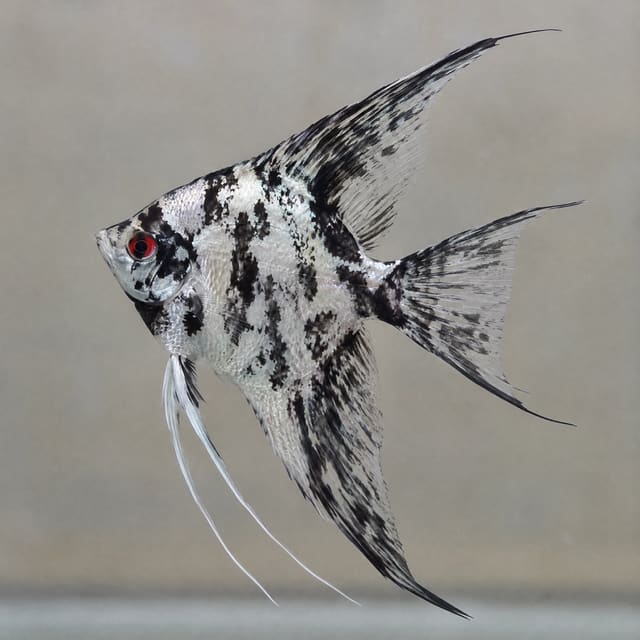
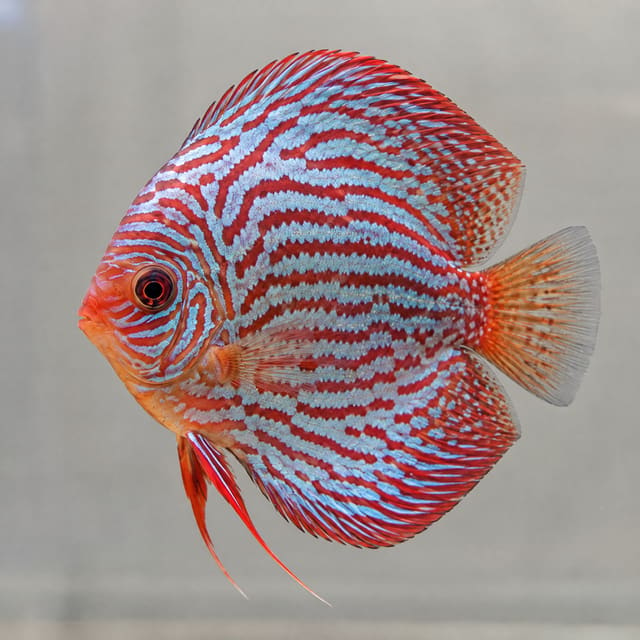
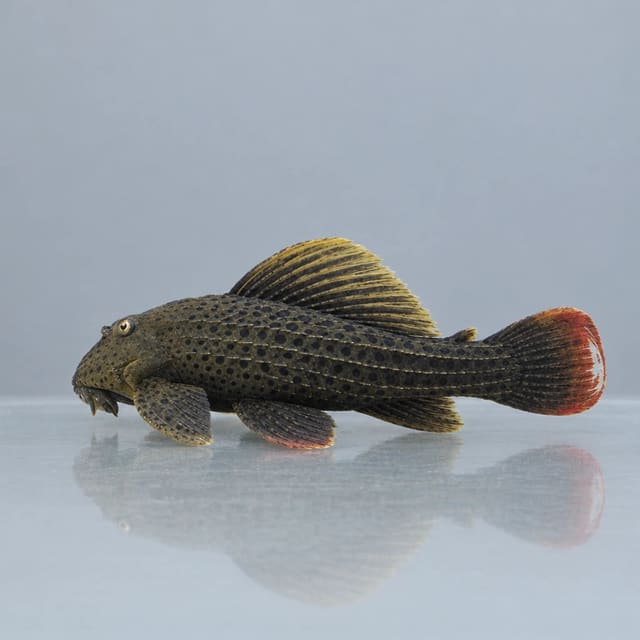
Care for the two is almost identical, and young L020 share shelters with S. punctatissimus in the wild, so they can be kept together in a large, rocky aquarium. If you already keep our L030 Peppermint Pleco, L020 is a different fish, not a colour form of the same one. The gallery images are representative, prepared from a reference photograph, and do not show the exact fish supplied.
Planet Catfish separates Spectracanthicus from almost all other plecos by a dorsal-fin membrane that reaches back to the spine of the adipose fin, which gives the fish its "sail-fin" look. It differs from the similar Baryancistrus by having fewer than 25 teeth, and from Parancistrus by its small gill openings.
One purchase quantity supplies one live L020 Polkadot Pleco in the standard size offered. Sex is not specified. Scotcat notes that males develop a longer, broader head and more odontodes, tooth-like skin spines, behind the gill covers and on the pectoral-fin spines; young fish show little difference.
In the wild, Planet Catfish and FishBase record the L020 pleco living alone or in groups of three under boulders, with juveniles in the spaces beneath rocks. A single fish, or a small group with a cave each, suits it well.
Dispatch days and packing are explained in our delivery information.
Planet Catfish gives a maximum of 129 mm standard length and Scotcat 12 cm, both without the tail. FishBase records a much larger maximum of 24 cm total length and 220 g, which includes the tail. Plan for a fish of 13 cm body length or more.
No source gives a tank size for this species. OATA suggests at least 80 litres for the smaller pleco species and points out that a larger aquarium keeps temperature and water quality more stable. For L020, floor space matters more than height: a long base lets you build a line of rock caves, run a current along the tank and keep each pleco's territory apart. Our tank volume calculator converts your measurements into litres.
Planet Catfish describes L020 as a moderately current-loving fish of rock-bottom areas subject to backwaters and strong currents, found down to 2 m deep. Recreate that with smooth, rounded boulders and flat rocks stacked into crevices, over sand or fine gravel. Place rocks on the glass before adding sand, so that nothing can shift. A little wood adds cover, but rock should dominate.
Point the filter outlet or a flow pump along the length of the tank so that water moves over the rocks without blasting the fish off them. Bright light is unnecessary for a night-grazer, but some light on the rocks encourages the natural film of algae it likes to graze.
| Area | Purpose |
|---|---|
| Rock caves along the back | A daytime refuge and territory for each pleco |
| Boulders across the middle | Grazing surfaces and current breaks |
| Open sand at the front | A feeding station you can watch and clean |
| Flow along the length | Oxygen-rich water that mimics the Xingu |
Our L-number plecos include several other Xingu species that suit the same layout.
Scotcat advises a strong current and oxygen-rich water for this genus because of the high temperatures it enjoys. The target column keeps inside the ranges for both L020 and its relative L030, and in the lower part of the temperature range, where warm water holds a little more oxygen.
| Value | Planet Catfish (L020) | Scotcat (L020) | Scotcat (L030) | Target |
|---|---|---|---|---|
| Temperature | 25–30°C | 26–30°C | 26–30°C | 26–28°C |
| pH | Not given | 5.5–7.0 | 6.0–7.2 | 6.0–7.0 |
| Hardness | Not given | Not given | Not given | Stable, within OATA's general catfish range of 4–18 dGH |
UK tap water varies widely, and your water company publishes the hardness and pH for your postcode. In a hard-water area, blending tap water with reverse-osmosis water is the usual way to bring pH and hardness down; change it slowly and keep each water change consistent. Our water matcher compares your supply with this fish, and our water chemistry guide explains every reading.
| Reading | Target |
|---|---|
| Ammonia | Zero mg/l |
| Nitrite | Zero mg/l |
| Nitrate | No more than 20 mg/l above your tap water |
OATA sets these waste limits for aquarium catfish. A river pleco from fast, clean water is quick to suffer when ammonia or nitrite appear, so test every week and act on any reading above zero.
For this pleco the filter has two jobs: keeping the water clean and keeping it moving. Choose filtration rated well above the tank volume, add a flow pump if the filter alone cannot move water across the whole floor, and make sure the surface ripples for gas exchange. Our guide to aquarium filtration explains how to combine the two.
Planet Catfish and FishBase describe L020 grazing algae and other organisms from the film on rocks, feeding mainly at night. Scotcat calls the genus omnivorous and recommends a varied diet of vegetable foods, tablets and frozen foods.
Add an L020 only to a mature aquarium with zero ammonia and nitrite, the temperature steady at 26–28°C and the caves already built. OATA recommends double bagging catfish so that their fin spines cannot pierce the bag, and its floating bag method suits this fish: lights off, float the bag for about 10 minutes, then add small amounts of tank water over up to 20 minutes, and release the fish with as little bag water as possible. Our guide to acclimatising new fish covers each step. Move the pleco in a container rather than a net, where its spines can catch.
| Checkpoint | What to do |
|---|---|
| Before arrival | Test the water, confirm the temperature and check the flow reaches the caves |
| Release | Lights off and no food that evening |
| First meals | A few tablets near the caves after dark |
| Every day | Check breathing and belly, and remove leftovers |
| End of the week | Full water test and a water change |
A pleco from warm, oxygen-rich water shows stress quickly when flow or water quality slips. OATA's warning signs for catfish include hanging at the surface, sitting abnormally or swimming erratically, colour change, more hiding or aggression, faster or slower breathing, white spots or fluffy growths, damaged fins, weight change and reduced appetite.
| If you see | Do this |
|---|---|
| Fast breathing or clinging high on the glass | Test ammonia, nitrite and temperature, and increase flow and surface movement |
| Spots fading to grey and constant hiding | Check every water reading and the temperature |
| A hollow belly | Feed after dark, closer to its cave |
| Two plecos fighting over one cave | Add caves and sight breaks between them |
| White spots, fluffy growths or damaged fins | Test the water and seek fish-health advice |
Planet Catfish lists the plecos found sharing shelters with young L020 in the Xingu: Ancistrus species including A. ranunculus, Baryancistrus xanthellus, S. punctatissimus, Hopliancistrus tricornis, Parancistrus nudiventris, Peckoltia vittata and Pseudancistrus aff. barbatus. That makes a Xingu pleco aquarium a natural choice, as long as every fish has a cave of its own.
| Suits | Avoid |
|---|---|
| Other Xingu plecos of similar size, each with its own cave | Large plecos that take over every cave |
| Peaceful midwater fish that tolerate 26–28°C and current | Cool, still community tanks |
| A small group of L020 with one cave each | Boisterous bottom-feeders that take its food at night |
From our range, Xingu companions include the Candy Striped Pleco L015 (Peckoltia vittata), the L034 Medusa Pleco (Ancistrus ranunculus), the L018 Golden Nugget Pleco (Baryancistrus) and the L046 Zebra Pleco. For the midwater, a school of Cardinal Tetra is often kept in warm pleco aquariums. Check every mix with our tank mates tool before you buy, and browse all our catfish and plecos, South American catfish and rare and collector fish. Our pleco care guide covers the basics.
Planet Catfish records that S. zuanoni has been bred in the aquarium and lists four breeding reports, and its relative S. punctatissimus has been bred too. If you hope to breed L020, keep a small group with several caves and the warm, flowing water described above. The species has not been evaluated on the IUCN Red List; its relative S. punctatissimus is listed as Least Concern.
L020 is a Spectracanthicus pleco from the Rio Xingu at Altamira, Brazil. Planet Catfish and Scotcat both place L020 in Spectracanthicus zuanoni, a species described in 2014, which Scotcat also lists as L354 and the grey-spotted sail-fin pleco.
No. L030 is Spectracanthicus punctatissimus, which has small yellowish to white dots and yellowish tips to the dorsal and tail fins. L020 is S. zuanoni, with large white spots and noticeably bigger eyes. Both live in the Xingu, and young L020 share shelters with S. punctatissimus in the wild.
The two fish are close relatives from the same river, and for many years shops and suppliers grouped them together. Current references (Planet Catfish and Scotcat, following the 2014 revision of the genus) list L020 under S. zuanoni and L016, L030 and L315 under S. punctatissimus.
Planet Catfish gives 129 mm standard length and Scotcat 12 cm, while FishBase records a maximum of 24 cm total length and 220 g. Plan for a fish of 13 cm body length or more.
Warm, flowing, oxygen-rich water. Planet Catfish gives 25–30°C and Scotcat 26–30°C with pH 5.5–7.0. We suggest 26–28°C and pH 6.0–7.0, with zero ammonia and nitrite and nitrate no more than 20 mg/l above your tap water.
In the wild it grazes algae and other organisms from rocks, mostly at night. Scotcat describes it as an omnivore, so feed sinking tablets, frozen foods and vegetable foods after the lights go out.
Yes, if each pleco has its own cave. In the Xingu young L020 share shelters with plecos such as Ancistrus ranunculus, Baryancistrus xanthellus, Peckoltia vittata and S. punctatissimus, but adults still need separate hiding places.
Yes. Planet Catfish records that S. zuanoni has been bred in the aquarium and lists four breeding reports.
No reviews for this item yet. Bought one? Honest reviews only, good or bad.
What customers say about ordering from us
Easy website plenty of info on fish your buying great to pick a time slot
TRACEY DURRANT · 7 Oct 2026
Got some lovely fish thank you
Kevin Mackie · 7 Oct 2026
Reviews of our shop, collected by Judge.me, an independent third-party review collector. Newest first.
Moved by UK carriers licensed to handle live animals
Hand-packed with oxygen bags, poly box, heat pack
Email photos the same day; an optional unboxing video helps us review problems faster — claim terms apply
Klarna & PayPal Pay in 3 at checkout