−15%
Suckermouth Catfish Gold (Hypostomus plecostomus)
22–27°C · pH 6.2–8
£8.49£9.99

L030 Peppermint Pleco is a compact Xingu loricariid for a mature, warm, oxygen-rich aquarium. One unsexed fish is supplied in the selected 7-9 cm or 10-11 cm approximate dispatch size; gallery images are representative.
Adult size is the maximum length this species reaches at full maturity (scientific sources). The livestock you receive will be younger and smaller — pick a size above for the actual shipping size. Product-photo provenance and any image-specific limitations are stated on the listing.
Spectracanthicus punctatissimus
Confirm your email, then we’ll send an availability message for this exact item if it returns within 180 days.
This request is only for this product—no newsletter or other promotions. A mail-provider retry may very rarely duplicate the same availability message. Unconfirmed addresses are removed after 48 hours. See our privacy policy.
L030 Peppermint Pleco is a compact Xingu loricariid for a mature, warm, oxygen-rich aquarium. One unsexed fish is supplied in the selected 7-9 cm or 10-11 cm approximate dispatch size; gallery images are representative.
Adult size is the maximum length this species reaches at full maturity (scientific sources). The livestock you receive will be younger and smaller — pick a size above for the actual shipping size. Product-photo provenance and any image-specific limitations are stated on the listing.
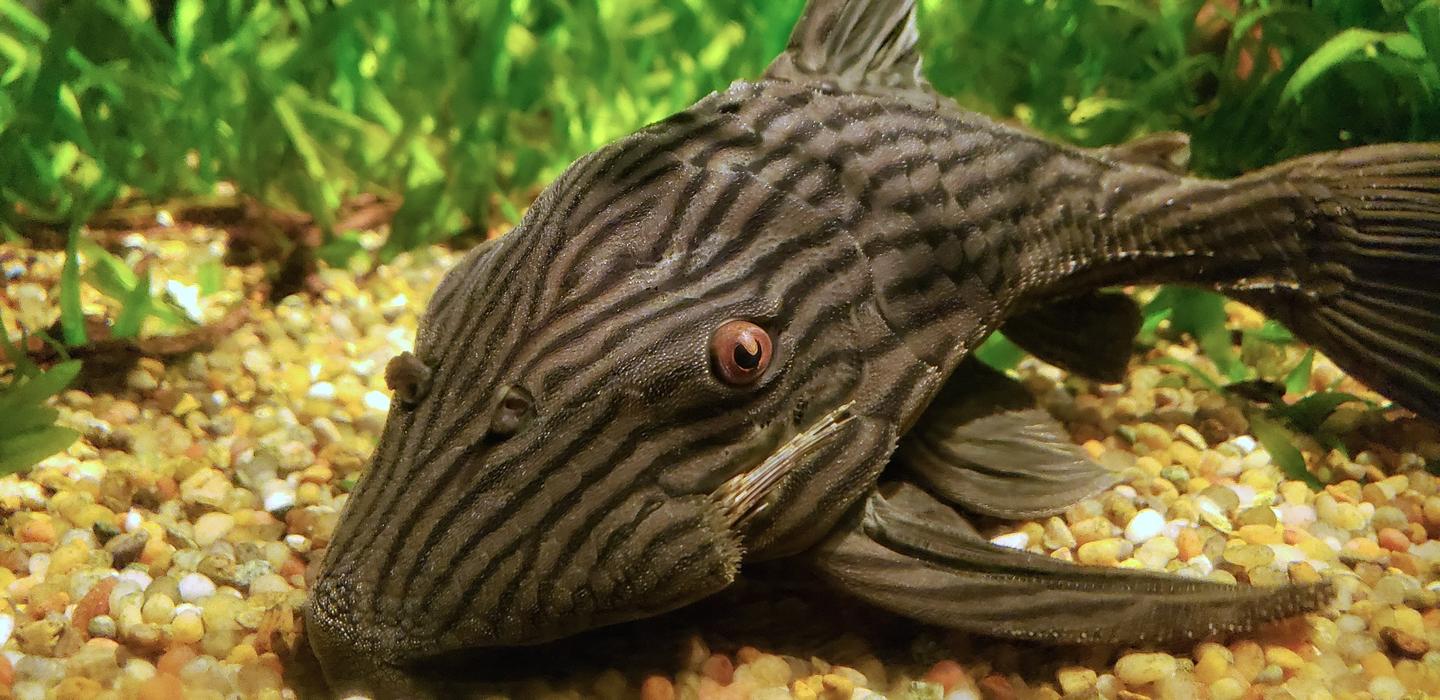
‘Pleco’ is a loose aquarium-trade label, not one species or one care sheet. Before buying, confirm the scientific name or defensible L-number, adult size and measurement method, required footprint, temperature and water, diet, social plan and source. No universal pleco tank size, menu or algae result is honest.
Maintain these water conditions for optimal health and vibrant colors
L030 Peppermint Pleco is the aquarium trade name used here for Spectracanthicus punctatissimus, a compact spotted loricariid catfish from the Xingu River basin in Brazil. It is best suited to an established warm-water aquarium with excellent oxygenation, strong biological filtration, rock or wood cover and at least one secure cave. This is a collector pleco for deliberate care, not a fish that should be bought simply to clean algae.
This listing supplies one unsexed live fish in the selected approximate dispatch-size band. Choose 7-9 cm or 10-11 cm where those options are available. A quantity of one means one fish, not a pair, breeding group or choice of sex. Size bands are practical dispatch measurements; natural posture, fin position and normal measurement variation mean an individual does not arrive as an exact whole-centimetre object.
The accepted scientific spelling is Spectracanthicus punctatissimus. Older aquarium and taxonomic material may use Oligancistrus punctatissimus; that is a historical combination, not a second fish included with this listing. Trade L-numbers can also overlap between sources, so this page keeps the supplied L030 identity without claiming a specimen-level collecting locality or genetic certificate that has not been provided.
Pattern and colour are naturally variable. The gallery shows representative illustrations of the listed form, not the exact fish that will be selected for dispatch. Spots may appear cream, yellowish, pale blue or nearly white under different aquarium lights, backgrounds, camera settings and stress states. Sex, spot count, fin markings and exact body shade are not selectable unless a particular option explicitly says otherwise.
| Accepted name | Spectracanthicus punctatissimus (Steindachner, 1881) |
|---|---|
| Older name | Oligancistrus punctatissimus |
| Family | Loricariidae |
| Natural distribution | Xingu River basin, Brazil; this is distribution information, not a claim about the source of the individual sold |
| Documented size context | Examined material to 119.8 mm standard length; plan aquarium space for roughly 14-15 cm total length |
| Selected sale unit | One unsexed fish in the selected approximate dispatch-size band |
| Practical aquarium baseline | 150 litres or more for one fish, with a footprint around 90 cm or longer, mature filtration and several shelters |
| Temperature | 26-30°C, stable and strongly oxygenated |
| Practical pH | About 6.0-7.5; stability and clean water matter more than chasing a decimal |
| Diet | Detritus/periphyton-grazing omnivore; varied sinking plant, fibre and microbial foods with modest animal material |
| Temperament | Usually reserved with open-water fish but territorial around caves and food with other bottom dwellers |
| Experience level | Intermediate; oxygen, feeding access and bottom-territory design require attention |
| Current availability | Use the size selector for live price and stock; unavailable options cannot be promised for immediate dispatch |
The product has two protected size options: 7-9 cm and 10-11 cm. Each option has its own current price and stock status. Select the actual size wanted before adding to the basket. Do not assume the lower-priced option, the first option shown or a photograph corresponds to the fish currently available.
| Selected option | What one unit means | Planning point |
|---|---|---|
| 7-9 cm | One unsexed fish within the approximate dispatch band | Still requires the permanent adult aquarium, secure cover and targeted food from the first day |
| 10-11 cm | One unsexed fish within the approximate dispatch band | Needs established adult-scale territory immediately and may be less forgiving of transport stress or food competition |
Do not choose a smaller fish as a way to postpone upgrading the aquarium. A juvenile needs the same stable heat, oxygen and mature biological system as a larger specimen. Moving a settled cave-dwelling pleco through repeated temporary tanks adds stress and makes feeding and condition harder to judge.
Neither option is sold as male, female, proven pair, breeding stock, wild-caught, captive-bred or locality-certified unless those words appear in the option itself. The present options state size only. The current stock indicator is the authority for availability; when a size is unavailable, use the restock facility rather than relying on old search-result text.
The accepted name used by Eschmeyer's Catalog of Fishes is Spectracanthicus punctatissimus. A peer-reviewed 2014 revision of the genus placed Oligancistrus in synonymy with Spectracanthicus. Showing both names once is useful because older books, supplier sheets and search results may use the older combination, but repeating both throughout a sales page would create confusion rather than authority.
The same revision describes this species with small yellowish spots over the head, body and fins, plus yellowish distal bands on the dorsal and caudal fins. That description is more precise than promising “electric blue” or pure-white spots. Aquarium lighting can shift the visual impression dramatically, and a stressed newly arrived fish may look darker or less contrasting before it settles.
L-numbers are aquarium-trade identifiers created to distinguish loricariids before or alongside formal species names. They are valuable shopping shorthand, but they are not a replacement for taxonomy, nor do they prove where an individual fish was collected. Some specialist indexes associate more than one L-number with this species. This listing retains L030 because that is the product identity supplied to the shop, while the accepted species name anchors the care information.
The natural range is given as the Xingu River basin in Brazil. That tells us about evolutionary and habitat context. It does not establish that the particular fish offered was taken from the wild, bred in Europe, bred in Asia or collected at a named Xingu locality. No unsupported provenance has been added.
A healthy specimen has the flattened underside, ventral mouth and armoured body plates typical of loricariid catfish. The body is dark, carrying many small pale spots rather than the very large white spots seen in some related forms. Fin edges can show lighter bands, but intensity and completeness vary.
Colour should never be assessed from one edited image alone. Tank background, tannins, brightness, camera white balance, screen calibration, feeding, social stress and the fish's immediate state all influence what a person sees. A darker fish is not automatically unhealthy, and a paler fish is not automatically a different species. Look at body condition, posture, breathing, feeding response and skin integrity together.
Young fish can change in proportion and contrast as they mature. Individual spots do not stay in a perfectly fixed catalogue layout, and the selected fish will not be matched spot-for-spot to a gallery illustration. Buyers who require a photographed individual should not infer that service from a representative product page.
Sex cannot be confirmed from the colour pattern. Mature loricariids may show sex-related differences in odontodes, body proportions or breeding condition, but those features can be subtle, age-dependent and difficult to assess without handling. This product is sold unsexed to avoid turning an uncertain visual guess into a promise.
The taxonomic revision examined material up to 119.8 mm standard length. FishBase reports a maximum of 10.6 cm standard length. Standard length is measured from the snout to the base of the tail, excluding the caudal fin. Retail and home-aquarium measurements often use total length, which includes the tail and therefore produces a larger number.
For practical aquarium planning, allow for roughly 14-15 cm total length rather than treating 10.6 cm as the complete tip-to-tip adult. This is a conservative husbandry allowance, not a guarantee that every fish will reach exactly 15 cm. Genetics, age, sex, food, health and measurement technique all affect the number recorded.
Floor area and shelter distribution matter more than litres alone for a bottom-territorial fish. A tall narrow aquarium can contain 150 litres yet provide less useful territory than a longer, wider tank. Plan around the adult fish, its cave, feeding area, maintenance access and the territories of every other bottom dweller.
Use 150 litres as a conservative lower planning baseline for one fish, preferably with a footprint around 90 cm long or greater. This is not a universal legal minimum or a licence to stock every 150-litre shape identically. An aquarium with other plecos, large wood, heavy rockwork or vigorous tank mates needs more usable floor area and often more total volume.
A mature 180-litre or larger community aquarium usually gives more room to create both a high-flow feeding zone and calmer secure refuges. Larger systems also offer more thermal and chemical stability, although extra volume cannot compensate for weak oxygenation, blocked filters or neglected maintenance.
Before purchase, map the bottom of the aquarium. The fish needs a cave it can enter and turn within, shaded cover, an unobstructed route to food and space away from another catfish's entrance. Keep enough open access to siphon trapped waste. Decor that looks dense from the front may leave only one defensible cave behind it.
Browse the wider pleco collection or the catfish and plecos shop when comparing adult size and territorial needs. “Pleco” covers hundreds of species with very different body sizes, diets and flow requirements; the name alone is not a stocking calculation.
The species' Xingu context points toward rocky, flowing, highly oxygenated habitat rather than still, dirty water. Build the aquarium around stable structures, crevices, shade and clean current. Smooth stones, securely placed rockwork, suitable wood and robust caves can create several sight breaks without turning the bottom into an uncleanable wall.
Every rock and cave must be stable before water and fish are added. Plecos push into narrow spaces and can undermine loose pieces. Place heavy structures on a secure base rather than balancing them on shifting gravel. Avoid sharp edges that can damage the abdomen, eyes or fins.
Provide at least one cave per territorial pleco, plus spare shelter where space permits. Entrances should not all face one another. A fish that can see every other cave from its own doorway may spend more energy defending than feeding. Broken lines of sight are often more effective than simply adding one extra ornament.
Wood is useful as cover and as a surface for biofilm, but this species should not be described as an obligate wood eater. Include wood where it supports the layout, not because the fish is expected to survive by digesting the decor. Rock, glass, wood and mature filter surfaces can all support the microbial films the fish explores.
Plants are possible if they tolerate warmth, current and the chosen lighting. Attach hardy epiphytes to secure decor rather than relying only on delicate rooted plants in the fish's main route. The pleco is not guaranteed to leave every plant untouched, especially when underfed or when soft leaves collect edible growth.
| Parameter | Planning range | How to use it |
|---|---|---|
| Temperature | 26-30°C | Keep stable; warmer water carries less oxygen, so aeration and surface movement become more important |
| pH | About 6.0-7.5 | Avoid abrupt correction; stable suitable water is safer than repeated chemical swings |
| Hardness | Soft to moderately hard, roughly 2-12 dGH as a practical band | Know the tap-water baseline and acclimate carefully rather than forcing a number quickly |
| Ammonia | 0 mg/l | Any detected ammonia requires immediate investigation and corrective action |
| Nitrite | 0 mg/l | Any detected nitrite indicates an unsafe biological-filtration problem |
| Nitrate | Kept consistently low through stocking, feeding and water changes | Follow the trend in the actual aquarium rather than relying on a single occasional test |
| Flow and oxygen | High dissolved oxygen with purposeful current and sheltered resting areas | Watch the fish and surface movement; strong pump output is not useful if the tank still has stagnant debris zones |
A water temperature of 26-30°C is warm enough that oxygen management cannot be an afterthought. Use efficient filtration, visible surface agitation and, where helpful, an air stone or additional circulation. Clean mechanical media before it clogs, but do not sterilise all biological media at once.
Strong current does not mean blasting the fish against the glass continuously. Direct flow across rock and feeding surfaces while leaving caves and lee areas where the fish can rest. Observe where waste collects. A nominally powerful filter can still leave dead zones behind large wood or under crowded caves.
Do not add this fish to a newly filled or uncycled aquarium. “Mature” means more than the calendar age of the tank: the biological filter must process the existing load, temperature and pH should be stable, oxygen must remain adequate overnight, and maintenance must be routine. A tank can be old but biologically unstable after a filter failure, medication or major stocking change.
Check temperature and oxygen risk during hot weather. Warm rooms, closed lids, reduced surface movement and high organic load can combine quickly. Increase aeration before fish show distress rather than waiting for rapid breathing or surface gathering.
This fish should not be described as strongly carnivorous. A 2024 study examined stomach contents from 60 Spectracanthicus punctatissimus in the Xingu system. Detritus was the principal resource by average index of relative importance, while diatoms, green algae, filamentous algae, invertebrates and sponges also contributed. That supports a varied detritus- and periphyton-grazing omnivore model.
In an aquarium, “detritus feeder” does not mean the fish should live on dirt, fish waste or decomposing leftovers. Natural detrital food webs contain microbial, algal and fine organic material assembled in running water. A closed aquarium cannot reproduce that safely by allowing waste to accumulate. Provide clean grazing surfaces and deliberate complete foods while removing uneaten material.
A useful staple rotation includes quality sinking algae or spirulina wafers, mixed plant/omnivore pleco tablets, fibre-rich foods and small amounts of suitable soft vegetable matter. Modest animal protein can be included through a balanced sinking food or occasional invertebrate-based item, but bloodworm and meat-heavy pellets should not dominate every meal.
Compare the product formats in Green Algae Wafers and Tropical Pleco Tablets. Their presence on the site does not make either an automatic complete diet for this fish; read the current label, ingredients and portion guidance, then build variety without stacking several full portions into one evening.
Feed after the main aquarium lights dim, when the pleco is more willing to leave cover and faster open-water fish are less dominant. Place a measured sinking portion close enough to the cave that the intended fish can find it, but not so deep inside that leftovers cannot be removed. Confirm eating rather than assuming a missing wafer reached the correct animal.
There is no honest universal count of wafers per fish. Wafer diameter, density and composition vary, as do the fish's size, natural grazing, tank temperature and competition. The correct amount is the portion that maintains good body condition without leaving waste or raising nutrient levels.
Offer soft vegetable items in controlled amounts rather than leaving a large piece in the tank for days. Courgette is commonly used; other suitable plant foods can be rotated if they are prepared safely. Remove uneaten pieces before they break down, and never use seasoned, salted, oiled or pesticide-contaminated kitchen food.
A fish with a pinched abdomen, hollow area behind the head or declining mass may not be receiving enough food even when wafers disappear nightly. Dominant tank mates, an inaccessible feeding place, intestinal disease, transport stress or inappropriate food can all be involved. Increase observation before simply increasing the ration.
The fish is equipped to rasp and graze surfaces, and algae can form part of the material it consumes. That does not make it a guaranteed solution for an algae problem. It will not identify the cause of algae, clean every pane, eat every species of algae or replace light control, nutrient management and manual maintenance.
Buying any pleco as a disposable cleaner is poor husbandry. The aquarium must be suitable even if the fish ignores the visible algae completely. Feed it deliberately from day one, especially in a new-looking or heavily cleaned tank with little mature biofilm.
Excess light, excess dissolved nutrients, unstable carbon conditions, overfeeding and neglected plant growth can all affect algae. Correct those causes separately. Adding another fish also increases feeding and waste, so it can worsen the underlying nutrient balance if the aquarium is already overloaded.
With mid-water fish, this pleco is generally more reserved than predatory. The main compatibility issue is bottom territory: cave entrances, food stations and resting surfaces. A fish can appear peaceful for weeks and still become defensive when it settles, matures or competes for one preferred shelter.
Suitable companions are calm warm-water fish that tolerate the same temperature and oxygen-rich current without harassing a resting catfish. Medium tetras and other non-nipping open-water species can work where their own group size and tank needs are met. Compatibility is never guaranteed by a species name alone.
Avoid tank mates that repeatedly enter the cave, bite fins, monopolise sinking food or need cooler, stiller conditions. Large aggressive cichlids can injure or starve a pleco even when they cannot swallow it. Very small shrimp or vulnerable benthic invertebrates should not be treated as guaranteed safe with an opportunistic omnivore.
Other loricariids require the most deliberate planning. Compare the compact but protein-leaning L260 Queen Arabesque Pleco, the similarly collectible L066 King Tiger Pleco, and the larger-care questions around the L128 Blue Phantom Pleco. These links are comparisons, not automatic recommendations to keep them together.
| Potential companion | Assessment | What must be checked |
|---|---|---|
| Peaceful medium open-water fish | Often suitable | Shared temperature, oxygen, group needs and feeding access |
| Small peaceful tetras | Often suitable in a proper group | No fin nipping, enough open water and no conflict with the warm end of their range |
| Another pleco | Conditional | Much larger footprint, separate caves, broken sight lines and separate food stations |
| Large or aggressive cichlid | Usually avoid | Risk of cave invasion, injury, stress and food exclusion |
| Delicate shrimp or tiny benthic animals | Not guaranteed safe | Opportunistic feeding and night-time encounters cannot be excluded |
| Cool-water or low-flow fish | Poor environmental match | The pleco's warm, oxygen-rich requirements must not be compromised |
One fish is the simpler and safer starting plan. It does not need a same-species companion for emotional welfare in the way a schooling tetra needs a group. A single specimen can use a well-designed territory without being forced into continuous cave disputes.
Keeping more than one is an advanced territory-management decision, not a reason to buy a “pair”. Sex is not guaranteed, and two fish can be the same sex or simply incompatible. Use a substantially larger footprint, more caves than fish, separate feeding stations and decor that blocks direct views between entrances. Be ready to separate an animal if one is trapped, injured or prevented from feeding.
Adding several pleco species creates the same fundamental problem. Each label may say “peaceful”, yet the fish can still want the same cave and the same sinking tablet. Stock by usable bottom territories and filtration capacity, not by adding together only the centimetres printed in listings.
Prepare the aquarium before the delivery day. Confirm that the heater, filter and aeration are working; test ammonia and nitrite; check the receiving tank's temperature and pH; and make sure a secure cave is open. Do not rearrange all decor while a transported fish waits in its bag.
On arrival, follow the current livestock-acclimation instructions supplied with the order. Keep the shipping bag closed while temperature is equalised if directed, minimise bright light, and never add shipping water to the aquarium unnecessarily. Once a transport bag is opened, its chemistry can change, so a prolonged improvised drip is not automatically safer.
Release the fish close to cover with the lights low. It may hide and refuse a visible meal during the first night. Offer a small suitable sinking portion after it has had time to settle, then remove leftovers. Repeatedly lifting the cave or chasing the fish for photographs usually delays normal behaviour.
Observe breathing, posture and attachment without demanding immediate daytime activity. Escalate genuine concerns promptly under the current Live Arrival Guarantee instructions. Photographs and timing requirements matter, so read the policy rather than waiting to see whether a serious arrival problem resolves by itself.
| Check | Reassuring signs | Reason to investigate |
|---|---|---|
| Breathing | Steady at rest, no repeated surface rushing | Persistent very rapid breathing, loss of balance or inability to stay attached |
| Shelter | Uses a cave and changes position after dark | Continuously exposed because another fish blocks every refuge |
| Feeding | Food is reached and body condition remains stable | Food repeatedly stolen, hollow abdomen or continued weight loss |
| Skin and fins | Intact armour, eyes and fin edges | New sores, cotton-like growth, red areas, severe fin damage or eye injury |
| Water tests | Stable temperature and pH, ammonia/nitrite zero | Any ammonia or nitrite, sudden pH change or overheating |
Hiding is normal for a newly moved cave-dwelling fish. Hiding combined with rapid breathing, a pinched abdomen and no evidence of feeding is different. Use several observations together. A phone photograph from the same angle every few days can help track body condition without repeatedly handling the fish.
Do not medicate a whole aquarium merely because the fish is shy. First confirm water quality, oxygen, aggression and food access. Medication can affect biological filtration and sensitive species, and an incorrect treatment can add stress while leaving the original cause untouched.
Plan regular partial water changes based on measured nitrate trend, stocking, feeding and the aquarium's actual stability. A heavily fed warm pleco tank may need more frequent maintenance than a lightly stocked display of the same volume. Consistency is usually safer than occasional very large corrections after waste has built up.
Siphon around caves and wood where fine food and faeces collect, but leave the fish a secure refuge. A narrow hose can reach debris without dismantling its entire territory. Inspect pump intakes and cave gaps so the fish cannot become trapped as it grows.
Rinse mechanical filter media in removed aquarium water or by the filter manufacturer's safe method before flow is badly reduced. Preserve enough biological media and never replace every mature component together. Check air stones and impellers because their performance can decline gradually while the equipment still sounds as if it is running.
At each water change, match replacement temperature reasonably and avoid abrupt changes in pH or mineral content. If tap water differs sharply from the aquarium, understand why before adding chemical adjusters. Repeated swings are often more stressful than a stable value within the practical range.
A well-conditioned pleco should not look hollow through the abdomen or sharply pinched behind the head. The eyes should be clear, the fish should attach and move normally, and the fins should not be clamped or rapidly deteriorating. Because the animal is often viewed from above or from one side, inspect from several angles without removing it from water.
Weight loss can result from inadequate food, the wrong food, competition, internal parasites, chronic stress or a water-quality problem. A large nightly ration does not prove the intended fish ate it. Check food access and observe after dark before deciding the problem is simply insufficient quantity.
Reddening, ulcers, damaged barbels or fin wear can follow poor water, sharp decor or aggression. Correct environmental causes quickly. A suitable aquatic veterinarian or experienced fish-health professional should assess persistent or severe signs; a product description cannot diagnose a living animal.
Never add salt or medication automatically because the fish is a catfish. Loricariids can react differently to treatments, and dose safety depends on the exact active ingredient, water chemistry and diagnosis. Follow a verified product label and professional guidance.
There is no robust species-specific lifespan study for this species, so a precise “12 years” is not presented as fact. Loricariid catfish are often long-term aquarium animals, but an exact number for this species would imply evidence that the listing does not have.
Buy only if the warm, oxygen-rich adult aquarium can be maintained for the long term. Heaters, pumps and filters eventually fail; plan redundancy, power-cut aeration and holiday feeding before they are needed. Future house moves and changes in tank mates also matter for a fish that may remain in the aquarium for years.
Lifespan is influenced by genetics, initial condition, water quality, oxygen, food, chronic stress and disease. A guarantee of years would be as misleading as a guarantee of exact adult size. The shop can describe sound care and protect the live-arrival stage, but it cannot control an animal's entire life after delivery.
This listing does not guarantee sex. Mature sexing may involve odontode development, head shape, body proportions and breeding condition, but those signs are not equally obvious on every fish and are unreliable in small or stressed specimens. Gallery images are not a basis for choosing male or female.
Specialist loricariids in this group are generally approached as cave spawners, with a male-associated cave territory, but detailed captive reports for this exact taxon are limited and variable. A warm, clean, oxygen-rich aquarium, mature compatible adults, secure caves and appropriate conditioning are prerequisites, not a recipe that guarantees eggs.
Do not buy two unsexed fish and call them a pair. Even a male and female may not be compatible, mature or ready to spawn. Breeding attempts require extra space and a separation plan because territorial pressure can increase around caves.
No eggs, fry, fertility, lineage or breeding history are included with a normal single-fish purchase. Anyone building a breeding programme should obtain documented stock information separately and keep records that go beyond a retail product title.
The useful comparison is not “which spotted pleco looks best?” but which adult care model fits the aquarium. The L030 form combines compact size with warm, high-oxygen water, a detritus/periphyton-based omnivorous diet and cave territoriality. Other spotted loricariids can lean more strongly toward animal foods, grow larger or need different water.
The L046 Zebra Pleco is a high-value striped Hypancistrus with a different visual identity and feeding emphasis. The L236 Pleco and L134 Peckoltia provide further L-number comparisons. Their product pages should be read separately; shared cave use and temperature do not make diets or adult plans interchangeable.
For a broad, source-led overview of size and diet groups, read the Pleco Care Guide. Collectors can also browse rare and collector fish, but rarity is not a care level. A less common fish is still the wrong purchase if the aquarium cannot provide stable oxygen and territory.
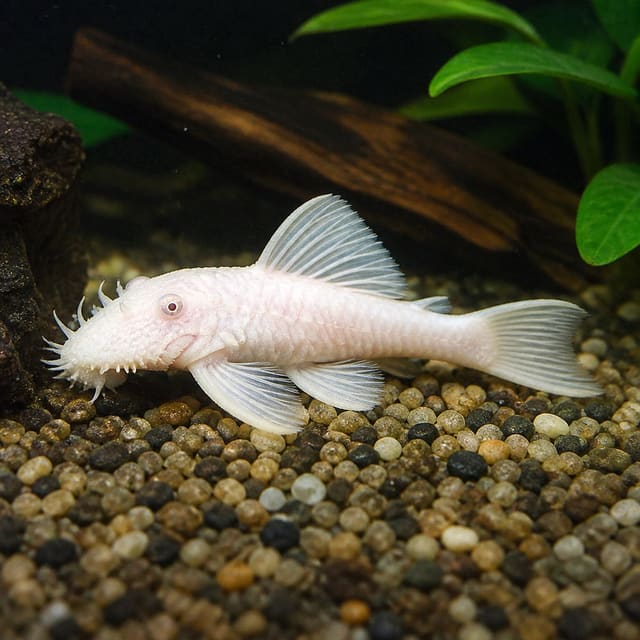
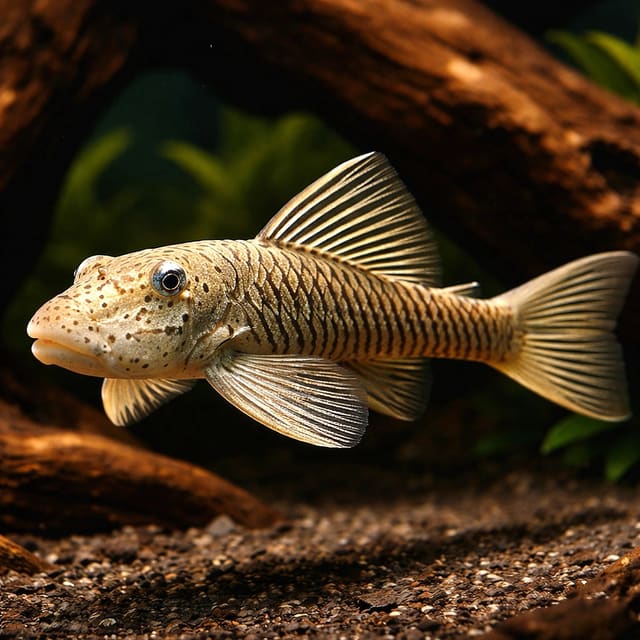
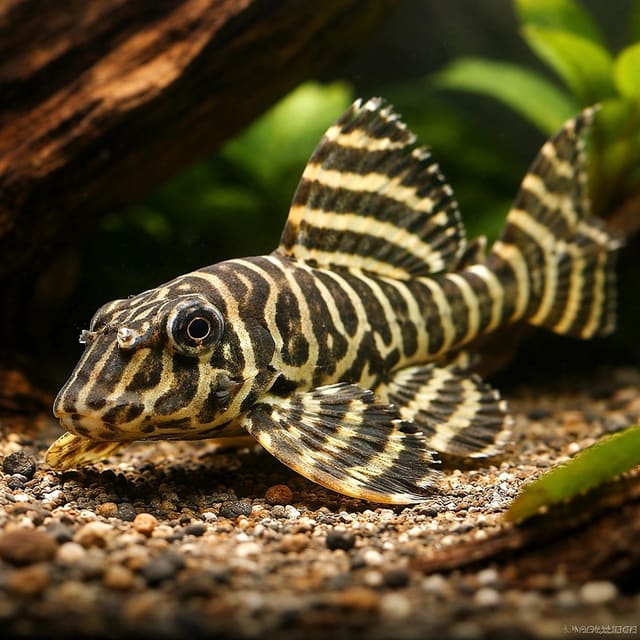
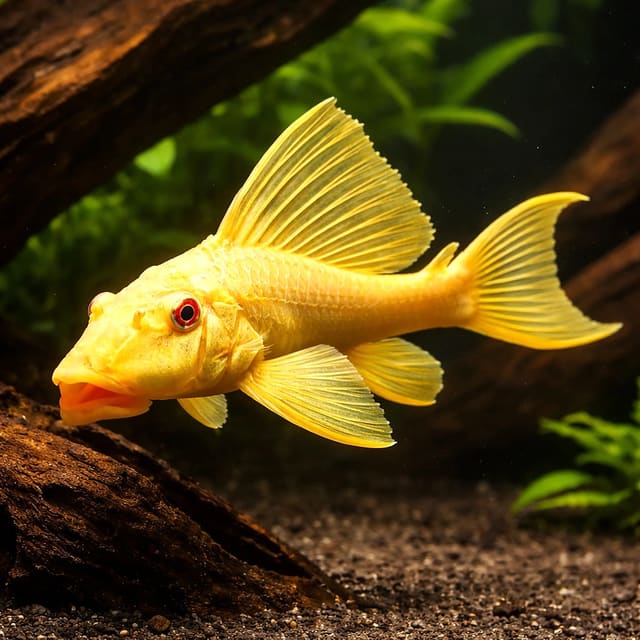
The four preserved gallery images are representative digital illustrations. They help show the compact dark body and dense spotted pattern associated with the listed form. They do not prove the sex, exact colour, exact spot arrangement, fin condition or size of the individual chosen for dispatch.
The first image is more stylised around the eye and mouth than a documentary specimen photograph would be. The distinction is stated here so a polished gallery does not become a WYSIWYG promise.
Colour may shift between the gallery, a phone screen, a shipping bag and a settled aquarium. The fish can darken under stress and recover contrast after it establishes a cave and feeding routine. Judge identity and condition from the whole animal, not a demand that every pale dot match a rendered image.
Use the size selector for the live price and availability of each option. Stock can change, and an out-of-stock option is not promised for immediate dispatch. A quantity of one adds one unsexed fish in the selected approximate size band.
Eligible first-time customers can use WELCOME10 for 10% off their first order under the current promotion terms. The discount is applied at checkout and does not change the selected fish, stock status, delivery charge or care requirements. Only one code can be relied on where checkout rules restrict combinations.
Livestock orders are covered by the current Live Arrival Guarantee. Read the delivery day, destination and reporting requirements before ordering, and be available to receive the parcel. The guarantee protects the stated arrival stage; it does not replace a cycled aquarium, acclimation, feeding observation or ongoing husbandry.
UK delivery availability depends on the current checkout rules and destination. Weather, courier schedules and livestock welfare can affect dispatch timing. Do not plan around an old search snippet or assume a fish will be sent on the day an order is placed.
This listing separates measured species facts from practical aquarium recommendations. Accepted name and synonymy were checked against Eschmeyer's Catalog of Fishes and the peer-reviewed 2014 taxonomic revision of Spectracanthicus. Distribution, diagnostic pattern and measured standard length come from those sources.
Diet was corrected using the 2024 study Effect of Seasonality on the Diet of Spectracanthicus punctatissimus in the Xingu River. The study's stomach-content evidence is why this page does not repeat the previous meat-heavy feeding claim.
Tank volume, footprint, temperature, pH, hardness, feeding routine and compatibility are conservative retail husbandry guidance assembled from the fish's ecology, current supplier care context and specialist aquarium practice. They are not presented as measurements from a controlled lifespan trial. Where a precise species-specific result was not found, the limitation is stated instead of filling the gap with a confident number.
The accepted name used for this listing is Spectracanthicus punctatissimus. Oligancistrus punctatissimus is an older scientific combination that remains visible in historical and aquarium material. The epithet has two consecutive “s” letters in the middle: punctatissimus.
“Bluespotted Pleco” is one trade description used for spotted Spectracanthicus, while “Peppermint Pleco” is common in current L030 retail results. Common names are not regulated identities. This page uses L030 plus the accepted species name and describes the documented small yellowish spotting without promising an exact blue colour.
Published examined material reaches 119.8 mm standard length, which excludes the tail fin. For aquarium planning, allow roughly 14-15 cm total length. An individual may remain smaller or measure differently, so the planning figure is not a guaranteed final size.
Use 150 litres as a conservative lower baseline, with a footprint around 90 cm or longer and preferably more space in a community. Usable bottom area, separate caves, filtration, oxygen and maintenance access are more important than the volume number alone.
A typical 100-litre tank does not provide the recommended adult territory and stability, especially with other bottom dwellers. Choose a genuinely smaller species or provide the larger permanent aquarium before purchase rather than treating a juvenile as temporary permission.
Plan for 26-30°C with stable heat and high dissolved oxygen. Because warm water holds less oxygen, surface movement, clean filter flow and sensible stocking are essential. Tank mates must also be comfortable in this warm range.
A practical range is about pH 6.0-7.5. Stability matters more than forcing the tank toward one decimal with repeated chemicals. Test the source water, acclimate carefully and avoid abrupt shifts.
It benefits from purposeful current and high oxygen consistent with its Xingu river context. Direct flow across grazing surfaces and keep the water clean, but also provide caves and sheltered areas where the fish can rest without being blasted continuously.
It grazes surfaces and can consume algae within a broader detrital/periphyton diet, but it is not a guaranteed aquarium-cleaning tool. Feed it deliberately and correct the causes of nuisance algae through lighting, nutrient and maintenance control.
Use a varied rotation of quality sinking algae or spirulina wafers, mixed pleco tablets, fibre-rich plant material and modest animal ingredients. The species-specific diet study does not support making bloodworm or meat-heavy pellets the daily foundation.
Offer a measured sinking meal after lights dim and adjust through body condition, competition and leftovers. There is no universal wafer count. Mature grazing surfaces supplement feeding but do not remove the need for intentional food.
Wood is valuable cover and a biofilm surface, so it is useful in the layout. This species is not presented as an obligate wood eater, and wood cannot substitute for a balanced diet. Rock and other mature surfaces are also relevant.
Many peaceful mid-water tetras can work if they tolerate 26-30°C, are kept in their own proper group and do not interfere with feeding. Check the needs of the exact tetra rather than assuming all species share one temperature range.
Only with cichlids calm enough not to attack, trap or starve it and with adequate floor territory. Large aggressive or cave-claiming cichlids are a poor risk. “Too large to eat” does not mean compatible.
Shrimp safety is not guaranteed. The pleco is an opportunistic omnivore active around the bottom at night, and vulnerable shrimp or young may be encountered. Use a dedicated shrimp-safe stocking plan where preservation of every shrimp is essential.
One is the safer plan. Two require a substantially larger footprint, more caves than fish, blocked sight lines, separate food stations and a separation option. Two unsexed fish are not automatically a pair.
It is usually reserved toward open-water fish but can be territorial around caves and food with other bottom dwellers. Temperament changes with maturity, layout and resource pressure, so “peaceful” should never be read as “needs no territory”.
It is better for an intermediate keeper who already understands cycling, warm-water oxygen management, nocturnal feeding checks and territorial bottom fish. A beginner with strong preparation can succeed, but the fish should not be sold as effortless algae control.
No robust species-specific lifespan study was found for a defensible exact number. Treat it as a long-term commitment and maintain the aquarium accordingly, but do not rely on the previous unsupported 12-year figure as a promise.
No. The gallery is representative and sexing requires mature physical features that are not reliably shown. The sale unit is one unsexed fish unless a specific option explicitly states otherwise.
No. The four images are representative illustrations of the listed form. The selected live fish will have its own pattern, colour, proportions and fin details, and transport can temporarily darken its appearance.
This product does not make either claim. The Xingu River basin is the species' natural distribution, not proof of the supplied individual's production method or collecting locality. Ask for documented provenance if that distinction is essential to the purchase.
One quantity includes one unsexed live fish in the selected approximate dispatch-size band. It does not include a pair, group, cave, food, aquarium equipment or a choice of pattern.
Each size has independent live inventory. When an option shows unavailable, it cannot be promised for immediate dispatch. Use the restock facility and check the current selector rather than relying on a cached search result.
Livestock orders are covered under the current Live Arrival Guarantee, subject to its destination, receipt, evidence and reporting terms. Read those terms before dispatch day and report a genuine arrival issue within the stated window.
Eligible first-time customers can use WELCOME10 for 10% off the first order under the active promotion terms. Enter it at checkout. It does not override stock, delivery restrictions or animal-care requirements.
No reviews for this item yet. Bought one? Honest reviews only, good or bad.
What customers say about ordering from us
I have a small group of long finned mountain minnows. So was delighted to be able to order ten of this variety to increase the genetics in my tank . The ones I recieved are healthy but it’s to early to give a verdict on wether they are of a long finned type since they are small currently.
Gordon Walker · 23 Sept 2026
100% success travel and "installation". Pleased with quality of purchase. The Siamese fighter a bit "shy" so have not yet seen him at his best yet but looking good. Happy customer. GG
George E Garratt · 21 Sept 2026
Reviews of our shop, collected by Judge.me, an independent third-party review collector. Newest first.