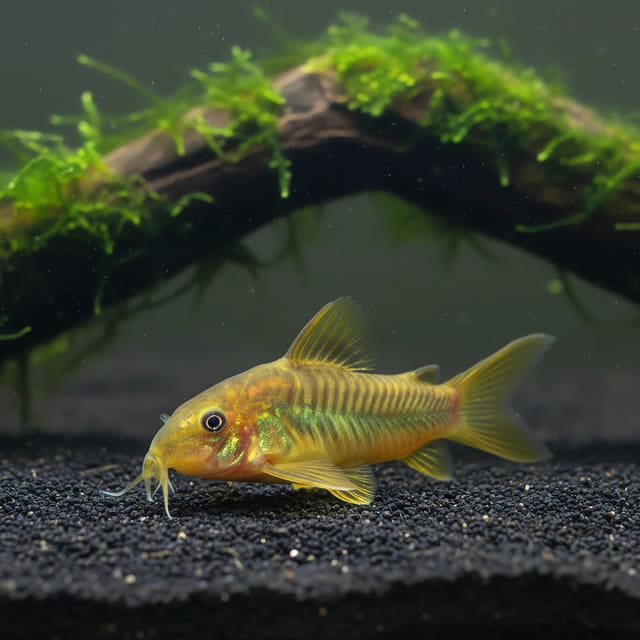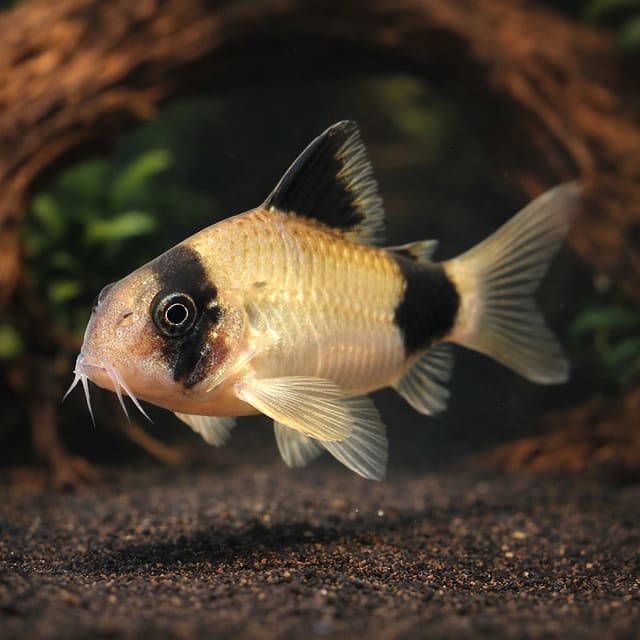
Panda Cory Catfish (Corydoras panda)
22–25°C · pH 6–7.4
From £8.69Some sizes on sale

The L333 Maze Zebra Pleco (Hypancistrus sp.) is an unidentified freshwater suckermouth armoured catfish from a genus found in the Amazon basin. It suits keepers who can provide established filtration, shelter and weekly testing; OATA’s tropical algae-eater group guidance uses 22–27°C, pH 6.0–8.0 and 4–12°dGH. Sold individually in sizes from 2.5–3 cm to 10–12 cm.
Hypancistrus sp.
The L333 Maze Zebra Pleco (Hypancistrus sp.) is an unidentified freshwater suckermouth armoured catfish from a genus found in the Amazon basin. It suits keepers who can provide established filtration, shelter and weekly testing; OATA’s tropical algae-eater group guidance uses 22–27°C, pH 6.0–8.0 and 4–12°dGH. Sold individually in sizes from 2.5–3 cm to 10–12 cm.
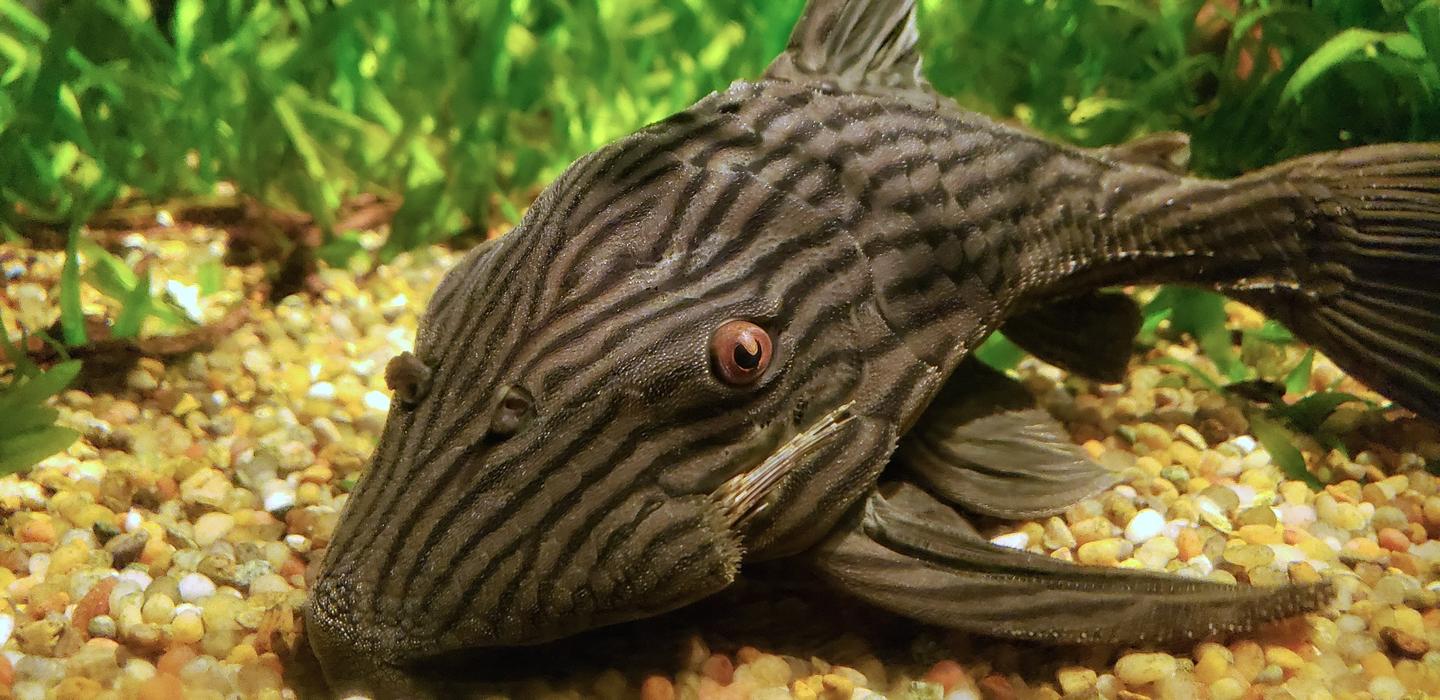
‘Pleco’ is a loose aquarium-trade label, not one species or one care sheet. Before buying, confirm the scientific name or defensible L-number, adult size and measurement method, required footprint, temperature and water, diet, social plan and source. No universal pleco tank size, menu or algae result is honest.
Maintain these water conditions for optimal health and vibrant colors
The L333 Maze Zebra Pleco is a freshwater suckermouth armoured catfish sold under the aquarium trade label L333. WoRMS places Hypancistrus in the family Loricariidae and recognises it as a genus rather than a single species. It suits a keeper prepared to run an established biological filter, test the water every week, provide physical shelter and control measured feeding.
This distinction matters when planning the aquarium. The name Hypancistrus sp. does not justify treating one named species as an exact match, and an L-number is not an adult-size measurement. Plan conservatively around the fish’s continuing growth, maintain enough usable space around its shelters and review the layout as its body size changes.
Wikipedia’s Hypancistrus summary describes freshwater catfishes from the Amazon basin in South America. It also notes that some members of the genus have carnivorous tendencies and take meat in nature. That context explains why the genus should not be treated as a universal algae-cleaning tool, while feeding for this unidentified fish still requires careful observation.
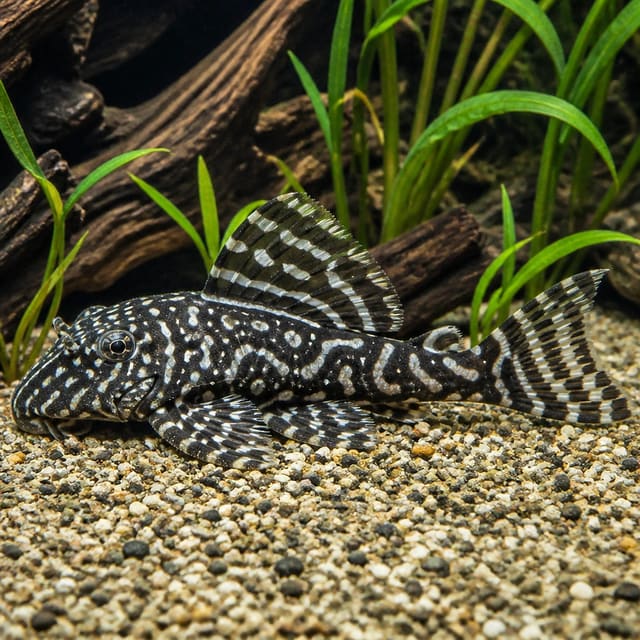
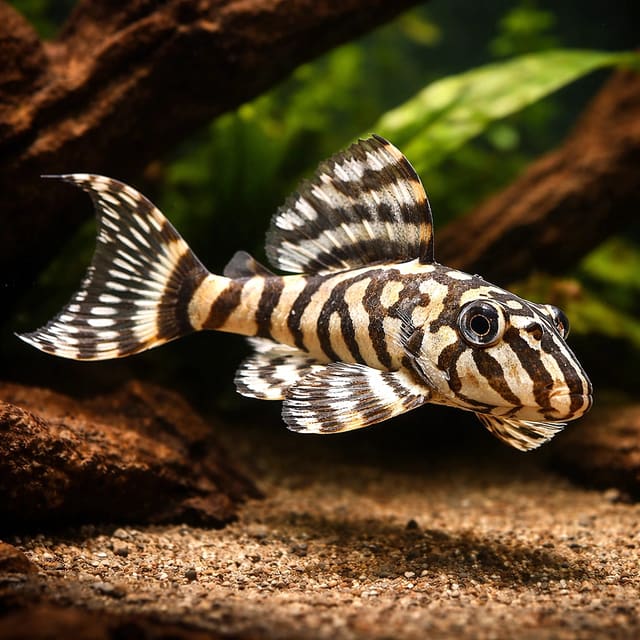
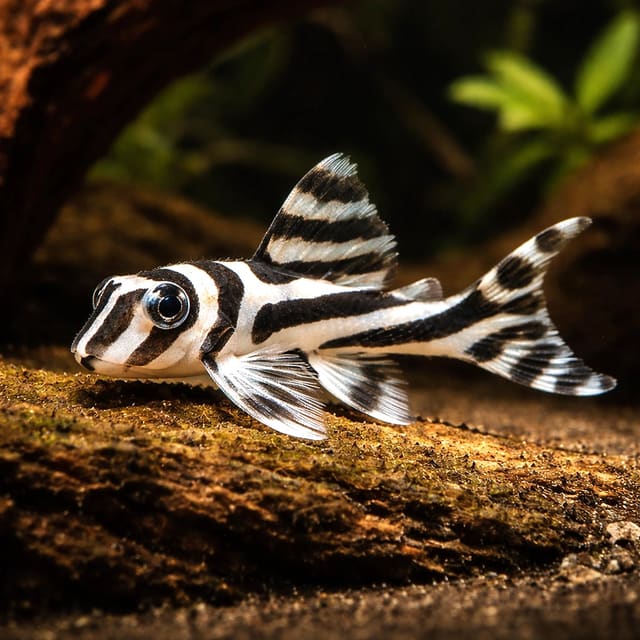
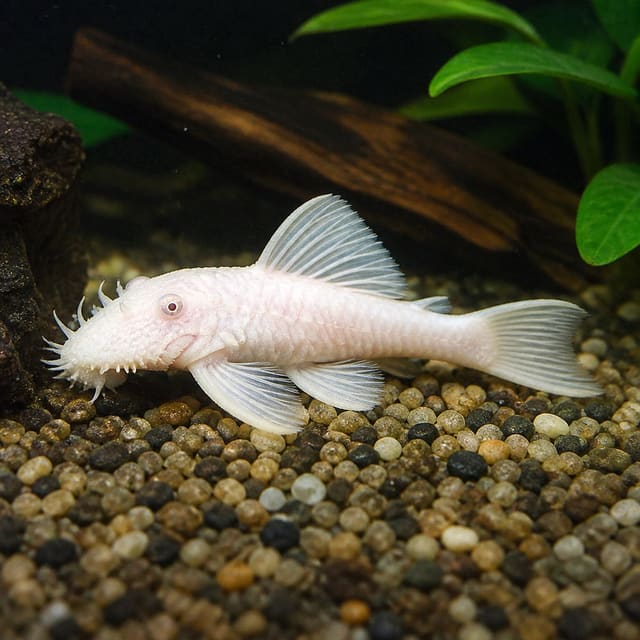
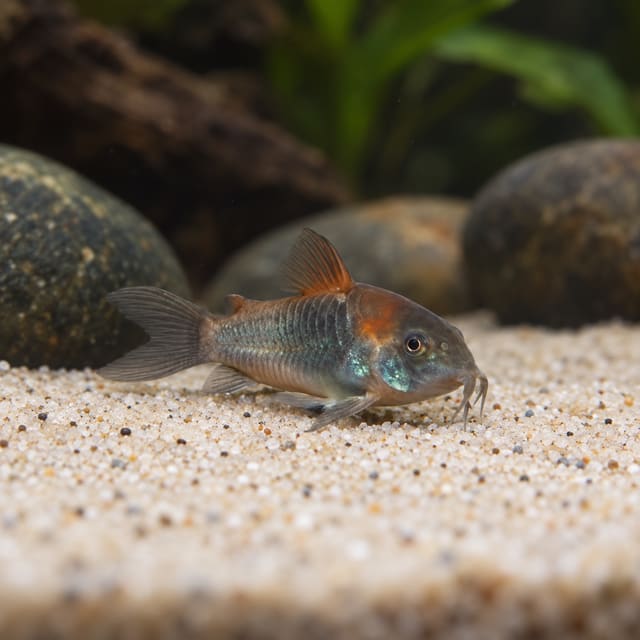
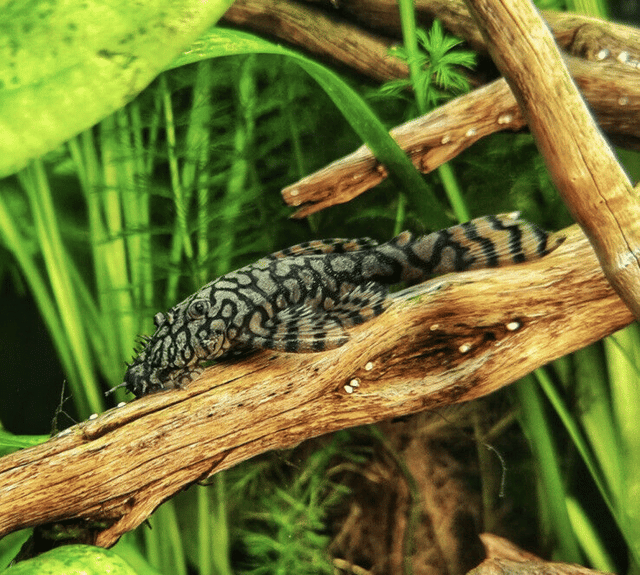
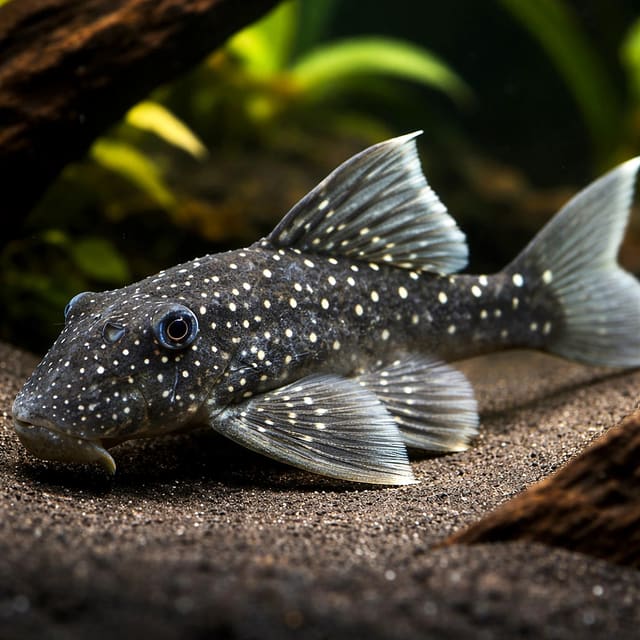
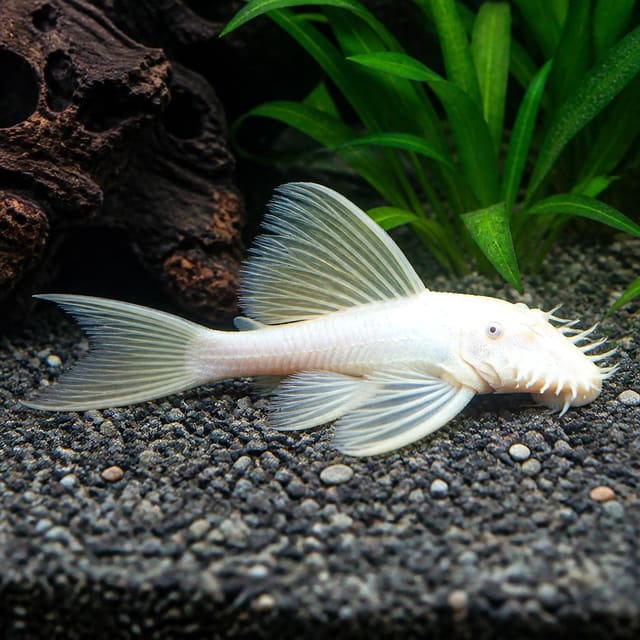
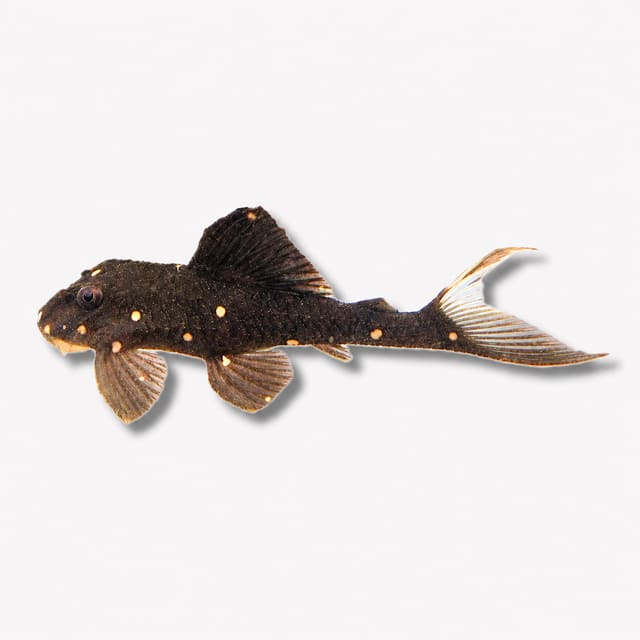
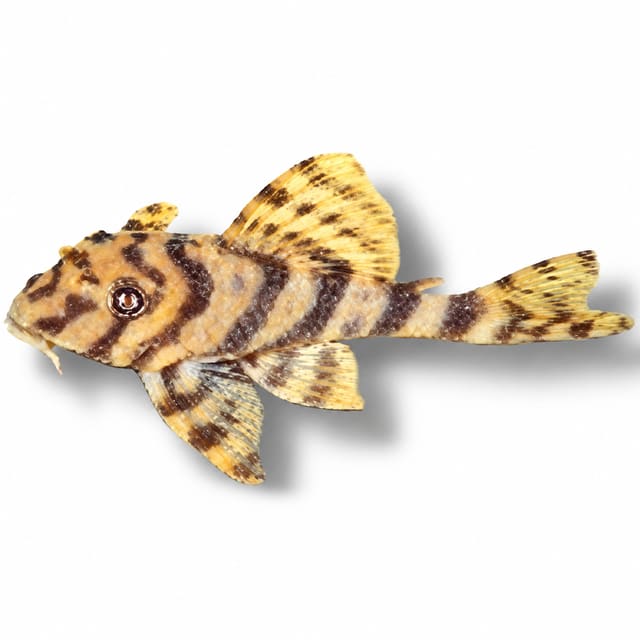
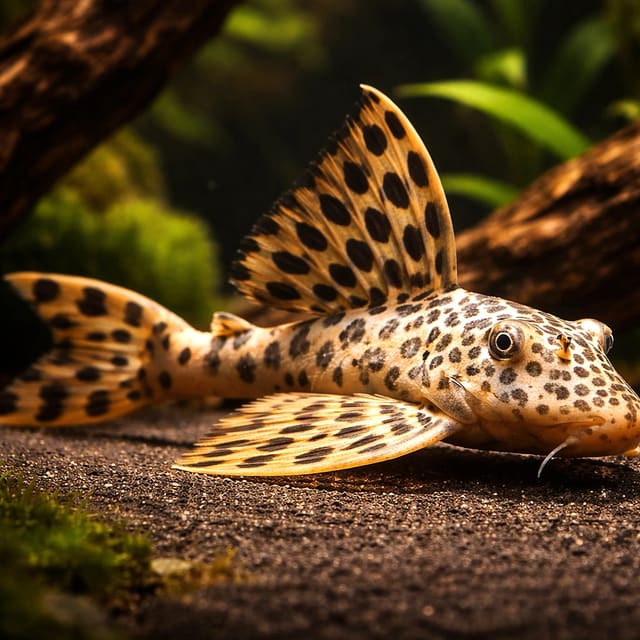
The maze wording refers to the cream-on-dark pattern represented in the gallery. One image shows a fish resting beneath wood, another shows two fish together, a third presents a side view and the fourth places the fish beneath a broad leaf. Those scenes help show body shape and markings; they do not determine the number or sex supplied.
This fish suits a keeper prepared to provide continuing filtration, testing, shelter and measured feeding rather than treating a living catfish as a solution to algae. If those routines fit your aquarium, you can also compare the wider catfish and pleco collection by identity and husbandry needs.
One purchase supplies one animal in the size selected from the live size selector. The exact species has not been identified, so the care advice here follows the genus Hypancistrus and its care group. Sex is guaranteed only when the selected option explicitly states male or female. This L333 Maze Zebra Pleco listing has no sex-guaranteed option.
The gallery images are representative, based on reference photographs of this kind of animal, so colours can look slightly different from the live animal.
| Selector label | What it means |
|---|---|
| 2,5 - 3 cm | One animal measured within this dispatch band |
| 3.5 cm | One animal at this dispatch size |
| 4-5 cm | One animal measured within this dispatch band |
| 6 - 8 cm | One animal measured within this dispatch band |
| 10 - 12 cm | One animal measured within this dispatch band |
The size you select is the size supplied, not the adult size. In particular, the 10–12 cm choice must not be read as a maximum-length promise. A smaller choice also does not establish a life stage, sex or rate of future growth.
Begin with as large an aquarium as is practical. More water gives the filter and keeper a greater buffer against rapid changes in temperature and waste concentration, while a generous footprint leaves more scope to add shelter without crowding every route through the aquarium. Choose the aquarium through a layout assessment for this unidentified Hypancistrus, not from the supplied measurement alone.
Check whether the aquarium can continue to provide open movement space, accessible feeding areas and sheltered resting places as the fish develops. If decor already fills most of the floor, a larger supplied fish may leave too little flexibility even when the nominal aquarium volume sounds generous. A smaller fish still needs the same disciplined filtration, testing and long-term planning.
OATA’s tropical algae-eater guidance uses 22–27°C, pH 6.0–8.0 and 4–12°dGH across the relevant group examples. These are group planning values rather than a species-specific optimum. Keep the measured values stable within this framework.
| Suits | Not suited to |
|---|---|
| A filtered aquarium with gravel or sand, shelter and weekly testing | An unfiltered aquarium or a system with detectable ammonia or nitrite |
| A keeper planning long-term space around continued growth | A plan that treats the selected size as the adult maximum |
| A measured feeding routine with leftover-food control | Aquariums relying on this fish to replace algae maintenance |
Set and monitor the aquarium within 22–27°C, pH 6.0–8.0 and 4–12°dGH. Choose a stable point inside each range rather than repeatedly adjusting water to chase a particular number. Stability depends on knowing the values in the aquarium, not judging water by appearance.
Use an aquarium test kit once a week. Ammonia and nitrite should each read zero mg per litre. OATA’s algae-eater framework keeps nitrate from exceeding 20 mg per litre above the normal level in the tap water used for the aquarium. Test that tap water as the comparison point instead of assuming it begins at zero nitrate.
| Reading | Decision |
|---|---|
| Temperature | Keep it stable between 22 and 27°C |
| pH | Keep it stable between 6.0 and 8.0 |
| General hardness | Work within 4–12°dGH |
| Ammonia | Maintain zero mg per litre |
| Nitrite | Maintain zero mg per litre |
| Nitrate | Keep within 20 mg per litre of the tap-water baseline |
Our water chemistry guide explains what these measurements mean, while the water matcher helps compare your measured aquarium values with this planning framework. Record results with the date so a gradual shift is visible before it becomes a large change.
If ammonia or nitrite is detectable, treat the result as a filtration and waste-management warning. Pause any plan to add livestock, check for uneaten food and confirm that the filter is running correctly. A rising nitrate difference calls for a review of stocking, feeding and maintenance. Persistent algae should prompt the same review because algae-eating fish do not replace suitable stocking levels or regular aquarium care.
Retest after corrective maintenance. One improved reading is useful, but a dated run of stable readings gives a much clearer basis for deciding whether the aquarium is ready for this fish.
A working filter is essential. The RSPCA’s aquarium welfare guidance explains that fish release toxic ammonia and that beneficial bacteria in a biological filter convert it first to nitrite, which is also toxic, and then to the safer nitrate. This process is the reason a pump moving water is not, by itself, proof that the aquarium can process fish waste.
Use a well set up and maintained filter, and establish its biological function before livestock enters the aquarium. The aquarium should repeatedly hold ammonia and nitrite at zero under its existing load. If you are preparing a new system, follow our first tropical aquarium guide before choosing a supplied size.
Do not add this fish as a way to test whether a new filter works. A live animal produces the same waste that an immature filter may fail to process. Confirm water quality first, then continue weekly testing after introduction because a new resident changes the amount of waste entering the system.
Choose filter capacity alongside total stocking rather than looking at this animal in isolation. Every fish contributes waste, and a heavily stocked aquarium gives the biological filter less margin when feeding or maintenance changes. A larger aquarium can make environmental conditions more stable, but volume never removes the need for filtration.
Keep the filter maintained without allowing routine work to interrupt biological processing. Base the maintenance schedule on the equipment instructions and measured aquarium performance. The practical target remains simple: continuous filtration, zero ammonia, zero nitrite and controlled nitrate.
Use aquarium gravel or sand as the substrate and include cover. Live plants can provide shelter; where live planting does not suit the aquarium, use aquarium-safe artificial plants and suitable ornaments. Plant pots or model caves are practical examples of enclosed cover from OATA’s aquarium guidance.
Place shelters so the fish can enter them while you can still inspect the surrounding floor and remove uneaten food. An ornament that creates an inaccessible waste trap makes feeding control and maintenance harder. Leave routes between the shelter, feeding area and open aquarium rather than turning the entire footprint into a tightly packed structure.
Check each object for stability before the fish enters the aquarium. Decor should remain secure during ordinary filter flow and routine maintenance. Recheck it whenever substrate is moved or an ornament is lifted for cleaning. This is particularly important when a shelter rests on loose gravel or sand.
| Layout choice | Planning test |
|---|---|
| Live plants | Do they provide cover without blocking maintenance access? |
| Artificial plants | Are they aquarium-safe and securely positioned? |
| Plant pot or model cave | Can the fish enter while waste remains reachable? |
| Open floor | Is there a clear route between cover and food? |
A shelter chosen for a smaller supplied fish may not remain useful as body size changes. Inspect access during normal observation without forcing the fish from cover. Replace or reposition an obviously restrictive shelter and preserve open space around its entrance.
Plants and ornaments are additions to filtration, not alternatives to it. Likewise, visual cover does not compensate for crowding. If the aquarium cannot hold shelter, open routes and an accessible feeding area at the same time, reduce the stocking plan or increase the usable aquarium space before introducing this fish.
Do not rely on naturally occurring algae to provide a complete diet. OATA advises supplementing algae-grazing aquarium fish with prepared feeds such as algae-based wafers or flakes and, ideally, fresh vegetables such as cucumber. Wash vegetables thoroughly before use or choose organic produce to reduce the risk from pesticide residues.
Offer a modest portion and watch whether the fish consumes it, although algae-grazing members of the group may need additional time with food intended for grazing. This does not mean leaving an unlimited portion in the aquarium. Use observation to distinguish active grazing from food simply remaining untouched.
Some Hypancistrus species have carnivorous tendencies and enjoy meat in their natural diet. Because L333 here identifies an unspecified member of the genus, do not turn that broad observation into an all-meat feeding rule. Begin with the supplemented algae-eater routine above and judge consumption, body condition and water results together.
Algae on glass, plants or ornaments is not a feeding schedule. Its quantity and nutritional value are uncontrolled, while the fish still requires deliberately offered food. Persistent aquarium algae can also indicate a maintenance or water-chemistry problem, so adding food and adding an algae-eating fish should never replace investigation of the cause.
Uneaten food breaks down and releases toxic waste. When ammonia, nitrite or nitrate trends worsen, review portion size and trapped food before adding more feed. If the meal disappears but the weekly results remain stable, continue the measured routine rather than increasing the portion without a clear reason.
Feed this fish where it can reach the food without every other occupant consuming it first. Compatibility includes access to nutrition, not merely the absence of direct conflict.
Build maintenance around repeatable checks rather than waiting for the aquarium to look dirty. Clear water can still contain ammonia, nitrite or excess nitrate, so visual inspection and water testing perform different jobs.
General hardness changes less quickly in many routines, but it should still be checked whenever the water supply, water preparation or maintenance approach changes. Keep it within 4–12°dGH and avoid abrupt adjustments made solely to reach the centre of the range.
| What you find | What to review first |
|---|---|
| Detectable ammonia | Filter operation, biological capacity, waste and uneaten food |
| Detectable nitrite | Biological filtration and recent changes to stocking or maintenance |
| Rising nitrate difference | Feeding, total stocking and the maintenance routine |
| Repeated leftover food | Portion size, placement and access |
| Persistent algae | Water chemistry, maintenance and stocking |
Change one clearly identified part of the routine at a time where immediate welfare does not demand urgent action. Dated results then show whether that decision helped. Several unrecorded changes made together can hide the real cause of improvement or decline.
Do not use the pleco as the maintenance intervention. Algae-eating fish add to the biological load and still require complete feeding. Regular testing, appropriate stocking and a maintained filter remain the controls that protect water quality.
Arrange for someone to receive the parcel because live fish cannot be left unattended. Follow the steps in the current delivery and Live Arrival Guarantee policy from the sealed parcel through release.
The policy states that fish are hand-bagged in oxygen, placed in an insulated box and packed with a heat pack when weather calls for one. Keep the parcel and fish attended throughout the arrival process.
Confirm that the filter continues to run normally and that no decor shifted during introduction. OATA’s aquarium guidance supports checking water quality regularly, so test ammonia and nitrite after the introduction if equipment operation changes or uneaten food begins to accumulate.
Keep the first feeding measured so any remainder can be identified and removed. The new fish and its food add waste to the system, making post-introduction observation part of the filtration and feeding plan.
The bag contains one fish for each purchase even when a gallery scene shows two. The purchase unit is determined by the order, not by a photograph. Likewise, the visible pattern in an image cannot determine the sex of the animal received.
For a Live Arrival Guarantee claim, contact us the same day with the order number and continuous unboxing video showing the sealed parcel, its opening and the fish still in the bag.
Use the first month to confirm that the aquarium routine works with its new biological load. The aim is not to force rapid changes in the fish or decor; it is to collect enough consistent observations and measurements to make sound decisions.
Confirm that the fish can reach shelter, the filter is operating and the aquarium remains within 22–27°C. Keep transport water out of the aquarium and note whether the initial measured food portion remains. Remove uneaten food rather than leaving it to break down.
Test water on the normal weekly schedule and add an extra test if food accumulates or equipment operation changes. Ammonia and nitrite must remain at zero. Compare nitrate with the tap-water baseline and keep the difference within 20 mg per litre.
Review food access as well as quantity. If other occupants consume the entire portion before this fish reaches it, change placement rather than simply increasing the total amount. If food repeatedly remains around the shelter, offer less at the next meal and make the area easier to clean.
Read the dated results as a trend. Stable temperature, pH and hardness combined with zero ammonia and nitrite support continuation of the routine. A repeated change points to a decision about filtration, feeding, stocking or maintenance rather than a reason to add another algae-eating animal.
| Checkpoint | Decision to make |
|---|---|
| Water remains stable | Continue the established routine |
| Food is consistently left | Reduce the portion and improve access for removal |
| Food is intercepted | Change feeding placement and reassess occupants |
| Waste readings rise | Review filter capacity, food and total stocking |
| Shelter becomes restrictive | Reposition or replace it while preserving open space |
Do not interpret the supplied size as a growth timetable. Continue checking whether the shelter, feeding area and aquarium footprint remain workable as the fish develops. If you notice a sudden health or behavioural change, test the water promptly and contact us with the measured results.
Assess compatibility for this unidentified Hypancistrus case by case. Start with water conditions, then consider the biological load, usable space, shelter and food access created by the complete stocking plan.
A candidate that passes one check can still fail another. Matching temperature alone does not show that the aquarium has enough biological capacity, and a large water volume does not guarantee that food or shelter can be reached. Assess the arrangement as a complete system.
| Situation | Decision |
|---|---|
| Water requirements overlap | Continue to the space and filtration checks |
| Water requirements conflict | Choose a different stocking plan |
| Ammonia or nitrite is detectable | Add no livestock and correct the aquarium first |
| Shelter blocks maintenance | Redesign the layout before adding an occupant |
| Food cannot reach this fish | Change feeding access or the stocking plan |
Use the same process whether the proposed companion swims near the bottom or elsewhere in the aquarium. Swimming zone can influence how space is used, but it does not remove shared demands on water quality and filtration.
Recheck compatibility after any addition. Weekly tests show whether the filter continues to manage waste, while feeding observation shows whether the arrangement works in practice. The L333 label identifies a genus member rather than an exact species, so observed aquarium performance must guide later decisions.
Do not add an L333 Maze Zebra Pleco solely to solve algae. OATA warns that algae-eating fish are not substitutes for regular maintenance or appropriate stocking, and persistent algae may point to an underlying water-chemistry or maintenance problem.
First test the aquarium and review its routine. Check ammonia, nitrite and nitrate, confirm the filter is maintained and look for uneaten food around decor. Review whether current stocking already approaches the aquarium’s practical capacity. These actions address the system without adding another source of waste.
Next decide whether you want to keep this animal for its own identity and husbandry needs. That decision requires a filtered, sheltered aquarium, a regular measured diet and long-term space planning. Surface grazing, if observed, does not remove the need to feed prepared food and fresh vegetable matter.
| If you see | Do this |
|---|---|
| Persistent algae | Test water and review maintenance and stocking |
| Uneaten food near cover | Remove it and reduce the next portion |
| Rising nitrate difference | Review food input, total livestock and maintenance |
| Stable water but poor food access | Change feeding placement before adding more food |
| A plan based only on algae removal | Reconsider the livestock purchase as a separate commitment |
Every added fish changes biological load and may change access to shelter or food. Repeat the compatibility screen rather than assuming that a previously stable aquarium will remain unchanged. If ammonia or nitrite becomes detectable, stop further additions and correct filtration or waste pressure first.
Likewise, a new ornament or plant can alter the usable layout even though livestock numbers remain the same. Keep shelter accessible, preserve open routes and make sure food can be retrieved if it is not eaten. Compatibility is the continuing fit between animals, water, equipment and space—not a permanent yes-or-no label attached to a species name.
Plan the aquarium around continuing growth rather than treating any supplied size as the adult maximum. Keep checking that the fish can enter its shelter and still has open routes and an accessible feeding area as it develops.
Use as large an aquarium as practical and judge it by usable space, shelter, feeding access and filtration capacity. A larger volume gives greater stability, but the filter must still maintain zero ammonia and zero nitrite.
Decide the number through an individual stocking assessment rather than assuming a fixed group size. Check total biological load, usable space, shelter access, feeding access and every occupant’s water requirements before adding another fish.
It suits a keeper who can establish and maintain biological filtration, test water every week, provide accessible shelter and control measured feeding. Prepare the aquarium first and confirm that ammonia and nitrite remain at zero.
OATA’s tropical algae-eater guidance advises prepared algae-based wafers or flakes and thoroughly washed fresh vegetables such as cucumber. Some Hypancistrus have carnivorous tendencies, so monitor consumption and body condition while keeping portions measured and removing leftovers.
OATA’s tropical algae-eater group guidance uses 22–27°C, pH 6.0–8.0 and 4–12°dGH. Keep ammonia and nitrite at zero and nitrate within 20 mg per litre of the normal tap-water baseline.
Assess behaviour and compatibility individually rather than assuming a fixed temperament. Check that every occupant can access shelter and food, that the aquarium retains open routes and that the complete stocking plan fits the filter’s biological capacity.
OATA’s tropical algae-eater group guidance uses 22–27°C, pH 6.0–8.0 and 4–12°dGH; choose companions that fit those values, then screen the plan for biological load, usable space, shelter and feeding access. Add no livestock while ammonia or nitrite is detectable.
Film every delivery continuously from the sealed parcel as it is opened, with the fish still in the bag before anything is disturbed. Have someone present to receive it, float the bag for 20–30 minutes, release the fish and never pour the bag water into the aquarium.
No reviews for this item yet. Bought one? Honest reviews only, good or bad.
What customers say about ordering from us
I have a small group of long finned mountain minnows. So was delighted to be able to order ten of this variety to increase the genetics in my tank . The ones I recieved are healthy but it’s to early to give a verdict on wether they are of a long finned type since they are small currently.
Gordon Walker · 23 Sept 2026
100% success travel and "installation". Pleased with quality of purchase. The Siamese fighter a bit "shy" so have not yet seen him at his best yet but looking good. Happy customer. GG
George E Garratt · 21 Sept 2026
Reviews of our shop, collected by Judge.me, an independent third-party review collector. Newest first.