Moderate
L340 / LDA19 Mega Clown Pleco (Hypancistrus sp.)
£78.69
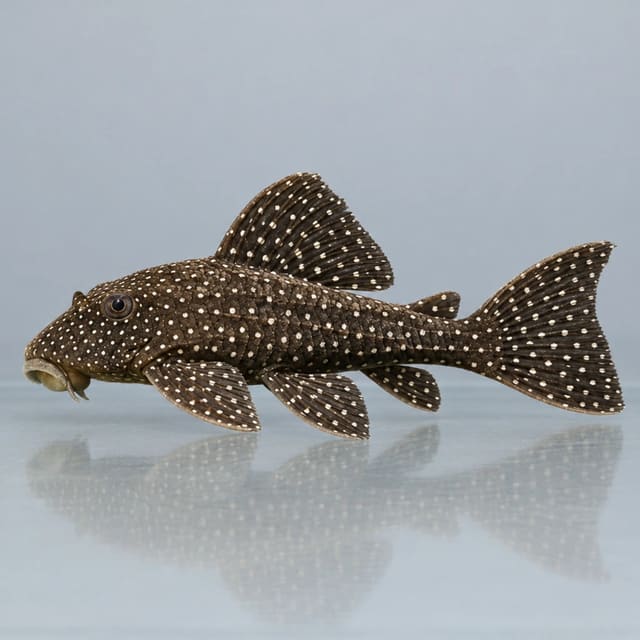
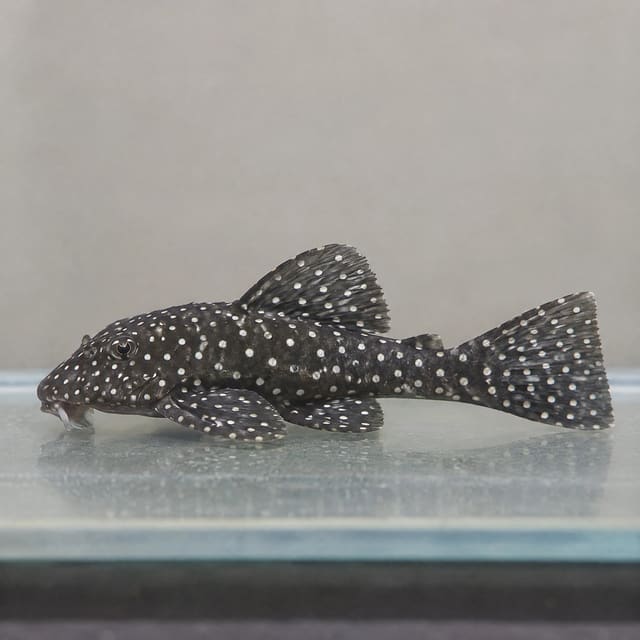
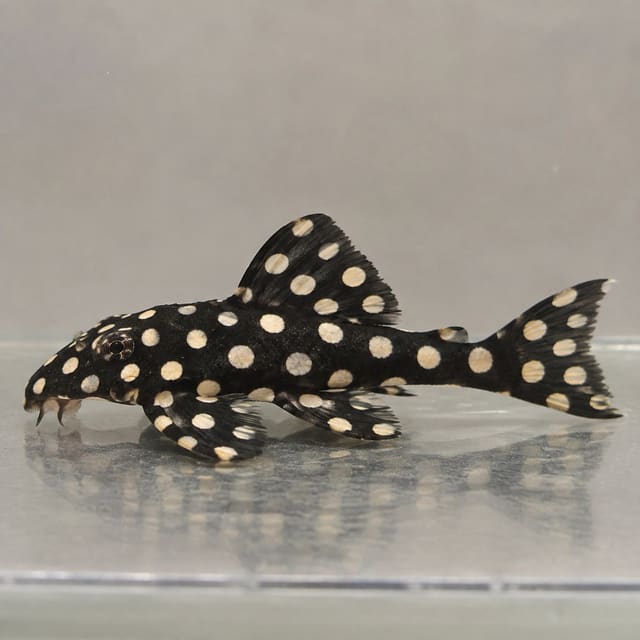
The Contradens Pleco (Hypancistrus contradens) is a compact, peaceful suckermouth catfish from the Orinoco in Venezuela, dark with round white to cream spots, that grows to about 12–13 cm. It needs warm (26–28°C), clean, strongly flowing water, rocks and a cave of its own. Sold individually as one live fish.
Hypancistrus contradens
The Contradens Pleco (Hypancistrus contradens) is a compact, peaceful suckermouth catfish from the Orinoco in Venezuela, dark with round white to cream spots, that grows to about 12–13 cm. It needs warm (26–28°C), clean, strongly flowing water, rocks and a cave of its own. Sold individually as one live fish.
‘Pleco’ is a loose aquarium-trade label, not one species or one care sheet. Before buying, confirm the scientific name or defensible L-number, adult size and measurement method, required footprint, temperature and water, diet, social plan and source. No universal pleco tank size, menu or algae result is honest.
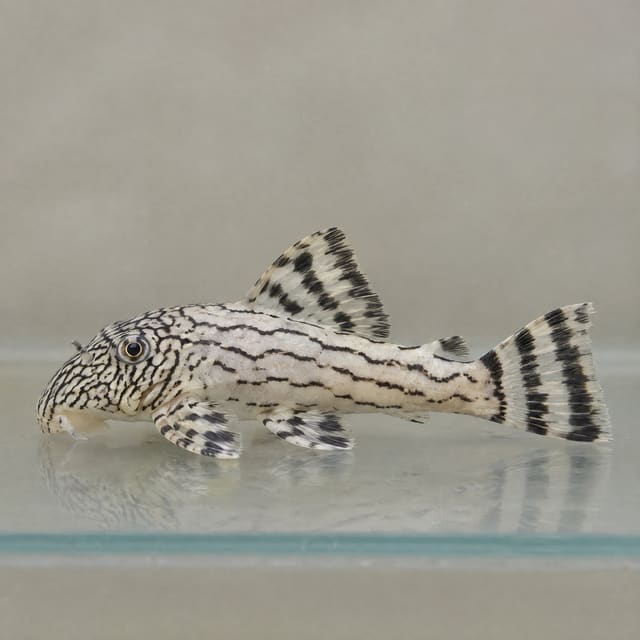
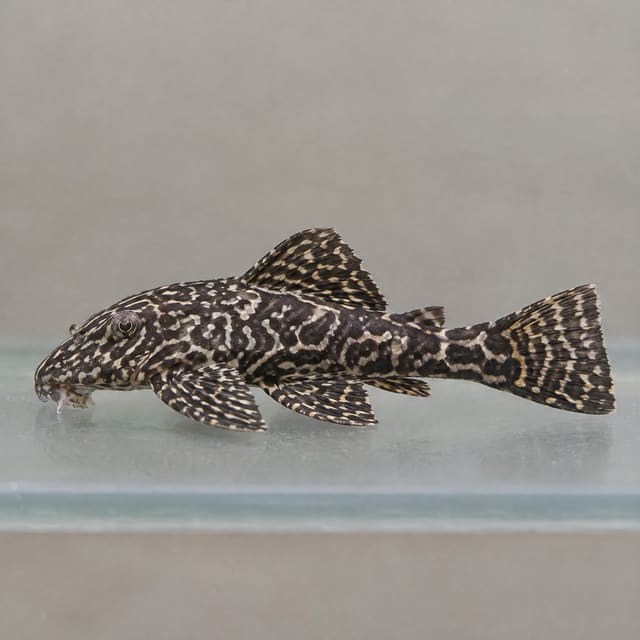
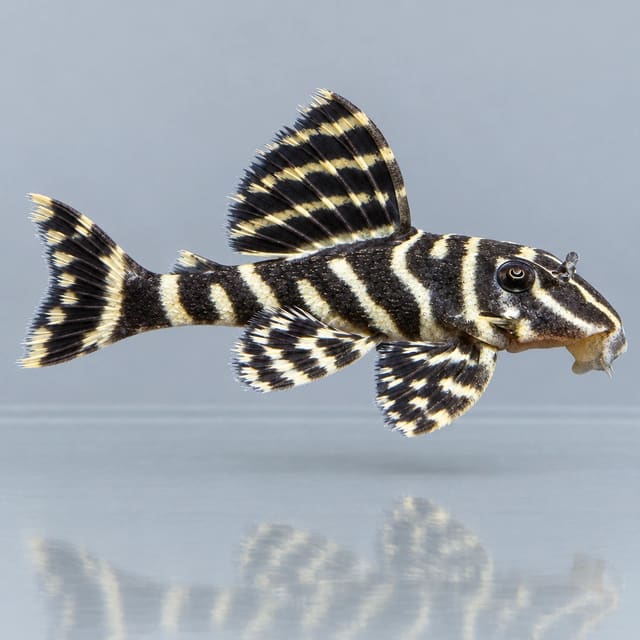
The Contradens Pleco (Hypancistrus contradens) is a compact suckermouth catfish from the Río Ventuari and the main Río Orinoco in southern Venezuela. Its body and fins are dark, covered in round white to cream spots, and the spots on its head are the same size as those on its body. Planet Catfish lists the common name Orinoco Polka-dot Pleco, and the fish was sold under the trade code L201 for years before scientists described it in 2007.
It belongs to the armoured suckermouth catfish family, Loricariidae, and to the same genus as the famous zebra pleco. Like its relatives it lives among rocks in clear, warm, flowing water and spawns in caves. For a UK fishkeeper the Contradens Pleco is a manageable L-number-type pleco: it grows to around 12–13 cm, stays peaceful with other kinds of fish and suits a rocky aquarium with a strong current and a cave of its own.
| Name | What it means |
|---|---|
| Contradens Pleco | The common name used by UK shops |
| Orinoco Polka-dot Pleco | The English common name listed by Planet Catfish |
| Hypancistrus contradens | The scientific name, given by Armbruster, Lujan and Taphorn in 2007 |
| L201 | The trade code it was sold under before 2007; the code is now used for a related, finer-spotted fish |
| H. inspector (L102) | The snowball pleco from the Rio Negro, with which Venezuelan specimens were once confused |
The species name joins the Latin contra (opposite, different) and dens (tooth), after the differently shaped teeth in the lower and upper jaws. The genus name refers to the reduced number of teeth compared with Ancistrus. Seriously Fish adds a practical detail: in Hypancistrus the lower-jaw teeth are about twice as long as the upper ones, a hint that these plecos eat more small animals than algae.
The scientists who described it, as reported by Practical Fishkeeping, separate it from the snowball pleco by four features: the folded dorsal fin reaches the spine of the small adipose fin; the head spots are as large as the body spots (much smaller on the head in H. inspector); the spots on the tail stay separate instead of joining into bands; and there are 22–23 plates along the middle of the belly instead of 24. Planet Catfish adds that it lacks the black edging seen on the unpaired fins of H. inspector, and that the fish now traded as L201 is flatter, slimmer and more finely spotted, and stays about 2 cm shorter. Compare it with our L201 Snowball Pleco and the other Hypancistrus plecos we keep.
In the wild it is known from the lower Río Ventuari and the Orinoco near the mouth of the Ventuari, where most specimens were collected on bedrock or in the cracks between it. Juveniles that may be this species or a close relative have also been recorded from the Casiquiare and the Rio Negro. The IUCN Red List rates it Near Threatened (2019): ScotCat summarises a known area of occupancy of only 36 km² and a decline in habitat quality caused by logging and illegal gold mining. Keeping a fish from such a small range well, for its whole life, is the best way to respect it.
One purchase supplies one live Contradens Pleco. The size option is "Standard": the fish is sent at the size currently available, normally well below the adult size. Sex is not chosen or guaranteed, because young fish cannot be sexed reliably and the differences described under breeding only show in mature fish.
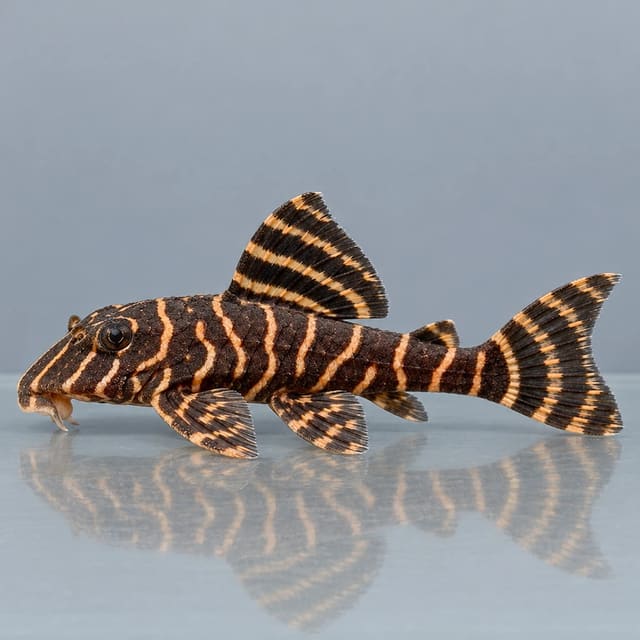
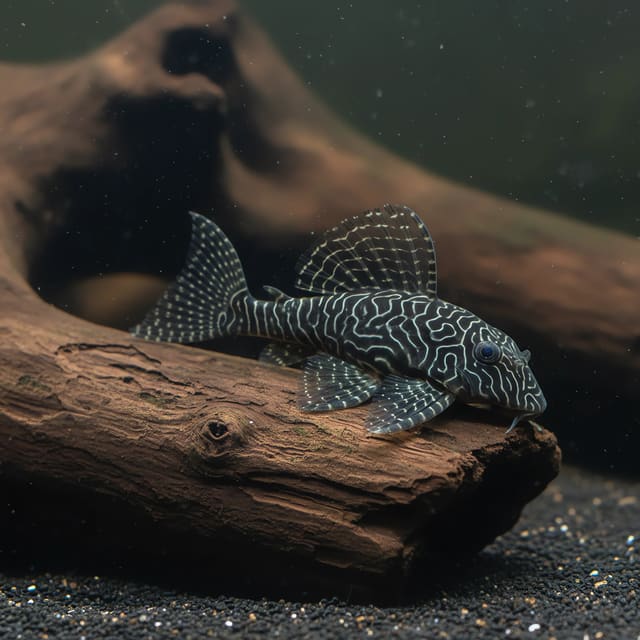
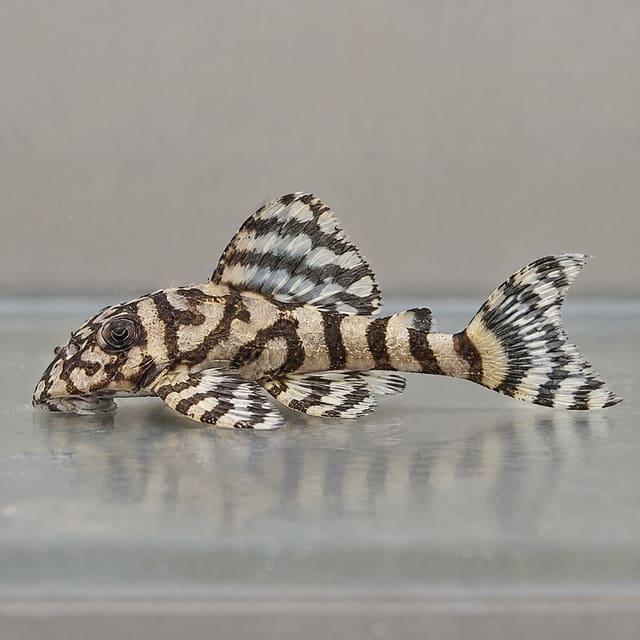
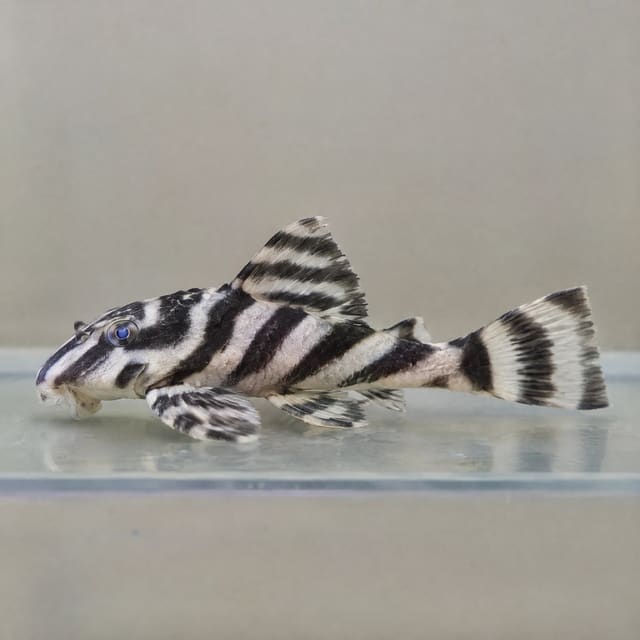
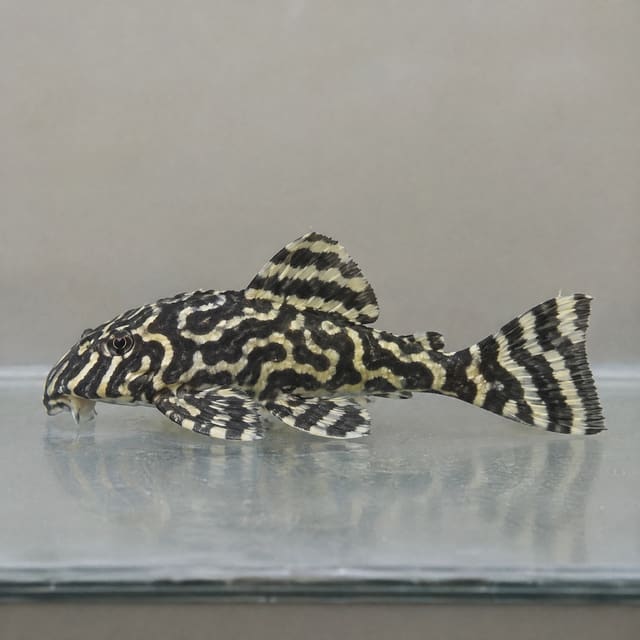
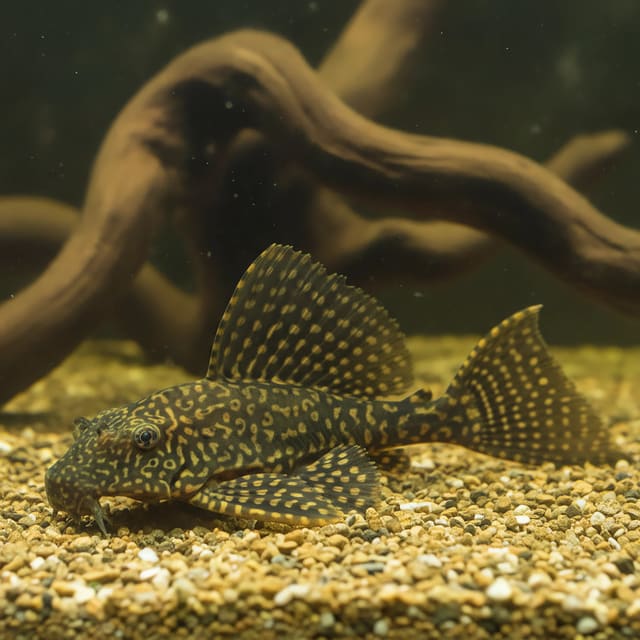
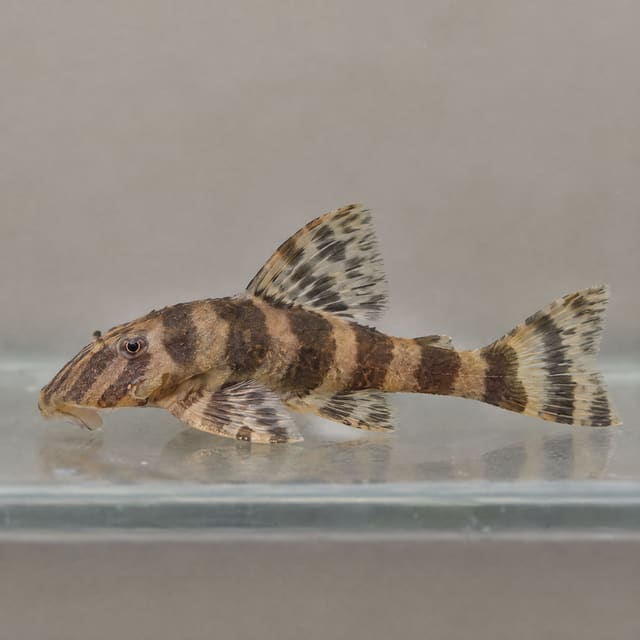
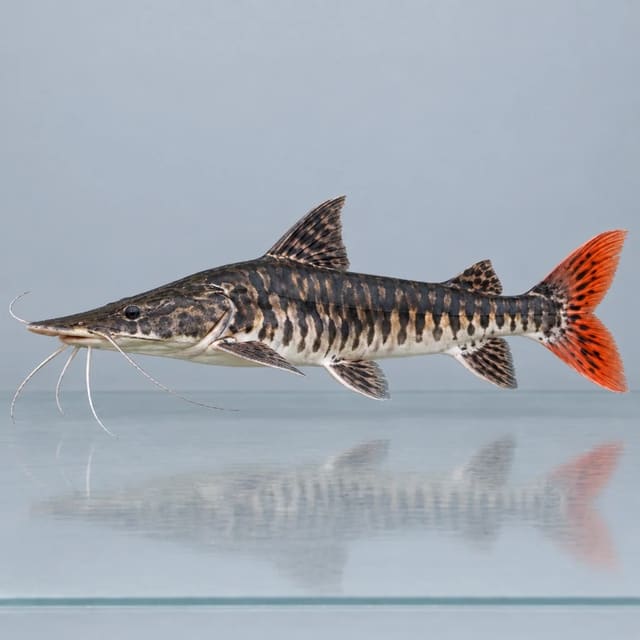
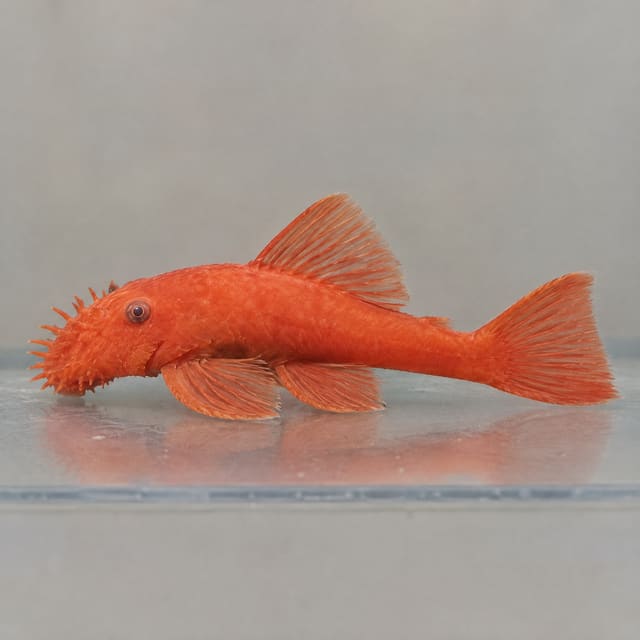
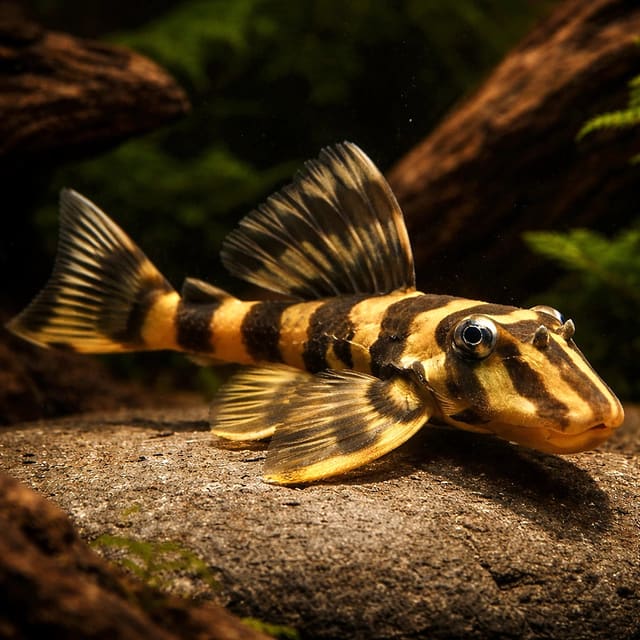
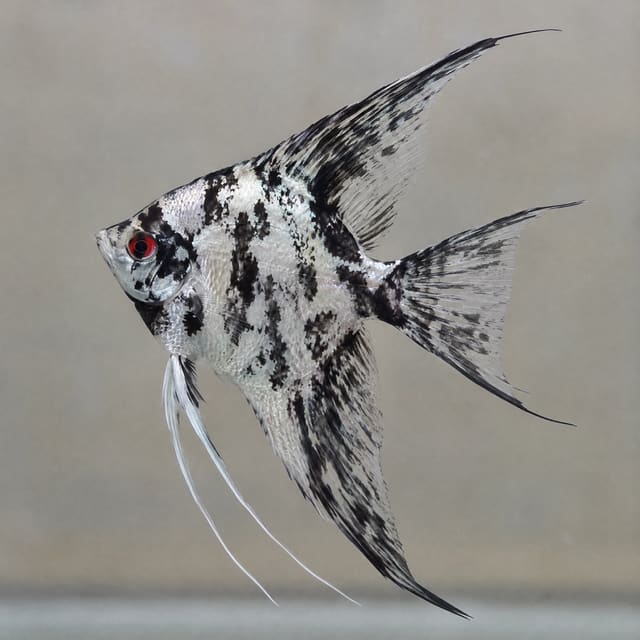
The photographs show the species, not the individual you will receive. Spot size, spot colour and body shade vary from fish to fish; ScotCat describes the spots as white or pink, and a fish that has just travelled often looks paler or blotchier for a while.
Before you order, read our delivery and Live Arrival Guarantee information, and make sure the aquarium is running, heated and matured before the fish arrives.
Planet Catfish gives a maximum of 126 mm standard length and ScotCat 12 cm. Standard length runs from the snout to the base of the tail, so the tail fin adds a little more. That makes the Contradens Pleco a mid-sized bottom dweller that needs floor space, rockwork and a current rather than a tall tank.
No minimum aquarium size has been published for this species. Seriously Fish recommends a base of 120 × 45 cm, about 243 litres, for its closest relative, the snowball pleco, which grows to 16 cm. OATA gives 80 litres as the starting point for the smaller pleco species. Treat OATA's figure as the floor for a single fish, and plan towards the Seriously Fish base for a group or a breeding set-up with several caves.
Place the aquarium away from radiators, windows and draughts so that the temperature stays steady, and fit a lid. A heater is needed all year round in a UK home, because this fish wants water warmer than a typical community tank.
Wild fish were caught on bedrock and in the cracks between it, in clear water with a steady current. Planet Catfish recommends copying that rather than building a typical planted South American tank: a sand substrate, rounded rocks stacked to leave narrow crevices and shelves, several caves for shelter and spawning, and a piece of bogwood, with bright lighting avoided.
| Area | Purpose |
|---|---|
| Stacked rounded rocks | Crevices and ledges to hide in by day, and surfaces to graze |
| Caves about 2.5–5 cm across and 15 cm deep | A daytime retreat for every fish and a spawning site for males (Planet Catfish) |
| Open sand at the front | A feeding area where sinking food can be found and leftovers siphoned |
| A piece of bogwood | Extra shade and broken lines of sight between caves |
| Hardy plants tied to rock or wood | Optional cover; tough plants such as Anubias and Java fern cope with flow and shade |
Use smooth sand or fine gravel. OATA notes that catfish have sensitive barbels that need a soft bottom, and a pleco rests its belly on the floor much of the time. Stand the bottom layer of rocks on the glass before adding sand, so that nothing in the tank can undermine the stack and topple it.
Keep the light soft. A brightly lit rock tank keeps a shy pleco in its cave all day, while shaded corners, a lower light setting or a few floating plants at one end bring it out more often in the evening.
Planet Catfish describes the Contradens as a clearwater fish of the Orinoco drainage and gives 25–29°C and pH 5.0–7.5. ScotCat gives a narrower 26–28°C and pH 6.5–7.0. Planet Catfish adds that soft, slightly acidic water is closest to nature, but that the species is tolerant and that what matters most is warmth, a high oxygen level, strong flow and very little dissolved waste. We suggest aiming for 26–28°C, where both sources agree.
| Reading | Target |
|---|---|
| Temperature | 26–28°C (published range 25–29°C) |
| pH | 6.5–7.0 ideal; 5.0–7.5 tolerated (Planet Catfish) |
| General hardness | No species figure; Seriously Fish gives 1–15 dGH for the related snowball pleco |
| Ammonia | 0 mg/l |
| Nitrite | 0 mg/l |
| Nitrate | No more than 20 mg/l above your tap water (OATA) |
UK tap water varies widely, from soft in much of Scotland, Wales and north-west England to hard in much of the south and east. You do not need to chase a perfect pH: a stable reading inside the tolerated range is better than one you keep adjusting with chemicals. If your supply is very hard, mixing it with reverse-osmosis water brings it closer to the ideal. Treat every water change with a conditioner, because water companies add chlorine or chloramine that harms fish and filter bacteria. Your water company's postcode checker shows your hardness, our water matcher compares your readings with this fish's range, and our water chemistry guide explains each reading.
Like many fish from running water, Hypancistrus do not tolerate a build-up of organic waste. For the snowball pleco, Seriously Fish recommends weekly water changes of 30–50% as routine, a moderate to high level of dissolved oxygen and water movement from power filters, extra powerheads or air stones. Its equipment guidance suggests a filter turning over four to five times the tank volume each hour, which for a 243-litre aquarium is roughly 970–1,215 litres per hour.
Direct the flow along the length of the tank and keep the surface rippling so oxygen is constantly replaced. Warm water holds less oxygen than cool water, which is one more reason this fish needs strong water movement. Our guide to aquarium filtration explains how to choose and position filters and powerheads.
The sources describe its diet differently. Planet Catfish says that, like its relatives, it is more of a carnivore than an algae eater, and recommends frozen bloodworm, brine shrimp, mysis and a good shrimp mix alongside sinking tablets and pellets, with only a little vegetable matter. ScotCat calls it an omnivore whose juveniles are keen on vegetable foods while adults are less so. The scientists who described it found organic and inorganic matter, including filamentous algae, in wild stomachs and called it an omnivorous grazer of aufwuchs, the film of algae and tiny animals on rocks. In practice: feed a varied, mainly meaty diet with some plant matter, and do not buy it to clean algae.
Watch the belly. A well-fed Hypancistrus has a gently rounded underside when it rests on the front glass. If it looks hollow, change where and when you feed before increasing the amount, and check that faster fish are not taking the food first.
Only add the fish to a filtered aquarium that has run long enough to process waste. Ammonia and nitrite must read zero and the temperature must already be in range. Our pleco care guide covers the general set-up, and our first tropical tank guide explains how to mature a new aquarium.
OATA recommends acclimatising with the aquarium lights off: float the sealed bag for about 10 minutes, then add small amounts of aquarium water to the bag over up to 20 minutes, and release the fish with as little bag water as possible. OATA also advises double-bagging catfish, because their fin spines can pierce a bag. Our guide on how to acclimatise new fish goes through each step.
| Checkpoint | What to do |
|---|---|
| Before arrival | Test the water, set 26–28°C, place the caves and dim the lighting |
| Arrival | Acclimatise with the lights off and release the fish close to a cave |
| First evening | Offer a small portion of thawed frozen food after lights-out |
| Days 2–7 | Check the belly, look for the fish with a dim torch at night and remove leftovers |
| End of week | Retest ammonia, nitrite and nitrate and do the usual water change |
Expect to see little of it at first. A new pleco often stays in its cave for days before it explores, which is normal. Rapid breathing, hanging at the surface or lying on its side are not, and call for an immediate water test.
Planet Catfish describes the Contradens as peaceful and not aggressive towards other species, although males defend their caves and squabble with each other. It also warns that it does not compete well for food with fast, greedy tank mates. Its suggested company is an Orinoco-style community of medium-sized characins, Geophagus eartheaters, other loricariids and current-loving dither fish, with either a single male or a group that has a cave for every fish.
| Suits | Avoid |
|---|---|
| Medium-sized characins such as the Red Eye Tetra | Other Hypancistrus species, which can hybridise with it |
| Peaceful eartheaters such as the Surinam Geophagus in a large tank | Fast, greedy bottom feeders that take the sinking food first |
| Peaceful loricariids from other genera | Fish that need cool water |
| Active midwater fish that enjoy a current | Predators big enough to harass a small pleco |
Check any planned mix with our tank mates tool, browse all catfish and plecos, the wider South American catfish range and our L-number plecos, or look through our rare and collector fish. The L046 Zebra Pleco and the small L471 Pleco are related Hypancistrus: choose one of them or the Contradens for a tank, not several.
OATA describes a healthy fish as having clear, bright eyes, undamaged fins, no ulcers or bumps, normal swimming and steady breathing; clamped fins, flicking against décor and shimmying are warning signs. For newly imported loricariids, Seriously Fish advises checking for a rounded belly and eyes that are not sunken, because emaciated fish often do not survive long. Learn what normal looks like for your fish during the first month.
| If you see | Do this |
|---|---|
| A hollow belly | Feed meaty sinking food after dark near its cave, and look for competition from other bottom fish |
| Rapid breathing or gasping | Test ammonia, nitrite and temperature at once and increase water movement |
| Pale or blotchy colour that lasts | Check the water and make sure it has a cave of its own; ScotCat shows that stressed fish lose colour |
| Frayed fins or sores | Watch for a bullying tank mate and test the water |
| White spots or fluffy patches | Test the water and seek fish-health advice before treating |
| Not seen for several days | Look with a dim torch after lights-out and count your fish |
Do not diagnose from a single sign. Most changes in behaviour follow a water-quality problem, so test first, note the readings and any recent changes, and then decide what to do.
Planet Catfish lists 16 breeding reports for this species, so it is one of the better-documented Hypancistrus to breed. It spawns in a cave in the typical Hypancistrus way: the male holds a cave, the female lays her eggs inside, and the male guards the brood for about 14 days. A clutch is around 20–50 eggs, depending on the size and condition of the female.
Keep only this one Hypancistrus species if you plan to breed, so that the young are pure Contradens Plecos.
It is Hypancistrus contradens, a small suckermouth catfish (family Loricariidae) from the Río Ventuari and the main Río Orinoco in southern Venezuela. It has a dark body with round white to cream spots of the same size on the head, body and fins, and it lives among rocks in warm, clear, flowing water.
It was sold as L201 before it was described in 2007. Today Planet Catfish uses L201 for a related, undescribed fish that is flatter, slimmer and more finely spotted and stays about 2 cm smaller. If a dealer offers "L201" with large spots, ask which fish it is.
Planet Catfish gives 126 mm standard length and ScotCat 12 cm. Standard length is measured without the tail fin, so the whole fish is a little longer.
No minimum is published for this species. OATA gives 80 litres as the starting point for smaller plecos, and Seriously Fish recommends a 120 × 45 cm base for the slightly larger snowball pleco. Use 80 litres as the floor for one fish and plan towards the larger base for a group or a breeding set-up.
Warm, clean, well-oxygenated water with a current. Planet Catfish gives 25–29°C and pH 5.0–7.5, ScotCat 26–28°C and pH 6.5–7.0. We suggest 26–28°C, with zero ammonia and nitrite and large weekly water changes.
Not reliably. Planet Catfish says it is more of a carnivore than an algae eater, so feed sinking pellets and frozen bloodworm, brine shrimp or mysis, with a little vegetable food.
Yes with plecos from other genera, but not with other Hypancistrus such as zebra or L201 plecos, because they can hybridise. Give every pleco its own cave.
One live fish of the standard size currently available. Sex is not chosen or guaranteed.
No reviews for this item yet. Bought one? Honest reviews only, good or bad.
What customers say about ordering from us
Easy website plenty of info on fish your buying great to pick a time slot
TRACEY DURRANT · 7 Oct 2026
Got some lovely fish thank you
Kevin Mackie · 7 Oct 2026
Reviews of our shop, collected by Judge.me, an independent third-party review collector. Newest first.
Moved by UK carriers licensed to handle live animals
Hand-packed with oxygen bags, poly box, heat pack
Email photos the same day; an optional unboxing video helps us review problems faster — claim terms apply
Klarna & PayPal Pay in 3 at checkout