
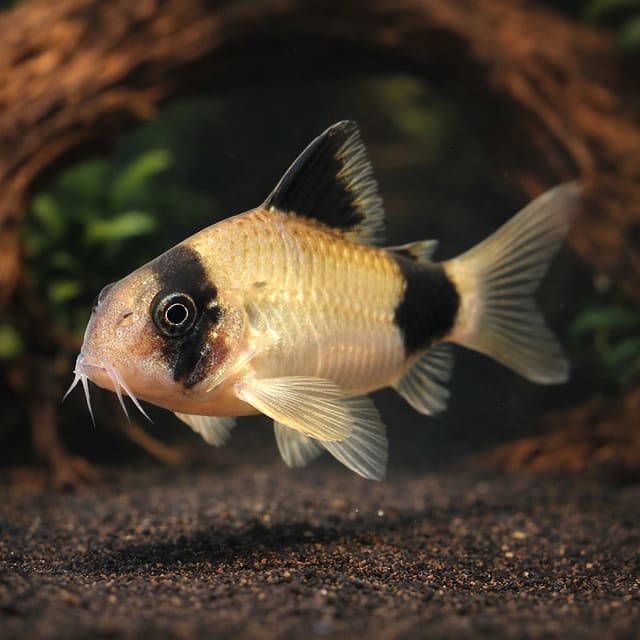
Panda Cory Catfish (Corydoras panda)
22–25°C · pH 6–7.4
From £8.69Some sizes on sale

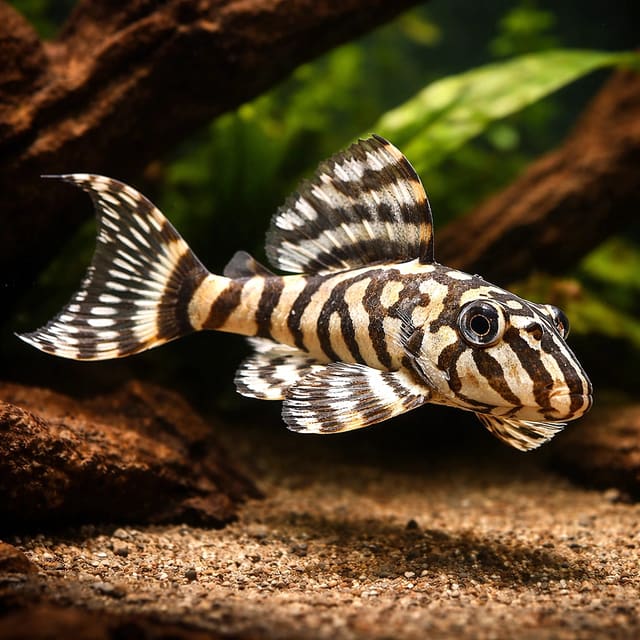
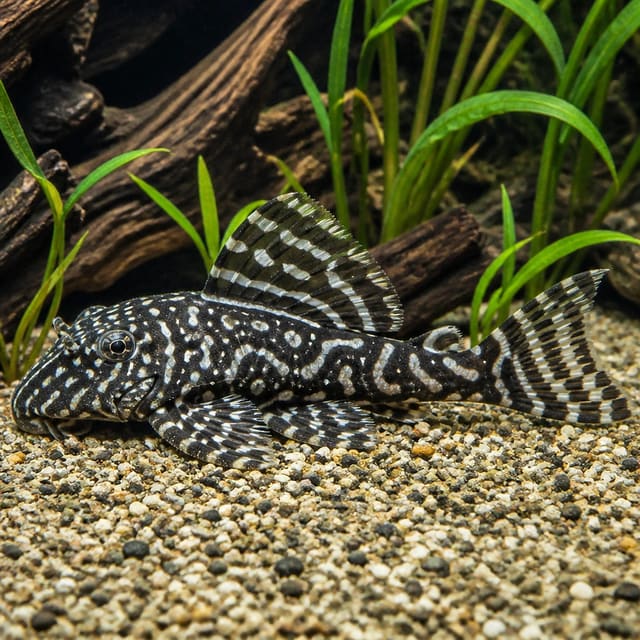
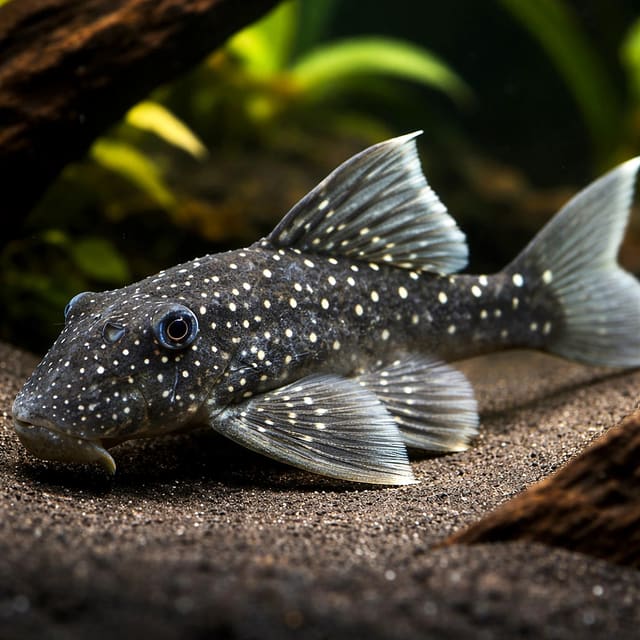
The L066 King Tiger Pleco (Hypancistrus sp.) is a suckermouth armoured catfish from South America’s Amazon basin. It suits keepers prepared for deliberate feeding, shelter and weekly testing; OATA’s tropical algae-eater guidance gives 22–27°C, pH 6.0–8.0 and 4–12°dH. Sold individually in dispatch sizes from 2.5–3 cm to 10–11 cm.
Hypancistrus sp.
The L066 King Tiger Pleco (Hypancistrus sp.) is a suckermouth armoured catfish from South America’s Amazon basin. It suits keepers prepared for deliberate feeding, shelter and weekly testing; OATA’s tropical algae-eater guidance gives 22–27°C, pH 6.0–8.0 and 4–12°dH. Sold individually in dispatch sizes from 2.5–3 cm to 10–11 cm.
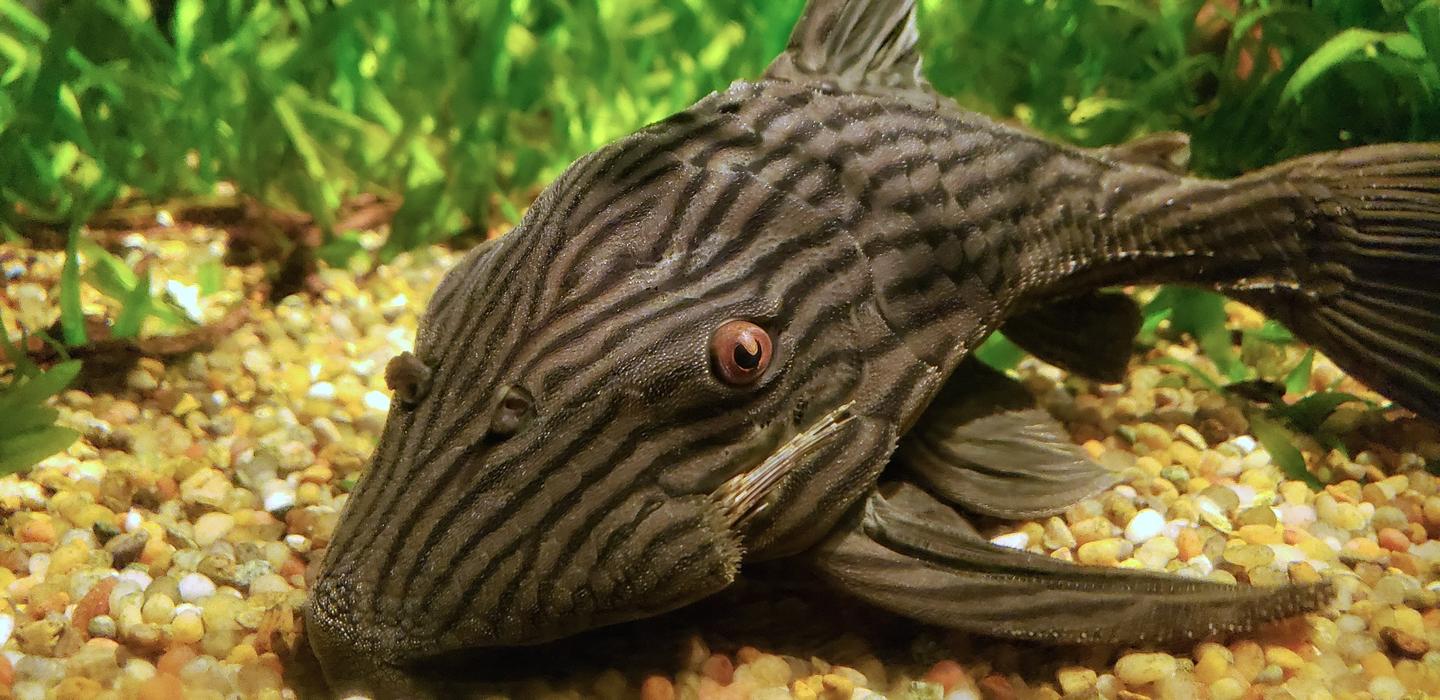
‘Pleco’ is a loose aquarium-trade label, not one species or one care sheet. Before buying, confirm the scientific name or defensible L-number, adult size and measurement method, required footprint, temperature and water, diet, social plan and source. No universal pleco tank size, menu or algae result is honest.
Maintain these water conditions for optimal health and vibrant colors
The L066 King Tiger Pleco is a freshwater suckermouth armoured catfish sold as Hypancistrus sp. and found at genus level in South America’s Amazon basin. It suits a keeper prepared to provide biological filtration, shelter, deliberate feeding and weekly water testing. The letters “sp.” mean that the scientific label stops at the genus rather than naming one formally identified species. Keep the L066 trade identifier attached to the name when comparing this fish with other patterned plecos; a broad name such as “tiger pleco” can be used for more than one aquarium fish.
WoRMS places Hypancistrus in Loricariidae, the family of suckermouth armoured catfishes. Treat that genus-level identity as the basis for care planning, without narrowing it to a single species from pattern, dispatch size or an image.
Wikipedia describes Hypancistrus as a freshwater South American genus found in the Amazon basin. It also notes that some members have carnivorous tendencies and include meat in their diet. These genus-level points guide broad feeding decisions without assigning one feeding balance, adult dimension or behaviour to every member.
| What the name establishes | What to do with it |
|---|---|
| L066 King Tiger Pleco | Keep the L-number when comparing animals and care plans. |
| Hypancistrus sp. | Treat the scientific identity as genus-level. |
| Loricariidae | Plan for a suckermouth armoured catfish rather than a general algae-control tool. |
| Suits | Not suited to |
|---|---|
| Keepers prepared to test water weekly and feed deliberately | Aquariums without a well set up and maintained filter |
| Filtered aquariums with gravel or sand and accessible shelter | Plans that rely on a fish to solve persistent algae |
| Layouts with room for growth, movement and maintenance | Setups where shelter and feeding routes are blocked |
One purchase quantity supplies one animal of the selected option. Use the live size selector to choose the dispatch grade for your order. The size you select is the size supplied, not the adult size. A smaller grade therefore needs the same forward planning for growth, filtration, shelter and final floor space as a larger grade.
The exact species has not been identified, so the care advice here follows the genus Hypancistrus and its care group.
| Selector label | Meaning for your order |
|---|---|
| CB 2,5 - 3 cm | One animal in that dispatch grade. |
| CB 4 - 5 cm | One animal in that dispatch grade. |
| 6-8 cm | One animal in that dispatch grade. |
| 8-9 cm | One animal in that dispatch grade. |
| 10-11 cm | One animal in that dispatch grade. |
Do not use a larger selector measurement as proof of adulthood or a smaller measurement as proof that the fish is young. The labels describe dispatch size only.
Sex is guaranteed only when the selected option explicitly states male or female. This L066 King Tiger Pleco listing has no sex-guaranteed option.
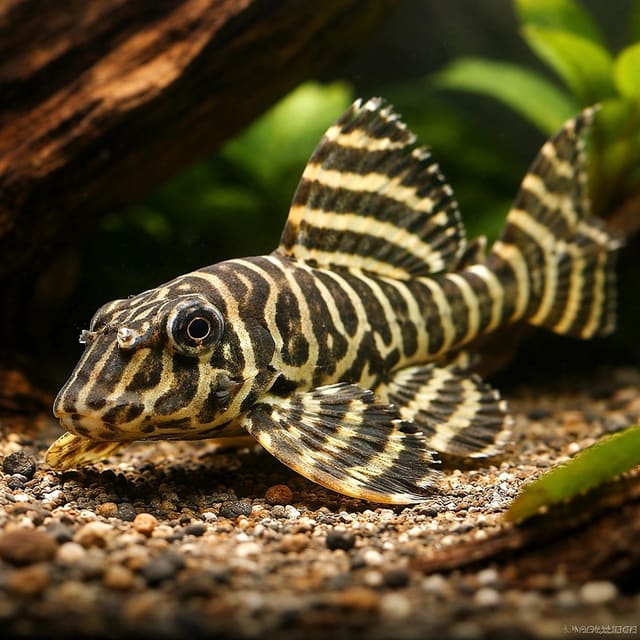
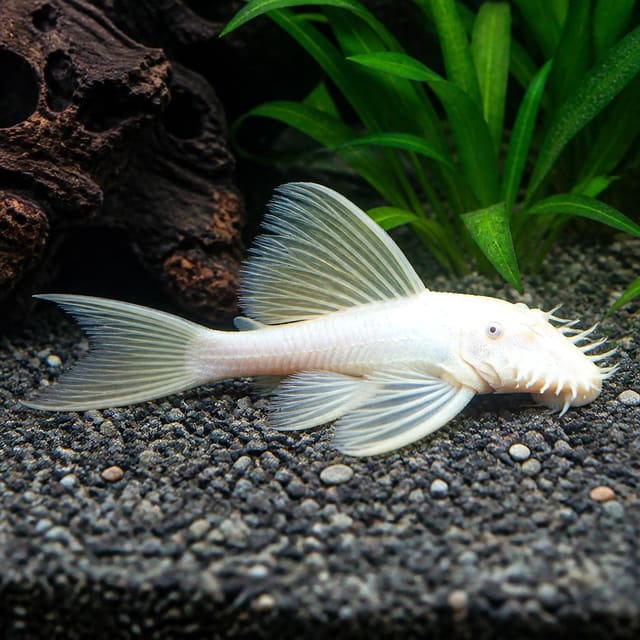
The gallery images are representative, based on reference photographs of this kind of animal, so colours can look slightly different from the live animal.
This sequence separates three decisions that are easily confused: the fish sent for one purchase, its size at dispatch and the aquarium it will need as it grows.
Start with water, filtration and shelter rather than colour or dispatch grade. OATA’s tropical algae-eater sheet gives 22–27°C, pH 6.0–8.0 and general hardness of 4–12°dH as group guidance, not a species-specific optimum. It also sets ammonia at zero mg/l, nitrite at zero mg/l and nitrate at no more than 20 mg/l above the normal tap-water level.
Use those figures as a practical screening range. An aquarium that repeatedly falls outside it needs correction and a period of stability before this fish is introduced. Do not choose a target at the edge merely because it sits within the figures; compare the aquarium’s usual readings and favour conditions you can hold consistently.
Choose as large an aquarium as is practical because greater water volume helps environmental conditions remain stable. No litre figure should replace an adult-growth plan for a genus-level animal. The aquarium must provide usable floor area, gravel or sand, shelter and room for the fish to move without every route being blocked by ornaments.
This pleco suits a keeper prepared to measure water weekly, feed it deliberately and treat algae control as an aquarium-maintenance issue rather than the fish’s job. Browse the catfish and pleco collection only after deciding which identity, eventual size and care pattern fit the aquarium.
A well set up and maintained filter is essential. The RSPCA’s aquarium welfare guidance explains why: fish release toxic ammonia, biological filtration converts it to nitrite, and beneficial bacteria then convert nitrite to the safer nitrate. Ammonia and nitrite remain dangerous stages in that process, so a filter is not simply a device for making the water look clear.
Our first tropical aquarium guide gives the preparation sequence a new setup needs before livestock is added. Use that preparation even when the selected fish is small. Dispatch size does not reduce the need for established biological filtration.
| Observation | Decision |
|---|---|
| Water looks clear but ammonia is measurable | Do not introduce the fish; the biological process is not meeting the target. |
| Nitrite is measurable | Pause introduction and continue preparing the aquarium until the reading is zero mg/l. |
| Both toxic compounds read zero | Check temperature, pH, hardness, nitrate and stocking before proceeding. |
| Readings change sharply between tests | Find and correct the cause, then demonstrate stability through repeated measurements. |
Keep the filter running and maintained as part of the permanent setup. Never treat a visual inspection as a substitute for tests: dissolved waste can be present in water that appears clean. A mature aquarium and working biological filter give you a measurable foundation for every later care decision.
Use 22–27°C, pH 6.0–8.0 and 4–12°dH as the working group range. Measure the aquarium rather than relying on a heater setting, a tap-water report or an earlier test. The temperature shown on equipment is an instruction to the heater; the temperature measured in the aquarium is the condition experienced by the fish.
The nitrate ceiling is no more than 20 mg/l above the normal tap-water level. For example, if the tap-water baseline is 10 mg/l, the aquarium should not exceed 30 mg/l under that rule. If the baseline is 20 mg/l, the corresponding ceiling is 40 mg/l. This calculation does not relax the ammonia or nitrite targets: both stay at zero mg/l.
Use our water chemistry guide to understand what each test measures, then enter actual readings into the water matcher to compare them with the stated range. Keep the written result beside the aquarium log rather than relying on memory.
| Reading | Action |
|---|---|
| Below 22°C or above 27°C | Correct the cause gradually and confirm stability before introduction. |
| pH outside 6.0–8.0 | Pause the stocking decision and investigate the aquarium and source water. |
| Hardness outside 4–12°dH | Do not assume pH alone makes the water a match. |
| Ammonia or nitrite above zero | Treat this as an immediate water-quality problem. |
| Nitrate above the calculated ceiling | Review maintenance, feeding and stocking pressure. |
Consistency matters because larger aquariums generally provide more stable environmental conditions. Select a setup whose range you can maintain every week, not one that reaches the target only immediately after maintenance.
Use aquarium gravel or sand as the base and provide cover through live plants, artificial plants or suitable ornaments. Plant pots and model caves are practical shelter options when they are aquarium-safe and arranged securely. Shelter should create places to withdraw while leaving open routes through the layout.
A heavily decorated aquarium can still be poorly planned when every shelter competes for the same small area. Spread cover through the layout and preserve sight breaks, feeding access and swimming routes. When more than one fish uses the lower area, count usable retreats rather than ornaments: a cave blocked by wood or occupied permanently by another animal does not serve two fish at once.
| If the layout has… | Then… |
|---|---|
| Open floor but no retreat | Add stable cover before introduction. |
| Many ornaments but little movement space | Remove or reposition pieces to open routes. |
| One shelter beside all feeding access | Create another accessible feeding area. |
| Plants without secure lower cover | Add a suitable cave, pot or ornament. |
| Unstable stacked hardscape | Rebuild it securely before the fish enters. |
Wood may be used as part of the hardscape, but the genus identity alone does not make it a complete diet. Treat wood, plants and caves as structural choices and provide food deliberately. The finished arrangement should support hiding, movement, observation and maintenance at the same time.
Do not convert a dispatch grade into a permanent aquarium recommendation. The selector measurements run from 2.5–3 cm to 10–11 cm, but each describes the animal sent under that option. Adult planning must account for a Hypancistrus whose exact species is unresolved, so choose generous water volume and usable floor area rather than working backwards from a small arrival size.
OATA’s general rule is to choose an aquarium as large as possible within reason because a larger volume supports greater environmental stability. That principle is especially useful here: it keeps the decision focused on stable conditions and future growth without pretending that one universal litre figure fits a genus-level identity.
| Planning shortcut | Why to reject it |
|---|---|
| “The fish is only 3 cm.” | The measurement describes dispatch, not its final space requirement. |
| “The aquarium has a high litre total.” | Volume alone does not show whether floor routes and shelters are usable. |
| “There is already one cave.” | Existing animals may control or block that shelter. |
| “Algae will feed it.” | Stocking and space cannot be justified by an algae problem. |
If future growth would leave no clear route, no distinct retreat or insufficient capacity to hold the care range, choose a larger setup before adding the fish. A planned move later should be a contingency, not the main answer to an aquarium that is too constrained from the start.
Do not purchase this fish as a substitute for algae management. Persistent algae can point to water chemistry, maintenance or stocking problems, and an algae-grazing fish does not correct those causes. Continue regular aquarium maintenance and keep stocking at an appropriate level whether or not grazing is observed.
OATA’s group guidance says algae-grazing aquarium fish still need prepared food, including algae-based wafers or flakes, with fresh vegetables such as cucumber. Wash vegetables thoroughly before use, or choose organic produce, because pesticide residues may harm aquarium animals. Remove the portion before it breaks down and adds waste.
Some Hypancistrus species have carnivorous tendencies and include meat in their diet. Use that genus trait to reject an algae-only menu, but do not assume that every unidentified member needs the same protein balance. Build the routine around suitable prepared foods, an algae-based component and a measured animal-protein component, then judge portions by what the fish consumes and by the water results.
| What you observe | What to change |
|---|---|
| Food disappears before the pleco reaches it | Change placement or review competition at feeding time. |
| Food remains after the fish has had access | Reduce the portion and remove the remainder. |
| Nitrate rises with frequent leftovers | Correct portion control and maintenance rather than adding more livestock. |
| Only algae grazing is seen | Continue deliberate supplementary feeding. |
Overfeeding creates uneaten material that breaks down and releases toxic waste. Portion control therefore links feeding directly to the zero-ammonia, zero-nitrite targets and the nitrate ceiling. Feed the animal you can observe, and use water tests to check that the routine remains sustainable.
Separate daily observation from weekly testing so neither task is forgotten. Daily checks tell you what has changed since the previous feed; weekly measurements show whether the aquarium is holding the required chemistry over time. Record both when something differs from the normal pattern.
| Pattern | Response |
|---|---|
| One unusual result | Repeat the measurement and inspect the aquarium immediately. |
| The same drift on successive weeks | Correct the underlying maintenance, feeding or stocking pressure. |
| Repeated uneaten food | Reduce the portion or change access rather than leaving it to decay. |
| A shelter entrance becomes blocked | Restore safe access before it becomes the normal layout. |
| Another fish controls the feeding area | Change placement and reassess the compatibility plan. |
Do not wait for cloudy water to signal a problem. Ammonia and nitrite are dissolved compounds, and the filter’s biological performance must be judged through testing. Equally, one good test does not replace a routine: the useful information comes from comparing readings under normal conditions week after week.
If the fish shows a sudden health or behaviour change, check water values and equipment promptly and seek appropriate fish-health help. Keep the recorded readings to hand because they show whether the aquarium changed at the same time.
Before adding the fish, confirm that the aquarium is appropriate for its identity, size, water range and effect on stocking. Complete that decision before delivery rather than trying to redesign a filled aquarium while the animal waits. The filter should be established, shelter should be accessible and measured water should sit within 22–27°C, pH 6.0–8.0 and 4–12°dH.
Keep the aquarium conditions steady during introduction. Do not make simultaneous changes to temperature, chemistry, hardscape and stocking unless an immediate welfare problem requires action. A prepared layout lets the fish enter a stable environment rather than one still being rearranged.
| Checkpoint | Decision |
|---|---|
| Filter operation | Confirm normal running every day. |
| Shelter access | Check that the fish can enter and leave without another animal blocking it. |
| Food access | Observe the pleco reaching food; do not judge by food disappearing alone. |
| Water | Check promptly if feeding, behaviour or equipment performance changes. |
Compare the month’s measurements with the pre-arrival baseline. If ammonia and nitrite remain zero, nitrate stays within the calculated ceiling and the fish has reliable shelter and feeding access, retain the routine. If a recurring problem appears, correct that pressure before considering another animal. Growth should increase the space margin you preserve, not reduce it to the point that a move becomes urgent.
Introduction is complete only when the aquarium’s normal routine accommodates the fish. The aim is not one quiet day after arrival; it is a repeatable pattern of stable water, working filtration, accessible cover and controlled feeding.
Do not use a universal tank-mate list for a genus-level pleco. Compatibility depends on the other animal’s adult size, water range, stocking effect, use of shelter and access to food. A fish that occupies a different part of the aquarium may reduce direct competition, but that alone does not make the combination suitable.
| Proposed combination | Decision test |
|---|---|
| Midwater fish with overlapping water needs | Continue to the adult-size, stocking and feeding checks. |
| Another fish using caves or the lower area | Map separate retreats, routes and feeding access before proceeding. |
| A much larger animal | Assess predation and intimidation risk before any introduction. |
| A fast feeder | Demonstrate that the pleco can still reach its portion. |
| An animal needing different chemistry | Do not compromise the water requirements of either animal. |
Temperament labels such as “peaceful” are not enough. They do not describe competition for one cave, pressure at a feeding point or the waste load created by another adult fish. Use the physical aquarium and measured water as the test.
Request a stocking and compatibility assessment from our team before mixing an uncertain combination. Include aquarium dimensions, filter details, recent water readings, resident species and adult sizes, plus a simple description of shelters and feeding areas. Those details allow a decision about the actual aquarium rather than a generic community label.
Each purchase supplies one animal; it does not establish a social group or reserve space for another pleco. If you want more than one bottom-using fish, repeat the full space, water, shelter and feeding assessment for every addition. Do not assume that matching genus, pattern or dispatch size makes two animals compatible.
| Situation | Decision |
|---|---|
| Two shelters share one narrow entrance route | Count this as a conflict point, not two independent spaces. |
| Several retreats exist but one fish controls the feeding point | Add separate food access or do not proceed with the combination. |
| Water is stable before another fish is added | Treat that as a baseline, not proof that extra stocking will remain stable. |
| Both fish fit the same temperature range | Continue checking pH, hardness, adult space and feeding competition. |
| A small newcomer fits today | Recalculate the layout using adult growth rather than dispatch size. |
Observe any established combination at feeding time and around shelter entrances. If one fish repeatedly loses access, change the layout or feeding placement promptly and reassess whether the aquarium can support both animals. Do not solve competition by simply adding more food, because leftovers can break down and raise the waste load.
Compatibility remains an aquarium-specific decision. Water overlap is essential, but the final plan must also give each animal sufficient space, reliable shelter and a realistic route to food while the filter continues to meet the zero-ammonia and zero-nitrite targets.
Plan it around adult growth rather than treating any 2.5–11 cm dispatch measurement as a final size. Choose generous water volume, usable floor area, accessible shelter and clear movement routes.
Use as large an aquarium as practical because greater volume supports more stable environmental conditions. Assess length, width, usable floor area, shelter, resident stocking and room for adult growth rather than relying on a guessed litre figure.
Plan every additional fish as a separate stocking decision. Confirm adult space, stable water quality, independent shelter, clear movement routes and reliable feeding access before adding another bottom-using fish.
It suits a keeper prepared to establish biological filtration, test water weekly, control feeding, provide accessible shelter and plan around adult growth. Do not introduce it to an aquarium with measurable ammonia or nitrite.
Offer suitable prepared food with an algae-based component, washed cucumber and a measured animal-protein component. Some Hypancistrus species include meat in their diet, so do not rely on aquarium algae alone; remove uneaten food before it decomposes.
OATA’s tropical algae-eater group guidance gives 22–27°C, pH 6.0–8.0 and 4–12°dH, not a species-specific optimum. Keep ammonia and nitrite at zero mg/l and nitrate no more than 20 mg/l above the normal tap-water level.
Treat behaviour between individuals as uncertain at genus level. Screen every combination by adult space, shared water conditions, shelter use and feeding access, then watch for any animal repeatedly losing access to food or cover.
Screen each candidate by adult size, stocking load, shelter use and feeding access, and use OATA’s tropical algae-eater group guidance of 22–27°C, pH 6.0–8.0 and 4–12°dH for the water check. Do not rely on a universal species list for an unidentified member of Hypancistrus.
Start filming the sealed parcel as soon as someone receives it, then continue in one take while it is opened and the fish remains inside the sealed bag. Float the bag for 20–30 minutes before releasing the fish, and never pour the bag water into the aquarium.
No reviews for this item yet. Bought one? Honest reviews only, good or bad.
What customers say about ordering from us
I have a small group of long finned mountain minnows. So was delighted to be able to order ten of this variety to increase the genetics in my tank . The ones I recieved are healthy but it’s to early to give a verdict on wether they are of a long finned type since they are small currently.
Gordon Walker · 23 Sept 2026
100% success travel and "installation". Pleased with quality of purchase. The Siamese fighter a bit "shy" so have not yet seen him at his best yet but looking good. Happy customer. GG
George E Garratt · 21 Sept 2026
Reviews of our shop, collected by Judge.me, an independent third-party review collector. Newest first.
22–25°C · pH 6–7.4
22–26°C · pH 6–7.5 · 60L
22–27°C · pH 6–8
26–30°C · pH 6–7.5
22–27°C · pH 6–8

22–27°C · pH 6–8
22–27°C · pH 6–8
22–26°C · pH 6–7.5
22–27°C · pH 6–8
23–26°C · pH 5–7.5
22–27°C · pH 6–8
22–27°C · pH 6–8

22–27°C · pH 6–8
22–27°C · pH 6–8
22–27°C · pH 6–8 · 80L

22–27°C · pH 6–8

22–28°C · pH 7–8 · 41L

21–25°C · pH 5–7
24–29°C

24–27°C · pH 6.5–6.5

22–27°C · pH 6–8 · 72L
24–27°C · pH 6.5–8 · 200L

23–27°C · pH 5.5–7 · 60L

22–26°C · pH 6–7.8 · 75L