Moderate
Contradens Pleco (Hypancistrus contradens)
£66.09
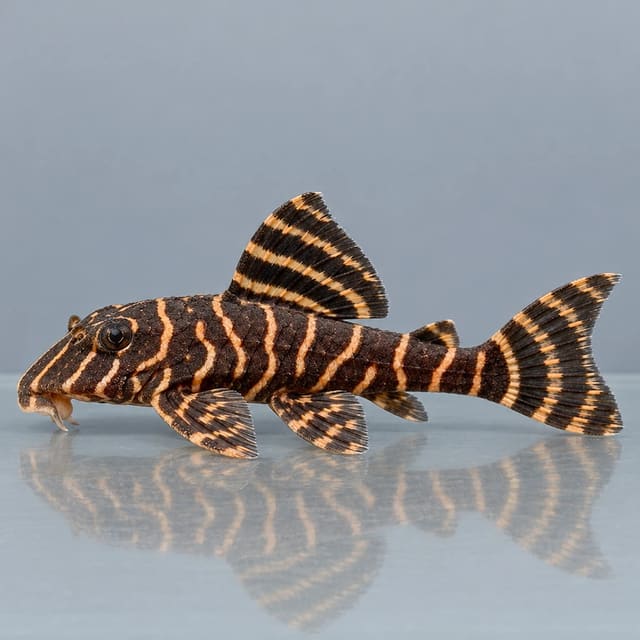
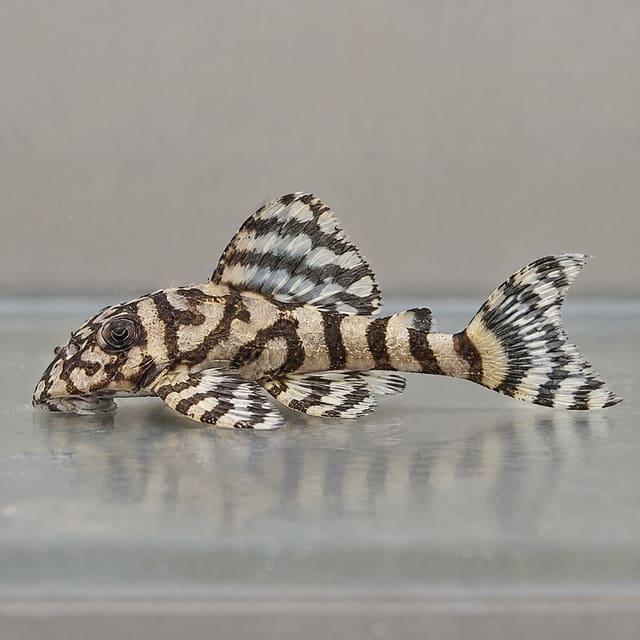
The L340 Mega Clown Pleco, also sold as LDA19, is an undescribed Hypancistrus from the Rio Tomo in Colombia, with a dark body crossed by broad cream to orange bands. It stays around 8–10 cm and needs warm, clean water at 26–29°C, rocky caves and meaty sinking foods. Sold individually as one live fish of 3–4 cm.
Adult size is the maximum length this species reaches at full maturity (scientific sources). The livestock you receive will be younger and smaller. Product-photo provenance and any image-specific limitations are stated on the listing.
Hypancistrus sp. (L340)
The L340 Mega Clown Pleco, also sold as LDA19, is an undescribed Hypancistrus from the Rio Tomo in Colombia, with a dark body crossed by broad cream to orange bands. It stays around 8–10 cm and needs warm, clean water at 26–29°C, rocky caves and meaty sinking foods. Sold individually as one live fish of 3–4 cm.
Adult size is the maximum length this species reaches at full maturity (scientific sources). The livestock you receive will be younger and smaller. Product-photo provenance and any image-specific limitations are stated on the listing.
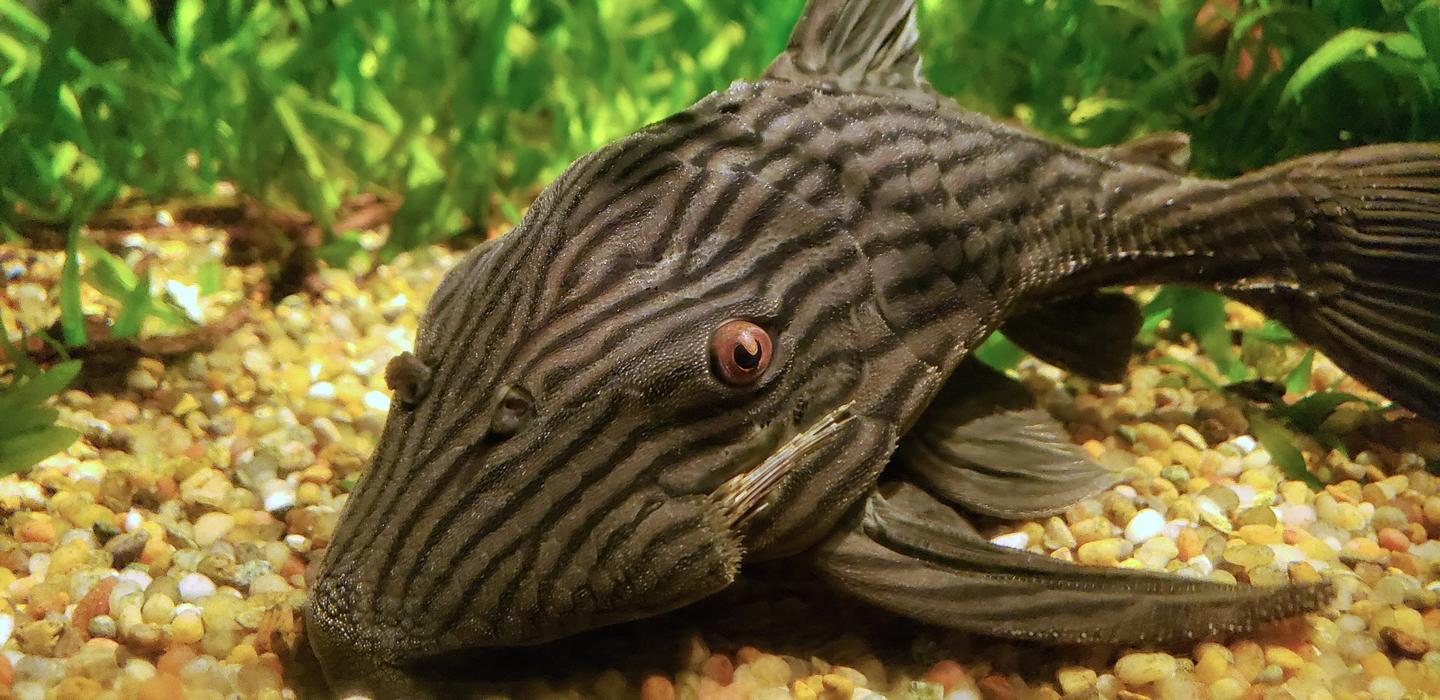
‘Pleco’ is a loose aquarium-trade label, not one species or one care sheet. Before buying, confirm the scientific name or defensible L-number, adult size and measurement method, required footprint, temperature and water, diet, social plan and source. No universal pleco tank size, menu or algae result is honest.
The Mega Clown Pleco is an undescribed suckermouth catfish traded under two codes, L340 and LDA19, and filed by scientists and hobby databases as Hypancistrus sp. (L340). It is a small, boldly banded pleco: a dark body crossed by broad cream to orange bands, banded fins, and bright lines running from the snout over the head. Planet Catfish records it first from the Tomo river basin in the Orinoco system, and ScotCat places that river in Colombia.
Like the famous zebra pleco, this is a member of Hypancistrus, a group of small cave-dwelling plecos with few teeth. ScotCat explains that Hypancistrus have fewer and larger teeth than Panaque, Panaqolus and Peckoltia, which suits their diet: Planet Catfish describes this one as a broad omnivore with a preference for meaty foods. The Mega Clown Pleco suits a keeper who wants a characterful, collectable pleco for a warm, clean aquarium with rocky caves, and possibly a breeding project later.
| Name | What it means |
|---|---|
| L340 | The L-number Planet Catfish and ScotCat use for this fish |
| LDA019 / LDA19 | A second trade code for the same fish, listed by all three databases |
| Mega Clown Pleco | The common name used by Planet Catfish, ScotCat and Welsfans |
| Hypancistrus sp. (L340) | Not yet scientifically described, so it has no species name |
| Hypancistrus cf. debilittera | The label used by Welsfans, meaning it is close to the described L129 |
"Mega clown" is a trade name only. The fish usually sold as the clown pleco is Panaqolus maccus, which Welsfans lists from the same river as L162 / LDA22. The names are similar, but the fish belong to different genera; our clown pleco guide covers that other fish. Browse our Hypancistrus plecos, every coded catfish in our L-number plecos range, the wider South American catfish category and our full catfish and plecos collection.
The nearest look-alike is L129, Hypancistrus debilittera. Planet Catfish says L340 can be confused with the more strikingly marked L129, and picks out three features of L340: its smaller size, its orange colour and the well-marked junction of the stripes at the eye. ScotCat adds that individual fish vary in colour and intensity, especially in the orange. Expect some youngsters to be paler and creamier and others warmer in tone.
One purchase supplies one live L340 Mega Clown Pleco at 3–4 cm. That is a youngster well below adult size, so plan the aquarium, the caves and the feeding for the grown fish. Sex is not specified: males and females can only be told apart once mature, as described in the breeding section below.
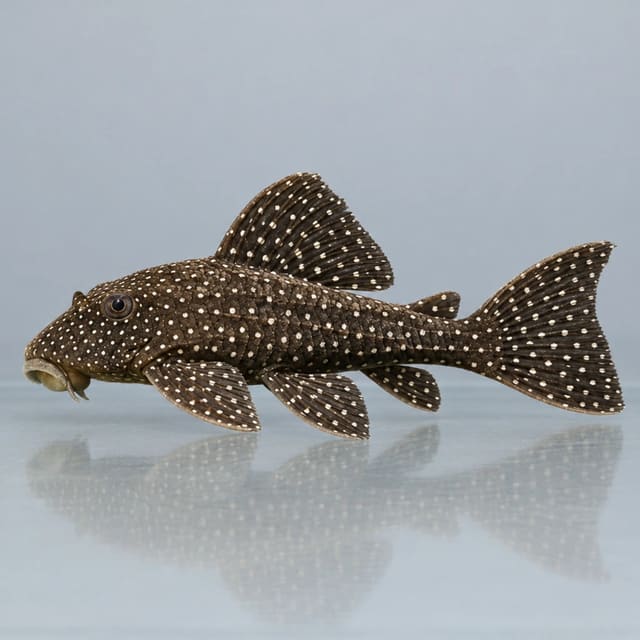
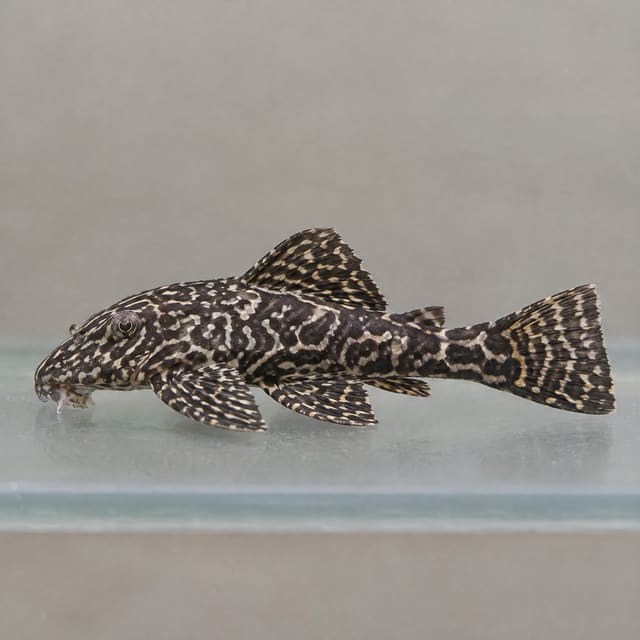
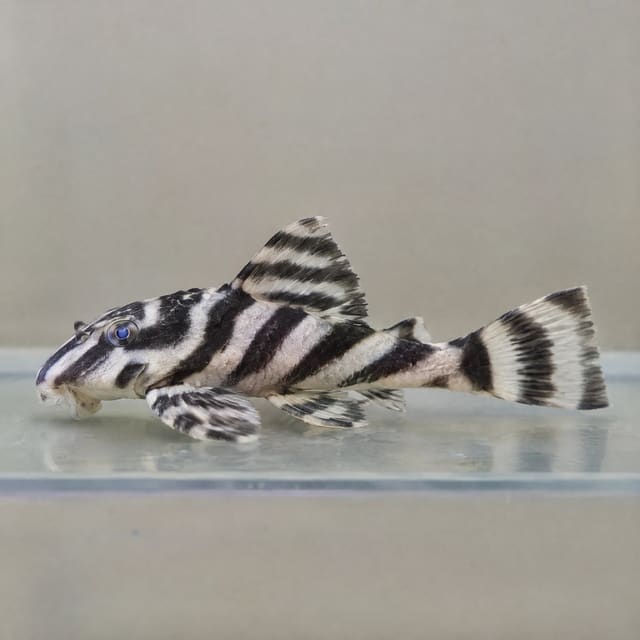
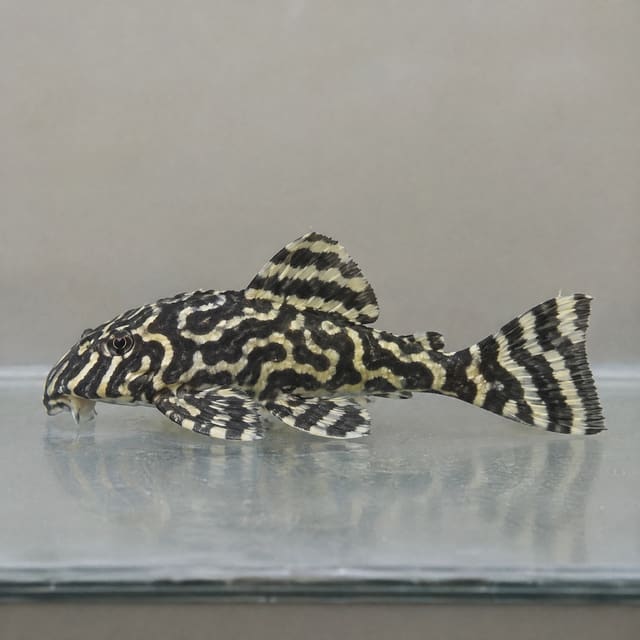
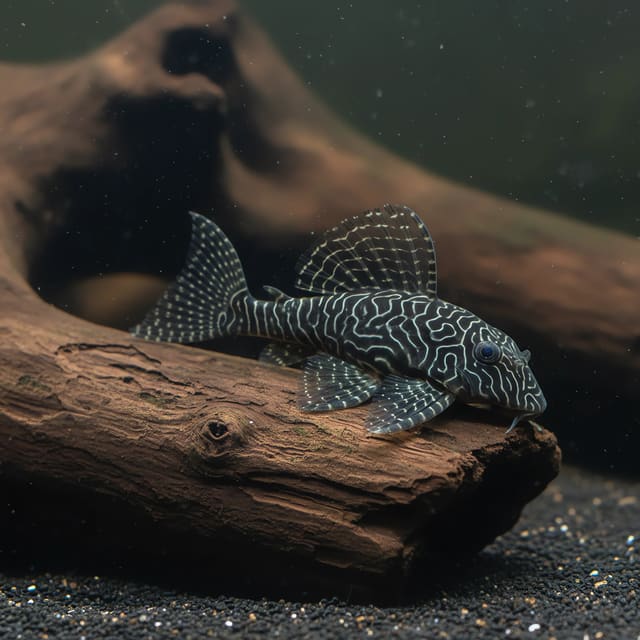
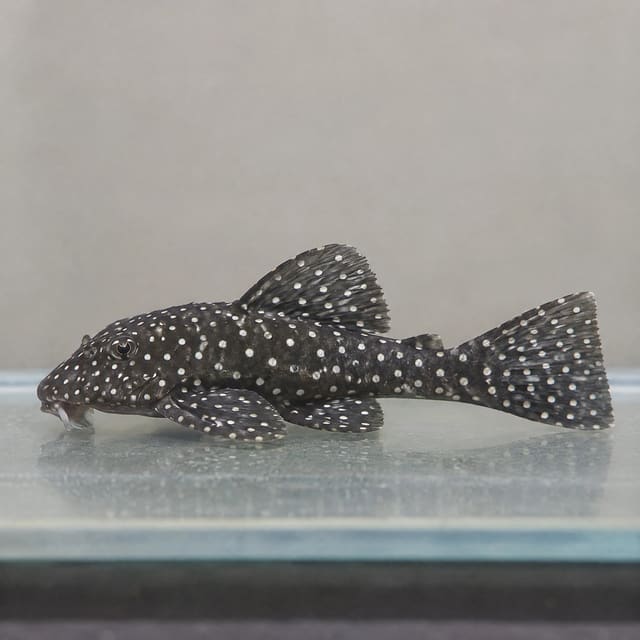
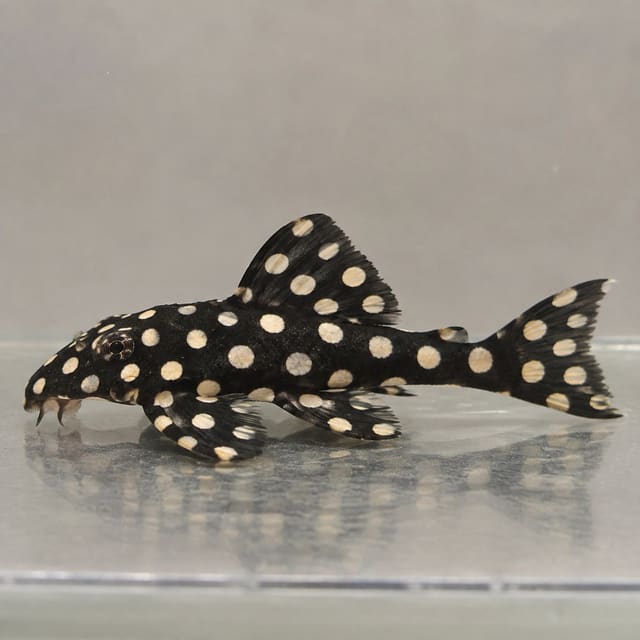
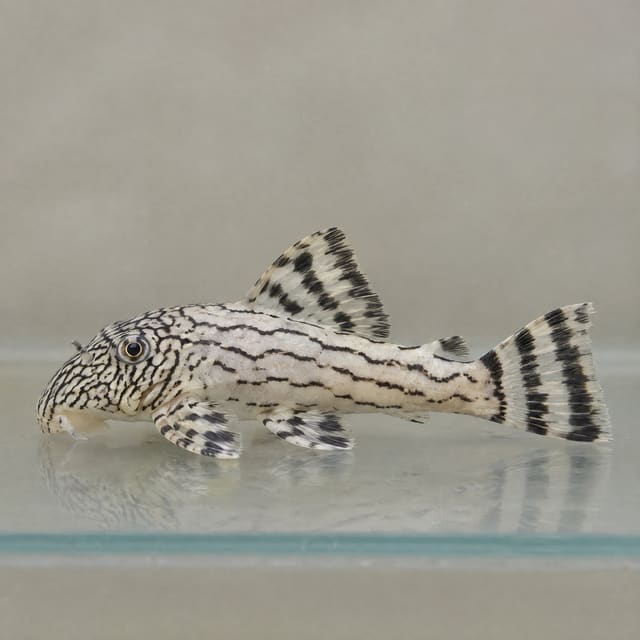
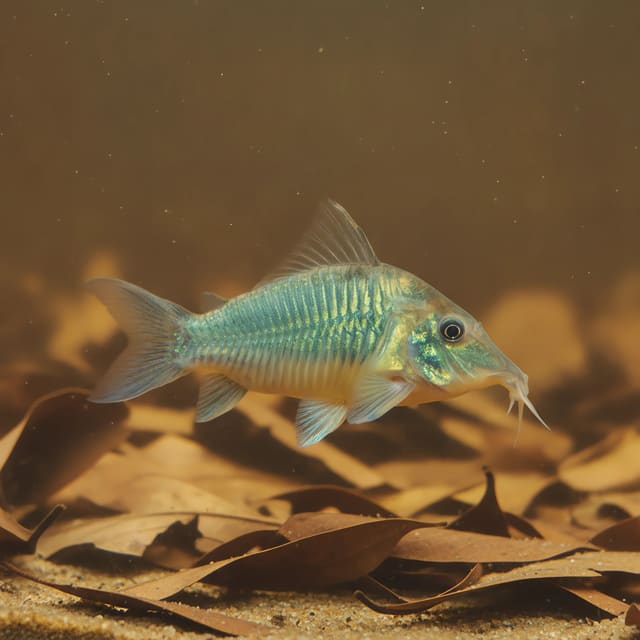
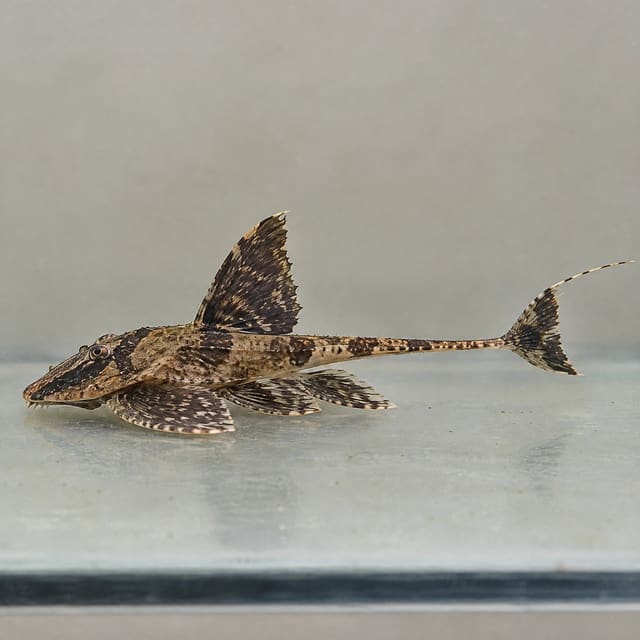
The photographs show the species, not the individual you will receive. Band width, the cream-to-orange tone and the pattern on the head differ from fish to fish and change with age and mood.
Before ordering, read our delivery and Live Arrival Guarantee information, and have the aquarium mature and warm before the fish arrives.
Welsfans recommends a 60 cm tank for this species. No source gives a footprint for L340 itself, so we compare it with its described relatives: Seriously Fish gives 60 × 30 cm for the zebra pleco, which also reaches 80 mm standard length, and 90 × 30 cm for L260 and L136, which reach 90 mm. We suggest a 90 × 30 cm base or more if you keep a small group or add tank mates, and OATA gives at least 80 litres for smaller plecos.
Floor area and the number of caves matter more than height. Each adult defends its own cave, so a longer tank with several well-spaced caves keeps the peace better than a tall one. Our pleco care guide covers the basics that apply to every suckermouth catfish.
Planet Catfish describes a simple, natural layout of rocks, driftwood and dead leaves over sand, and Welsfans lists standard caves for breeding. In practice that means piled flat stones with gaps, a few pieces of wood and purpose-made pleco caves the fish can back into. Welsfans describes its home river as clear water, so keep the water clean and bright rather than heavily stained.
Planet Catfish notes that the species is generally peaceful but territorial towards other plecos of similar size. Spacing the caves out lets each fish claim its own without constant disputes.
All three databases describe a warm-water fish, but their figures differ, so the safest target is where they overlap.
| Source | Temperature | pH | Adult size |
|---|---|---|---|
| Planet Catfish | 26.0–30.5°C | 6.0–8.0 | 80 mm SL |
| ScotCat | 25–29°C | 6.0–7.2 | 10 cm |
| Welsfans | 25–29°C | 5.5–7.5 | about 10 cm total length |
Aim for 26–29°C and pH 6.0–7.2. None of the sources gives a keeping range for hardness, but Welsfans notes that successful spawnings have happened across a wide range of water values, including records at pH 7.0–8.5 with 8–18 GH, so this is not a fish that needs very soft water. OATA's general catfish range of 4–18 dGH is a sensible band. UK tap water ranges from soft to very hard depending on where you live, so test it, or check your water company's report, before deciding whether it needs any adjustment. Our water matcher and water chemistry guide help you read the results.
Temperature, pH and hardness can vary within the ranges above; waste readings cannot. OATA sets ammonia and nitrite at zero and nitrate no more than 20 mg per litre above tap water. Meaty foods break down quickly in warm water, so remove leftovers and test weekly.
Warm water holds less dissolved oxygen than cool water, and a meat-eating pleco produces plenty of waste, so filtration and water movement matter. Use a filter rated above the tank volume, aim some of its flow across the caves and keep the surface moving. Our guide to understanding aquarium filtration explains how to choose and maintain one.
Planet Catfish describes the Mega Clown Pleco as broadly omnivorous with a preference for meaty, insect-based foods. ScotCat recommends frozen foods such as bloodworm, live foods such as brine shrimp and white or grindal worms, and prepared foods such as sinking tablets and presoaked flake, adding that young fish seem to like vegetable foods too. Suitable staples include sinking pleco tablets, freeze-dried bloodworms and freeze-dried brine shrimp.
Planet Catfish warns that these plecos can be shy and slow to grab food, so make sure enough reaches them. OATA advises feeding once a day, and allows grazing bottom-feeders up to 30 minutes to finish.
OATA recommends double-bagging catfish because their spines can pierce a bag. Switch off the aquarium lights, float the sealed bag for 10 minutes, then add small amounts of tank water over up to 20 minutes before releasing the fish and discarding the bag water. Our guide to acclimatising new fish explains each step. A small Hypancistrus usually heads straight for cover and may not be seen for several days; that is normal.
| When | What to check |
|---|---|
| Day 1 | Lights off, no food. Make sure several caves are free. |
| Days 2–3 | Place a small meaty meal near the caves at lights-out; check next morning that it has gone. |
| Days 4–5 | Test ammonia and nitrite, and check the temperature has held at 26–29°C. |
| Day 7 | Normal water change; look for the pleco at dusk and check fins and belly. |
A settled Mega Clown Pleco spends the day in or near its cave and becomes busier in the evening. OATA's warning signs for any catfish include clamped fins, rapid breathing, white spots, unusual colour, sitting in the open and loss of appetite.
| Observation | Action |
|---|---|
| Sunken or thin belly | Food is not reaching it: feed at lights-out, closer to the cave. |
| Chasing between plecos | Add caves and space them out; check that only one Hypancistrus species is present. |
| Sitting out in the open, breathing fast | Test the water and check oxygen and temperature at once. |
| White spots or clamped fins | Test the water first, then treat; see our white spot treatment guide. |
Planet Catfish suggests small tetras and similar small fish, and also corydoras, as tank mates, with the caution that this pleco must still get enough food. It is peaceful towards other fish but territorial towards plecos of its own size. ScotCat adds the most important rule: keep only one Hypancistrus species in a tank, because they hybridise; Welsfans records hybrids of L340 with L28 and L411.
| Suits | Avoid |
|---|---|
| Warm-water tetras such as the Cardinal Tetra and Rummy Nose Tetra | Any other Hypancistrus, such as the L046 Zebra Pleco or L260 Queen Arabesque Pleco |
| Corydoras that tolerate warm water, such as the Sterbai Cory | Large or boisterous bottom feeders that take all the food |
| Small, peaceful fish that keep to the middle and upper water | Plecos of similar size that compete for the same caves |
Our tank mates checker runs through these questions for the fish you have in mind.
The Mega Clown Pleco is a realistic breeding project. Planet Catfish says breeding is not hard to achieve and works in a large variety of water values; broods are small, around 10–15 eggs, and the male guards the eggs and fry in the cave until they swim free, while each female spawns one at a time like other Hypancistrus. Welsfans records many spawnings, found no single trigger and suggests larger water changes as one possibility.
Yes. Planet Catfish files LDA019 (often written LDA19) and the name Mega Clown Pleco under Hypancistrus sp. (L340), and ScotCat and Welsfans give both codes for the same fish.
It is a small pleco. Planet Catfish gives 80 mm standard length (body without the tail); ScotCat gives 10 cm and Welsfans about 10 cm total length.
No. The usual clown pleco is Panaqolus maccus, a different genus. Welsfans lists that fish from the same river, but it belongs to a different genus; our clown pleco guide covers it.
Welsfans recommends a tank of 60 cm for this species. For a small group or a community tank we suggest a base of 90 × 30 cm or more, the figure Seriously Fish gives for similar-sized Hypancistrus such as L260.
Warm, clean, well-oxygenated water. Aim for 26–29°C and pH 6.0–7.2, where Planet Catfish, ScotCat and Welsfans overlap, and keep ammonia and nitrite at zero.
Planet Catfish calls it a broad omnivore that prefers meaty, insect-based foods. Feed sinking tablets and granules with frozen or live bloodworm and brine shrimp; ScotCat notes young fish also take vegetable foods.
Keep only one Hypancistrus species per tank. ScotCat warns of hybridisation, and Welsfans records hybrids of L340 with L28 and L411.
Planet Catfish says breeding is not hard and works across a wide range of water values. Broods are small, around 10–15 eggs, and the male guards the eggs and fry in a cave until they swim free.
No reviews for this item yet. Bought one? Honest reviews only, good or bad.
What customers say about ordering from us
Easy website plenty of info on fish your buying great to pick a time slot
TRACEY DURRANT · 7 Oct 2026
Got some lovely fish thank you
Kevin Mackie · 7 Oct 2026
Reviews of our shop, collected by Judge.me, an independent third-party review collector. Newest first.
Moved by UK carriers licensed to handle live animals
Hand-packed with oxygen bags, poly box, heat pack
Email photos the same day; an optional unboxing video helps us review problems faster — claim terms apply
Klarna & PayPal Pay in 3 at checkout