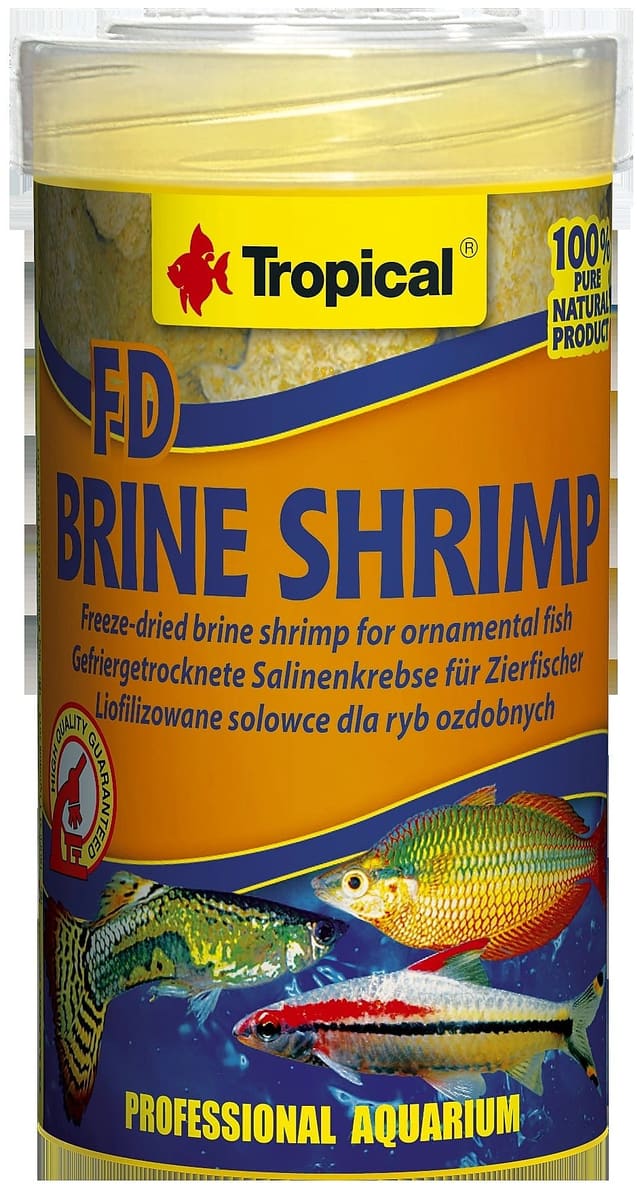
Tropical FD Brine Shrimp 100ml / 8g (Freeze-Dried Artemia)
£14.99

Tropical Red Mico 100ml/8g contains purified freeze-dried Chironomus bloodworms for omnivorous and carnivorous aquarium fish. Feed dry or soaked in small portions alongside a complete staple.
Tropical Red Mico 100ml/8g contains purified freeze-dried Chironomus bloodworms for omnivorous and carnivorous aquarium fish. Feed dry or soaked in small portions alongside a complete staple.
Tropical Red Mico 100ml/8g is a natural freeze-dried bloodworm food made from purified Chironomus larvae. It is intended for omnivorous and carnivorous aquarium fish that naturally take insect larvae and other animal foods. The loose, whole-larva format can be offered dry or soaked first, making it easy to adapt the texture and portion to the fish in front of you.
This is the original Red Mico freeze-dried bloodworm product, not Red Mico Colour Sticks and not a pressed cube food. That distinction matters: the 100ml tub contains 8g of freeze-dried bloodworms, while Colour Sticks is a separate extruded formula with a different weight and composition. The verified manufacturer product code is 01143 and the EAN is 5900469011430.
| Food | Purified, freeze-dried bloodworm larvae (Chironomus) |
|---|---|
| Pack size | 100ml / 8g |
| Format | Loose freeze-dried larvae; not cubes or sticks |
| Suitable for | Omnivorous and carnivorous aquarium fish able to take the particle size |
| How to serve | Dry, or soaked briefly in aquarium water |
| Diet role | Natural food and high-interest dietary supplement; use with an appropriate complete staple |
| Storage | Keep tightly closed, cool and dry; protect from moisture and direct sunlight |
Bloodworms are the aquatic larvae of non-biting midges in the family Chironomidae. Their familiar red colour is associated with haemoglobin-like pigments that help many species live in low-oxygen sediments. In fishkeeping, they are valued as a palatable animal food for fish whose natural diet includes insect larvae, small invertebrates or other meaty items.
Tropical preserves these larvae by freeze-drying. Water is removed at low temperature after freezing, producing a light, shelf-stable food while retaining much of the original shape and nutritional content. Unlike live bloodworms, the tub needs no live-food maintenance. Unlike frozen bloodworms, it requires no freezer or thawing. It is still a concentrated dry food, so careful portioning remains important.
The manufacturer describes Red Mico as part of its Natural line: foods based on invertebrates whose nutritional properties are retained through freeze-drying or drying. This makes it a useful way to add a recognisable natural prey item to a varied aquarium diet without treating it as a complete, one-food solution.
The correct 100ml/8g pack says Red Mico and freeze-dried bloodworms for ornamental fish. Red Mico Colour Sticks is a different 100ml/32g extruded food. If you are comparing packs, use the name, net weight, product code 01143 and EAN 5900469011430 rather than relying on the shared red-and-yellow branding.
The manufacturer's current specification is unusually clear for a natural fish food. The feed material is freeze-dried Chironomus larvae, with no separate Colour Sticks formula or colour-enhancing additive list attached to this product. The guaranteed analysis below is taken from the manufacturer listing for Red Mico 100ml/8g.
| Declared component | Amount | What it means in practice |
|---|---|---|
| Crude protein | 46.0% | A concentrated animal-protein food for species that use meaty items in their diet |
| Crude oils and fats | 1.7% | Relatively modest declared fat content |
| Crude fibre | 4.7% | Declared structural material in the natural larvae |
| Moisture | 12.0% | Low moisture supports shelf-stable storage when the tub stays dry |
Those figures do not make Red Mico a complete staple for every fish. A complete aquarium food normally includes a broader balance of vitamins, minerals and other nutrients selected for daily feeding. Use Red Mico to provide variety, feeding enrichment and an animal-food component while keeping a species-appropriate complete flake, granule or pellet at the centre of the routine.
Red Mico is designed for omnivorous and carnivorous aquarium fish. Bettas, gouramis, many tetras and barbs, rainbowfish, livebearers, angelfish and numerous small or medium cichlids commonly recognise bloodworms as food. Whether it is suitable for a particular fish depends on its natural diet, mouth size, health and normal feeding behaviour, not simply on the fact that it lives in a tropical aquarium.
For small fish, crumble only if the dried larvae are too large and soak the portion so it is easier to take. For a mixed community, spread small amounts across the surface or use feeding tweezers so one dominant fish does not collect the whole ration. Watch the least assertive fish rather than assuming every animal has eaten because the food disappeared quickly.
Do not use bloodworms as a routine food for fish that require a strongly herbivorous or specialised diet. Many mbuna, for example, are better served by algae-rich foods selected for their digestive needs. Very small fry may need finer first foods, and fish with a known sensitivity to rich animal foods need a more cautious plan. When in doubt, check the species rather than following a generic universal-suitability claim.
Red Mico is a single-ingredient natural food. Use it alongside a complete staple chosen for the species. Feeding one attractive food exclusively can create nutritional gaps even when the fish eat it eagerly.
The manufacturer permits feeding dry or after soaking. In either case, start with a portion smaller than you expect to need. Offer only enough for the fish to finish within two to three minutes, observe the response, and add a little more only if the group has eaten cleanly. This follows the manufacturer's small-portion guidance while allowing for different stocking levels and fish sizes.
The label allows several small feeds during the day, but that is a portioning instruction rather than a requirement to add Red Mico at every meal. In a normal home aquarium, decide frequency from the species' complete feeding plan, body condition and the other foods already offered. A treat or natural food should displace part of the day's ration, not sit on top of it as extra calories.
| Situation | Preparation | What to watch |
|---|---|---|
| Betta or other individual fish | Offer a few larvae with tweezers or a small soaked pinch | Stop once the fish loses urgency; do not keep feeding because it continues to beg |
| Small community fish | Soak and distribute tiny amounts across the surface | Make sure shy fish receive food and pieces match mouth size |
| Medium community or cichlid tank | Feed in several locations, dry or soaked | Prevent one dominant fish from monopolising the portion |
| Fish reluctant to take dry food | Soak briefly and present close to the fish | Persistent appetite loss needs a husbandry or health check, not repeated rich feeding |
Soaking is optional, not a rule. Dry larvae float readily and can work well for surface-oriented fish. A short soak makes them softer, helps you divide a tiny portion and can encourage pieces to move below the surface. Use aquarium water in a clean feeding cup; there is no need to soak the whole tub or return wet food to the container.
Claims that every freeze-dried food must be soaked to prevent swelling are often repeated more confidently than the evidence supports. The practical reasons to soak are texture, portion control and feeding position. What matters most is matching the particle to the fish, keeping the ration small and avoiding uneaten food.
A good rotation gives each food a clear job. Use a complete staple for everyday nutritional coverage, Red Mico for a natural insect-larva component and feeding enrichment, and other suitable foods to vary texture and nutrient sources. Our Tropical FD Brine Shrimp provides another freeze-dried invertebrate option, while Tropical Dafnia Natural offers a different particle shape and declared profile.
Bloodworms are palatable, but appetite stimulation is not the same as treating illness. A newly arrived or stressed fish may take a familiar meaty food, yet persistent refusal to eat can also point to poor water quality, aggression, an unsuitable temperature or disease. Check the aquarium first and use food variety as one part of the response.
Red Mico also should not be marketed as a guaranteed colour enhancer. Good colour reflects genetics, an appropriate diet, stable water, suitable lighting and low stress. This product supplies natural larvae and declared protein; it is not the separate Red Mico Colour Sticks recipe that contains dedicated colour-support ingredients.
| Format | Advantages | Points to manage |
|---|---|---|
| Freeze-dried Red Mico | Stores dry, easy to portion, no thawing, can be fed dry or soaked | Concentrated and buoyant; keep the tub dry and portions controlled |
| Frozen bloodworms | High moisture and a softer texture after thawing | Needs freezer space, hygienic thawing and prompt use of each portion |
| Live bloodworms | Natural movement can produce a strong hunting response | Shorter storage life, variable availability and more demanding handling |
No format is automatically best for every aquarium. Red Mico suits keepers who want a verified bloodworm product in a compact, shelf-stable tub. If you prefer a frozen option for suitable fish, compare it with our Red Mosquito Larvae Natural Frozen Food. Browse the wider fish food collection to build a rotation around the species you keep.
Tropical states that its freeze-drying process eliminates organisms that could cause fish disease in the aquarium. That is a manufacturer process claim for this packaged food, not a reason to ignore ordinary hygiene or to describe every freeze-dried product as sterile. Keep the lid closed, use clean dry fingers or utensils, and discard food if the pack becomes damp, mouldy or unusually odorous.
Do not thaw and refreeze this product because it is not frozen food. Do not pour aquarium water into the tub. If you soak a portion, prepare only what will be fed immediately and dispose of the soaking water and leftovers after the meal.
Chironomid larvae are a recognised inhalant and contact allergen for some people who handle fish food. Published medical literature includes respiratory and skin sensitisation associated with bloodworm-containing aquarium foods. Most handling is uneventful, but the risk deserves a clear, proportionate warning rather than being omitted from a detailed product page.
This is a handling warning, not a diagnosis. Anyone with a known severe allergy should avoid the product and follow advice from their healthcare professional.
Replace the lid promptly and store the tub in a cool, dry place away from direct sun, steam and aquarium splashes. Freeze-dried food absorbs moisture from the air. A damp tub can clump, lose quality and become unsuitable long before an otherwise dry pack would.
In the aquarium, uneaten bloodworms break down like any other food and add organic waste. If pieces reach the substrate or filter intake, remove them rather than waiting for scavengers to solve the problem. Persistent cloudiness, rising ammonia or nitrate, surface film and excess detritus are signs to reduce feeding and review maintenance. Water quality is a better guide than a fixed number of pinches.
Yes. The declared feed material is freeze-dried Chironomus larvae, commonly called bloodworms in the aquarium trade.
No. Red Mico 100ml/8g contains loose freeze-dried larvae. Cube-shaped bloodworm foods and Red Mico Colour Sticks are different products.
Bettas are carnivorous fish that commonly accept bloodworms. Offer only a small, mouth-sized portion and keep a suitable complete betta food at the centre of the diet.
Many omnivorous community fish can take Red Mico. Soak or divide the portion for smaller mouths, distribute it so shy fish have access and avoid using it for species that need a specialised herbivorous diet.
There is no universal weekly number for every species and aquarium. Use Red Mico within a balanced plan, feed small portions, account for the day's other foods and monitor body condition and waste.
Start with a small pinch and offer only what the fish finish within two to three minutes. The correct amount depends on fish size, number, appetite and the rest of the ration.
No. The manufacturer says it can be fed dry or soaked. Soaking is useful when you want a softer texture, smaller portions or food that moves below the surface.
It is a single-ingredient natural food rather than a broad complete formula for every aquarium fish. Pair it with a species-appropriate complete staple.
This Red Mico product is verified as freeze-dried bloodworms and is not sold here with a guaranteed colour-enhancement claim. Do not confuse it with the separate Red Mico Colour Sticks formula.
Tropical states that its process eliminates organisms that could cause fish disease. Store and handle the food hygienically nevertheless; the page does not extend that claim to every freeze-dried food.
Yes. Chironomid larvae are a documented allergen for some people. Avoid inhaling dust, wash after handling and do not use the product if you have a known relevant allergy.
Keep it tightly closed, cool and dry, away from direct sunlight and splashes. Never return soaked or damp food to the tub.
This listing is for one Tropical Red Mico 100ml/8g tub. It is a dry, non-living aquarium food and travels by our normal parcel service; the Live Arrival Guarantee used for livestock is not relevant to this product. Current price, availability and dispatch options are shown beside the basket controls.
New customers can use WELCOME10 for 10% off their first eligible order. Discount conditions are checked at checkout. Keep the product sealed after delivery and confirm the pack name and 8g net weight before feeding.
Identity, ingredients, analysis and feeding directions were checked against the Tropical manufacturer listing for Red Mico 100ml/8g. The handling warning is supported by published medical literature on chironomid and bloodworm sensitisation, including the PubMed case report on aquarium fish-food allergy and a peer-reviewed review and case discussion of bloodworm-induced asthma. External sources are provided for verification and do not replace pack directions or professional medical advice.
No reviews for this item yet. Bought one? Honest reviews only, good or bad.
What customers say about ordering from us
I have a small group of long finned mountain minnows. So was delighted to be able to order ten of this variety to increase the genetics in my tank . The ones I recieved are healthy but it’s to early to give a verdict on wether they are of a long finned type since they are small currently.
Gordon Walker · 23 Sept 2026
100% success travel and "installation". Pleased with quality of purchase. The Siamese fighter a bit "shy" so have not yet seen him at his best yet but looking good. Happy customer. GG
George E Garratt · 21 Sept 2026
Reviews of our shop, collected by Judge.me, an independent third-party review collector. Newest first.