
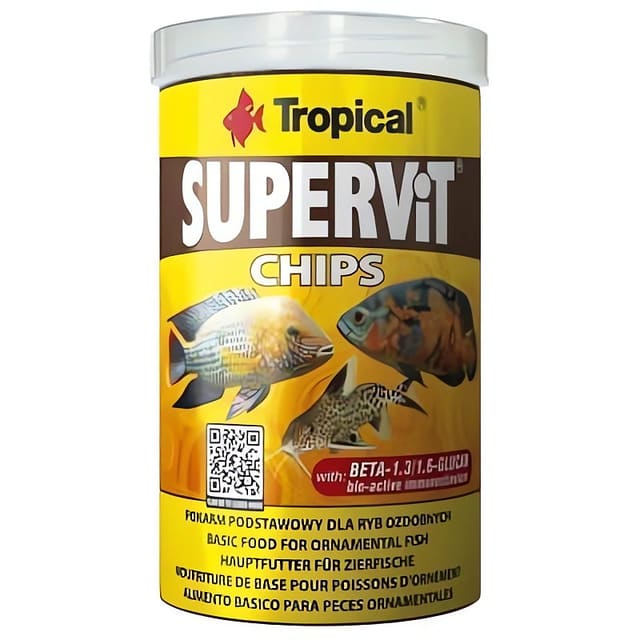
Tropical Supervit Chips 250ml/130g
£19.99

Freeze-dried daphnia in a 100ml/18g pack for suitable freshwater aquarium fish and natural diet variety.
Freeze-dried daphnia in a 100ml/18g pack for suitable freshwater aquarium fish and natural diet variety.
Tropical Dafnia Natural Freeze-Dried Daphnia 100ml/18g is a non-living dried daphnia food for suitable freshwater aquarium fish. Daphnia are small freshwater crustaceans, and the freeze-dried format gives keepers an easy way to add natural food variety without storing frozen or live food.
Offer small amounts a few times a week alongside a suitable staple food. Dried foods can soften and spread in water, so feed lightly, watch how quickly your fish clear it, and remove leftovers before they affect water quality.
This is prepared dry food, not live food. Match the portion size to the fish you keep and use it as variety rather than the only food in the diet.
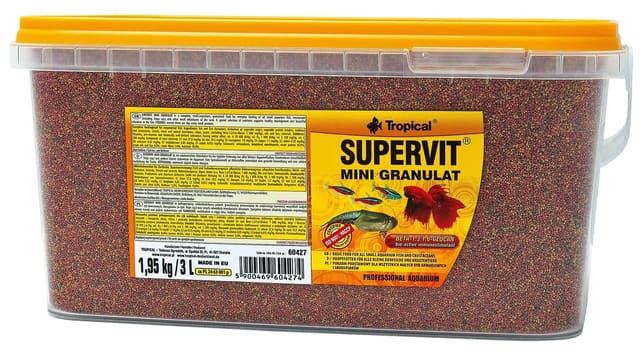
For everyday feeding, pair with Tropical Supervit Chips or Tropical Super Spirulina Forte Mini Granulat. For more variety, rotate with Tropical Spirulina Flakes or Discus Life Basic Frozen Blister Food where those foods suit your fish.
Let me tell you about Freeze-Dried Daphnia, or Daphnia pulex, because this is one of those foods that just makes sense in a tropical tank. If you’ve ever stood in front of your aquarium and thought, what do tropical fish eat, this is a brilliant answer to keep in your cupboard. It’s simple, natural, and very easy to use. Tropical Dafnia Natural is a classic fish food that gives your fish a soft, protein-rich snack, and it’s especially handy when you want variety without fuss.
Now, here’s the thing. Daphnia are tiny freshwater crustaceans, and they’ve been part of aquarium keeping for decades. That’s because fish recognise them as food very quickly. They trigger a strong feeding response, which is exactly what you want when you’re trying to tempt fussy eaters or just liven up a feeding routine. For many keepers, this becomes one of those staple treats you reach for again and again. In the wild, daphnia live in freshwater ponds, lakes, marshes, and slow-moving waters. They’re found across Europe, North America, and many temperate regions.
They spend their time in the water column, feeding on microscopic algae, bacteria, and suspended organic matter. That matters, because it helps explain why Freeze-Dried Daphnia works so well in the aquarium. The food floats and drifts in a way that feels natural to fish. It looks like tiny prey moving through the water, and that can really switch feeding behaviour on. Many aquarists in the UK like daphnia because they’re familiar, natural, and easy to store. Daphnia are native to the UK in several species, and they’re a normal part of freshwater food webs.
They’re not dangerous at all. In fact, they’re harmless prey. In the hobby, that makes them a very reassuring choice. You’re giving your fish something that fits neatly into the way they’d feed in nature, just in a clean, shelf-stable form. What I love about this food is the texture and the way it behaves in the tank. Freeze-Dried Daphnia has a light, buoyant body structure. That makes it ideal for fish that enjoy a soft snack. The flakes are small, pale, and easy to portion.
If you’ve looked at detailed photos of the product, you’ll already have a sense of the size and colour before you buy. That’s useful, because it helps you picture how it’ll move once it hits the water. This is a food that suits a lot of fish. Bettas, guppies, tetras, rasboras, livebearers, small cichlids, and juvenile fish can all take it well. It’s especially popular with keepers of bettas and other species prone to digestive issues, because it’s highly digestible and gentle. If you’ve ever asked what is tropical fish food made of, this is a nice example of a natural supplementary food that bridges the gap between live daphnia, frozen daphnia, and everyday dry diets.
For tank setup, the good news is that this food is suitable for all aquarium sizes when fed correctly. You don’t need any special equipment. You don’t need a dedicated feeding tank. You just need to offer sensible portions. Because it’s a freeze-dried food, it stores neatly and is simple to portion out. Keep it sealed and stored properly in a cool, dry place, and it stays shelf-stable for a long time. That makes it a very practical tropical fish food option for busy keepers.
One thing worth mentioning is how you feed it. Since this is a soft, buoyant food, it can be offered directly, but some keepers like to soak it first. That can help it sink more slowly and may make it easier to digest. It’s a useful trick, especially if you’re feeding fish that prefer food lower in the water column. You can also crush it for smaller mouths or fry. That’s handy if you’re feeding juvenile fish or tiny community species. As for the aquarium itself, there’s no special substrate or décor requirement for the food.
It’s more about matching the feeding style to your fish. Since daphnia drift, they suit fish that like to pick at floating or suspended food. If you’ve got active mid-water feeders, they’ll usually spot it quickly. And if you’re ever in that situation where you’re wondering what can I feed my tropical fish if I run out of food, this is exactly the sort of product you’ll be glad to have on hand. On water parameters, the product is suitable for fish kept at eighteen to twenty-eight degrees Celsius, or sixty-four to eighty-two degrees Fahrenheit.
It’s also suitable for most freshwater aquariums, typically with a pH range of six point zero to eight point zero. That makes it a very flexible food choice. It doesn’t narrow your options much at all. Whether you’re keeping softer water fish or more general community species, this food fits right in. Feeding-wise, this is best used as a supplementary food or treat, alongside a staple diet. It’s not meant to replace your main fish food. Think of it as variety, enrichment, and a handy appetite booster.
Feed it in small portions, and watch how your fish respond. You’ll often see them come up fast once they recognise it. That’s one reason people searching for freeze dried daphnia review notes often come away pleased. It’s dependable, and fish usually accept it very readily. For a regular treat, it can be fed a few times a week. That’s a sensible rhythm for most tropical fish. It adds interest without overdoing it. Because it’s highly digestible, it’s particularly useful for bettas and fish that need a gentler food.
It can also be a smart conditioning feed when you want to encourage a better appetite. The key is moderation. Small amounts go a long way. Behaviour-wise, fish tend to react quickly to this food. You’ll notice them darting around first thing when it goes in. Some will hover and pick at it in the water column. Others will rise to the surface and feed with real enthusiasm. It’s one of those foods that can make a quiet tank suddenly feel alive. That’s part of the appeal.
It looks and behaves like something natural, so fish often treat it that way. Compatibility is broad, which is another reason it’s so useful. It’s suitable for all freshwater fish, and it works especially well in community tanks. Bettas are a big favourite for this food, and so are guppies, tetras, rasboras, livebearers, small cichlids, and juvenile fish. If you keep mixed species, this is a very easy food to include. It’s also useful when you want something that most fish will accept without a lot of coaxing.
Now, species to avoid really comes down to fish that don’t eat this kind of food naturally, or fish that need a very specific diet. Since this is a freshwater supplementary food, it’s not the right choice for non-freshwater species. And if you’ve got very tiny fry, you’ll want to crush it first so the pieces are manageable. For most freshwater community fish, though, it’s a safe and useful option. It’s one of those foods that fits neatly into a wide range of setups. If you’re comparing best freeze-dried daphnia treats for tropical fish options, this one stands out because it’s clean, simple, and easy to store.
It’s also a good alternative when you’re weighing up tropical dafnia natural versus live daphnia. Live food has its place, of course, but not everyone wants the maintenance that comes with cultures. This gives you the convenience without losing that natural feeding response. That’s why so many keepers keep a tub around. Breeding-wise, there’s nothing complicated to worry about with the food itself. What matters is that it can be a useful conditioning feed. Fish often respond well to natural foods when they’re being prepared for spawning.
The strong feeding response and soft texture make it a nice part of a varied diet. And because it’s so easy to portion, you can offer just enough without overfeeding. That’s always a win in breeding or conditioning situations. On health, the main thing is to feed sensibly. Because it’s a treat food, you don’t want to rely on it alone. Use it alongside a balanced staple diet. That helps keep things steady and supports good digestion. For fish prone to digestive issues, the gentle, highly digestible nature of Freeze-Dried Daphnia is one of its biggest strengths.
As with any food, overfeeding is the thing to avoid. Small amounts, fed properly, are the way to go. So, if you’re looking for a natural fish food option that’s easy to use, easy to store, and accepted by most tropical species, Tropical Dafnia Natural is a really smart pick. It sits nicely between live food and everyday dry food, and it gives your fish something a bit more exciting without making life harder for you. That’s what good fishkeeping is all about, really. Practical, natural, and enjoyable for both you and your fish.
No reviews for this item yet. Bought one? Honest reviews only, good or bad.
What customers say about ordering from us
I have a small group of long finned mountain minnows. So was delighted to be able to order ten of this variety to increase the genetics in my tank . The ones I recieved are healthy but it’s to early to give a verdict on wether they are of a long finned type since they are small currently.
Gordon Walker · 23 Sept 2026
100% success travel and "installation". Pleased with quality of purchase. The Siamese fighter a bit "shy" so have not yet seen him at his best yet but looking good. Happy customer. GG
George E Garratt · 21 Sept 2026
Reviews of our shop, collected by Judge.me, an independent third-party review collector. Newest first.




22–28°C · pH 7–8 · 41L

21–25°C · pH 5–7
24–29°C

24–27°C · pH 6.5–6.5

22–27°C · pH 6–8 · 72L

23–27°C · pH 5.5–7 · 60L

22–27°C · pH 6–8

22–26°C · pH 6–7.8 · 75L