

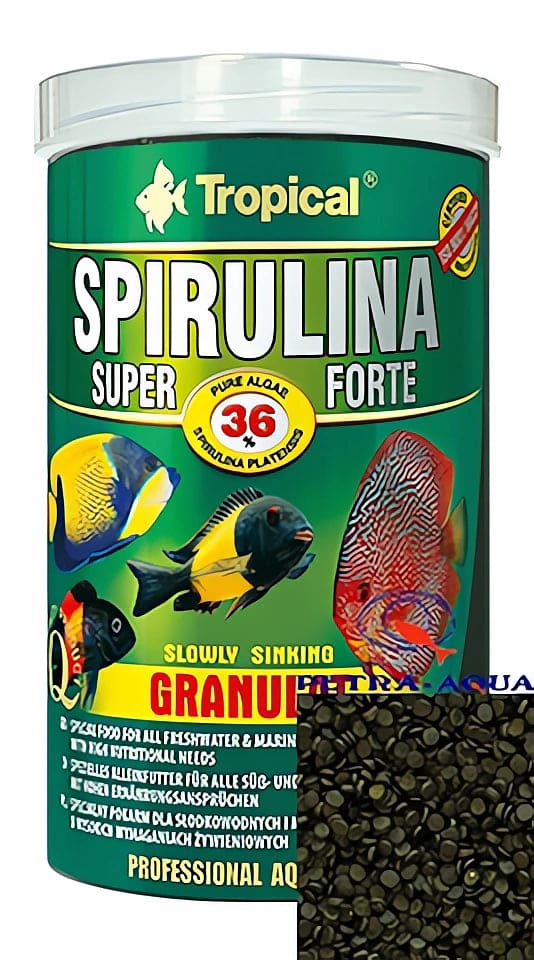
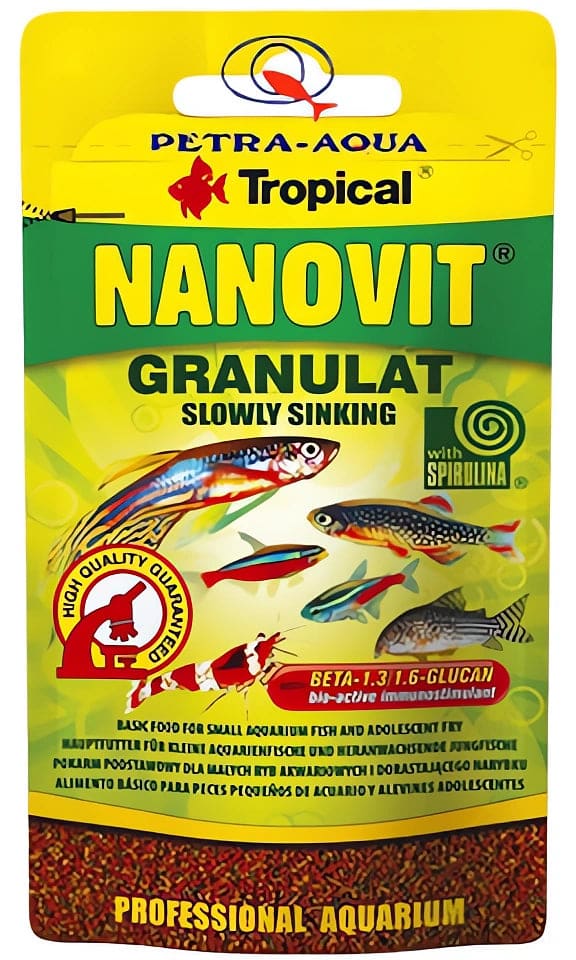
Tropical Super Spirulina Forte Mini Granulat 100ml/56g
£23.99

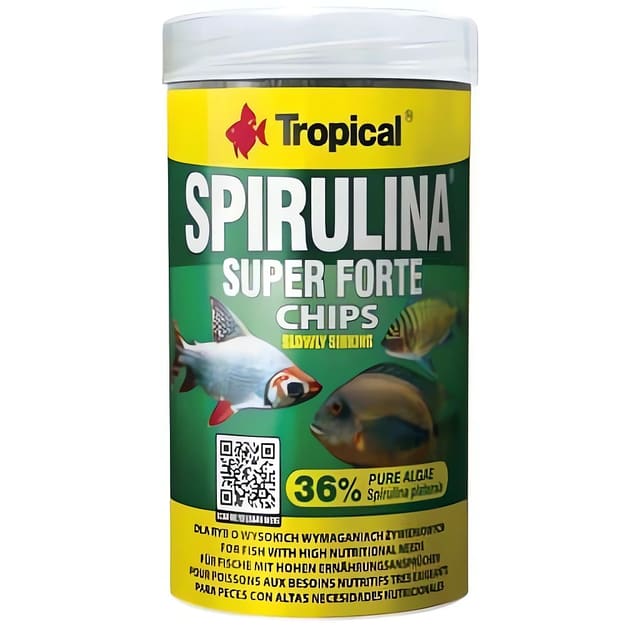
Multi-ingredient sinking chips for omnivorous aquarium fish that feed mid-water or at the bottom.
Multi-ingredient sinking chips for omnivorous aquarium fish that feed mid-water or at the bottom.
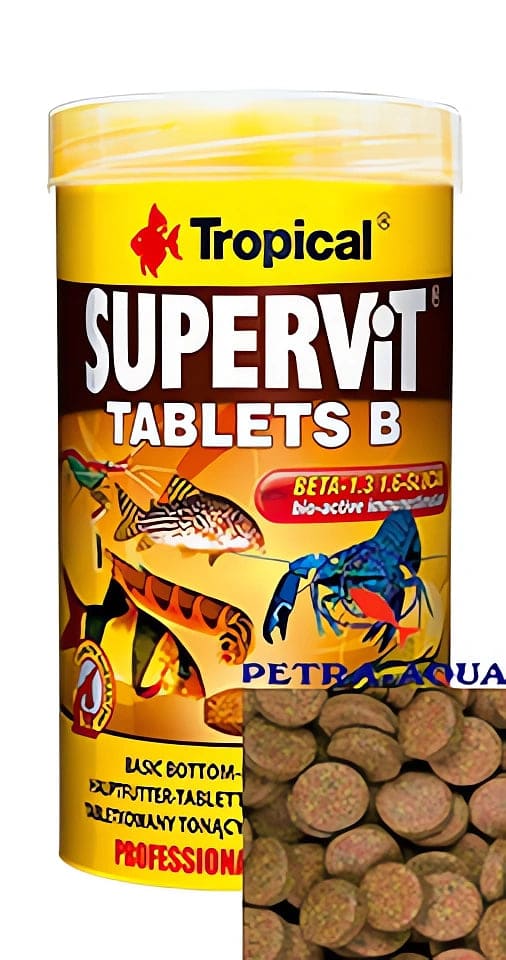
Tropical Supervit Chips 250ml/130g are multi-ingredient sinking chips for everyday feeding of omnivorous aquarium fish. The chip format is useful for fish that feed in the middle layers of the aquarium or pick food from the bottom.
Offer small portions that fish clear quickly. Because the chips sink and soften, they give slower fish and bottom-feeding species a fairer chance to feed without relying only on surface foods.
This is a non-living prepared food, not live food. Match it to the species you keep, rotate with other suitable foods where variety is useful, and remove uneaten pieces before they affect water quality.
For vegetable-rich feeding, compare with Tropical Super Spirulina Forte Mini Granulat or Tropical Spirulina Flakes. For larger fish, Tropical Super Spirulina Forte Granulat 36% may be a better format.
Let me tell you about Tropical Supervit Chips. If you keep a busy community tank, this is one of those foods that just makes sense. Tropical Supervit Chips are a smart, practical tropical fish food keepers can use every day. They’re multi-ingredient sinking chips, and they’re designed for fish that feed at different levels. So if you’ve ever watched the faster fish race to the top while the shy ones hang back, you’ll know exactly why a sinking staple like this can be so useful.
It’s simple, reliable, and made for mixed tanks. Now here’s the thing. This isn’t about feeding one fish in one way. It’s about giving everyone a fair chance. In a lively aquarium, that matters a lot. Tropical Supervit Chips are especially handy when you’ve got bottom feeders, midwater fish, and more active surface feeders all sharing the same space. That makes them a really solid choice for anyone looking for community fish food chips that actually work in the real world, not just on paper.
What I love about this food is how it fits into the natural feeding habits of tropical fish. In the wild, a lot of community species aren’t just grabbing food from the surface. They’re picking at insect larvae, tiny crustaceans, algae film, plant matter, biofilm, and little bits of food that drift down or settle on the substrate. Tropical Supervit Chips are built around that sort of feeding style. They’re a dry aquarium food, but they’re designed to behave in a way that feels more natural for fish that like their food to reach the bottom.
That’s why they’re such a useful staple in a mature tropical tank. They soften gradually, so fish can take bites rather than having to tackle a hard pellet straight away. If you’ve ever tried feeding a mixed tank and seen the food disappear before the slower fish get a look in, you’ll appreciate that. This is the sort of fish food chips UK hobbyists often keep on hand because it helps bring a bit of order to feeding time. In terms of who they suit, the product information is very clear.
Tropical Supervit Chips are suitable for all tropical fish, and they’re especially beneficial for corydoras, loaches, dwarf cichlids, and other bottom-dwelling species. They’re also a good fit for plecos, barbs, rainbowfish, gouramis, and tetras in mixed community setups. So if you’re looking for multi-ingredient chips for all tropical fish aquariums, this is very much in that category. Because they’re sinking chips, tank setup is really about making feeding easy and fair. You don’t need anything exotic, but you do want a sensible community layout. The minimum tank size given is sixty litres for a small community setup.
That gives you a decent base to work from. In a tank like that, you’ll want enough open space for fish to move, but also enough structure that bottom dwellers can settle in and feed without feeling rushed. Substrate and décor matter here too, especially if you keep corydoras, loaches, or dwarf cichlids. These fish are mentioned as especially suited to the food, so think about giving them a comfortable bottom zone. Plants and decorations can help break up sight lines and reduce feeding pressure from the faster fish.
That’s often the difference between a calm mealtime and a scramble. If the surface feeders are too dominant, the sinking chips are a real advantage because they head down where the quieter fish can reach them. One thing worth mentioning is portion control. Because these are easy to portion and simple to store, they suit daily feeding routines really well. You don’t need to overdo it. In fact, with any sinking food, it’s usually better to feed in a way that lets the fish clear the food without waste.
That’s a big part of learning how to feed sinking chips to tropical fish. Start with a sensible amount, watch how your fish respond, and adjust from there. The chips are designed to soften gradually, which helps make feeding more manageable in a busy aquarium. Water parameters are straightforward for this product, because it’s a food rather than a fish. The product information gives a tropical community range of twenty-two to twenty-eight degrees Celsius. The pH range listed is six point zero to seven point eight, depending on the species you keep.
That’s a broad and practical range for many tropical community tanks. The main thing is to match the food to the fish you already keep, and keep the tank stable and well run. Feeding-wise, Tropical Supervit Chips are all about consistency and balance. They’re a multi-ingredient sinking chip formula, so they’re meant for everyday use as part of a varied feeding routine. The product description positions them as a reliable daily staple, not a one-off treat. That makes sense. In a healthy tropical aquarium, steady feeding is usually better than overcomplicating things.
You want fish that feed well, stay in good condition, and keep their appetite. Because the chips soften gradually, they’re particularly useful for fish that prefer to take bites rather than chase food. That includes bottom dwellers, but also slower midwater fish that can pick at the chips once they’ve softened a little. If you’ve got a mixed tank, that’s a real advantage. It means the food can move through the tank in a way that gives different fish a chance to feed. And that’s exactly why many keepers compare them with other best sinking chips for tropical fish options.
They’re practical, not flashy, and that’s often what wins in the long run. Behaviourally, these chips don’t change the fish, of course, but they do change the feeding moment. You’ll notice fish that usually miss out getting a better chance to eat. The first time you use a proper sinking staple in a mixed tank, it can be quite satisfying to watch. The food reaches the lower levels, and the bottom feeders get to do what they do best. Meanwhile, the midwater fish can still join in once the chips begin to soften.
It creates a calmer, more even feeding rhythm. That’s especially helpful in community tanks where some fish are peaceful and some are semi-peaceful. The product is listed as suitable for peaceful, semi-peaceful, and bottom-feeding fish. So it’s clearly aimed at the kind of aquarium where different personalities share the same water. If you’ve got shy fish, slower fish, or fish that don’t like competing at the surface, this kind of food can really help. Compatibility is one of the strongest points here. Tropical Supervit Chips are designed for tropical aquarium fish that feed at different levels.
The product description specifically names corydoras, loaches, plecos, barbs, rainbowfish, gouramis, and tetras. That’s a very useful spread, because it covers a lot of common community tank favourites. If your tank is a mixed species setup, these chips fit neatly into that style of keeping. They’re especially useful when faster surface feeders can otherwise outcompete slower fish. That’s the real selling point. In a community fish food setup, the wrong food can create a feeding race. These chips help ease that problem by sinking down to where the quieter fish are waiting.
So if you’ve got loaches nosing around the substrate, or corydoras patrolling the bottom, they’ll appreciate food that gets to them instead of disappearing above them. As for species to avoid, the product information doesn’t give a specific list, so I won’t invent one. What I can say is that this food is clearly aimed at tropical community fish, especially mixed tanks and bottom feeders. So it’s best matched to the fish it’s designed for. If you’re unsure, always think about whether your fish are tropical, what level they feed at, and whether sinking food suits their routine.
Breeding isn’t the focus of this food, but it does fit into the broader care of healthy tropical fish. Because it’s a daily staple with balanced feeding in mind, it can support steady condition and appetite. That’s useful in any aquarium, including tanks where fish are being conditioned. The product description also mentions that it supports steady condition, colour, and appetite. That’s exactly the sort of thing you want from a dependable staple food. For health, the main thing is prevention through sensible feeding. These chips are easy to use, but like any aquarium food, you want to avoid waste and keep the tank clean.
Overfeeding can always become an issue if you’re not watching how much the fish actually eat. The good news is that the chips are designed to be practical and easy to portion. That makes it easier to feed carefully and keep your tank in good shape. If you’re looking for a straightforward, reliable tropical fish food keepers can use in everyday life, Tropical Supervit Chips are a strong option. They’re versatile, easy to store, and made for the sort of mixed aquarium many of us actually keep.
I like that they’re not trying to be complicated. They’re just a solid, multi-ingredient sinking chip that gets food to the fish that need it most. And that’s really what Tropical Fish Co is all about. Good products, clear information, and foods that make sense for real aquariums. If you want a dependable community staple for your tank, Tropical Supervit Chips are well worth a look.
No reviews for this item yet. Bought one? Honest reviews only, good or bad.
What customers say about ordering from us
I have a small group of long finned mountain minnows. So was delighted to be able to order ten of this variety to increase the genetics in my tank . The ones I recieved are healthy but it’s to early to give a verdict on wether they are of a long finned type since they are small currently.
Gordon Walker · 23 Sept 2026
100% success travel and "installation". Pleased with quality of purchase. The Siamese fighter a bit "shy" so have not yet seen him at his best yet but looking good. Happy customer. GG
George E Garratt · 21 Sept 2026
Reviews of our shop, collected by Judge.me, an independent third-party review collector. Newest first.




22–28°C · pH 7–8 · 41L

21–25°C · pH 5–7
24–29°C

24–27°C · pH 6.5–6.5

22–27°C · pH 6–8 · 72L
24–27°C · pH 6.5–8 · 200L

23–27°C · pH 5.5–7 · 60L

22–27°C · pH 6–8