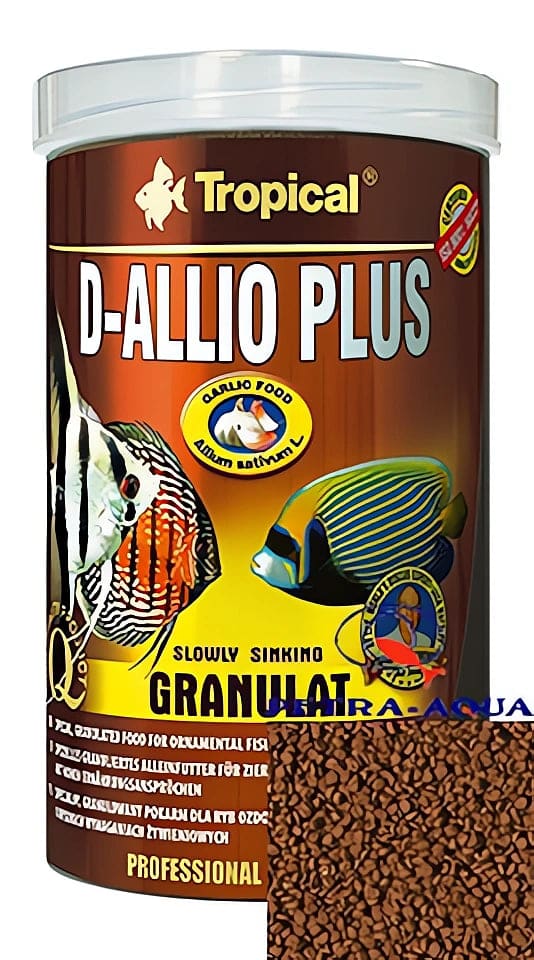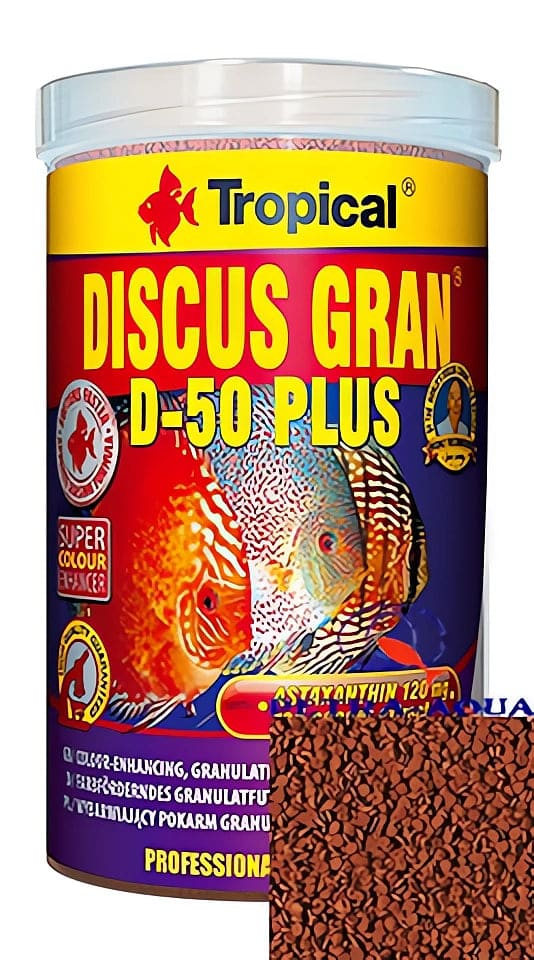
Tropical Discus Gran D-50 Plus
£5.19
Approximately 0.5 mm slowly sinking complete food for young discus, with 55% crude protein and a formula designed for frequent small feeds.
Approximately 0.5 mm slowly sinking complete food for young discus, with 55% crude protein and a formula designed for frequent small feeds.
Tropical Discus Gran D-50 Plus Baby is a specialist slowly sinking micro-granule food for young Discus and fry of other ornamental fish with high nutritional requirements. Tropical specifies an approximate granule size of 0.5 mm and 55% crude protein, making the Baby formula suitable once juvenile fish are large enough to take fine prepared granules cleanly.
This is a complete ornamental fish food. Use the live product controls for current pack details, price and stock, and use the physical pack label as the final authority if the manufacturer changes the formula.
Tropical lists ingredients including fish and fish derivatives, vegetable protein extracts, molluscs and crustaceans, egg products including 15% egg powder, cereals, vegetable derivatives including 5% garlic, algae including 3% Spirulina platensis and 1.5% Ascophyllum nodosum, yeasts including beta-glucan, oils and fats, and mineral feed materials including zeolite.
The published analytical values for the Baby formula are 55% crude protein, 9% crude oils and fats, 2% crude fibre and 10% moisture. These figures describe the manufacturer’s current formulation; they are nutrition data, not medical claims.
Young Discus are commonly fed several small meals through the day. Offer only the amount the fish consume promptly and make sure smaller or subordinate juveniles are actually feeding. Remove accumulated waste before it affects water quality.
Very small fry may need an earlier micro-food or live-food stage before they can take 0.5 mm granules. Adult Discus can eat the Baby formula, but the fine particle size is intended for younger fish and may be less efficient for large adults.
Frequent feeding increases waste production. Strong mature biological filtration, regular siphoning and water changes matched to the stocking level are essential in juvenile Discus grow-out systems. A high-protein food cannot compensate for ammonia, nitrite, crowding or unstable temperature.
Feed for steady body condition rather than forcing rapid growth through excessive portions. If juvenile Discus lose appetite, test water and review competition, temperature and health before simply changing foods or increasing the amount.
Keep the container tightly closed in a cool, dry place away from direct sunlight and aquarium moisture. Use dry hands or a clean dry scoop and follow the best-before date printed on the supplied pack.
Independently collected by Judge.me from customers who bought this item. All reviews are shown.
Its great and the baby discus love them