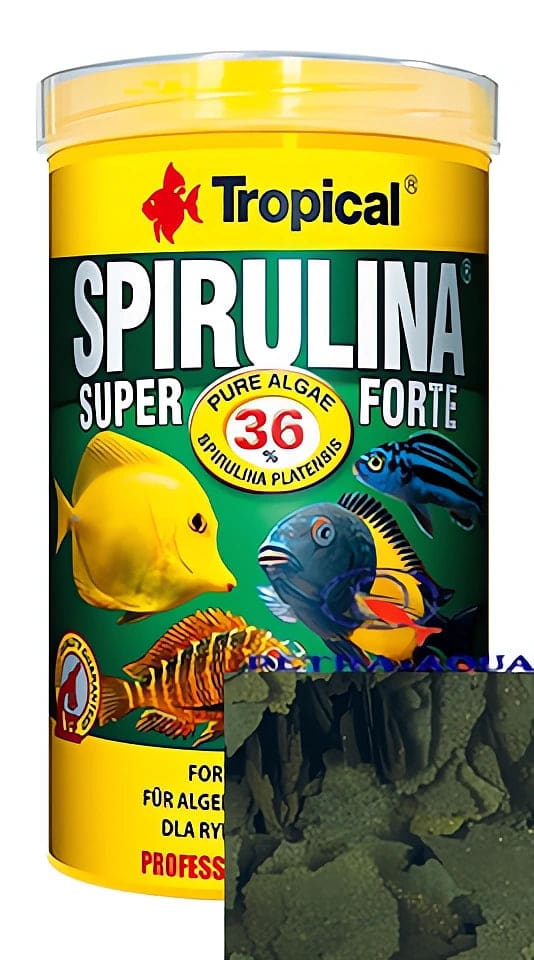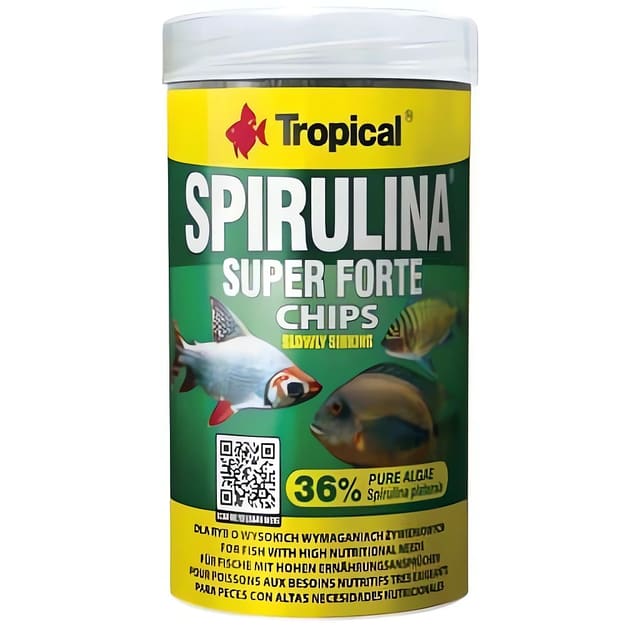
Tropical Super Spirulina Forte Chips 1000ml / 520g
£41.19
One 50 ml / 32 g can of Tropical Mikro-Vit Basic: extremely finely divided multi-ingredient food for aquarium fish fry, with 48% protein.
Minimum of 2 per order.
One 50 ml / 32 g can of Tropical Mikro-Vit Basic: extremely finely divided multi-ingredient food for aquarium fish fry, with 48% protein.
Tropical Mikro-Vit Basic Fry Food 50ml/32g is an extremely finely divided, multi-ingredient basic food for aquarium fish fry. Tropical makes the particles small enough for developing fish that cannot yet take ordinary flakes or granules. The recipe combines fish, plant ingredients, cereals, krill, squid, spirulina, yeast, oils, minerals and a declared vitamin and trace-element package.
This listing supplies one 50 ml can containing 32 g. Tropical directs several small feeds during the day, with each portion eaten within 2-3 minutes. "Several" is intentionally not converted into a fixed number: species, developmental stage, temperature, stocking density and the use of live first foods all affect a safe feeding plan.
| Listing detail | What is supplied |
|---|---|
| Quantity | One sealed retail can |
| Volume | 50 ml |
| Net weight | 32 g |
| Recipe | Tropical Mikro-Vit Basic |
| Manufacturer article | 77602 |
| Food stage | Fry and very small developing aquarium fish able to take dry fine food |
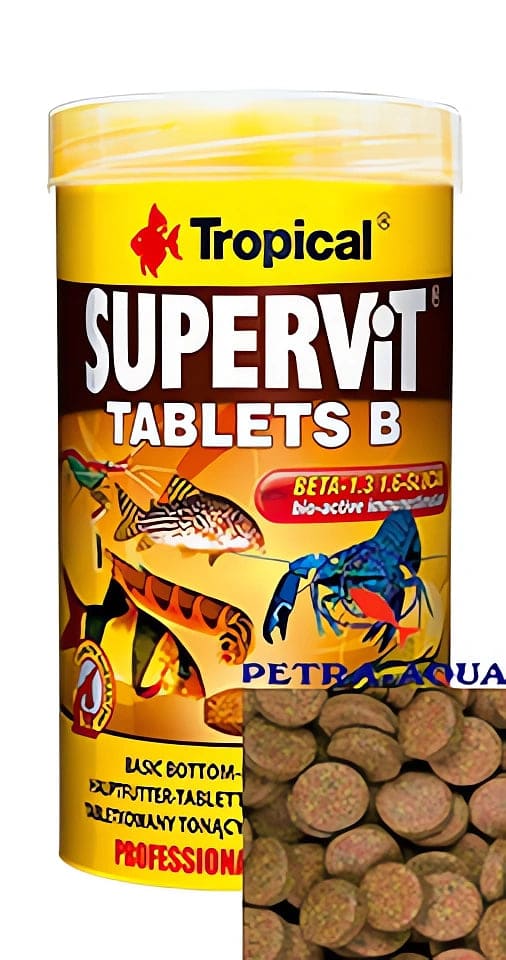
The product image shows the correct Mikro-Vit Basic can. Label artwork can change, so the product name, 50 ml volume and 32 g net weight on this page define the pack supplied. The live price and stock shown beside the buy button are the current commerce record and are not repeated in this description.
Tropical describes Mikro-Vit Basic as a multi-ingredient basic food for fry. In this context, "basic" means it is designed to form a dependable part of routine fry feeding, rather than being a single-ingredient treat or a specialist vegetable-only recipe. It does not mean that every newly hatched fish can use it as its only first food.
Fry is a broad term. Livebearer young can be comparatively large and ready to take fine prepared food soon after birth, while the larvae of some egg-laying species are much smaller and may initially need infusoria, rotifers or another moving microfood. Always identify the species and understand its mouth size, feeding behaviour and developmental sequence before choosing a first diet.
Many newly hatched fish rely on their yolk sac before they begin feeding externally. Prepared food should be offered when the species reaches its normal free-swimming, exogenous-feeding stage, not simply because hatching has occurred. The exact timing varies from hours to several days or longer.
Watch for purposeful searching, pecking or feeding movements. If fry do not respond, do not keep adding powder. Confirm that they are developmentally ready and that the particle size and movement match what the species recognises. A dry food can be nutritionally rich yet still fail as a first feed if the larvae cannot see, capture or swallow it.
Mikro-Vit Basic is extremely fine, but "fine" does not guarantee suitability for every larval fish. Very small or specialised fry may require live or suspended microfoods before prepared powder becomes practical.
The manufacturer describes the food as maximally or extremely finely divided so that tiny developing fish can take it easily. It is more accurate to call it a fine fry food or powder-like prepared food than to promise a fixed granule diameter. Tropical does not publish a micrometre size on the current product specification.
That lack of a fixed size matters. A label such as "microgranule" can imply a uniform pellet, while an extremely divided food can contain a range of fine particles. Observe how the food disperses and whether the fry swallow it cleanly. If fish repeatedly spit particles out or ignore them, use a finer or more suitable first food.
Tropical lists fish and fish derivatives; cereals; vegetable protein extracts; molluscs and crustaceans, including a minimum of 1% krill meal and a minimum of 1% squid meal; derivatives of vegetable origin; algae, including a minimum of 0.5% Spirulina platensis; yeasts; oils and fats; and mineral feed materials, including 1% zeolite.
This is a broad mixed formula containing animal, plant, cereal, algae, yeast and mineral ingredients. It is not a single-protein or grain-free food. If fish are under a veterinary diet or a specific ingredient must be excluded, check the current can label and obtain professional advice before feeding.
| Declared ingredient group | Named detail | What the declaration establishes |
|---|---|---|
| Fish and fish derivatives | First listed group | Animal-protein component |
| Molluscs and crustaceans | Krill meal min. 1%; squid meal min. 1% | Named aquatic animal ingredients |
| Algae | Spirulina platensis min. 0.5% | Declared spirulina inclusion |
| Mineral feed materials | Zeolite 1% | Declared mineral ingredient |
| Plant and cereal ingredients | Cereals, vegetable protein extracts and vegetable derivatives | Mixed plant component |
| Other groups | Yeasts, oils and fats | Additional formula components |
| Constituent | Declared amount | How to read it |
|---|---|---|
| Crude protein | 48.0% | High-protein fry formula |
| Crude oils and fats | 8.0% | Concentrated dietary energy |
| Crude fibre | 3.5% | Declared fibre fraction |
| Moisture | 6.0% | Dry-food moisture declaration |
These values describe the food, not a guaranteed growth rate. Fry development also depends on genetics, species, temperature, oxygen, water chemistry, stocking density, disease status and access to the food. Rapid growth should not be pursued at the cost of water quality or skeletal development.
Developing fish build tissue quickly and generally have a high nutrient demand relative to their body size. Tropical's 48% crude-protein declaration reflects the product's fry-food role. Protein concentration alone does not establish whether a food is suitable: amino-acid profile, digestibility, particle size and feeding access also matter.
The manufacturer states that the mixed plant and animal recipe is intended to meet the high nutritional needs of developing young fish. This should be read as a formulation purpose, not a promise that the food prevents or cures illness. Poor growth can result from husbandry, parasitic, bacterial, genetic or dietary causes and needs proper investigation.
| Vitamin additive per kg | Declared amount |
|---|---|
| Vitamin A | 38,900 IU |
| Vitamin D3 | 2,100 IU |
| Vitamin E | 130 mg |
| Vitamin C | 580 mg |
Tropical positions the vitamin and microelement package for normal growth and development and against the consequences of nutritional deficiency during this sensitive stage. That is manufacturer nutrition language, not a veterinary treatment claim. Do not automatically add separate vitamin products without considering the entire diet.
| Declared trace element per kg | Amount |
|---|---|
| Iron | 40.5 mg |
| Zinc | 11.2 mg |
| Manganese | 8.4 mg |
| Copper | 2.0 mg |
| Iodine | 0.24 mg |
| Selenium | 0.24 mg |
| Molybdenum | 0.05 mg |
The declaration also includes lecithin, colourants and antioxidants. Formulations and statutory label wording can change, so the physical label supplied with the current batch takes precedence if it differs from an older image or archived online description.
The manufacturer highlights spirulina, krill and squid as recognisable elements of the mixed recipe. The exact declarations are at least 0.5% spirulina, 1% krill meal and 1% squid meal. They sit within a much broader formula rather than defining the entire food.
Avoid reading the presence of a fashionable ingredient as proof that one food is universally superior. For fry, a usable particle size, balanced overall formulation, freshness and correct feeding are more important than a single ingredient name on the front of the can.
Zeolite is listed at 1% within the mineral feed materials. It is a porous mineral commonly used in aquarium and feed contexts, but its presence in food should not be presented as a replacement for biological filtration, water changes or ammonia control. The product page does not promise that feeding this formula removes waste from the aquarium.
Water quality still depends on the amount fed, fish biomass, filtration maturity, oxygen and maintenance. Fine food is especially easy to overdose because a small pinch contains many particles.
Tropical's current direction is to feed several times during the day in small portions that the animals consume within 2-3 minutes. Start with less than you think is needed. Observe the whole group, then adjust the next feed according to how quickly particles disappear and how much settles.
Do not translate "several times" into one rigid schedule for every aquarium. A warm, densely stocked livebearer brood may need a different plan from slow-growing cool-water fry or larvae receiving live food. The total daily ration matters as much as feed frequency.
| Step | Practical action | Reason |
|---|---|---|
| 1. Confirm readiness | Check that the species is at its normal external-feeding stage | A newly hatched larva may still rely on its yolk sac |
| 2. Test a tiny portion | Offer a light dusting where fry are feeding | Establishes acceptance without loading the tank |
| 3. Observe for 2-3 minutes | Watch swallowing, distribution and settling | Matches the manufacturer's portion endpoint |
| 4. Remove excess | Siphon visible settled food where practical | Limits decay and bacterial load |
| 5. Repeat only as appropriate | Use several small feeds according to species and system | Avoids a universal feed-count claim |
| 6. Review growth and water | Track body condition, survival, waste and tested water quality | Shows whether the plan is working safely |
Use a clean, dry fingertip, the tip of a small dry spoon or another dedicated dry tool. The goal is repeatability: learn what a very small portion looks like for that aquarium rather than shaking directly from the can. Direct pouring makes accidental overfeeding much more likely.
If pre-mixing a tiny amount in aquarium water helps distribute it, prepare only what will be used immediately and discard the remainder. Do not return wet food or a wet tool to the can. Tropical does not require routine soaking, so choose the method that gives controlled delivery without compromising freshness.
Fry often cluster near light, plants, tank walls or a gentle current. Place several very small feeds across the occupied area rather than creating one dense cloud. This can reduce competition and give slower individuals a chance to feed.
Current should be gentle enough that fry can hold position but sufficient to keep oxygen available. Avoid directing powder straight into a filter intake. A mature sponge filter is commonly used in fry systems because it offers biological filtration with lower intake risk, but every setup still needs monitoring.
Watch several parts of the brood. A few rounded bellies near the feeding point do not prove that smaller or weaker fry elsewhere received enough food.
Fine particles have a high surface area and can break down quickly when uneaten. Excess feeding can increase ammonia, encourage bacterial blooms, consume oxygen and coat the bottom of a nursery tank. Clear water is not proof that dissolved waste is safe, so test the parameters relevant to the species and system.
Remove settled residue with a fine airline siphon while protecting fry from the intake. Use appropriately matched water for small changes, maintain stable temperature and avoid large swings. If food remains after the 2-3-minute window, reduce the next portion rather than adding cleanup products.
Tropical's general product guidance mentions removing uneaten food or using a few snails to consume leftovers. Snails can graze residue, but they also produce waste and can introduce organisms if moved from an unquarantined source. They do not make overfeeding safe.
Manual portion control and siphoning remain the primary safeguards. Add any cleanup animal only if it suits the aquarium, water chemistry and biosecurity plan.
Prepared fine food can suit many livebearer fry, larger egg-layer fry and small juveniles once they recognise and can swallow non-moving particles. Guppy, platy, molly and swordtail fry are common examples of relatively developed newborn fish, but even within those groups portion and stage vary.
For egg layers, suitability depends heavily on larval size. Some cichlid, catfish and larger cyprinid fry may take fine prepared food readily once free swimming. Tiny characin, rasbora, gourami or marine larvae can require substantially smaller or moving food first. The product name should never replace species research.
| Fry situation | Likely role | Check before feeding |
|---|---|---|
| Large livebearer newborns | Potential early prepared food | Acceptance and particle swallowing |
| Free-swimming cichlid fry | Potential basic or supplementary food | Species diet and mouth size |
| Small egg-layer larvae | May be too coarse or insufficiently stimulating | Need for infusoria, rotifers or other live microfood |
| Juveniles outgrowing powder | Transition food | Readiness for a larger particle |
| Tiny adult fish | Possible supplementary fine food | Whether the overall formula fits the species |
Sometimes prepared food can form most of a fry diet, but not for every species or at every stage. Moving live foods can trigger feeding, remain suspended and match the mouth size of very small larvae. They can also introduce culture-management and hygiene risks, so the choice should be deliberate.
A useful plan may combine Mikro-Vit Basic with appropriate live foods, then increase prepared food as acceptance improves. Do not assume that variety means adding random treats. Each food should have a nutritional and developmental purpose.
Tropical recommends making the fry diet as varied as possible. Variety should still be species-appropriate and controlled. Different Mikro-Vit formulas, suitable live foods and later-stage granules can contribute different ingredients and feeding behaviours, but sudden changes can reduce intake.
Introduce one change at a time and watch survival, bellies, faeces, growth distribution and water quality. A brood in which only the largest fry thrive may need better food distribution or grading, not simply more food.
| Feature | Mikro-Vit Basic | Mikro-Vit Hi-Protein |
|---|---|---|
| Primary role | Multi-ingredient basic food for fry | High-protein basic food for fry with egg yolk |
| Named Basic ingredients | Spirulina, krill and squid | Different recipe; check its own label |
| Pack on linked listing | 50 ml / 32 g here | Check the linked product page |
| Choice | Use when this mixed Basic formula suits the fry | Use when the Hi-Protein formula suits the species and plan |
Our Tropical Mikro-Vit Hi-Protein listing is a related fry-food option, not an automatic upgrade. Compare the current ingredient declarations and the needs of the fish rather than choosing only by the word "protein".
Move gradually when fish can take a larger particle without spitting, when fine powder is becoming difficult to target, and when the species' diet supports the next food. Growth within a brood is often uneven, so a short overlap can help smaller individuals continue feeding.
Do not rush the transition just because age has advanced. Mouth size and observed feeding are more useful than a calendar. Browse the fish-food shop or the native Tropical prepared-food category for alternatives, then verify the exact particle format and suitability on each listing.
Some very small adult fish can take the fine particles, but the food is formulated and marketed for fry. Adult use should be judged against the species' complete dietary needs. A particle being small enough does not prove that its nutrient profile and feeding behaviour are the best long-term fit.
For tiny adults, use it as a considered component or temporary fine option rather than assuming it replaces a species-appropriate staple. Monitor whether fish feed efficiently throughout the water column and whether too much powder escapes into filtration.
Keep the can tightly closed in a cool, dry place away from direct sunlight, heaters and humidity. Use clean, dry hands or a dedicated dry tool. Do not store it above a warm aquarium or near an open-top fry system where condensation can reach the food.
Check the best-before and batch details printed on the pack. Discard food that becomes damp, mouldy, contaminated, unusually odorous or visibly changed. Do not top up an old can with a new one, because that hides the age and condition of both batches.
The gallery shows an accurate Tropical Mikro-Vit Basic can. It is a product photograph, not a picture of the exact particles at microscope scale and not evidence that every fish pictured is a recommended fry species. Packaging graphics may change while the product name and formula remain recognisable.
On arrival, confirm the name Mikro-Vit Basic, the 50 ml volume, 32 g net weight, seal, batch and best-before information. If the delivered label materially differs from this page, use the label as the batch-specific authority and contact us before feeding if clarification is needed.
| Order question | Where to check |
|---|---|
| Dispatch and delivery | See current delivery information |
| Returns | Read the returns policy before opening food |
| First order | Eligible first orders can use WELCOME5 for 5% off; terms apply |
| Suitability question | Contact us with the fish species and developmental stage |
| General husbandry | Start with our aquarium care guides |
The live product page shows current price and availability. We do not place a fixed price in the body because stock costs and promotions can change independently of the product specification.
Pack, composition, analysis, additives and feeding directions on this page were checked against Tropical's official Mikro-Vit Basic product specification and the supplied pack record. Manufacturer statements about nutritional demand, growth, development and deficiency are presented as formulation claims, not guarantees or treatment claims.
One 50 ml can containing 32 g of Tropical Mikro-Vit Basic.
Tropical describes it as extremely finely divided food. The manufacturer does not publish a fixed granule diameter, so this page does not promise a uniform microgranule size.
It is a basic multi-ingredient food for aquarium fish fry. Suitability still depends on species, developmental stage, mouth size and whether the fry accept non-moving prepared food.
Only when the species reaches its normal external-feeding stage. Many fry first absorb a yolk sac, and very small larvae may require a finer or moving live food.
Tropical says several times during the day in small portions. There is no single manufacturer-backed feed count for every species or aquarium.
Offer a very small amount that the fry consume within 2-3 minutes. Reduce the next portion if food settles or remains visible.
The declared crude-protein level is 48%, with 8% crude oils and fats, 3.5% crude fibre and 6% moisture.
Yes. The manufacturer declares at least 0.5% Spirulina platensis.
Yes. The formula declares at least 1% krill meal and at least 1% squid meal.
Yes. Cereals are listed, along with fish, plant, crustacean, mollusc, algae, yeast, oil, fat and mineral ingredients.
Zeolite is declared at 1% within the mineral feed materials. It does not replace filtration or water changes.
For some fry it may form most of the prepared diet, but very small or specialised larvae can need live microfoods first. Check the species rather than assuming one plan fits all.
Some tiny adults can take it, but its primary role is fry feeding. Check whether the overall formula suits the adult species and use a more appropriate staple where needed.
Tropical does not require soaking. A tiny amount can be dispersed directly; if pre-mixing improves distribution, make only enough for immediate use and keep wet tools out of the can.
Feed less, observe the 2-3-minute endpoint, remove settled residue and maintain mature filtration and appropriate water changes. Do not use cleanup animals to justify excess food.
Keep it sealed, cool and dry, away from sunlight, aquarium condensation and heat. Use a clean, dry feeding tool and follow the best-before details on the pack.
No reviews for this item yet. Bought one? Honest reviews only, good or bad.
What customers say about ordering from us
Easy website plenty of info on fish your buying great to pick a time slot
TRACEY DURRANT · 7 Oct 2026
Got some lovely fish thank you
Kevin Mackie · 7 Oct 2026
Reviews of our shop, collected by Judge.me, an independent third-party review collector. Newest first.