
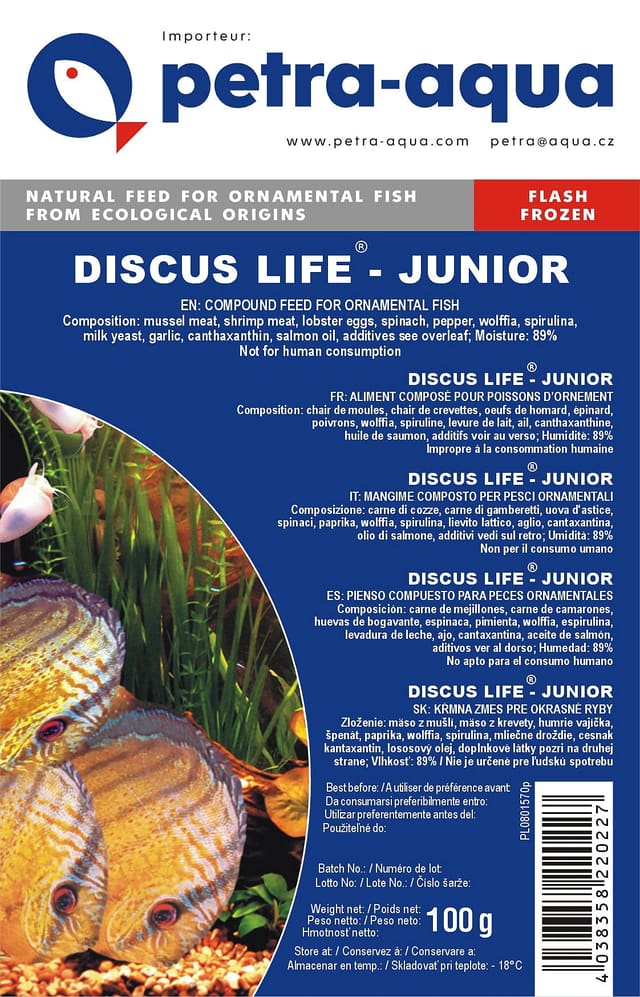
Discus Life Junior Frozen Food (6 x 100g)
£26.99

Discus Life Basic frozen blister food in a 6 x 100g pack for clean, measured feeding in discus and suitable tropical aquariums.
Discus Life Basic frozen blister food in a 6 x 100g pack for clean, measured feeding in discus and suitable tropical aquariums.
Discus Life Basic Frozen Blister Food 6 x 100g is a frozen compound feed for ornamental fish, made for discus and suitable tropical aquarium fish. Each case contains six 100g blister packs, so you can thaw small portions cleanly without breaking up a frozen slab.
Thaw only the amount your fish will eat quickly, then feed in small measured portions. Remove leftovers before they affect water quality, especially in warm discus aquariums where uneaten frozen food can break down quickly.
Use Discus Life Basic as part of a varied feeding routine rather than as the only food. Do not refreeze thawed portions, and keep the remaining blister packs sealed and frozen between feeds.
The blister format is useful when you want cleaner portion control than a frozen slab. It suits discus keepers who want a practical frozen food for diet variety, appetite support and measured feeding without forcing unrelated livestock or cichlid keywords into the page.
Use the care, feeding and storage notes above to decide whether this format fits your setup before adding it to your routine.
Let me tell you about Discus Food, Symphysodon species, in these handy one hundred gram frozen blister packs. If you keep discus, or you’re planning to, this is the sort of food that makes life easier. It’s frozen, protein-rich, and designed for those demanding appetites that discus and other delicate tropical fish can have. What I like straight away is the portion control. You’re not breaking off random chunks and hoping for the best. You get a clean, convenient format that helps you feed with a bit more confidence.
And if you’ve ever stood at the tank wondering whether your fish are really interested, this kind of food can make a real difference to feeding response. Now, here’s the thing about discus. They come from the Amazon Basin, from places like Brazil, Peru, and Colombia. Think slow lagoons, flooded forest edges, and calm tributaries. These are warm, soft-water environments with low flow, leaf litter, and subdued light. It’s a very different world from a bright, busy community tank with strong current. In nature, discus browse for tiny invertebrates, worms, insect larvae, biofilm, and other natural food sources.
So when you’re feeding them at home, you’re trying to reflect that sort of diet as closely as you can. That’s why a natural fish food aquarium approach matters so much with this species. They’re not fish that do best on rough, random feeding. They prefer regular, calm, carefully chosen meals. What I love about discus is the look of them. They’ve got that rounded body shape that makes them instantly recognisable, and they’re prized for their intense colour. They’re peaceful, social cichlids, and they can reach around fifteen to twenty centimetres in diameter.
They’re also slightly shy, which gives them a lovely, gentle presence in the aquarium. The first time you see a group settle in properly, it’s very rewarding. They don’t rush about like some fish. They move with purpose, and there’s a calm confidence to them. With excellent care, they can live up to ten years, so you’re not just keeping a fish for a few months. You’re building a long-term setup around a species that really responds to good husbandry and good feeding. For tank setup, the big number to keep in mind is the minimum tank size.
You’ll want at least two hundred and fifty litres, which is about fifty-five gallons. That gives discus the space they need, especially because they’re social fish and do best with room to settle. Gentle filtration is important, because their natural habitat is slow moving. Strong flow just isn’t the vibe here. Soft-water conditions, dim lighting, and a calm layout all help echo the places they come from. Leaf litter and subdued light suit them well, because that mirrors the flooded forest edges and calm tributaries of the Amazon.
If you’re feeding frozen discus food, a peaceful tank layout also helps reduce stress at feeding time. You want them relaxed enough to come out and eat properly. It’s also worth remembering that discus are considered advanced fish, so stability matters. Keep things consistent, and don’t overcomplicate the setup. Water parameters are really important with discus. Keep the temperature between twenty-eight and thirty degrees Celsius. That warm water range supports their natural behaviour and appetite. The pH should sit between six point zero and seven point zero.
Soft water is the goal, because that matches the low-mineral waters they come from. If you’re trying to get the best from them, consistency matters more than constantly tweaking things. These fish respond best when the environment feels calm and stable. That’s one reason frozen discus food for tropical fish is such a practical choice. It gives you a dependable feeding routine without adding unnecessary mess. And with discus, less waste is always a good thing, because water quality is so closely tied to their wellbeing.
Feeding discus is all about small, regular portions. They respond best to frequent meals rather than one big feed. That’s straight from the way they behave in the wild, where food comes in smaller, natural amounts. This frozen food is protein-rich and very palatable, so it suits that style well. It’s easy to digest too, which is especially useful for delicate tropical species. If you’re comparing tropical fish food flakes, tropical fish food pellets, and frozen options, this is one of those foods that fills a very specific role.
It’s not about replacing everything else. It’s about giving you a strong, reliable part of the diet. Many keepers use frozen foods alongside carefully chosen dry foods, and that balance can work well. The key is not to overfeed. Small portions help keep waste down and support stable water quality. That’s especially important in a discus tank. If you’ve ever watched fish hesitate at the surface, then suddenly switch on when the right food appears, you’ll know how much feeding response matters. This food is designed to help with that.
In terms of behaviour, discus are peaceful, social, and slightly shy. That means they’re not the sort of fish that charge around the tank all day. You’ll notice them moving together, settling into a group, and becoming more confident as they get comfortable. The first time you see them feeding properly in a calm tank, it’s a great moment. They have a gentle rhythm to them. Because they’re social cichlids, they really do benefit from being kept in suitable company rather than on their own.
They’re also fish that appreciate routine. If your feeding times are consistent, they’ll often respond better. And because they come from low-flow habitats, they tend to look best and behave best when the tank feels peaceful. That’s part of the appeal. They’re not frantic. They’re measured, and that makes them a joy to watch. Compatibility is something to think about carefully. This food is suitable for discus, angelfish, and all tropical community fish, but the fish themselves still need the right tank mates. Soft-water companions are the safest direction, because discus come from warm, acidic, low-mineral waters.
Peaceful species are the best match. Anything calm and non-aggressive is the sort of company you want. You’re looking for tank mates that won’t outcompete them at feeding time or make them feel cornered. That’s especially important because discus are slightly shy. On the other hand, you’ll want to avoid aggressive or territorial fish. Anything that bullies, nips, or dominates the tank is a bad fit. Fast, boisterous feeders can also be a problem, because discus need a relaxed feeding environment and small portions. If you’ve ever kept live foods for aquarium fish or used live fish food options, you’ll know that some species become very pushy at mealtimes.
That’s exactly what you don’t want here. The same goes for choosing between live fish food and prepared diets. With discus, control and calm are the winning combination. This frozen food is a strong option for peaceful tropical community tanks, especially where you want to support colour, growth, and behaviour without creating unnecessary waste. Breeding discus is a subject that gets people talking, because they’re such admired fish in the freshwater hobby. They were first described in the nineteenth century and quickly became one of the most respected aquarium fish around.
In breeding situations, their calm, social nature really stands out. They’re advanced fish, though, so breeding them is not something to rush into lightly. Good water quality, stable conditions, and the right temperature are all part of the picture. Because they’re sensitive to their environment, feeding quality matters a lot too. A protein-rich, easy-to-digest diet can help keep them in good condition. If you’re interested in breeding, you’ll already know that conditioning fish well is half the battle. This is where a reliable frozen food can fit neatly into the routine.
Health-wise, the main thing to watch is stress. Discus don’t like rough conditions, and poor water quality can quickly become a problem. Overfeeding is another thing to avoid, because excess waste can upset the tank. Since they’re delicate tropical species, they really do benefit from careful feeding and stable parameters. A food like this helps because it’s easy to portion and designed to be digestible. That means less mess and a better chance of keeping things under control. If your fish are not feeding well, or they seem withdrawn, that’s usually a sign to check the environment first.
With discus, prevention is always better than trying to fix problems later. What I really like about this product is how practical it is. You’re getting a frozen food that’s been made for a very specific kind of fishkeeping. It supports colour, feeding response, and overall condition, and it does that in a format that’s easy to use. If you’re comparing the best food for tropical fish, or even looking through aquarium fish food options, this is a solid choice for anyone keeping discus or other calm tropical species.
At Tropical Fish Co, we know how much difference the right food makes, especially with advanced fish like these. We focus on quality, care, and products that actually suit the fish people keep.
No reviews for this item yet. Bought one? Honest reviews only, good or bad.
What customers say about ordering from us
I have a small group of long finned mountain minnows. So was delighted to be able to order ten of this variety to increase the genetics in my tank . The ones I recieved are healthy but it’s to early to give a verdict on wether they are of a long finned type since they are small currently.
Gordon Walker · 23 Sept 2026
100% success travel and "installation". Pleased with quality of purchase. The Siamese fighter a bit "shy" so have not yet seen him at his best yet but looking good. Happy customer. GG
George E Garratt · 21 Sept 2026
Reviews of our shop, collected by Judge.me, an independent third-party review collector. Newest first.

22–28°C · pH 7–8 · 41L

21–25°C · pH 5–7
24–29°C

24–27°C · pH 6.5–6.5

22–27°C · pH 6–8 · 72L

23–27°C · pH 5.5–7 · 60L

22–27°C · pH 6–8

22–26°C · pH 6–7.8 · 75L