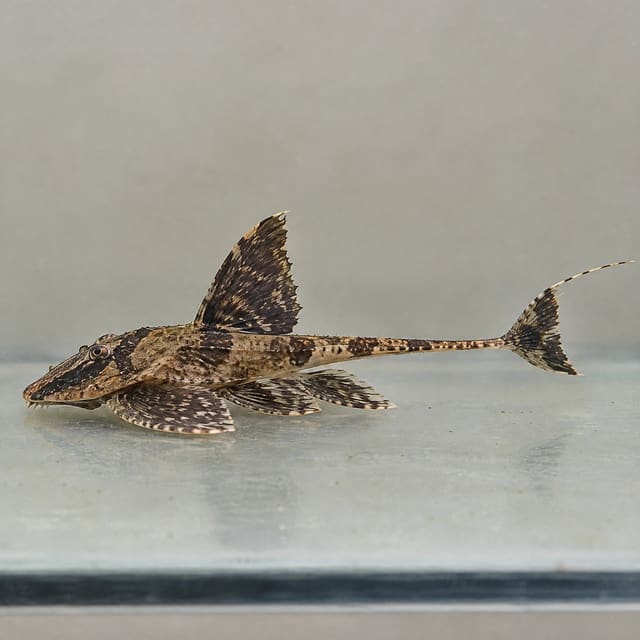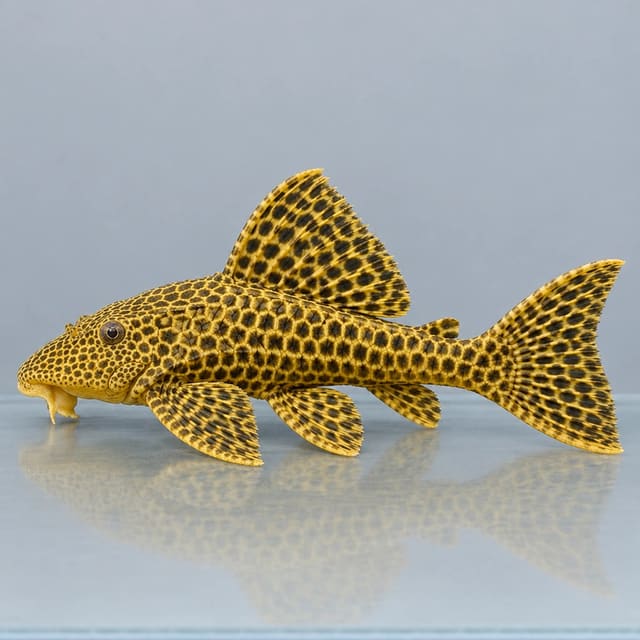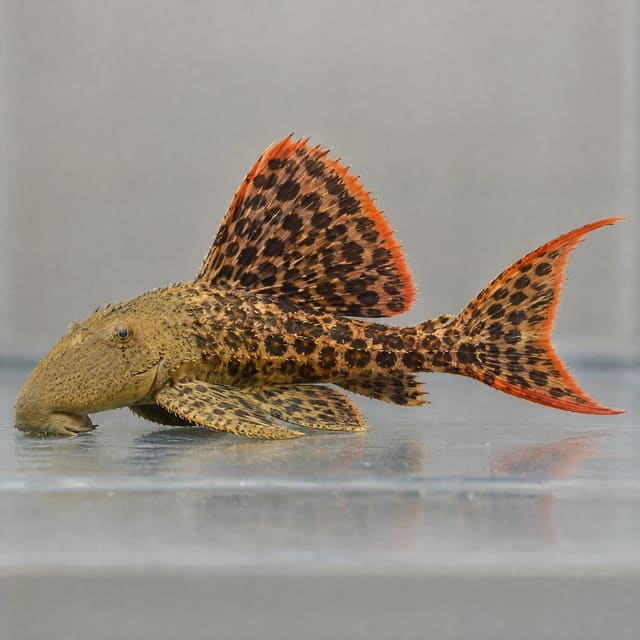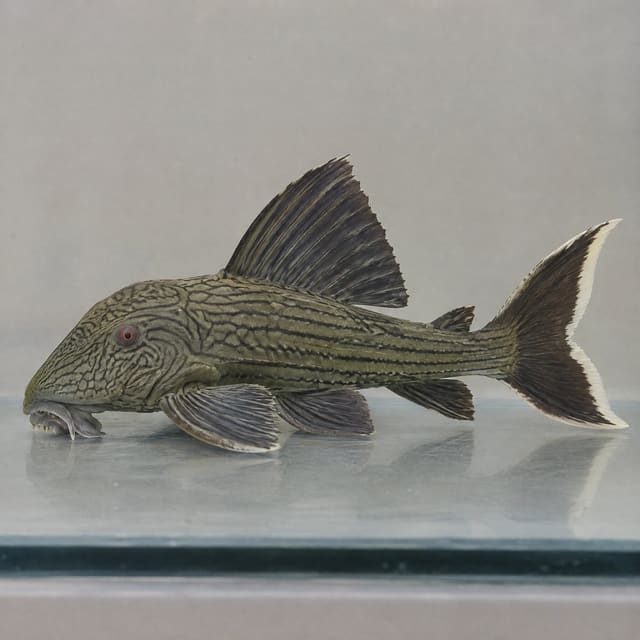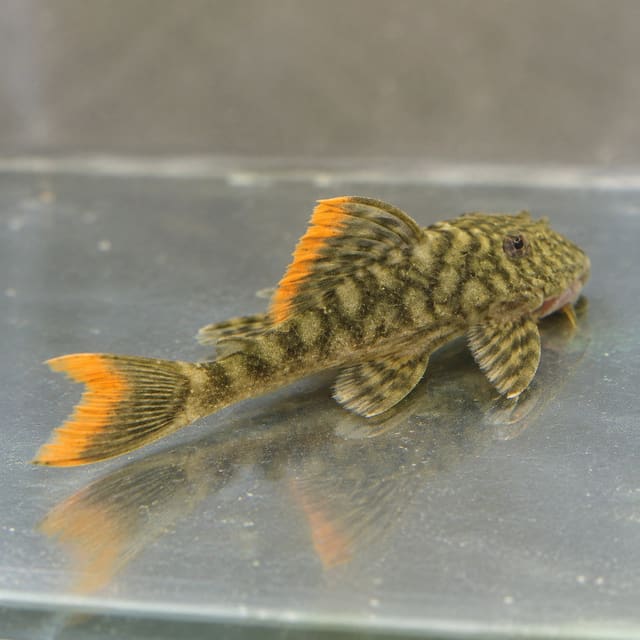
L106 Pleco (Panaque sp. L106)
£26.99
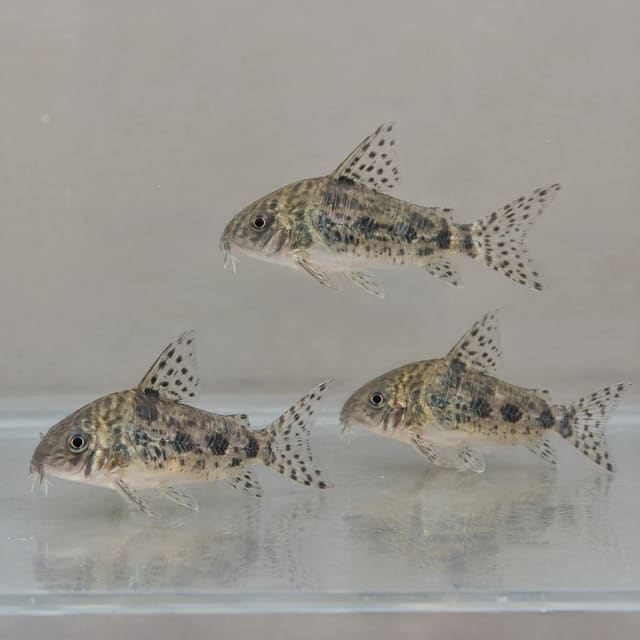
The Imitator Catfish (Brachyrhamdia imitator), also called the False Cory, is a small Venezuelan catfish whose colour pattern copies the spotted cory Corydoras melanistius. It reaches about 5.4 cm standard length (7–9 cm with the tail) and is best kept with a group of similarly marked Corydoras at 22–24°C. Sold individually as one live fish.
Brachyrhamdia imitator
Quantity discounts are pricing offers, not a group-size recommendation. Check the full care guidance and your existing animals before choosing a quantity.
The Imitator Catfish (Brachyrhamdia imitator), also called the False Cory, is a small Venezuelan catfish whose colour pattern copies the spotted cory Corydoras melanistius. It reaches about 5.4 cm standard length (7–9 cm with the tail) and is best kept with a group of similarly marked Corydoras at 22–24°C. Sold individually as one live fish.
Read the full care guidance when planning conditions for your aquarium.
The Imitator Catfish (Brachyrhamdia imitator) is a small South American catfish that has made a career of looking like something else. Planet Catfish explains that its name alludes to the fact that it shares, identically, the colour pattern of the spotted cory Corydoras melanistius, known today as Hoplisoma melanistium. In the wild it swims with those Corydoras, and in the aquarium the Imitator Catfish is at its best in the same company.
It comes from the Caura River basin in the Orinoco drainage of Venezuela, according to FishBase, and was described by George Myers in 1927 from the Caño de Quiribana near Caicara. It is the type species of its genus. Seriously Fish describes its close relatives as rarely seen in the trade, usually arriving mixed in with shipments of other fish, so it is a catfish for keepers who enjoy something unusual.
| Name | Where you will see it |
|---|---|
| Imitator Catfish | Trade name, from the scientific name |
| False Cory, False Corydoras | Common names on Planet Catfish and ScotCat |
| Brachyrhamdia imitator Myers, 1927 | The current scientific name |
| Pimelodella imitator | An older name still seen on some labels |
The genus name joins the Greek for "short" with Nhamdia or Jamdia, a Brazilian local name for these catfish. It belongs to the Heptapteridae, the three-barbeled catfishes, the same family as the Graceful Pimelodella. Seriously Fish notes that the family was once treated as part of the Pimelodidae but molecular studies support it as separate.
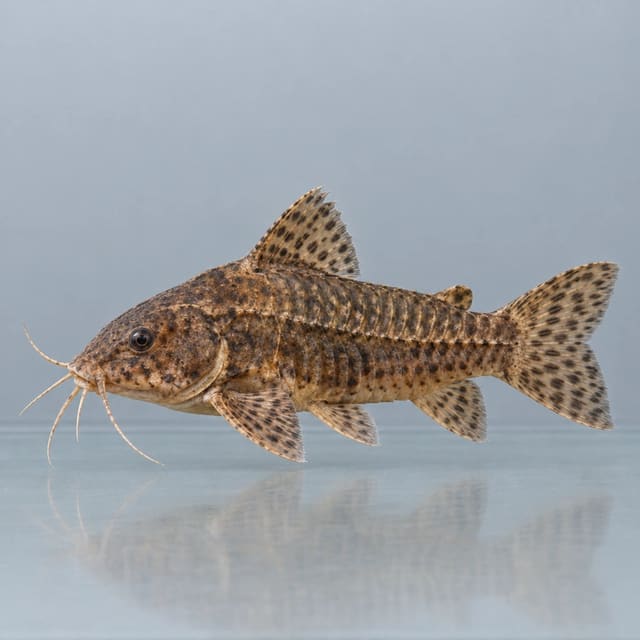
At a glance it passes for a cory. Planet Catfish says that anything more than a quick glance reveals the long barbels and naked flanks, and Seriously Fish puts the difference the same way: Brachyrhamdia have significantly longer barbels than Corydoras and no scute-like plates on the body.
| Feature | Imitator Catfish | Corydoras |
|---|---|---|
| Barbels | Three pairs, long and slender | Much shorter |
| Body covering | Smooth, naked skin with no plates | Bony, scute-like plates along the body |
| Movement | A fast swimmer that darts between cover and open sand | A slower forager on the bottom |
Why it copies a cory is still debated. Seriously Fish and ScotCat describe two ideas: that it gains protection from predators wary of the Corydoras' locking spines, or that it shoals with them to take the food they dig up, and possibly their eggs. Seriously Fish adds that several Brachyrhamdia species copy the Corydoras they live with throughout their lives.
One purchase supplies one live Imitator Catfish at the size currently available ("Standard"). Sex is not chosen or guaranteed; Planet Catfish lists sexing as unknown, and Seriously Fish says that in the genus mature females are noticeably fuller in the body.
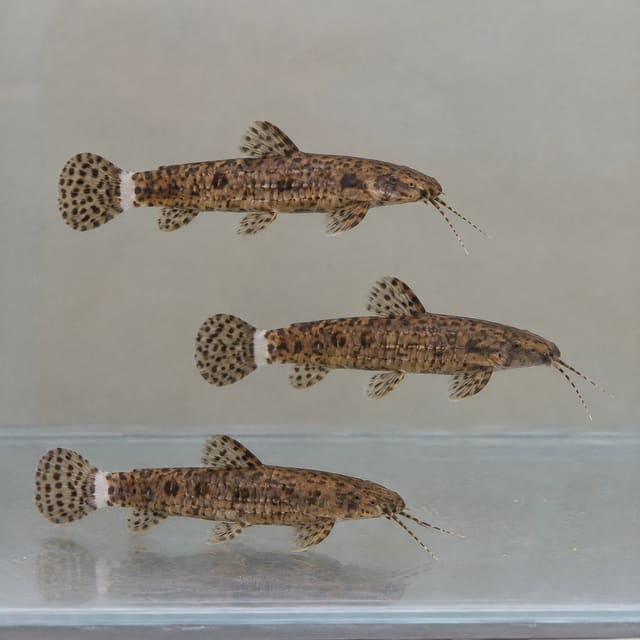
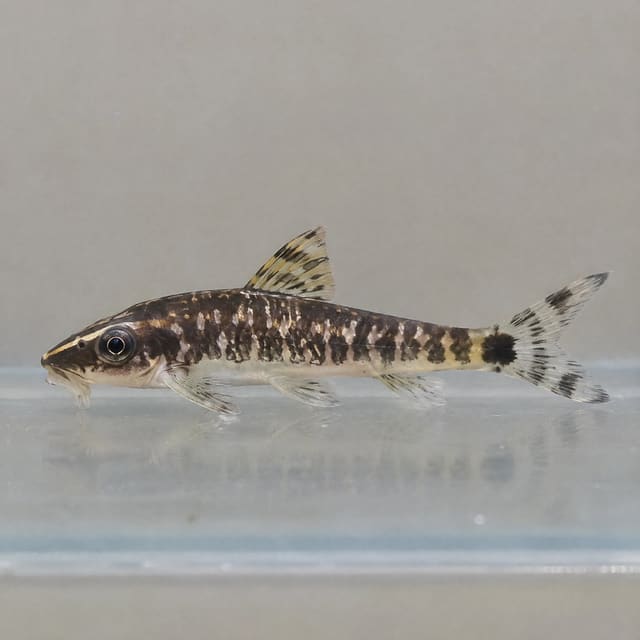
The photographs show the type of fish, not the individual you will receive. Because the pattern copies a spotted cory with a black stripe through the eye, expect a pale body with dark markings; the exact layout differs between fish.
Before you order, read our delivery and Live Arrival Guarantee information and have the aquarium ready and matured.
Sizes depend on how the fish is measured. FishBase and Planet Catfish give 5.4 cm standard length, which stops at the base of the tail. ScotCat gives 7 cm and Welsfans about 9 cm total length, including the tail. Plan for a slim, fast fish of around 7–9 cm in total.
ScotCat recommends a tank of 60 cm or more, Welsfans 80 cm, and Seriously Fish gives an 80 × 30 cm base for the related B. rambarrani. Because the Imitator Catfish should share its floor with a group of Corydoras, we recommend at least 80 × 30 cm.
Position the tank away from radiators, windows and draughts, as OATA's catfish care sheet recommends, and fit a lid: a fast, startled fish can jump.
Planet Catfish says an open stretch of substrate, where it can mix with its own kind or with Corydoras, is necessary to see it at its best. Floating plants diffuse the light and give the fish more confidence in the open, and the open area should be bordered by hiding places with easy entry and exit for this fast swimmer. ScotCat suggests alternating sand and gravel with a planted area.
| Area | Purpose |
|---|---|
| Open fine sand in the middle | Foraging ground shared with the Corydoras |
| Wood, roots and plants around the edges | Quick retreats with open entrances |
| Floating plants | Softer light, so it spends more time in view |
| A little leaf litter | Natural cover and a home for tiny food organisms |
Use smooth sand or fine, rounded gravel. OATA notes that catfish barbels are sensitive and need a soft bottom, and Seriously Fish warns that the related B. rambarrani does not tolerate a build-up of organic waste, so keep the substrate clean.
The published temperatures disagree. Planet Catfish gives 20–24°C, FishBase and ScotCat 21–25°C, and Welsfans 25–29°C. We suggest 22–24°C, which sits inside the first three and also suits the spotted cory it copies: Seriously Fish gives 22–26°C for Hoplisoma melanistium. Planet Catfish and FishBase agree on pH 6.0–7.5 and hardness up to 18 dGH.
| Reading | Target |
|---|---|
| Temperature | 22–24°C (sources span 20–29°C) |
| pH | 6.0–7.5 |
| General hardness | Soft to medium, up to 18 dGH |
| Ammonia | 0 mg/l |
| Nitrite | 0 mg/l |
| Nitrate | No more than 20 mg/l above your tap water |
The ammonia, nitrite and nitrate limits come from OATA's catfish guidance. Treat every water change with a conditioner to remove chlorine or chloramine. Compare your own readings with our water matcher, and see our water chemistry guide for what each one means.
A small catfish living on the sand needs clean, well-oxygenated water without a strong current. Seriously Fish suggests a turnover of four to five times the tank volume an hour for an 80 × 30 cm Brachyrhamdia tank, which it puts at about 290–360 litres an hour. Point the outlet to ripple the surface rather than blast the sand.
OATA warns that adding fish too quickly causes "new tank syndrome", because the filter bacteria need time to catch up. Add the Corydoras group and the Imitator Catfish in stages, testing between each.
Wild Brachyrhamdia feed mostly on small invertebrates living on the bottom, Seriously Fish says, and Welsfans lists ostracods, insect larvae and seeds from stomach contents. ScotCat calls it an easy feeder on tablets, pellets, frozen and live foods such as bloodworm, and insect larvae. Planet Catfish adds a warning: it will eat most foods to the point of bursting, so do not overfeed, especially with foods that swell after eating.
Add it only to a mature, filtered aquarium with zero ammonia and nitrite. OATA recommends acclimatising with the lights off: float the sealed bag for about 10 minutes, add small amounts of aquarium water to the bag over up to 20 minutes, then release the fish with as little bag water as possible. Our guide on how to acclimatise new fish covers each step.
| Checkpoint | What to do |
|---|---|
| Before arrival | Test the water; make sure the Corydoras are settled and feeding |
| Arrival | Acclimatise in dim light and leave the lights off for the day |
| First evening | Offer a little thawed bloodworm near the Corydoras |
| Days 2–7 | Watch whether it joins the corys and whether any small fish go missing |
| End of week | Retest the water and do the usual water change |
Planet Catfish describes it as peaceful with its own species and with Corydoras, but says it will eat small tetras and young fish; fish larger than about 2.5 cm (1 inch) are too big to eat and are not otherwise bothered. ScotCat suggests a species tank, or one with Corydoras and larger characins or anabantoids in the upper half, warning that it can be predatory with small species such as neon tetras. Planet Catfish names tetras, rasboras and rainbowfish as good companions, as long as they are large enough.
| Suits | Avoid |
|---|---|
| Corydoras with a dark band through the eye, such as the Masked Corydoras | Plain-coloured Corydoras such as bronze corys, which ScotCat says tend to be nipped |
| Larger tetras such as Rummy Nose Tetras, Lemon Tetras and Black Phantom Tetras | Neon tetras and other fish small enough to swallow |
| Peaceful rasboras and rainbowfish of a good size | Fry and dwarf shrimp |
| Calm anabantoids in the upper half | Large catfish or cichlids that could eat it |
ScotCat reports that it does better with Corydoras that have a black eye stripe, such as Hoplisoma melanistium, than with plain species such as the bronze cory, which tend to be nipped and driven out of the group. Seriously Fish gives the same advice for a related species: keep it with similarly patterned Corydoras and no other bottom-dwelling fish. Read our Corydoras care guide, browse all Corydoras catfish and tetras, and check the final mix with our tank mates tool. For other unusual bottom fish, see our catfish and plecos and South American catfish.
OATA describes a healthy fish as having clear eyes, undamaged fins, no ulcers or bumps, normal swimming and steady breathing. With a fish that copies its tank mates, it is worth counting both species daily for the first few weeks.
| If you see | Do this |
|---|---|
| A swollen belly after feeding | Cut the portion and soak dry foods; Planet Catfish warns it overeats |
| Worn or short barbels | Check the substrate for sharp grains and dirt, and siphon more often |
| Corydoras with nipped fins | Check whether they are a plain species and add more cover or rehome |
| Small fish going missing | Move very small fish to another tank |
| Rapid breathing or hanging at the surface | Test ammonia, nitrite and temperature at once |
| White spots or fluffy patches | Test the water and seek fish-health advice before treating |
Planet Catfish records one failed spawning, published in the Catfish Association of Great Britain journal in April 1986. A group began to spawn when their Corydoras melanistius tank mates did; the corys laid their eggs on the glass, while the Imitator Catfish stuck theirs to the leaves of large Vallisneria plants. The water was soft and slightly acidic, and the eggs did not develop. Seriously Fish mentions the same observation. Nothing more is known, so any spawning in your tank is worth writing up.
It is Brachyrhamdia imitator, a small three-barbeled catfish (family Heptapteridae) from the Caura River basin in the Orinoco drainage of Venezuela. It is also sold as the False Cory or False Corydoras because its colour pattern copies a Corydoras, the spotted cory Corydoras melanistius (now Hoplisoma melanistium).
Look at the barbels and the sides of the body. Corydoras have short barbels and bony, scute-like plates along the body. The Imitator Catfish has much longer barbels and smooth, naked skin with no plates, and it is a fast swimmer.
FishBase and Planet Catfish give 5.4 cm standard length, measured without the tail. ScotCat gives 7 cm and Welsfans about 9 cm total length, so expect an adult of roughly 7–9 cm including the tail.
ScotCat recommends a tank of 60 cm or more; Welsfans suggests 80 cm. Because it is best kept with a group of Corydoras, we recommend a base of at least 80 × 30 cm.
Planet Catfish gives 20–24°C, pH 6.0–7.5 and hardness up to 18 dGH; FishBase and ScotCat give 21–25°C. Welsfans gives a much warmer 25–29°C. We suggest 22–24°C, pH 6.0–7.5 and soft to medium water.
Not with very small ones. Planet Catfish says it will eat small tetras and young fish, though fish over about 2.5 cm (1 inch) are left alone. ScotCat warns specifically about neon tetras, so choose larger tetras and other mid-water fish.
Similarly marked Corydoras. ScotCat reports that it does better with Corydoras that have a black stripe through the eye, such as Hoplisoma melanistium, while plain species such as the bronze cory tend to be nipped and driven out of the group.
Only partly. Planet Catfish records a spawning, reported to the Catfish Association of Great Britain in 1986, in which the fish laid eggs on Vallisneria leaves when their Corydoras melanistius tank mates spawned, but the eggs did not develop.
One live fish of the standard size currently available. Sex is not chosen or guaranteed.
No reviews for this item yet. Bought one? Honest reviews only, good or bad.
What customers say about ordering from us
Easy website plenty of info on fish your buying great to pick a time slot
TRACEY DURRANT · 7 Oct 2026
Got some lovely fish thank you
Kevin Mackie · 7 Oct 2026
Reviews of our shop, collected by Judge.me, an independent third-party review collector. Newest first.
Moved by UK carriers licensed to handle live animals
Hand-packed with oxygen bags, poly box, heat pack
Email photos the same day; an optional unboxing video helps us review problems faster — claim terms apply
Klarna & PayPal Pay in 3 at checkout