Advanced
Snoring Catfish (Wertheimeria maculata)
22–26°C · pH 6.5–7.2
£75.49
Pseudancistrus genisetiger, the Slate Pleco, is a mainly vegetarian pleco from the Jaguaribe River basin in Ceará, north-eastern Brazil. Males grow long bristles along the snout. It grows to between 10 and 20 cm, depending on the source, and needs warm, very clean, well-filtered water and its own cave. One live fish per purchase.
Pseudancistrus genisetiger
Pseudancistrus genisetiger, the Slate Pleco, is a mainly vegetarian pleco from the Jaguaribe River basin in Ceará, north-eastern Brazil. Males grow long bristles along the snout. It grows to between 10 and 20 cm, depending on the source, and needs warm, very clean, well-filtered water and its own cave. One live fish per purchase.
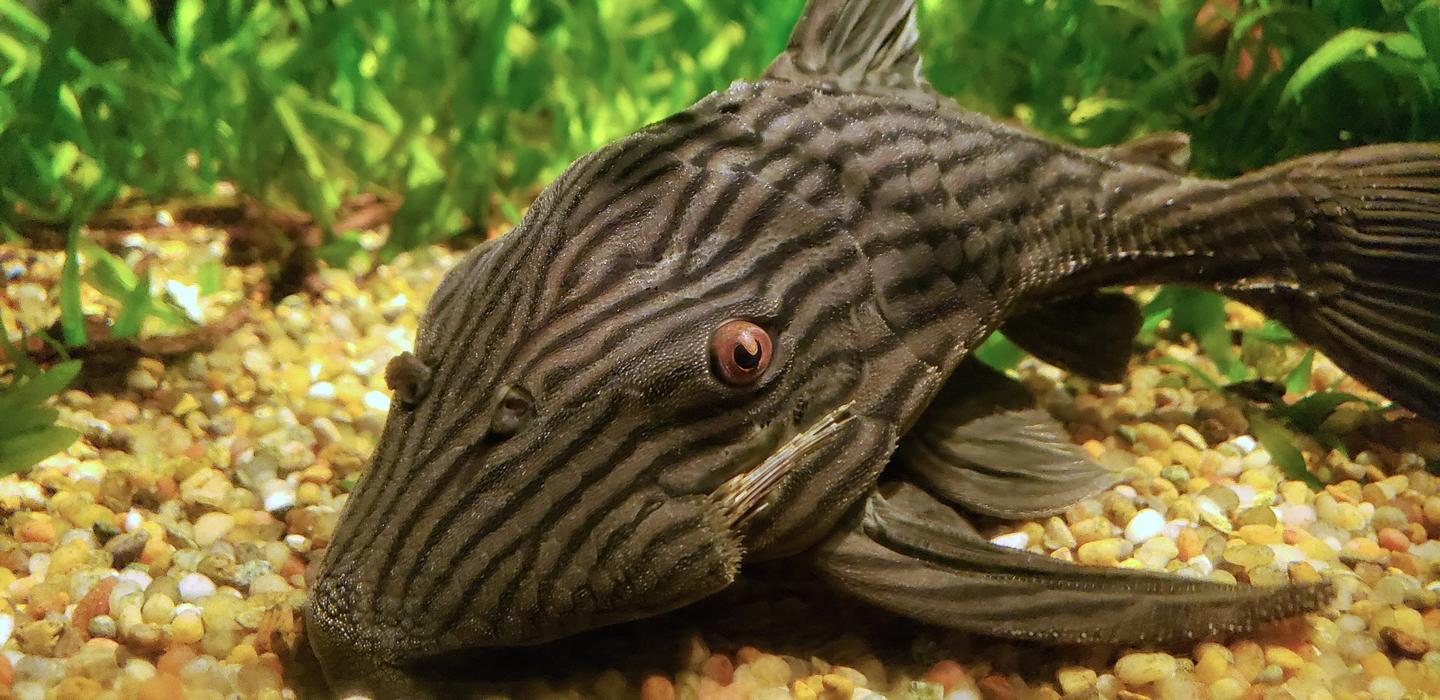
‘Pleco’ is a loose aquarium-trade label, not one species or one care sheet. Before buying, confirm the scientific name or defensible L-number, adult size and measurement method, required footprint, temperature and water, diet, social plan and source. No universal pleco tank size, menu or algae result is honest.
Read the full care guidance when planning conditions for your aquarium.
Pseudancistrus genisetiger is a pleco from the Jaguaribe River basin in the state of Ceará, north-eastern Brazil, a river system that drains to the Atlantic rather than to the Amazon. Henry Fowler described it in 1941 from the Rio Jaguaribe at Orós. Planet Catfish lists the common name Slate Pleco, and older books file it as Lasiancistrus genisetiger or Lithoxancistrus genisetiger. It is a collector's pleco: rarely offered, mainly vegetarian and particular about clean, warm water.
Both names describe its most striking feature. Pseudancistrus means "false Ancistrus", a fish like a bristlenose and yet not quite one. Genisetiger combines the Greek for cheek or jaw with the Latin for bristle and "bearing", after the prominent bristles on the cheeks and along the lower margin of the head. In males these bristles grow long along the edge of the snout, and Scotcat notes that their length may reflect each male's rank among its rivals.
| Feature | Pseudancistrus genisetiger | Bristlenose (Ancistrus) |
|---|---|---|
| Snout ornament | Hardened odontodes (tooth-like skin spines) forming bristles along the snout edge of males | Soft, fleshy tentacles on the snout of males |
| Cheek plates | Not evertible: Planet Catfish notes that Pseudancistrus is the only genus of its tribe without evertible cheek plates | Evertible cheek plates armed with spines |
| Adult size | 103 mm standard length (Planet Catfish, FishBase) to 20 cm (Scotcat) | About 15 cm (OATA) |
| Diet | Mainly vegetable food and grazing | Algae, vegetables and wood |
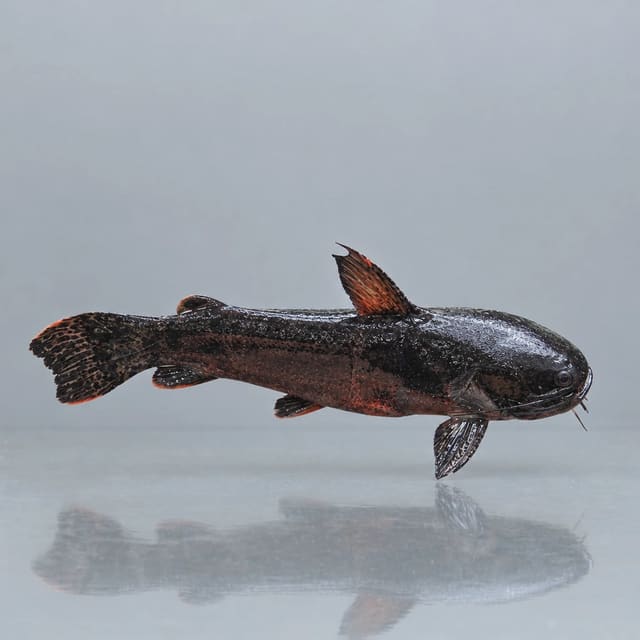
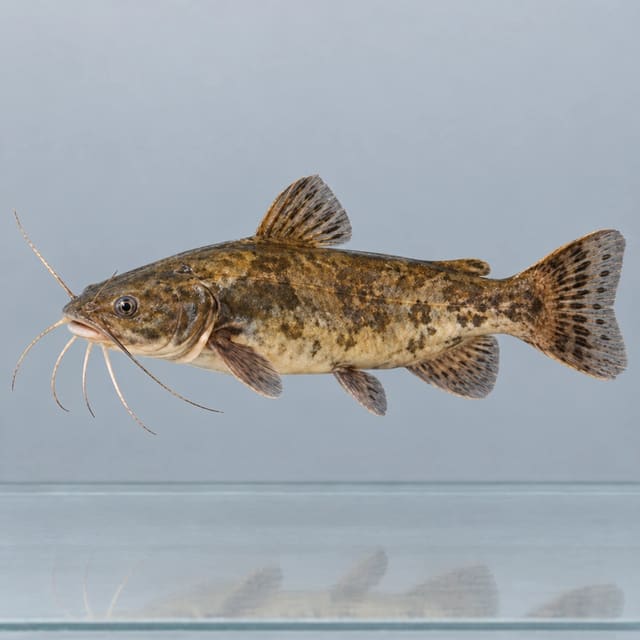
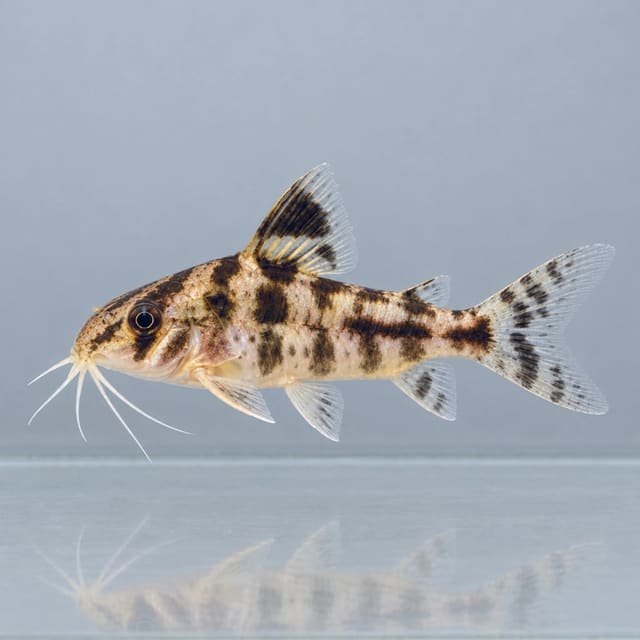
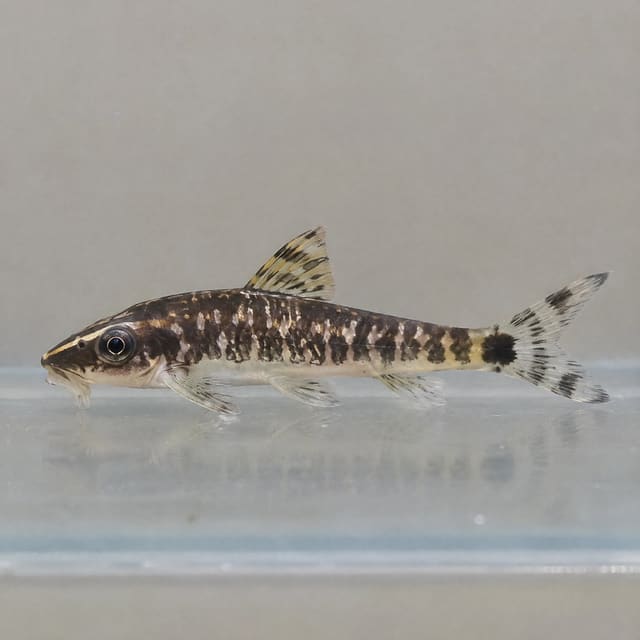
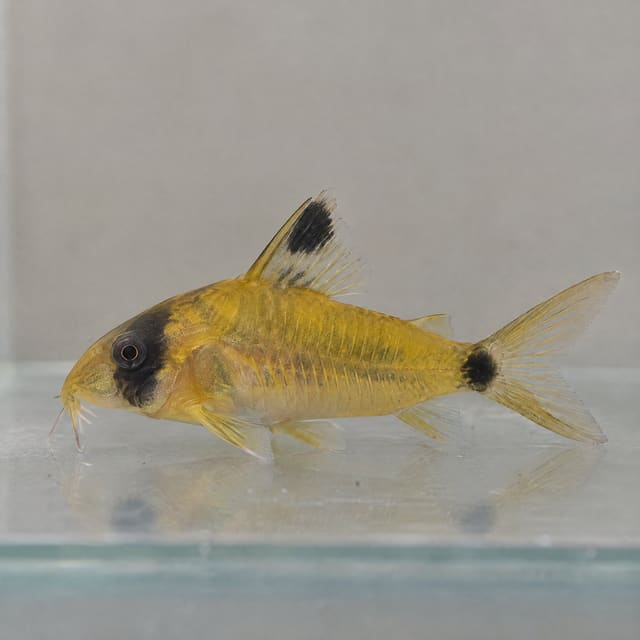
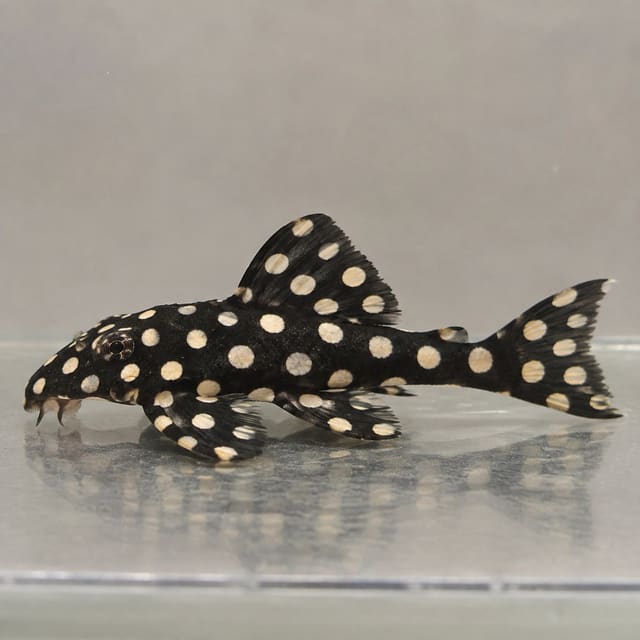
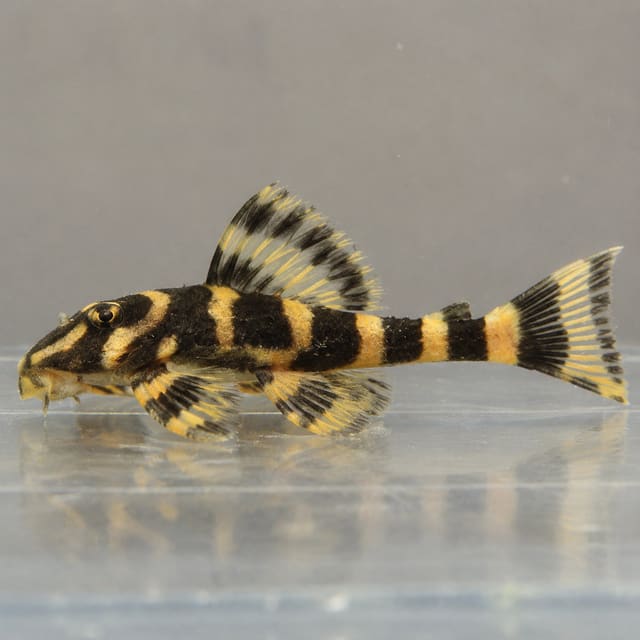
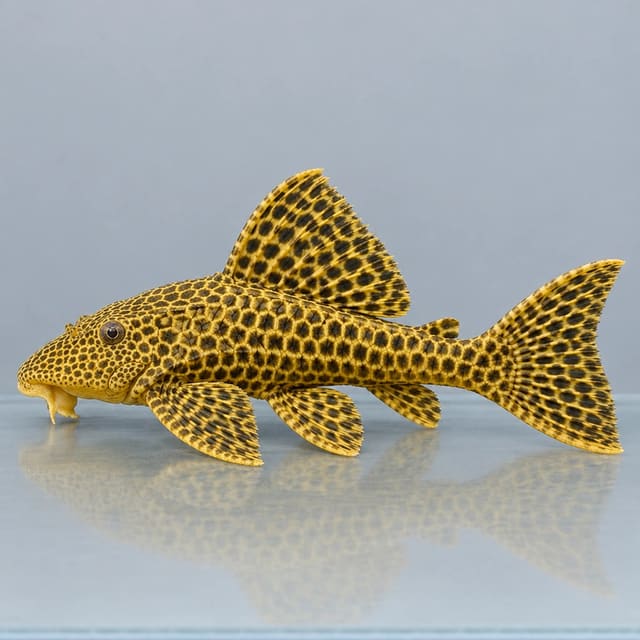
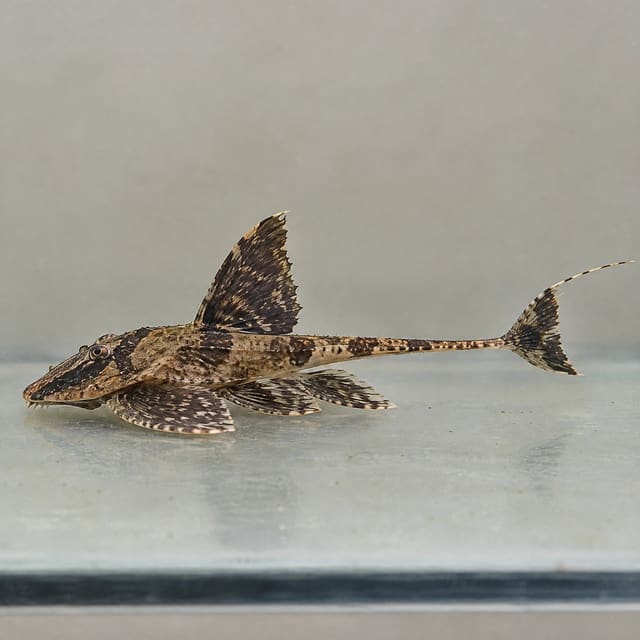
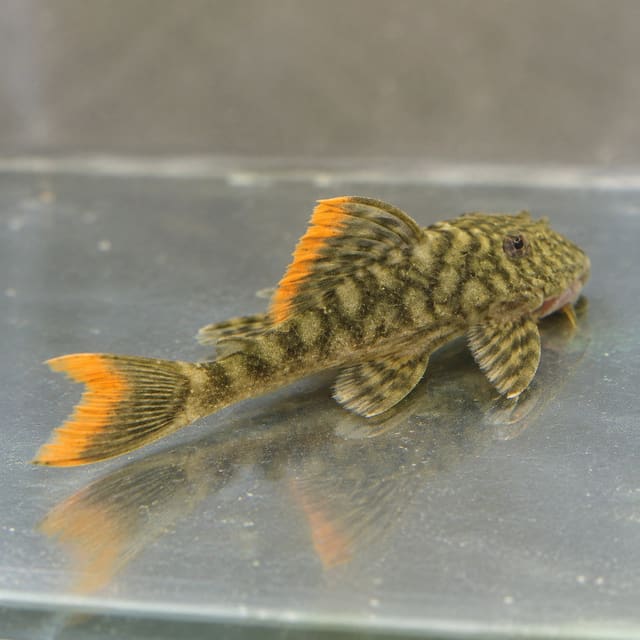
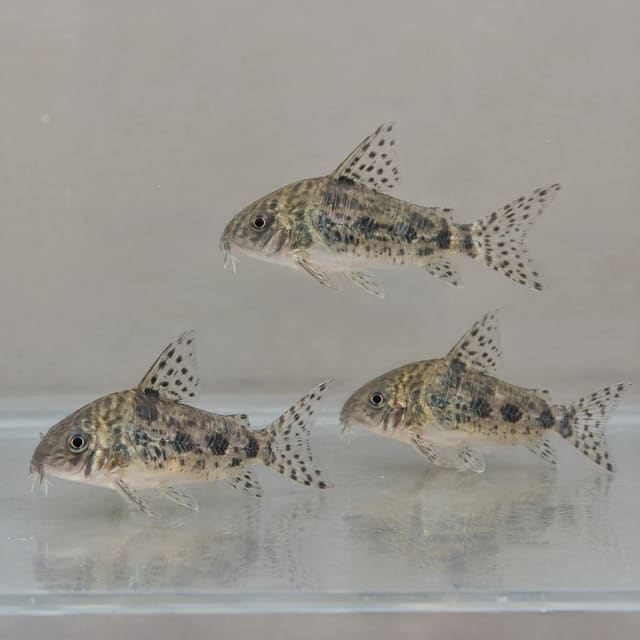
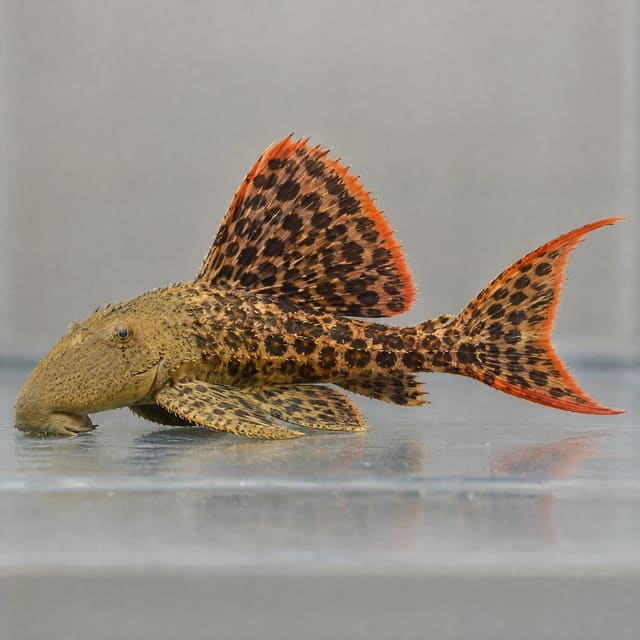
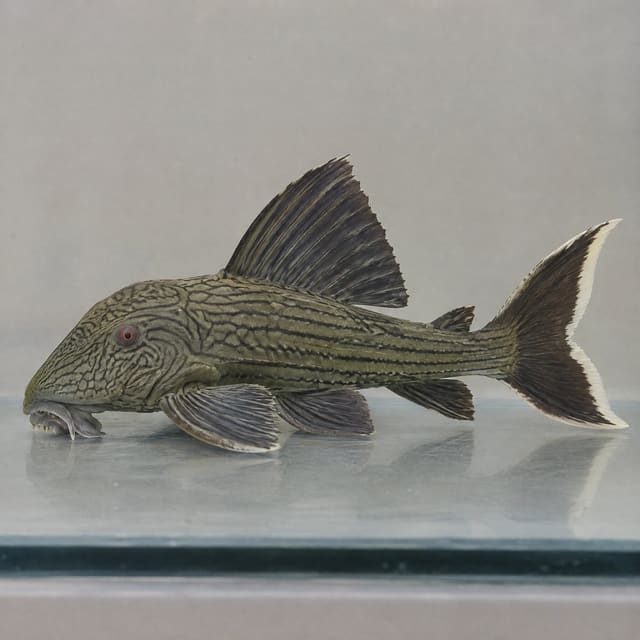
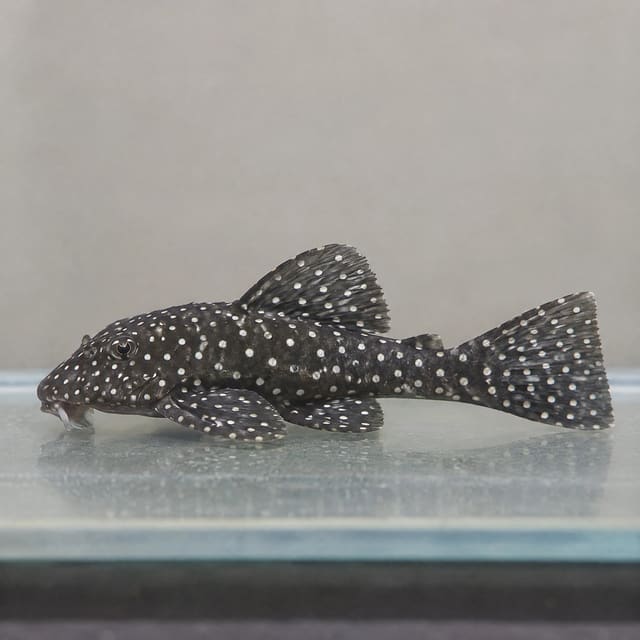
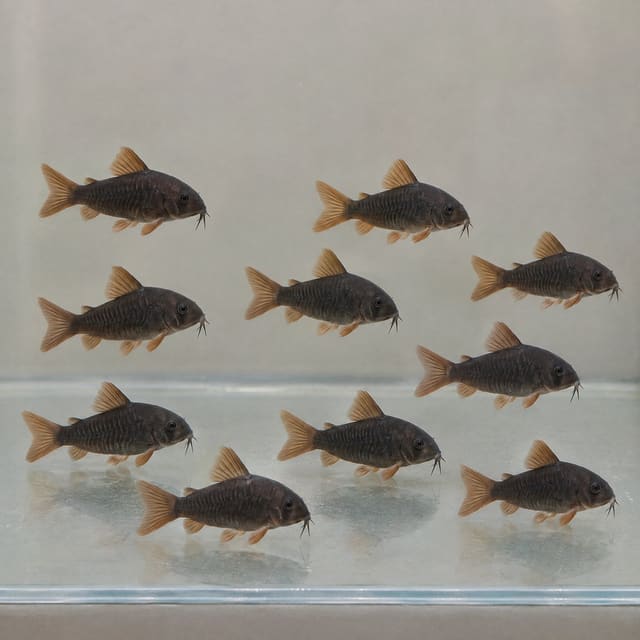
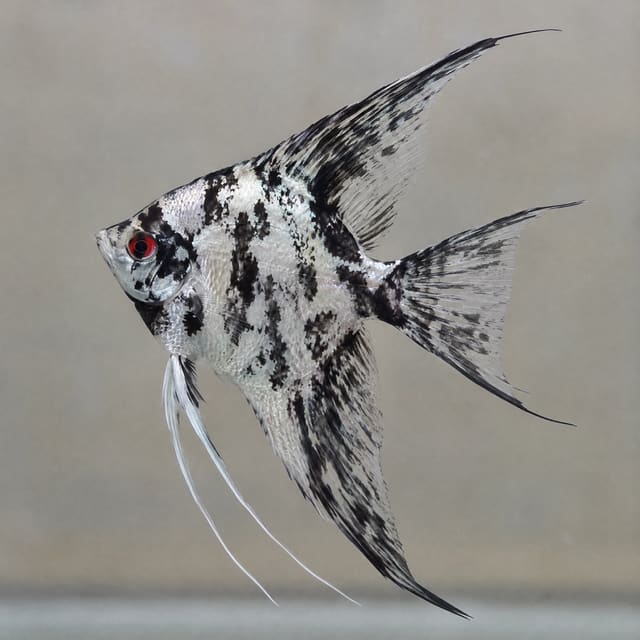
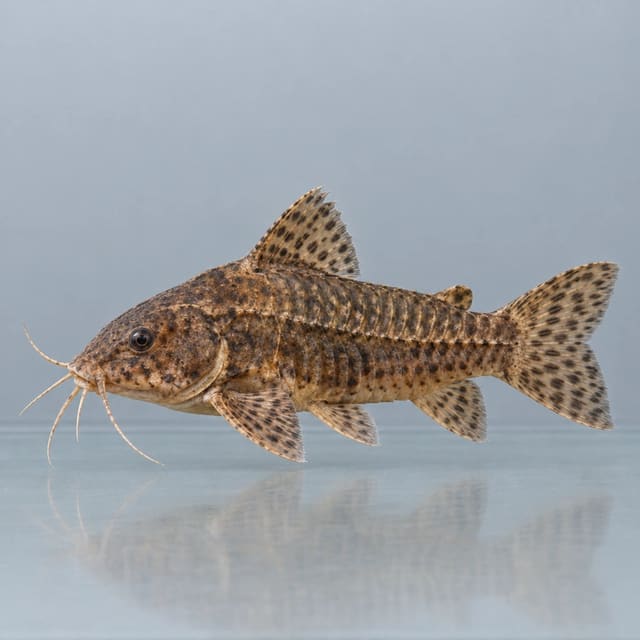
The gallery images are representative, prepared from a reference photograph, and do not show the exact fish supplied. Pattern and bristle length vary with sex, age and condition.
| Suits | Not suited to |
|---|---|
| A mature, well-filtered aquarium kept at 26–28°C | A newly set-up tank or one with unstable water |
| One male with his own cave | A tank already ruled by another large pleco |
| Peaceful fish that like warm water | Coolwater community fish |
One purchase quantity supplies one live Pseudancistrus genisetiger in the standard size offered. Sex is not specified. Scotcat describes adult males as broad-headed, with long bristles along the edge of the snout; young fish and females lack the long bristles, so a small fish may turn out to be either sex.
One adult male per aquarium is the safe plan. Scotcat warns that adult males are very territorial and will not get on with other large loricariid catfish. Two fish only make sense in a tank large enough for well-separated caves and broken sight lines.
Our delivery page explains dispatch days and packing.
The sources disagree on size. Planet Catfish and FishBase both give 103 mm standard length, measured without the tail, while Scotcat gives 20 cm. Until you know how large your fish will grow, plan for the bigger figure.
None of our sources gives a tank size for this species. OATA suggests at least 80 litres for the smaller pleco species and much larger aquariums for bigger ones, and the larger the aquarium, the more stable its temperature and water quality. For a territorial pleco that may reach 20 cm, a tank with a long base gives room for a cave of its own and for other fish to stay out of its way. Our tank volume calculator turns measurements into litres, and our stocking calculator helps you check the total load.
OATA notes that many catfish appreciate shelter in the form of wood, pots or caves, and recommends sand or fine gravel to protect their sensitive barbels and undersides. Build a layout of smooth rocks and one or two pieces of wood with a cave the pleco can claim, and add more hiding places around the tank so that other fish can keep their distance. Stand rocks on the glass before adding the substrate so that nothing can be undermined.
As a surface grazer, this pleco also benefits from rocks and wood that grow a natural film of algae and tiny organisms, which it scrapes as it moves around the aquarium. Planted tanks are fine, but expect soft-leaved plants to be grazed.
| Area | Purpose |
|---|---|
| One cave or pipe at the back | The pleco's territory and daytime refuge |
| Smooth rocks and wood across the floor | Grazing surfaces and broken sight lines |
| Open sand at the front | A feeding station you can see and clean |
| Strong filter outlet across the surface | Movement and oxygen in warm water |
Browse our plecos to compare other species that need a similar cave-and-rock layout.
Scotcat gives 26–30°C and pH 6.0–7.0, and describes this as not the easiest species to keep: it needs pristine, well-filtered water that is not too hard, and warm water as the norm. Planet Catfish and FishBase publish no water values for it. We suggest the lower part of Scotcat's temperature range, which still suits the fish, keeps more oxygen in the water and widens the choice of tank mates.
| Value | Scotcat | Our target |
|---|---|---|
| Temperature | 26–30°C | 26–28°C |
| pH | 6.0–7.0 | 6.0–7.0, kept stable |
| Hardness | Not too hard (no figure given) | The softer half of OATA's general catfish range of 4–18 dGH |
Much of the UK has hard tap water, and your water company publishes the figures for your postcode. Where the supply is hard, blending it with reverse-osmosis water is the usual way to soften it; make every change slowly. Our water matcher compares your tap water with this fish, our water chemistry guide explains each reading, and our guide to tropical tank temperature helps you choose a heater that holds 26–28°C steadily.
| Reading | Target |
|---|---|
| Ammonia | Zero mg/l |
| Nitrite | Zero mg/l |
| Nitrate | No more than 20 mg/l above your tap water |
These limits are OATA's for aquarium catfish. For a fish that needs pristine water they are the minimum, not the goal: any ammonia or nitrite reading above zero needs action the same day.
Warm water holds less oxygen than cool water, so a pleco kept at 26–28°C needs good surface movement as well as clean water. Use a filter rated well above the tank volume, point the outlet so it ripples the surface, and keep the biological media undisturbed. Our guide to aquarium filtration explains how to size and set up a filter.
Scotcat describes P. genisetiger as an aufwuchs grazer, feeding on the film of algae and tiny organisms that covers rocks and wood, and as mainly vegetarian. In the aquarium it recommends lettuce, spinach, cucumber and courgette, with vegetarian flake and tablets. It will take other foods such as insect larvae, zooplankton and soft wood, but the diet should stay mainly green. OATA advises using organic vegetables or washing them thoroughly to remove pesticide residues.
Add the pleco only to a mature aquarium with zero ammonia and nitrite, water at 26–28°C and its cave in place. OATA recommends double bagging catfish because their fin spines can pierce a single bag, and its floating bag method suits this fish: lights off, float the bag for about 10 minutes, then add small amounts of tank water over up to 20 minutes before releasing the fish with as little bag water as possible. Our guide to acclimatising new fish covers each step. Lift the pleco in a container rather than a net, where its bristles and spines can snag.
| Checkpoint | What to do |
|---|---|
| Before arrival | Test the water and confirm the temperature is steady at 26–28°C |
| Release | Lights off; let it find the cave and do not feed that evening |
| First meals | A small vegetable portion after dark, removed next morning if untouched |
| Every day | Check the belly, breathing and fins, and look for chasing |
| End of the week | Full water test and a water change |
A fish that needs pristine water shows problems quickly when conditions slip. OATA's warning signs for catfish include hanging at the surface, sitting on the bottom or swimming erratically, colour change, more hiding or aggression, faster or slower breathing, white spots or fluffy growths, damaged fins, weight change and reduced appetite.
| If you see | Do this |
|---|---|
| Fast breathing or resting high on the glass near the surface | Test ammonia, nitrite and temperature and increase surface movement |
| A hollow belly | Feed vegetables after dark and check other fish are not taking them |
| Chasing another pleco | Add caves and sight breaks, or separate the fish if it continues |
| Faded colour and hiding all the time | Check all water readings and the temperature |
| White spots, fluffy growths or damaged fins | Test the water and seek fish-health advice |
Outside its cave this pleco is no threat to midwater fish, but Scotcat is clear that adult males do not tolerate other large loricariid catfish. Choose companions that live above the bottom and share the warm water it needs.
| Suits | Avoid |
|---|---|
| Peaceful midwater fish that tolerate 26–28°C | Other large loricariid catfish, especially a second adult male |
| Small schooling characins in a well-filtered tank | Fish that need cool water |
| A small number of non-territorial bottom-dwellers with their own cover | Boisterous fish that take its vegetables |
Midwater fish from our range that are often kept in warm water include the Cardinal Tetra and the Rummy Nose Tetra; browse our tetras for more, and check every combination with our tank mates tool before you buy.
For related plecos, compare our L067 Pleco (Pseudancistrus sp.), a close relative from the same genus, the true Bristlenose Pleco and the bristle-cheeked L034 Medusa Pleco, or read our Ancistrus pleco guide to see how bristlenoses differ. You can browse all our catfish and plecos, South American catfish and algae eaters, and our pleco care guide covers the basics.
Planet Catfish has no breeding report for P. genisetiger, and the sources give no details of its spawning. In the wild it is not threatened: FishBase lists it as Least Concern on the IUCN Red List (assessed 2018), and Scotcat reports that collecting since 2009 in the upper Jaguaribe basin found it widespread, frequent and abundant, with no significant threats identified.
It is a pleco from the Jaguaribe River basin in Ceará, north-eastern Brazil, described by Henry Fowler in 1941. Planet Catfish lists the common name Slate Pleco. The genus name means "false Ancistrus", because it resembles a bristlenose but differs from it.
No. Males carry long bristles along the edge of the snout, but these are hardened odontodes rather than the soft tentacles of a bristlenose, and Pseudancistrus is the only genus of its group without evertible cheek plates.
The sources disagree. Planet Catfish and FishBase give 103 mm standard length, while Scotcat gives 20 cm. Plan for a fish of up to about 20 cm.
Scotcat gives 26–30°C and pH 6.0–7.0 and advises pristine, well-filtered water that is not too hard. We suggest keeping it at 26–28°C, with zero ammonia and nitrite and nitrate no more than 20 mg/l above your tap water.
Mainly vegetable food. Scotcat describes it as a grazer of the film of algae and tiny organisms on surfaces, to be fed lettuce, spinach, cucumber, courgette and vegetarian flake and tablets, with occasional insect larvae, zooplankton and soft wood.
Be careful with males. Scotcat notes that adult males are very territorial and will not get on with other large loricariid catfish, so keep one male per aquarium unless the tank is large enough for well-separated caves.
It grazes surfaces, but it still needs a mainly vegetable diet of its own, and OATA points out that algae-eating fish are no substitute for regular maintenance.
No. FishBase and Scotcat list it as Least Concern on the IUCN Red List, and Scotcat reports that recent surveys found it widespread, frequent and abundant in the upper Jaguaribe basin.
No reviews for this item yet. Bought one? Honest reviews only, good or bad.
What customers say about ordering from us
Easy website plenty of info on fish your buying great to pick a time slot
TRACEY DURRANT · 7 Oct 2026
Got some lovely fish thank you
Kevin Mackie · 7 Oct 2026
Reviews of our shop, collected by Judge.me, an independent third-party review collector. Newest first.
Moved by UK carriers licensed to handle live animals
Hand-packed with oxygen bags, poly box, heat pack
Email photos the same day; an optional unboxing video helps us review problems faster — claim terms apply
Klarna & PayPal Pay in 3 at checkout