Moderate
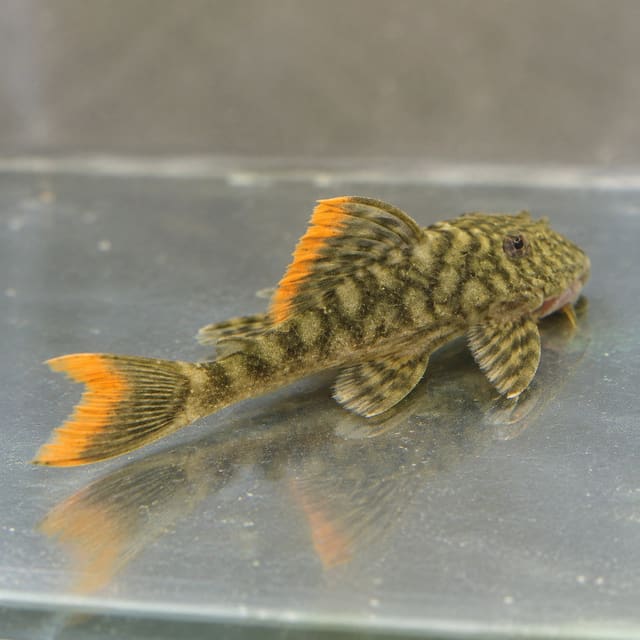
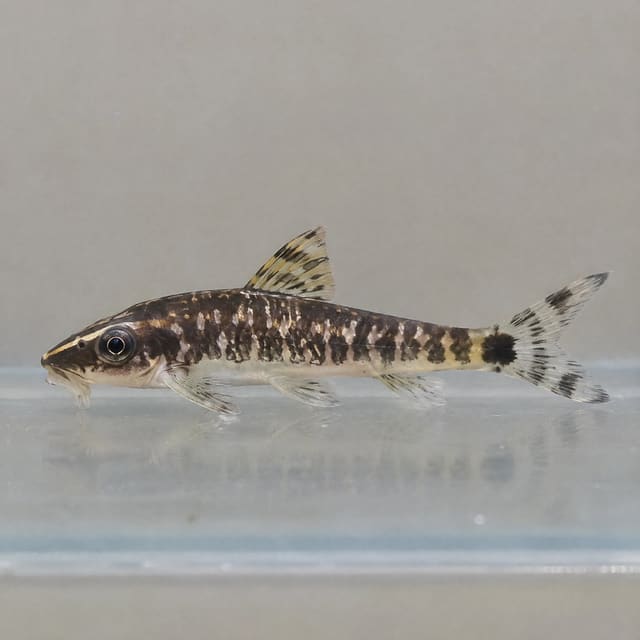
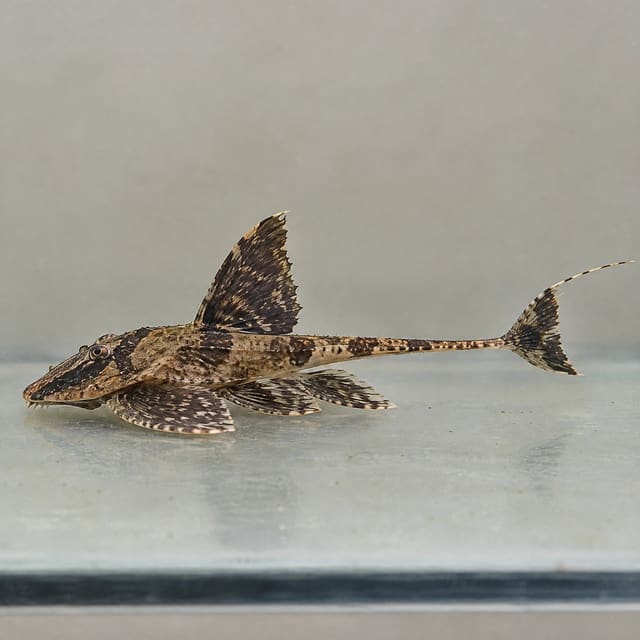
Rio Atabapo Whiptail Catfish (Loricaria sp.)
23–28°C · pH 6.4–7.6
£47.99
The Snoring Catfish (Wertheimeria maculata) is a rare thorny catfish found only in the Jequitinhonha and Pardo river basins of eastern Brazil. It reaches about 30 cm standard length, eats fruit and insects in the wild, and needs a very large aquarium (about 180 cm long) at 22–26°C and pH 6.5–7.2. Sold individually as one live fish.
Wertheimeria maculata
The Snoring Catfish (Wertheimeria maculata) is a rare thorny catfish found only in the Jequitinhonha and Pardo river basins of eastern Brazil. It reaches about 30 cm standard length, eats fruit and insects in the wild, and needs a very large aquarium (about 180 cm long) at 22–26°C and pH 6.5–7.2. Sold individually as one live fish.
Read the full care guidance when planning conditions for your aquarium.
The Snoring Catfish (Wertheimeria maculata) is a large, rarely seen catfish from eastern Brazil, and the only member of its genus. "Snoring Catfish" is the common name used for it on Planet Catfish, and the Danish name listed there, gulplettet tornmalle, translates as "yellow-spotted thorny catfish", a good description of an adult. The species name maculata means spotted.
It belongs to the thorny catfishes, the family Doradidae, which also includes the talking and Raphael catfishes sold in UK shops. A 2014 study of the group's relationships by Birindelli placed Wertheimeria with Kalyptodoras in a new subfamily, Wertheimerinae, as the sister group of all the other thorny catfishes. Unlike most of its relatives, it lacks the hooked thorns on the bony plates along the side.
We have found no published study of the sounds this species makes, so treat "snoring" as a trade name rather than a promise of a particular noise.
| Suits | Not suited to |
|---|---|
| A very large aquarium, around 180 cm long or more | Standard community tanks |
| Keepers ready for a fish of about 30 cm | Anyone expecting a small catfish |
| 22–26°C and pH 6.5–7.2 | Hard, alkaline water |
| Large, peaceful companions | Any fish small enough to be swallowed |
| Varied feeding, including fruit and insect foods | A diet of one type of pellet only |
Very little has been published about keeping it. As the Scotcat species page puts it, not a lot is known about the husbandry of this large thorny catfish, so this page sets out what the sources do say and where they disagree.
One purchase supplies one live Snoring Catfish. It is sold in one standard size with no size grade, and it is not an adult, so plan the aquarium for the full adult size below. No reliable external sex differences have been published, so sex is not specified. Read our delivery information for dispatch days and arrival terms before you order.
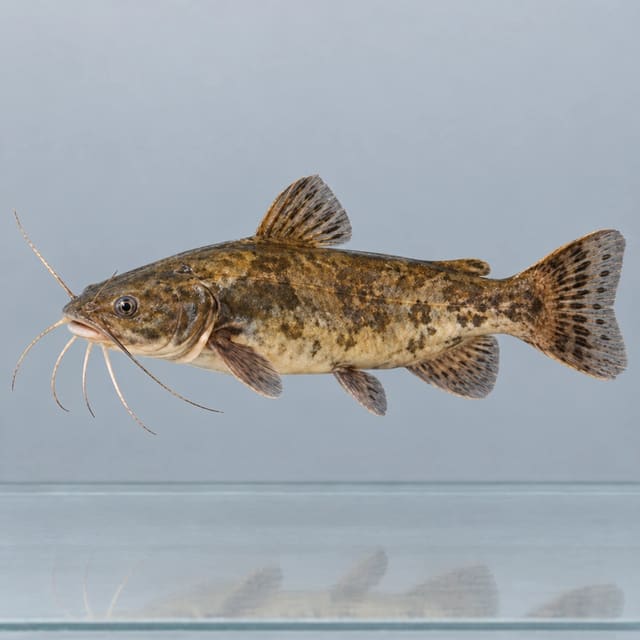
Young and adult fish look very different. Vono and Birindelli's 2007 study of its natural history, summarised by Scotcat, describes a reddish to olive ground colour, with large whitish vermiculations (worm-like markings) on small fish and sparse dots on larger ones. Scotcat also notes only about three bony plates (scutes) on the front of the body, with the rest of the lateral line a soft, unossified tube.
| Feature | What to look for |
|---|---|
| Young fish | Dark body with bold whitish worm-like markings and spots |
| Adult fish | Reddish to olive-brown body with scattered pale, rounded spots |
| Side plates | Only about three scutes behind the head, without hooked thorns |
| Barbels | Long barbels around the mouth, typical of a thorny catfish |
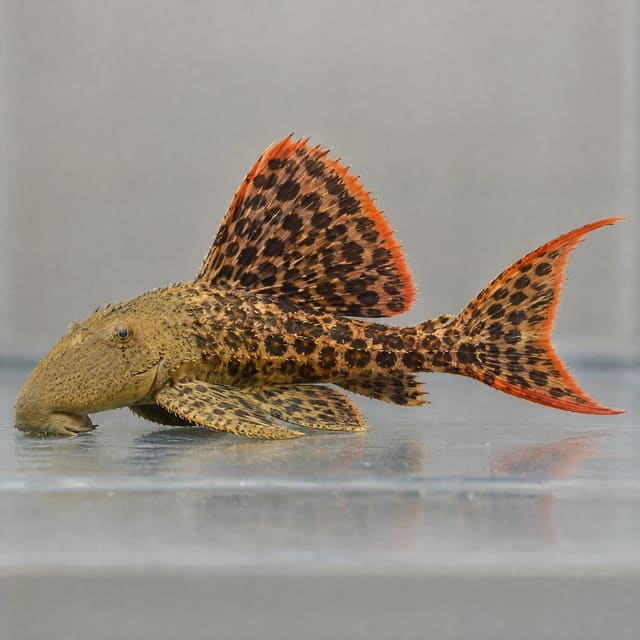
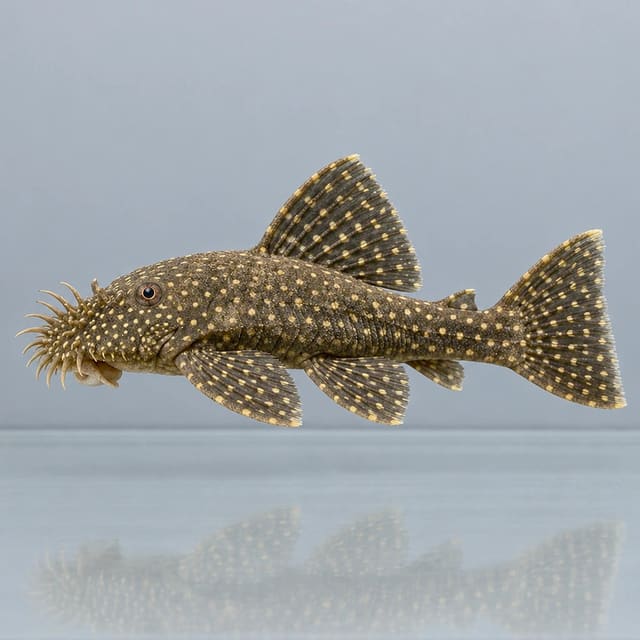
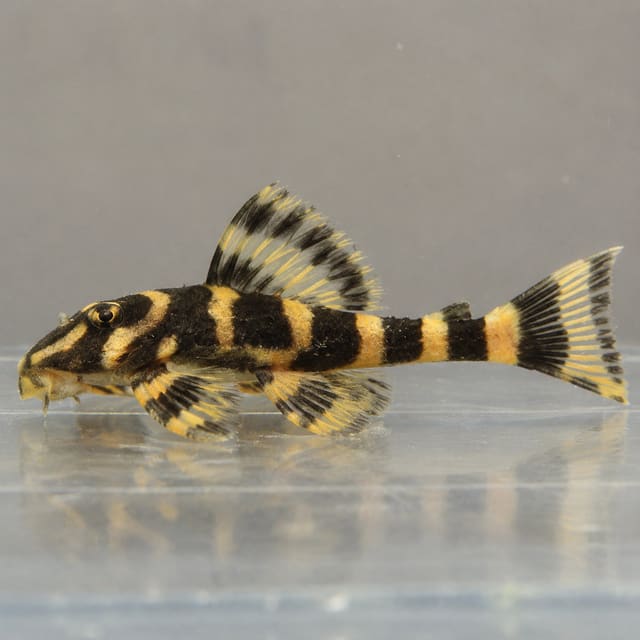
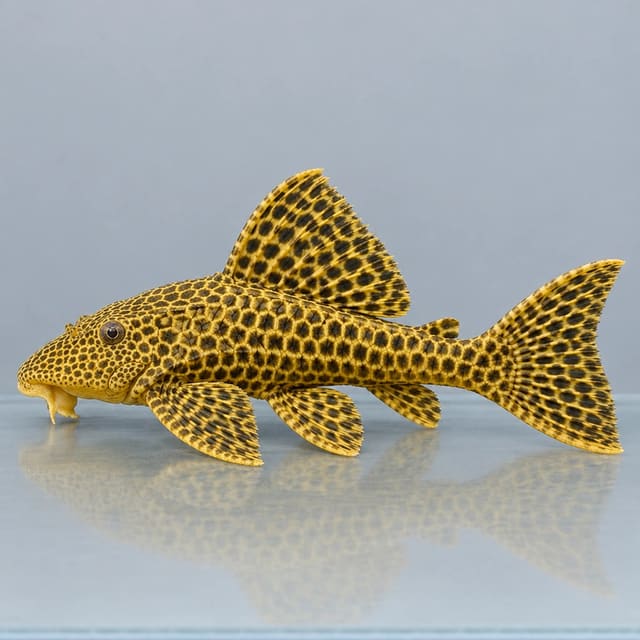
Our photographs show the species, not the individual you will receive, and a young fish will not match an adult picture.
Planet Catfish and FishBase both give a maximum of 300 mm standard length (measured without the tail). The Suedamerikafans catfish database gives about 35 cm total length, with 220 mm standard length documented, and recommends a tank 180 cm long. No source we found gives a minimum width, so choose a tank deep enough from front to back for a 30 cm fish to turn easily among caves and wood.
Our tank volume calculator converts your tank's dimensions into litres, and our stocking calculator helps you check the total load with every other fish at adult size.
The species is found only in the Jequitinhonha river basin of Minas Gerais and the Pardo river of Bahia, both draining to the Atlantic coast of eastern Brazil. Vono and Birindelli caught it mostly in the rainy season, only in the main channel and the larger tributaries, in deep pools at running or backwater sites; artisanal traps made of bamboo and lianas worked best.
For the aquarium, OATA's catfish guidance recommends sand or fine gravel to protect the barbels, and caves, wood, pots or plants as cover. A deep-pool layout puts those together:
| Area | Purpose |
|---|---|
| Soft sand over most of the floor | Protects the barbels and lets the fish search for food |
| A large cave or root tangle at one end | A shaded resting place big enough for an adult |
| Smooth stones and wood along the back | Broken sight lines and a natural river look |
| Open water above | Swimming room for large mid-water companions |
Fix heavy rocks firmly on the glass base, not on top of the sand, so a large catfish digging underneath cannot topple them.
| Value | Species figure (Scotcat) | OATA general catfish guidance |
|---|---|---|
| Temperature | 22–26°C | 22–27°C |
| pH | 6.5–7.2 | 6.0–8.0 |
| General hardness | Not published | 4–18 °dH |
| Carbonate hardness | Not published | 3–15 °dKH |
| Ammonia and nitrite | Not given | Zero |
| Nitrate | Not given | No more than 20 mg per litre above tap water |
Aim for the species figures: 22–26°C and pH 6.5–7.2. No hardness range has been published for this fish, so keep it moderate and, above all, stable. UK tap water ranges from soft to very hard depending on the region, and hard water usually runs at a higher pH, so test yours before you buy. Our water matcher compares your water with each fish's needs, and our water chemistry guide explains pH and hardness.
Temperature and pH describe the habitat; ammonia, nitrite and nitrate measure waste. OATA's targets of zero ammonia, zero nitrite and nitrate no more than 20 mg per litre above tap water apply whatever the habitat values, and they matter more with a large fish eating fruit and meaty foods.
OATA says a filter is always essential for catfish and recommends a 25% partial water change every week, siphoning solid waste from the substrate, with replacement water treated to remove chlorine or chloramine. It also says a heater is needed to keep the temperature stable all year. Our filtration guide explains how to size a filter for a large tank, and our article on the nitrogen cycle explains why the tank must be mature first.
In the wild, Vono and Birindelli found a varied diet made up mainly of food falling into the river from the bank: chiefly fruits and land insects from the riverside vegetation. The Suedamerikafans database also lists plant food. In the aquarium, that points to a mixed diet rather than one type of pellet.
OATA recommends appropriate sinking foods for catfish, fed once a day, giving only what is eaten within a few minutes, or up to 30 minutes for slow grazers, because uneaten food breaks down and fouls the water.
OATA advises that catfish travel double-bagged and that the tank must show zero ammonia and nitrite before any fish goes in. Use the floating-bag method: switch off the lights, float the sealed bag for about 10 minutes, add small amounts of tank water over up to 20 minutes, then release the fish while keeping the bag water out. Lift a catfish in a container rather than a net where you can, because fin spines catch in netting. Our acclimatisation guide covers each step.
| When | Check | Action |
|---|---|---|
| Day 1 | Fish has found a cave or shaded spot | Keep the tank lights off for the rest of the day |
| Days 2–3 | Food taken overnight | Offer a small evening meal and remove leftovers next morning |
| Days 3–5 | Ammonia and nitrite | Change water at once if either is above zero |
| Day 7 | Full test, body condition and barbels | Move to the normal weekly routine if everything is on target |
No source we found describes this species' behaviour with other fish. The safe general rule for any 30 cm catfish is to keep it only with fish too large to fit in its mouth, in a tank with enough caves that no two large bottom-dwellers have to share one.
| Suits | Avoid |
|---|---|
| Large, peaceful South American schooling fish, such as the Silver Dollar or Striped Silver Dollar, if their water ranges overlap | Any fish small enough to swallow |
| Robust mid-water fish of a similar size that leave the bottom to the catfish | Other large catfish competing for the only cave |
| Fish happy at 22–26°C and pH 6.5–7.2 | Aggressive fish that harass a resting catfish |
Our tank mates tool checks a planned mix for you. If you like thorny catfishes but have a smaller tank, compare our Hancock's Talking Catfish, Painted Talking Catfish and Spotted Raphael Talking Catfish, or browse the South American Catfish category, our catfish and plecos, our bottom dwellers and our rare and collector fish.
OATA lists the signs of a healthy catfish as clear, bright eyes, undamaged fins, intact scales or skin, no ulcers or bumps, normal swimming and steady breathing. Warning signs include clamped fins, flicking against objects, white spots or fluffy growths, erratic swimming, a change in colour, faster or slower gill movement and a reduced appetite.
| Observation | First action |
|---|---|
| Worn or shortened barbels | Check the substrate for sharp grains and test nitrate |
| Food left uneaten every morning | Feed less, try a different food and test the water |
| Fast breathing or fish out in the open by day | Test ammonia and nitrite and check the temperature |
| White spots, fluffy growths or sores | Identify the problem before choosing any treatment |
The sources disagree on breeding. Planet Catfish states that no member of the genus has been bred in the aquarium. Scotcat reports successful breeding in Brazil by an exporter, and the Suedamerikafans database records breeding at a Brazilian fish farm, citing a 2019 article by Hans-Georg Evers. From wild fish, Vono and Birindelli suggested partial spawning, because they caught some fish in advanced maturity and others fully spawned at different times.
The IUCN assessed the species as Least Concern in 2018. Scotcat notes threats within its small range from siltation, habitat fragmentation, pollution and introduced species.
It is Wertheimeria maculata, a large thorny catfish (Doradidae) found only in the Jequitinhonha and Pardo river basins of eastern Brazil. "Snoring Catfish" is the common name Planet Catfish uses for it.
It is a trade name. We have found no published study of the sounds this species makes, so do not buy it expecting a particular noise.
Planet Catfish and FishBase give 30 cm standard length; a German catfish database gives about 35 cm total length.
A tank around 180 cm long or more, as recommended by the Suedamerikafans database, with a large cave or root tangle.
22–26°C and pH 6.5–7.2 (Scotcat), with zero ammonia and nitrite. No hardness range has been published, so keep it stable.
In the wild mainly fruits and land insects. In the aquarium, give sinking catfish foods with pieces of fruit and insect-based foods.
Large, peaceful fish too big to swallow, such as silver dollars, provided their water needs overlap. Its behaviour with other fish has not been documented.
Sources disagree: Planet Catfish says the genus has not been bred in aquariums, while Scotcat and the Suedamerikafans database report breeding in Brazil.
Small fish have large whitish worm-like markings; larger fish turn reddish to olive with sparse spots.
No reviews for this item yet. Bought one? Honest reviews only, good or bad.
What customers say about ordering from us
Easy website plenty of info on fish your buying great to pick a time slot
TRACEY DURRANT · 7 Oct 2026
Got some lovely fish thank you
Kevin Mackie · 7 Oct 2026
Reviews of our shop, collected by Judge.me, an independent third-party review collector. Newest first.
Moved by UK carriers licensed to handle live animals
Hand-packed with oxygen bags, poly box, heat pack
Email photos the same day; an optional unboxing video helps us review problems faster — claim terms apply
Klarna & PayPal Pay in 3 at checkout