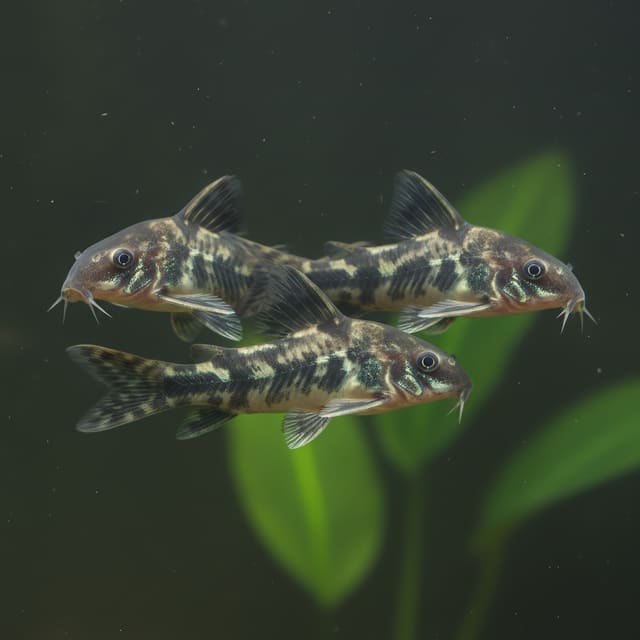
3 × Peppered Corydoras (Corydoras paleatus)
22–23°C · pH 6–7 · 70L
£10.99

3 × Hoplo Cats (Hoplosternum thoracatum) are peaceful South American armoured catfish that need a mature aquarium planned around adult floor space, good filtration and places to forage and shelter. The current size of the fish supplied is not confirmed; please ask if it affects your plan.
Adult size is the maximum length this species reaches at full maturity (scientific sources). The livestock you receive will be younger and smaller. Product-photo provenance and any image-specific limitations are stated on the listing.
Hoplosternum thoracatum
3 × Hoplo Cats (Hoplosternum thoracatum) are peaceful South American armoured catfish that need a mature aquarium planned around adult floor space, good filtration and places to forage and shelter. The current size of the fish supplied is not confirmed; please ask if it affects your plan.
Adult size is the maximum length this species reaches at full maturity (scientific sources). The livestock you receive will be younger and smaller. Product-photo provenance and any image-specific limitations are stated on the listing.
Maintain these water conditions for optimal health and vibrant colors
One purchase supplies three Hoplo Cats, a substantial South American armoured catfish for a mature freshwater aquarium with room across the bottom. They are peaceful fish that search the substrate for food, use cover and sometimes rise to take air at the surface. The appeal is easy to see: a broad, patterned body, purposeful foraging and a calm presence in a thoughtfully planned community. The important decision is whether your aquarium can serve three adults, not simply whether three small fish fit into it today.
The familiar trade name in this title is Hoplosternum thoracatum. The accepted scientific name is Megalechis thoracata; the former is a historical synonym still widely used for the Hoplo Cat. Both names here refer to the same species, rather than two different fish. FishBase places it in the callichthyid armoured catfish family and records it across the Amazon, Orinoco and upper Paraguay basins and northern South American coastal rivers. That describes the species' wild range, not the origin of these particular retail fish. FishBase's species account explains the accepted name and distribution.
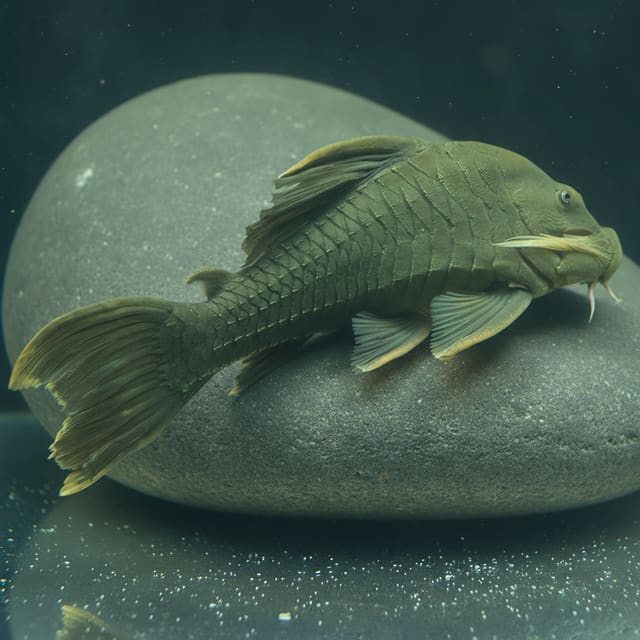
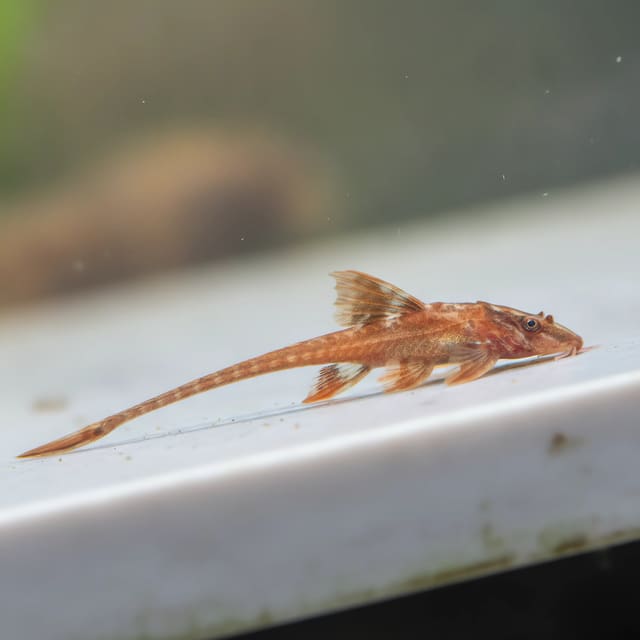
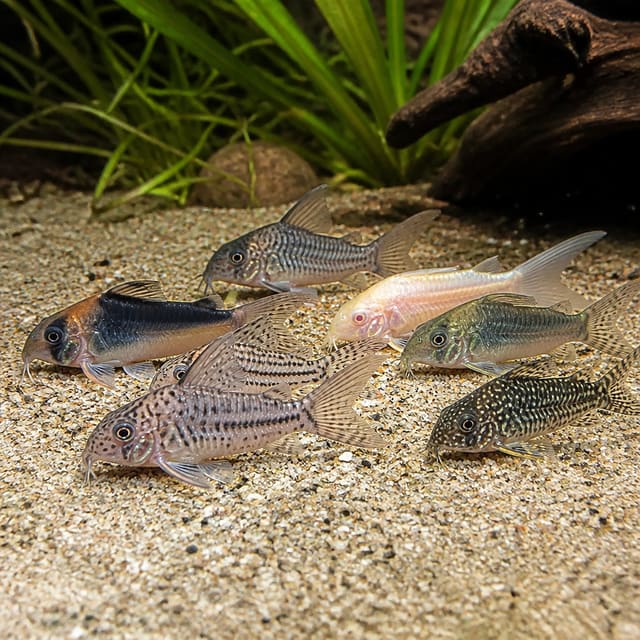
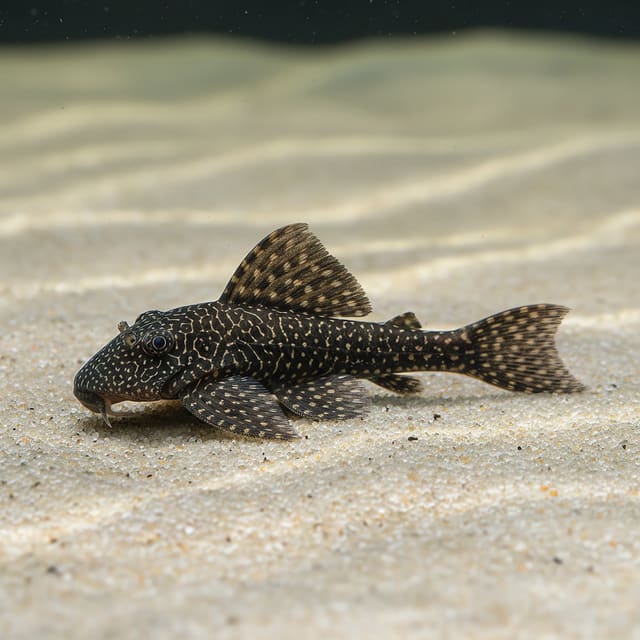
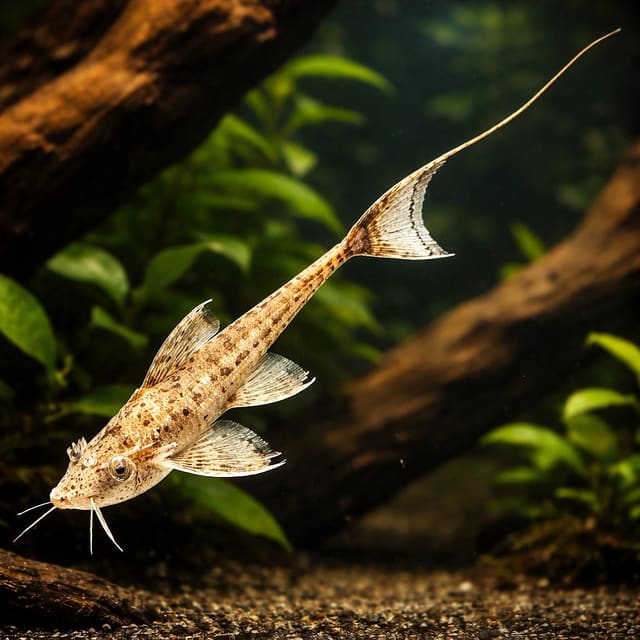
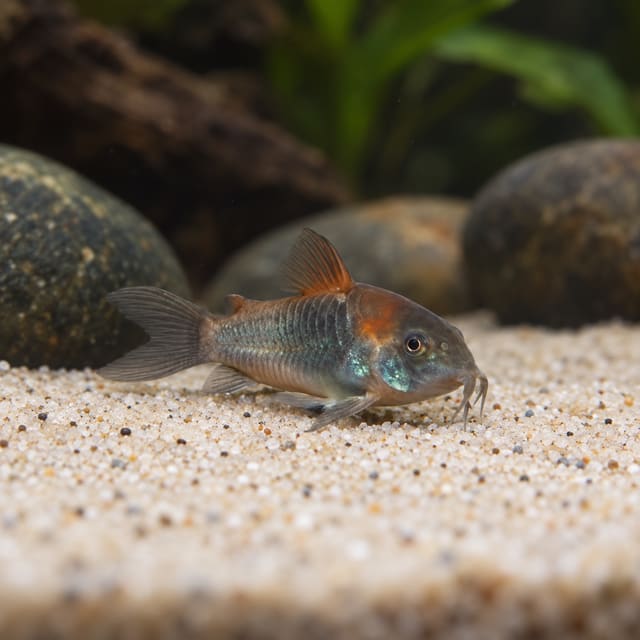
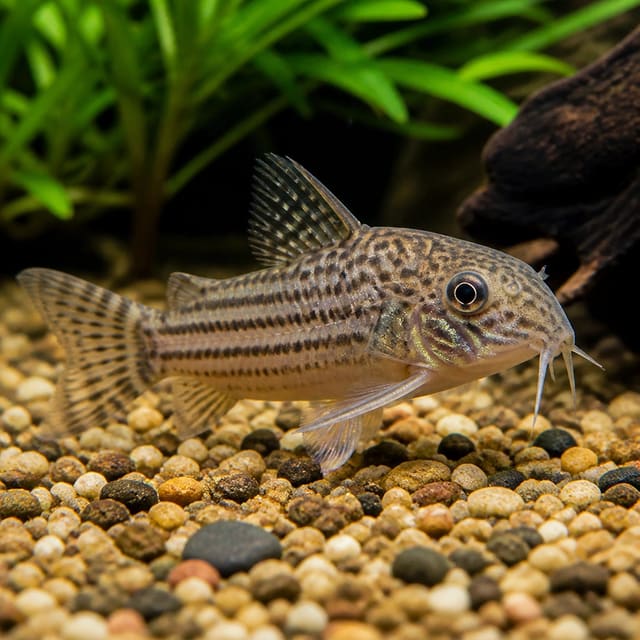
This is a retail pack of three fish. A single fish is pictured in the gallery, so the photograph does not show the number supplied. The pictured animal and the fish delivered can also vary naturally in pattern, size and maturity. Sex is guaranteed only when the selected option explicitly states male or female. This 3 × Hoplo Cats listing has no sex-guaranteed option. Do not plan this purchase as a sexed or breeding group.
The current measured length of the three fish supplied has not been verified. Please confirm the current supplied size before ordering if it determines stocking, transport preparation or whether tank mates will be appropriately sized. This purchase supplies three live Hoplo Cats.
| Offer | Three Hoplo Cats per purchase; no sex guarantee |
|---|---|
| Names | Hoplo Cat or Atipa; accepted species name Megalechis thoracata |
| Adult planning | Around 15 cm standard length in the species profile; FishBase records a maximum of 15.5 cm standard length. Standard length excludes the tail fin. |
| Aquarium | A mature, filtered freshwater tank with generous floor area planned for three adult fish |
| Species guidance | 18–28°C; pH 6.0–8.0; hardness up to 20 dGH, with stable conditions within a suitable part of these ranges |
| Temperament | Generally peaceful; assess neighbours, feeding and space together |
Those figures are planning context, not a claim that any tank at the edge of a range is automatically suitable. Seriously Fish gives a 120 × 38 cm base for its species aquarium example, at about 137 litres when calculated with its stated depth. That is useful evidence about the length and width an adult needs, but it is not a verified minimum for this trio. Three adult fish and any other residents require an individual floor-space and filtration plan. A long, useful bottom footprint matters more than a tall tank with the same nominal volume.
The species profile describes the Hoplo Cat as a generally peaceful community fish. Peaceful does not mean it needs no room, no deliberate feeding or no assessment of other bottom dwellers. Their adult build is noticeably more substantial than many familiar small Corydoras. A keeper who enjoys catfish behaviour can make this trio a rewarding centre of interest when the aquarium has clear foraging space, shelter and steady water quality. If your tank is new, cramped or already heavily occupied at the bottom, make the space and filtration plan first.
Imagine the aquarium from a Hoplo Cat's point of view. Food falls onto the substrate, cover is reached along the bottom, and each fish needs room to turn, explore and rest. For this purchase, draw the usable floor area before deciding that a tank is large enough. A tall aquarium can hold a great deal of water while leaving a surprisingly short feeding run. The 120 × 38 cm base in the Seriously Fish species profile is a valuable reference for the species, but its approximate 137-litre example does not certify that three adults plus neighbours will fit. If the tank is close to that example, consider its actual layout, filtration and existing occupants carefully rather than treating the volume as a green light.
Leave connected open substrate where the fish can move and food can be found. Place cover in more than one part of the tank so every animal has a choice of resting places. Rocks, plants and bogwood are named in the species profile; arrange them securely and keep accessible space around them. A decorative cave that blocks most of the only free floor area does little for a growing trio. Equally, a bare tank without cover misses a normal part of their habitat use. You can balance open foraging ground with shaded retreats instead of choosing one at the expense of the other.
Sand or fine gravel suits the species' habit of rooting through the substrate. Whichever you use, keep it clean enough that settled waste and uneaten food do not accumulate where the fish feed. A surface that is practical to maintain is more useful than a complex ornament arrangement that traps debris behind every shelter. Watch the fish at feeding time: can all three reach food without having to squeeze through the same narrow opening? If not, spread suitable food across accessible spots and reconsider the layout.
Hoplo Cats can rise for atmospheric air. FishBase describes them as air breathing, while the species care profile notes that a gulp at the surface may be seen in captivity. Leave them access to the surface. This behaviour does not make a poorly filtered or oxygen-poor aquarium acceptable. Persistent distress, unusual breathing or a sudden change in activity still deserves a water test and close attention; an occasional natural air gulp should be understood in the context of the fish's normal pattern. Keep the aquarium secure as you would for other fish, while leaving a clear route to the water surface.
Slow or still flow is described as suitable in the species profile, though the fish can adapt to stronger movement. Build an area where they can rest without constantly working against a current. Filtration still needs to handle the waste produced by three adult catfish and their tank mates. Filter turnover examples from a small illustrative tank do not determine the right equipment for every stocked aquarium. Choose and maintain filtration for the actual volume, livestock and feeding load, then verify its performance with water tests rather than relying on the pump label alone.
Move this pack into a fully matured aquarium, not a newly filled one. The RSPCA explains that beneficial bacteria in a working biological filter process harmful ammonia into nitrite and then nitrate. OATA's freshwater catfish guidance recommends checking that ammonia and nitrite are at zero before fish are added and increasing stocking gradually as the filter community adjusts. Three fish arriving together add a greater waste and feeding load than one fish, so assess the tank's existing stocking and filter capacity beforehand. The first tropical tank guide helps with the preparation sequence if you are still setting up.
Test regularly after introduction, especially while the filter responds to the extra load. Ammonia and nitrite should remain undetectable; investigate any reading rather than waiting for the fish to look unwell. Nitrate is a separate product of the nitrogen cycle and calls for routine water changes and an appropriate stocking level. The OATA sheet offers a group-level recommendation of roughly 25% partial water changes each week, with replacement water conditioned for chlorine or chloramine. Actual maintenance needs also depend on measured values and feeding. The water chemistry guide explains the measurements in practical terms.
During a water change, remove settled food and waste from accessible substrate. Check the filter for blocked flow without stripping away the bacteria you worked to establish. If filter media needs a light rinse, OATA advises lightly rinsing media in water removed during a partial water change; do not rinse it under the tap, where chlorine or chloramine can kill beneficial bacteria. Avoid changing every piece of filter media and deep-cleaning all substrate at once. A steady routine, along with enough space and measured water quality, is more reliable than a dramatic clean only when the aquarium looks dirty.
Watch both the fish and the test results. Clear eyes, intact fins, normal feeding and a familiar pattern of bottom exploration give context, while a sudden refusal to eat, unusual hiding, laboured breathing or visible lesions warrant prompt attention. Those signs do not diagnose a disease by themselves. Check ammonia, nitrite and temperature, observe all residents and seek appropriate aquatic-veterinary or experienced retailer advice if concern persists. Avoid treating the whole tank on a guess, especially when filtration could be affected.
Seriously Fish gives 18–28°C, pH 6.0–8.0 and hardness up to 20 dGH for this species in an aquarium. These are broad species-level ranges, not a suggestion to move between extremes or a promise that every combination within them is ideal. Choose a stable part of the range that also suits your established fish. If the aquarium already runs at one end, check the needs of all its residents rather than changing temperature or chemistry abruptly for a new arrival. The water matcher can help compare your measured water with the stated guidance.
Measure your own tap and aquarium water instead of guessing from a regional description such as “soft” or “hard”. Water from the same tap can behave differently after treatment, buffering or contact with aquarium materials. When a reading needs to change, find the reason and make any correction carefully; rapid swings can be harder on livestock than a stable value within the suitable range. Recheck after water changes and after any alteration to filtration, substrate or stocking. Use the 6.0–8.0 species aquarium range as a guide and prioritise stability.
Do not use a wild distribution record as a recipe for a captive tank. FishBase can tell us where this species occurs and record aspects of its biology, while the aquarium care profile offers the practical species-level values above. The fact that a Hoplo Cat can breathe air or has been described as adaptable in the wild should never be used to justify ammonia, nitrite, overcrowding or unstable conditions at home. A calm, mature environment is a much better aim than testing the outer limit of any range.
Hoplo Cats are active bottom foragers, but they are not a substitute for cleaning up a community's leftovers. Seriously Fish says the species accepts most commercial foods and that live or frozen food should also form part of its diet. Choose an appropriate prepared food that reaches these fish at the bottom, then offer suitable live or frozen foods for variety. OATA's general catfish guidance supports providing suitable sinking food and warns against overfeeding. A particular pellet or wafer is a possible choice, not a mandatory staple established for every Hoplo Cat.
Watch a full feeding rather than assuming that food thrown into the aquarium reaches them. Fast midwater fish may intercept it; other bottom residents may occupy the same spot. Place food where it can settle in more than one accessible area and confirm that each Hoplo has a chance to feed. Adjust the amount to what is eaten, and remove leftovers before they break down. If one fish is repeatedly outcompeted, change the feeding position or the community arrangement rather than simply adding more food across the whole tank.
Variety should be sensible and clean, not a rotating collection of poorly matched treats. Use foods intended for aquarium fish and avoid making a diet out of scraps from other species. A gradual feeding routine also makes changes in appetite easier to notice. In a new aquarium, feed conservatively while observing the biological filter's response; extra food becomes waste whether or not the fish eat it. Review body condition over time along with behaviour, since neither a brief burst of enthusiasm nor a missed meal alone tells the whole story.
Prepare the aquarium before the delivery day: confirm suitable temperature, measured water values, mature filtration, room on the bottom and sheltered areas. Plan for someone to be at the delivery address and inspect the parcel when it arrives. The store's delivery and Live Arrival Guarantee policy gives current terms. If you need to make an arrival claim, it requires same-day contact and a continuous video beginning with the parcel sealed and showing the fish in their sealed bag; read the full policy for the applicable conditions. That evidence step is separate from the care these animals need after opening.
Give the fish a calm introduction with the aquarium ready. The store's arrival guidance advises floating the sealed bag for around 20–30 minutes before release and keeping bag water out of the aquarium. Avoid rushing them into water with a very different temperature. Observe the trio once released without chasing them into view or feeding heavily immediately. A sheltered area lets them settle while you check their normal swimming, breathing and interest in food over the following days.
For this particular purchase, think of introduction as adding three adult prospects to the stocking plan at once, even if the fish currently appear small. Monitor ammonia and nitrite as the filter meets the added waste load. Keep maintenance steady and avoid rearranging every refuge on the same day. If another resident repeatedly blocks access to food or shelter, resolve that interaction early rather than assuming the fish will sort it out as they grow.
The species profile gives 150 mm standard length, and FishBase records a maximum of 15.5 cm standard length. Standard length runs from the snout to the base of the tail, so it is not the same measurement as overall length with the tail fin. Neither published figure is the measured length of the fish currently supplied. These fish deserve a long-term floor-space plan from the start, rather than a tank that only fits their initial appearance.
Revisit the layout as they grow. More body mass means more food consumed and more waste processed, while competition at a narrow feeding spot can become more apparent. For this trio, watch each animal's access to space, cover and food as an individual welfare question. If the aquarium's bottom becomes crowded, make a practical plan for more suitable housing before stress or water quality forces the issue.
There is no verified current measured length for the fish in this retail pack. If you are matching them with an established community, ask for the current size rather than trying to infer it from the photograph. The same caution applies when planning a move to a larger aquarium: purchase and husbandry decisions are better made from the real fish and the adult care requirements together. A mature, spacious tank with room to maintain clean substrate is the strongest foundation for enjoying their normal behaviour.
Seriously Fish describes the Hoplo Cat as a peaceful community species and specifically notes that it can be kept with smaller tetras and barbs when the setup suits them. That is a useful starting point, not a promise about every tetra, barb or individual fish. Compare temperature, pH, hardness, adult size, activity and feeding needs for the whole aquarium. A neighbour that shares the water range but constantly drives the Hoplos away from food still makes a poor match.
Smaller fish are not automatically excluded. The species profile expressly mentions smaller community fish such as tetras and barbs, so assess the actual mix and conditions rather than ruling out all small fish. At the same time, assess individual species and circumstances rather than reading “peaceful” as a guarantee that no interaction can ever occur. Provide room for smaller fish to use their preferred areas and observe the tank as all residents mature.
Other bottom dwellers deserve particular planning because they share the same physical space. Look at where each species rests and feeds, how much of the floor is truly open, and whether a single cave or food drop creates competition. A large aquarium can accommodate varied bottom use more easily than a crowded footprint. Distribute cover and feeding areas, and watch for one fish monopolising an entrance or displacing others. The need is for workable space and access, not a fixed prescribed count of caves.
The species profile also describes adaptability with some larger or more assertive fish, but that should not be turned into a universal endorsement of aggressive tank mates. Temperament differs among individuals and species, and an aquarium with repeated chasing or injury is not working regardless of a general profile. Avoid making a compatibility promise from the Hoplo's reputation alone. If introducing the trio to a community with assertive residents, have a practical way to separate fish should sustained harassment develop.
Many community decisions look fine until food is offered. Watch whether midwater residents take all prepared food before it sinks, whether another bottom fish guards the feeding patch, and whether all three Hoplos emerge and eat. Several small feeding sites can help, provided uneaten food can be removed. If the only way to feed the trio is to overfeed everyone else, the combination or layout needs changing. A peaceful pairing still fails if one animal consistently misses meals.
Keep the adult fish in mind when choosing neighbours. A young Hoplo may pass easily through an open strip that becomes cramped later, and its waste load changes as it grows. Likewise, water values that suit the Hoplo within its broad range must also suit the other species at the chosen stable point. Check compatibility before buying rather than after a conflict appears. This trio is best suited to a deliberately planned community with room for adult movement, clean substrate, reliable filtration and fair access to food.
The 3 × Hoplo Cats in this offer belong to a species listed at 15 cm standard length by Seriously Fish; FishBase records a maximum of 15.5 cm standard length. Standard length excludes the tail fin. Those are adult figures, not the current measured size of the fish supplied.
The species profile uses a 120 × 38 cm aquarium base, but its approximate 137-litre example is not a verified minimum for this retail trio. Plan generous usable floor space, mature filtration and cover for three adults plus any neighbours.
The trio format sets the purchase quantity. Plan for each fish's adult space and feeding access, rather than treating three as a fixed group-size rule.
A keeper who can maintain a mature, spacious aquarium and test its water can care for them; the main challenge is planning for three substantial adults. An uncycled or cramped first tank is unsuitable.
They accept appropriate commercial foods that reach the bottom, with suitable live or frozen foods for variety. Make sure all three receive food; leftovers from other fish are not a dependable diet.
The species aquarium profile gives 18–28°C and pH 6.0–8.0, with hardness up to 20 dGH. Choose stable conditions within a suitable part of those broad ranges and check that tank mates share them.
Seriously Fish describes the species as generally peaceful in a community aquarium. Observe individual fish and give them enough space, cover and feeding access; no species profile can guarantee every interaction.
The species profile mentions smaller tetras and barbs as possible companions. Match the actual species' water needs, adult size and temperament, and check that other bottom fish do not compete for all the available space or food.
Tropical Fish Co uses a licensed live-animal courier and provides a Live Arrival Guarantee subject to its current delivery policy. Arrange for someone to receive the parcel and inspect it the same day; the policy explains the continuous sealed-parcel unboxing video needed for an arrival claim.
For the accepted name, wild distribution, air-breathing biology and recorded maximum standard length, see FishBase: Megalechis thoracata. For aquarium floor area, substrate, water ranges, diet and community behaviour, see Seriously Fish: Megalechis thoracata.
General aquarium welfare and maintenance guidance comes from OATA's freshwater catfish care sheet and the RSPCA's aquarium environment advice. OATA's figures cover a broad group and do not replace the species-level range above. The store's current delivery and arrival terms are linked in the care section.
No reviews for this item yet. Bought one? Honest reviews only, good or bad.
What customers say about ordering from us
I have a small group of long finned mountain minnows. So was delighted to be able to order ten of this variety to increase the genetics in my tank . The ones I recieved are healthy but it’s to early to give a verdict on wether they are of a long finned type since they are small currently.
Gordon Walker · 23 Sept 2026
100% success travel and "installation". Pleased with quality of purchase. The Siamese fighter a bit "shy" so have not yet seen him at his best yet but looking good. Happy customer. GG
George E Garratt · 21 Sept 2026
Reviews of our shop, collected by Judge.me, an independent third-party review collector. Newest first.