−10%
Easy
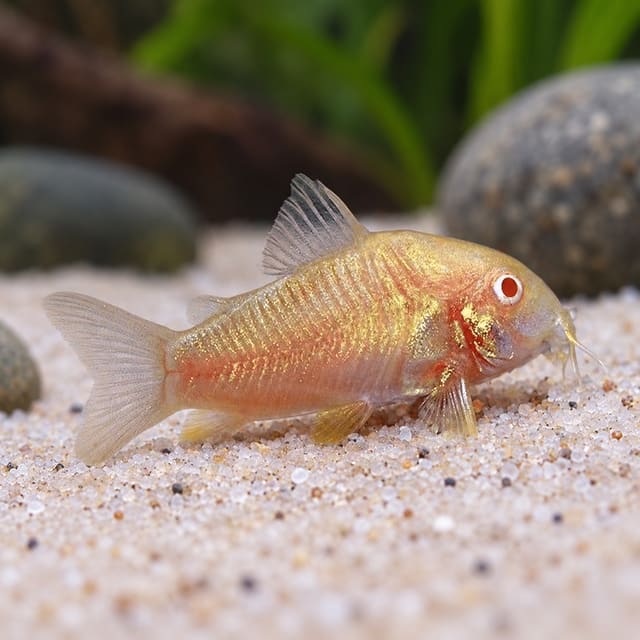
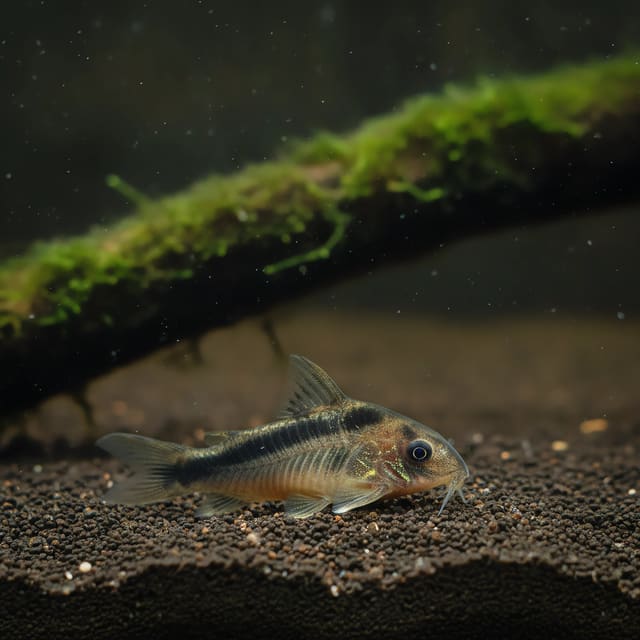
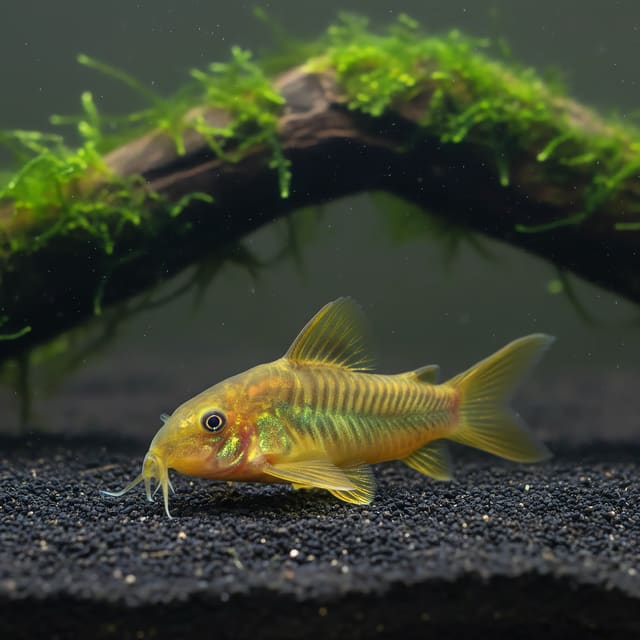
Bronze Corydoras, Bronze Cory Catfish (Corydoras aeneus)
22–26°C · pH 6–7.5 · 60L
£3.59£3.99
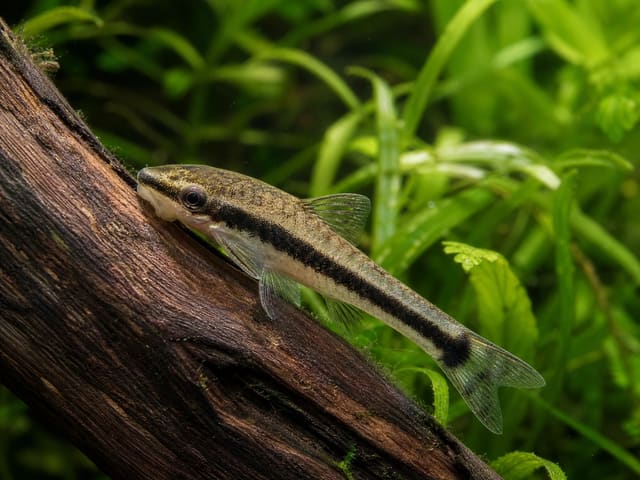
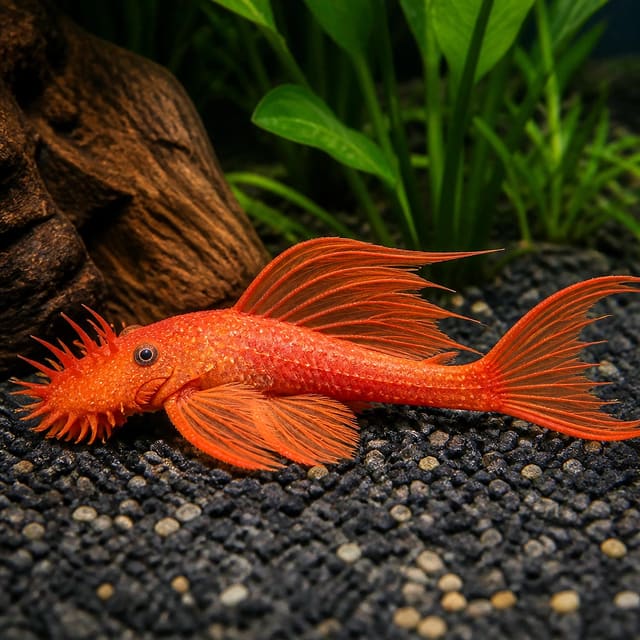
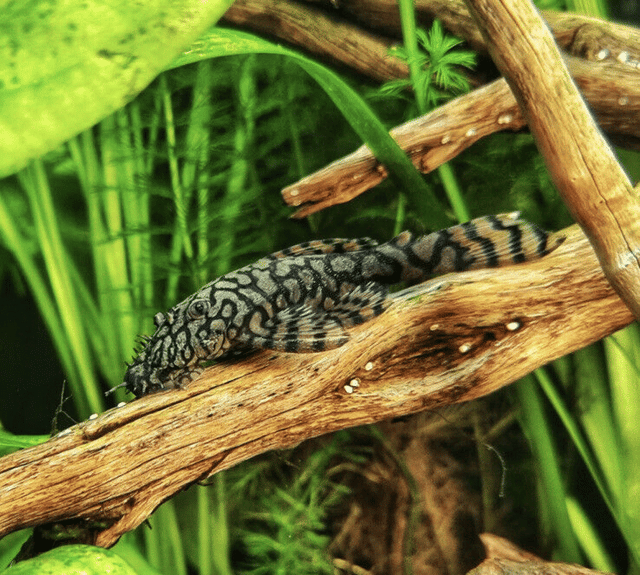
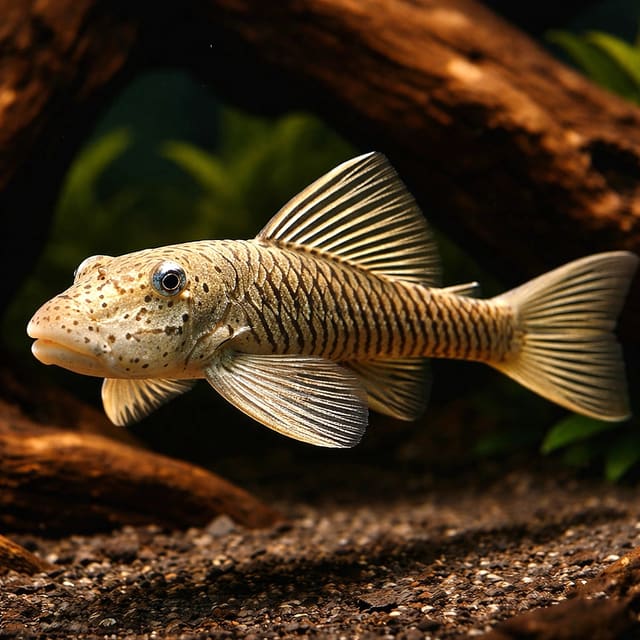
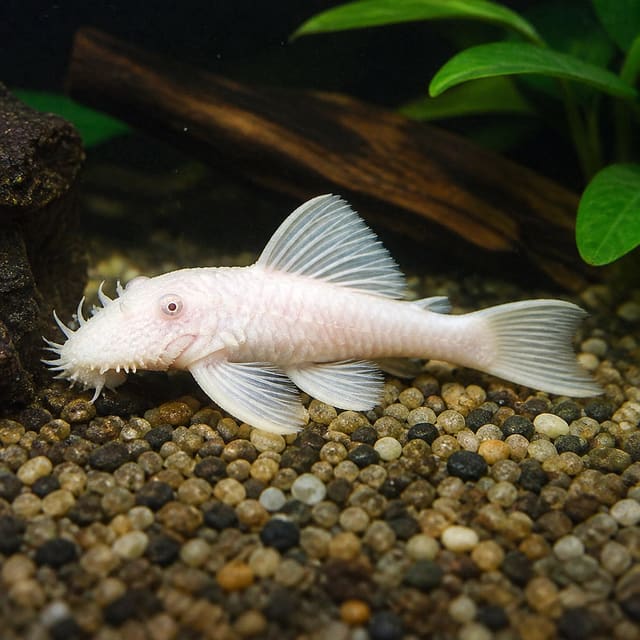
The Tiger Otocinclus (Otocinclus sp.) is a South American suckermouth armoured catfish from the family Loricariidae. OATA recommends a group of five or more in a calm aquarium at 22–27°C and pH 6.0–8.0; Otocinclus will need clean, highly oxygenated water and appreciate cover among wood or dense planting. Sold individually.
Otocinclus sp.
The Tiger Otocinclus (Otocinclus sp.) is a South American suckermouth armoured catfish from the family Loricariidae. OATA recommends a group of five or more in a calm aquarium at 22–27°C and pH 6.0–8.0; Otocinclus will need clean, highly oxygenated water and appreciate cover among wood or dense planting. Sold individually.
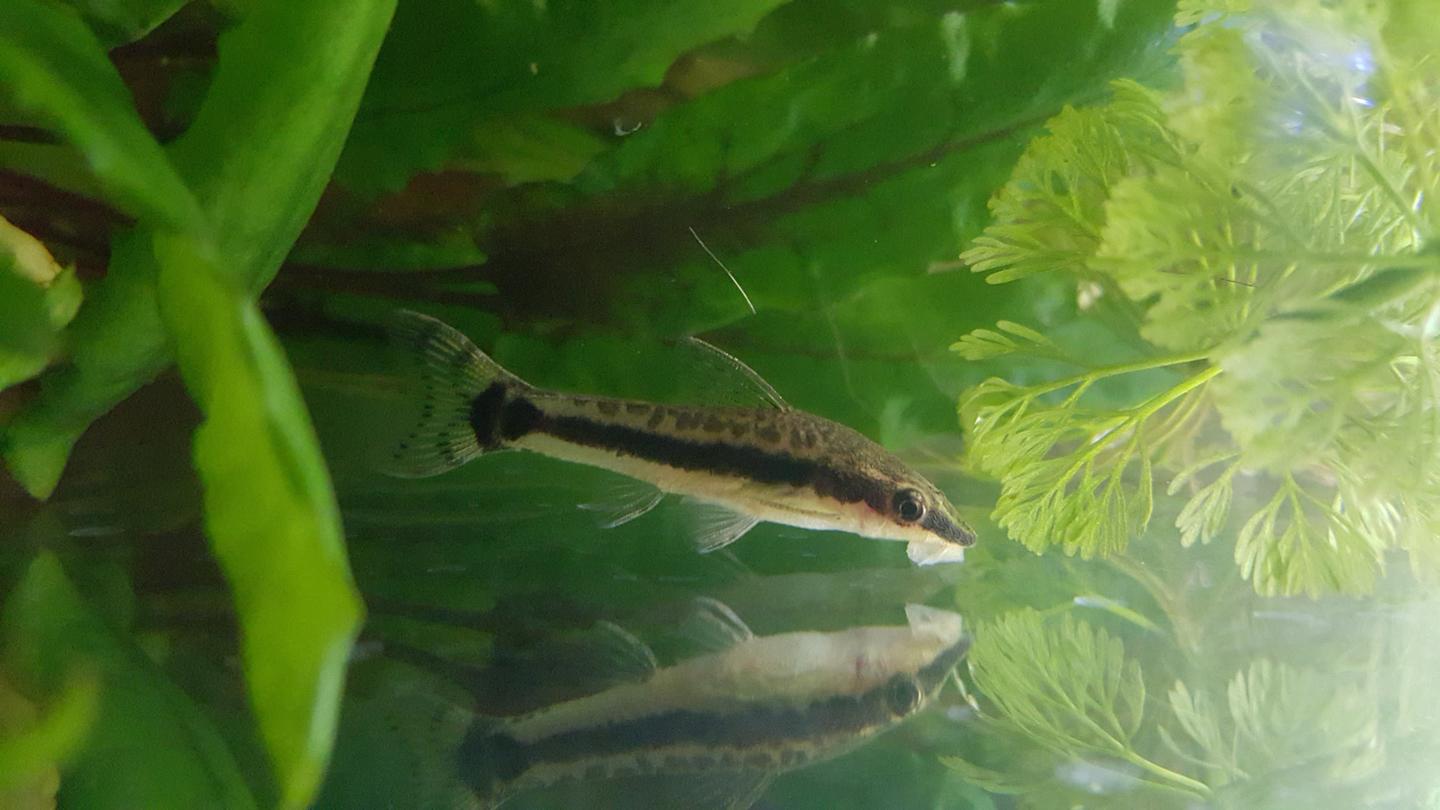
Otocinclus are small South American loricariid catfish, not disposable algae cleaners. Confirm the supplied species where possible; start with a mature, stable aquarium with ample grazing surfaces; plan a compatible social group; and provide suitable food even when algae is visible.
Maintain these water conditions for optimal health and vibrant colors
The Tiger Otocinclus (Otocinclus sp.) is a freshwater suckermouth armoured catfish in the family Loricariidae. The genus comes from South America, and this fish suits a keeper who can provide a calm, planted aquarium, a social group and consistently clean, highly oxygenated water. It should be chosen as a delicate community resident rather than as a quick solution to an algae problem.
WoRMS places Otocinclus in Loricariidae. The genus is characterised by armour plating along the body and an underslung suckermouth.
Wikipedia describes the natural history of Otocinclus as South American, with the genus distributed east of the Andes through lowland areas from northern Venezuela to northern Argentina but generally absent from the Amazon and Orinoco lowlands. It also records the common group names “otos” and “dwarf suckers”.
| Suits | Not suited to |
|---|---|
| A calm aquarium with plants, wood or other cover | A boisterous community where shy fish are intimidated |
| A planned group of five or more | Keeping a lone fish without planning its social group |
| Clean, highly oxygenated water with weekly testing | An aquarium without an established, maintained filter |
| A keeper prepared to supplement grazing with suitable food | Using an algae eater instead of regular aquarium maintenance |
| Tank mates that share its water needs and cannot eat it | Larger fish that may treat it as prey |
Browse our algae eaters collection to compare this social Otocinclus with animals that may have different adult space, feeding and compatibility requirements.
One purchase supplies one live Tiger Otocinclus. The exact species has not been identified, so the care advice here follows the genus Otocinclus and its care group. “Tiger” is the trade name this fish is sold under.
The scientific label is therefore Otocinclus sp. Plan the aquarium around the social, water-quality and compatibility requirements given here.
Sex is guaranteed only when the selected option explicitly states male or female. This Tiger Otocinclus listing has no sex-guaranteed option.
The fish supplied is an individual animal, but its social requirement remains part of the buying decision. Check how many suitable Otocinclus already live in the aquarium and plan purchases so the resulting group reaches at least five. For example, adding one fish to an established suitable group of four reaches OATA’s recommendation; adding one to a group of two produces three and still requires a plan for two or more additional fish.
Keep this Otocinclus at 22–27°C, pH 6.0–8.0 and general hardness of 4–12°dH. Carbonate hardness should be 3–10°dKH, ammonia must be zero mg per litre, nitrite must be zero mg per litre, and nitrate must not exceed 20 mg per litre above the normal tap-water level. OATA’s tropical algae-eater guidance gives these figures for the Otocinclus care group; they are broad group-level values, not a species-specific optimum.
Keep five or more together in a calm aquarium. Give the group clean, highly oxygenated water and cover among wood or heavily planted areas. A filter is essential, and the aquarium should be large enough to accommodate the complete group, its cover and any carefully screened tank mates without crowding. OATA advises choosing as large an aquarium as is practical because greater water volume creates more stable environmental conditions.
Do not count grazing fish as aquarium maintenance. Persistent algae can indicate a water-chemistry or maintenance problem, while every Otocinclus still needs appropriate supplementary food.
Use a well-set-up, maintained biological filter from the beginning. The RSPCA explains why aquarium filtration is vital: fish release toxic ammonia, beneficial filter bacteria convert it to nitrite, and further biological processing converts nitrite to the safer nitrate. The required result for this aquarium is zero mg per litre ammonia and zero mg per litre nitrite.
Prepare and mature the aquarium before livestock arrives. Our first tropical tank guide sets out the preparation sequence for a new aquarium. A newly filled tank is not made suitable simply by reaching the right temperature; the working biological filter is what processes waste.
Make these checks before assessing space for the group. A larger aquarium can improve environmental stability, but volume does not replace filtration or testing. Conversely, a working filter does not make an overcrowded aquarium suitable. The filter, group size, cover and total community all need to fit the same plan.
When a test moves outside the required values, treat that reading as a reason to stop further livestock additions and restore suitable conditions. Check that the filter remains operational and that maintenance is controlling waste. Do not use an algae-eating fish to compensate for a water-quality problem; algae can be a visible symptom of incorrect maintenance or water chemistry.
Clear water is not a substitute for test results. Confirm ammonia and nitrite with a test kit even when the aquarium looks clean, because these dissolved wastes are not assessed reliably by sight. Check the filter itself as part of the same decision: it must remain installed, operating and maintained while the fish are present.
Use the total community, not the Tiger Otocinclus alone, when judging the filtration plan. Every fish contributes waste, and every addition changes the work required from the biological filter. A result of zero mg per litre ammonia and nitrite supports the immediate water-quality decision; it does not remove the need for continued weekly testing as stocking and feeding continue.
Hold temperature at 22–27°C, pH at 6.0–8.0, general hardness at 4–12°dH and carbonate hardness at 3–10°dKH. Measure the aquarium itself rather than relying on an assumed tap-water value. Use our water chemistry guide to understand what each measurement means, then compare the readings with this Otocinclus plan.
Test water once a week. OATA treats water testing kits as essential so that the water can be checked every week against the required values. Record temperature, pH, ammonia, nitrite and nitrate together so that a change in one value is not considered in isolation. General and carbonate hardness complete the water profile needed for this group.
| Reading | Required decision |
|---|---|
| 22–27°C | Keep the aquarium within this temperature range |
| pH 6.0–8.0 | Keep pH within this range |
| 4–12°dH | Use soft-to-medium general hardness |
| 3–10°dKH | Use soft-to-medium carbonate hardness |
| Zero ammonia and nitrite | Keep both at zero mg per litre |
| Nitrate ceiling | Keep it from exceeding 20 mg per litre above normal tap water |
Use the water matcher to compare measured aquarium values with these ranges. Enter actual test results, not the figures printed by a water company for a broad supply area, because the fish experiences the water inside its aquarium.
Clean water must also be highly oxygenated. Treat oxygenation as a continuous requirement, particularly when considering the full stocking plan. A calm aquarium refers to the behaviour of its inhabitants; it does not mean stagnant or poorly oxygenated water.
Do not approve the aquarium from temperature alone. A reading of 25°C fits the stated range, but the plan still fails if ammonia or nitrite is detectable, pH lies outside 6.0–8.0, or the water is not highly oxygenated. In the same way, zero ammonia does not compensate for unsuitable hardness or an intimidating community.
Keep dated results so gradual movement is easier to recognise. Compare each new set with the previous set and with the required limits. If nitrate approaches its ceiling while feeding and stocking remain unchanged, use that trend as an early prompt to review maintenance rather than waiting for the ceiling to be exceeded.
Provide an aquarium with gravel or sand and plenty of cover. Live plants are ideal; when live plants are not used, add plastic plants and suitable ornaments, such as plant pots or model caves, for shelter. Otocinclus particularly appreciate cover among wood or heavily planted areas, which helps a shy fish retreat from activity in the open aquarium.
Plants also give these small catfish surfaces on which to graze. OATA notes that Otocinclus can delicately clean algae from plants, which is one reason they are popular in planted aquariums. This grazing role does not make the fish a substitute for testing, filtration, suitable stocking or regular maintenance.
Use the fish’s behaviour to assess whether the layout and community remain calm. Otocinclus are shy, and boisterous fish can intimidate them even when water readings overlap. If the group is repeatedly displaced from sheltered or feeding areas, reassess the tank-mate plan rather than removing the cover that gives the Otocinclus security.
A larger aquarium offers more stable environmental conditions, but it still needs an intentional layout. Empty volume without cover does not meet the need for wood or heavily planted areas, while dense décor cannot compensate for inadequate filtration or an unsuitable number of fish. Balance usable shelter, water movement, filtration and room for the complete social group.
Observe whether several members of the group can use cover at the same time. One small sheltered spot may exist without serving the complete group. Spread useful cover through the aquarium so a shy fish is not forced to cross a busy open area whenever it needs to retreat or reach a grazing surface.
Keep the arrangement compatible with filtration and highly oxygenated water. Plants, wood and ornaments provide security, but they should form part of a functioning aquarium rather than replace water movement, maintenance or testing. Reassess the layout when new residents alter access to sheltered or feeding areas.
Feed a suitable algae-based prepared food in a measured portion. OATA says algae-grazing fish will all need their diet supplemented with prepared feeds such as algae-based wafers or flakes, and that some may need extra time to graze on algal foods. Judge the portion by consumption rather than leaving a large amount to break down in the aquarium.
Add variety with fresh vegetables such as cucumber. Buy organic vegetables or wash them thoroughly before use because pesticide residues may harm fish or invertebrates. Prepared food and vegetables supplement the fish’s grazing; visible algae alone is not a complete feeding plan.
| What you observe | What to do |
|---|---|
| The group reaches the prepared food | Keep the portion accessible to the shy Otocinclus |
| Algal food needs grazing time | Allow appropriate access without adding an excessive portion |
| Food remains and breaks down | Reduce the next portion to prevent waste accumulation |
| Other fish dominate the feeding area | Reassess whether the aquarium is calm enough for shy Otocinclus |
| Algae becomes persistent | Check water chemistry, maintenance and stocking rather than adding fish as a cure |
Uneaten food releases waste as it breaks down, which works against the zero-ammonia and zero-nitrite requirement. Portion control therefore connects feeding directly to filtration and water quality. More food is not a remedy for an unsuitable community, and more algae-eating fish are not a remedy for overfeeding.
Watch the whole group at feeding time. The goal is access for each fish without forcing shy Otocinclus to compete with boisterous residents. When designing a community, consider not only whether tank mates share the water values but also whether the Otocinclus can reach its prepared food and vegetable supplement calmly.
First confirm that the Otocinclus can reach the food. A suitable product is ineffective if faster or more forceful residents take control of the feeding area. Distribute access around covered and planted areas where the shy group can graze without repeated intimidation.
Then check what remains. Food that accumulates and decomposes adds avoidable waste, while a clean plate or surface does not by itself show that every fish fed. Read food access, group behaviour and water tests together before adjusting the portion.
Make the weekly water test the fixed checkpoint for this aquarium. Measure temperature, pH, ammonia, nitrite and nitrate, and check hardness often enough to confirm that the aquarium remains within 4–12°dH and 3–10°dKH. The required routine values remain 22–27°C, pH 6.0–8.0, zero ammonia and zero nitrite.
Combine those readings with direct observation. A technically suitable water test does not cancel a compatibility problem, and calm behaviour does not cancel a harmful ammonia result. Review the social group, access to food, cover and tank-mate behaviour alongside the water measurements.
Otocinclus can be delicate at times, so respond to changes promptly. If a fish shows a health change, test the water straight away and correct any reading outside the required values. Note the readings, recent maintenance and what changed, and watch tank mates for intimidation at the same time.
Use the same set of measurements at each weekly review so a partial check does not hide a developing problem. Record the numerical results rather than relying on labels such as “fine” or “normal”. A written temperature, pH, ammonia, nitrite and nitrate result creates a useful comparison with the previous week.
Add short behavioural notes beside the readings. Record whether the group reached food, used its cover and remained free from intimidation by larger or boisterous residents. This joins the two sides of the care decision: measurable water quality and the fish’s access to a calm, suitable environment.
Have someone at the delivery address to receive the parcel, then follow the arrival sequence without disturbing the sealed bag before the condition of the fish has been recorded. Our delivery and Live Arrival Guarantee policy gives the packing, receipt, video and acclimatisation requirements.
Film every delivery from the sealed parcel onward. The continuous sequence shows the parcel still sealed, the opening of the box and the fish inside the unopened bag. Keep the order number with the recording. If anything has gone wrong, send the order number and video on the same day so the Live Arrival Guarantee claim can be assessed promptly.
The policy describes fish as hand-packed in pure oxygen inside an insulated poly box, with a heat pack when the weather calls for it. Transport is handled by a licensed live-animal courier, and tracking details are sent by email so someone can be ready to receive the parcel.
Prepare the aquarium water separately before the parcel arrives. Confirm that it is within 22–27°C and pH 6.0–8.0, that ammonia and nitrite are both zero mg per litre, and that the filter is operating. Complete these checks before delivery day.
Arrange for the recipient to be present and have the aquarium operating within the required range beforehand. On the day, the recipient can then concentrate on filming, inspecting, floating and releasing the fish. Do not wait until the bag is open to discover that the aquarium temperature or filter is unsuitable.
Keep the sealed-parcel video continuous through the opening and the view of the fish inside the sealed bag. Complete the same-day inspection before acclimatisation proceeds. Once the bag has floated for 20–30 minutes, release the fish without adding the transport water to the aquarium.
Choose calm fish that share the Otocinclus water conditions and are not large enough to eat them. OATA describes Otocinclus as shy and best suited to a calm aquarium where they are not intimidated by boisterous species or by larger fish that may treat them as prey.
A prospective tank mate must fit 22–27°C, pH 6.0–8.0, 4–12°dH and 3–10°dKH; it must suit clean, highly oxygenated water; it must be calm enough not to intimidate Otocinclus; and it must not be large enough to eat them. Passing one part of that screen does not override failure elsewhere.
Treat compatibility with invertebrates as a separate assessment based on the exact animal, its size and the shared aquarium conditions. Do not assume that the label “algae eater” creates compatibility between different animals that graze on algae.
Before choosing a tank mate, write down the aquarium volume and dimensions, current temperature, pH and hardness, the number of existing Otocinclus, and the names and approximate sizes of all current residents. Check every candidate against that complete list rather than approving a tank mate from its name alone.
Start with the water requirements because every resident must live in the same aquarium water. If a proposed fish cannot share the stated temperature, pH and hardness, stop the comparison there. A behavioural match cannot correct conflicting water needs.
Next consider intimidation and predation separately. A fish may share the water range yet remain unsuitable because it is boisterous, while a calm fish may still present a risk if it is large enough to eat Otocinclus. Finish by checking whether the combined stocking leaves room for the group, its cover and effective filtration.
Keep five or more Otocinclus together. This is a social recommendation for the care group, so calculate the number that will live in the aquarium after the new fish is introduced rather than considering the purchased animal in isolation.
| Existing suitable group | Result after adding one fish |
|---|---|
| Four Otocinclus | Five, meeting the recommendation |
| Three Otocinclus | Four, requiring a plan for at least one more |
| Two Otocinclus | Three, requiring a plan for at least two more |
| No Otocinclus | One, so the complete group still needs planning |
Numbers alone do not complete the decision. The aquarium must support the resulting group with highly oxygenated water, an essential filter, plants or wood for cover and suitable supplementary feeding. It must also have enough capacity for all other residents without compromising water stability.
Assess the complete group against existing tank mates. A calm resident that shares the temperature range may still fail the screen if it is large enough to eat Otocinclus. A small resident may still be unsuitable if it is boisterous and repeatedly intimidates shy fish. Compatibility is the overlap of water requirements, behaviour, predation risk and available space.
When any part of this plan fails, address the specific issue. Adjust the community when intimidation is the problem, restore the required water conditions when a test is outside range, and revise stocking when the aquarium cannot support the complete social group.
Count every Otocinclus that will remain in the aquarium after introduction. The recommendation concerns the resulting social group, not the number in one purchase. Reaching five addresses the numerical part of the plan, while water quality, cover, food access and compatible residents determine whether the aquarium can support that group.
Do not use the group target as permission to crowd the aquarium. If the complete community cannot retain zero ammonia and nitrite, clean highly oxygenated water and usable cover, revise the stocking plan before adding fish. Social planning and environmental capacity must succeed together.
Otocinclus are small catfish, so plan the aquarium around a calm group of five or more, with room for plants or wood, an essential filter and stable water.
Choose as large an aquarium as practical and size it for at least five fish, their cover and every screened tank mate. OATA’s group-level guidance explains that larger aquariums provide more stable temperature and water quality, while every aquarium still needs a filter.
Keep five or more. OATA’s group-level Otocinclus guidance describes them as highly social and recommends a group of at least five, so calculate the resulting group after the new fish is added.
It suits a prepared keeper who can follow OATA’s group-level guidance for clean, highly oxygenated water, zero mg per litre ammonia and nitrite, weekly testing and a calm group of five or more. OATA notes that Otocinclus can be delicate at times.
Feed algae-based wafers or flakes in a measured portion, allow extra grazing time where needed, and supplement grazing with fresh vegetables such as cucumber. Wash vegetables thoroughly or use organic produce.
Keep it at 22–27°C and pH 6.0–8.0. OATA’s group-level Otocinclus guidance also gives 4–12°dH general hardness, 3–10°dKH carbonate hardness, and zero mg per litre ammonia and nitrite.
OATA describes Otocinclus as shy fish, best suited to a calm aquarium where they are not intimidated by boisterous species or larger fish that may eat them.
Choose calm fish that are not large enough to eat it and that share OATA’s group-level Otocinclus water guidance of 22–27°C, pH 6.0–8.0 and 4–12°dH. Avoid boisterous species and larger fish that may treat Otocinclus as prey.
Tropical Fish Co’s policy says it is hand-packed in pure oxygen inside an insulated poly box, with a heat pack when the weather calls for it, and carried by a licensed live-animal courier. Someone must be at the address to receive the parcel, film it in one continuous take from the sealed parcel to the fish in the sealed bag, open and inspect it the same day, float the bag for 20–30 minutes and release the fish without pouring the bag water into the aquarium.
No reviews for this item yet. Bought one? Honest reviews only, good or bad.
What customers say about ordering from us
Easy website plenty of info on fish your buying great to pick a time slot
TRACEY DURRANT · 7 Oct 2026
Got some lovely fish thank you
Kevin Mackie · 7 Oct 2026
Reviews of our shop, collected by Judge.me, an independent third-party review collector. Newest first.