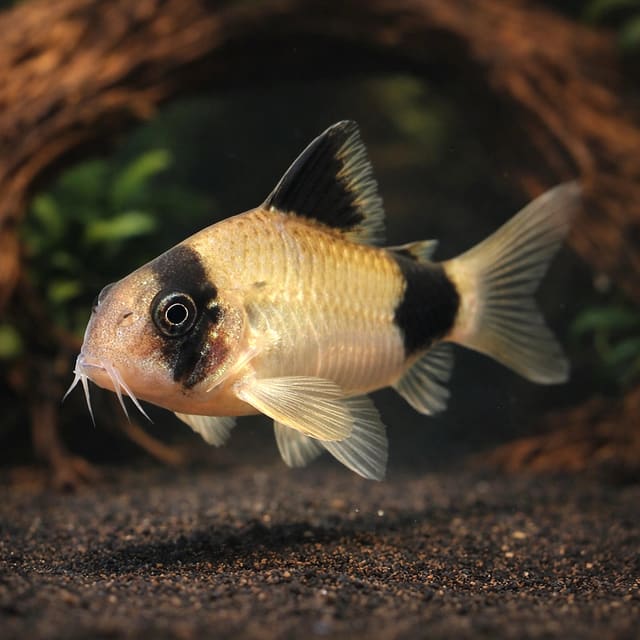
Panda Cory Catfish (Corydoras panda)
22–25°C · pH 6–7.4
£7.29
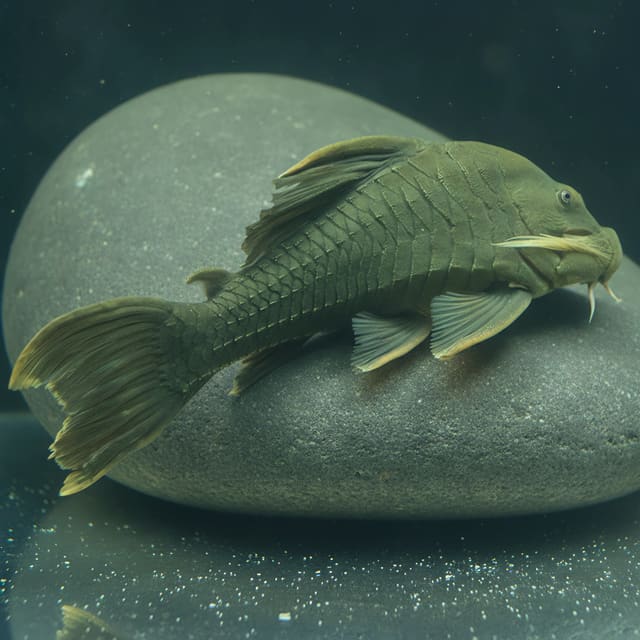
Royal panaque (Panaque nigrolineatus) is a South American wood-eating armoured catfish recorded at 43 cm SL. Supplied as one live fish across 3–20 cm dispatch bands; an advanced long-term project requiring mature filtration, submerged wood and an aquarium at least 120 cm long.
Adult size is the maximum length this species reaches at full maturity (scientific sources). The livestock you receive will be younger and smaller — pick a size above for the actual shipping size. Product-photo provenance and any image-specific limitations are stated on the listing.
Panaque nigrolineatus
Royal panaque (Panaque nigrolineatus) is a South American wood-eating armoured catfish recorded at 43 cm SL. Supplied as one live fish across 3–20 cm dispatch bands; an advanced long-term project requiring mature filtration, submerged wood and an aquarium at least 120 cm long.
Adult size is the maximum length this species reaches at full maturity (scientific sources). The livestock you receive will be younger and smaller — pick a size above for the actual shipping size. Product-photo provenance and any image-specific limitations are stated on the listing.
Maintain these water conditions for optimal health and vibrant colors
Royal panaque (Panaque nigrolineatus), also known as royal plec or royal pleco, is a South American armoured catfish from the Orinoco and Amazon basins. FishBase records a maximum of 43 cm standard length, making this a substantial long-term fish even when the animal selected today is small. Retain the published 43 cm SL measurement rather than converting it into an unstated total length.
One purchase supplies one live fish in the size selected. The listing carries seven genuine dispatch bands from 3–4 cm through 15–20 cm. The size you select is the size supplied, not the adult size. Availability belongs to the live purchase controls and is not frozen into this care guide. Sex is guaranteed only when the selected option explicitly states male or female. This Royal panaque listing has no sex-guaranteed option.
The defining husbandry point is xylophagy: this species eats wood. FishBase reports plants and roots in its feeding ecology, and the species summary describes it as a herbivorous freshwater catfish able to use wood as food. Submerged wood is therefore part of the animal's environment and feeding strategy, not merely decoration. Wood does not remove the need for an appropriate sinking diet, water testing or a mature filter.
| Suits | Think carefully if |
|---|---|
| An advanced keeper planning for a catfish recorded at 43 cm SL | You are choosing the aquarium around the dispatch size |
| A mature aquarium at least 120 cm long, with usable bottom space and secure wood | You need a compact “algae eater” for routine clean-up |
| A household prepared for long-term filtration, maintenance and deliberate feeding | The permanent tank, adult stock and access for a large fish are undecided |
Panaque nigrolineatus belongs to Loricariidae, the armoured catfish family. FishBase places the species in freshwater, describes it as benthopelagic and records its range across the Orinoco and southern middle and lower Amazon tributaries. The broader species summary names Brazil, Colombia and Venezuela. These facts explain why the fish should be treated as a dedicated South American catfish rather than as a generic community accessory.
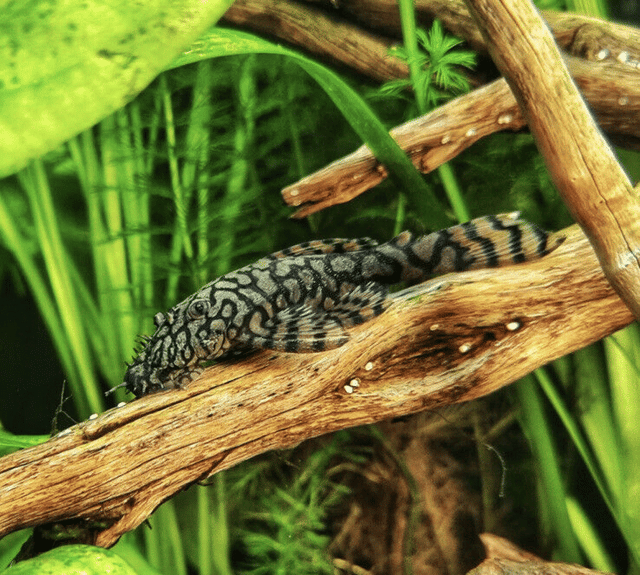
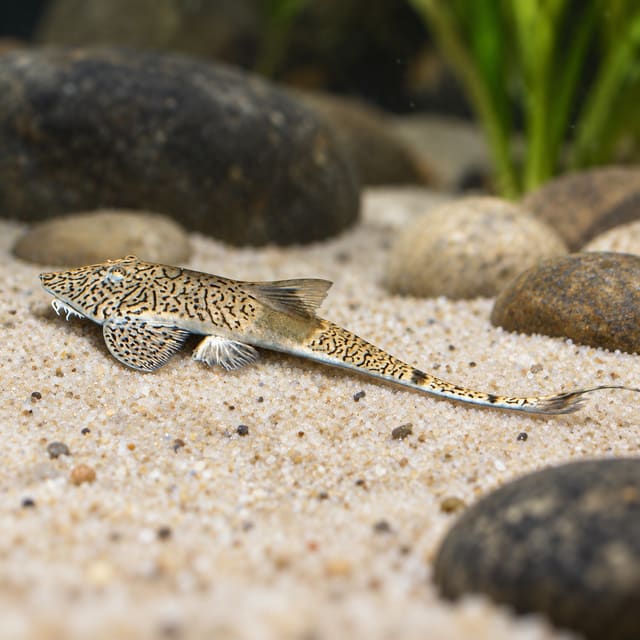
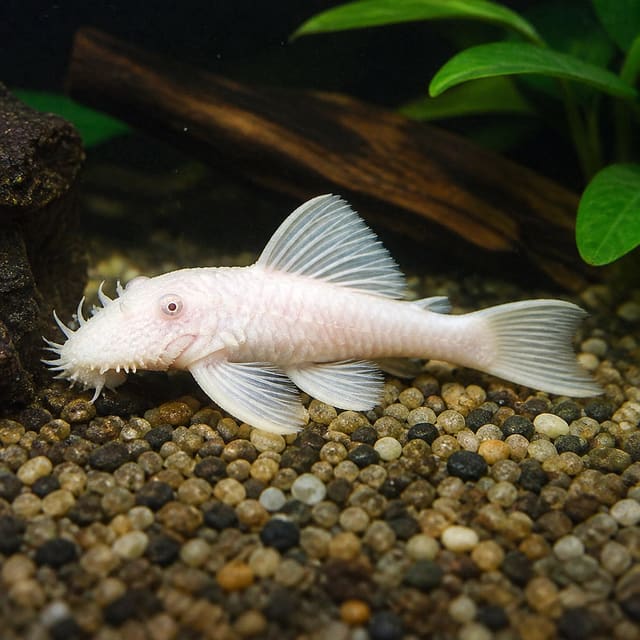
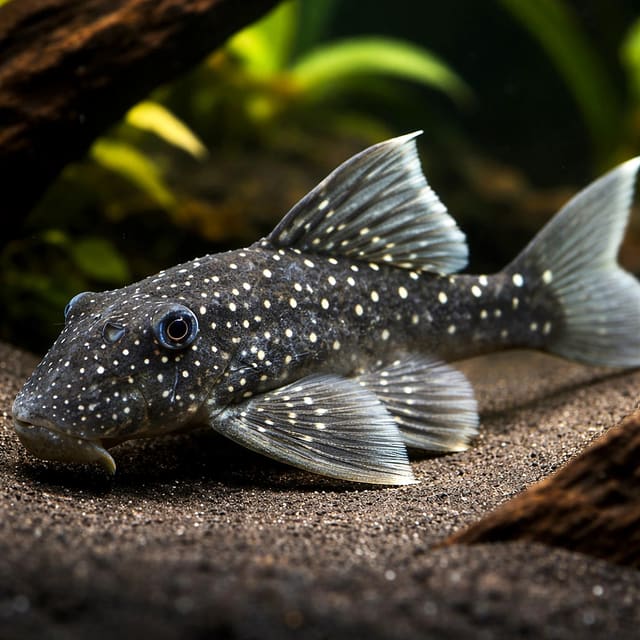
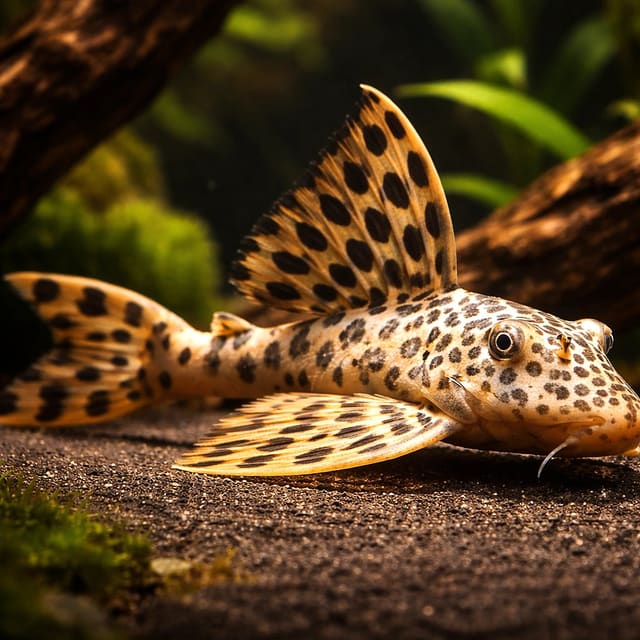
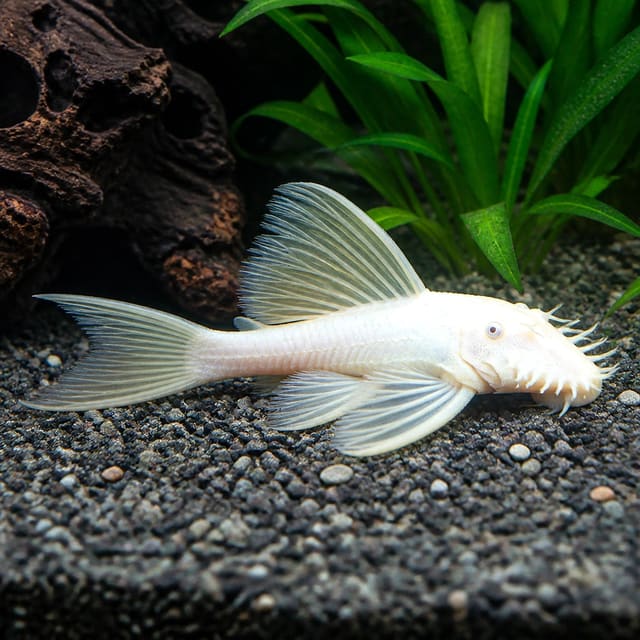
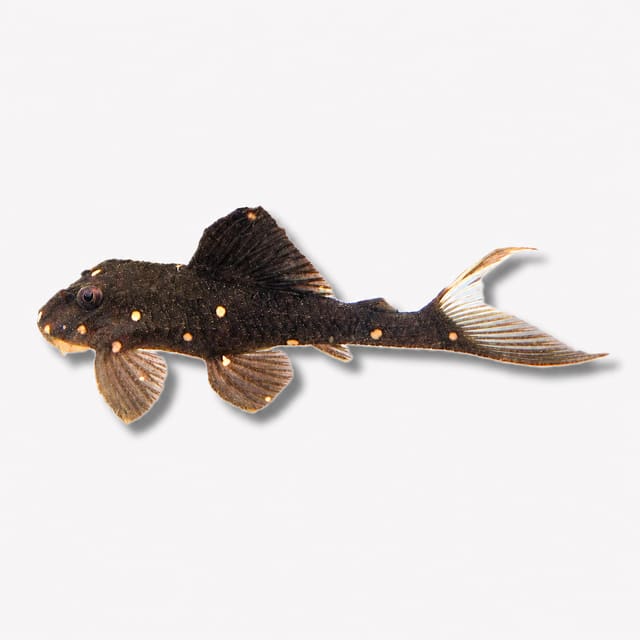
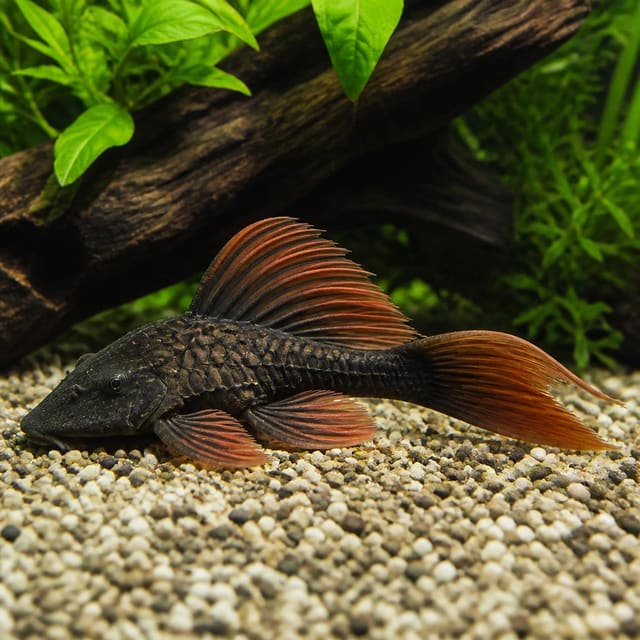
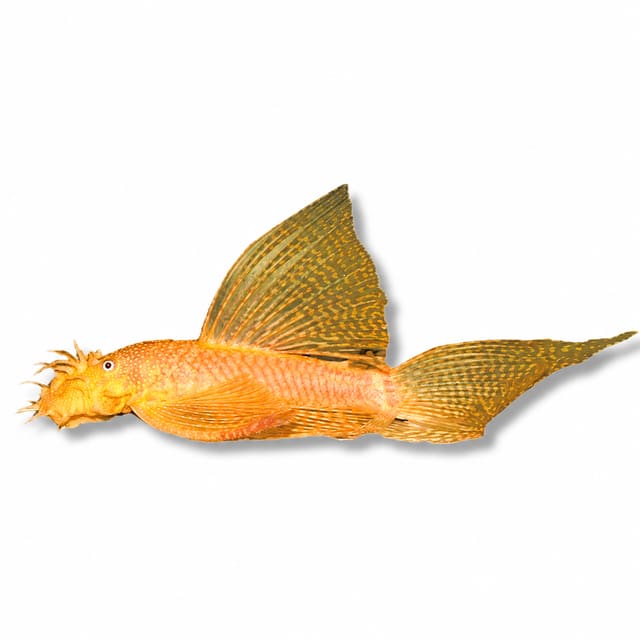
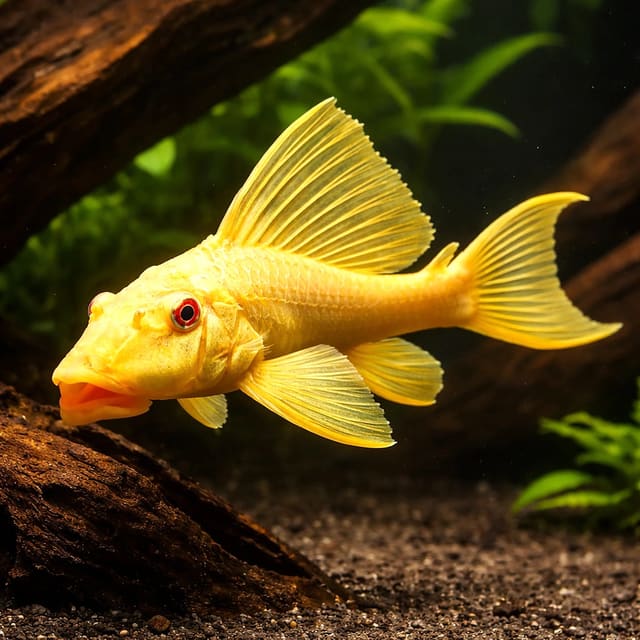
The fish's familiar striped appearance makes it popular, but the decision should rest on adult care rather than looks. Gallery scenes cannot promise the exact colour, pattern, size or maturity of a live animal. Gallery images have been digitally enhanced to improve image quality. Natural colour, pattern, size and maturity can vary between live animals.
A larger dispatch fish is not closer to being “finished”; every size band leads to the same adult planning problem. Confirm the permanent aquarium, wood layout, filtration and adult stock before choosing among the bands. Measure the usable inside length and width after hardscape, not only the external glass dimensions. Make sure the intended route to a feeding place will still work for a broad-bodied catfish.
Also look beyond day-to-day care. Decide how routine waste will be siphoned from under wood, whether the filter can be serviced without dismantling shelter and how a large fish would be separated safely if another animal blocked its food. These questions are easier and kinder to solve while the aquarium is empty.
The catfish and plecos collection is useful for comparing other choices. It is a shopping route, not a compatibility chart. A smaller catfish may suit an aquarium that cannot responsibly house a full-grown Royal panaque, while another large bottom dweller may compete for the same space and food.
FishBase records Panaque nigrolineatus at up to 43 cm SL and gives 120 cm as the minimum aquarium size. The unit matters: 120 cm is a length, not a volume. Do not turn it into a litre claim or treat every 120 cm tank as equivalent. Width, height, displacement, bottom footprint, wood arrangement, filtration and the rest of the adult stock all affect whether the finished aquarium can serve a heavily built catfish.
Start with the adult body and movement path. The fish needs room to approach food, turn without scraping between hard structures and reach shelter without being boxed in by other animals. Wood consumes floor and water space, so the bare external dimensions overstate the usable area. Sketch the layout at adult scale and check service access before buying equipment.
Aquarium furniture should be secure. Choose aquarium-safe wood that cannot shift onto the fish or glass and arrange it so waste can be removed. Check gaps at the fish's eventual body depth, not just the juvenile's current width. A route that is generous for a 5 cm animal may become a trap as the catfish grows.
The first tropical tank guide covers setup and maturation. A Royal panaque should go into an established system, not a newly filled display. Test ammonia and nitrite to confirm biological performance; clear water does not prove that toxic dissolved waste is under control.
FishBase records an environmental temperature of 22–26 °C, pH 6.5–7.5 and hardness of 2–15 °dH for this species. Use these as the species-profile planning range and aim for stability inside it. They should not be widened to the whole OATA catfish interval merely because many catfish tolerate different water.
| Measure | Royal panaque planning value |
|---|---|
| Temperature | 22–26 °C |
| pH | 6.5–7.5 |
| General hardness | 2–15 °dH |
| Ammonia | 0 mg/l |
| Nitrite | 0 mg/l |
| Nitrate | Keep within the maintenance limit below |
OATA's wider catfish sheet sets ammonia and nitrite at zero and advises that nitrate should not exceed 20 mg/l above the normal tap-water level. Measure the tap water as a baseline. The water chemistry guide explains the tests, and the water matcher helps compare measured aquarium values with the stated species range.
Use a log rather than reacting to one surprising test. Record temperature, pH, hardness, ammonia, nitrite and nitrate together with water changes, feeding changes and new livestock. A trend can reveal a developing issue before a dramatic reading appears. Sudden correction can be stressful, so investigate the cause and adjust in a controlled way.
The RSPCA explains that a biological filter houses bacteria that convert toxic ammonia to toxic nitrite and then to less harmful nitrate. Every fish aquarium needs an established and maintained filter. With a large catfish that consumes plant material and wood, the keeper should expect visible waste and choose filtration and access accordingly.
Filtration has two connected jobs. Mechanical media captures particles so they can be removed before they break down further. Biological media supports the bacteria that process dissolved nitrogenous waste. Strong mechanical capture without mature biology leaves ammonia risk; mature biology without sensible cleaning can leave flow restricted and debris accumulating.
Check the intake, outlet and circulation pattern. Waste collecting repeatedly behind wood may indicate a dead area that needs better flow or easier siphon access. Make sure the fish can also rest away from the strongest current. Equipment should serve the whole aquarium rather than blasting one route and leaving the rest stagnant.
As the fish grows, review filter capacity. A system that held steady for a small juvenile may be inadequate for a much larger animal eating more food. Use test trends, flow and the amount of collected waste as evidence for maintenance decisions. Waiting for cloudy water or distress is too late.
Royal panaque is notable for eating wood. The species summary calls it xylophagous, while FishBase states that it feeds on plants and roots. Provide suitable submerged wood continuously so the fish can rasp it. Secure several usable surfaces rather than relying on a single inaccessible ornament.
Wood alone should not be treated as a complete aquarium ration. OATA warns that catfish are not simply scavengers and should receive appropriate sinking food. For this herbivorous fish, choose a sinking plant-based staple suited to the animal and make sure it reaches the bottom. Keep the plan centred on the established feeding mode: suitable submerged wood plus an appropriate sinking herbivorous food, adjusted through observation of the fish and water quality.
OATA's group guidance is to feed only what catfish can consume within a few minutes, once daily, while allowing grazing species up to 30 minutes where required. Apply that observation-based rule to the correct food. Watch the Royal panaque feed rather than assuming a missing wafer was eaten by it; another fish may have taken it or the food may have disappeared under wood.
Remove persistent leftovers and adjust portions from observed consumption. Uneaten food adds to the nitrogen load and can collect in spaces under wood. A short feeding log helps during settlement: food offered, location, response, time taken and leftovers. It also reveals whether companions are blocking access.
OATA notes that many catfish appreciate shelter in wood, pots or caves and that some species eat or dig up live plants. In this aquarium, wood has a direct species-level role as food and habitat. Place it so the fish has more than one approach and can remain partly sheltered without becoming wedged.
Choose plants and planting methods with realistic expectations around a large wood-grazing fish. Keep roots and hardscape secure, leave clear maintenance routes and avoid making delicate planting the only available cover. The animal's needs and access to food come before preserving an intricate aquascape.
Inspect wood and structures during maintenance. Look for movement, trapped debris and narrowing gaps. Replace or reposition items deliberately if the mature fish's route changes. Do not rearrange the entire tank casually, because a large established animal benefits from a predictable environment; change what is needed and observe the result.
OATA strongly recommends a partial water change of 25% at least once every week for freshwater catfish. Carry out the 25% change at least weekly rather than automatically increasing the percentage. Treat replacement water with conditioner to remove chlorine or chloramine and match it sensibly for temperature and chemistry.
Siphon accessible waste, particularly where wood creates collection points. Test ammonia and nitrite at least weekly and track nitrate against the tap-water baseline. Check the heater, filter and water movement while hands are already on the system. A consistent routine gives much more useful comparisons than occasional major cleans.
If filter media needs cleaning, rinse it lightly in water removed from the aquarium; do not run it under the tap, because chlorine or chloramine may kill beneficial bacteria. Restore the filter, confirm normal flow and check that the fish has not been trapped or stressed by moved equipment.
Prepare routine supplies in advance: conditioner, reliable test reagents, a siphon and containers reserved for aquarium use. Know what 25% represents in the working aquarium after displacement. Calm, measured maintenance is safer than estimating quantities while trying to solve a problem.
The filter bacteria need oxygenated water flow and a stable place to live. A power interruption, blocked intake or over-cleaned filter can reduce their ability to process waste even when the aquarium looked stable the day before. Check that water is moving normally each day and test promptly after any event that could have affected the filter.
Ammonia or nitrite detection calls for action because OATA sets both at zero. Review recent feeding, new livestock and filter work, then protect the fish while the biological system recovers. Avoid masking the cause with repeated feeding or further stocking. Nitrate tells a different story: compare it with the tap-water baseline and the usual rise between partial changes.
A large catfish can change the pattern gradually. Growing appetite means more input, while rasped wood and solid waste change the amount of material the filter and siphon must handle. Update the service schedule from measured performance rather than keeping the juvenile routine forever.
Choose a feeding site that can be observed without exposing the fish completely. Place the sinking food where it can reach the bottom without being swept behind inaccessible wood. If mid-water companions intercept it, alter placement rather than simply adding more food. More food can increase waste while still failing to feed the panaque.
Look for rasping marks on suitable wood, normal body condition and a repeatable response to the staple. These observations work together: an empty feeding place alone does not show who ate. If the fish stops feeding, test water and review competition before changing the menu several times in quick succession.
Allow the group-level observation window OATA gives grazing catfish, up to 30 minutes where needed, then remove persistent leftovers. This is different from leaving excess food in overnight without checking it. The aim is measured access for a grazer, not a permanent supply of decaying food.
Submerged wood changes with time. Surfaces are rasped, pieces can shift and debris can settle beneath them. Inspect stability during each partial change and use the siphon around accessible edges. If a piece no longer offers a usable surface or creates an unsafe gap, revise the layout while retaining enough suitable wood for the fish.
Several securely placed pieces can distribute access better than one dominant structure, particularly if another bottom dweller is present. Leave open routes between them. The keeper should be able to see enough of the fish for health checks and reach enough of the substrate for waste removal.
Do not confuse tinted water or natural surface growth with failed filtration automatically. Test the water and assess flow. Decisions based on measurements and fish behaviour are more reliable than repeatedly stripping down a mature aquarium because it no longer looks newly installed.
OATA recommends watching swimming, colour, temperament, breathing, external appearance, body condition and feeding. Concern signs include unusual surface-hanging or bottom-sitting, erratic movement, unexpected colour change, increased hiding or aggression, faster or slower gill movement, white spots, fluffy growths, fin or scale damage, changing condition and reduced appetite.
Begin with water and equipment checks when behaviour changes. Test ammonia, nitrite, temperature and pH; confirm filter flow and review recent feeding or stocking changes. Poor water can cause distress that resembles illness, and adding treatment without correcting the environment can add further pressure. This guide does not prescribe medication.
Daily observation need not be long. Confirm that the fish emerges or rests in its normal places, can reach food, breathes normally and has not been blocked behind shifted wood. Look at the whole aquarium from several angles because a large bottom fish can be hidden by the very structures it needs.
Keep the first week steady. Confirm filter flow, temperature and the FishBase planning range, and test ammonia and nitrite after the new bioload is added. Observe where the panaque settles and whether it can reach wood and sinking food. A shy start can be managed with calm observation; repeated major changes make it harder to identify what is helping.
Delay unrelated livestock additions. OATA warns that stocking too quickly can produce new tank syndrome because the bacterial population has not increased enough for the added waste and feeding. Give the filter and the keeper time to show that water and feeding access remain stable before changing the stock again.
Write down the first normal pattern: usual resting area, feeding response, breathing and colour. Later changes are easier to recognise when the keeper has a baseline from the settled animal rather than relying on memory.
Read the current delivery and Live Arrival Guarantee policy before delivery. Be present at the confirmed address, have the mature aquarium ready and make sure a phone can record continuously before the parcel is touched.
Record first, inspect in the sealed bag, then float. That order preserves the evidence required for a Live Arrival Guarantee claim while allowing supported temperature equalisation. Avoid adding extra water-mixing steps that are not part of the stated store process.
The aquarium should evolve towards the adult plan, not remain frozen around the juvenile stage. Recheck turning space, shelter openings, wood access, feeding position, filter load and maintenance routes. Compare the fish's present size and waste production with the equipment's actual performance.
Plan upgrades early. Moving a large catfish and mature biological system is more difficult than preparing adequate space before it is urgently needed. The 120 cm FishBase minimum is a starting floor; adult stocking and usable dimensions may justify a larger, wider aquarium. Keep that long-term requirement visible when choosing every other animal for the tank.
Catfish vary from small social species to large animals that prefer more individual space, so OATA does not give a universal compatibility formula. For Royal panaque, begin with the recorded 43 cm SL adult size, the 120 cm minimum aquarium length and the amount of floor area occupied by wood. Only then assess what room remains for other adults.
A companion must fit the 22–26 °C, pH 6.5–7.5 and 2–15 °dH planning range, but shared water is not enough. Compare feeding level, activity, shelter use and adult body size. A fish can be chemically compatible yet prevent the panaque reaching sinking food or occupy the same narrow retreats.
Pay particular attention to other large bottom dwellers. Multiple animals using the same wood, caves and feeding sites need much more usable footprint than their lengths suggest. Provide separated resources and observe actual access. Do not interpret the absence of visible fighting as proof that every fish is eating.
Feed in a way that lets the Royal panaque reach its own herbivorous sinking food. Mid-water fish can still intercept food before it settles, while another catfish may control the preferred feeding place. Adjust placement and timing from observation without overfeeding the aquarium.
One purchase provides one fish. OATA's group sheet says some catfish shoal while others need space and prefer to live alone, so a generic group number cannot be transferred to this species. Treat each additional panaque as a full adult commitment and assess the multi-fish plan before buying.
Sex is not guaranteed on this listing and should not be inferred from size, colour or a gallery image. A plan that depends on a particular male-to-female ratio therefore needs a specifically sexed source rather than assumptions about the animal supplied here.
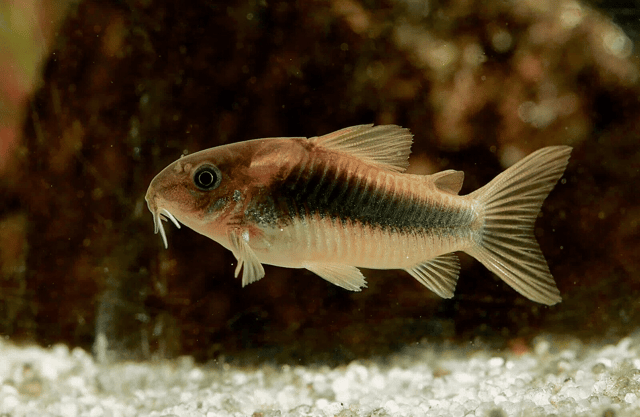
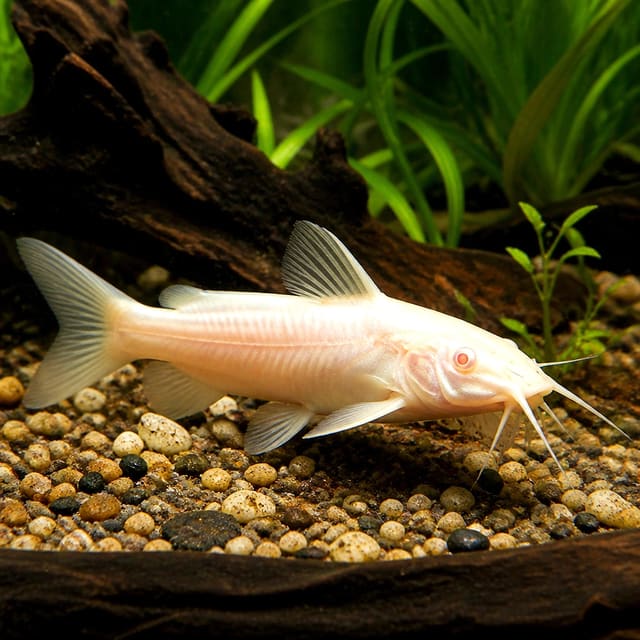
Related products shown on the page are alternatives for comparison, not approved tank mates. Panda and bronze corydoras are smaller catfish choices for a different stocking decision; their presence in the related field does not establish compatibility with Royal panaque.
FishBase records Royal panaque at a maximum of 43 cm standard length for an unsexed fish. Standard length stops at the base of the tail, so it should be kept as the published measurement rather than converted into a guessed total length. The 3–20 cm bands on this listing are dispatch sizes, not adult-size limits.
FishBase states a minimum aquarium length of 120 cm for Panaque nigrolineatus. Treat that as a minimum length, not a litre conversion. The final aquarium must also provide floor space, secure wood, shelter, feeding access and filtration suitable for a heavily built catfish recorded at 43 cm standard length.
One purchase supplies one fish. Treat every additional Royal panaque as a separate adult-space, wood, shelter and feeding commitment rather than assuming a shoal number. OATA notes that catfish social needs range from groups to solitary living, so any multi-fish plan should be assessed around the actual species and finished aquarium.
It is best treated as an advanced long-term project because the fish can reach 43 cm standard length, FishBase sets a 120 cm minimum aquarium length, and the keeper must maintain mature filtration while providing submerged wood and appropriate sinking food.
Royal panaque is a herbivorous, wood-eating armoured catfish. FishBase says it feeds on plants and roots, while the species summary describes its xylophagy. Keep suitable submerged wood available and provide an appropriate sinking herbivorous food rather than expecting the fish to live on scraps or aquarium algae alone.
FishBase records 22–26 °C, pH 6.5–7.5 and 2–15 °dH for Panaque nigrolineatus. Use those species-profile environmental values as the planning range, keep conditions stable and continue regular ammonia, nitrite and nitrate testing in the aquarium.
Plan compatibility around its eventual size, bottom-feeding access and use of wood rather than relying on a blanket peaceful or fin-nipping label. OATA emphasises that catfish vary widely in compatibility. Watch whether every fish can feed and shelter without persistent displacement.
There is no universal tank-mate list for this large catfish. Consider only animals whose adult size, 22–26 °C water range, feeding behaviour and use of the aquarium leave the Royal panaque enough bottom space, wood, shelter and access to sinking food. Assess other large bottom dwellers especially cautiously.
Tropical Fish Co hand-packs live fish in oxygen with an insulated box and a heat pack when weather calls for it, then uses a licensed live-animal courier. Be present, film the sealed parcel being opened in one continuous unboxing video, inspect the fish in the sealed bag, float the bag for 20–30 minutes, transfer carefully without adding transport water, and contact the store the same day with the order number and video if a Live Arrival Guarantee claim is needed.
The delivery policy is linked beside the arrival sequence it governs. FishBase environmental values are kept as a named species-profile planning range, while OATA and RSPCA material is used for clearly broader aquarium practice.
No reviews for this item yet. Bought one? Honest reviews only, good or bad.
What customers say about ordering from us
Easy website plenty of info on fish your buying great to pick a time slot
TRACEY DURRANT · 7 Oct 2026
Got some lovely fish thank you
Kevin Mackie · 7 Oct 2026
Reviews of our shop, collected by Judge.me, an independent third-party review collector. Newest first.