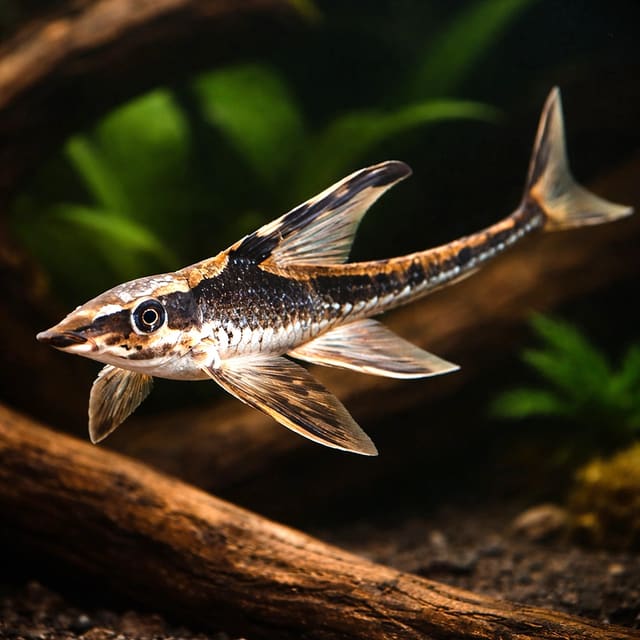
L018 Baryancistrus sp. Golden Nugget
22–27°C · pH 6–8
£80.00

A striking, peaceful gold-spotted pleco that needs warm, highly oxygenated water and expert-level care. Difficult care, peaceful. 26-30C, pH 6.0-7.5.
Adult size is the maximum length this species reaches at full maturity (scientific sources). The livestock you receive will be younger and smaller — pick a size above for the actual shipping size. Product-photo provenance and any image-specific limitations are stated on the listing.
Baryancistrus sp.
Confirm your email, then we’ll send an availability message for this exact item if it returns within 180 days.
This request is only for this product—no newsletter or other promotions. A mail-provider retry may very rarely duplicate the same availability message. Unconfirmed addresses are removed after 48 hours. See our privacy policy.
A striking, peaceful gold-spotted pleco that needs warm, highly oxygenated water and expert-level care. Difficult care, peaceful. 26-30C, pH 6.0-7.5.
Adult size is the maximum length this species reaches at full maturity (scientific sources). The livestock you receive will be younger and smaller — pick a size above for the actual shipping size. Product-photo provenance and any image-specific limitations are stated on the listing.
Maintain these water conditions for optimal health and vibrant colors
Catalogued under the L-number L081, this Baryancistrus sp. is a sought-after South American suckermouth catfish for the dedicated keeper. It belongs to the same demanding group as the better-known nugget plecos and shares their need for warm, oxygen-rich, scrupulously clean water, growing to a substantial size of up to around 15 cm over a lifespan that can reach a decade.
Make no mistake: this is a difficult-care fish, not a beginner's algae-eater. It comes from swift, well-oxygenated rivers, so it expects strong current and a mature, heavily filtered aquarium of at least 300 litres. Hold the temperature towards the warmer end at 26-30°C, keep the pH between 6.0 and 7.5, and aim for soft to moderate hardness of 1-12 dGH. A hardscape of smooth rockwork and driftwood gives it the surfaces it needs to graze and the cover it relies on to feel settled.
Feeding leans herbivorous and detritivorous, grazing algae and biofilm along the bottom, with modest meaty supplements rounding out its diet. Given the right environment it is a long-lived, peaceful and rewarding centrepiece that gets along quietly with its tank mates. Its preference for the warmer, faster water of its native rivers means strong oxygenation and very clean conditions are non-negotiable, so plan for generous filtration and turnover, and introduce it only once the system is fully mature and stable. As a slow-growing, long-lived catfish it suits the patient keeper, settling in over months rather than weeks to become a quiet, dependable presence working the substrate of a spacious tank.
It mixes peaceably with calm midwater community fish, small to medium tetras, rasboras, non-aggressive dwarf cichlids and other peaceful loricariids where the tank is large enough. Keep it clear of aggressive cichlids, large predators, fin-nippers, highly territorial bottom-dwellers and overly boisterous species that would outcompete it at feeding time. We send every L081 Baryancistrus with a licensed live-animal courier under our live arrival guarantee.
No reviews for this item yet. Bought one? Honest reviews only, good or bad.
What customers say about ordering from us
I have a small group of long finned mountain minnows. So was delighted to be able to order ten of this variety to increase the genetics in my tank . The ones I recieved are healthy but it’s to early to give a verdict on wether they are of a long finned type since they are small currently.
Gordon Walker · 23 Sept 2026
100% success travel and "installation". Pleased with quality of purchase. The Siamese fighter a bit "shy" so have not yet seen him at his best yet but looking good. Happy customer. GG
George E Garratt · 21 Sept 2026
Reviews of our shop, collected by Judge.me, an independent third-party review collector. Newest first.