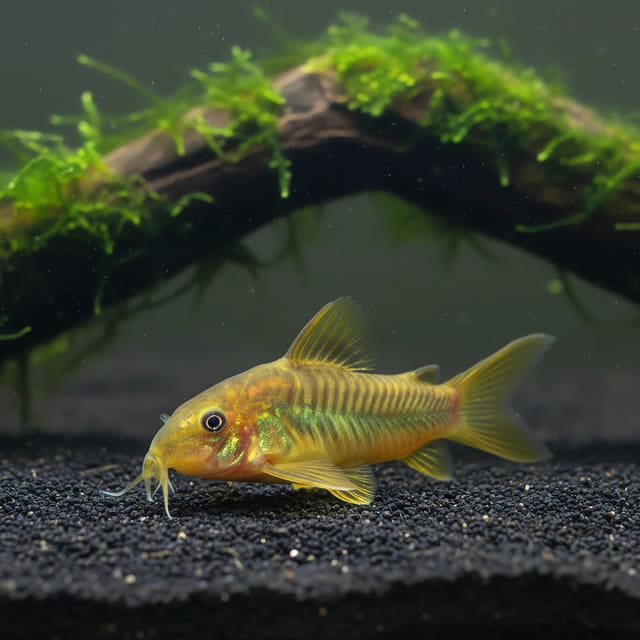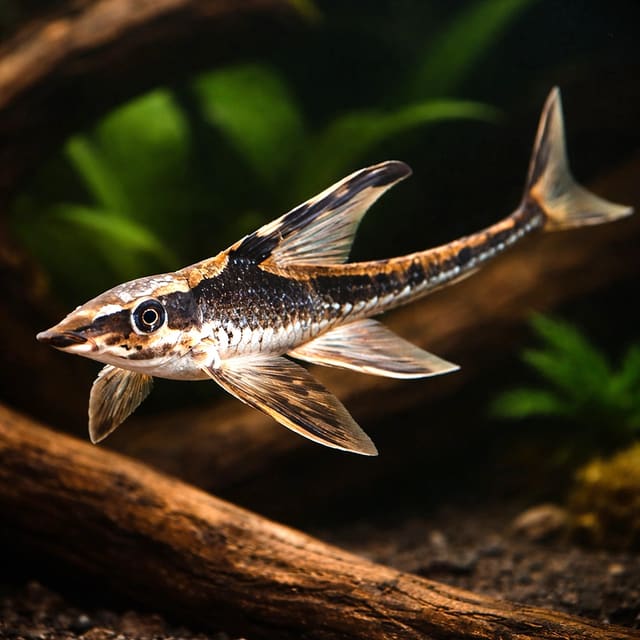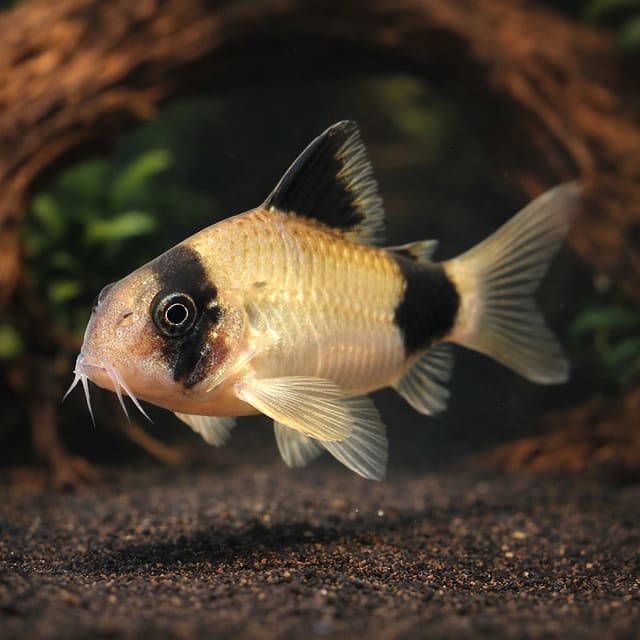
Panda Cory Catfish (Corydoras panda)
22–25°C · pH 6–7.4
£7.29

L018 Baryancistrus sp. Golden Nugget is an unidentified suckermouth armoured catfish from a genus found in flowing Amazon and Orinoco rivers in Brazil and Venezuela. It suits keepers able to maintain a mature filtered aquarium at OATA’s group-guidance values of 22–27°C, pH 6.0–8.0 and 4–12°dH, with tank mates screened for water, space and feeding fit. Sold individually in dispatch sizes from 4–5 cm to 10–13 cm.
Baryancistrus sp.
L018 Baryancistrus sp. Golden Nugget is an unidentified suckermouth armoured catfish from a genus found in flowing Amazon and Orinoco rivers in Brazil and Venezuela. It suits keepers able to maintain a mature filtered aquarium at OATA’s group-guidance values of 22–27°C, pH 6.0–8.0 and 4–12°dH, with tank mates screened for water, space and feeding fit. Sold individually in dispatch sizes from 4–5 cm to 10–13 cm.
Maintain these water conditions for optimal health and vibrant colors
L018 Baryancistrus sp. Golden Nugget is a freshwater suckermouth armoured catfish in the family Loricariidae. The accepted taxonomy for Baryancistrus places it as a genus rather than a single named species. The exact species has not been identified, so the care advice here follows the genus Baryancistrus and its care group. It suits a keeper prepared to test the water, maintain a biological filter and assess compatibility fish by fish.
The L-number and Golden Nugget trade name are useful aquarium identifiers, while Baryancistrus sp. expresses the scientific limit accurately. It would be misleading to attach the biology of one named Baryancistrus species to every animal carrying this label. Plan instead from the genus-level facts and the practical care range set out below.
Wikipedia describes Baryancistrus in flowing sections of rivers, especially clearwater, across the Amazon and Orinoco basins in Brazil and Venezuela. This describes the wild genus rather than the commercial origin of an individual fish. It supports a plan centred on clean water, dependable filtration and an aquarium that remains stable between maintenance sessions.
The largest members of the genus reach up to 34 cm in total length. That is a conservative planning reference for an unidentified member of the genus, not a promise that every L018 will finish at exactly 34 cm. Use it to test whether the aquarium, shelter and stocking plan can still work if the fish becomes substantially larger than its dispatch size.
This is a good choice for a keeper prepared to measure water, maintain a biological filter and make compatibility decisions fish by fish. Browse the wider catfish and pleco collection if you want to compare this genus-level identity with alternatives whose adult size or social needs may be defined more narrowly.
One purchase supplies one animal. Use the live selector to choose between the size labels 4–5 cm, 6–7 cm, 7–9 cm and 10–13 cm. The size you select is the size supplied, not the adult size.
Those labels describe the dispatch size. They do not identify a sex, life stage, place of origin or eventual length. A smaller selection therefore needs the same long-term planning exercise as a larger selection: work from the genus reference of up to 34 cm total length and make sure the aquarium plan remains suitable as the fish grows.
Sex is guaranteed only when the selected option explicitly states male or female. This L018 Baryancistrus sp. Golden Nugget listing has no sex-guaranteed option.
Do not use spot density, yellow fin edging, body width, the chosen size or a gallery pose to assign sex. If more than one animal is purchased, the quantity describes how many animals are ordered; it does not create a guaranteed pair or a particular sex ratio.
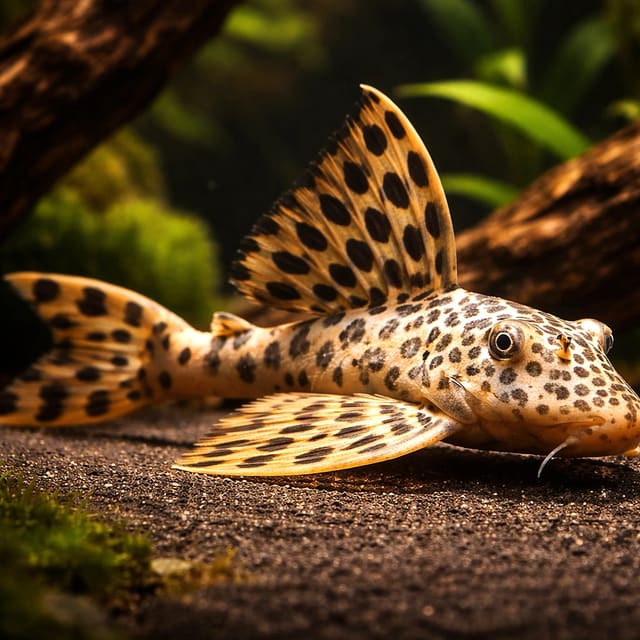
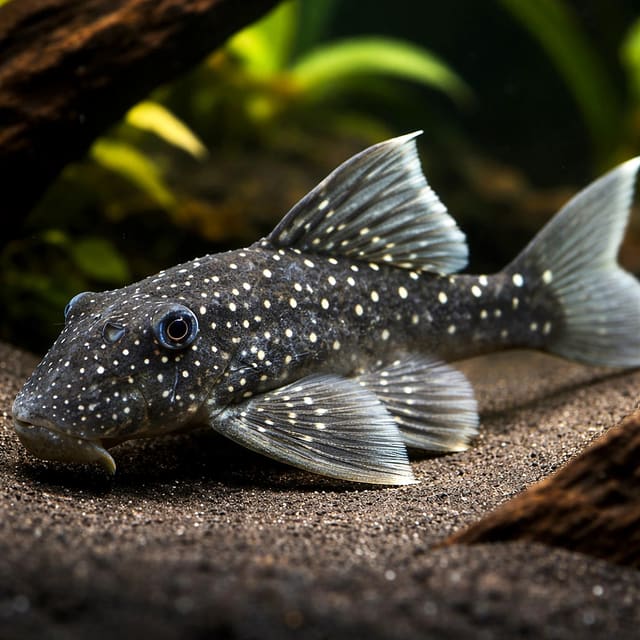
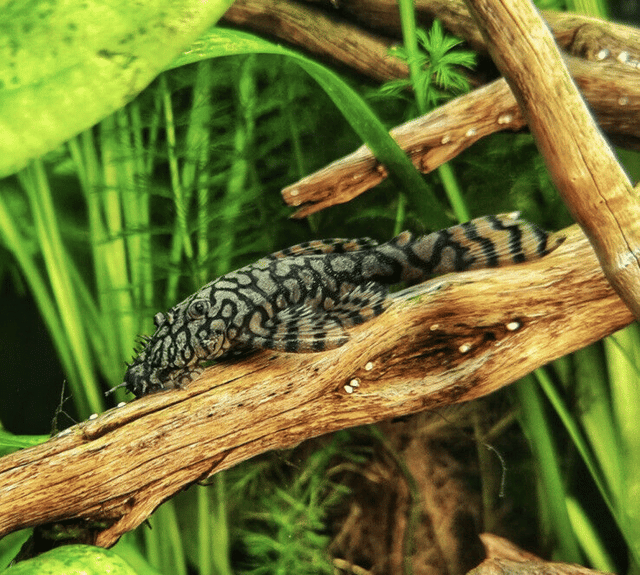
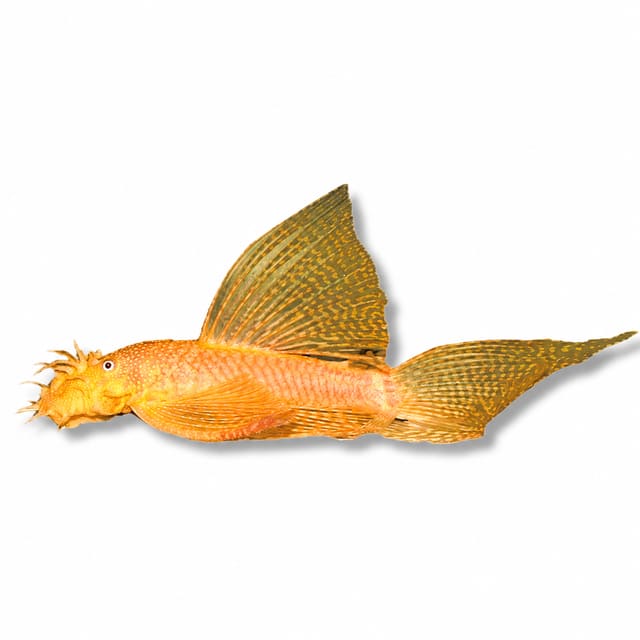
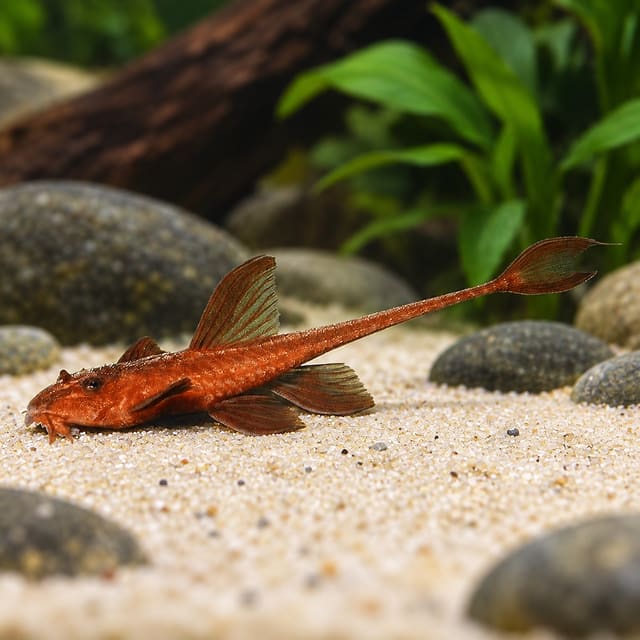
The gallery images are representative, based on reference photographs of this kind of animal, so colours can look slightly different from the live animal.
The illustrations show the dark body, golden-yellow spotting, broad pleco-like form and yellow fin margins associated with the Golden Nugget trade appearance. A scene containing two fish remains a representation of appearance and setting, while the retail unit stays one animal per purchase. Make the husbandry decision from the identity, adult-size planning reference and care instructions rather than from the number of animals or the apparent scale of objects in an illustration.
| Suits | Not suited to |
|---|---|
| Keepers prepared to test water at least weekly | Using an algae-eating fish instead of regular maintenance |
| A mature aquarium with a maintained biological filter | An aquarium without a well set up and maintained filter |
| Water maintained at 22–27°C, pH 6.0–8.0 and 4–12°dH | Water outside any part of the care-group range |
| Long-term space planned from the genus reference | Permanent space planned only around the dispatch size |
OATA’s tropical algae-eater guidance gives 22–27°C, pH 6.0–8.0 and general hardness of 4–12°dH for the care group. Treat these as broad group guidance rather than a species-specific optimum. Keep all three values stable and test them against the water that the aquarium can maintain routinely, not a one-off reading achieved immediately before introduction.
| Planning point | Instruction |
|---|---|
| Adult size | Allow conservatively for up to 34 cm total length, the maximum recorded across the genus. |
| Temperature | Maintain 22–27°C. |
| pH | Maintain pH 6.0–8.0. |
| General hardness | Maintain 4–12°dH. |
| Toxic waste | Keep ammonia and nitrite at zero. |
| Testing | Check water at least weekly and respond to movement away from the target conditions. |
Choose the largest practical aquarium rather than working backwards from an arbitrary small footprint. A larger volume generally changes temperature and water chemistry more slowly, but volume alone cannot compensate for an immature filter, excessive stocking or neglected testing. The aquarium must have a functioning filter, gravel or sand, and cover made with plants or suitable aquarium ornaments.
A simple pre-purchase test is to compare the planned conditions with every row in the table. An aquarium at 25°C, pH 7.2 and 8°dH falls inside all three care-group ranges. A tank at 29°C fails the temperature screen even if its pH and hardness fit. Do not average a failed value against two passing values; each requirement has to work independently.
Choose the largest practical aquarium and plan its usable space from the up-to-34 cm genus reference, the physical room needed for shelter and the total adult stocking load. This approach is more useful than treating a dispatch length such as 4–5 cm as the size around which the permanent aquarium should be built.
Set up and mature the aquarium before introducing livestock. Our first tropical aquarium guide explains the preparation sequence, while the key decision for this fish is whether the system can maintain its target conditions under the intended adult stocking load.
Use the up-to-34 cm genus reference as the conservative end point when judging the aquarium. The dispatch size may make a young or smaller animal look comfortable in a space that will not support the same stocking plan later. Choose the largest aquarium practical because greater water volume generally gives more stability in temperature and chemistry. Keep enough usable space for the fish, shelter and the other intended occupants without crowding the aquarium with decoration.
Use aquarium gravel or sand as the substrate. Add live plants where they suit the system, or provide plastic plants and suitable aquarium ornaments such as model caves when live plants are not used. The purpose is to provide cover while keeping the aquarium manageable for routine inspection and maintenance.
Do not turn the natural record of flowing rivers into an arbitrary promise that one fixed current strength suits every unidentified Baryancistrus. Prioritise clean water, biological filtration and stable conditions. Arrange equipment and cover so water can circulate and the aquarium remains practical to test and maintain.
A mature aquarium is a functioning system, not simply an aquarium that has stood full of water. Its filter must contain the beneficial bacteria that process fish waste, and testing must show that toxic ammonia and nitrite are being controlled. Complete that preparation before the animal becomes part of the biological load.
The RSPCA’s aquarium welfare guidance explains why a well set up and maintained filter is vital. Fish release ammonia, which is toxic. Beneficial bacteria in a working biological filter convert ammonia to nitrite, which is also toxic, and then to the safer nitrate stage.
A filter being switched on is not the same as a filter being biologically ready. Use water tests to judge performance. Ammonia and nitrite should both remain at zero, including after livestock and feeding add waste to the system. Check that the filter continues to run as intended and investigate any departure from zero rather than treating it as a normal part of keeping the fish.
| Test result | Decision |
|---|---|
| Ammonia zero, nitrite zero | Continue the planned routine and weekly testing. |
| Ammonia above zero | Treat the system as unable to process its present waste load and correct filtration or maintenance before further stocking. |
| Nitrite above zero | Pause further stocking and restore biological performance before adding more animals. |
| Repeated movement in pH or temperature | Find and correct the cause rather than repeatedly chasing a single reading. |
Feed control is part of filter protection. Food left to break down adds waste, so offer a controlled portion while allowing the extra grazing time appropriate to algal foods. If food repeatedly remains, reduce the next portion rather than adding more because the fish is visually large.
Stocking control matters for the same reason. The genus can include large fish, and every additional animal increases the waste processed by the filter. Use the adult plan rather than the dispatch size when deciding whether another fish can be added. A stable result under today’s load is helpful, but it is not permission to keep adding livestock without retesting.
Persistent algae should prompt a check of water chemistry, maintenance and stocking. An algae-grazing fish cannot replace filtration, testing or appropriate stocking levels, so choose this animal because its identity and long-term needs fit the aquarium rather than as a remedy for an underlying water-quality problem.
Maintain temperature at 22–27°C, pH at 6.0–8.0 and general hardness at 4–12°dH. The same algae-eater guidance places carbonate hardness at 3–10°dKH for several fish in the group. Use stable readings inside these ranges and avoid choosing a fish whose routine conditions would require constant correction of the aquarium’s normal water.
Our water chemistry guide explains what each measurement means. Record actual numbers rather than descriptions such as “soft” or “normal”, because those words cannot show whether pH and hardness fit simultaneously. The water matcher can then compare measured aquarium values with the target range.
| Example reading | Decision |
|---|---|
| 25°C, pH 7.0, 8°dH | All three values sit inside the working ranges. |
| 28°C, pH 7.0, 8°dH | Temperature is too high for the 22–27°C care range. |
| 25°C, pH 8.2, 8°dH | pH is above the 6.0–8.0 range. |
| 25°C, pH 7.0, 14°dH | General hardness is above the 4–12°dH range. |
The worked examples show why a single passing value is insufficient. Temperature, pH and hardness affect different parts of the aquarium environment, so each one needs to fit. Measure the aquarium after it has settled into its normal operating routine rather than testing only while making an adjustment.
Test water at least once a week and keep a simple dated log. A sequence of readings shows whether conditions are stable or moving towards an edge of the range. For example, pH readings of 7.0, 7.3 and 7.7 still fall inside the stated range, but the direction of travel deserves investigation before the next reading crosses pH 8.0.
Keep ammonia and nitrite at zero alongside these physical and chemical values. A suitable temperature cannot make toxic waste acceptable, and a zero-ammonia result cannot compensate for temperature outside 22–27°C. The complete water check is the decision tool.
Treat this animal under the tropical algae-eater feeding approach. Aquarium algae may contribute grazing material, but it is not a complete feeding plan and the fish should not be expected to solve persistent algae caused by maintenance or water-chemistry problems.
Supplement grazing with prepared algae-based wafers or flakes and fresh vegetables such as cucumber. Choose organic vegetables where practical or wash them thoroughly before use because residual pesticides may harm fish or invertebrates.
Offer a controlled portion and allow algal foods extra grazing time. Judge the amount by whether the ration is consumed without repeatedly breaking down in the aquarium.
| What you observe | What to do next |
|---|---|
| The measured ration is eaten | Repeat the same portion and continue observing. |
| Food repeatedly remains | Reduce the next portion to limit waste. |
| Other fish take the whole ration | Change the feeding placement or compatibility plan so this fish can reach its food. |
| Algae keeps increasing | Review testing, maintenance and stocking rather than adding more algae-eating animals. |
Feeding access is part of compatibility. A tank mate can share the same temperature and pH yet still be a poor match if it prevents this fish from reaching the prepared ration. Observe the food itself rather than assuming a bottom-associated wafer has reached the intended animal.
Keep the routine simple enough to assess. Changing food type, portion and timing all at once makes it difficult to identify why food remains or disappears. Begin with a measured amount of the defined foods, watch what happens, and change one part of the routine at a time.
Uneaten food releases waste as it breaks down, increasing the work required from the biological filter. Portion control therefore supports both nutrition and water quality. It also prevents the common mistake of using the animal’s potential adult size as a reason to overfeed a smaller dispatch-size fish.
Build the routine around measured water quality, filter operation, controlled feeding and appropriate stocking. OATA recommends checking water at least once a week, while the RSPCA identifies a maintained biological filter as essential for processing toxic fish waste.
Write down the numbers. A note saying “water fine” cannot reveal drift, while a short sequence such as 24°C, pH 7.1 and 8°dH gives a useful baseline for the following week. Add ammonia and nitrite results to the same log so filter performance remains part of the assessment.
If algae persists, begin with the log and the maintenance routine. Algae-eating fish are not substitutes for regular maintenance or suitable stocking levels, and adding another animal increases the biological load. Check whether feeding is excessive, whether food is being left to decay and whether the tested chemistry is moving before changing the livestock plan.
Make changes because a measurement or observation calls for them, not merely because a calendar date has arrived. The fixed weekly test provides the checkpoint; the results identify where attention is needed. This keeps routine care concrete without pretending that one maintenance action or one algae-grazing fish can correct every aquarium problem.
Use the same log when considering future tank mates. Stable readings inside the target ranges make comparison possible, while repeated fluctuations show that the aquarium should be stabilised before another animal is added.
Arrange for someone to receive the parcel because live fish cannot be left unattended. Read the current delivery and Live Arrival Guarantee policy before the delivery date. Prepare the destination aquarium in advance at 22–27°C, pH 6.0–8.0 and 4–12°dH, with ammonia and nitrite at zero.
The continuous recording from the sealed parcel through to the fish inside the bag supplies the unboxing video required for a Live Arrival Guarantee claim. Keep the order number with the recording and contact us the same day if a claim is needed.
Use the same target aquarium identified during compatibility planning. Moving the animal into a convenient temporary community simply because that tank is running can create a water mismatch or an unsuitable stocking combination. The destination should already pass the complete water, filtration, space and feeding-access screen.
The bag size and the fish’s apparent scale on arrival remain dispatch details. They do not change the up-to-34 cm genus planning reference. Once the animal is transferred, keep the first feeding measured and use the observation plan below rather than adding extra food in an attempt to compensate for transport.
Husbandry after release remains centred on stable water, a functioning filter and controlled feeding. Check the fish and aquarium without changing several parts of the routine at the same time.
Use the first month to establish a reliable baseline for this individual fish and the aquarium carrying its added biological load. Record water, feeding and access to shelter without assigning a sex, final size or temperament from a brief observation.
Confirm that the fish has entered the prepared aquarium and that the filter continues to operate. Recheck temperature after the acclimatisation period and keep the first ration controlled. A large extra meal creates waste and makes the filter’s response harder to interpret.
Test temperature, pH, general hardness, ammonia and nitrite. Compare the results with 22–27°C, pH 6.0–8.0, 4–12°dH and zero for both toxic-waste readings. Note how much of the algae-based food or cucumber is consumed and whether other animals prevent access to it.
| Checkpoint result | Next decision |
|---|---|
| All water values fit and food is eaten | Continue the measured routine. |
| Food remains repeatedly | Reduce the next portion and protect water quality. |
| A tank mate takes the ration | Change feeding access or reconsider that combination. |
| Ammonia or nitrite rises above zero | Correct the biological-load or filtration problem before further stocking. |
Review the weekly log as a sequence. Stable values show that the aquarium is holding its routine; a repeated movement towards the edge of a range identifies a problem earlier than one isolated test. Compare the fish’s present dispatch length with the long-term plan only to judge how much growth allowance remains, not to predict its sex or exact adult length.
Keep the aquarium’s stocking unchanged while a water or feeding problem is being resolved. Adding another animal makes it harder to identify whether the issue comes from filter capacity, excessive food, competition or unsuitable water. If you notice a health change, contact us with the recent water results and feeding observations rather than starting an undocumented treatment.
After the first month, continue the weekly testing and measured feeding routine. The value of the initial log is that later changes can be compared with a clear baseline instead of memory.
Assess compatibility case by case. Begin with water: every proposed tank mate must function at 22–27°C, pH 6.0–8.0 and 4–12°dH. A familiar community label is not enough if the candidate’s routine conditions fall outside any part of that range.
A candidate passes only when all five checks work together. Matching pH cannot compensate for inadequate long-term space, and a large aquarium cannot make incompatible water suitable. Likewise, two fish may fit physically while one consistently prevents the other from feeding.
Use caution with any combination that depends on an assumed peaceful temperament for L018. The genus identity and trade label do not create a universal temperament guarantee, so observe the actual aquarium and be ready to revise a combination that restricts feeding or shelter access.
Do not convert the old habit of naming broad groups such as tetras, rasboras, corydoras or dwarf cichlids into automatic approval. Species within those groups can have different water, size and behaviour requirements. Screen the exact candidate rather than approving it from the group name alone.
Ask us for a stocking and compatibility assessment if you can provide the aquarium dimensions, tested water values and the exact animals already planned. The useful decision comes from those details, not from describing L018 as suitable for every community aquarium.
Treat the number of L018 animals as a case-by-case stocking decision rather than assuming that this unidentified fish must live alone, in a pair or in a fixed group. One purchase supplies one animal, but the retail unit is not a social-care recommendation.
If the quantity is one, the order contains one animal of the selected dispatch size. If the quantity is two, the order contains two animals. That arithmetic does not establish a bonded pair, a male-and-female combination or a suitable long-term group.
For more than one, repeat the compatibility screen for the complete adult plan. Count each animal against the conservative up-to-34 cm genus reference, check that shelter and usable space remain practical, and make sure each fish can reach food. Confirm that the biological filter can keep ammonia and nitrite at zero under the resulting load.
| Planning question | Required answer |
|---|---|
| Do all animals share the water range? | Every animal must fit 22–27°C, pH 6.0–8.0 and 4–12°dH. |
| Does the adult plan still fit? | Space must be judged from adult references, not dispatch sizes. |
| Can every fish feed? | Each animal must have reliable access to the measured ration. |
| Is the filter coping? | Ammonia and nitrite must remain at zero. |
An illustration showing two Golden Nuggets demonstrates a visual scene only. It does not set the purchase quantity or establish that two animals form a compatible pair. Use the quantity control to order the intended number and use the aquarium assessment for the number that can be kept responsibly.
Apply the same discipline when adding unrelated fish. A stocking plan can fail through water mismatch, cumulative adult size, excessive biological load or feeding competition even when no single animal is described as an automatic exclusion. Build the combination from measured compatibility rather than a generic community label.
Plan conservatively around up to 34 cm total length, the maximum recorded for the genus. This is a planning reference rather than a guaranteed adult length for the unidentified fish.
Choose the largest practical mature aquarium, with a maintained biological filter, gravel or sand and cover from plants or suitable ornaments. Plan the usable space around the genus reference of up to 34 cm total length rather than the dispatch size.
Choose the number case by case from long-term space, shelter, filter capacity and feeding access rather than assuming a fixed group. Count every fish against the adult plan and keep ammonia and nitrite at zero.
Choose it only if you can maintain a mature biological filter, test the water at least weekly and keep OATA’s tropical algae-eater group-guidance values of 22–27°C, pH 6.0–8.0 and 4–12°dH stable while planning around a large genus-level size reference.
Offer algae-based wafers or flakes and fresh cucumber in a controlled portion, allowing extra grazing time. Use organic vegetables or wash them thoroughly before feeding, and reduce the next portion if food repeatedly remains.
OATA’s tropical algae-eater group guidance gives 22–27°C, pH 6.0–8.0 and general hardness of 4–12°dH. Test at least weekly and keep ammonia and nitrite at zero.
Do not assume a guaranteed temperament from the genus name or trade label. Assess behaviour case by case and revise any combination that restricts feeding or shelter access.
Screen each candidate against OATA’s tropical algae-eater group-guidance values of 22–27°C, pH 6.0–8.0 and 4–12°dH, then check long-term space, shelter, biological load and feeding access. Do not treat any broad community-fish group as universally suitable.
Film every delivery continuously from the sealed parcel before opening it, showing the outer box, the parcel being opened and the fish still inside the sealed bag. Someone must be present to receive it; then float the bag for 20–30 minutes before release and never pour the bag water into the aquarium.
No reviews for this item yet. Bought one? Honest reviews only, good or bad.
What customers say about ordering from us
I have a small group of long finned mountain minnows. So was delighted to be able to order ten of this variety to increase the genetics in my tank . The ones I recieved are healthy but it’s to early to give a verdict on wether they are of a long finned type since they are small currently.
Gordon Walker · 23 Sept 2026
100% success travel and "installation". Pleased with quality of purchase. The Siamese fighter a bit "shy" so have not yet seen him at his best yet but looking good. Happy customer. GG
George E Garratt · 21 Sept 2026
Reviews of our shop, collected by Judge.me, an independent third-party review collector. Newest first.