Moderate
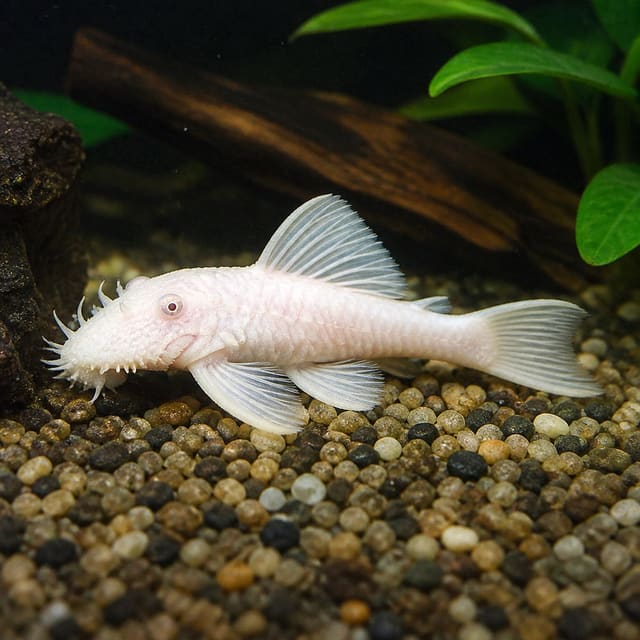
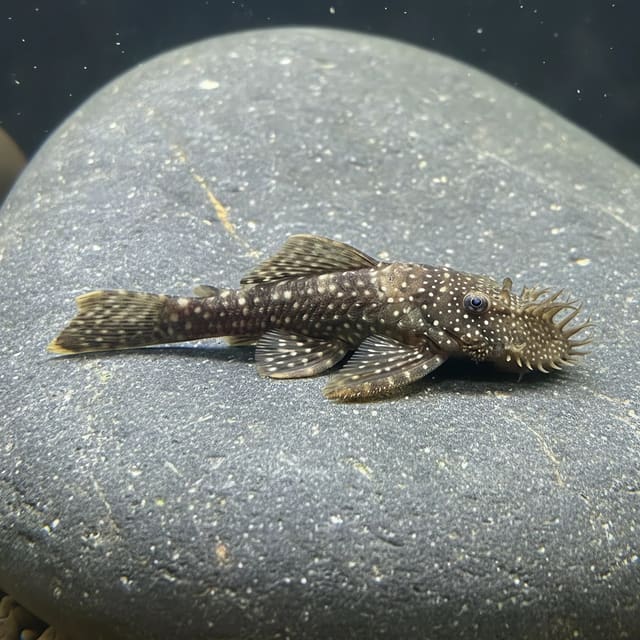
Bristlenose Pleco (Ancistrus sp.)
22–27°C · pH 6–8
From £3.51Some sizes on sale

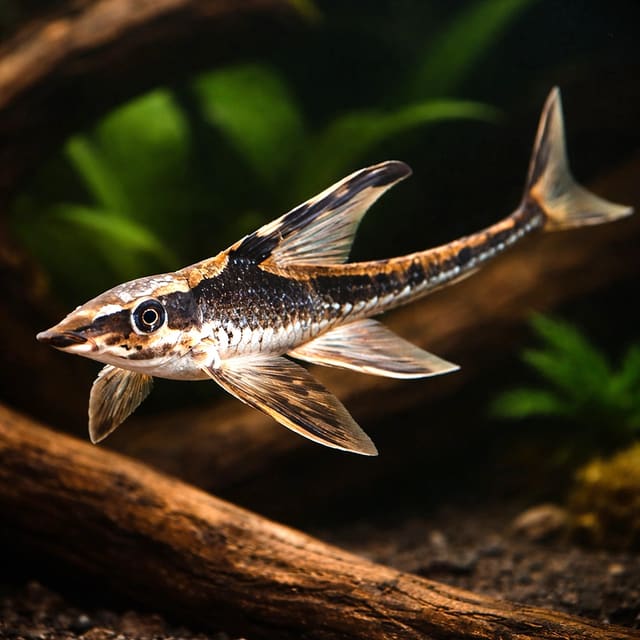
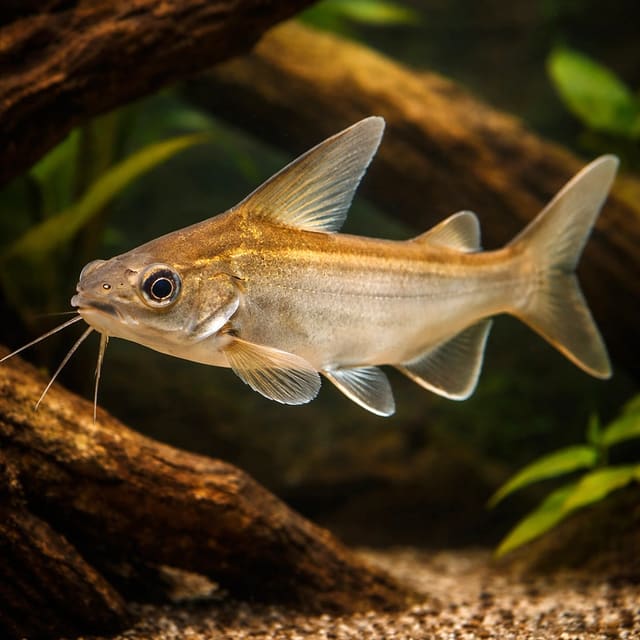
Pseudoplatystoma fasciatum Catfish, also called the Barred sorubim, is a predatory freshwater catfish from South American river basins that reaches 105 cm standard length. It suits keepers able to plan around 360 × 240 × 120 cm and maintain 22–26°C, pH 6.0–7.6 and 2–30 dGH. Sold individually in 4–5 cm, 6–8 cm, 10 cm and 20 cm dispatch sizes.
Adult size is the maximum length this species reaches at full maturity (scientific sources). The livestock you receive will be younger and smaller — pick a size above for the actual shipping size. Product-photo provenance and any image-specific limitations are stated on the listing.
Pseudoplatystoma fasciatum
Save when buying multiple fish. Each quantity is one fish; sex and pair formation are not guaranteed unless the selected variant explicitly states them.
Pseudoplatystoma fasciatum Catfish, also called the Barred sorubim, is a predatory freshwater catfish from South American river basins that reaches 105 cm standard length. It suits keepers able to plan around 360 × 240 × 120 cm and maintain 22–26°C, pH 6.0–7.6 and 2–30 dGH. Sold individually in 4–5 cm, 6–8 cm, 10 cm and 20 cm dispatch sizes.
Adult size is the maximum length this species reaches at full maturity (scientific sources). The livestock you receive will be younger and smaller — pick a size above for the actual shipping size. Product-photo provenance and any image-specific limitations are stated on the listing.
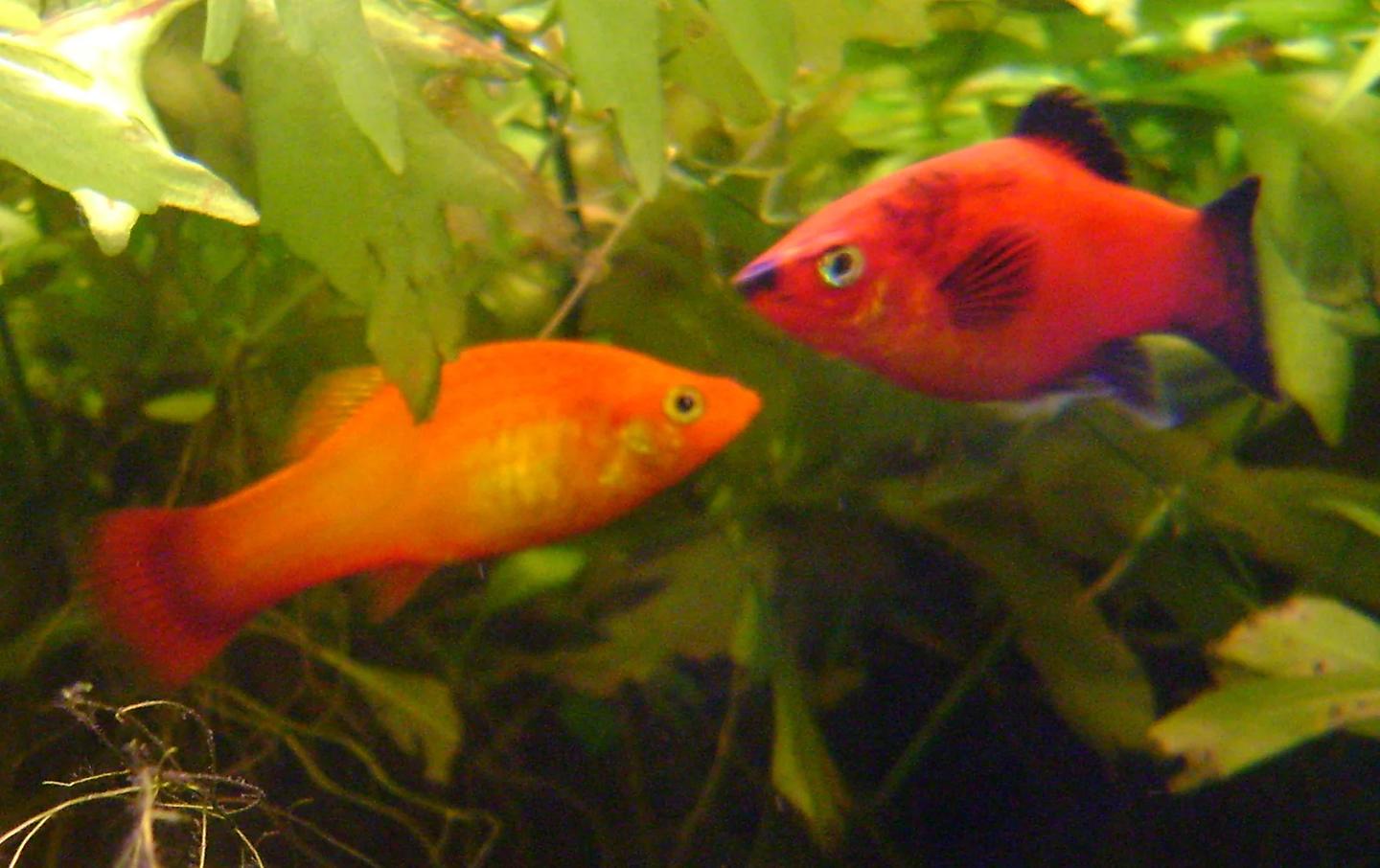
Platy is a trade name used for Xiphophorus maculatus, X. variatus and domestic forms. Start with at least three in a mature aquarium of at least 45 litres, verify the exact fish and measured water, and plan extra capacity before mixing sexes.
Maintain these water conditions for optimal health and vibrant colors
Pseudoplatystoma fasciatum, commonly called the Barred sorubim, is a freshwater, bottom-associated catfish in the long-whiskered catfish family Pimelodidae. FishBase records a maximum of 105 cm standard length and places it in South America’s Amazon, Corantijn, Essequibo, Orinoco and Paraná river basins. That maximum is the decisive planning figure: a smaller dispatch size does not reduce the eventual space, filtration or feeding commitment. It suits keepers who can secure its permanent accommodation before purchase.
This is a predatory fish rather than a conventional community catfish. Smaller fish may be swallowed, while another Pseudoplatystoma or large pimelodid may meet territorial behaviour. Its scale also limits mixed-species choices severely. Keeping one fish alone is the practical default for most settings; any shared system has to be exceptionally large and carefully assessed around every adult occupant.
Seriously Fish gives an adult planning reference in the region of 360 × 240 × 120 cm, or 10,368 litres, for a fully grown fish. It also cautions that even this would not provide the cruising room available in nature. Treat those dimensions as the starting point for a credible permanent plan, not as a guarantee that any aquarium with the same nominal volume will have the right shape.
| Suits | Not suited to |
|---|---|
| Keepers with a permanent plan around 360 × 240 × 120 cm | Conventional community aquariums |
| Purpose-planned systems with open movement space | Short or narrow aquariums chosen by volume alone |
| Routine water at 22–26°C, pH 6.0–7.6 and 2–30 dGH | Water outside the stated aquarium range |
| Solitary keeping in most situations | Fish small enough to be swallowed |
Choose this animal only when the permanent enclosure has already been planned. Buying a small fish first and relying on a later upgrade creates a serious rehoming risk, because metre-scale predatory catfish require highly unusual accommodation. If this footprint is beyond your project, browse the catfish and plecos collection for animals with different long-term requirements.
One purchase supplies one animal in the size chosen through the live size selector. The dispatch sizes are 4–5 cm, 6–8 cm, 10 cm and 20 cm. Use the live selector to see which size can be selected and its live price rather than relying on static page wording.
The size you select is the size supplied, not the adult size. A 4–5 cm fish and a 20 cm fish therefore lead to the same permanent planning decision: both belong to a species recorded up to 105 cm standard length. The smaller size is not a permanently small form, and the largest dispatch size is not the adult maximum.
| Size label | Meaning |
|---|---|
| 4–5 cm | One animal within that dispatch-size band |
| 6–8 cm | One animal within that dispatch-size band |
| 10 cm | One animal at the stated approximate dispatch size |
| 20 cm | One animal at the stated approximate dispatch size |
Sex is guaranteed only when the selected option explicitly states male or female. This Pseudoplatystoma fasciatum Catfish listing has no sex-guaranteed option. External sexing is described as virtually impossible, so colour, body shape, dispatch size and gallery appearance should not be used to assign sex to the animal ordered.
The gallery images are representative, based on reference photographs of this species, so colours can look slightly different from the live animal.
This order prevents the manageable appearance of a smaller animal from driving the decision. The dispatch size changes the fish’s size on arrival; it does not change the identity, predatory feeding behaviour, territorial risk or eventual accommodation requirement.
The permanent enclosure must provide length and width, not merely a large litre figure. The adult planning reference of 360 × 240 × 120 cm works out as 10.368 cubic metres, or 10,368 litres, before allowing for furnishings and displacement. A tall, narrow aquarium with a similar headline volume would not reproduce that turning area or open floor space.
| Question | Decision |
|---|---|
| Is the enclosure about 360 cm long? | Plan enough linear swimming room for a fish recorded up to 105 cm SL. |
| Is it about 240 cm wide? | Protect turning room rather than relying on height to create volume. |
| Is it about 120 cm deep? | Use the full three-dimensional reference when evaluating the system. |
| Is open movement preserved? | Subtract the space occupied by wood, rocks, pipes and equipment. |
The 10,368-litre figure is a planning reference for a fully grown specimen, and even that scale would not give the fish the cruising room it would have in nature. Do not reduce the footprint because the chosen animal arrives at 4–5 cm, 6–8 cm, 10 cm or 20 cm. Growth is not limited to the size of the aquarium, and this catfish can approach its maximum length in captivity.
Work backwards from the permanent enclosure. First identify where the adult fish will live. Then decide how each earlier enclosure will maintain clear movement, stable water and adequate filtration while the animal is smaller. Every interim stage must already exist within a credible route to the permanent system; an intention to find more space later is not a housing plan.
A suitable decision begins with adult dimensions, open movement and permanent responsibility. Once those are secure, the dispatch size can be chosen according to the prepared enclosure rather than used as a substitute for adult planning.
For an adult, elaborate decoration is unnecessary if the lighting is fairly dim. Large pieces of bogwood, beech branches or smooth rocks can be used, but every item must be too heavy for the fish to move or secured so it cannot shift. Preserve a broad, unobstructed route through the enclosure instead of filling the footprint with decorative structures.
Smaller specimens benefit from hiding places formed by bogwood, root and branch tangles, stable rock piles or plastic pipe of a suitable bore. Size every opening so the fish can enter, turn or leave without becoming trapped. As the body grows, remove or enlarge any shelter that no longer offers clear passage.
| Bottom option | Practical consequence |
|---|---|
| Ordinary gravel | Many grades may be swallowed or become caught in the delicate gills. |
| Sand | Suitable, although the fish may move it out of place. |
| Large smooth pebbles | A practical option when each piece is stable and rounded. |
| Bare bottom | Simplifies the removal of solid waste. |
Inspect the route around every rock, branch and pipe from the perspective of a much larger fish. A structure that looks spacious around a 6–8 cm animal may become a narrow obstruction as body depth and head width increase. Reassess décor before it becomes tight rather than waiting for rubbing, trapped waste or restricted movement.
Dimmer surroundings and secure cover can be provided without turning the aquarium into a maze. The goal is a calm resting choice combined with clear movement and straightforward cleaning. Large décor earns its place only when it remains stable, cannot trap the animal and does not consume the footprint needed by an adult fish.
A large and efficient biological filter is essential for this predatory catfish. Its system must process dissolved waste while also allowing regular removal of solid food residue and faeces. Install and mature the filter before introducing the fish; the animal should never be used to start the biological cycle.
The RSPCA explains the biological filtration process: fish release toxic ammonia, established bacteria convert it to toxic nitrite, and further bacterial activity converts nitrite to the safer nitrate. That process depends on a well set up and maintained filter, so an impressive filter body is not enough unless its biological media remains active.
When filter media needs cleaning, rinse it lightly in aquarium water removed during a water change. Do not run it under the tap because any chlorine or chloramine present may kill the beneficial bacterial population established in the media. The aim is to clear obstructing debris while retaining the bacteria that process ammonia and nitrite.
Keep filtration running as the fish grows and feeding changes. Larger meals and a larger body increase the consequences of uneaten food or delayed waste removal. Remove leftovers rather than expecting the biological filter to compensate for overfeeding, and check flow paths after moving décor so waste does not become inaccessible.
If ammonia or nitrite rises above zero mg/L, treat it as a water-quality problem immediately: stop adding livestock, check the filter for interruption or blockage, remove uneaten food and carry out an appropriate conditioned partial water change. Continue testing while the biological filter recovers. A mature, maintained filter and controlled feeding are the foundation of stable water; neither can substitute for the other.
Maintain an aquarium temperature of 22–26°C, pH 6.0–7.6 and general hardness of 2–30 dGH. Slightly acidic water is preferred within that pH range. Measure the aquarium and source water rather than adjusting by guesswork, then favour stability within the suitable range over repeated swings.
OATA’s freshwater-catfish guidance gives zero mg/L ammonia, zero mg/L nitrite and nitrate no more than 20 mg/L above the normal tap-water level for the group; the routine temperature, pH and hardness targets here come from the detailed aquarium guidance for this animal.
| Value | Working target |
|---|---|
| Temperature | 22–26°C |
| pH | 6.0–7.6, with slightly acidic water preferred |
| General hardness | 2–30 dGH |
| Ammonia | Zero mg/L |
| Nitrite | Zero mg/L |
| Nitrate | No more than 20 mg/L above normal tap water |
Test at least once a week, and test again whenever feeding, behaviour, breathing or filter performance changes. Use our water chemistry guide to understand each measured value, then compare the aquarium readings with the stated range using the water matcher.
At least once every week, carry out a partial water change of 25%. Treat replacement tap water with a conditioner that removes chlorine or chloramine before it enters the aquarium. Match the replacement water closely enough to prevent abrupt changes in the established temperature and chemistry, and use the water change to siphon out visible solid waste.
Record results consistently so gradual movement is visible before the fish shows distress. Stable water, zero toxic nitrogen waste and dependable weekly maintenance matter more than occasional large corrections after quality has deteriorated.
This catfish is piscivorous by nature but usually adapts well to dead foods in captivity. Build the diet around varied meaty items such as prawns, mussels, cockle, lancefish and earthworms. Larger specimens can also receive white-fish fillet. Match each portion to the fish’s ability to take and swallow it cleanly, then remove anything left uneaten.
| Food decision | Reason |
|---|---|
| Rotate suitable meaty foods | Reliance on one item may make the fish reluctant to accept alternatives. |
| Watch body condition | Predatory fish can become overweight when high-protein food is excessive. |
| Remove leftovers | Decaying food adds toxic waste to the aquarium. |
| Avoid mammalian and poultry meat | Lipids in beef heart or chicken cannot be properly metabolised and may cause harmful fat deposits. |
Use the feeding schedule appropriate to the fish’s development. A juvenile can be fed every other day. Reduce frequency as it grows; an adult needs no more than one meal per week. Do not interpret a strong feeding response as a requirement for another meal, because appetite alone is a poor guide for a captive predator that is prone to excess weight.
Assess the result rather than feeding to habit. The fish should accept an appropriate meal, maintain a sound body condition and leave little or no food behind. A widening body combined with frequent large meals calls for less food or longer intervals. Loss of condition or reduced interest in familiar foods calls for a water test and a broader health check rather than an automatic increase in food.
Do not use feeding to accelerate growth. Good care means suitable variety, controlled frequency, clean water and enough space at every stage. The permanent enclosure remains the same planning obligation whether growth is fast or slow, and overfeeding only adds weight and waste without solving that accommodation requirement.
Prepare the aquarium before arranging arrival. The filter must be mature, ammonia and nitrite must both test at zero mg/L, and the temperature, pH and hardness must already sit within 22–26°C, pH 6.0–7.6 and 2–30 dGH. Complete the layout and secure heavy furnishings before the fish enters so major changes are not needed immediately afterwards.
Read the current delivery and Live Arrival Guarantee policy for dispatch arrangements and the claim process. Use the live size selector for the chosen dispatch size, then prepare shelter and open movement space around that size without losing sight of the permanent adult plan.
Someone must be present to receive the parcel, and it must be opened and inspected on the day it arrives.
Add livestock slowly because the bacterial population must adjust whenever waste and feeding increase. Do not introduce several additional fish at the same time as this catfish. A gradual change gives the biological filter a more manageable increase and makes it easier to connect any water or behaviour change with a particular event.
Observe swimming, resting position, breathing, colour, body condition, fins, scales and feeding response. Test water whenever behaviour or appetite changes and continue the normal schedule of at least weekly testing. Remove refused food promptly and check that the fish can enter and leave its shelter without rubbing or becoming confined.
A quiet resting period can be normal, but a change from the fish’s own pattern deserves attention. Hanging at the surface, erratic swimming, unusually fast or slow gill movement, a marked colour change, damaged fins, missing scales, white spots, fluffy growths or loss of appetite should lead first to water testing and a check of filtration, waste and recent changes.
This fish can approach its maximum size in captivity and may grow quickly. Never rely on the aquarium to restrict growth: the idea that a fish grows only to match its tank is a myth. Recheck swimming room, shelter openings and the route around furnishings while there is still ample clearance, then move to the next prepared stage before the enclosure becomes restrictive.
| Checkpoint | Action |
|---|---|
| Water quality | Test at least weekly and keep ammonia and nitrite at zero mg/L. |
| Maintenance | Change 25% at least once every week with conditioned replacement water. |
| Feeding | Use the development-appropriate interval and remove leftovers. |
| Body condition | Reduce excess food if the fish is becoming overweight. |
| Space | Preserve open movement and enlarge or remove tight shelter. |
| Compatibility | Separate any fish that has become vulnerable to swallowing or territorial conflict. |
Learn the animal’s normal pattern of resting, swimming, breathing and feeding. Health decisions become clearer when they are based on a change from that pattern. Darker or paler colour, increased hiding, new aggression, surface hanging, erratic swimming, altered gill movement, reduced feeding, white spots, fluffy growths, damaged fins, lost scales or changing body condition all justify a closer check.
Begin with measured water quality because ammonia and nitrite are toxic and filtration problems can affect behaviour quickly. Check the filter for interruption or blockage, remove uneaten food and inspect the aquarium for trapped waste. If concerning changes continue after those checks and appropriate water maintenance, contact us for health guidance.
Long-term responsibility means keeping accommodation, filtration and maintenance ahead of the fish. A clear permanent plan is safer than repeated emergency upgrades and far safer than relying on rehoming once the catfish has become difficult to transport or house.
Plan to keep one Pseudoplatystoma fasciatum in most situations. The fish is territorial towards its own kind and other large pimelodid catfish, so adding another similar catfish creates a conflict risk even when the enclosure appears spacious at the current body size.
Solitary keeping does not mean the animal is universally aggressive. It is described as relatively peaceful alongside suitably sized fish in appropriate surroundings, yet it will readily swallow smaller fish. Predatory feeding and territorial behaviour therefore need separate tests: a fish may be ignored as a rival and still be eaten as prey.
| Screen | Decision |
|---|---|
| Could either fish swallow the other? | Do not combine them. |
| Is the proposed companion another large pimelodid? | Avoid the combination in most situations. |
| Does the enclosure approach public-aquarium scale? | If not, keep this catfish alone. |
| Do all adults fit the permanent footprint? | Calculate around adult bodies, not dispatch sizes. |
| Do their water ranges overlap? | Proceed only when one stable set of values suits every fish. |
Do not buy two small animals on the assumption that early tolerance will continue. Body size, swallowing capacity and territorial pressure change as the fish grows. A companion that coexists while both animals are small may later become prey or compete for the same resting area.
Mixed-species keeping would require a system approaching public-aquarium size. The adult planning reference for one specimen is already around 360 × 240 × 120 cm, and added fish need their own movement, turning and retreat space rather than sharing the same allocation on paper. Depth also matters when species use different parts of the enclosure.
Ask us for a stocking and compatibility assessment before adding any companion. Provide the enclosure’s internal dimensions, measured water values, each fish’s identity and each adult size. That assessment should happen before purchase, not after animals have been placed together.
Avoid every fish small enough to be swallowed. This rule applies to animals that look substantial beside the catfish at its dispatch size, because compatibility must be assessed against a predator recorded up to 105 cm standard length. Most familiar large aquarium fish may still be too small to remove the swallowing risk.
Avoid another Pseudoplatystoma fasciatum or other large pimelodid in most situations because territorial behaviour is directed towards both. Simply choosing another bottom-dwelling catfish of similar length does not solve that problem. Shared use of the same floor area can intensify the conflict while also reducing open movement.
Passing these screens makes a proposal possible; it does not guarantee a peaceful outcome. Individual behaviour can change, especially as body size and territorial use develop. Prepare a separate enclosure that can safely house the animals at their current sizes before combining them.
If a fish begins hiding more than usual, stops feeding, shows damaged fins or scales, changes colour markedly or displays new aggression, test the water and review the social arrangement. Separate animals when there is swallowing risk, repeated territorial pressure or physical damage. Do not wait for a smaller companion to disappear before applying the adult-size test.
The safest long-term decision is one catfish in a vast, purpose-planned enclosure. A mixed system is an exceptional project whose dimensions, depth, filtration and adult stocking plan all need to work together.
FishBase records the Barred sorubim at up to 105 cm standard length. Plan its permanent enclosure around that adult figure rather than its dispatch size.
Seriously Fish gives a planning reference around 360 × 240 × 120 cm, or 10,368 litres, for a fully grown fish and cautions that even this does not provide natural cruising room.
Keep one in most situations because it is territorial towards its own kind and other large pimelodids. A mixed system would need to approach public-aquarium scale.
No. A fish reaching 105 cm standard length, requiring a planning reference around 360 × 240 × 120 cm and eating smaller fish needs exceptional permanent accommodation and long-term preparation.
Offer varied meaty foods such as prawns, mussels, cockle, lancefish and earthworms. Feed juveniles every other day, reduce frequency as they grow and feed adults no more than once per week.
Maintain 22–26°C, pH 6.0–7.6 and 2–30 dGH. Seriously Fish gives these routine aquarium values, while OATA’s freshwater-catfish guidance sets ammonia and nitrite at zero mg/L.
It is relatively peaceful with suitably sized fish but predatory towards smaller fish and territorial towards its own kind and other large pimelodids. Prioritise swallowing risk and territorial conflict when assessing compatibility.
Avoid fish small enough to swallow and avoid another large pimelodid in most situations. Possible companions named by Seriously Fish include Oxydoras niger and Pterodoras granulosus; big characins or cyprinids may be considered only in a very deep system approaching public-aquarium scale.
Film every delivery continuously from the sealed parcel before opening it, keep filming as it is opened and show the fish still inside the sealed bag. Someone must be present to receive the parcel; float the bag for 20–30 minutes before release and never pour the bag water into the aquarium.
No reviews for this item yet. Bought one? Honest reviews only, good or bad.
What customers say about ordering from us
I have a small group of long finned mountain minnows. So was delighted to be able to order ten of this variety to increase the genetics in my tank . The ones I recieved are healthy but it’s to early to give a verdict on wether they are of a long finned type since they are small currently.
Gordon Walker · 23 Sept 2026
100% success travel and "installation". Pleased with quality of purchase. The Siamese fighter a bit "shy" so have not yet seen him at his best yet but looking good. Happy customer. GG
George E Garratt · 21 Sept 2026
Reviews of our shop, collected by Judge.me, an independent third-party review collector. Newest first.