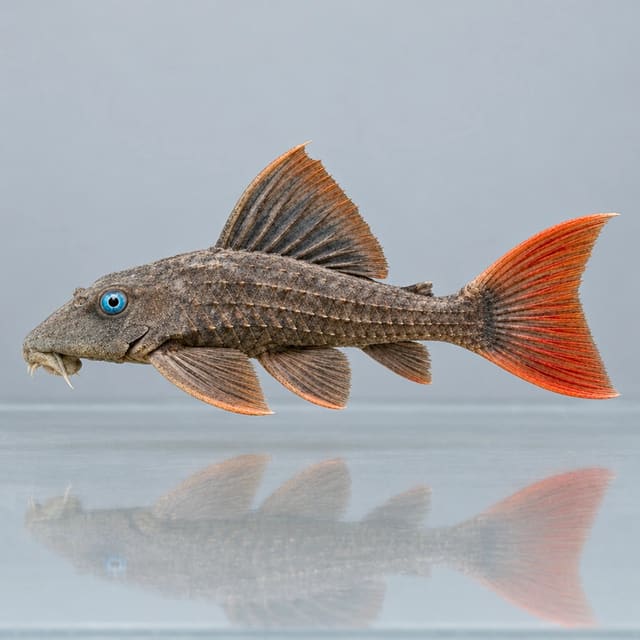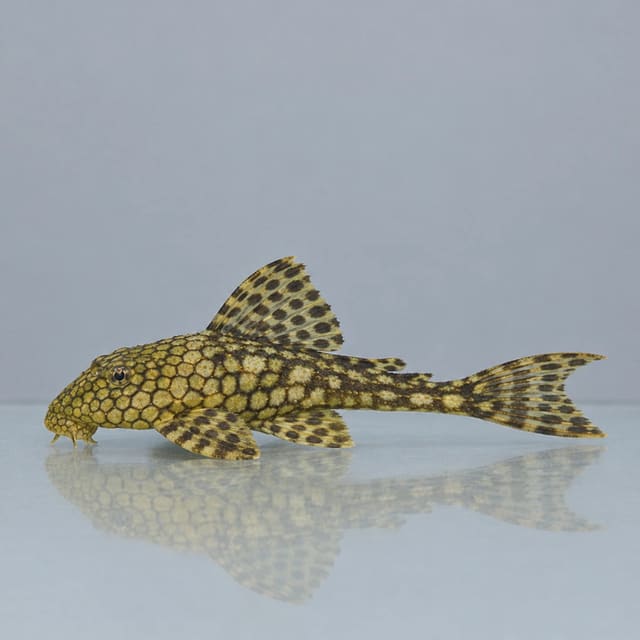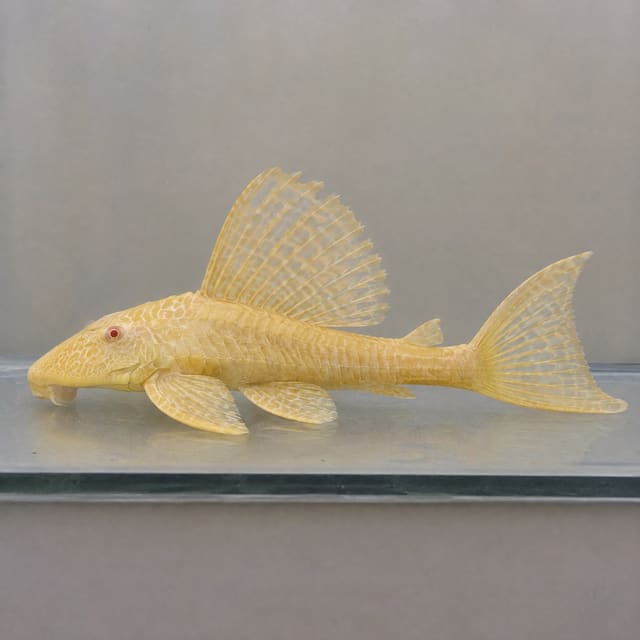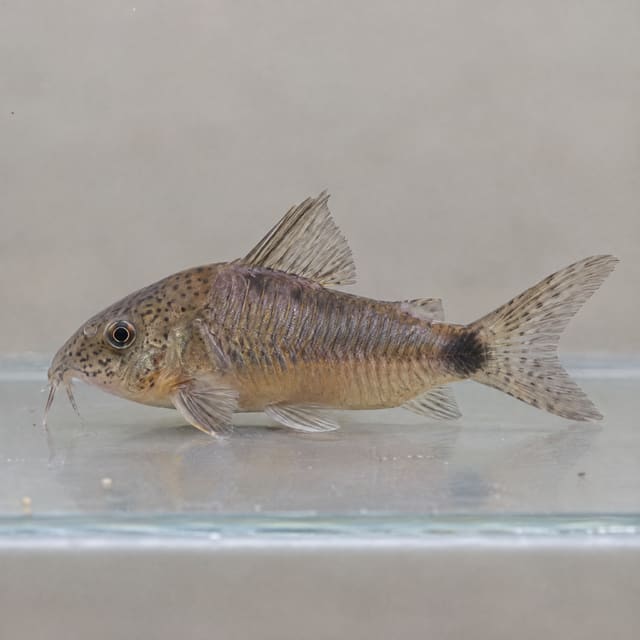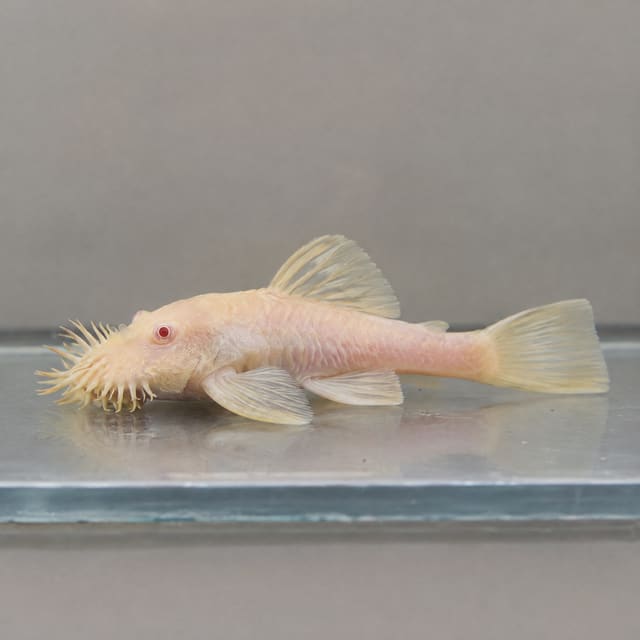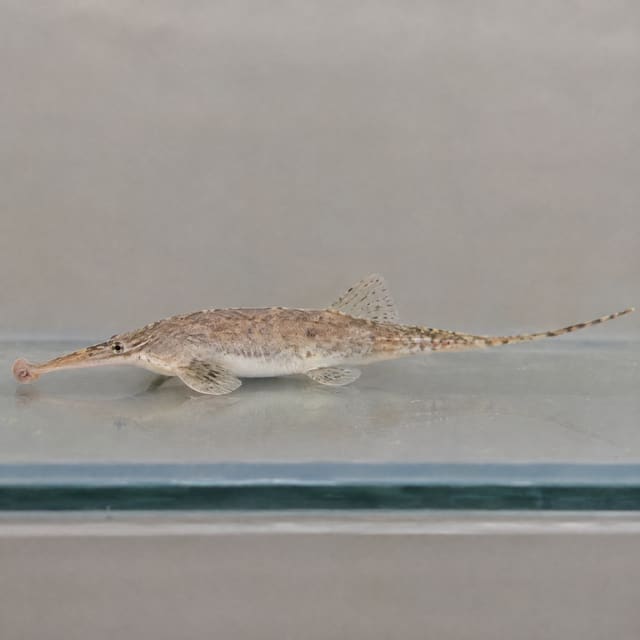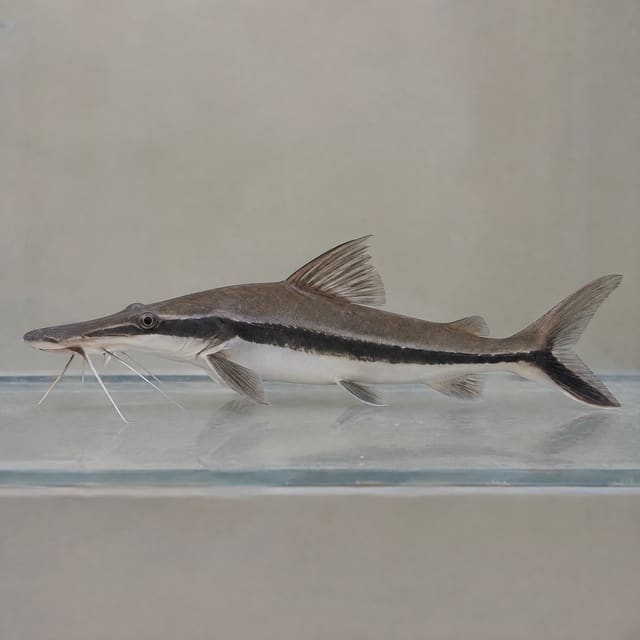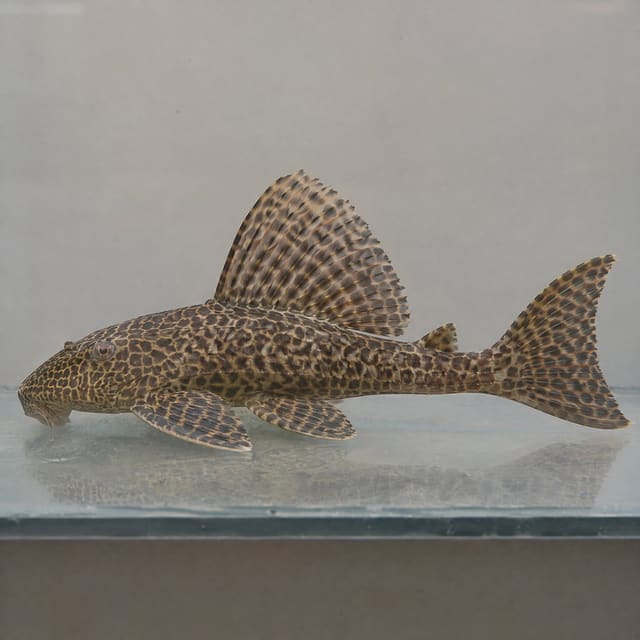
Common Pleco / Suckermouth Catfish (Hypostomus plecostomus) – 4–30cm Sizes
20–28°C · pH 6.2–8.2
£8.29
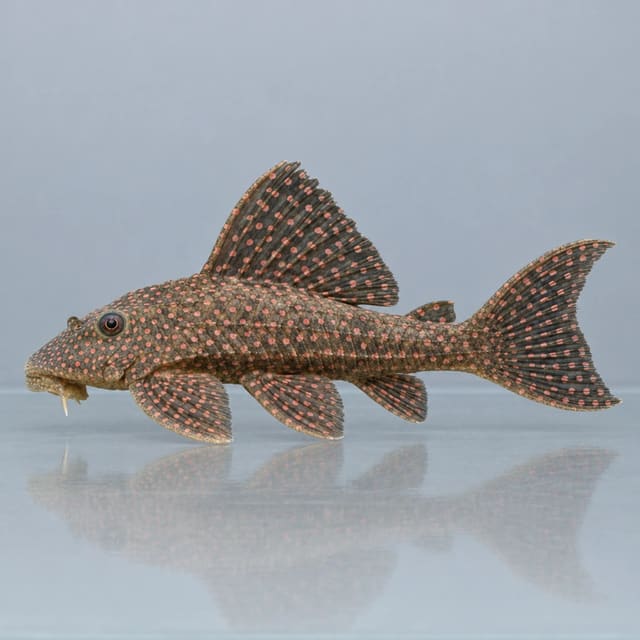
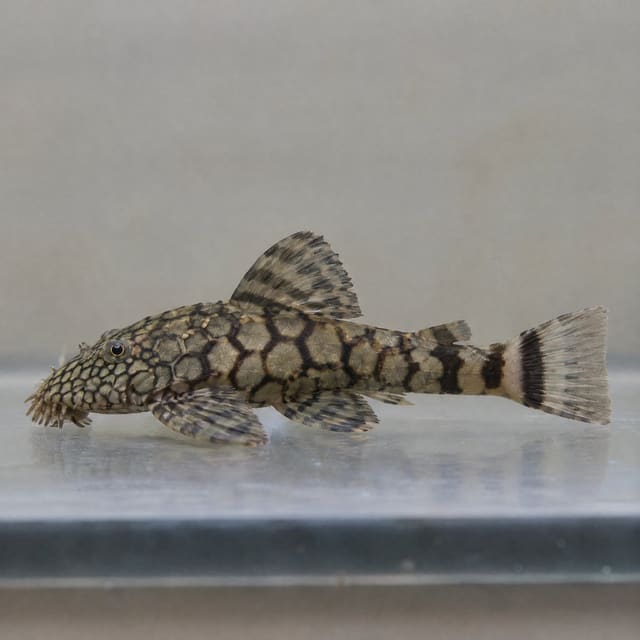
The Jaguar Pleco is a spotted Hypostomus suckermouth catfish with large dark dots on a pale sandy body, traded as Hypostomus sp. 'Jaguar' and matching Hypostomus jaguar from the Rio Paraguaçu in Bahia, Brazil. The largest measured fish was 17.6 cm without the tail; it needs a 120 × 45 cm tank or larger with rocks, wood and well-oxygenated, flowing water. One live fish per purchase.
Hypostomus sp. 'Jaguar'
The Jaguar Pleco is a spotted Hypostomus suckermouth catfish with large dark dots on a pale sandy body, traded as Hypostomus sp. 'Jaguar' and matching Hypostomus jaguar from the Rio Paraguaçu in Bahia, Brazil. The largest measured fish was 17.6 cm without the tail; it needs a 120 × 45 cm tank or larger with rocks, wood and well-oxygenated, flowing water. One live fish per purchase.
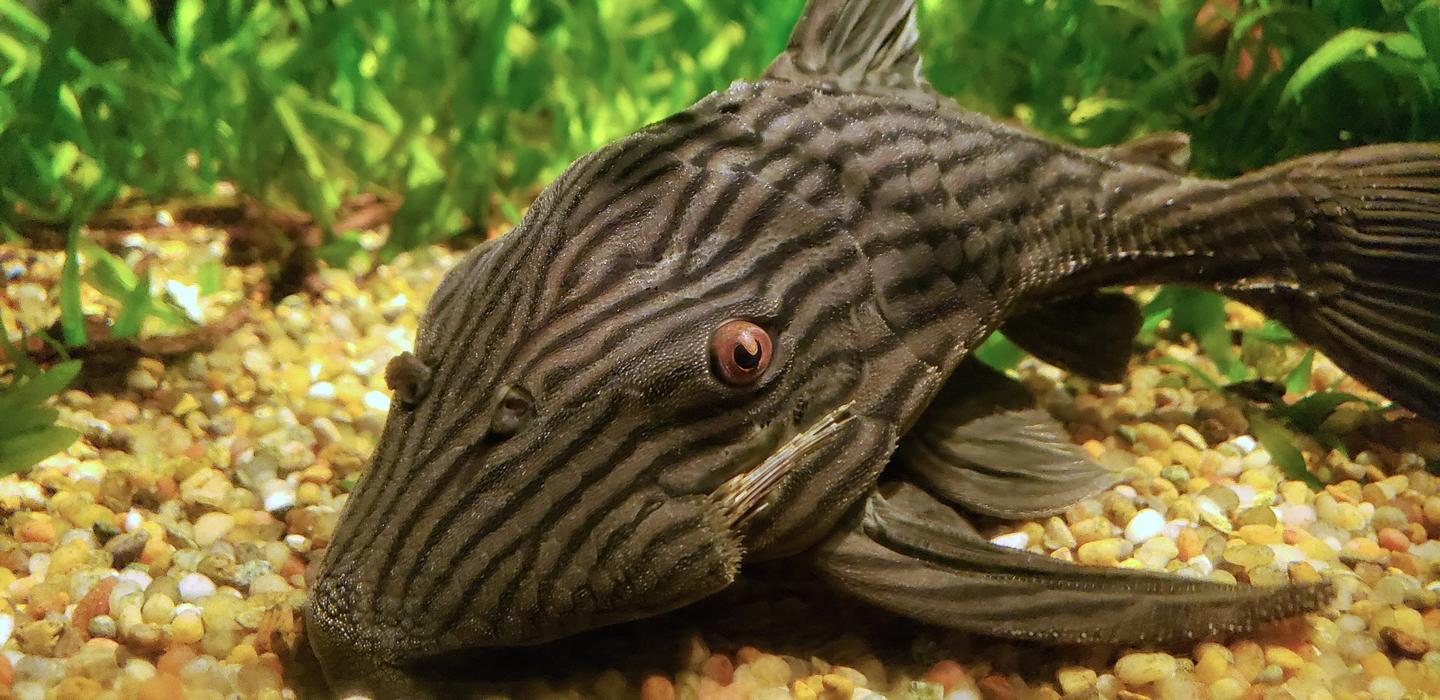
‘Pleco’ is a loose aquarium-trade label, not one species or one care sheet. Before buying, confirm the scientific name or defensible L-number, adult size and measurement method, required footprint, temperature and water, diet, social plan and source. No universal pleco tank size, menu or algae result is honest.
Read the full care guidance when planning conditions for your aquarium.
The Jaguar Pleco is a spotted Hypostomus suckermouth catfish with large, dark, rounded spots scattered evenly over a pale sandy body, head and fins. It arrives labelled Hypostomus sp. "Jaguar", and the trade name points to Hypostomus jaguar, a species described in 2013 by Zanata, Sardeiro and Zawadzki and listed as the Jaguar Pleco by Planet Catfish. FishBase explains the name: it comes from îagûara, the Tupi-Guarani word for panther, chosen for the black dots on a clear background. Hypostomus itself means "mouth underneath", for the sucker mouth these fish use to cling to rocks and wood.
The species is known from the Rio Paraguaçu basin in Bahia State, eastern Brazil. Its type locality is the Paraguaçu at Fazenda Os Touros, 18 km from Iaçu, at 143 metres above sea level. FishBase, summarising the original description, says it lives in the Paraguaçu and its tributaries in stretches up to 60 m wide and 1.5 m deep, over rocky bottoms, in dark-coloured water with a mild to fast current, at altitudes of 143–350 m. FishBase lists it as Least Concern on the IUCN Red List (assessed 2018).
Because we cannot confirm the exact collection locality of each imported fish, we keep the trade label on this listing and give the published facts for H. jaguar. Very little has been written about keeping it, and we say so wherever the advice below comes from general Hypostomus or catfish guidance rather than from studies of this species.
The 2013 description separates H. jaguar from its relatives by colour pattern and fin counts, as summarised by FishBase:
| Fish | Spots | Dorsal fin |
|---|---|---|
| Hypostomus jaguar | Large dark dots on a clear background, similar in size on head and body, from half to about one eye-width | Short, with seven rays |
| Hypostomus chrysostiktos, found in the same river | Small yellow dots on a dark background | Ten to eleven rays |
| H. brevicauda and H. wuchereri | Dots smaller than the pupil | Not a key feature |
| Sailfin plecos (Pterygoplichthys) | Many spotted or marbled forms | Long, sail-like, with many more rays |
Do not confuse it with the similarly named Jaguaribe pleco, a different fish named after the Rio Jaguaribe.
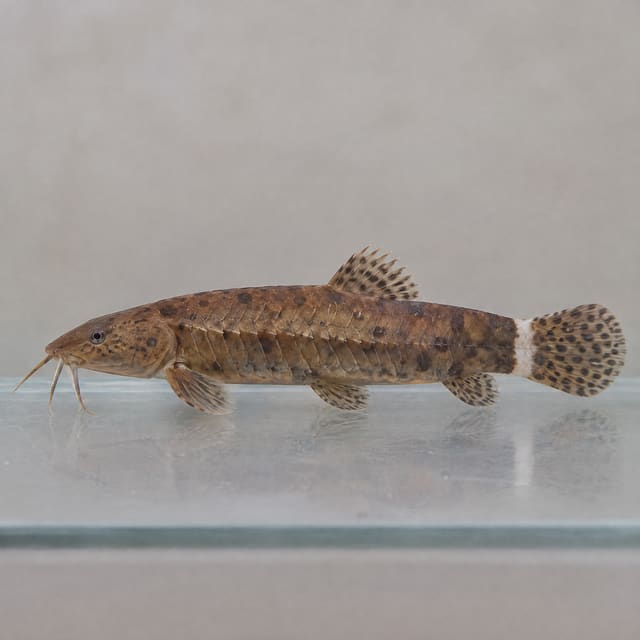
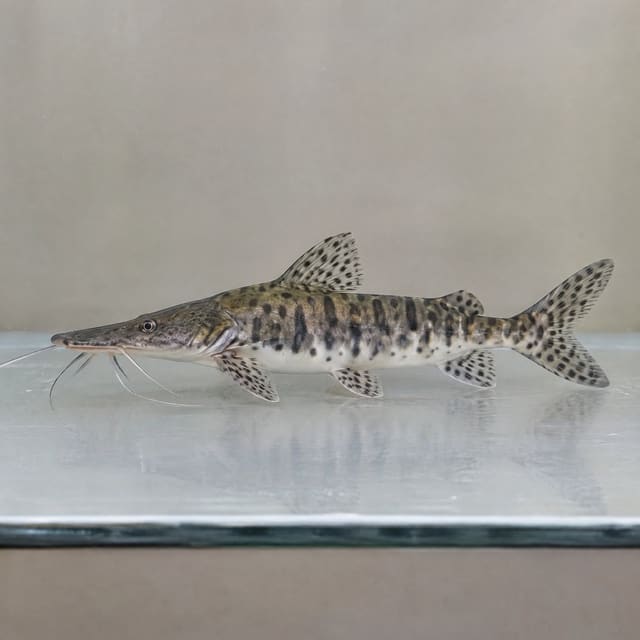
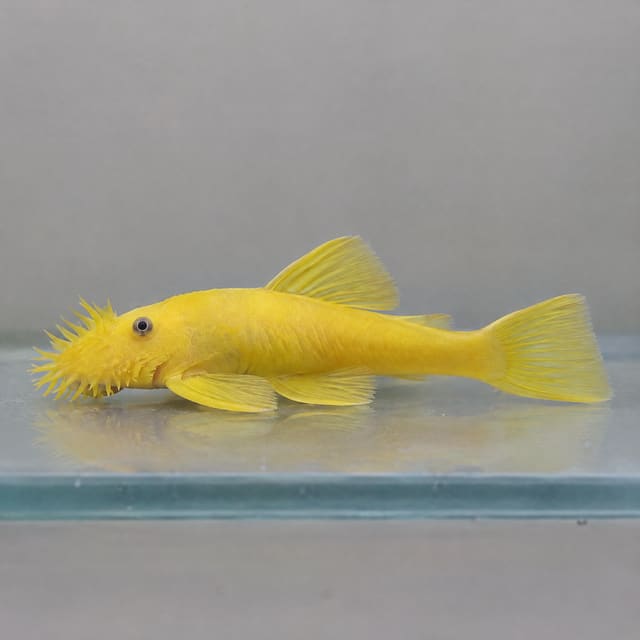
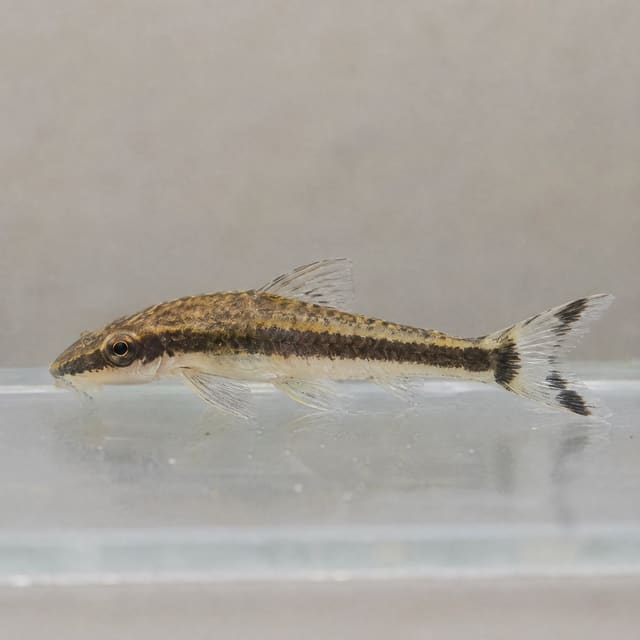
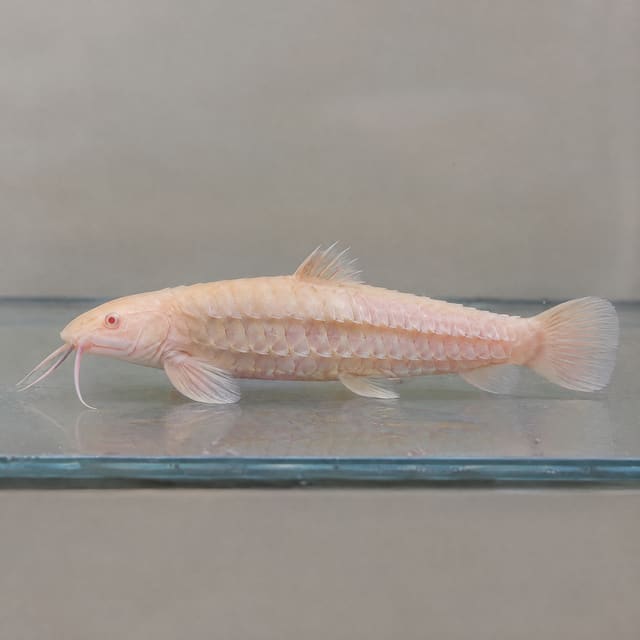
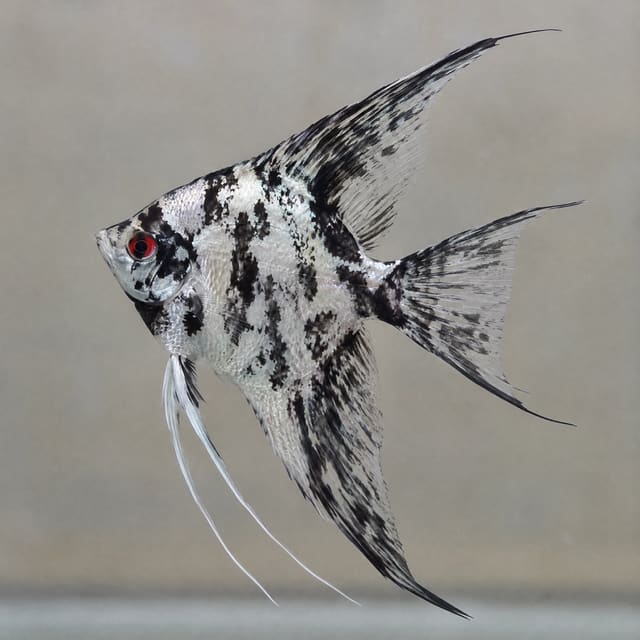
One purchase supplies one live Jaguar Pleco in the standard size we receive. Sex is not specified, and no way to sex this species is published. Spot size and spacing vary between individuals, so the gallery images show the type of fish, not the individual you will receive. The images are prepared from a reference photograph.
Read our delivery and Live Arrival Guarantee policy before you order, and have the aquarium running and tested before the fish arrives.
The largest fish measured for the 2013 description was 17.6 cm standard length, which is measured without the tail fin. Some sellers quote 25–35 cm; we have found no published source for that, but a wild sample of a few fish may not show the full adult size either. Plan for a fish of at least 18 cm standard length, more with the tail, and leave room for it to grow larger.
No care profile publishes a minimum tank for this species. For comparison, Seriously Fish gives a 120 cm length for a 200 mm Hypostomus and a 120 × 45 cm base for some 230–250 mm species. We recommend at least 120 × 45 cm for one Jaguar Pleco, and a longer tank if you keep it with other bottom fish.
Its wild home is a rocky river with a mild to fast current, so a river-style layout is the most natural choice: smooth, rounded rocks and pebbles over sand, a few pieces of heavy wood, and caves among the rocks. OATA advises soft substrates for catfish, and wood or caves for shelter.
| Zone | What to use | Why |
|---|---|---|
| Rock bed | Smooth, rounded river rocks and pebbles, set firmly on the tank floor | Echoes the rocky river bottoms of the Paraguaçu |
| Caves | A clay cave or a gap under stacked rock the adult can fit into | A secure daytime retreat |
| Wood | One or two heavy pieces of aquarium wood | Shade, grazing and broken lines of sight |
| Floor | Sand between the rocks | Soft for the mouth and barbels; easy to siphon |
| Flow | A strong outlet or extra pump along the length of the tank | Movement and oxygen, as in a flowing river |
Fix every rock securely so a strong pleco cannot undermine it, and keep plants tough or attached to wood.
No water values have been published for this species. The wild habitat is described as dark-coloured, flowing river water in a tropical climate. Until better data exist, we use OATA's general guidance for catfish and aim for the middle of it, where most Hypostomus are comfortable.
| Value | Target | Source |
|---|---|---|
| Temperature | 22–27°C, ideally mid-range | OATA general catfish range |
| pH | 6.0–8.0, ideally near neutral | OATA general catfish range |
| General hardness | 4–18 °dH | OATA general catfish range |
| Ammonia and nitrite | 0 mg/l | OATA |
| Nitrate | No more than 20 mg/l above tap water | OATA |
Most UK tap water falls inside this broad range once treated with a conditioner, which makes the Jaguar Pleco easier to house than soft-water specialists. Test your tap water and compare it with our water matcher, keep the temperature steady with a correctly sized heater, and make any change slowly. Steady, clean, well-oxygenated water matters more for this river fish than a precise pH.
River plecos produce plenty of waste and need oxygen-rich water. Choose a filter rated well above your tank volume, add a powerhead or spray bar to create a current along the length of the tank, and keep the surface moving. FishBase notes that Hypostomus can breathe air when they need to, but a fish that keeps gulping at the surface is telling you the water needs attention. New tanks must be fully cycled first; our guide to the nitrogen cycle explains how.
No diet study has been published for H. jaguar. In aquariums, spotted Hypostomus are fed as grazing omnivores, and OATA's guidance for algae-eating fish applies: they always need prepared foods such as algae wafers alongside any algae they find, plus fresh vegetables, washed well or bought organic to avoid pesticide residues.
| Part of the meal | Example | How often |
|---|---|---|
| Prepared food | Sinking algae wafers or pleco tablets | Most evenings |
| Vegetable | A slice of blanched courgette, weighted to sink | Three or four times a week; remove leftovers next morning |
| Meaty food | A small portion of thawed frozen bloodworm or similar | Once or twice a week |
| Grazing | Algae and biofilm on rocks and wood | Always available, never the whole diet |
Feed after the lights dim, near its shelter, and adjust the amount so very little is left after a few hours.
OATA advises adding fish only when ammonia and nitrite read zero, and adding them gradually so the filter bacteria can cope. Catfish travel double-bagged because their spines can puncture a single bag. Turn off the tank lights, float the bag for about 10 minutes, then add small amounts of tank water over up to 20 minutes before releasing the fish with as little bag water as possible. Our guide to acclimatising new fish shows each step.
| Day | Check | Action |
|---|---|---|
| 1 | The fish settles in a cave or under rock | Keep lights low; do not rearrange the rocks |
| 2–3 | It explores after dark | Offer one wafer and a small slice of courgette near its cave |
| 4–5 | Food disappears overnight | Test ammonia and nitrite; both should read zero |
| 7 | Belly rounded, fins relaxed | Start the weekly routine and normal feeding |
Handle it carefully: OATA warns that most catfish have spines on the pectoral fins and behind the gills, and plecos tangle easily in nets. Move it in a container where possible.
A settled Jaguar Pleco rests in its cave or on the rocks by day and grazes actively in the evening. OATA lists clamped fins, flicking against décor, shimmying and fast breathing as warning signs in any fish.
| What you see | What to do |
|---|---|
| Frequent dashes to the surface for air | Test the water and increase flow and surface movement |
| Hollow belly | Feed later in the evening, closer to its cave, and add more vegetables |
| Chasing other plecos | Add caves and rock piles, or reduce the number of bottom fish |
| Plants being eaten | Feed more vegetables and switch to tough plants |
| Damaged fins or white patches | Test the water and seek fish-health advice before treating |
Our pleco care guide and common pleco guide cover routine care for larger Hypostomus.
No behaviour notes have been published for this species. Seriously Fish's genus notes describe other Hypostomus as peaceful with most tank mates but territorial towards similar-sized bottom fish, especially their own kind, and that is the safe assumption here. Good companions are robust, peaceful fish that use the middle and upper water and enjoy a current.
| Suits | Avoid |
|---|---|
| Robust, peaceful midwater fish | Several large territorial bottom fish in one tank |
| Barbs and other active fish that like flowing water | Fish that need very soft, very warm or cool water |
| Other plecos only in a large tank, one cave each | Delicate soft plants, unless vegetables are fed often |
From our range, an active barb such as the Denison Barb suits a flowing river tank; check its own water needs overlap first. For related plecos, compare the Common Pleco (Hypostomus plecostomus), the Gold Suckermouth Catfish, the long-finned Leopard Sailfin Pleco and the Gold Spot Pleco L001. Browse our Hypostomus plecos, all South American catfish, our bottom-dwelling fish and the full catfish and plecos range, and check any mix with our tank mates tool.
Planet Catfish holds no breeding reports for H. jaguar, and no aquarium spawning has been published. No differences between males and females have been described either. Large Hypostomus generally need a very large tank and suitable caves or burrows to spawn, so buy this fish for its striking pattern rather than with breeding in mind.
Jaguar Pleco is the trade name of a spotted Hypostomus suckermouth catfish with large dark dots on a pale sandy background. Planet Catfish uses the name for Hypostomus jaguar, described in 2013 from the Rio Paraguaçu basin in Bahia, Brazil.
Almost certainly; the pattern matches the published description of that species. It arrives labelled Hypostomus sp. "Jaguar", and we cannot confirm where each fish was collected, so we keep the trade label and give the published facts for H. jaguar.
The largest fish measured for the 2013 description was 17.6 cm standard length, which is without the tail. Some sellers quote 25–35 cm, but we have found no published source for that, so plan for at least 18 cm plus the tail and allow room to grow.
At least a 120 × 45 cm base. Seriously Fish gives that base, or a 120 cm length, for other Hypostomus of 20–25 cm standard length; go bigger if your fish grows beyond the published size.
No species-specific values are published. In the wild it lives over rocks in dark-coloured, flowing river water. Use the OATA catfish guide range of 22–27°C and pH 6.0–8.0, aim for the middle, and keep the water clean, well oxygenated and moving.
Feed it like other grazing Hypostomus: sinking algae wafers and pleco tablets, washed vegetables such as courgette, and occasional frozen foods. OATA notes that algae eaters always need prepared foods as well as algae.
With care. No behaviour notes exist for this species, but Hypostomus are commonly territorial towards other large bottom-dwellers. Give each pleco its own cave and plenty of floor space, or keep just one.
Hypostomus jaguar has large dark dots of similar size on the head and body, up to about one eye-width across, and a short dorsal fin with seven rays. The H. chrysostiktos that lives alongside it has small yellow dots on a dark body and a dorsal fin with 10–11 rays, and sailfin plecos also have a long, many-rayed dorsal fin.
No reviews for this item yet. Bought one? Honest reviews only, good or bad.
What customers say about ordering from us
Easy website plenty of info on fish your buying great to pick a time slot
TRACEY DURRANT · 7 Oct 2026
Got some lovely fish thank you
Kevin Mackie · 7 Oct 2026
Reviews of our shop, collected by Judge.me, an independent third-party review collector. Newest first.
Moved by UK carriers licensed to handle live animals
Hand-packed with oxygen bags, poly box, heat pack
Email photos the same day; an optional unboxing video helps us review problems faster — claim terms apply
Klarna & PayPal Pay in 3 at checkout